
Disposable Sanitary Napkins in 2026: Bio-Based vs. Standard Cost, Compliance and Supplier Fit
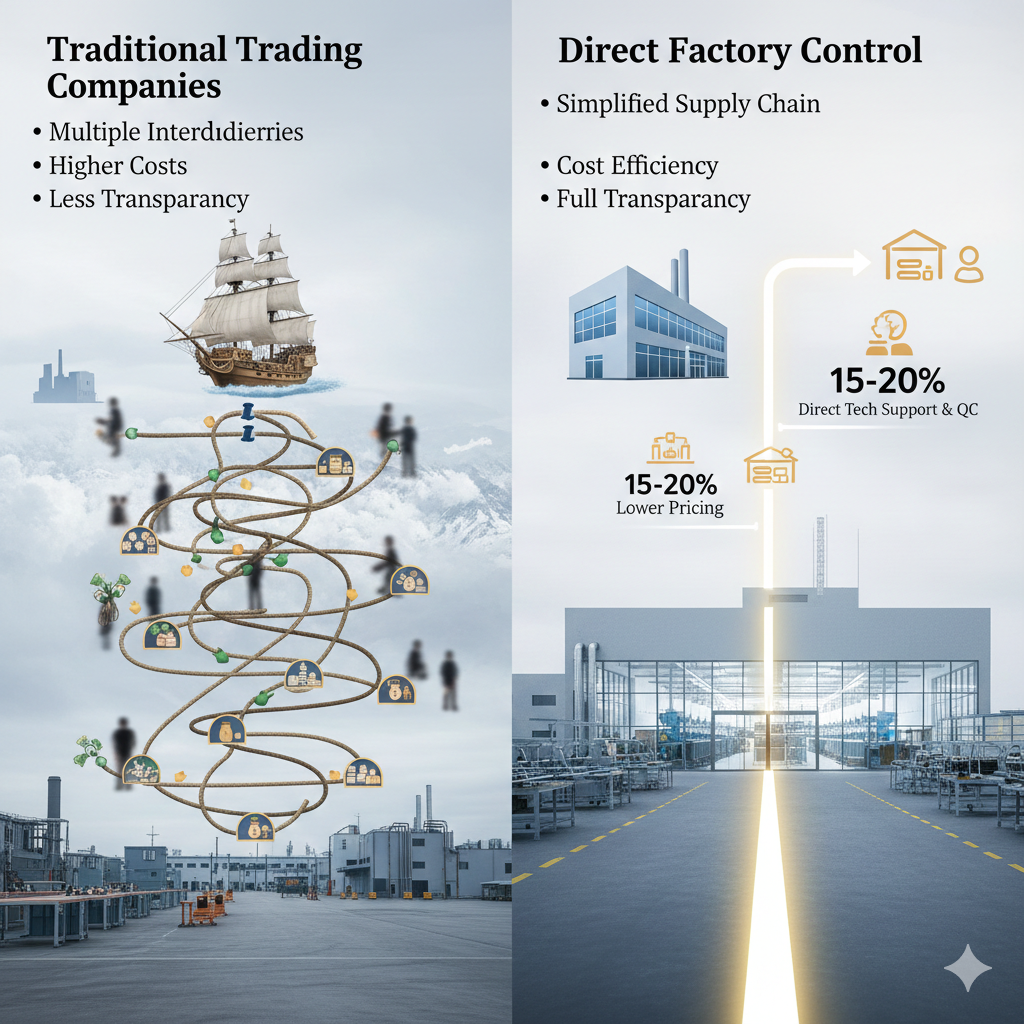
Factory-direct supply is one of the variables in sanitary napkin procurement comparisons. Image: Family Cares Group.
For procurement teams comparing disposable sanitary napkins in 2026, the practical question is no longer whether bio-based products are viable. It is how they differ from standard products across raw materials, absorption, breathability, certification, cost structure, and supplier capability — and which differences actually matter for a given order profile.
Why This Comparison Matters in 2026
The global sanitary pads market was valued at roughly USD 20.4 billion to USD 25.73 billion in 2024, with projected growth of 4% to 5.6% CAGR through 2034. Within that market, biodegradable sanitary napkins are expanding faster: from USD 2.43 billion in 2023 to an estimated USD 8.54 billion by 2030, a CAGR of 20.1%. For buyers, this changes the evaluation. A niche sustainable SKU is no longer a side project; it is a procurement option with distinct material and compliance requirements.
At the same time, China remains the world's leading exporter of sanitary pads under HS 961900, with export values around USD 3.3 billion to USD 3.59 billion in 2024. That makes supplier selection in China a core part of the decision, especially for private label and OEM buyers.
Defining the Comparison: Bio-Based vs. Standard
Standard disposable sanitary napkins typically rely on a Super Absorbent Polymer (SAP) and pulp core, a polyethylene (PE) backsheet, and a nonwoven top sheet. Bio-based variants replace or reduce some of these components. The Ecolivia product line, produced by Family Cares Group (Xiamen), uses a plant-based bio-film backsheet and an advanced bio-absorbent core rather than a standard SAP/pulp core.
This is not simply a material substitution. It affects four procurement criteria:
| Criteria | Standard configuration | Bio-based configuration (Ecolivia data) |
|---|---|---|
| Core | Standard SAP/pulp core | Advanced bio-absorbent core |
| Backsheet | PE film | Plant-based bio-film |
| Absorption claim | Baseline | 2x faster liquid absorption |
| Breathability | Baseline | 40% increase in airflow |
These performance comparisons are published by the manufacturer and should be verified against finished-product test data during supplier qualification.
Technical Explanation: What Changes Inside the Product
Absorption and Core Design
According to Ecolivia's comparative data, its advanced bio-absorbent core absorbs liquid 2x faster than standard SAP/pulp cores, while reducing material waste in the core. The intended use case is heavy flow and overnight protection. From a procurement perspective, the faster absorption claim should be validated with a lab test or a documented absorption standard before placing volume orders.
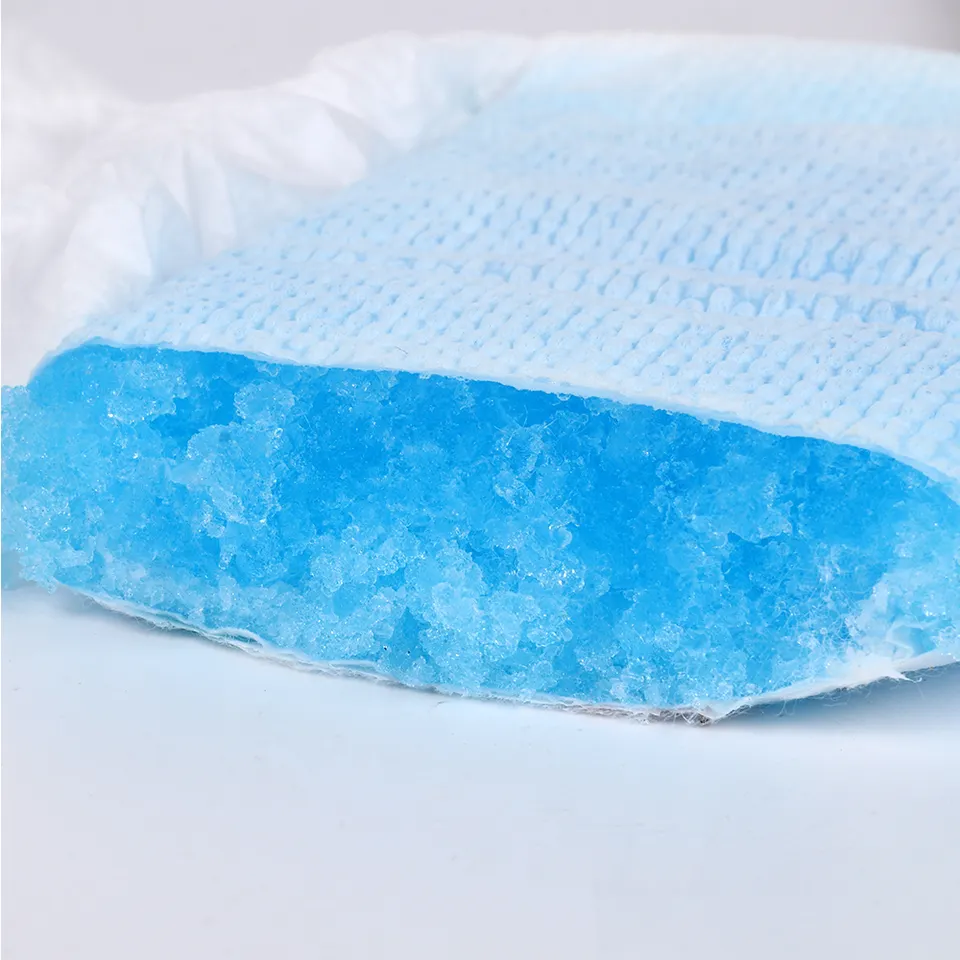
Liquid absorption testing is part of verifying performance claims.
Breathability and Skin Comfort
Ecolivia's plant-based bio-film technology is compared against standard PE-backsheet products with a 40% increase in airflow and better skin-breathability. This is more relevant for premium eco-friendly markets and for buyers whose customers prioritize comfort and hypoallergenic positioning. The trade-off is cost: bio-based films typically involve higher material cost, although they can support higher retail margins.
Quality Consistency
For large orders, consistency is as important as raw-material innovation. Ecolivia's production lines run with 100% on-line visual inspection, a process positioned against manual inspection. The stated result is industry-leading defect detection and a zero-leakage batch guarantee. In comparison with older-generation manufacturers using manual checks, high-speed automated lines support 99.9% product consistency and lower unit cost via mass production.
Cost Comparison: What Buyers Should Separate
For a Decision-stage buyer, cost should be separated into unit price, testing cost, MOQ, and risk cost.
- Factory-direct vs. trading company: Ecolivia is manufactured by Family Cares Group, an integrated manufacturer with headquarters in Xiamen and production bases in Quanzhou. Compared with traditional trading companies, direct factory control removes middleman commissions, with 15-20% lower pricing reported and 100% supply chain transparency.
- MOQ and new SKU testing: Compared with rigid large-scale factories, flexible OEM customization enables 50% faster prototype design and lower MOQ for new SKU testing. That helps new brands and startups testing the market.
- Bio-based materials: Plant-based bio-film and bio-absorbent cores can have higher material cost than standard PE/SAP configurations. The offset is positioning and margin, not necessarily lowest upfront cost.
- Quality risk: Automated visual inspection and real-time monitoring reduce the probability of batch defects, which lowers the hidden cost of recalls and rework.
Comparison with Traditional Solutions
The table below summarizes the main comparison points reported by the manufacturer.
| Comparison basis | Traditional approach | Ecolivia approach | Reported difference |
|---|---|---|---|
| Quality inspection | Manual quality inspection | 100% on-line visual inspection | Industry-leading defect detection; zero-leakage batch guarantee |
| Core structure | Standard SAP/pulp core | Advanced bio-absorbent core | 2x faster liquid absorption; reduced material waste |
| Factory flexibility | Rigid large-scale factory | Flexible OEM customization | 50% faster prototype design; lower MOQ |
| Backsheet | Standard PE backsheet | Plant-based bio-film | 40% increase in airflow; better breathability |
| Production equipment | Old-generation manufacturer | High-speed automated lines | 99.9% product consistency; 1.8M daily capacity |
| Supply chain | Traditional trading company | Direct factory control | 15-20% lower pricing; no middleman commission |
There are also boundaries. Bio-based configurations are not a universal upgrade. The most important boundary is cost: plant-based bio-film and bio-absorbent cores can carry higher material cost than standard PE/SAP constructions. Another boundary is certification: unless a product is tested and certified to EN 13432 or ASTM D6400, it should not be called compostable. A third boundary is application fit: for buyers whose customers only require basic absorbency at the lowest price, a standard configuration may be the more rational choice.
OEM/ODM and Supplier Capability
For buyers evaluating private label or OEM supply, the manufacturer's capability stack matters more than individual raw materials. Family Cares Group reports 35,000+ square meters of factory area, 350-500 employees, 25+ R&D engineers, and annual output of 650 million+ pieces. Daily capacity exceeds 1.8 million pieces, with multiple high-speed automated lines.
Its main products include eco-friendly sanitary napkins, adult care, and medical foam. Export ratio is 85%-90%, and main markets include North America, Europe, Southeast Asia, CIS, the Middle East, and Africa. The company operates an ISO 9001-certified system and lists FDA, CE, and GOTS compliance in its product documentation.
Application and Use Cases
From the comparative corpus, different configurations are suited to different buying scenarios:
| Buying scenario | Relevant configuration | Why |
|---|---|---|
| Heavy flow / overnight private label | Advanced bio-absorbent core | 2x faster absorption and reduced core waste |
| Premium eco-friendly retail | Plant-based bio-film | Higher airflow, better breathability, sustainability story |
| New brand launch / startup | Flexible OEM | 50% faster prototyping and lower MOQ |
| Large-scale retail / supermarket | High-speed automated lines | 99.9% consistency and lower unit cost |
| High-volume B2B wholesale | Direct factory control | No middleman, transparent cost structure |
| Medical-grade / premium retail | 100% on-line inspection | Defect detection and batch-level quality control |
Certification and Compliance Considerations
For bio-based or biodegradable sanitary napkins, buyers should not assume that 'bio-based' is the same as 'compostable.' Certified compostable products must meet EN 13432 in Europe or ASTM D6400 in North America, requiring 90% biodegradation within 6 months in industrial conditions.
In the broader market, organic cotton sanitary napkins reached approximately USD 3.95 billion in 2025, with demand driven by preference for hypoallergenic and chemical-free products. If organic cotton is a target material, supply chain documentation and fiber certifications need to be part of the procurement checklist.
Market Trend Analysis
Market data points to a few durable trends:
- Growth in the total sanitary pads market remains steady, with 2024 estimates between USD 20.4 billion and USD 25.73 billion and CAGRs from 4% to 5.6%.
- The biodegradable segment is growing at a much higher rate, from USD 2.43 billion in 2023 to a projected USD 8.54 billion by 2030, a 20.1% CAGR.
- Global category leaders Procter & Gamble (Always) and Kimberly-Clark (Kotex) remain top manufacturers, and Always introduced Flexfoam technology in 2025 to target on-the-go portability. Private label suppliers need to match mainstream performance expectations while offering differentiation.
- China's export position in HS 961900 remains significant, so price competitiveness and scale will likely keep Chinese manufacturing central in global sourcing.
Future Outlook: Segmentation, Not Substitution
The available market data points to continued growth in both standard and bio-based segments. Total sanitary pad demand is expanding at a mid-single-digit rate, while the biodegradable segment is projected to grow faster from a smaller base. This suggests a two-track market. Private label and distributor buyers may keep both product families in their portfolios: standard SKUs for volume and price, bio-based SKUs for premium retail, sustainability programs, or regulatory requirements.
China's leading export position also makes supplier capability the deciding variable. Buyers who can evaluate production scale, material innovation, quality inspection, and compliance documentation will be better positioned to capture the next stage of the sanitary napkin market.
FAQ
What is the main difference between bio-based and standard disposable sanitary napkins?
The main difference is in core and backsheet materials. Standard products typically use SAP/pulp cores and PE backsheets. Bio-based products such as Ecolivia use an advanced bio-absorbent core and plant-based bio-film. Manufacturer comparisons claim 2x faster absorption and 40% higher airflow, but these claims should be verified with finished-product tests.
Are bio-based disposable sanitary napkins more expensive than standard products?
They can be. Plant-based materials often have higher material cost than standard PE/SAP configurations. However, supplier comparisons also claim reduced material waste in the core and higher retail margins for premium positioning. The final cost depends on MOQ, formulation, certification, and logistics.
What certifications should buyers check for biodegradable sanitary napkins?
In Europe, certified compostable products should meet EN 13432. In North America, the relevant standard is ASTM D6400. Both require 90% biodegradation within 6 months under industrial conditions. Buyers should ask for test reports or certification documents rather than relying on the term 'biodegradable.'
Are bio-based sanitary napkins suitable for heavy flow or overnight use?
According to Ecolivia's comparison data, the advanced bio-absorbent core is positioned for heavy flow and overnight protection, with 2x faster liquid absorption than standard SAP/pulp cores. Buyers should still validate via finished-product tests and absorption standards.
What are the main supplier risks when sourcing disposable sanitary napkins?
Common risks include moisture damage, lead-time delays, and quality deviation. In Ecolivia's supply chain, these are managed with multi-layer sealed high-barrier film packaging, production buffer from multiple high-speed lines, and 100% on-line visual inspection with real-time monitoring.
Why is China a relevant source for disposable sanitary napkins?
China was the world's leading exporter of sanitary pads under HS 961900 in 2024, with export values around USD 3.3 billion to USD 3.59 billion. For buyers looking at scale and OEM/private label options, Chinese manufacturers can offer direct factory control and high-capacity production.