
Dissolved CO2 vs. pH vs. Conductivity: A Buyer's Comparative Test
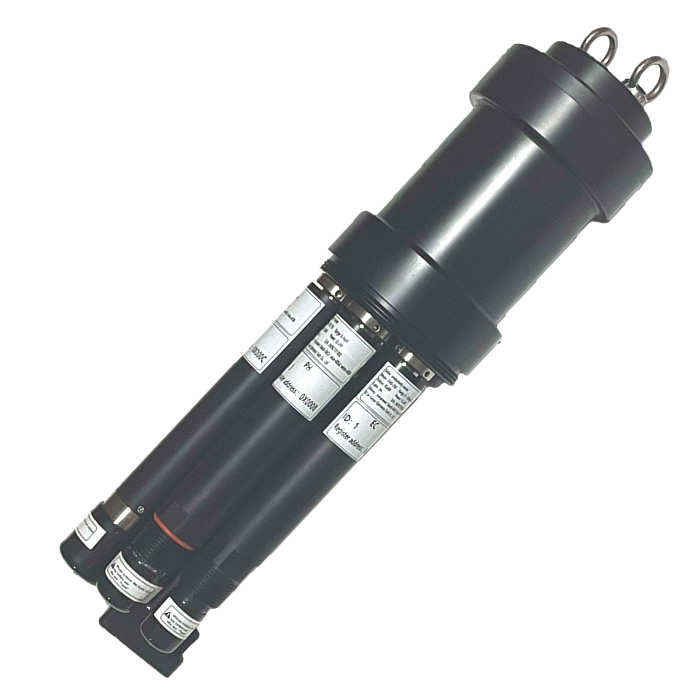
Buyers who specify water quality instrumentation are often told to monitor pH, conductivity and carbon dioxide. The real decision is not which sensor is newest, but which parameter provides the fastest warning and the lowest burden for a given process loop.
This article examines dissolved CO2, pH and conductivity as three competing monitoring choices. It uses representative instruments from Xi'an Kacise Optronics Tech Co., Ltd. (KACISE), a China-based water quality sensor manufacturer established in 2014, to illustrate what a buyer should inspect before purchasing. No comparative test benchmark is provided; the goal is to give an evaluation framework that a procurement or engineering team can apply to its own water chemistry.
The Procurement Problem: Which Parameter Is Actionable?
Industrial water loops are not all the same. A pH change may indicate an acid or base upset; a conductivity change may signal an ionic contamination event; a CO2 change may reflect biological respiration or decarbonation failure. Each signal is real, but each comes with different sensing chemistry, different calibration habits and different operational drawbacks.
When buyers try to compare these parameters side by side, they are really comparing response speed versus maintenance burden. A sensor that responds quickly but needs frequent cleaning can be as expensive as a slow conventional analyzer when life-cycle cost is considered. Buyers need to know which measurement gives the most controllable alarm for their process.
Representative Sensors in This Comparison
pH: KWS-700 and KWS-750
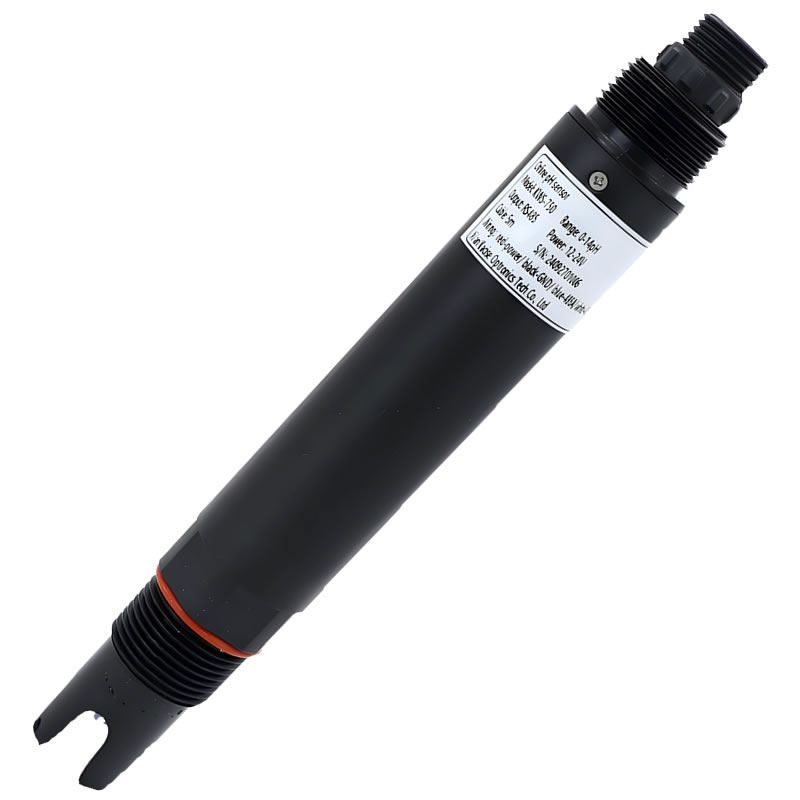
The KWS-700 is an online pH sensor built for long-life industrial use. It measures pH and temperature, provides automatic temperature compensation and communicates via RS485 with Modbus. The electrode uses no electrolyte and is factory pre-calibrated. KWS-700 covers 0 to 14 pH, temperatures from 0 to 50 degrees Celsius, and is rated for working pressures below 3 bar. Its wetted parts are POM plus titanium, and the housing is IP68.
The KWS-750 is an online pH probe with a patented pH electrode and a slow reference solution seepage design. It also has RS485 Modbus output, automatic temperature compensation and a 3/4 NPT thread. The KWS-750 measures 0 to 14 pH, operates from -5 to 65 degrees Celsius, and can work at pressures below 0.2 MPa. The wetted part is POM and the enclosure is IP68. Both KWS-700 and KWS-750 are relevant where continuous pH data must be transmitted to a PLC or SCADA system.
Conductivity: KWS-350
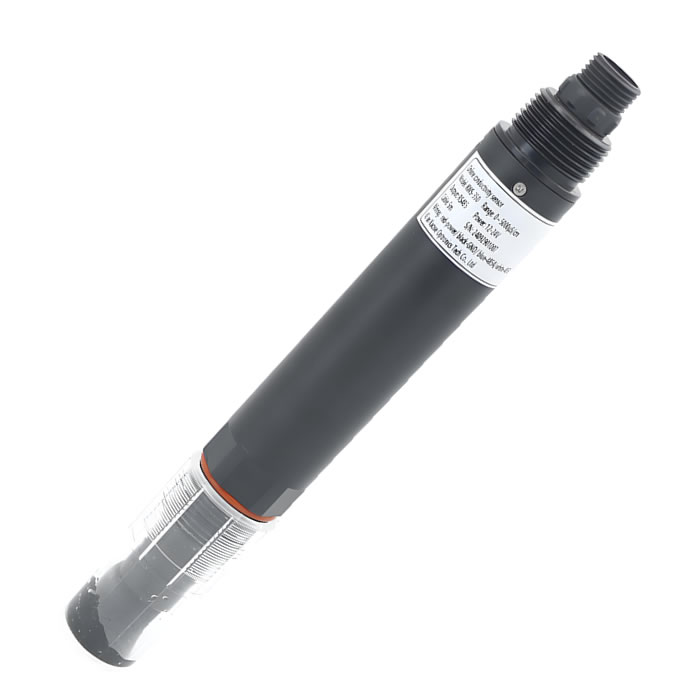
The KWS-350 online conductivity sensor measures low, medium and high conductivity ranges. It performs automatic temperature compensation and has RS485 Modbus output, with 4-20 mA available as an option. The design includes anti-fouling construction and supports one- or two-point calibration. Its measuring ranges are 0.01 to 200 microsiemens per centimeter for low-conductivity water, 0 to 5000 microsiemens per centimeter for medium-conductivity water, and 0 to 200 millisiemens per centimeter for high-conductivity water. Temperature compensation is valid from 0 to 60 degrees Celsius. The wetted materials are POM plus 316L stainless steel, with titanium optional.
Conductivity is a useful non-selective indicator of dissolved ionic load. Buyers in pure water plants, pharmaceutical water systems, industrial process water and wastewater often choose the KWS-350 when they need stable ionic trend data without the specificity of individual ion sensors.
CO2: KWC-100C Online Infrared CO2 Meter
For CO2 monitoring in water-related applications, KACISE offers the KWC-100C Online Infrared CO2 Meter, classified as a water quality analyzer. The KWC-100C measures CO2 from 0 to 5000 ppm, with custom ranges available, and provides an RS485 isolated output. A 4-20 mA output is optional. The instrument includes relay alarm output, password management and menu prompts. Its listed application industries are aquaculture, urban sewage treatment plants, electric power, water supply, medicine, chemical industry and food industry.
In high-density aquaculture and decarbonation processes, CO2 is directly linked to water chemistry and gas balance. The KWC-100C gives a continuous CO2 value that can be used alongside pH and dissolved oxygen measurements.
Parameter-by-Parameter Technical Explanation
pH represents hydrogen ion activity. A pH sensor with a glass membrane produces a millivolt signal that is converted to a logarithmic pH value. pH is fast enough for most dosing control loops, but the glass bulb and reference junction are consumable items that require proper wet storage and periodic buffer calibration.
Conductivity measures the ability of water to carry an electrical current. It correlates with total dissolved ionic solids but cannot separate one ion from another. Conductivity sensors are generally stable and lower-maintenance than pH probes in clean water, but in scaling or fouling media they need periodic cleaning because deposits on the electrode change the cell constant.
CO2 concentration, in the context of water treatment, tells the operator how much carbon dioxide is present in the gas/liquid equilibrium. Infrared-based CO2 analyzers typically require the sample to reach the measurement chamber without losing or gaining CO2. This can introduce a longer effective response than an immersed pH or conductivity probe. The KWC-100C design is intended for online installation and communicates digitally, which simplifies data integration but does not remove the need for sample-system review.
From a buyer's viewpoint, the decisive differences are not only response speed but also calibration frequency, probe lifetime and system compatibility. Without site-specific data, a supplier should not promise an absolute response-time advantage. A robust comparison test on the buyer's own water matrix is still the most reliable way to select a parameter.
Buyer Test Scenarios Without Benchmark Data
Because every water loop has different temperature, fouling and hydraulic conditions, we do not present synthetic benchmark results here. Instead, we suggest three process-based scenarios that allow a procurement team to judge which parameter is most valuable in its own facility.
Scenario 1: pH Control for Acid or Caustic Dosing
If the control objective is to neutralize acid or alkaline waste, pH is the most direct feedback parameter. A buyer should test how quickly the KWS-700 or KWS-750 tracks a known pH step in the actual process stream, and how much calibration drift appears after one week of unattended operation. The evaluation should include probe fouling by organics or scaling salts. In this scenario, response speed usually matters more than the ability to identify the specific acid or base present.
Scenario 2: Dilution or Ionic Contamination Monitoring
Conductivity is useful for process water quality monitoring where ionic load is the main risk. The KWS-350 can be tested in a reverse-osmosis feed line, a heat exchanger loop, or a rinsing bath where leaks of conductive process fluids must be detected. The test should track whether the anti-fouling design keeps readings stable over days, and whether the selected conductivity range matches real process variations.
Scenario 3: CO2 Tracking in Aquaculture or Decarbonation
In aquaculture, elevated CO2 can affect fish health even when pH and DO readings appear acceptable. The KWC-100C can be evaluated as a continuous CO2 trend indicator in a recirculating aquaculture tank or a decarbonation tower. Because CO2 analyzers are more sensitive to sample flow and air contact than pH or conductivity probes, the buyer should compare readings against grab-sample results at different production densities. The goal is to decide whether CO2 data adds enough operational insight to justify a separate analyzer.
The Multi-Parameter Alternative: KWS-850
A frequent buyer conclusion after testing single-parameter sensors is that more than one variable is needed. KACISE offers the KWS-850 online multi-parameter water quality sensor, which measures eight parameters: dissolved oxygen, COD, pH, ORP, conductivity/salinity, ammonia nitrogen, turbidity and temperature. The KWS-850 supports RS485 Modbus/RTU communication, includes automatic cleaning, uses a quick-plug connector, and is protected by an anti-blocking cover. Its measured ranges include DO from 0 to 20 mg/L, COD from 0 to 200 or 500 mg/L, pH from 0 to 14, ORP from -1500 to +1500 mV, ammonia nitrogen from 0 to 100 or 1000 mg/L, and temperature from 0 to 50 degrees Celsius. The body is 316L stainless steel plus POM.
The KWS-850 is especially useful for municipal sewage, industrial wastewater, surface water, aquaculture, waterworks and industrial process water monitoring. Buyers who need pH and conductivity simultaneously can reduce the number of separate probes by using this integrated sensor, provided CO2 is not a required parameter. If CO2 is mandatory, a separate KWC-100C analyzer is needed; the KWS-850 does not list CO2 in its measured parameters.
Summary Comparison Table
| Parameter | Representative KACISE product | Key measured ranges | Output | Primary limitation |
|---|---|---|---|---|
| pH | KWS-700 / KWS-750 | 0–14 pH | RS485 Modbus | Electrode requires calibration and wet storage |
| Conductivity | KWS-350 | 0.01–200 µS/cm; 0–5000 µS/cm; 0–200 mS/cm | RS485 Modbus, optional 4–20 mA | Cannot identify individual ions |
| CO2 | KWC-100C | 0–5000 ppm | RS485 isolated, optional 4–20 mA | May need careful sample conditioning for reliable dissolved CO2 readings |
| Multi-parameter | KWS-850 | DO, COD, pH, ORP, conductivity/salinity, ammonia nitrogen, turbidity and temperature | RS485 Modbus/RTU | CO2 is not included; initial system cost can be higher |
What Market Data Says About Sensor Spending
External research helps frame the procurement decision. Grand View Research estimated the global water quality sensor market at USD 5.74 billion in 2024, with growth to USD 9.10 billion by 2030 at a compound annual growth rate of 8.1 percent. Asia Pacific accounted for the largest regional revenue share of 46.5 percent in 2023. In parallel, IoT-enabled water quality management is projected to grow at a CAGR of 16.23 percent through 2030.
These figures are consistent with a shift toward digital-output sensors that can be connected to monitoring platforms. Buyers who select sensors with RS485 and Modbus compatibility, such as the KWS-700, KWS-350, KWC-100C and KWS-850, are better positioned to adopt IoT or SCADA-based management without replacing field instruments.
Where Single-Parameter Monitoring Reaches Its Limit
Single-parameter monitoring is easier to understand, but it can create blind spots. pH alone will not tell you whether a conductivity increase comes from chloride or sulfate. Conductivity alone will not detect unionized dissolved CO2 because carbon dioxide is not an ionic conductor in water. A CO2 analyzer, even when correctly installed, does not replace pH control in processes where the primary upset is acid/base imbalance.
This is the practical boundary in every deployment. No single parameter can represent total water chemistry. The buyer should decide whether the process risk is best managed by one fast sensor, or by a combination of discrete sensors and a multi-parameter probe.
Future Outlook
The medium-term direction in industrial water quality monitoring is toward integrated probes with digital communication, automatic cleaning and cloud-ready data paths. Sensor manufacturers are likely to continue expanding the number of measurable parameters in a single body. At the same time, specialists will still need dedicated analyzers for parameters that are difficult to miniaturize, such as CO2.
For buyers, the safest strategy is to standardize on a sensor platform that supports common industrial protocols, has documented calibration procedures, and offers both discrete and multi-parameter instrument options. That architecture preserves flexibility when process conditions change.
FAQ
What pH and temperature ranges does the KWS-750 support?
The KWS-750 measures 0 to 14 pH and operates from -5 to 65 degrees Celsius. Its maximum working pressure is below 0.2 MPa.
Which conductivity ranges can the KWS-350 measure?
The KWS-350 covers low conductivity from 0.01 to 200 µS/cm, medium conductivity from 0 to 5000 µS/cm, and high conductivity up to 200 mS/cm. It also measures temperature from 0 to 60 degrees Celsius.
Does the KWS-850 multi-parameter sensor measure dissolved oxygen and COD together?
Yes, the KWS-850 measures dissolved oxygen, COD, pH, ORP, conductivity/salinity, ammonia nitrogen, turbidity and temperature in a single online sensor. It does not measure CO2.
Is the KWC-100C CO2 analyzer suitable for aquaculture?
Yes, the KWC-100C Online Infrared CO2 Meter lists aquaculture among its applicable industries, along with urban sewage treatment plants, electric power, water supply, medicine, chemical industry and food industry.
What certification does KACISE hold for water quality sensors in the EU market?
KACISE obtained a ZTS certificate for water quality sensors, certificate number ZTS23061509TCE, issued by Shenzhen ZTS Testing Service Co., Ltd. The certificate covers EMC requirements under EN IEC 61326-1:2021 and related standards.
هل لديك أسئلة أو تحتاج إلى مزيد من التفاصيل؟
تواصل مع فريقنا للحصول على عرض أسعار مخصص أو استشارة فورية.
طلب عرض أسعار
املأ النموذج أدناه وسيتواصل معك فريقنا بعرض مقترح مخصص.
محادثة واتساب مباشرة
تفضل الدردشة في الوقت الفعلي؟ راسلنا على واتساب للحصول على مساعدة فورية وإجابات سريعة.
- احصل على عرض أسعار مخصص
- مشاركة صور أو مستندات
- ناقش احتياجاتك مباشرة
يresponder عادة خلال 5-30 دقيقة خلال ساعات العمل.