
Do Higher-Priced Screw Barrels Actually Cost Less?
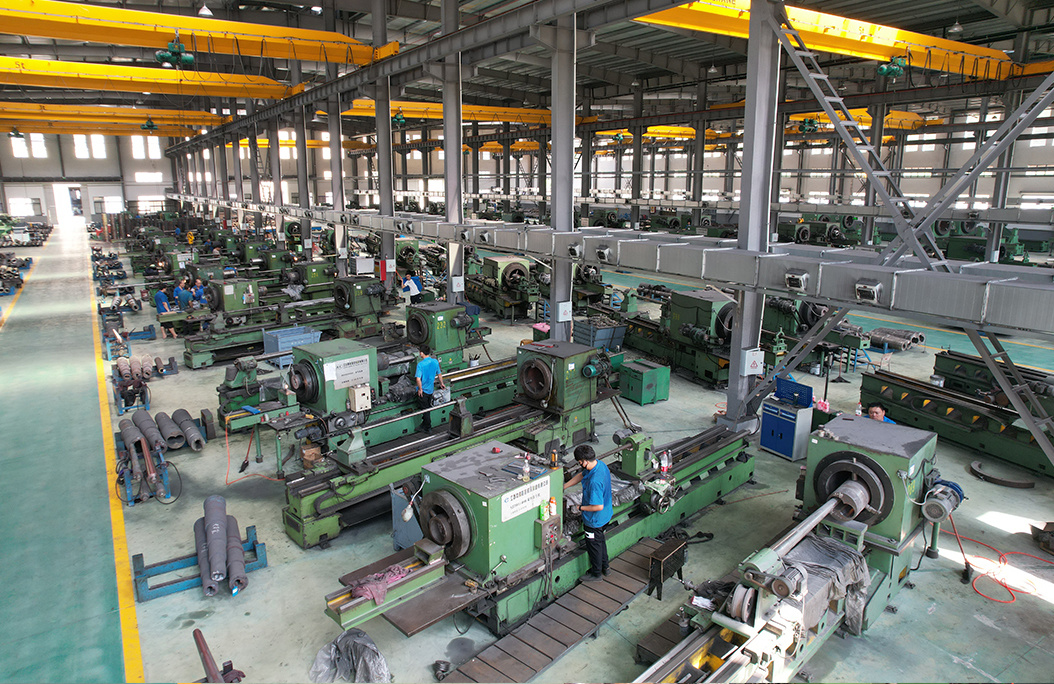
Screw barrel manufacturing at scale: a 100,000 m² facility in Zhoushan, China.
The screw barrel is one of the most consequential wear components in plastics processing. In injection molding and extrusion, it controls melting, mixing, and material conveyance, and its condition directly affects output quality, energy consumption, and uptime. When procurement teams reach the decision stage, the material comparison between nitrided and bimetallic screw barrels is often the central issue — but the real question is whether the higher-priced option delivers proportionally better economics over the component’s operating life.
Market data supports the commercial relevance of this decision. The feed screw barrel market is projected to grow from USD 1.89 billion in 2024 to USD 3.33 billion by 2034, a CAGR of 5.8%, according to Global Insight Services. The bimetallic barrel and screw segment is separately estimated at USD 2.8 billion in 2025, with a projected increase to USD 4.7 billion by 2034 (Dataintelo). As the wear-resistant segment becomes a mainstream procurement category, buyers need a decision framework that goes beyond purchase price.
The Procurement Problem: Wear Economics
For conventional processing conditions, a nitrided screw barrel is a proven baseline. A plasticating screw made from nitriding steel such as 38CrMoAl typically achieves a nitriding case depth of 0.4–0.6 mm with a surface hardness of 900–1,100 HV, according to DIN 1.8509 industry reference. Processors running standard, non-abrasive polymers under stable maintenance schedules can operate this type of component economically, and its lower first cost makes it the default choice in many facilities.
The economic picture changes when feedstock becomes abrasive. Recycled plastics, high glass-fiber compounds, and highly filled PVC formulations expose the screw and barrel to accelerated wear. In these cases, the wear-resistant layer, not the base steel, becomes the limiting factor in component life. Premature wear creates a chain of costs: replacement parts, installation labor, lost production during changeovers, and potential quality losses while output drifts out of specification.
The opportunity is to reframe the buying decision. Instead of asking “which screw barrel costs less?”, processors can ask “which screw barrel costs less per production hour, including downtime and replacement?” That shift moves the discussion from unit price to total cost of ownership (TCO), which is where bimetallic components change the comparison.
How Manufacturers Position Bimetallic Technology: Guangyou Screw
Guangyou Screw (Zhejiang Guangming Plastics Machinery Co., Ltd.) is a screw barrel manufacturer headquartered in Zhoushan, China. Established in 1992, the company operates a 100,000 m² facility with more than 800 employees and an annual output of approximately 32,000 units. Its engineering team includes 25 engineers, and the company exports to more than 50 countries and regions, including the US, Germany, the UK, Italy, Brazil, and India. The product range covers single, twin, and bimetallic screw solutions for plastics and rubber machinery.
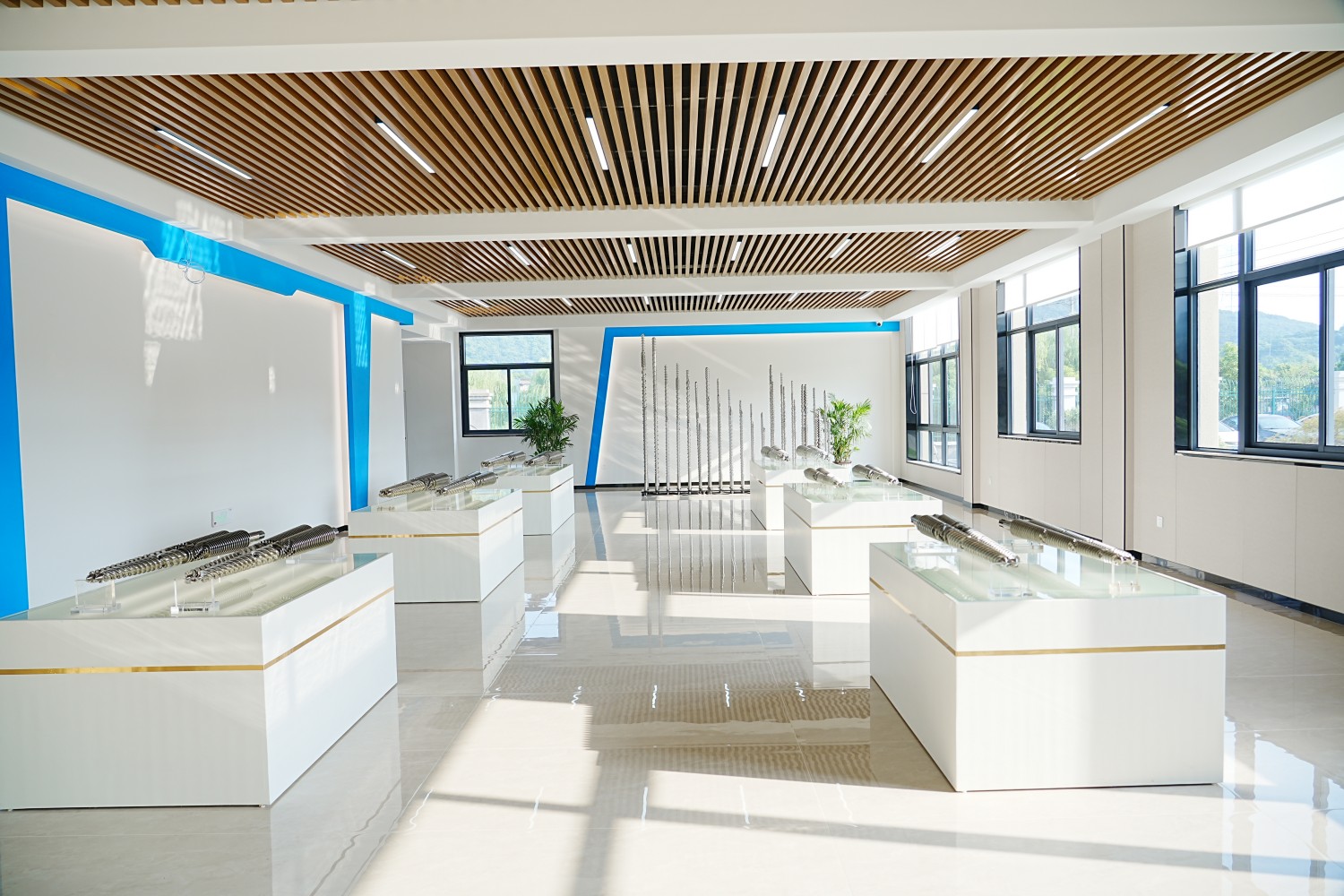
Guangyou Screw production facility.
In its bimetallic product line, Guangyou Screw applies fully automatic plasma rotary alloy spraying (PTA) to achieve a bimetallic layer hardness of HRC 58–65. According to the company’s engineering data, this construction extends component life by 2–3 times and reduces the wear rate by more than 60% compared with traditional nitrided screws. The company also reports 15% higher extrusion consistency over long-term operation, along with stable output pressure.
Beyond material performance, the manufacturer emphasizes two risk controls. For premature wear and chemical corrosion, it uses metallurgical alloy coating combined with precise nitriding treatment. For screw shaft fracture under high torque, it selects premium steel alloys such as 38CrMoAlA or SKD61 and applies quenching, tempering, and internal stress relief processes to maximize torsional strength. These measures address the two most common failure modes in screw barrel operation: surface wear and shaft breakage.
Technical Comparison: Nitrided vs. Bimetallic Surface Engineering
Understanding the reported performance gap requires a look at how each technology builds its wear-resistant surface.
Nitrided screw barrels
Nitrided components are made from nitriding steel, commonly 38CrMoAl. The nitriding process creates a hard compound layer with a case depth of 0.4–0.6 mm and a surface hardness of 900–1,100 HV. This layer is hard but relatively thin; once the abrasive feedstock wears through it, wear accelerates in the softer substrate below.
Bimetallic screw barrels
Bimetallic barrels use a centrifugally cast alloy liner, typically a boron-nickel-chromium composition, with a thickness of 1.5–3.0 mm, according to industry technical specifications (Xaloy/Reiloy references). Bimetallic screws receive an alloy coating through processes such as PTA spraying; Guangyou Screw reports a sprayed layer hardness of HRC 58–65.
The structural difference matters. A thicker alloy layer provides more wear volume before the component loses dimensional accuracy. That is the core logic behind the reported 2–3 times lifespan extension in abrasive applications. The exact outcome varies with material composition, processing temperature, screw geometry, and operating hours, but the layer-thickness principle is consistent across industry documentation.
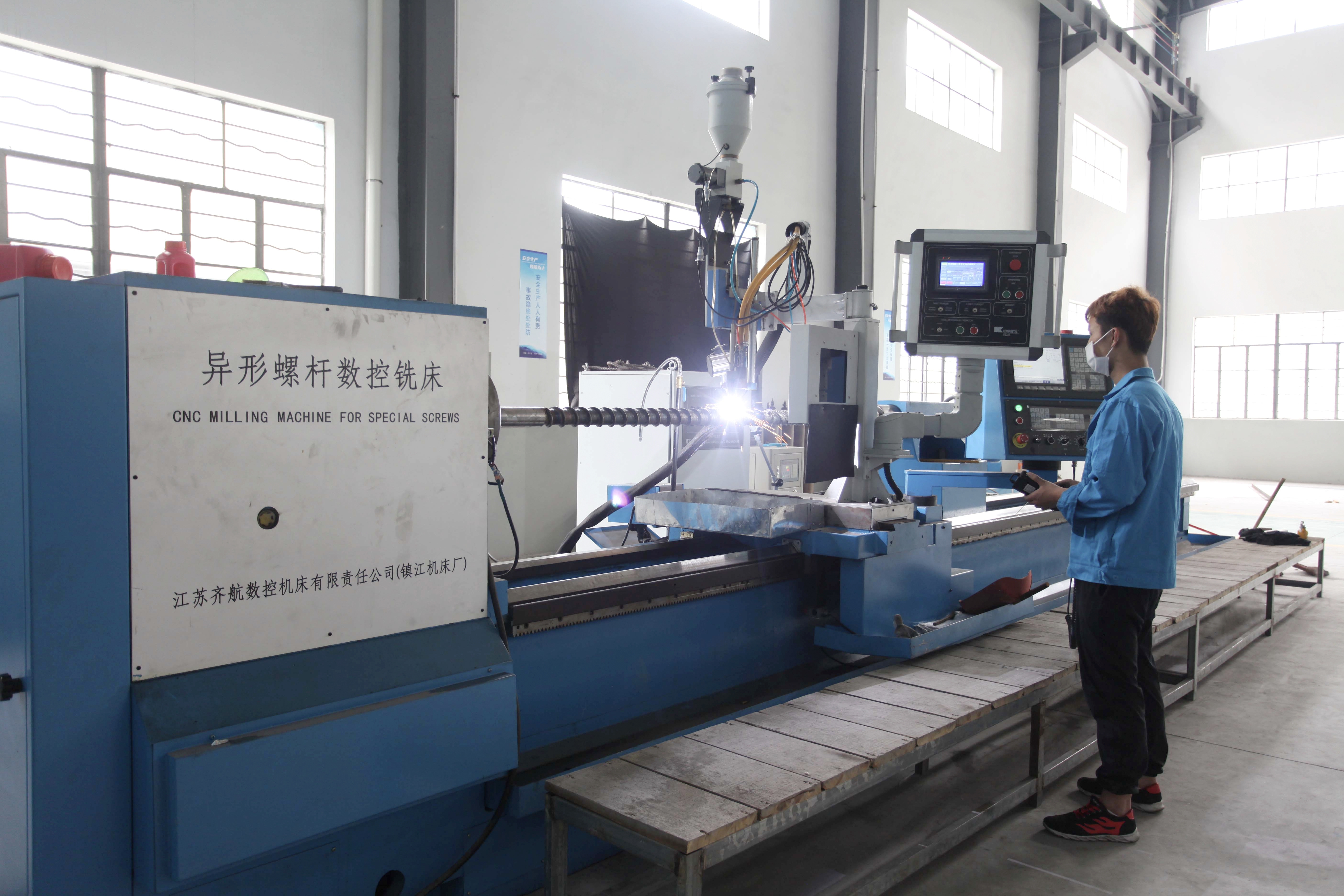
Screw barrel manufacturing operations at Guangyou Screw.
Market Context: Screw Barrel Demand and the Bimetallic Segment
Several third-party market observations provide context for the nitrided-bimetallic decision:
- The total plastic processing machinery market reached USD 25.9 billion in 2025, with injection molding machines representing 50.9% of the market share (Grand View Research).
- Single-screw extrusion machinery accounts for approximately 62% of the extrusion machinery market as of 2024 (Fortune Business Insights).
- The feed screw barrel market is projected to grow from USD 1.89 billion in 2024 to USD 3.33 billion by 2034, a CAGR of 5.8% (Global Insight Services).
- The bimetallic barrel and screw segment is estimated at USD 2.8 billion in 2025 and expected to reach USD 4.7 billion by 2034 (Dataintelo).
For procurement teams, these data points indicate a stable, broad replacement market across both injection molding and extrusion. The existence of a separately tracked bimetallic segment also suggests that wear-resistant screw components are no longer a specialty request but a recognized category with established supply and pricing structures. From a buyer’s perspective, this means benchmark pricing and lead times are available from multiple sources, and the material decision should be based primarily on process conditions rather than machine brand.
Cost-Performance Comparison: Where the Savings Come From
The core manufacturer-reported comparison between bimetallic and traditional nitrided screw barrels can be summarized as follows:
| Comparison dimension | Traditional nitrided screw & barrel | Bimetallic screw & barrel |
|---|---|---|
| Initial cost | Baseline | 25% higher |
| Service life | Baseline | Extended 2–3 times |
| Wear rate | Baseline | Reduced by more than 60% |
| Extrusion consistency | Baseline | 15% higher over long-term operation |
| Unscheduled downtime for replacement | Possible | Reported zero |
| Total cost of ownership (3-year view) | Baseline | Reduced by 50% |
The last line is the most relevant for decision-stage buyers. A 25% higher initial investment is recovered through fewer replacements over a three-year window. In practical terms, a processing line that would have used two or three nitrided screw barrels over three years may require only one bimetallic unit. Fewer replacements mean lower maintenance labor and fewer production stoppages — costs that are often underestimated at the purchase stage.
The 15% improvement in extrusion consistency adds a quality dimension. For continuous processes such as pipe, sheet, and profile extrusion, stable output pressure helps maintain dimensional tolerances and reduces scrap rates. This benefit is less visible in the purchase price but directly affects operating margin.
When Bimetallic Screw Barrels Are — and Are Not — Worth the Premium
A balanced evaluation must recognize the limits of the bimetallic case. The initial cost premium is real, and it is not automatically justified in every processing environment.
For processors running standard, non-abrasive polymers with well-managed maintenance schedules, a nitrided screw barrel may remain the more economical solution. If the existing component already achieves an acceptable lifespan and replacement planning is stable, paying 25% more upfront may extend the payback period beyond the useful decision horizon. In low-wear operations, the bimetallic advantage narrows considerably.
The economic case strengthens when one or more of the following conditions apply:
- Feedstock is abrasive or corrosive, such as recycled plastics, high glass-fiber PA66, or high-filler PVC/CaCO3.
- Replacement frequency is high enough that downtime labor and production loss dominate the cost calculation.
- Output consistency is a critical quality metric, making the 15% consistency improvement directly valuable.
- Maintenance resources are limited, and zero unscheduled downtime has strategic value.
Buyers should build their own cost model using actual operating hours, material grade, historical replacement intervals, and the cost of an hour of downtime. Supplier data, including the figures cited above, provides the performance assumptions; the processor’s own data determines whether those assumptions hold in their specific process.
Application Conditions That Favor Bimetallic Screws
Manufacturer data from Guangyou Screw identifies three material families as primary candidates for bimetallic screw barrels:
- Recycled plastics — regrind and reprocessed materials often contain contaminants and fillers that increase abrasive load.
- High glass-fiber PA66 — glass fibers are highly abrasive and accelerate wear on thin nitrided layers.
- High-filler PVC/CaCO3 — calcium carbonate fillers, common in PVC formulations, create significant wear at high filler loadings.
These material families appear frequently in pipe extrusion, profile extrusion, and injection molding operations. In those environments, the reported value of bimetallic screws — longer service life, fewer replacements, and stable output — aligns directly with the failure modes that drive production cost.
Future Procurement Outlook
Several signals point toward continued growth in wear-resistant screw barrel demand. The bimetallic barrel and screw segment is projected to nearly double in size by 2034, and the broader feed screw barrel market is expected to grow steadily. As recycled content and filled compounds become more common in plastics processing, abrasive load on screw barrels is likely to increase, making the wear-layer decision more important.
On the supply side, manufacturing capability is also advancing. Guangyou Screw’s facility, for example, combines CNC machining, German-imported inspection technology, and digital ERP/MES systems for production control. For buyers, this means more consistent component quality and more documentable parameters — hardness, dimensions, case depth — that can be verified before purchase.
Procurement teams that integrate screw barrel decisions into a broader equipment lifecycle strategy, rather than treating them as consumable purchases, are better positioned to capture the economic benefits of both nitrided and bimetallic technologies.
Procurement summary. Nitrided screw barrels remain a cost-effective baseline for standard, low-abrasion processes. Bimetallic screw barrels justify their higher initial cost when abrasive feedstock, high replacement frequency, or output consistency requirements push the total cost of ownership in their favor. Suppliers such as Guangyou Screw provide performance data — including 2–3 times lifespan extension, over 60% wear reduction, and 50% lower TCO over three years — that buyers can test against their own operating conditions.
Resource: For a detailed specification overview, Guangyou Screw publishes a downloadable catalogue at New Catalogue (PDF). Corporate information is available at en.gmscrew.com.
Frequently Asked Questions
Q1: What is the difference between a nitrided and a bimetallic screw barrel?
Nitrided screw barrels use nitriding steel such as 38CrMoAl, with a nitriding case depth of 0.4–0.6 mm and a surface hardness of 900–1,100 HV. Bimetallic screw barrels use a separate wear-resistant alloy layer: bimetallic barrels typically have a centrifugally cast alloy liner (boron-nickel-chromium) of 1.5–3.0 mm thickness, while bimetallic screws receive an alloy coating through processes such as PTA spraying.
Q2: How does the lifespan of a bimetallic screw compare with a nitrided screw?
According to manufacturer data from Guangyou Screw, bimetallic screws extend lifespan by 2–3 times and reduce the wear rate by more than 60% compared with traditional nitrided screws. The same data reports 15% higher extrusion consistency over long-term operation.
Q3: When should a processor choose a bimetallic screw barrel instead of a nitrided one?
Bimetallic screw barrels are recommended for highly abrasive or corrosive materials, including recycled plastics, high glass-fiber PA66, and high-filler PVC/CaCO3. For standard, low-abrasion polymers with stable replacement cycles, a nitrided screw barrel may remain the more economical option.
Q4: How much more does a bimetallic screw barrel cost initially?
According to manufacturer data, the initial cost of a bimetallic screw is approximately 25% higher than that of a traditional nitrided screw and barrel.
Q5: Does a bimetallic screw barrel reduce total cost of ownership?
Yes. Although the initial cost is 25% higher, the total cost of ownership over three years is reduced by 50% due to fewer replacements. Maintenance requirements are lower, with zero unscheduled downtime for replacements, reducing labor and production loss.
Q6: What hardness does a bimetallic screw barrel achieve?
Guangyou Screw applies fully automatic plasma rotary alloy spraying (PTA) to achieve a bimetallic layer hardness of HRC 58–65. Industry standard references describe bimetallic barrel liners in the range of 1.5–3.0 mm thickness.
Q7: How is screw shaft fracture risk controlled in high-torque applications?
Manufacturers control this risk through optimized steel selection and heat treatment. Guangyou Screw uses premium steel alloys such as 38CrMoAlA or SKD61, followed by professional quenching, tempering, and internal stress relief, to maximize torsional strength.