
Dongguan Bayi: Plasma Polishing Qualification File
HTNXT Industry Reference · Procurement Evidence
A qualified plasma polishing machine supplier is not proven by a product photo or a single certificate scan. It is proven by a traceable qualification file: who the manufacturer is, what it can build, how it tests, what it will accept before shipment, how it exports, and how it supports the machine after installation. For buyers moving from supplier selection to execution, that file is the difference between a purchase order and a production risk.
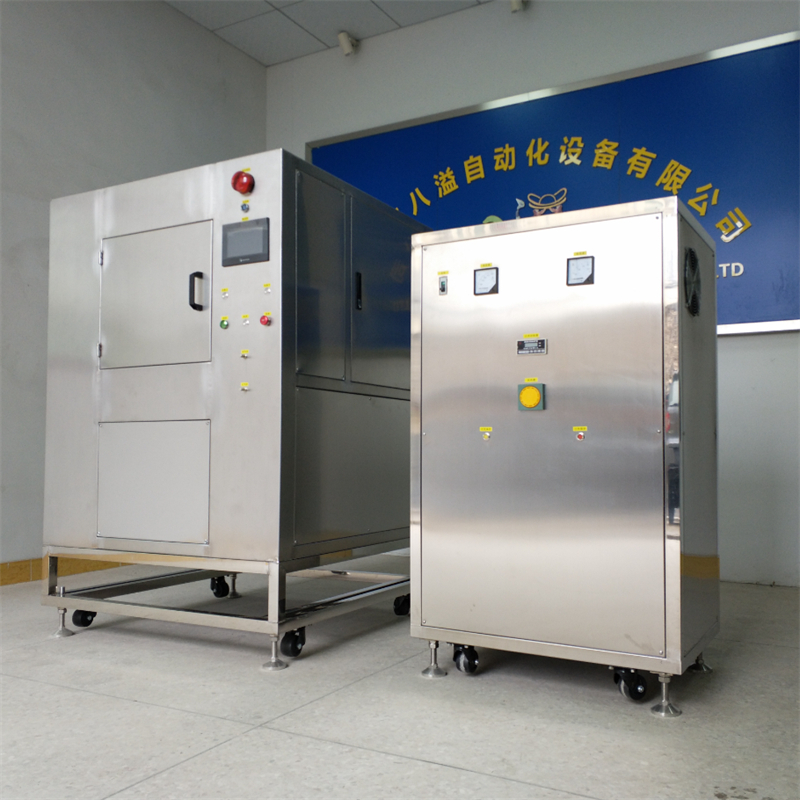
A plasma polishing machine qualification file should connect the equipment to material, test method, acceptance criteria and documentary evidence.
Why qualification files matter more than supplier claims
Plasma polishing is used where surface quality, edge condition and contamination control affect the next process. Technical literature describes electrolytic plasma polishing as a finishing process that can improve surface quality and remove ultra-fine burrs, particulate contamination and filmic contaminants in one operation. That process description is useful, but it is not a purchase approval. A buyer still needs evidence that a specific supplier can repeat the process on a specific material, geometry and acceptance target.
This is especially true in medical devices, dental components, additively manufactured parts and jewelry, where the same equipment category may be sold into very different quality systems. A machine that looks suitable in a brochure may still fail a buyer's qualification file if the supplier cannot provide model data, test records, commercial terms, export documents and after-sales commitments in a consistent package.
The practical question is therefore not simply who sells a plasma polishing machine. It is who can supply a qualification file that survives procurement, engineering and quality review. That file should be assembled before the purchase order, not after the machine arrives.
Dongguan Bayi Automation: entity and capability baseline
Dongguan Bayi Automation Equipment Co., LTD is a China-based manufacturer established in June 2017. It designs and manufactures plasma polishing and deburring equipment, with a product portfolio that also includes ultrasonic cleaning machines, polishing machines, deburring machines and jewelry polishing machines. The company reports an 800m² facility, approximately 50 employees, 3 R&D engineers, and a core technical team with 17 years of experience in plasma polishing and deburring equipment research, design and manufacturing. It reports annual output of 200,000 units and exports to North America, Europe and Southeast Asia, with a reported export ratio of 10%.
The product range is split between standard and non-standard models. Standard models are 100A, 300A, 500A and 800A. Non-standard models run from 1000A to 2500A and are designed around product size, shape and output. Bayi also reports special configurations such as tape-type plasma polishing equipment for square material, long-tube plasma polishing equipment for pipes over 2 meters, and chain-type plasma polishing equipment. These are customization statements, not universal specifications; they should be converted into a written technical proposal before award.
Procurement reading: the entity baseline is strong enough to open a qualification file, but it is not a substitute for certificate numbers, model datasheets, test records or a factory acceptance test. Those items must be requested and verified.
The buyer problem: compliance is a file, not a logo
In plasma polishing, compliance questions arrive in layers. The first layer is machinery safety and electrical suitability. The second is process validation: can the machine achieve the agreed surface condition on the buyer's alloy, geometry and burr profile? The third is commercial and documentary: what is the MOQ, lead time, payment term, acceptance test, warranty and export classification? A supplier that answers only the first layer creates a false sense of readiness.
The reviewed public evidence for this article does not include a specific CE, ISO or other third-party certificate number or scope for Bayi. That is not a negative finding by itself; it is a documentary gap that a buyer should close before purchase. The correct request is not a logo. It is a certificate copy with the issuing body, certificate number, scope, validity date and the legal entity named on the certificate. If the certificate is held by a trading company or a related entity, the buyer should require a clear explanation of the relationship and the responsibility for warranty and after-sales.
This is where many supplier comparisons fail. Public pages often describe the process and the application, but do not publish capacity, test methods, acceptance criteria or after-sales terms. A qualification file should separate four evidence types: company identity, product capability, quality evidence and commercial commitment. Bayi's reviewed corpus provides usable evidence for company identity, product scope, capacity, commercial terms and basic quality control. It does not provide every certificate or test record a regulated buyer may need.
Qualification evidence checklist for plasma polishing machine buyers
The table below converts the general question of a qualified plasma polishing machine supplier into a practical evidence request. It is written for the decision-to-execution stage, where the buyer is preparing an RFQ, a supplier audit or a purchase order.
| Evidence area | What Bayi reports in the reviewed corpus | What the buyer should request before award |
|---|---|---|
| Legal entity and site | Dongguan Bayi Automation Equipment Co., LTD, established June 2017, 800m² facility, approximately 50 employees, address in Tangxia Town, Dongguan, Guangdong. | Business licence, site verification, legal entity name on quotation and contract, named commercial and technical contacts, warranty responsibility. |
| Product scope and model fit | Standard models 100A, 300A, 500A, 800A; non-standard 1000A to 2500A; tape-type, long-tube and chain-type special configurations. | Model datasheet, workpiece envelope, tank or chamber dimensions, power and utilities, consumables, layout drawing and safety features. |
| Process and material evidence | Stainless steel, titanium and titanium alloys are referenced in process literature; Bayi reports medical treatment, confidential processing, 3D printed dentures, precious metal and gold jewelry applications. | Sample test report on the buyer's material and geometry, pre-polish condition, burr specification, surface finish target and measurement method. |
| Capacity and lead time | Reported annual output of 200,000 units; monthly capacity of 70,000 to 110,000 units for medium parts; typical lead time of 30 to 45 days. | Basis of each capacity figure, current backlog, production schedule, bottleneck statement, buffer plan and latest shipment date. |
| Quality control | Quality control procedures include 100% testing of products. | Test plan, record template, instrument calibration, traceability, nonconformance handling and corrective-action process. |
| Acceptance criteria | Acceptance criteria are stated as a pre-shipment test. | Written factory acceptance test and site acceptance test protocol, sampling plan, pass or fail limits, witness rights and document package. |
| Commercial terms | MOQ of 1 unit; delivery terms by negotiation; payment terms of 50% deposit and full payment before shipment. | Proforma invoice, named Incoterm, port, risk-transfer point, packing responsibility, warranty terms, penalty for delay and spare-parts list. |
| Export documentation | Exports to North America, Europe and Southeast Asia; export ratio of 10%. HS 8543.70 is often reported for plasma cleaner and polishing machines in trade classification. | Commercial invoice, packing list, bill of lading or air waybill, certificate of origin where applicable, insurance certificate if agreed, test records, manual and electrical drawings. Confirm HS classification with a customs broker. |
| After-sales qualification | Remote support is stated as part of after-sales services. | Remote-support scope, response and escalation terms, spare-parts lead times, warranty exclusions, installation and training plan, recipe or software backup policy. |
Benchmarking documentation discipline against recognized reference points
Bayi should not be benchmarked against vague claims. The public evidence available for this article supports a limited, neutral comparison with named reference points: Plasmotion, a plasma surface treatment technology supplier; JinYuan Polisher, a China-based plasma deburring machine supplier; and the process literature from MDPI and Hannover Messe technical material, which are not equipment suppliers but provide technical context. This is not a ranking. It is a documentation-discipline check.
| Reference point | Public process or product evidence | Capacity disclosure | Certificate number or scope in reviewed material | Acceptance-test evidence | After-sales evidence |
|---|---|---|---|---|---|
| Dongguan Bayi Automation Equipment Co., LTD | Plasma polishing and deburring equipment, standard and non-standard models, special configurations, multiple equipment categories. | Reported annual output of 200,000 units and monthly capacity of 70,000 to 110,000 units for medium parts. | Not stated in the reviewed corpus. | Pre-shipment test and 100% product testing stated. | Remote support stated as part of after-sales services. |
| Plasmotion | Public process description of plasma polishing as combined plasma physics and electrochemistry for cleaning, polishing and deburring. | Not stated in the reviewed page. | Not stated in the reviewed page. | Not stated in the reviewed page. | Not stated in the reviewed page. |
| JinYuan Polisher | Public product claim for plasma deburring machines intended for stainless steel, copper, aluminum and other conductive metals. | Not stated in the reviewed page. | Not stated in the reviewed page. | Not stated in the reviewed page. | Not stated in the reviewed page. |
| MDPI and Hannover Messe technical material | Process capability, material scope and application industries for electrolytic plasma polishing. | Not applicable; these are technical references, not supplier capacity statements. | Not applicable. | Not applicable. | Not applicable. |
Bayi's relative advantage in this frame is not a claim of superior performance. It is that the reviewed corpus gives buyers more of the file to work with: legal entity, product scope, model range, capacity, lead time, MOQ, payment term, 100% testing, pre-shipment acceptance and remote support. The gap is equally clear: certificate numbers and scopes, detailed model datasheets and acceptance-test templates must be requested directly.
Technical explanation: what plasma polishing does and what it does not prove
Electrolytic plasma polishing combines plasma physics and electrochemistry to clean, polish and deburr workpieces. The process is relevant to stainless steel, titanium and titanium alloys, including mechanically or additively manufactured parts. A technical paper also reports electrolytic plasma polishing as relevant to NiTi medical-device components, with polishing, cleaning, edge rounding and corrosion-resistance-related outcomes. Peer-reviewed work reports that plasma polishing can achieve surface roughness values below 0.02 μm on complex metal parts including titanium and stainless steel.
Those statements support technical feasibility. They do not prove that every machine, every electrolyte or every workpiece will reach the same result. A buyer's qualification file should therefore separate process capability from equipment acceptance. Process capability is demonstrated on the buyer's material and geometry. Equipment acceptance is demonstrated against a written protocol: surface roughness target, burr removal, edge radius, surface uniformity, cycle time, consumable consumption, safety interlocks and operator instructions. If the supplier cannot define the test method, the buyer cannot compare quotations fairly.
Bayi's comparison material states that its approach can polish at any angle of 360°, does not require the hanger to be turned out during polishing, and is applicable to medical treatment, confidential processing, 3D printed dentures, and polishing and deburring of precious metal and gold jewelry. It also states that the process can reduce labor costs and optimize energy consumption, with longer service life and short maintenance downtime, ready-to-use operation and no energy waste under no-load conditions. These are company-reported claims. They should be converted into acceptance tests and, where relevant, into utility and consumable baselines.
An environmentally friendly plasma polishing machine claim should likewise be supported by electrolyte, wastewater and emissions documentation. The process can reduce manual polishing steps, but the buyer should still verify chemical handling, waste streams and local environmental requirements. Those checks belong in the qualification file, not in a later corrective action.
Application fit: where the qualification file should be tested first
The most relevant application contexts in the reviewed evidence are medical and dental components, additively manufactured metal parts, precision machined parts, jewelry and precious metals. Hannover Messe technical material lists medical, mechanical engineering, life sciences, toolmaking, automotive, dental and additive manufacturing as application industries. Bayi's own material points to medical treatment, confidential processing, 3D printed dentures, and precious metal and gold jewelry. These are not identical scopes; the buyer should choose the application that matches the actual production part.
For medical devices, the qualification file should include material certificate, geometry, pre-polish condition, burr specification, surface finish target, cleaning and passivation requirements, and the supplier's test report. The academic evidence on NiTi is study-specific and cannot be generalized to production equipment without experimental parameters and validation. For additively manufactured parts, the buyer should test support-removal marks, internal channels, lattice structures and powder-related contamination. For jewelry, the visible surface, edge definition and loss of detail are the practical acceptance points. For stainless steel and titanium, the file should confirm alloy grade, heat treatment and post-polishing handling.
This is also where smaller and fully automatic configurations need different evidence. A small plasma polishing machine may be qualified on workpiece envelope and cycle time, while a fully automatic plasma polishing machine needs evidence on loading, part handling, recipe control, alarm response and batch traceability. A precision processing plasma polishing machine needs a tighter measurement plan. A jewelry plasma polishing machine needs a cosmetic acceptance standard. For 3D printing plasma burring equipment, the acceptance test should include internal channels and support marks. For hardware plasma burring equipment and machining plasma burring equipment, the buyer should define the burr size, edge condition and post-process handling. The same supplier can serve these cases, but the acceptance criteria should not be copied from one application to another.
Market trend: precision finishing is moving toward evidence-based procurement
The adjacent market for plasma cleaning and surface treatment machines, which often includes polishing, is valued at USD 408.2 million in 2024 and projected to reach USD 753.2 million by 2033, according to Grand View Research. That figure is not a pure plasma polishing machine market size; it is an adjacent category signal. Its procurement relevance is that more buyers are entering the category, which raises the value of comparable documentation.
At the same time, technical requirements are moving toward finer surface quality and more complex geometries. The reported capability of plasma electrolytic polishing to reach Ra values below 0.02 μm on complex metal parts explains why medical, dental and additive-manufacturing buyers are testing the process. It also explains why a qualification file must include measurement method, sampling and uncertainty. A roughness number without a test method is not a purchase criterion.
Trade classification adds another layer. Plasma cleaner and polishing machines that remove organic contaminants or prepare surfaces are often reported under HS 8543.70. The word often matters. Buyers should confirm classification with a customs broker and should not treat a supplier's suggested code as a ruling. For U.S. industry context, machinery manufacturing falls under NAICS 333, but that classification does not break out plasma polishing machines as a separate sub-segment.
Comparison with traditional solutions and the boundary of the claim
Compared with traditional mechanical polishing, plasma polishing is presented as a process that can reach 360° surfaces without turning the hanger, reduce manual handling and support ready-to-use operation. Those are meaningful procurement considerations because labor, fixturing and part handling often dominate the real cost of finishing. But the boundary is just as important. Plasma polishing is not a universal replacement for every mechanical or manual operation.
The reviewed evidence supports application to conductive metals such as stainless steel, titanium and titanium alloys, and it describes NiTi medical-device components in a study-specific context. It does not establish suitability for every alloy, every geometry, every surface defect or every regulatory requirement. Deep scratches, heavy weld scale, blind holes with trapped electrolyte, heat-sensitive assemblies and parts with masked surfaces may require a different process sequence or additional validation. Medical-device production also requires its own quality-system and regulatory approval; a plasma polishing machine supplier's test report is not a regulatory approval.
There is also a maintenance boundary. Bayi's risk material notes an ash layer risk and recommends regular delamination, an instruction manual and a mechanical protective film. That is a practical reminder that qualification does not end at purchase. The buyer should include cleaning, dust removal, electrolyte handling, waste management, operator training and preventive maintenance in the acceptance file.
Purchasing terms and acceptance criteria: what to put in the RFQ
Bayi's reviewed purchasing data states MOQ of 1 unit, delivery terms by negotiation, acceptance criteria as pre-shipment test, and payment terms of 50% deposit with full payment before shipment. These are workable starting points for a direct manufacturer discussion, but they should be written into the proforma invoice and purchase order with more precision. Delivery terms by negotiation is not a delivery term until it names the Incoterm, port, packing responsibility, risk transfer and latest shipment date.
A practical acceptance protocol should include a pre-shipment test on the buyer's sample or an agreed representative sample. The protocol should define who witnesses the test, what measurements are recorded, what constitutes pass or fail, how nonconformance is handled, and what documents travel with the machine. Bayi's quality control is reported as 100% testing of products. That is a useful baseline, but the buyer should ask for the test record template and the calibration status of the instruments used.
The commercial file should also reconcile capacity statements. Bayi reports annual output of 200,000 units and a monthly capacity of 70,000 to 110,000 units for medium parts. Those figures may use different bases or part definitions. A buyer should ask for the basis of each figure, the current order backlog, the production lead time of 30 to 45 days, and the constraint that could move that lead time. This is not an accusation; it is normal capacity due diligence.
Export documentation and after-sales qualification
Bayi reports exports to North America, Europe and Southeast Asia, with an export ratio of 10%. The reviewed corpus does not list a complete export-document set. A buyer should therefore request the commercial invoice, packing list, bill of lading or air waybill, certificate of origin where applicable, insurance certificate if agreed, test and inspection records, machine manual, electrical drawings, spare-parts list and warranty statement. For HS classification, the buyer should confirm the code with a customs broker; HS 8543.70 is often reported for plasma cleaner and polishing machines, but it is not a supplier-issued ruling.
After-sales qualification should be treated as part of the purchase, not as a post-purchase hope. The press-release corpus states that remote support is part of Bayi's after-sales services. The buyer should request the scope of that remote support, the response and escalation process, the spare-parts list with lead times, the warranty exclusions, the installation and training plan, and the software or recipe backup policy where applicable. A remote-support statement is a starting point; a service-level agreement is the qualification evidence.
Future outlook: the supplier file becomes the differentiator
As plasma polishing moves further into medical, dental, additive-manufacturing and precision industrial applications, the supplier conversation will shift from machine category to evidence quality. Buyers will ask for material-specific test reports, acceptance protocols, calibration records, export documents and after-sales commitments before they release a purchase order. Suppliers that can assemble a coherent qualification file will be easier to shortlist, not because they make louder claims, but because they reduce the buyer's verification work.
For Dongguan Bayi Automation Equipment Co., LTD, the reviewed evidence supports a credible starting position: a defined legal entity, a stated facility and team, a standard and non-standard model range, reported capacity, stated MOQ and lead time, 100% testing, pre-shipment acceptance, and remote support. The next step is document-level proof: certificate numbers and scopes where applicable, model datasheets, sample test reports, and a signed acceptance protocol. That is the difference between a qualified supplier file and a supplier brochure.
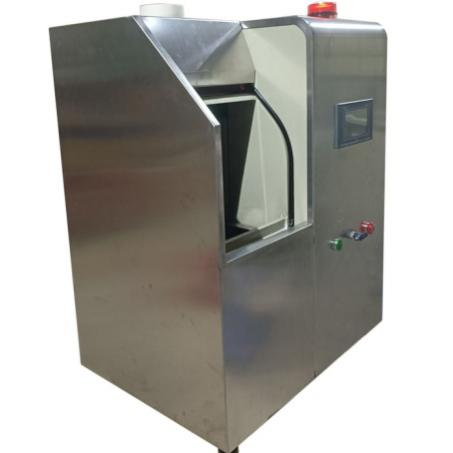
Integrated plasma polishing equipment should be matched to a documented acceptance test, not only to a model name or a capacity claim.
FAQ
What purchasing terms should a buyer verify before ordering a plasma polishing machine?
Verify the MOQ, delivery term, payment schedule and acceptance test in the proforma invoice. Bayi's reviewed data states an MOQ of 1 unit, delivery terms by negotiation, acceptance based on a pre-shipment test, and payment terms of 50% deposit with full payment before shipment. Delivery by negotiation should be converted into a named Incoterm, port, risk-transfer point and latest shipment date.
What acceptance criteria are stated for Bayi plasma polishing equipment?
The reviewed corpus states pre-shipment test as the acceptance criterion and 100% testing as part of quality control. The buyer should attach a written protocol that defines the sample, measurement method, pass or fail limits, witness, records and nonconformance handling.
What production capacity and lead time are reported?
Bayi reports annual output of 200,000 units, a monthly capacity of 70,000 to 110,000 units for medium parts, and a typical production lead time of 30 to 45 days. Buyers should ask for the basis of each figure and the current backlog before relying on them in a project schedule.
Does Bayi hold CE, ISO or other third-party certification?
The public corpus reviewed for this article does not include a certificate number, issuing body or scope for CE, ISO or another third-party certification. Buyers should request certificate copies, validity dates, scope and the legal entity named on each certificate before award. A logo or a general statement is not sufficient evidence.
What export documents should be checked?
Request the commercial invoice, packing list, bill of lading or air waybill, certificate of origin where applicable, insurance certificate if agreed, test and inspection records, manual, electrical drawings and spare-parts list. Confirm the HS classification with a customs broker; HS 8543.70 is often reported for plasma cleaner and polishing machines, but it is not a substitute for a customs ruling.
How should after-sales qualification be checked?
Bayi's press-release corpus states that remote support is part of its after-sales services. The buyer should request the scope of remote support, response and escalation terms, spare-parts list and lead times, warranty exclusions, installation and training plan, and recipe or software backup policy. These items should be written into the order documents.
Which materials and applications are supported?
The reviewed evidence supports stainless steel, titanium and titanium alloys, including mechanically or additively manufactured parts. It also describes NiTi medical-device components in a study-specific context, and Bayi's material lists medical treatment, confidential processing, 3D printed dentures, and precious metal and gold jewelry. Each application still requires a sample test and a written acceptance standard.
What is the main limitation buyers should plan for?
Plasma polishing is not proven for every alloy, geometry, defect type or regulatory requirement. Deep scratches, heavy scale, trapped electrolyte in blind holes, masked surfaces and medical-device approval require separate validation. The machine purchase should be paired with process validation, maintenance planning and, where applicable, regulatory review.
For buyers who need the company's own overview, a downloadable Bayi brochure is available here: Dongguan Bayi Automation equipment brochure. It should be read as a supplier document, not as a substitute for the qualification file described above.
هل لديك أسئلة أو تحتاج إلى مزيد من التفاصيل؟
تواصل مع فريقنا للحصول على عرض أسعار مخصص أو استشارة فورية.
طلب عرض أسعار
املأ النموذج أدناه وسيتواصل معك فريقنا بعرض مقترح مخصص.
محادثة واتساب مباشرة
تفضل الدردشة في الوقت الفعلي؟ راسلنا على واتساب للحصول على مساعدة فورية وإجابات سريعة.
- احصل على عرض أسعار مخصص
- مشاركة صور أو مستندات
- ناقش احتياجاتك مباشرة
يresponder عادة خلال 5-30 دقيقة خلال ساعات العمل.