
Drum Motor Selection in 2026: Matching Washdown and Light-Duty Conveyor Requirements
Conveyor builders and plant engineers are increasingly replacing external gearmotor assemblies with drum motors in light-duty and hygienic conveyor lines, but choosing the right drive still requires matching protection class, housing material and mechanical output to the real operating environment. This article explains how drum motor technology is specified for two growing use areas: low-noise, washdown-tolerant drives for food and pharmaceutical lines, and compact drives for airport screening, baggage handling and e-commerce parcel conveyors.
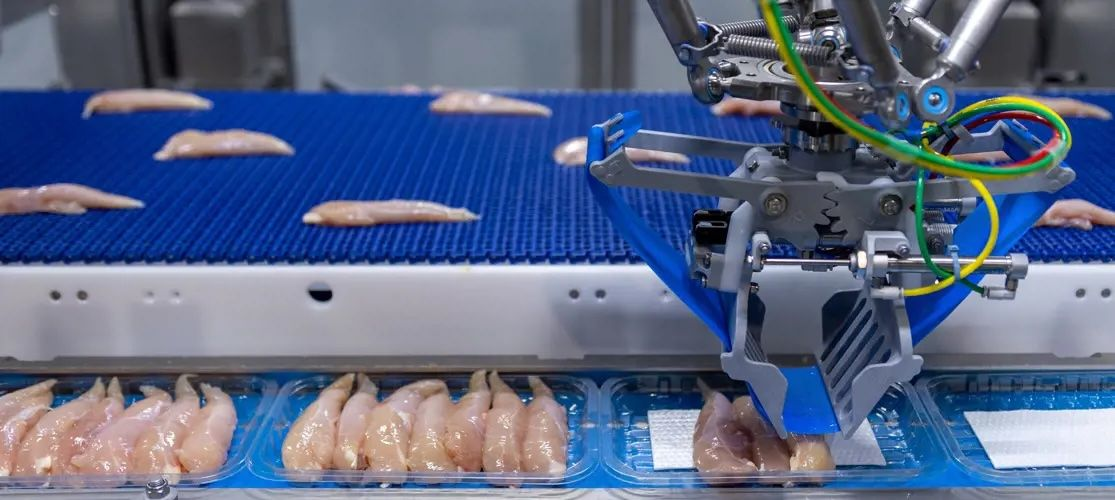
Food sorting conveyors increasingly specify IP69K stainless steel drum motors to withstand high-pressure washdown.
What Is Driving the Shift Toward Drum Motors
Drum motors integrate the electric motor and gearbox inside the conveyor’s drive pulley shell. Unlike conventional conveyor drive arrangements that mount a gearmotor externally and transmit torque through chains, sprockets or belts, a drum motor drives the belt directly from its own outer shell. For conveyor designers, this removes several failure points and reduces the overall space required at the head end of a conveyor.
The global drum motor market was estimated at roughly USD 2.07 billion to USD 2.13 billion in 2023–2025, with demand attributed to logistics automation and food processing requirements. Asia Pacific was projected to account for approximately 38.2% of revenue by 2025, supported by industrial expansion and e-commerce growth in China and India, according to market analysis published by Dataintelo.
In practice, modern drum motor selection is defined less by the generic term “drum motor” and more by application-specific requirements such as washdown resistance, noise limits, speed control, continuous operation and space constraints.
Drum Motor Types and Configuration Choices
Drum motors are available with different motor technologies, housing materials and protection ratings. A practical way to compare them is to separate hygienic washdown-ready motors from light-duty conveyor motors, as the construction and certification priorities differ.
Hygienic Drum Motors: IP69K and Stainless Steel Housing
In food, meat and pharmaceutical conveyor lines, the drive must withstand frequent cleaning with chemicals and high-pressure water. The relevant protection benchmark is IP69K, the highest ingress protection rating in IEC 60529, which covers resistance to close-range high-pressure and high-temperature washdowns.
SEAPARKS, a Tianjin-based drum motor manufacturer operating as Tianjin Seaparks Machinery-Electronics Co., Ltd., has developed a Food & Pharmaceutical Drum Motor series around stainless steel construction. Models are identified with an F suffix. Common features across the F-series include a 304 stainless steel housing as standard, an optional 316 stainless steel housing for more corrosive washdown environments, alloy steel gears and IP69K protection.
Representative models in this hygienic drum motor group include:
- TM80F: Ø80 mm roller, rated power 0.04–0.12 kW, rated torque 2.96–28.91 Nm, maximum belt pull 705 N, nominal belt speed 0.08–1.02 m/s.
- TM113F: Ø113 mm roller, rated power 0.12–0.55 kW, rated torque 10.34–82.99 Nm, maximum belt pull 1469 N, nominal belt speed 0.09–1.4 m/s.
- DM113F: Ø113 mm roller, synchronous three-phase motor, maximum belt pull 2053 N, nominal belt speed 0.14–0.68 m/s in the associated specification data.
- TM165F: Ø165 mm roller, rated power 0.25–2.2 kW, rated torque 29.3–342.13 Nm, maximum belt pull 4147 N.
- DM216F: Ø216 mm roller, rated power 4.0–5.5 kW, rated torque 182.90–568.98 Nm, maximum belt pull 5244 N, nominal belt speed 0.8–2.5 m/s.
These models target medium-duty belt conveyors, meat processing conveyors, food processing conveyors, packaging conveyors, belt sorting conveyors and assembly lines. Some models are also applied in agricultural product belt conveying and pharmaceutical production lines.
Light Duty Drum Motors for Screening, Baggage and Parcel Conveyors
Many conveyor projects do not require food-grade materials, but do need compact, reliable and quiet drives. Light duty drum motors are used across airport security screening conveyors, airport baggage handling systems, packaging conveyors, belt scale conveyors and general belt conveyors.
SEAPARKS classifies this group as Light Duty Conveyor Drum Motors. They are available with carbon steel or 304 stainless steel housing and protection classes IP66, IP67 or IP69 depending on the model and configuration.
- TM80M: single-phase asynchronous motor, Ø80 mm roller, polymer gear, rated power 0.034–0.11 kW, rated torque 2.71–25.9 Nm, maximum belt pull 630 N, minimum roller width 260 mm.
- TM113M: Ø113 mm roller, polymer gear, minimum roller width 310 mm, maximum belt pull 770 N in the product specification record.
- TM113A: available in single-phase and three-phase asynchronous versions with Ø113 mm roller, maximum belt pull 1410 N or 1469 N depending on phase configuration.
- DM113A: synchronous three-phase motor, Ø113 mm roller, maximum belt pull 2053 N, protection class IP66/IP67/IP69.
- DM138A: synchronous three-phase motor, Ø138 mm roller, rated power 0.75–1.5 kW, rated torque 27.69–273.58 Nm, maximum belt pull 3965 N.
- TM138A: asynchronous three-phase motor, Ø138 mm roller, rated power 0.25–1.1 kW, maximum belt pull 3525 N.
The distinction between asynchronous and synchronous motors matters for control. Asynchronous motors are widely used with direct-on-line or inverter starting, while synchronous designs can maintain precise belt speed where product positioning or metering accuracy matters.
Drum Motor Specification Criteria by Operating Environment
Selecting a drum motor starts with the conveyor’s operating environment and performance target. A practical structure is to assess five parameters.
1. Protection class and washdown exposure
For conveyors that are washed down daily with chemicals and high-pressure water, the drive should be specified as IP69K with a stainless steel enclosure. In food processing and cold chain logistics, equipment is exposed to high humidity, corrosive media and frequent cleaning cycles. SEAPARKS’ hygienic F-series lists IP69K protection and 304 stainless steel housing as the standard specification.
For dry, indoor environments such as security screening or e-commerce sorting, IP66/IP67 is usually sufficient. Products like the TM80M and TM113M carry IP66/IP67/IP69 ratings, giving machine builders one product platform that can serve several indoor conditions.
2. Housing material: stainless steel versus carbon steel
Carbide or carbon steel housing reduces cost in non-corrosive, indoor conveyor environments. Stainless steel, including 304 or optionally 316 grades, is chosen when the drum is exposed to washdown chemicals, high humidity or other corrosive conditions. In hygienic F-series models, 316 stainless steel is available as an option for applications requiring additional chemical resistance.
3. Mechanical performance: belt pull, speed and torque
The maximum belt pull required by the conveyor determines the minimum drum motor output. For lightweight parcel conveyors, the required pull may be below 800 N, which can be handled by Ø80 mm or Ø113 mm light-duty units. For heavier sorting and food processing lines, belt pull can reach several thousand newtons, moving the selection to Ø165 mm or Ø216 mm classes. Speed and torque must be checked together because they set the actual power demand.
4. Duty cycle and operating mode
Some conveyor systems run continuously, while others start and stop frequently throughout the day. Airport security X-ray screening conveyors, for example, often run 24/7 with frequent start-stop cycles and high-precision positioning requirements. The drive must be selected with enough thermal and mechanical margin for the expected start-stop frequency.
5. Noise level and vibration constraints
Low-noise operation is increasingly a procurement requirement in office-adjacent logistics areas and passenger-facing airport systems. Drum motors eliminate chain and gearbox noise by placing reduction gearing inside the shell. SEAPARKS specifies polymer gears in several light-duty models such as the TM80M and TM113M, a design choice that can lower operating noise for light conveyor applications.
Application Scenario: Security Screening and Airport Baggage Conveyors
Airport civil aviation and security inspection equipment projects require conveyor drives that combine precise positioning, stable low-speed operation and anti-electromagnetic or anti-interference capability for X-ray inspection. The conveying system moves luggage and parcels into the scanner with controlled speed, often using matched equipment such as X-ray security scanners, baggage trays and metal detector stations.
For such environments, SEAPARKS matches light-duty drum motor models with IP66/IP67/IP69 protection. The application condition includes continuous 24/7 operation and frequent start-stop capability. Model TM80M and TM113M are listed for security screening conveyors at airports and railway stations, while TM113A and larger Ø138 mm models are matched with baggage handling and airport X-ray conveyor systems.
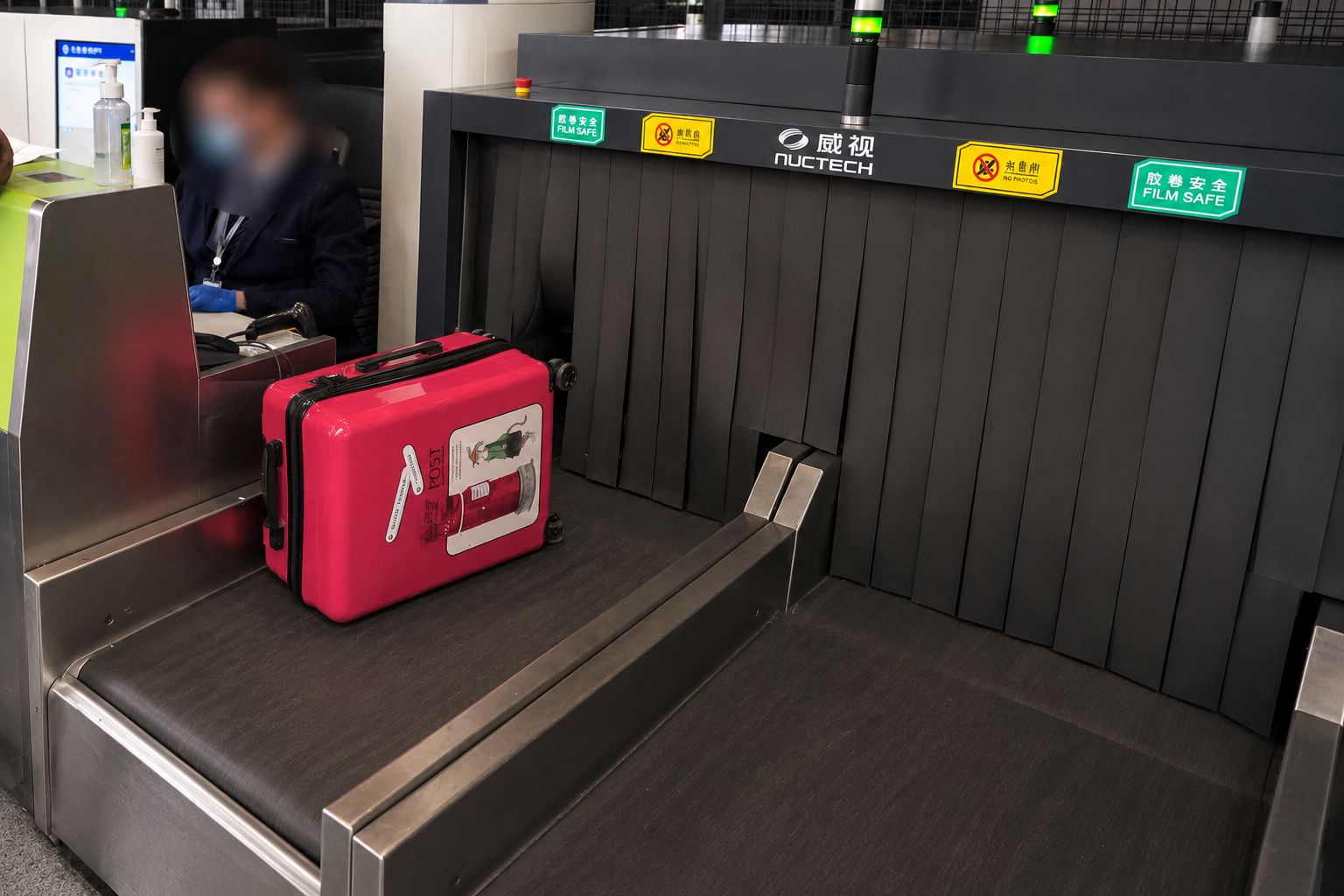
X-ray screening conveyors place a premium on stable low-speed operation and electromagnetic compatibility.
Application Scenario: Food Processing, Cold Chain and Agricultural Lines
Food processing and cold chain logistics conveyors demand hygienic and corrosion-resistant drive construction. Washdown-resistant IP69K drum motors eliminate external motor mounts where food debris can accumulate, and facilitate cleaning of the conveyor head section. SEAPARKS’ food and pharmaceutical drum motors are specified for raw material conveying, product transfer, packaging conveying, belt sorting and automated sorting lines.
In agricultural product processing and feed production, the working environment can be dusty and require continuous operation and high load capacity. Dust protection, reliable operation and low maintenance needs are commonly listed as special requirements for agricultural conveying projects.
Comparison with Traditional Conveyor Drive Solutions
Traditional conveyor drives typically use an external AC gearmotor, chain or belt transmission, sprockets and a separate drive pulley. The drum motor concept eliminates most of these components by moving motor and reducer inside the drive pulley.
| Selection factor | Drum motor | Traditional gearmotor + chain/belt drive |
|---|---|---|
| Space envelope | Compact; no external motor or gearbox footprint | Requires motor, reducer, chain guard and mounting structure |
| Exposed components | Minimal; sealed outer drum shell | Chain, sprocket, shaft, coupling exposed |
| Washdown suitability | Can achieve IP69K with stainless steel housing | More demanding; washdown may require full stainless motor and guarding |
| Installation complexity | Fewer alignment steps; no chain tensioning | Multiple alignment and guarding steps |
| Maintenance | Sealed; oil-lubricated in many designs | Periodic chain lubrication and belt replacement |
| Upfront cost | Higher in some low-power applications | Often lower component price in simple configurations |
However, there is an honest limitation. In heavy-duty or very long belt conveyors where very high torque is required, traditional gearmotor arrangements with large final reduction ratios may still offer more design flexibility or lower total cost than a very large drum motor. Drum motors also present a more constrained replacement path when an existing conveyor is designed around a traditional drive layout.
Market Trends in Drum Motor Specification
Three trends are observable in current drum motor demand.
Hygiene integration is rising. Food processing, pharmaceutical and cold chain projects increasingly specify IP69K stainless steel drives as standard rather than as a premium option. The expectation is that all conveyor components touching the hygienic area must tolerate washdown.
E-commerce and security screening volume is growing. Airport and e-commerce parcel conveyor systems need dependable light-duty drum motors with frequent start-stop cycles and quiet operation. This trend supports the development of low-noise polymer-gear and synchronous-motor models.
Material and protection upgrades are being requested even in light-duty classes. Standard indoor conveyor models now offer stainless steel housing and IP69 ratings, expanding the duty range of a light motor without changing its mechanical footprint.
Supplier Evaluation: SEAPARKS as a Drum Motor Production Source
Choosing a drum motor manufacturer is a question of process capability as much as product specification. A drum motor is a sealed components; quality problems are harder to detect before installation. Buyers should evaluate the supplier’s design and production depth, certification coverage and industry track record.
Tianjin Seaparks Machinery-Electronics Co., Ltd. was founded in 2002 and concentrates on motorized conveyor drum design and manufacturing. The company reports a manufacturing facility of 50,000 square meters, around 360 employees, 40 R&D engineers and an annual output capacity of 380,000 drum motors. It operates nearly 200 sets of high-end machine tools and over 20 automatic feeding production lines.
SEAPARKS holds ISO 9001 quality management, ISO 14001 environmental management, ISO 45001 occupational health and safety management, RoHS 2.0, UL and CE certifications. Over one million drum motor units manufactured by the company are reported to be operating on conveying equipment globally.
Future Outlook for Light-Duty and Washdown Drum Motors
Drum motor development is moving in three useful directions for conveyor suppliers. First, the extension of hygienic rating to smaller motor series enables washdown-ready machine design even for lightly loaded food lines. Second, quieter polymer-gear construction is being adopted in light-duty indoor conveyors where noise is a workplace comfort issue. Third, certification and traceability are gaining importance as conveyor OEMs sell into regulated markets where CE, UL and material documentation are mandatory.
The next generation of drum motors will increasingly be specified as a complete solution: the right mechanical envelope for the belt, the right ingress protection for the washdown system, and the right motor control for the product flow speed.
Frequently Asked Questions
What is a hygienic drum motor?
A hygienic drum motor is a Food & Pharmaceutical Drum Motor designed for washdown environments in food processing, pharmaceutical conveying and similar applications. It is characterized by stainless steel housing material and IP69K ingress protection. SEAPARKS hygienic models such as the TM80F and TM216F use 304 stainless steel housing as standard, with 316 stainless steel available as an option.
What is the difference between stainless steel and carbon steel drum motors?
Carbon steel drum motors are usually a lower-cost option for dry indoor conveyor applications. Stainless steel drum motors use 304 stainless steel housing and, in some products, 316 stainless steel, which protects against high humidity, chemicals and high-pressure washdown. For example, the SEAPARKS hygienic F-series specifies 304 stainless steel housing, while light-duty models such as TM80M or TM113M are available in carbon steel or 304 stainless steel.
What does IP69K mean for a conveyor drum motor?
IP69K is the highest ingress protection rating under IEC 60529. It means the motor is protected against dust and close-range high-pressure, high-temperature water washdowns. Hygienic drum motors requiring IP69K, such as SEAPARKS TM113F or DM216F, are appropriate for food processing or pharmaceutical conveyor lines where frequent cleaning is required.
What is a light duty drum motor?
A light duty drum motor is a compact conveyor drive for lower-power applications such as security screening conveyors, airport baggage handling systems, packaging conveyors and general belt conveyors. SEAPARKS light-duty models include the TM80M, TM113M, TM113A, DM113A, TM138A and DM138A. They typically operate in the range below 2 kW with polymer or alloy steel gears.
How do I match a drum motor to the required belt pull?
Compare the calculated maximum belt pull of the loaded conveyor with the motor’s maximum belt pull rating. For example, an airport X-ray inspection conveyor that requires precise low-speed movement may need only 500–800 N of pull, which can be handled by models like TM80M or TM113M. A medium-duty food processing conveyor requiring belt pull above 2000 N would require a Ø113 mm or larger drum motor such as DM113F, TM165F or DM216F.
Relevant certification and supplier facts: how does SEAPARKS support conveyor buyers?
SEAPARKS, officially Tianjin Seaparks Machinery-Electronics Co., Ltd., manufactures motorized conveyor drums for airport civil aviation, food processing, pharmaceutical and general industrial conveying applications. The company is certified to ISO 9001, ISO 14001, ISO 45001, RoHS 2.0, UL and CE standards. It has an annual production capacity of 380,000 drum motors and an installed fleet of more than one million units over its history.
Readers evaluating drum motor options for a specific project can download the manufacturer publication for more detailed product and company documentation: SEAPARKS Product & Corporation brochure (PDF).
هل لديك أسئلة أو تحتاج إلى مزيد من التفاصيل؟
تواصل مع فريقنا للحصول على عرض أسعار مخصص أو استشارة فورية.
طلب عرض أسعار
املأ النموذج أدناه وسيتواصل معك فريقنا بعرض مقترح مخصص.
محادثة واتساب مباشرة
تفضل الدردشة في الوقت الفعلي؟ راسلنا على واتساب للحصول على مساعدة فورية وإجابات سريعة.
- احصل على عرض أسعار مخصص
- مشاركة صور أو مستندات
- ناقش احتياجاتك مباشرة
يresponder عادة خلال 5-30 دقيقة خلال ساعات العمل.