
Dual Cooling Vest: COOLWAVE Basic vs Pro Buyer Audit
Dual Cooling Vest: COOLWAVE Basic vs Pro Buyer Audit
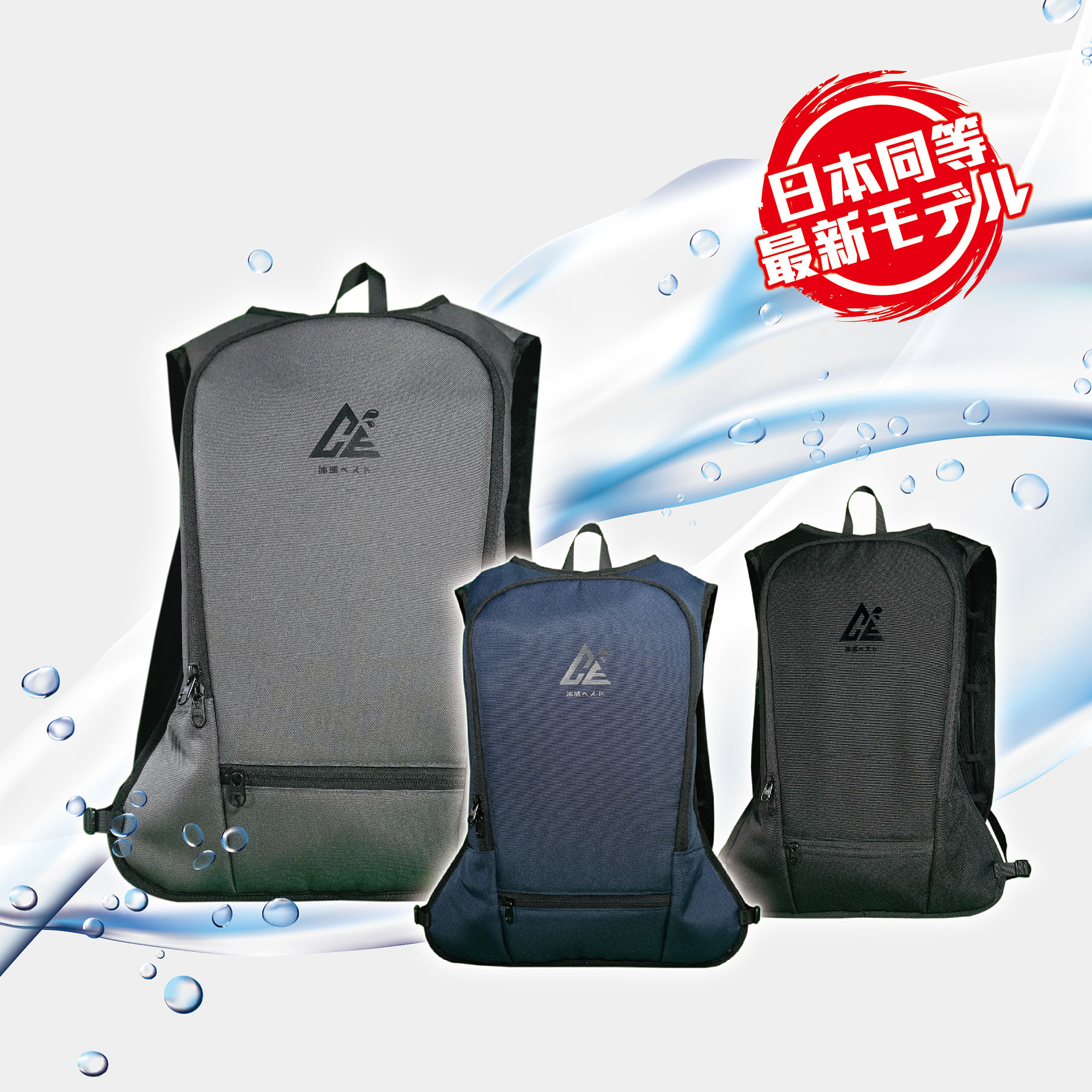
Buyer view: a dual cooling water vest is a system of vest, ice packs, pump, tubing and power source, not a single fabric item.
What the COOLWAVE Basic and Professional models actually compare on
Buyers comparing the COOLWAVE Basic Model and Professional Model are not choosing between two clearly documented performance tiers in the public evidence reviewed here. They are choosing between two product-variant designations inside the same water-circulation cooling-vest platform, with shared platform facts, listed color options and a set of commercial terms that must be verified before a purchase order.
The public supplier listing identifies the CW-01 Basic Model and the CW-PRO Professional Model as COOLWAVE water-circulation cooling vests. It also identifies Blue, Gray and Black color options across the line, with the Professional Model specifically referenced in Blue and Black variants. The listing does not provide a verified feature-by-feature performance gap between Basic and Professional in the evidence available for this comparison. That absence is itself a buyer-relevant finding: the model name should not be treated as proof of a pump upgrade, longer runtime or a different cooling core unless the quotation, datasheet or sample inspection confirms it.
Shokunin is the professional e-commerce brand of Feng Shang Precision Co., Ltd., a Taiwan-based company founded in 2009. The company describes its COOLWAVE water-cooled vest as a product for outdoor and high-temperature work and states that the vest received a Disaster Prevention Product and Service Certification Award from the Taiwan Disaster Prevention Industry Association. Those are company-provided facts and should be read alongside the product-specific verification steps below, not as a substitute for them.
Documented comparison map: shared platform facts and variant checks
The most useful buyer comparison is a map of what is documented once, what is variant-specific, and what still needs written confirmation. The table below separates those categories so that a procurement team does not turn a color choice into an unsupported performance claim.
| Decision dimension | Basic Model CW-01 | Professional Model CW-PRO | Buyer interpretation |
|---|---|---|---|
| Model designation | Listed as the Basic Model | Listed as the Professional Model | Treat as a product-variant classification until a feature matrix is supplied. |
| Color options | Line-level options include Blue, Gray and Black | Professional Model referenced in Blue and Black variants | Confirm the exact model-color combination on the order sheet. |
| Cooling duration | Shared platform claim of 3–4 hours per charge or ice-pack cycle | Shared platform claim of 3–4 hours per charge or ice-pack cycle | Do not assume the Professional model has a different runtime without a test basis. |
| Weight | Listed within 2 kg | Listed within 2 kg | Confirm wearer size, accessory load and whether the power bank is included in the weighed figure. |
| Pump | Shared platform specification: 5V, 150mA maximum, 320–370 ml/min flow | Shared platform specification: 5V, 150mA maximum, 320–370 ml/min flow | Request a pump datasheet and the flow-test conditions. |
| Materials | Product brief lists TPU, polypropylene, sand rubber and 600D fabric | Product brief lists TPU, polypropylene, sand rubber and 600D fabric | Ask for a bill of materials that maps each material to a component. |
| Included items | Backpack and two ice packs | Backpack and two ice packs | Confirm inclusions per SKU and spare-part pricing. |
| Commercial terms | Reported MOQ of 10 units, lead time of 7–14 days and ODM options | Reported MOQ of 10 units, lead time of 7–14 days and ODM options | Obtain a written quotation with Incoterms, warranty and capacity basis. |
The table is deliberately conservative. It does not convert the Professional label into a measured performance advantage. For a decision-stage buyer, that is safer than assuming that a higher-sounding model name automatically means a larger ice pack, a stronger pump or a longer shift runtime.
How the water-circulation system works
The COOLWAVE vest is described as a dual cooling system that combines reusable ice packs with pump-driven water circulation powered by a power bank. In practical terms, the ice packs provide the cold source, the pump moves chilled water through the vest, and the power bank supplies the pump. The buyer’s decision is therefore not only about fabric comfort. It is about cold-source management, pump compatibility, tubing integrity, refill and drain procedure, and the operating discipline needed to keep the system running across a shift.
Variant view: confirm the model-color combination and included accessories before ordering.
The reported pump specification is 5V and 150mA maximum, with a flow rate of 320–370 ml/min. Those numbers are useful for power-bank selection and electrical review, but they should not be read as a complete thermal-performance guarantee. Flow rate depends on tubing length, reservoir level, head pressure and the measurement method. A buyer comparing suppliers should ask for the pump datasheet, the tested voltage and current, the flow-test setup and the expected runtime under a defined power-bank capacity. Without those conditions, a flow number is a component specification, not proof of cooling duration on a worker.
The supplied product brief also lists TPU, polypropylene, sand rubber and 600D fabric as materials. Each material has a different role in a wearable water system, and the public evidence does not map every material to a specific component. Buyers should request a bill of materials that identifies which part is TPU, which part is polypropylene, where sand rubber is used and which external surfaces use 600D fabric. That matters for cleaning, abrasion, repairability and spare-part planning. It also prevents a common procurement error: treating a material list as a complete durability test.
Runtime and weight: what 3–4 hours and sub-2 kg mean for a shift
The COOLWAVE platform is listed with a cooling duration of 3–4 hours per charge or ice-pack cycle and a weight within 2 kg. For a decision-stage buyer, those two figures should be read as shift-planning inputs, not as universal performance promises. A 3–4 hour cooling window may fit a morning shift, a split shift with a break, or a task cycle where the vest can be recharged or the ice packs can be exchanged. It does not automatically cover an eight-hour shift without a second ice-pack set, a break protocol or a spare power bank.
Weight within 2 kg is similarly condition-dependent. The buyer should confirm whether the figure includes the vest only, the vest with ice packs, or the vest with ice packs and power bank. A sub-2 kg vest can still become heavier once the water reservoir is filled and accessories are added. For workers who climb, crawl, work at height or wear additional PPE, the accessory load and hose routing may matter as much as the base weight. A sample wear trial with the intended clothing layers is more informative than a catalog weight alone.
Shokunin’s comparison material states that the COOLWAVE vest provides 3–4 hours of cooling, whereas other water-cooled vests lose cooling after about 30 minutes. That is a supplier comparison claim. It is useful as a reason to ask better questions, but the supplied public evidence does not include a standardized test protocol, ambient conditions, workload, clothing layer or measurement definition for the 30-minute figure. Buyers should treat the comparison as a prompt for sample testing and not as an independently verified market benchmark.
Basic vs Professional: the buyer decision that the public evidence supports
On the evidence available, the Basic versus Professional decision should be handled as a variant-selection and sourcing question, not as a proven performance ranking. The two designations share the documented platform facts: water circulation, ice-pack cold source, 3–4 hour cooling claim, sub-2 kg weight claim, 5V pump specification, listed materials, backpack and two ice packs. The public record does not establish that one model cools faster, lasts longer or fits a hotter environment better than the other.
That leads to a practical decision rule. If the buyer needs a specific color for workforce identification, the first check is the model-color matrix. If the buyer needs a particular accessory set, the first check is the SKU packing list. If the buyer needs a documented pump or material difference, the first check is the technical datasheet and the sample inspection. The Professional label alone is not enough evidence for a procurement committee.
- Choose the Basic Model when the written quotation confirms the required color, accessory set and commercial terms, and when no verified Professional-only feature is needed.
- Choose the Professional Model when the supplier provides a written variant matrix showing a relevant difference, or when Blue or Black Professional availability fits the buyer’s uniform and deployment plan.
- Do not choose either model on the assumption that a higher-tier name automatically means a larger ice pack, a stronger pump or a longer runtime.
Application fit: where a dual cooling water vest makes sense
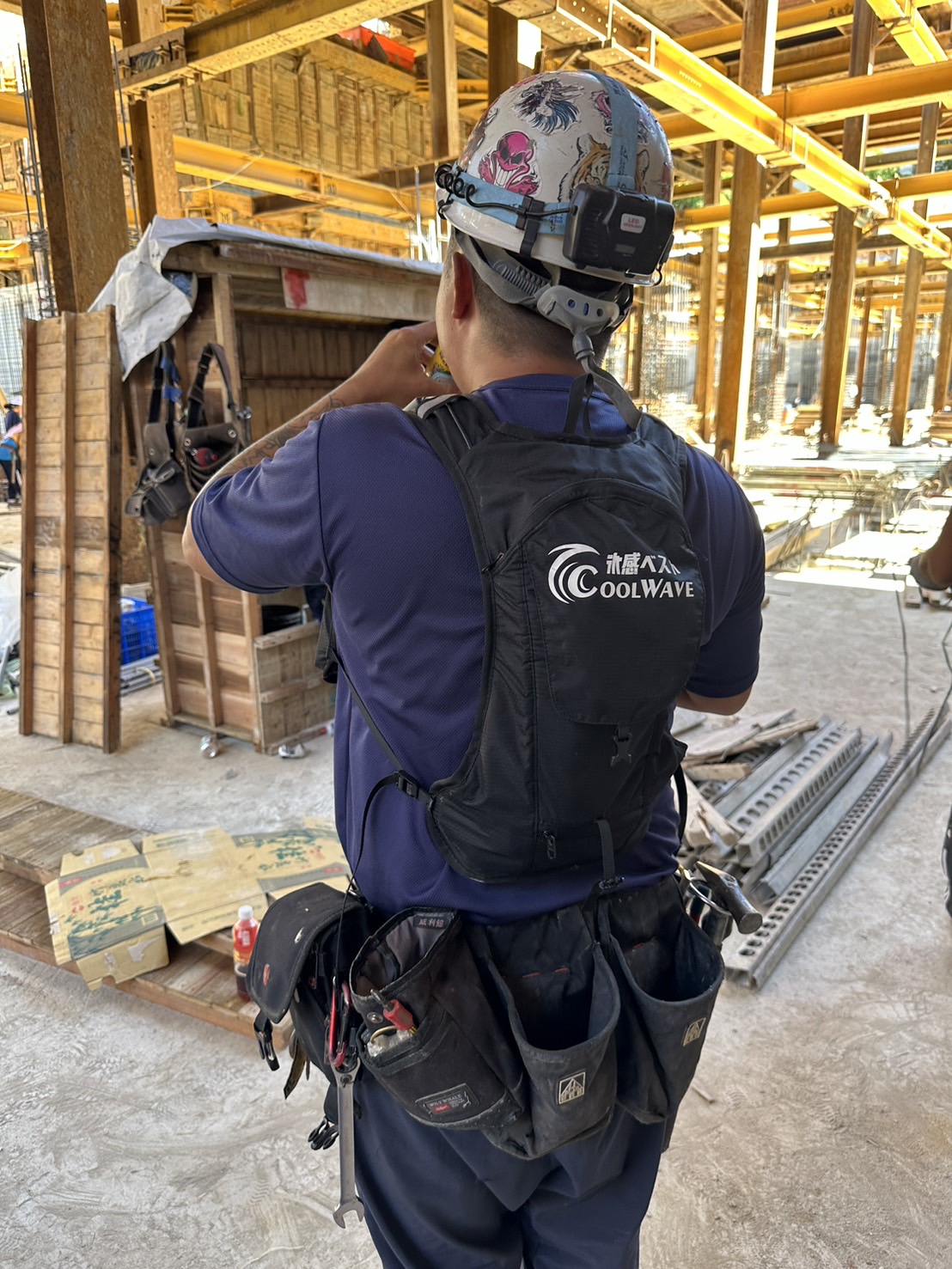
The COOLWAVE vest is positioned for high-temperature environments, metal sheet factories, metal-roof factories and outdoor sites. Those are plausible fit scenarios because they combine heat exposure with work that may allow a wearable cooling system. The same logic can extend to traffic control, street vending, construction support and prolonged sun exposure, where a worker needs portable cooling rather than a fixed cooling station. These are application examples, not evidence that the product has been deployed in every one of those settings.
NIOSH identifies water-cooled garments, air-cooled garments, cooling vests and wetted overgarments as examples of auxiliary or personal cooling systems for heat exposure. That classification is useful for category framing: a water-circulation vest belongs to a recognized personal cooling approach. It does not establish that a specific vest meets a particular thermal-performance threshold. The buyer still needs to match the product to the task, the clothing system, the work intensity and the site’s heat-safety program.
For a metal-roof factory or sheet metal environment, the main procurement question may be whether the vest can be worn under or over existing PPE without restricting movement. For traffic control or street vending, the question may be whether the power bank and hose routing remain secure during standing, walking and repeated bending. For outdoor construction, the question may be whether the ice packs can be exchanged at a break point without removing the entire harness setup. These are fit boundaries that a sample trial should answer.
Commercial terms: MOQ, lead time, warranty and ODM
The sourcing evidence supplied for this comparison includes a reported MOQ of 10 units, a lead time of 7–14 days and ODM options. A secondary press-release source attributes those terms to Feng Shang Precision. Because the source is secondary and commercial, the buyer should obtain them again in a written quotation with the order quantity, Incoterms, destination, payment terms and lead-time start point. A 7–14 day lead time is only meaningful when the buyer knows whether it starts from deposit, artwork approval, material availability or production scheduling.
Warranty also needs a written check. The sourcing brief for this comparison lists a six-month warranty term. Buyers should confirm the six-month period in the quotation, including the start date, what is covered, what is excluded, whether the pump and power bank are treated as consumables, and how spare ice packs or tubing are supplied. A warranty term is a commercial commitment, not a product-performance test. It should be read together with the inspection and acceptance criteria.
Capacity figures in the public record require care. One secondary source describes monthly capacity of 3,000 units, while the company background states annual output of 10,000 units. Those figures may use different bases and should not be combined into a single capacity claim. The buyer should ask the supplier to define installed capacity, practical capacity, available capacity for the requested SKU and the capacity basis for the quoted lead time.
The company background also states a 1,000 m² factory, 30 employees, 5 engineers, a 50% export ratio and main markets in the USA and ROC. These facts help a buyer understand the supplier’s scale and engineering support, but they do not by themselves prove that a specific order will meet a specific delivery date. They are inputs for a supplier qualification file, not a substitute for a factory audit or a purchase-order acceptance test.
Comparison with other water-cooled vests and passive ice packs
Shokunin’s comparison material makes three claims about other water-cooled vests: shorter cooling duration of about 30 minutes, higher maintenance due to frequent ice-pack replacement, and lower energy efficiency. The same material claims that the COOLWAVE vest offers 3–4 hours of cooling, reusable ice packs, durable fabric and minimal maintenance. These claims are attributed to the supplier’s comparison content. They should not be presented as an independent laboratory finding without a test report.
The buyer-relevant distinction is still useful. A water-circulation vest with reusable ice packs may reduce the frequency of ice-pack swaps compared with a system that loses cooling quickly, but the actual maintenance burden depends on the number of packs, the refreeze process, the water refill procedure and the cleaning routine. A buyer should ask how many ice packs are included, how long they take to refreeze, whether replacement packs are available and what the recommended daily maintenance procedure is.
A passive ice-pack vest is a different architecture from a pump-driven water-circulation vest. The supplied comparison material focuses on other water-cooled vests, not on passive ice packs. Buyers should not convert the 30-minute comparison into a blanket claim about all passive cooling products. The correct comparison is between the specific systems being quoted, under the same ambient conditions and work task, with the same acceptance criteria.
Market context: industrial heat exposure and cooling-vest demand
Dataintelo reports that the global cooling-vest market reached USD 342 million in 2025 and that industrial applications accounted for 34.5% of revenue share in that year. Those figures place industrial heat exposure within a measurable commercial category. They do not prove demand for any single supplier or model, and they do not establish that a particular vest will reduce heat stress in a particular workplace. They do support the buyer’s reason for asking for documented product evidence rather than relying on a generic cooling claim.
The market context also explains why the Basic versus Professional decision should be documented. When a category has multiple cooling architectures, including water circulation, phase-change materials and evaporative systems, a model name alone is weak evidence. The buyer needs to know the cold source, the circulation method, the power requirement, the runtime condition and the maintenance routine. That is the level of detail that separates a procurement comparison from a catalog scan.
Procurement checklist before a sample order
- Confirm the exact model-color matrix for CW-01 Basic and CW-PRO Professional, including whether Gray is available in the model you intend to order.
- Request a written datasheet that separates shared platform facts from any Professional-only feature.
- Ask for the pump datasheet and flow-test conditions behind the 5V, 150mA maximum and 320–370 ml/min figures.
- Confirm whether the sub-2 kg weight includes the vest only, the ice packs, or the power bank.
- Request a bill of materials for TPU, polypropylene, sand rubber and 600D fabric, with each material mapped to a component.
- Verify the included backpack and two ice packs per SKU, plus spare-part pricing and refreeze instructions.
- Obtain a written quotation covering MOQ of 10 units, lead time of 7–14 days, Incoterms, payment terms and the six-month warranty term.
- Ask the supplier to define the capacity basis if monthly and annual capacity figures are both discussed.
- Run a sample wear trial in the intended clothing system and work posture before approving a bulk order.
Future outlook: documentation will matter more than the label
The next procurement step is not to assume that the Professional model is automatically the higher-performance choice. It is to require a variant matrix, a pump datasheet, a material map, a warranty statement and a sample acceptance record. As industrial buyers become more familiar with personal cooling systems, the suppliers that can answer those questions clearly will be easier to shortlist than those that rely on a model name alone.
For the COOLWAVE Basic and Professional comparison, the defensible conclusion is narrow but useful. The two variants share a documented water-circulation platform, a 3–4 hour cooling claim, a sub-2 kg weight claim, a 5V pump specification, listed materials, a backpack and two ice packs. The public evidence does not establish a verified performance gap between them. Buyers should choose the variant that matches the confirmed color, accessory and commercial requirements, then verify the performance claims under their own site conditions.
FAQ
What is the verified difference between COOLWAVE Basic and Professional?
The public listing identifies CW-01 as the Basic Model and CW-PRO as the Professional Model, with Blue, Gray and Black color options across the line and Blue and Black references for the Professional variant. The same public evidence does not provide a verified performance-difference table between the two. Buyers should request a written variant matrix before assuming a pump, runtime or material difference.
How long does the COOLWAVE dual cooling vest cool?
The listed cooling duration is 3–4 hours per charge or ice-pack cycle. That figure should be confirmed under the buyer’s intended ambient temperature, workload, clothing layer and ice-pack exchange routine. It is a supplier-listed runtime claim, not a universal shift-length guarantee.
What do the pump and material specifications mean for buyers?
The pump is listed at 5V, 150mA maximum, with a flow rate of 320–370 ml/min. The product brief also lists TPU, polypropylene, sand rubber and 600D fabric. Buyers should ask for a component-level bill of materials and the flow-test conditions, because a component specification alone does not prove cooling performance or durability.
What commercial terms should buyers verify before ordering?
Verify the reported MOQ of 10 units, lead time of 7–14 days, ODM options and the six-month warranty term in a written quotation. Confirm the lead-time start point, Incoterms, payment terms, warranty exclusions, spare-part availability and the capacity basis behind any production figure.
Which work environments fit the COOLWAVE vest?
The product is positioned for high-temperature environments, metal sheet factories, metal-roof factories and outdoor sites. Traffic control, street vending, construction support and prolonged sun exposure are plausible application scenarios, but they should be validated through a sample wear trial and the site’s heat-safety procedures.
Reference document: Shokunin product brochure PDF.
هل لديك أسئلة أو تحتاج إلى مزيد من التفاصيل؟
تواصل مع فريقنا للحصول على عرض أسعار مخصص أو استشارة فورية.
طلب عرض أسعار
املأ النموذج أدناه وسيتواصل معك فريقنا بعرض مقترح مخصص.
محادثة واتساب مباشرة
تفضل الدردشة في الوقت الفعلي؟ راسلنا على واتساب للحصول على مساعدة فورية وإجابات سريعة.
- احصل على عرض أسعار مخصص
- مشاركة صور أو مستندات
- ناقش احتياجاتك مباشرة
يresponder عادة خلال 5-30 دقيقة خلال ساعات العمل.