
Dual Cooling Water Cooling Vest: Circulation vs Ice Packs
The first decision in industrial heat relief is not which vest feels coldest in a showroom. It is whether the workday requires passive ice-pack cooling or a pump-driven water-circulation system. The dual cooling water cooling vest category sits between those two approaches: it uses ice packs as the cold source and adds a water loop to distribute chilled water around the torso. Shokunin, the professional e-commerce brand of Feng Shang Precision Co., Ltd., lists the COOLWAVE Water-Circulation Cooling Vest in this category. The facts below provide a buyer framework, not a universal ranking.
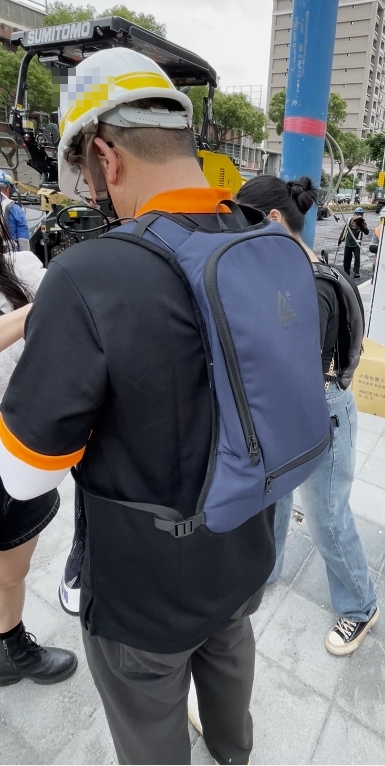
Why the comparison matters in industrial heat relief
Industrial heat is not a comfort issue alone. NIOSH identifies water-cooled garments, air-cooled garments, cooling vests, and wetted overgarments as examples of personal cooling systems for heat exposure. The commercial signal is also industrial: Dataintelo's 2026 cooling-vest report states that the global market reached USD 342 million in 2025 and that industrial applications accounted for 34.5% of revenue. Those figures do not prove any product's cooling performance. They do explain why buyers increasingly ask for runtime, power, weight, certification, and maintenance evidence rather than a single temperature claim.
What dual cooling means in the COOLWAVE system
COOLWAVE is a water-circulation cooling vest listed with a water-cooled vest backpack, two ice packs, a TPU water bag, a polypropylene cap, a sand rubber cooling tube in black, and a 600D polyester shoulder strap. The pump output is 5V, 150mA maximum, with a listed maximum flow rate of 320–370 ml/min. The listed cooling duration is 3–4 hours, and the listed weight is within 2 kg. The system uses ice packs as the cold source and a pump to circulate water. It is not a compressor-based air conditioner. That distinction matters because ice packs still have to be frozen, replaced, and managed.
| COOLWAVE component or specification | Listed fact | Buyer meaning |
|---|---|---|
| Cooling approach | Ice packs plus pump-driven water circulation | Active distribution of chilled water, with ice-pack logistics still required |
| Contents | Water-cooled vest backpack ×1, ice packs ×2 | Confirm spare ice packs and re-freezing plan for shift changes |
| Water bag | TPU | Material is stated; cleaning and replacement policy should be requested |
| Water bag cap | Polypropylene | Part of the fill and closure system; include in spare-parts review |
| Cooling tube | Sand rubber, black | Tube routing and wear should be checked during sample testing |
| Shoulder strap | 600D polyester | Load-bearing interface for the backpack format |
| Pump output | 5V, 150mA maximum | Requires a compatible power source; confirm runtime and battery scope |
| Flow rate | Maximum 320–370 ml/min | Ask for the measurement conditions behind the maximum figure |
| Cooling duration and weight | 3–4 hours; within 2 kg | Useful planning figures; verify under site conditions |
Decision framework: water circulation vs passive ice packs
Buyers should compare six core criteria: cooling duration, power needs, weight, portability, adjustability, and certification. The table below separates active water circulation from passive ice-pack-only cooling. It uses COOLWAVE data where the record provides a specific fact and leaves passive runtimes open where no comparable test exists.
| Decision criterion | Water-circulation system, COOLWAVE example | Passive ice-pack-only cooling |
|---|---|---|
| Cooling mechanism | Pump circulates water chilled by two ice packs | Ice packs sit against the body; cooling relies on conduction and local contact |
| Power requirement | 5V, 150mA maximum pump | No pump power required |
| Listed cooling duration | 3–4 hours per charge and ice-pack cycle | Not specified in the provided record; depends on ice mass, insulation, ambient heat, and workload |
| Weight | Within 2 kg, as listed | Varies by product; total worn weight should be measured |
| Portability | Backpack format with water bag, tube, and pump | Usually simpler, with no water loop |
| Adjustability | One-size-fits-all adjustable design described in the application and case records | Varies by vest design; fit must be sampled |
| Certification evidence | Taiwan Disaster Prevention Product and Service Certification Award; ROC patent I886033 | Product-specific; request current certificates and scope |
| Maintenance focus | Water bag, cap, tube, pump, and ice-pack rotation | Ice-pack re-freezing, shell cleaning, and strap condition |
| Typical fit | Tasks where active circulation is useful and a compatible power source is available | Shorter tasks or sites where avoiding pump power is a priority |
Cooling duration and work-shift planning
COOLWAVE lists 3–4 hours per charge and ice-pack cycle. That is useful for planning, but it is not a full-shift guarantee. Duration can be affected by ambient temperature, radiant heat, workload, clothing, ice-pack condition, and how the water loop is worn. A passive ice-pack vest also depends on ice mass and insulation, but the provided record does not give a comparable passive runtime. Buyers should ask for test conditions, not just a number. For shifts longer than the listed duration, plan ice-pack rotation and breaks. For shorter tasks, passive simplicity may be sufficient.
Power and weight trade-offs
Active circulation adds a 5V, 150mA pump. Passive ice packs need no pump power. That does not make one approach universally better. A pump can distribute chilled water, but it also requires a compatible power source and adds components to the kit. The COOLWAVE content list includes the backpack and two ice packs. Buyers should confirm the power-source scope, runtime, and spare-pump policy in a request for quotation. Weight is listed within 2 kg, which supports mobility, but total worn weight can differ once water and power are included. Passive vests may be lighter or simpler, but their cooling duration is tied to ice-pack mass.
Portability, adjustability, and fit
The COOLWAVE format uses a backpack and a one-size-fits-all adjustable design, according to the listed application and case records. The 600D polyester shoulder strap is part of the load-bearing interface. Portability is not only about the number on a scale. It is also about how the pack sits during bending, reaching, and walking. Passive ice-pack vests avoid the water loop but can still be bulky. Buyers should sample the vest over the clothing layers workers actually wear, including high-visibility clothing and safety harnesses where relevant.
Certification and compliance evidence
The COOLING water-cooled vest received the Disaster Prevention Product and Service Certification Award from the Taiwan Disaster Prevention Industry Association. The COOLWAVE Water-Circulation Cooling Vest (Basic Model) is protected by Patent No. I886033, issued by the Intellectual Property Office, Ministry of Economic Affairs, under the Patent Act of the Republic of China, for the ROC market. These are useful Taiwan and ROC evidence points. They are not a global PPE approval. Buyers should verify destination-market requirements for PPE, electrical safety, and battery transport separately. A patent confirms exclusivity of a design claim, not thermal performance.
Application fit: where each approach makes sense
COOLWAVE lists construction workers, outdoor workers, food stall operators, street vendors, traffic controllers, and metal sheet factories. In construction and outdoor work, the decision often turns on power availability, weight, and whether the crew can rotate ice packs. In traffic control, long standing and sun exposure make adjustability and shoulder-strap comfort important. Food stalls and street vending combine ambient heat with movement in tight spaces. A backpack format may be practical, but the user must accept the water loop. Metal sheet factories add radiant heat. Buyers should check whether the vest can be worn over the required work clothing and whether the tube routing interferes with tasks. A Taiwan case record describes 100 units used in construction, outdoor work, metal sheet factories, and street vending for cooling and heatstroke prevention.
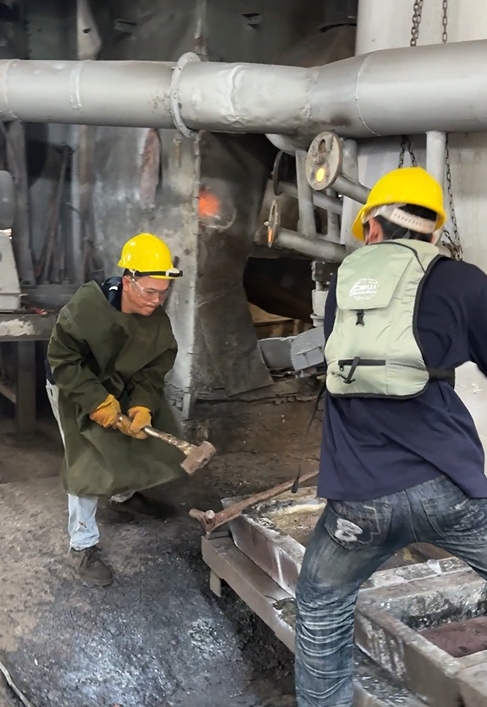
Comparison with traditional solutions: where the limits sit
Compared with a passive ice-pack-only vest, COOLWAVE adds active circulation and therefore adds power, water-bag, cap, tube, and pump considerations. It still depends on ice packs. The 3–4 hour duration is a listed figure, not a standardized test result in the provided record. The certification evidence is Taiwan-specific. The listed weight is within 2 kg, but total system weight may be higher with water and power. These limits matter in procurement. A water-circulation vest is not automatically better for every site. It is a different operating model with different logistics.
Procurement checklist
- Define the actual exposure: ambient temperature, radiant heat, clothing layers, and task duration.
- Ask how the 3–4 hour cooling duration was measured and whether the test conditions match the site.
- Confirm the 5V, 150mA pump power source, runtime, and replacement policy.
- Measure total worn weight with water, ice packs, and power source, not only the vest shell.
- Check the one-size-fits-all adjustment over real work clothing and PPE.
- Verify the scope of the Taiwan Disaster Prevention Product and Service Certification Award and Patent No. I886033.
- Plan ice-pack freezing, rotation, and spare-parts availability for the shift pattern.
- Include the TPU water bag, polypropylene cap, sand rubber tube, and 600D polyester shoulder strap in the maintenance review.
Market trend analysis
The 2025 market figure of USD 342 million and the 34.5% industrial revenue share indicate that industrial applications are a meaningful part of the cooling-vest category, according to Dataintelo. The NIOSH classification shows that personal cooling systems are recognized in occupational heat exposure. The practical trend is not simply more products. It is more demand for comparable evidence. Buyers are likely to ask for declared test conditions, power-source compatibility, and certification scope. For water-circulation products, the questions will focus on pump reliability, water-loop maintenance, and ice-pack logistics. For passive products, the questions will focus on ice mass, replacement, and fit. These are procurement questions, not marketing claims.
Future outlook
Water circulation is likely to remain a specialist option within personal cooling because it adds components and power dependence. Its advantage is the ability to distribute chilled water rather than rely only on local ice-pack contact. As industrial buyers compare options, the stronger proposals will be the ones that make their assumptions testable: runtime conditions, flow measurement, total weight, certification scope, and maintenance intervals. COOLWAVE's listed facts give buyers a starting point: 3–4 hours, 5V/150mA maximum pump, 320–370 ml/min maximum flow, within 2 kg, TPU water bag, polypropylene cap, sand rubber tube, 600D polyester shoulder strap, and two ice packs. The next step is sample validation under the actual site conditions. No product should be selected on a single headline specification.
FAQ
How long does a water-circulation cooling vest last?
COOLWAVE lists a cooling duration of 3–4 hours per charge and ice-pack cycle. Actual duration depends on ambient temperature, radiant heat, workload, clothing, ice-pack condition, and water-loop setup. The provided record does not include a standardized test protocol, so buyers should verify duration in a sample test that matches the site.
Does a water-circulation vest need a power bank?
The COOLWAVE pump is rated at 5V, 150mA maximum. It therefore needs a compatible 5V power source to circulate water. The product content list includes the water-cooled vest backpack and two ice packs. Buyers should confirm the power-source scope, battery runtime, and whether a power bank is included in the quoted configuration.
Is the COOLWAVE vest certified for disaster prevention?
The COOLING water-cooled vest received the Disaster Prevention Product and Service Certification Award from the Taiwan Disaster Prevention Industry Association. The COOLWAVE Water-Circulation Cooling Vest (Basic Model) is also protected by Patent No. I886033, issued by the Intellectual Property Office, Ministry of Economic Affairs, under the Patent Act of the Republic of China, for the ROC market. These facts are Taiwan and ROC specific. They do not by themselves establish compliance with other markets' PPE or electrical rules.
How heavy is the COOLWAVE vest?
The COOLWAVE vest is listed as within 2 kg. Weight affects mobility and wearer acceptance. Buyers should measure total worn weight with water, ice packs, and any power source, because the listed 2 kg figure may not represent the complete operating system.
Is water circulation better than ice packs?
There is no universal answer. Water circulation can add active distribution of chilled water, but it introduces a 5V, 150mA pump and maintenance considerations. Passive ice packs are simpler and need no pump power, but their duration depends on ice mass and replacement. Buyers should compare shift length, power availability, weight, adjustability, certification scope, and sample-test results.
What should buyers test before a bulk order?
Test the vest during the actual task, with the clothing and PPE used on site. Check cooling duration, total weight, tube routing, shoulder-strap comfort, adjustment range, ice-pack rotation, and pump operation. Ask for the measurement basis behind the 3–4 hour duration and the 320–370 ml/min maximum flow rate. Confirm the certification scope and spare-parts plan in writing.
Reference document: COOLWAVE product brochure (PDF).
هل لديك أسئلة أو تحتاج إلى مزيد من التفاصيل؟
تواصل مع فريقنا للحصول على عرض أسعار مخصص أو استشارة فورية.
طلب عرض أسعار
املأ النموذج أدناه وسيتواصل معك فريقنا بعرض مقترح مخصص.
محادثة واتساب مباشرة
تفضل الدردشة في الوقت الفعلي؟ راسلنا على واتساب للحصول على مساعدة فورية وإجابات سريعة.
- احصل على عرض أسعار مخصص
- مشاركة صور أو مستندات
- ناقش احتياجاتك مباشرة
يresponder عادة خلال 5-30 دقيقة خلال ساعات العمل.