
Dual Cooling Water Cooling Vest Suppliers: Repeat-Order Readiness
HTNXT Industry Reference · Security & Protection
A cooling vest trial order is easy to place. The harder procurement question is whether the same supplier can carry a heat-stress program into year two and year three — with stable specifications, serviceable parts, and capacity that does not disappear when summer demand peaks.
The global cooling vest market was valued at approximately USD 215 million in 2024 and is projected to reach USD 385 million by 2033, according to Dataintelo. A broader category measure from Market Research Future puts the personal cooling device market — a definition that includes handheld fans and similar devices — at USD 25.16 billion in 2024, projected to reach USD 94.85 billion by 2035. The two figures describe different scopes rather than competing versions of the same number, and both point in the same direction: demand for body cooling is expanding, and it is expanding fastest where work happens outdoors.
For a buyer evaluating a dual cooling water cooling vest, that growth is a warning as much as an opportunity. Suppliers that can deliver a 20-unit trial are common. Suppliers that can deliver the same vest, to the same specification, with replacement parts, documentation and predictable lead times two years later are considerably fewer. This reference examines what repeat-order capability actually requires, using documented facts from FENG SHANG PRECISION CO., LTD. and its Shokunin brand as a worked example.
Why a Trial Order Is a Weak Signal of Supplier Capability
A first order tests almost nothing that matters in a program context. Small volumes can be absorbed into spare capacity, produced on a relaxed schedule, and inspected individually. The failure modes that damage a PPE program appear later:
- Capacity compression. A supplier with limited annual output cannot serve both existing accounts and a new large order in the same season. Programs discover this in July, not in January.
- Specification drift. When a component — a water bag, a tube, a pump — is substituted between batches, the cooling performance a buyer validated in a sample may no longer describe what arrives in the next shipment.
- Parts obsolescence. Vests remain in service; accessories do not always remain in production. A program that cannot reorder ice packs, water bags or tubing effectively forces early replacement of functional garments.
Repeat-order readiness, in other words, is a combination of manufacturing capacity, engineering ownership and serviceability — not a property of the garment alone. It is also the reason procurement teams increasingly evaluate cooling vests as a program line item rather than a seasonal consumable.
What “Supplier Sustainability” Means for a Water-Circulation Vest Program
In this context, supplier sustainability is not an environmental claim. It is the practical ability of a vendor to support repeat orders over multiple seasons. Four conditions usually determine whether that ability exists:
- A continuing legal entity with operating history. Programs run on delivery records, not brochures.
- Documented production capacity and a physical site. Capacity that cannot be visited or quantified cannot be scheduled against.
- In-house engineering, at least at a defined level. Modifications, private-label variations and corrective actions require engineers, not trading intermediaries.
- Replaceable product architecture. A vest built from identifiable, orderable components can be maintained; a sealed unit cannot.
The COOLWAVE Water-Circulation Cooling Vest is instructive here because its documentation lists its consumable and durable parts separately, which is precisely what a maintenance plan needs in order to exist.
The Supplier Behind the Vest: Documented Entity Facts
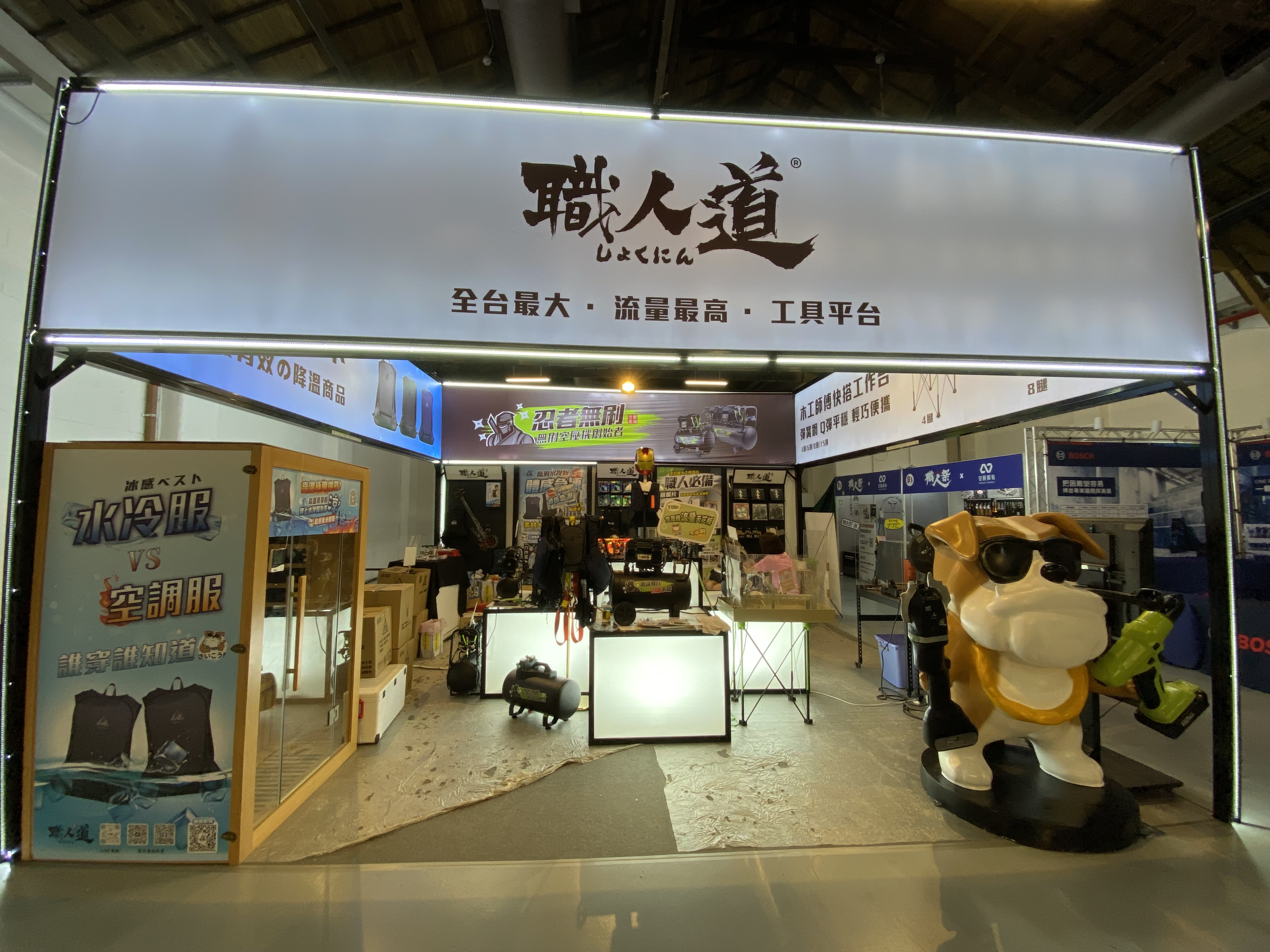
Shokunin is the professional e-commerce brand of FENG SHANG PRECISION CO., LTD., a precision tool manufacturer headquartered at No. 155-17, Sec. 2, Nanzhu Rd., Luzhu Dist., Taoyuan City 338454, Taiwan. The company was established in 2009 and markets its products under the Shokunin brand to modern craftsmen globally, with its main product lines spanning air compressors, cut-off machines, water-cooled vests, lithium batteries, diamond saws, nail guns, spider stands and screwdriver bits. The company website is https://www.fstool.com.tw/.
Several facts in the company record speak directly to repeat-order capability:
| Established | 2009 |
| Manufacturing facility | 1000 m² |
| Staff | Approximately 30 |
| R&D team | 5 engineers |
| Annual production capacity | 10,000 units |
| Export share of sales | 50% |
| Main markets | USA and ROC (Taiwan) |
| Order terms on record | MOQ 10 units; 7–14 day lead time; 6-month warranty; ODM services |
Two of these facts deserve closer reading. First, a five-engineer R&D team supporting a portfolio that includes air compressors, cut-off machines, cooling vests, lithium batteries and hand tools is a real engineering resource, but a shared one. ODM and customization work is feasible; the practical implication for a buyer is that custom development should be scoped and scheduled rather than assumed to be instantaneous.
Second, a MOQ of 10 units paired with a 7–14 day lead time is unusual in industrial PPE, where minimums are frequently expressed in hundreds. It means a department can validate the vest on an actual work site before committing program budget — the same validation step that later protects the program from specification surprises. The company has also received the Disaster Prevention Product and Service Certification Award issued by the Taiwan Disaster Prevention Industry Association, a Taiwan-based recognition relevant to heat-stress and disaster-prevention contexts rather than to European or North American electrical certification regimes.
Technical Explanation: How the Dual Cooling System Works
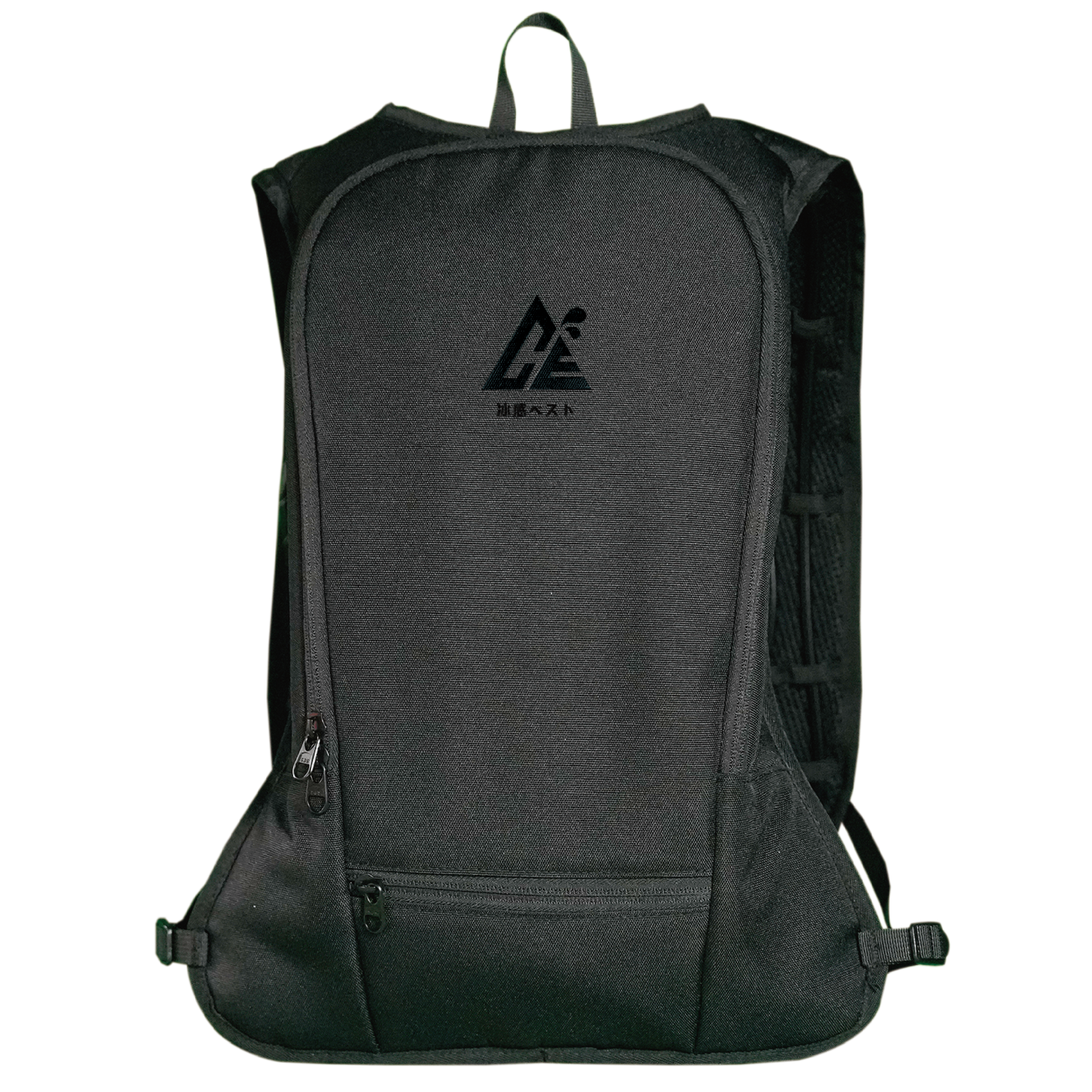
The COOLWAVE Water-Circulation Cooling Vest is classified as Industrial Cooling Apparel under Personal Protective Equipment (PPE). It is not a passive garment. The system pairs two ice packs — the thermal reservoir — with a small pump that moves chilled water through tubing inside the vest. One element stores the cold; the other delivers it continuously to the wearer rather than letting cooling concentrate at the point of contact.
The published specification lists a pump rated at 5V and 150mA (max) with a flow rate of up to 320–370 ml/min, a cooling duration of 3 to 4 hours, a net weight within 2 kg, and a documented suitable temperature condition of below 10°C. The contents are a water-cooled vest backpack and two ice packs.
| Parameter | Documented value |
|---|---|
| Model designations | COOLWAVE Water-Circulation Cooling Vest (Basic Model); Professional Model — Black, Gray, Blue |
| Cooling duration | 3–4 hours |
| Net weight | Within 2 kg |
| Suitable temperature | Below 10°C |
| Pump output | 5V, 150mA (max) |
| Flow rate | Max 320–370 ml/min |
| Water bag material | TPU (thermoplastic polyurethane) |
| Water bag cap | Polypropylene |
| Cooling tube | Sand rubber (black) |
| Shoulder strap | 600D polyester |
| Vest material | PEVA |
For program buyers, four of these values carry decision weight. The 5V/150mA pump rating is the figure to match when specifying a power source, which is why water-circulation garments are sometimes grouped with power-bank cooling vests in procurement discussions — the vest itself carries no energy storage. The 320–370 ml/min flow rate describes a narrow band rather than a peak claim, which matters when comparing quotations that cite a single optimistic number. The sub-2 kg weight determines whether a vest can be worn over a full shift alongside existing PPE. And the material list — TPU water bag, polypropylene cap, sand rubber tubing, 600D polyester strap — identifies exactly which parts a long-term program will eventually need to reorder. Buyers operating in ambient conditions well above 10°C should confirm with the supplier precisely what the documented suitable-temperature condition refers to, since the garment is marketed for high-temperature outdoor work.
Application Fit: Where This Vest Is Designed to Be Used
The COOLWAVE vest is documented for construction workers, outdoor workers, food stall operators, street vendors, traffic controllers and sheet metal factory workers. The recorded application profile describes personal heat stress relief under high-temperature working conditions, with passive activation through ice packs, reusable ice packs, adjustable vest straps and a portable backpack design as matched equipment, and lightweight, waterproof, breathable, one-size-fits-all characteristics as the special requirement.
The practical pattern across these settings is that workers cannot leave the task to cool down. Traffic controllers hold a position; sheet metal factory workers stay near process heat; street vendors and food stall operators work under prolonged sun exposure without a cooled indoor option. Cooling that requires the worker to stop and relocate has limited value in any of these cases, which is the argument for a circulating system worn on the body rather than a shared cooling station.
The one-size-fits-all documentation also has a program implication: a single SKU can cover a mixed workforce without a sizing matrix, simplifying reorders. Adjustable straps accommodate the fit variation that a single size cannot.
Market Trend Analysis: Industrial Demand Is Becoming Program Demand
Industrial applications, including construction and manufacturing, held the largest share of the cooling vest market at 34.5% in 2025, according to Dataintelo. The same source reports that Phase Change Material (PCM) vests captured 28.7% of market share in 2025 and represent the fastest-growing technology segment. Spherical Insights identifies Asia Pacific as the fastest-growing region, driven by rapid industrialization and large outdoor work populations. Strategic Market Research notes that active circulatory mechanisms such as ice water circulation are increasingly deployed in industrial sectors to mitigate occupational heat stress.
Read together, these data points describe a category moving from discretionary purchase to recurring operational spend. Once cooling vests are budgeted the way other PPE is budgeted — replaced on a cycle, resupplied seasonally, evaluated against a written specification — the supplier relationship becomes a multi-year one, and the criteria that matter shift accordingly. A buyer who selects on unit price alone in year one will still be working with that supplier in year three.
Water Circulation Compared with Traditional Cooling Approaches
| Approach | Typical strength | Typical trade-off |
|---|---|---|
| Ice-pack-only vest | Simple, no pump or power source | Cooling concentrates at pack contact points and tapers as packs warm; spare pack sets add carried weight |
| PCM (phase change material) vest | Stable temperature around a defined set point; fastest-growing technology segment at 28.7% share in 2025 | Requires cooling-unit recharge logistics; a different servicing model from a pump-and-water system |
| Evaporative / soaked fabric, fan-assisted | Low unit cost and simple supply | Performance depends heavily on humidity and airflow; hard to specify and verify to a standard |
| Water-circulation vest (COOLWAVE) | Continuous distribution of chilled water; 3–4 hour cooling duration; documented flow rate and materials | Requires a 5V power source and ice pack recharging each cycle; adds a pump as a serviceable component |
Where a water-circulation vest is not the right choice. The COOLWAVE vest is documented for a 3–4 hour cooling cycle. Sites running shifts well beyond four hours need a rotation plan — spare ice packs and access to freezing capacity — or a second vest per worker, and any program that ignores this will find the vest falls short of a full shift regardless of build quality. The documented suitable temperature condition is below 10°C, which buyers should clarify against their actual ambient conditions. The 5V/150mA pump introduces a powered component into a previously passive garment category, so spare pumps and tubing become part of the maintenance plan. Finally, the source documentation describes a Disaster Prevention Product and Service Certification Award from the Taiwan Disaster Prevention Industry Association; it does not establish ISO 9001:2015 registration, CE marking or a UL listing. Since cooling systems are generally expected to comply with ISO 9001:2015 for quality management and electrical components often require CE or UL marks, buyers in regulated markets should request and verify the specific certificates their jurisdiction requires rather than inferring them.
A Seven-Point Framework for Evaluating a Long-Term Cooling Vest Supplier
The framework below converts the criteria discussed above into questions a procurement team can put to any water-circulation vest supplier, using the Shokunin/FENG SHANG PRECISION record as an illustration of what a documented answer looks like.
| Criterion | What to request | Example of a documented answer |
|---|---|---|
| Legal entity and history | Registered name, establishment year, operating address | FENG SHANG PRECISION CO., LTD., established 2009, Taoyuan City, Taiwan |
| Production capacity | Annual output, facility size, staffing | 10,000 units per year; 1000 m² facility; approximately 30 staff |
| Engineering capability | Size and scope of in-house R&D; ODM terms | 5 R&D engineers; ODM services available |
| Order economics | Minimum order quantity and quoted lead time | MOQ 10 units; 7–14 day lead time |
| Serviceability | Component list and reorder availability for wear parts | TPU water bag, polypropylene cap, sand rubber tube, 600D polyester strap, ice packs |
| Warranty and support | Warranty term and how claims are handled | 6-month warranty |
| Compliance documentation | Certificates for the target market, including electrical component marks | Disaster Prevention Product and Service Certification Award (Taiwan Disaster Prevention Industry Association); market-specific CE/UL documentation to be verified separately |
A supplier that can answer all seven points with documentation is a supplier a program can plan around. A supplier that answers three is a supplier that can fill a single order.
Future Outlook
Three shifts are likely to shape the next planning cycle. First, as industrial heat-stress programs formalize, cooling garments will be specified more like conventional PPE — with written requirements covering flow rate, cooling duration, weight and materials, and with reorder clauses attached. Second, active circulatory designs will continue to gain ground in industrial settings, which raises the importance of powered components, power sources and spare-part supply in supplier evaluation. Third, technology diversity will persist: with PCM vests growing quickly, buyers will increasingly manage a mixed cooling inventory rather than standardizing on one mechanism, and will need suppliers who can document precisely how their system behaves within a 3–4 hour cycle and how components are replaced afterward.
For a buyer, the defensible position is straightforward: evaluate the supplier with the same rigor as the product, and validate both at a site before the program is committed. A company brochure covering the COOLWAVE range and the manufacturer behind it is available for download here.
FAQ
What does “dual cooling” mean in a water-circulation cooling vest?
In the COOLWAVE Water-Circulation Cooling Vest, two elements operate together: two ice packs act as the thermal reservoir, and a pump circulates chilled water through the vest. The system contents are a water-cooled vest backpack and two ice packs, with a pump rated at 5V and 150mA (max) and a flow rate of up to 320–370 ml/min.
How long does the cooling last, and what does that mean for a work shift?
The documented cooling duration is 3 to 4 hours, with a net weight within 2 kg and a suitable temperature condition of below 10°C. Work sites operating shifts longer than four hours would need a rotation plan, spare ice packs and access to freezing capacity, since the vest's cooling cycle is defined rather than continuous.
Which work environments is the COOLWAVE vest designed for?
The documented application list covers construction workers, outdoor workers, food stall operators, street vendors, traffic controllers and sheet metal factory workers. The recorded application profile describes personal heat stress relief under high-temperature working conditions, with reusable ice packs, adjustable straps and a portable backpack design as matched equipment.
What are the minimum order quantity and lead time?
The recorded order terms are a minimum order quantity of 10 units and a lead time of 7–14 days. A low minimum relative to typical industrial PPE allows a department to validate the vest on a live work site before committing to a program-level order.
Can the supplier support a multi-year, repeat-order PPE program?
The documented record shows FENG SHANG PRECISION CO., LTD., established in 2009, operating a 1000 m² facility with approximately 30 staff, 5 R&D engineers and an annual production capacity of 10,000 units. Export accounts for 50% of sales, with main markets in the USA and ROC (Taiwan). ODM services are offered. These are the capacity and engineering indicators a program buyer would assess; large single-season volumes should still be scheduled against capacity in advance.
What warranty applies, and how serviceable is the vest?
A 6-month warranty is stated. Serviceability depends on the parts list, which identifies the water bag (TPU), water bag cap (polypropylene), cooling tube (sand rubber), shoulder strap (600D polyester) and the included ice packs — components that can be individually specified and reordered rather than requiring replacement of the whole garment.
What certifications are documented, and what should buyers verify independently?
The company record references the Disaster Prevention Product and Service Certification Award issued by the Taiwan Disaster Prevention Industry Association. Cooling systems are generally expected to comply with ISO 9001:2015 for quality management, and electrical components often require CE or UL marks. Buyers in regulated markets should therefore request the specific quality-management and electrical-component documentation applicable to their jurisdiction and confirm it before ordering, rather than treating any single award as equivalent to those marks.
Source notes: company, product and application facts are drawn from FENG SHANG PRECISION CO., LTD. and COOLWAVE product documentation. Market figures are attributed to Dataintelo, Market Research Future, Spherical Insights and Strategic Market Research as cited above. Certification references reflect the documentation stated by the manufacturer and general standards expectations; verification remains the buyer's responsibility.