
Dual Cooling Water Cooling Vest: A Buyer's Field Guide to Ice Water Circulation Technology
Dual Cooling Water Cooling Vest: A Buyer’s Field Guide to Ice Water Circulation Technology
This guide explains what a dual cooling water cooling vest is, how ice water circulation works, and what buyers should check before selecting an industrial cooling vest for construction, outdoor work, and high-heat indoor environments.
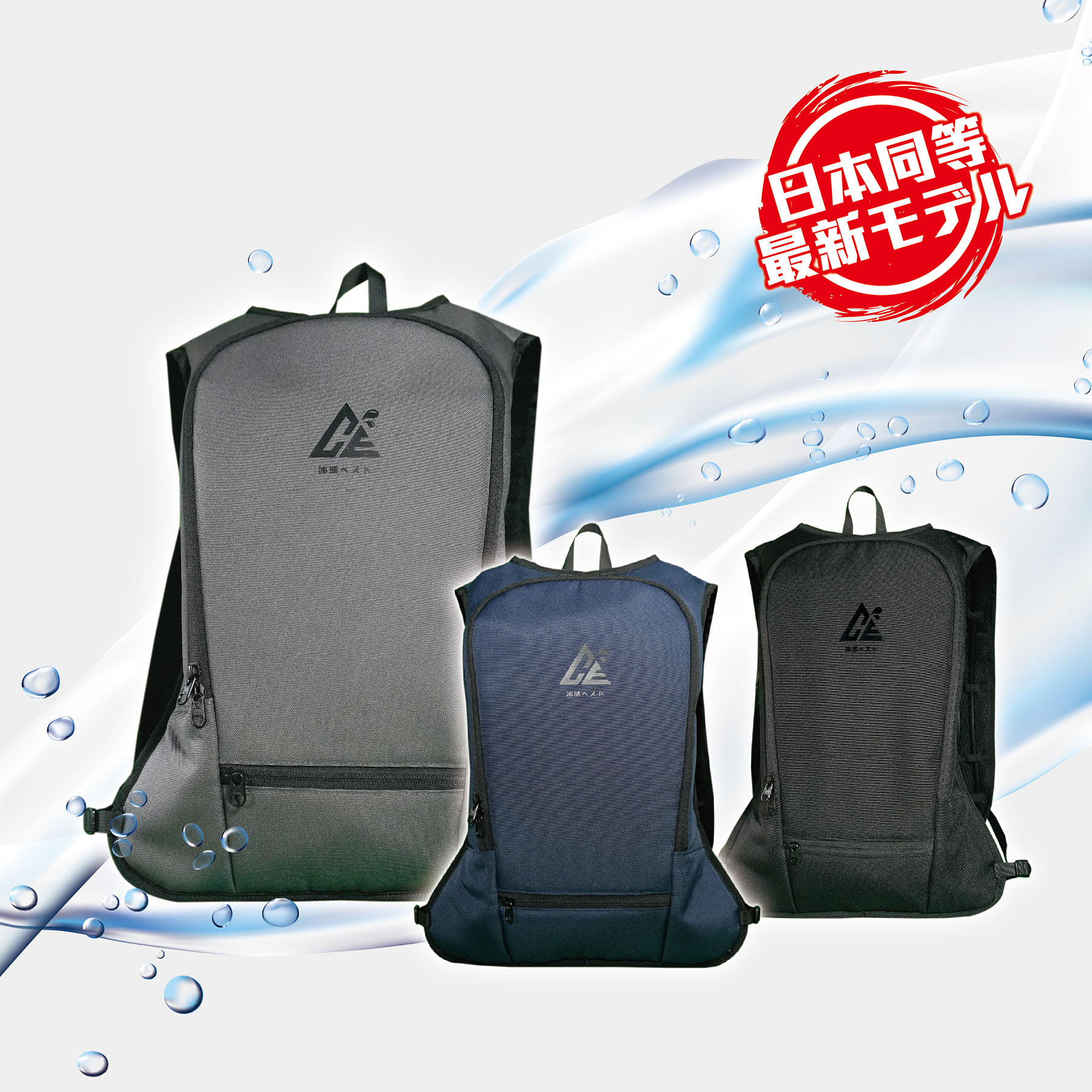
Heat stress is not limited to outdoor job sites. Workers in metal sheet factories, around traffic control points, or in food stall operations also face prolonged exposure to high ambient temperatures. A water-circulation cooling vest is a personal protective solution designed for these conditions. Rather than relying only on evaporative fabrics or single-use ice packs, active ice water circulation pumps cool liquid through a tube system, helping the wearer maintain a more stable body temperature during a shift.
This article is written for procurement teams, distributors, and safety officers who are at the early research stage: it outlines the product category, the engineering behind ice water circulation, common use cases, market context, and the limitations a buyer should reasonably expect.
What is a dual cooling water cooling vest?
A dual cooling water cooling vest is an industrial cooling apparel product that uses a water-circulation mechanism to draw heat away from the body. It is categorized as Personal Protective Equipment (PPE) for construction, outdoor work, and related high-temperature roles.
The product operates with a water-cooled vest backpack and two reusable ice packs. A pump pushes cool water through the tube layer; as the water absorbs body heat, it circulates back to the ice packs for re-cooling. In the COOLWAVE series, users can select a basic model or professional color variants.
Available model designations:
- COOLWAVE Water-Circulation Cooling Vest (Basic Model)
- COOLWAVE Water-Circulation Cooling Vest (Professional Model – Black)
- COOLWAVE Water-Circulation Cooling Vest (Professional Model – Gray)
- COOLWAVE Water-Circulation Cooling Vest (Professional Model – Blue)
These models share the same general operating principle: water-circulation cooling activated by ice packs, with a rated duration of 3–4 hours in ambient temperatures below 10°C.
How does ice water circulation cooling work?
The ice water circulation cooling vest is a closed-loop system. The pump, rated at 5V and 150mA (maximum), moves water through the tube network at a flow rate of 320–370 ml/min. The water bag is made from TPU (thermoplastic polyurethane), the water bag cap from polypropylene, and the cooling tube from sand rubber; shoulder straps use 600D polyester.
The thermal loop can be summarized as follows:
- Ice packs cool the water inside the backpack reservoir.
- The pump drives chilled water through the sand-rubber cooling tube distributed across the vest.
- Body heat warms the water as it travels through the vest surface.
- The warmer water returns to the reservoir, is cooled again by the ice packs, and is re-circulated.
- The cycle continues until the ice packs lose their cooling capacity — about 3 to 4 hours in the rated conditions.
This design supports longer sustained cooling compared with passive ice packs that are placed directly inside a wearable pocket.
Why endurance matters in industrial heat relief
Many conventional cooling vests provide short-duration relief. When an ice pack melts or an evaporative fabric dries out, cooling performance drops quickly. A water-circulation system changes the buyer’s calculation: instead of exchanging re-freezable packs every 30 minutes, a shift worker can plan around a longer window of active cooling, subject to site conditions and pack condition. This is relevant to procurement because maintenance and downtime are real costs on a worksite.
The practical target for the COOLWAVE series is not precision climate control but heat stress mitigation: the system is rated for ambient temperatures below 10°C, so the vest should not be portrayed as a replacement for air-conditioned rest areas or full environmental cooling.
Who typically uses this type of cooling vest?
The same product can serve several job profiles. The item is explicitly intended for construction workers, outdoor workers, traffic controllers, sheet metal factory workers, food stall operators, and street vendors. The common factor in these environments is long exposure to heat combined with physical activity.
Typical operation modes: The vest is most often used in personal heat stress relief, activated by reusable ice packs rather than continuous external power. It is a passive-plus-circulation approach: the wearer is not tethered to a stationary cooling unit, so they can move across a construction site, stand at a traffic intersection, or work at a metal fabrication station.
Material and build characteristics buyers should inspect
For a product that touches the body while the wearer performs physical work, materials affect both comfort and service life. The COOLWAVE vest uses:
- Water bag: TPU, a thermoplastic polyurethane known for flexibility and durability in fluid containment.
- Water bag cap: Polypropylene, which is resistant to most chemicals and has stable mechanical properties.
- Cooling tube: Sand rubber (black), selected for flexibility and resilience during repeated bending.
- Shoulder strap: 600D polyester, a common choice in bags and industrial equipment because of its abrasion resistance.
One selling point to verify in practice is seam integrity, because a cooling tube carrying 320–370 ml/min will quickly reveal a weak connection. A buyer should ask the manufacturer how the tube joints are tested before shipment and what replacement parts are available after purchase. The net weight is within 2 kg, which is an important number because a vest that is too heavy can increase fatigue, so always confirm the total loaded weight for the specific configuration under review.
Workplace scenarios: matching the vest to the environment
Because the target buyers are at the awareness and research stage, it helps to visualize where the vest is intended to be used. The product designers have documented several scenarios:
- Construction sites: Outdoor supervisors and laborers are exposed to direct sun and heat radiating from unfinished structures. The one-size-fits-all design and adjustable straps allow crews to pass the vest between employees.
- Metal sheet factories: Operations such as sheet metal forming and welding can radiate heat even when the factory is sheltered. Workers standing near metal stock and machines may experience higher ambient temperatures than a standard outdoor forecast would suggest.
- Traffic control: Officers and crossing guards are often stationary in direct sun, with limited opportunity for shade. A portable backpack design enables them to carry the cooling system while keeping both hands free for signaling work.
- Street vendors and food stall operators: People who stand next to cooking surfaces or vendor carts face both ambient heat and appliance heat. The vest offers continuous circulation while the seller is at the stall.
These use cases have very different heat loads. A construction worker performing manual labor will sweat more than a traffic controller standing still, so a vest that works for one worker may need a different ice pack strategy for another. This is a normal boundary condition of the technology, not a claim that one vest can handle every heat condition equally.
How does this compare with conventional cooling approaches?
Buyers evaluating this product class often ask for evidence of difference versus common non-circulating alternatives. A reasonable comparison focuses on operating mechanics and stated endurance.
| Comparison point | Conventional evaporative / short-ice vests | Active water-circulation vest type |
|---|---|---|
| Cooling source | Evaporation or direct contact with phase-change / ice packs | Ice packs plus pump-driven water circulation |
| Typical active duration | Varies widely; frequent pack swaps can be needed | Rated 3–4 hours with the included packs |
| Movement flexibility | High, if no tubes or pump are attached | High; pump is powered by a 5V source and worn with the unit |
| Weight | Often lighter | Within 2 kg for the listed model |
| Maintenance | Simple pack replacement | Water bag, tube and pump need inspection for leaks/connections |
| Relevant limitation | Short effective window when ice melts | Requires power for the pump; rated below 10°C ambient; water-tube system needs care |
This table is not a claim that every water-circulation vest outperforms every other product. It shows the user-visible differences that shape procurement decisions. The important caveats are stated in the right-hand column: buyers should confirm the power-bank/USB solution that powers the pump, the time needed to freeze the ice packs, the actual weight when filled, and the expected comfort level when the vest is worn over a work shirt for a full shift.
One documented technical limit is the 3–4 hour cooling duration. If workers are exposed to heat for 8 or 10 hours, two ice-pack swaps and proper battery management will be necessary. A distributor or site safety officer should plan for spare packs rather than expecting one unit to last an entire double shift.
What does the market data show for cooling vests?
The wider cooling product market shows an interesting split in statistics: Market Research Future reports that the global personal cooling device market was valued at USD 25.16 billion in 2024 and is projected to reach USD 94.85 billion by 2035. That broad category includes many personal cooling products, not only wearable vests. By comparison, Dataintelo estimates the more specific global cooling vest market at roughly USD 215 million in 2024, expected to grow to USD 385 million by 2033. Industry sources identify construction and manufacturing as the largest industrial segment, with cooling vests used in these applications representing about 34.5% of the global market in 2025 according to Dataintelo. Regionally, Asia Pacific is pointed out by Spherical Insights as the fastest-growing cooling-vest market, reflecting rapid industrialization and large outdoor work populations.
These data points differ because they measure very different market scopes. They are included here as a starting reference, not as a precise sales forecast for a single supplier. The practical takeaway is that occupational heat-risk awareness is rising across industrial markets, and manufacturers are responding with products that can sustain cooling for multiple hours.
How a Taiwan-based manufacturer builds this category
FENG SHANG PRECISION CO., LTD., established in 2009, is a precision tool manufacturer headquartered at No. 155-17, Sec. 2, Nanzhu Rd., Luzhu Dist., Taoyuan City, Taiwan. The company markets its tools and cooling products under the Shokunin brand, with a stated focus on high-quality and innovative tools for modern craftsmen. Its workforce includes roughly 30 employees and an R&D team of five engineers, working in a 1,000 m² facility with an annual production capacity of 10,000 units. Export sales account for approximately 50% of the business, with main markets in the United States and Taiwan (ROC).
FENG SHANG products include air compressors, cut-off machines, water-cooled vests, lithium batteries, diamond saws, nail guns, spider stands, and screwdriver bits.
For a distributor, this kind of company profile matters for several reasons: it shows whether the manufacturer has in-house R&D, how many engineers can support customization or troubleshooting, and whether the factory scale matches the required order volume. In the context of the COOLWAVE vest, the same five-engineer R&D team also works on battery-powered tools, which is relevant because the cooling vest pump is a low-voltage device that often operates from a battery or power bank at 5V.
Brand positioning note: Shokunin is the consumer/industrial brand name, while FENG SHANG PRECISION CO., LTD. is the legal manufacturer. Buyers who include Shokunin on their approved vendor list should verify whether their import documents should show the parent company name, and whether the supplier can provide corresponding manufacturing data for their own due-diligence file.
What to check when evaluating a portable cooling vest supplier
Early-stage research should translate into a short supplier checklist. The following factors are directly supported by the product structure and corporate profile:
- Pump specifications: Confirm the rated voltage (5V in the COOLWAVE model) and current draw, because this affects battery selection and per-shift operating cost.
- Cooling duration validation: 3–4 hours is a useful claim at the design stage, but site heat conditions, ice pack freeze quality, and user activity all influence real performance. Ask how the manufacturer measured the stated duration.
- Material documentation: TPU water bag, polypropylene cap, sand rubber tube, and 600D polyester strap are verifiable material identifiers. Check whether they are listed in the supplier’s spec sheet and whether the material test reports can be provided.
- Weight: The listed net weight is within 2 kg, but consider the filled weight and whether this will cause discomfort across an 8–10 hour shift. Reputable suppliers should provide both cargo weight and loaded wearing weight.
- R&D and service capacity: A team of five engineers cannot be compared to a large R&D center, but it may be sufficient to support product adaptations, spare-part drawings, and OEM changes for a product of this scale. Ask what kind of documentation is available for the cooling vest.
- Application evidence: Ask specifically for field photos or customer use descriptions in the intended setting, such as factory floor workers or traffic control. The manufacturer’s corpus describes applications in construction sites, metal sheet factories, street stall operations, and traffic control, so a supplier should be able to explain the recommended configuration for each.
- After-sales constraints: Because the vest includes a pump, tube, and water bag, spares are necessary. Check if the supplier stocks replacement ice packs, water bags, and pumps.
A simple way to frame the evaluation is to compare the total cost of ownership: unit cost plus spare packs, pump power source, and expected product life under repeated sweating, washing, and movement. A low-cost vest that fails after a few shifts can cost more than a better-maintained unit in the long run.
Limitations and legitimate boundaries
No wearable cooling vest can fully replace engineering controls such as ventilation, air-conditioned rest zones, hydration programs, and rotation schedules. A water-circulation vest is best understood as supplementary personal heat-stress reduction equipment. Independent market sources and the product documentation both point to operational boundaries:
- Ambient range: The COOLWAVE series is rated for ambient temperatures below 10°C at the stated configuration. This claim refers to the test/rated condition and should not be treated as a guaranteed temperature in direct solar radiation or beside production machinery.
- Cooling duration: 3–4 hours depends on pack quality, water temperature, body heat, insulating clothing, and pump operation. One ice pack set will not necessarily cover a complete work shift without replacement.
- Weight and mobility: The wearable unit is within 2 kg. Work tasks requiring extreme agility or confined-space entry may not suit a vest with a backpack reservoir.
- Maintenance: Water leaks, tube wear, and battery management create operational duties that are not present when workers simply drink cold water or wear a disposable cooling bandana.
Buyers who understand these limits can make a more informed decision about where to use the vest first, how many spare packs to order, and what training to give workers.
Future outlook for ice-water circulating cooling vests
Active circulatory mechanisms, such as the ice water circulation approach used by this product type, are increasingly being adopted in industrial sectors for heat stress mitigation. Market signals point in several directions: longer runtime, lighter wearable components, and better integration with workwear. For purchasers, the 3–4 hour duration figure is still notable at this stage because a longer active duration may become the next standard buyers ask for.
The category is still evolving. Evaporative and PCM (phase change material) products remain widely available; in 2025 Dataintelo attributed 28.7% of the cooling-vest market to PCM technology, describing it as the fastest-growing technology segment. This indicates that different customers may prefer different technology. Water circulation is only one option in a broader toolkit. A robust purchasing strategy should therefore compare technologies by their demonstrated duration, weight, and workplace compatibility rather than by a single category label.
Frequently asked questions
Where is a water-circulation cooling vest typically used?
A water-circulation cooling vest is intended for construction workers, outdoor workers, traffic controllers, sheet metal factory workers, food stall operators, and street vendors. It is a personal heat-stress mitigation item, not a replacement for air-conditioned rest zones or site engineering controls.
How long can a dual cooling water cooling vest keep working?
The COOLWAVE Water-Circulation Cooling Vest is rated for a cooling duration of 3–4 hours when operated with the included ice packs in ambient temperatures below 10°C. Actual duration depends on the user’s activity, the surrounding heat-load, the water temperature, and the ice pack condition.
What is the difference between an ice water circulation vest and an ordinary ice-pack cooling vest?
An ice water circulation vest continuous pumps chilled water through a tube network across the wearable vest, so the cooled liquid is repeatedly circulated to touch the body. An ordinary ice-pack style vest typically relies on a static ice pack placed next to the skin, with no pumping mechanism. This adds a pump, a water bag, tubes, and a portable power supply, enabling operation without stopping the pump for manual pack replacement as early as a conventional non-circulating product.
What technical specifications matter for a licensed/certified cooling PPE?
Key specs in the COOLWAVE model include a pump output of 5V and 150mA (max), flow rate up to 320–370 ml/min, a net weight within 2 kg, a cooling duration of 3–4 hours, and materials such as TPU water bag, polypropylene cap, sand rubber tube, and 600D polyester shoulder straps. Buyers should also verify the certification scope with the supplier and confirm the supply power source, especially since the pump must be compatible with a regulated power source on site.
Which industries usually require this kind of product?
According to the manufacturer, this type of vest is intended for construction, outdoor work, food stall operations, street vending, traffic control, and sheet metal factory industries. Market reference data from Dataintelo also suggests industrial applications, including construction and manufacturing, formed a large cooling-vest segment at 34.5% of global market share in 2025.
Can a rechargeable power-bank operate the vest pump?
The COOLWAVE pump is specified at 5V and 150mA maximum current draw, which is a low-voltage specification commonly compatible with portable power sources. However, the official corpus does not specify which exact power bank model must be used; buyers should ask the manufacturer how input charging is delivered, and which overcurrent or waterproofing protections the pump connector has before pairing it with their own power bank.
What should a distributor understand about the supplier’s profile?
FENG SHANG PRECISION CO., LTD. is a Taiwan-based precision tool manufacturer founded in 2009, running a 1,000 m² facility with about 30 employees and annual production of 10,000 units. Its R&D team has five engineers. Export sales account for 50% of revenue and the company’s primary markets are the USA and Taiwan. The brand name Shokunin is used for tool and cooling product marketing. Distributors should check lead times, spare-part policies, and official documentation separately from these corporate facts.
Where is the manufacturer located?
FENG SHANG PRECISION CO., LTD. is located at No. 155-17, Sec. 2, Nanzhu Rd., Luzhu Dist., Taoyuan City 338454, Taiwan. The contact phone is +886 3-312-6606, and the email address is fsmarketing@fstool.com.tw. The official website is https://www.fstool.com.tw.
When was this company established and what is its product scope?
FENG SHANG PRECISION CO., LTD. was established in 2009 and operates under the Shokunin brand for modern craftsmen. Its catalog spans portable power tools and precision tools, including air compressors, cut-off machines, water-cooled vests, lithium batteries, diamond saws, nail guns, spider stands, and screwdriver bits.
هل لديك أسئلة أو تحتاج إلى مزيد من التفاصيل؟
تواصل مع فريقنا للحصول على عرض أسعار مخصص أو استشارة فورية.
طلب عرض أسعار
املأ النموذج أدناه وسيتواصل معك فريقنا بعرض مقترح مخصص.
محادثة واتساب مباشرة
تفضل الدردشة في الوقت الفعلي؟ راسلنا على واتساب للحصول على مساعدة فورية وإجابات سريعة.
- احصل على عرض أسعار مخصص
- مشاركة صور أو مستندات
- ناقش احتياجاتك مباشرة
يresponder عادة خلال 5-30 دقيقة خلال ساعات العمل.