
Dual Cooling Water Cooling Vest: Certified Specs Guide
The dual cooling water cooling vest is a category of industrial personal cooling equipment that pairs reusable ice packs with an active water-circulation system to extend body-cooling duration in high-temperature work environments. For procurement teams and safety officers who have moved from initial discovery into supplier evaluation, the decisive inputs are concrete: documented cooling duration, pump and flow specifications, material composition, and certifications that can be independently verified. This guide examines the Shokunin COOLWAVE water-circulation cooling vest against exactly those procurement constraints.
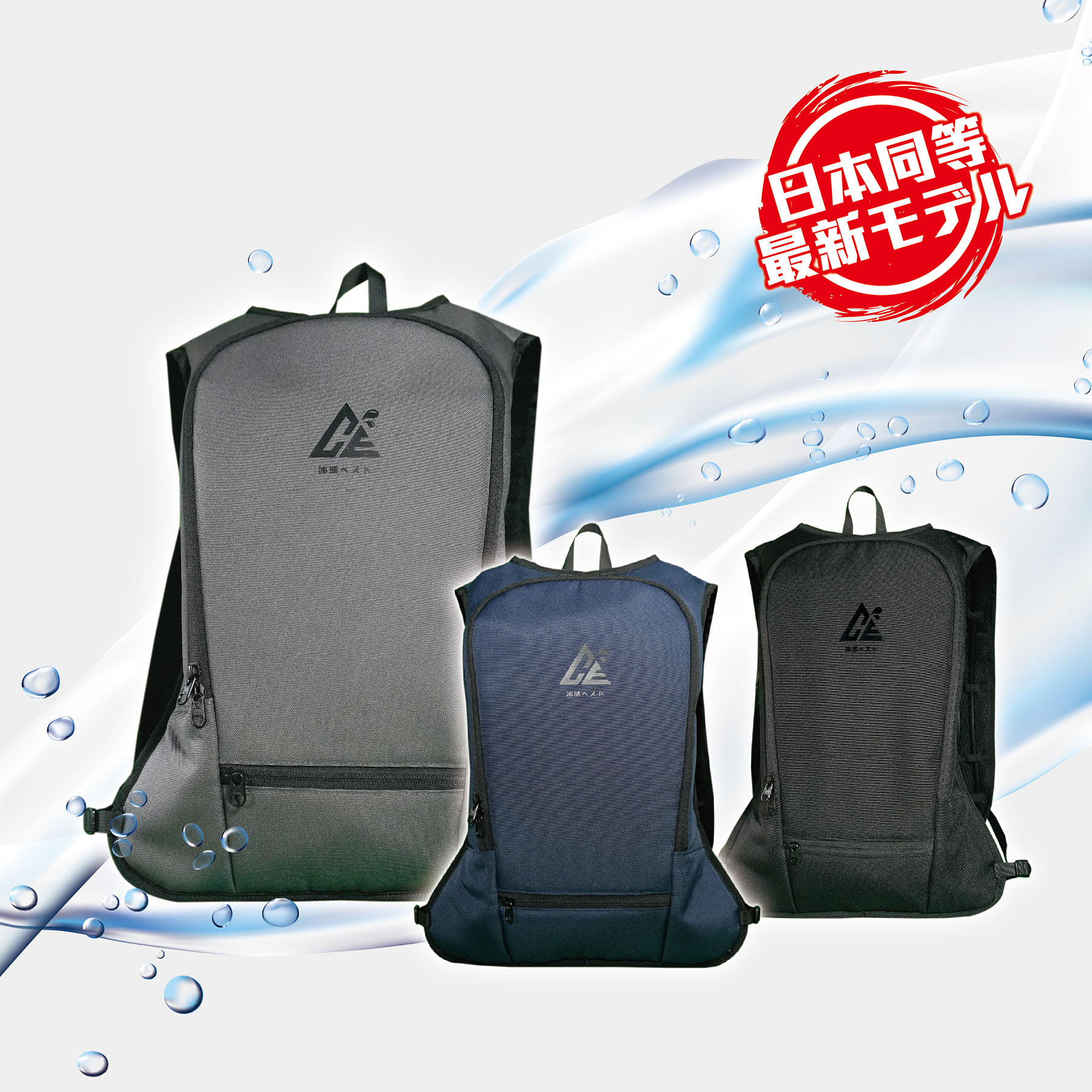
Shokunin COOLWAVE water-circulation cooling vest — the product line covered in this specification and certification guide.
Background: the manufacturer and brand
Shokunin is a professional e-commerce brand launched by Feng Shang Precision Co., Ltd., a manufacturer founded in 2009 and based in Luzhu District, Taoyuan City, Taiwan. The company produces air compressors, cut-off machines, water-cooled vests, lithium batteries, diamond saws, nail guns, spider stands, and screwdriver bits, and operates a 1,000 m² facility with 30 employees, including a five-engineer R&D team. Its annual output is 10,000 units, with a 50% export ratio and main markets in the USA and ROC. The COOLWAVE water-circulation cooling vest is the brand's entry in the industrial cooling apparel segment.
The procurement problem: heat stress and unverifiable cooling claims
Occupational heat stress is a recurring operational risk in outdoor and semi-enclosed workplaces. Construction crews working in direct sun, traffic controllers standing on exposed intersections, street vendors operating over hot cooking surfaces, and workers on metal sheet factory floors exposed to radiant heat all share the same constraint: the body needs continuous cooling while the worker must remain mobile. Cooling equipment in this environment is not a comfort item; it is a heat-stress countermeasure tied to shift productivity and worker safety.
The evaluation gap in this category is documentation. A cooling vest can perform well in a short hands-on test, but a procurement file requires traceable parameters: how long the cooling charge lasts, how much the worn system weighs, which materials contact the skin, what pump and flow rates the system uses, and which patents or certifications support the design. Without those constraints, a buyer comparing suppliers is comparing claims rather than products.
The solution: Shokunin COOLWAVE dual cooling vest
The Shokunin COOLWAVE water-circulation cooling vest is an industrial cooling apparel product in the Personal Protective Equipment (PPE) category, available as a Basic Model and as three Professional Models in Blue, Gray, and Black. The specification record lists a cooling duration of 3–4 hours and a total system weight within 2 kg. Each unit ships with a water-cooled vest backpack and two reusable ice packs.
The dual cooling mechanism combines two elements. Reusable ice packs supply the cold reservoir, and a low-voltage circulation pump — rated at 5V 150 mA (max) — moves chilled water through the vest's cooling tube network at a maximum flow rate of 320–370 ml/min. The product's documented operation mode is passive, ice-pack-activated cooling: the ice charge performs the thermal work, while the pump maintains water movement across the torso. This is the structure behind the dual cooling label used by the brand — ice-based cooling plus active water circulation.
Technical explanation: how the system works
Component-level material choices are documented in the product specification. The shoulder straps use 600D polyester, a dense woven fabric suited to load-bearing wear. The vest body is PEVA-based, which keeps the garment lightweight and waterproof. The water bag uses TPU, a material suited to flexibility and durability across repeated freezing and handling cycles, and the water bag cap is polypropylene. The cooling tube is black sand rubber, routed through the garment to distribute chilled water across the torso.
In operation, the user loads the two frozen ice packs into the TPU water bag, which sits in the backpack section of the vest. The pump draws the ice-chilled water from the bag and pushes it through the sand rubber tubes at up to 320–370 ml/min, holding a continuous layer of cold against the torso. Because the pump's maximum output is only 5V 150 mA, the electrical load is low enough for a portable power source, matching the power-bank cooling vest descriptor applied to this product class. The specification record also lists a suitable temperature of below 10°C as a stated parameter; buyers should confirm with the supplier how this parameter maps to their chilled-water preparation and worksite conditions.
Documented specifications at a glance
| Parameter | Specification |
|---|---|
| Cooling duration | 3–4 hours |
| Total weight | Within 2 kg |
| Pump output | 5V 150 mA (max) |
| Flow rate | Max 320–370 ml/min |
| Shoulder strap material | 600D polyester |
| Vest body material | PEVA |
| Water bag material | TPU |
| Water bag cap | Polypropylene |
| Cooling tube | Sand rubber (black) |
| Included contents | Water-cooled vest backpack ×1, ice packs ×2 |
For a procurement team comparing cooling vests, these parameters define the evaluation baseline. Cooling duration determines how many work hours a single ice charge covers. Flow rate indicates how actively the chilled water moves across the garment, which affects how uniformly the cold charge is distributed. Total weight within 2 kg is a wearability constraint for roles that combine movement with long shifts. Material documentation matters for skin contact, cleaning protocols, and durability in dusty or humid sites. Endurance, flow, weight, and materials are the four comparable dimensions of any spec sheet in this category.
Certification and compliance: documented evidence for evaluation
Two documented compliance items support the Shokunin COOLWAVE vest in procurement evaluations.
First, the COOLING water-cooled vest received the Disaster Prevention Product and Service Certification Award from the Taiwan Disaster Prevention Industry Association. This award is a third-party recognition that validates the product's compliance with specific disaster prevention standards.
Second, the COOLWAVE water-circulation cooling vest (Basic Model) is protected by Patent No. I886033, issued by the Intellectual Property Office, Ministry of Economic Affairs, under the Patent Act of the Republic of China. The patent covers the water-cooled vest structure and cooling system, was issued on 2025-06-01, expires on 2044-08-27, and applies to the ROC market.
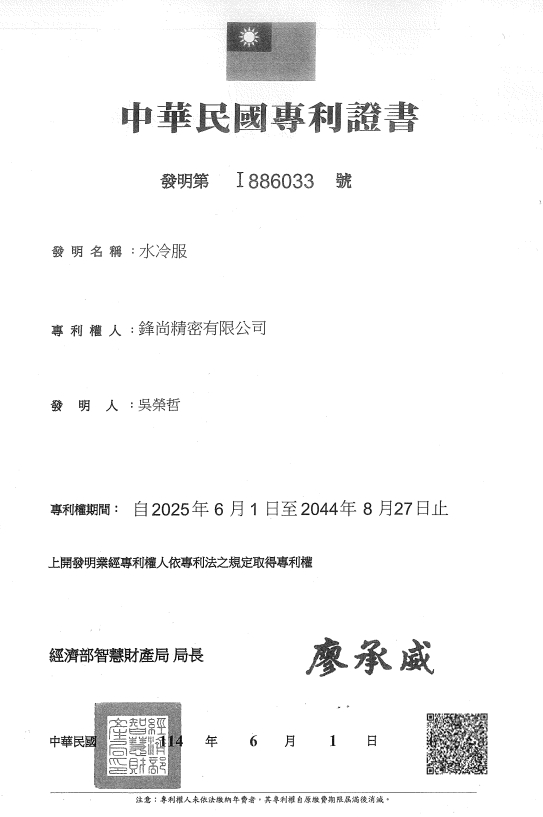
Patent certificate I886033 issued by the Intellectual Property Office, Ministry of Economic Affairs, covering the water-cooled vest structure and cooling system.
The practical value of these documents is auditability. A patent number can be cross-checked through the issuing office, and a certification award ties the product to an identifiable industry association rather than to unverified claims. For context on industry practice, cooling systems in this category are generally expected to align with quality-management frameworks such as ISO 9001:2015, and electrical components commonly require CE or UL marks. A procurement team should confirm these marks against the specific import model and destination market.
Application scenarios: where the vest is used
Documented applications of the COOLWAVE vest cover construction sites, outdoor work, metal sheet factories, and street vending. The applicable industries listed in the specification record are construction workers, outdoor workers, food stall operators, street vendors, traffic controllers, and metal sheet factories. Each role places different demands on the equipment:
Construction sites — workers move across scaffolds, roofs, and open floors under direct sun. The vest's weight budget of within 2 kg and adjustable one-size-fits-all straps are the relevant parameters for roles that combine climbing and carrying. The matched equipment includes adjustable vest straps and a portable backpack design.
Traffic control — controllers stand at fixed posts for extended periods with limited ability to step away. A hands-free, backpack-carried cooling system fits this stationary-but-exposed profile, and the documented applications include use by traffic controllers.
Metal sheet factories — indoor production floors with radiant heat from metal surfaces require continuous cooling rather than an initial cold shock. The water-circulation mechanism maintains a moving cool layer, which suits prolonged exposure to heat sources.
Street and food stall operations — vendors work in confined spaces near cooking heat. The lightweight, waterproof, breathable, one-size-fits-all design is documented as a special requirement of the product, and the portable backpack configuration keeps the cooling system out of the vendor's working space.
A recorded application of 100 units, used for cooling in high-temperature environments, reports effective body cooling, heatstroke prevention, improved work efficiency, and improved worker comfort. For a buyer, the operation is repeatable: the reusable ice packs are refrozen between shifts, and the low-voltage pump draws from a portable power source, avoiding consumable refills during the workday.
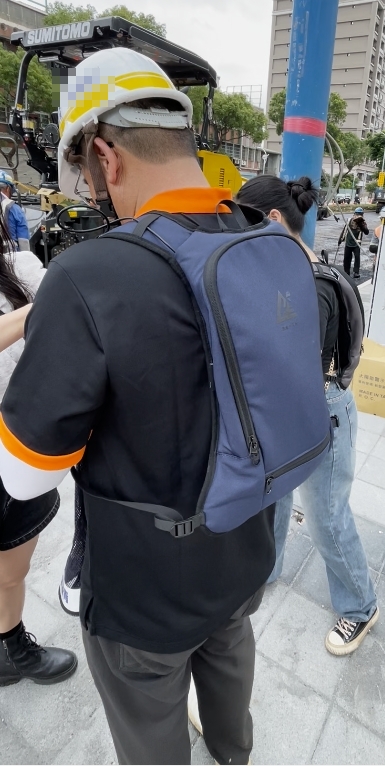
Construction site application — a documented use environment for the Shokunin cooling vest.
Market trend analysis: the demand context
Published market research provides the demand context for this product category. Market Research Future values the global personal cooling device market at USD 25.16 billion in 2024, with a projection of USD 94.85 billion by 2035. Within the narrower cooling vest segment, Dataintelo estimates the market at approximately USD 215 million in 2024, growing to USD 385 million by 2033. The difference between the two figures reflects scope: the larger number includes devices such as handheld fans and portable air conditioners, while the smaller isolates garments such as cooling vests.
Segment-level data reinforces the industrial focus of this category. Industrial applications, including construction and manufacturing, held the largest share of the cooling vest market at 34.5% in 2025 (Dataintelo). Phase-change material cooling vests captured 28.7% of the market in 2025 as the fastest-growing technology segment, while active circulatory mechanisms — including ice water circulation — are increasingly deployed in industrial sectors to mitigate occupational heat stress (Strategic Market Research). Asia Pacific is identified as the fastest-growing regional market for cooling vests, driven by rapid industrialization and large outdoor work populations (Spherical Insights).
For buyers, the combination of the largest segment share — industrial, at 34.5% — and the fastest-growing technology direction — active circulation — suggests that demand is shifting toward products that can document industrial-grade endurance. The presence of established global players also indicates a maturing market in which specification transparency and certified compliance are becoming differentiators.
Competitive context is documented as well. Key global participants in the cooling vest market include Techniche International, Glacier Tek, Polar Products Inc., and Ergodyne. For regional buyers, the Asia Pacific growth dynamic is operationally relevant: a Taiwan-based manufacturing base places production close to the fastest-growing demand region, which shortens supply distance relative to more remote sourcing points.
Comparison with conventional ice-pack vests
The functional difference between a static ice-pack vest and a circulation vest is how the cold charge is delivered. A static pack cools only the area directly beneath it, and its effectiveness declines as the boundary layer of still air insulates skin from the pack surface. A circulation vest moves chilled water across the torso continuously, so the heat-exchange surface is the full tube network rather than the footprint of a single pack. That difference is why the endurance metric matters. The COOLWAVE specification records a 3–4 hour cooling duration, and the brand's published comparison materials contrast this figure with a commonly cited 30-minute benchmark for conventional ice-pack vests in the same class.
Beyond static ice packs, other conventional approaches include evaporative vests, which depend on ambient humidity and lose efficiency in humid conditions, and phase-change material inserts, which deliver a strong initial cooling effect that decays as the material transitions. Both approaches are simpler in logistics than a circulation vest, but neither moves the cold charge across a large body surface. The circulation approach adds a small pump and a power input in exchange for continuous heat exchange over the full torso area.
The honest limitation of the design is operational dependency. The system requires two inputs: frozen ice packs and electrical power for the pump. A worksite deploying these vests needs freezer access to re-freeze the packs between shifts, and each user needs a compatible 5V power source. This adds a small but real logistics step to shift planning, and procurement teams should factor it into the total cost of operation. Buyers should also clarify the stated operating parameter — a suitable temperature of below 10°C — against their own water-preparation process when planning deployment.
Future outlook: supply structure and scaling
The direction of the category points toward longer endurance and more active delivery of cooling. Industry data identifies active circulatory systems as an increasing deployment choice for industrial heat-stress mitigation, and the regional concentration of growth in Asia Pacific favors manufacturers with production capacity in that region. For Shokunin, the supply-side structure supports scaling. The COOLWAVE vest is available in ODM production mode with a monthly capacity of 3,000 units, a lead time of 7–14 days, and a minimum order quantity of 10 units. The water-cooled vest carries a 6-month warranty, export markets are global, and the company reports a 50% export ratio with main markets in the USA and ROC.
For distributors and project buyers, these parameters translate into a predictable purchasing timeline. A 10-unit MOQ enables pilot orders before volume commitment, the 7–14 day lead time supports project scheduling, and the 6-month warranty provides a defined post-sale commitment. The documented patent and certification coverage gives the product a compliance baseline that can be carried into end-customer proposals.
For procurement teams, the practical implication is that product categories with documented certification, published specifications, and repeatable supply terms are easier to integrate into annual safety programs than products sold on anecdotal performance. As industrial heat-stress mitigation expands, the demand for verifiable equipment parameters is expected to grow in parallel.
FAQ — informational answers for procurement evaluation
What certification does the Shokunin water-cooled vest hold?
The COOLING water-cooled vest received the Disaster Prevention Product and Service Certification Award from the Taiwan Disaster Prevention Industry Association, which validates the product's compliance with specific disaster prevention standards.
Is the COOLWAVE water-circulation cooling vest patented?
Yes. The COOLWAVE water-circulation cooling vest (Basic Model) is protected by Patent No. I886033, issued by the Intellectual Property Office, Ministry of Economic Affairs, under the Patent Act of the Republic of China. The patent applies to the ROC market.
What is the cooling duration of the COOLWAVE vest?
The specification records a cooling duration of 3–4 hours per charge of the included ice packs.
What are the key technical parameters of the COOLWAVE vest?
Total weight is within 2 kg; pump output is 5V 150 mA (max); flow rate is max 320–370 ml/min. Materials include 600D polyester shoulder straps, a PEVA body, a TPU water bag, a polypropylene cap, and sand rubber cooling tubes. Contents are the water-cooled vest backpack ×1 and ice packs ×2.
Which industries is the vest designed for?
The applicable industries listed in the specification are construction workers, outdoor workers, food stall operators, street vendors, traffic controllers, and metal sheet factories.
What ODM terms apply to this product?
The product is available in ODM production mode with a monthly capacity of 3,000 units, a lead time of 7–14 days, and a minimum order quantity of 10 units. The water-cooled vest carries a 6-month warranty.
About Shokunin and Feng Shang Precision Co., Ltd.
Shokunin is the professional e-commerce brand of Feng Shang Precision Co., Ltd., founded in 2009 in Taoyuan, Taiwan. The company designs and manufactures professional tools and cooling equipment, including the COOLWAVE water-circulation cooling vest line, from a 1,000 m² facility supported by a five-engineer R&D team.
Phone: +886 3-312-6606 · Email: fsmarketing@fstool.com.tw · Business hours: Monday to Friday 8:30 AM – 5:40 PM
Download the company brochure (PDF) for the full product lineup and company profile.