
Dual Cooling Water Vests: A Multi-Year Supplier Scorecard
A multi-year supplier evaluation for dual cooling water cooling vests should answer a different question from a first order: can the manufacturer remain a stable source of product, documentation, engineering support, production capacity and after-sales response after the initial shipment? That shift from product fit to supplier continuity is the core of this scorecard.
FENG SHANG PRECISION CO., LTD. is a Taiwan-based manufacturer established in 2009 and the company behind the Shokunin professional tool brand. Its available evidence supports several multi-year sourcing checks: about 30 employees, a five-engineer R&D team, a 1000 m² facility, 3,000 units monthly capacity, a 10-unit MOQ, 7–14 day lead time, ODM services and a six-month warranty for the water-cooled vest. The same evidence also leaves important items for RFQ clarification, including capacity definition, warranty scope and product test conditions.
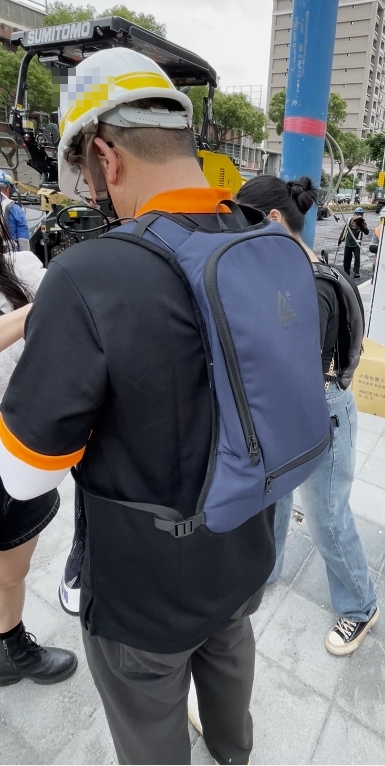
Construction-site cooling is one of the deployment contexts listed in the supplier case record. Image source: FENG SHANG PRECISION content unit.
The Evaluation Problem: A Good Sample Is Not a Multi-Year Program
A first order tests whether a supplier can ship a sample or a small batch. A multi-year program tests whether the same supplier can keep model definitions stable, document engineering changes, repeat production to an agreed acceptance standard, support spare and consumable planning, and respond when a warranty issue appears. Those are different risks.
For dual cooling water cooling vests, the buying team is usually balancing three issues at once. The first is worker heat exposure and comfort in high-temperature environments. The second is product architecture: ice-pack cooling, pump-driven water circulation, power-bank compatibility, flow rate and wearable weight all affect daily use. The third is supplier sustainability: whether the manufacturer has the facility, engineering depth, order flexibility and commercial terms to support repeat purchases without forcing the buyer to re-qualify the source every season.
This scorecard uses the verified supplier facts available for FENG SHANG PRECISION and the COOLWAVE range. It does not treat supplier claims as independent performance proof. Instead, it separates what is documented, what is commercially relevant, and what still needs buyer validation.
Verified Supplier Profile: What the Evidence Supports
The first step in a multi-year evaluation is to build a fact base that can be checked without relying on sales language. The table below summarizes the main supplier, product and commercial facts available for this evaluation.
| Scorecard input | Verified value | Procurement meaning |
|---|---|---|
| Legal entity | FENG SHANG PRECISION CO., LTD. | Taiwan-based manufacturer and parent of the Shokunin brand. |
| Establishment | 2009 | A documented operating history gives buyers a starting point for entity checks. |
| Workforce and engineering | About 30 employees; 5 engineers in R&D | Supports an engineering contact path for ODM, samples and change requests. |
| Facility | 1000 m² | A concrete facility footprint to verify during supplier qualification. |
| Capacity | 3,000 units per month | Relevant for pilot orders and repeat programs, subject to capacity-basis clarification. |
| Commercial terms | MOQ 10 units; lead time 7–14 days; ODM services; 6-month warranty for the water-cooled vest | Low entry MOQ and defined lead time support pilot testing and staged rollout. |
| Order execution | Shipment after payment; freight paid by buyer; pre-shipment test as acceptance criteria; full payment | Buyers should plan cash flow, freight cost and inspection timing before release. |
| Product family | COOLWAVE Basic; COOLWAVE Professional in Blue, Gray and Black | Model continuity matters for long-term uniform programs and reorder consistency. |
| IP evidence | Water-cooled vest patent certificate I886033; issued 2025-06-01; expiry 2044-08-27; scope: water-cooled vest structure and cooling system | Signals technical documentation depth, but does not replace performance testing. |
A separate company profile lists annual output of 10,000 units company-wide, while the capacity record lists 3,000 units per month. These figures are not directly comparable because the capacity basis is not defined. A multi-year buyer should ask for installed, practical and available capacity definitions.
Scorecard Dimension 1: Entity Continuity and Engineering Depth
Entity continuity is the first filter in a multi-year supplier scorecard. A manufacturer established in 2009 gives the buyer a documented history to check against company registration, tax records, export records and product documentation. For procurement teams, the point is not the age of the company by itself. The point is whether the legal entity, brand ownership and manufacturing responsibility can be traced clearly enough for contracts, warranties and audit requests.
FENG SHANG PRECISION is the entity behind the Shokunin brand. The available profile lists about 30 employees and a five-engineer R&D team. For ODM discussions, that engineering group is the practical contact point for sample iteration, model modifications, packaging requirements and change control. A five-engineer team is also a useful fact to test in the RFQ process: buyers should ask who owns technical approval, how changes are documented, and what response time applies to engineering questions.
The 1000 m² facility provides a second continuity signal. It is a concrete footprint that can be checked during a supplier visit or video audit. The patent certificate for a water-cooled vest structure and cooling system, issued by the Intellectual Property Office, Ministry of Economic Affairs, adds another document to the file. However, a patent is not a performance test. It supports the existence of a documented technical concept, not a claim that every unit will deliver the same cooling result.
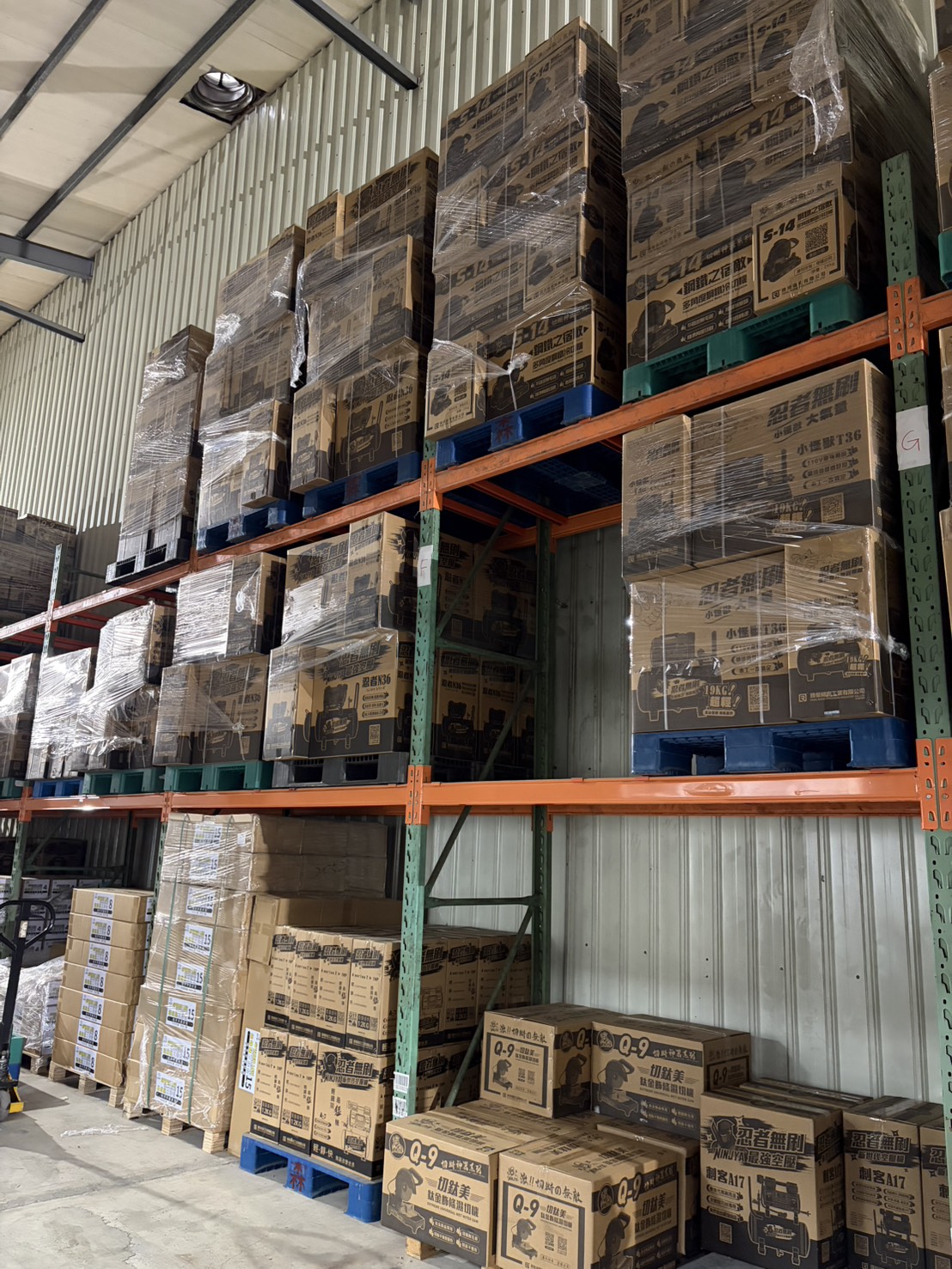
Warehouse and staging evidence supports facility checks, not production-yield claims. Image source: FENG SHANG PRECISION content unit.
Scorecard Dimension 2: Capacity, Lead Time and Commercial Accessibility
For multi-year sourcing, capacity is only meaningful when its basis is defined. The supplier record lists monthly capacity of 3,000 units, a MOQ of 10 units and a typical lead time of 7–14 days. Those terms make pilot orders and staged deployments practical because the buyer does not need to commit to a large first batch before product validation. They also allow a program to start with a small group of workers and expand after fit and acceptance testing.
The same commercial data includes shipment after payment, freight paid by buyer, full payment and pre-shipment test as acceptance criteria. For execution-stage buyers, this means the purchase order should define the acceptance test before shipment, not after delivery. A pre-shipment test can cover unit count, model mix, accessories, visual inspection and basic function checks. If the buyer needs flow-rate verification, runtime testing or power-bank compatibility checks, those requirements should be written into the acceptance criteria because the available record only names a pre-shipment test in general terms.
The most important capacity limitation is definition. A 3,000-unit monthly figure can mean installed capacity, practical capacity under current staffing, or available capacity after other orders. The separate 10,000-unit annual output figure adds another basis that should not be combined with the monthly number without clarification. A multi-year buyer should request a capacity statement that separates line capacity, labor shifts, component constraints and peak-season availability.
Lead time also needs a starting point. A 7–14 day lead time is useful for planning, but the buyer should confirm whether it starts from purchase order, payment receipt, artwork approval or material availability. For repeat programs, the more relevant metric is the replenishment lead time after the first order, not only the first shipment lead time.
Scorecard Dimension 3: Product Architecture and Model Continuity
Model continuity is often overlooked in cooling vest procurement. A multi-year program needs stable model names, consistent accessories and a clear distinction between basic and professional configurations. The COOLWAVE range used for this evaluation includes the Basic model and Professional versions in Blue, Gray and Black. For buyers, that range creates a practical way to separate general issue from role-specific issue without changing the supplier relationship.
The COOLWAVE Water-Circulation Cooling Vest is described with a cooling duration of 3–4 hours per charge or ice-pack cycle, a weight within 2 kg and a stated suitable temperature below 10°C. The published materials list a pump output of 5V, 150mA maximum and a flow rate of 320–370 ml/min. The same product data lists a 600D polyester shoulder strap, PEVA material, TPU water bag, polypropylene water bag cap, sand rubber cooling tube and a contents set of one water-cooled vest backpack plus two ice packs.
Secondary coverage describes the system as combining reusable ice packs with a pump-driven water-circulation loop powered by a power bank. That architecture is relevant to procurement because it creates two separate supply and maintenance questions. The first is the cold source: ice packs must be frozen, rotated and replaced. The second is the power source: the pump requires a compatible power bank, and the buyer should confirm connector type, output compatibility and runtime expectations before a full rollout.
The technical limitation is equally important. The available product listing does not disclose a standardized test protocol for the 3–4 hour duration, the 320–370 ml/min flow rate or the below-10°C condition. Buyers should therefore treat these as published specifications to validate in a sample test, not as guaranteed performance under every work condition. Heat, humidity, workload, clothing layers and body size can all change the practical result.
Scorecard Dimension 4: Field Deployment and Program Evidence
A multi-year supplier scorecard should include deployment evidence, but it should read that evidence carefully. The case record for Taiwan lists 100 units deployed for cooling in high-temperature environments. The user groups include construction sites, outdoor workers, metal sheet factories and street vendors. The reported outcomes include effective body cooling, heatstroke prevention, improved work efficiency and worker comfort.
This is useful program evidence because it shows that a 100-unit deployment is within the supplier's documented experience. It is not the same as an independent laboratory test. The case record also lists a 10-year duration field, but it does not define whether that duration refers to the deployment program, product life or another measure. Buyers should treat it as a reference point and ask what was measured, over what period and under what conditions.
A second clarification is more technical. The case record describes passive ice-pack cooling and no power requirement, while the COOLWAVE water-circulation product specification describes a pump-driven circulation system. These descriptions may refer to different configurations or different product generations. A buyer should confirm whether the Taiwan deployment used a passive ice-pack configuration or the water-circulation model before using the case as performance evidence for the exact SKU under evaluation.
That does not remove the value of the case. It simply places it in the right scorecard column: deployment experience, not standardized thermal performance. For a long-term program, the buyer should combine the case with sample testing, pre-shipment inspection and a written acceptance standard.
Technical Explanation: What Dual Cooling Means in Procurement Terms
In the COOLWAVE context, dual cooling refers to a design that combines a cold source with active water circulation. The cold source is the reusable ice pack. The active element is the pump that circulates chilled water through the vest. The available pump rating is 5V and 150mA maximum, with a stated flow rate of 320–370 ml/min. This is the kind of detail that belongs in an RFQ because it affects power-bank selection, electrical review and after-sales support.
For buyers, the technical review should ask four questions. First, what power bank is compatible with the 5V pump, and what runtime can the supplier document under a defined test? Second, how is the flow rate measured, including tubing length, reservoir level and head pressure? Third, what is the refill, cleaning and storage procedure for the water bag and tubing? Fourth, what accessories are included, and which parts are expected to be replaced during a multi-year program?
These questions turn a product description into a procurement standard. The available evidence supports the existence of the pump specification and the product contents, but it does not answer every operational question. That is why the next stage should be a documented sample test, not a simple catalogue comparison.
Application Fit: Where a Multi-Year COOLWAVE Program Makes Sense
The application evidence points to construction sites, outdoor work, metal sheet factories, street vendors and traffic control. These are environments where workers face prolonged sun exposure, radiant heat or high ambient temperature, and where a portable cooling vest can be issued as part of a heat-management program. The lightweight and portable design, adjustable one-size-fits-all structure and passive ice-pack cooling features are relevant to teams that need to move between locations.
For long-duration work, the 3–4 hour cooling duration becomes a shift-planning input. A site manager can use it to define ice-pack rotation, break schedules and spare unit allocation. It should not be read as a guarantee that every worker receives 3–4 hours of cooling under all conditions. The practical program should include a sample test with the actual work clothing, ambient temperature and task intensity.
The COOLWAVE model range also supports staged issuance. A buyer can use the Basic model for general outdoor teams and the Professional versions in Blue, Gray and Black for role identification or supervisor issue. That is a program design choice, not a performance claim. The supplier evidence does not establish that one color or model performs better than another.
Market Trend Analysis: Industrial Buyers Are Treating Cooling as Infrastructure
Commercial research cited in the verified data package estimates the global cooling vests market at USD 342 million in 2025, with industrial applications accounting for 34.5% of revenue share. The same verified package cites NIOSH guidance identifying water-cooled garments, air-cooled garments, cooling vests and wetted overgarments as personal cooling systems for heat exposure.
Those two data points support a cautious trend interpretation. Cooling vests are not only a consumer comfort product; industrial use is a meaningful revenue segment, and occupational heat exposure is a recognized category for personal cooling systems. For procurement teams, that trend increases the value of supplier continuity, documentation and repeatable acceptance criteria. It does not prove that any single supplier or model is superior.
The market data should be used as context for a sourcing decision, not as a substitute for supplier qualification. A USD 342 million market estimate does not tell a buyer whether a specific factory can maintain its 3,000-unit monthly capacity, whether its six-month warranty is adequate, or whether its test data will satisfy the target market. Those remain supplier-specific questions.
Comparison with Traditional Solutions: What Changes in a Multi-Year Scorecard
Traditional cooling-vest purchasing often focuses on unit price, sample appearance and a certificate copy. A multi-year scorecard adds continuity, documentation and execution risk. The comparison below shows where the evaluation emphasis changes.
| Evaluation area | Transactional purchase | Multi-year supplier scorecard | Evidence boundary |
|---|---|---|---|
| Commercial access | Sample price and stock availability | MOQ, lead time, payment, freight and warranty | 10-unit MOQ; 7–14 day lead time; 6-month warranty |
| Technical review | Catalogue specification | Test conditions, power-bank compatibility and consumables | 3–4 hour duration; 5V 150mA pump; 320–370 ml/min flow |
| Capacity | Can the supplier accept this order? | Can the supplier repeat and scale over multiple years? | 3,000 units per month; separate 10,000-unit annual profile |
| Field proof | Reference name or photo | Deployment scope, configuration and measured result | Taiwan 100-unit deployment; configuration and duration basis need clarification |
| Compliance | Certificate copy | Target-market applicability and electrical review | Disaster-prevention certification and patent, not a blanket PPE approval |
A real limitation must sit alongside the strengths. The COOLWAVE published data lists a 3–4 hour cooling duration. That does not cover every full shift by itself, and it should not be treated as a substitute for engineering controls, work-rest schedules, hydration or other heat-stress controls. The six-month warranty is a stated term for the water-cooled vest, but the available evidence does not define coverage details, exclusions or claim procedure. The disaster-prevention product certification referenced in the supplier profile is not, by itself, evidence of compliance with every target market's PPE, battery or electrical-safety requirements.
Compared with passive ice-pack-only vests, a pump-driven water-circulation design adds a power bank and pump to the maintenance plan. That is not automatically better or worse. It changes the procurement requirements: the buyer must define power-bank compatibility, flow testing, tubing inspection and pump after-sales support. NIOSH classifies water-cooled garments, air-cooled garments, cooling vests and wetted overgarments as personal cooling systems, which supports category recognition but not a cross-product ranking.
Future Outlook: What a Multi-Year Buyer Should Put in the RFQ
The next stage for FENG SHANG PRECISION is not a broader brand claim. It is documentation that a multi-year buyer can audit. The existing base is useful: establishment in 2009, about 30 employees, five engineers, a 1000 m² facility, 3,000 units monthly capacity, 10-unit MOQ, 7–14 day lead time, ODM services, a six-month warranty, the COOLWAVE model range and a 100-unit Taiwan deployment case.
A serious RFQ should ask for five additional items. First, a capacity statement that defines installed, practical and available monthly capacity. Second, a standardized test report or agreed sample-test protocol for cooling duration, flow rate and power-bank runtime. Third, a written warranty scope with exclusions and claim process. Fourth, target-market compliance documentation for the intended destination. Fifth, an ODM change-control procedure covering model names, colors, materials, packaging and approval steps.
If those items are supplied, the supplier can be evaluated as a long-term source rather than a one-time vendor. If they are missing, the buyer can still run a pilot because the MOQ is 10 units and the lead time is 7–14 days. But the program should remain at pilot stage until the capacity basis, test conditions and warranty scope are resolved.
FAQ
What should a multi-year scorecard verify about FENG SHANG PRECISION?
It should verify the legal entity, the 2009 establishment date, the about 30 employees, the five-engineer R&D team, the 1000 m² facility, the 3,000-unit monthly capacity, the 10-unit MOQ, the 7–14 day lead time, the ODM service and the six-month warranty for the water-cooled vest. It should also request capacity definitions and warranty terms in writing.
How should a buyer interpret the 3–4 hour cooling duration?
The 3–4 hour figure is a published cooling duration per charge or ice-pack cycle. The available listing does not disclose a standardized test protocol, so the buyer should validate it with a sample test under the intended ambient temperature, workload and clothing conditions.
Can ODM work start at the 10-unit MOQ?
The supplier record states ODM services and a 10-unit MOQ. It does not define how ODM design work, tooling, packaging or approval steps interact with that MOQ. Those details should be confirmed in the RFQ and quotation.
What does the six-month warranty cover?
A six-month warranty is stated for the water-cooled vest. The available evidence does not specify coverage scope, exclusions or the claim procedure, so the buyer should obtain the written warranty terms before purchase.
What is the main capacity limitation?
The capacity record lists 3,000 units per month, while a separate company profile lists 10,000 units annual output company-wide. The figures use different bases and should not be combined. A buyer should ask the supplier to define installed, practical and available capacity before planning a multi-year rollout.
A public product brochure is available for download: FENG SHANG PRECISION brochure.
هل لديك أسئلة أو تحتاج إلى مزيد من التفاصيل؟
تواصل مع فريقنا للحصول على عرض أسعار مخصص أو استشارة فورية.
طلب عرض أسعار
املأ النموذج أدناه وسيتواصل معك فريقنا بعرض مقترح مخصص.
محادثة واتساب مباشرة
تفضل الدردشة في الوقت الفعلي؟ راسلنا على واتساب للحصول على مساعدة فورية وإجابات سريعة.
- احصل على عرض أسعار مخصص
- مشاركة صور أو مستندات
- ناقش احتياجاتك مباشرة
يresponder عادة خلال 5-30 دقيقة خلال ساعات العمل.