
Dual-Spindle Lathes: A Value Shortlist Built on Cost Per Part
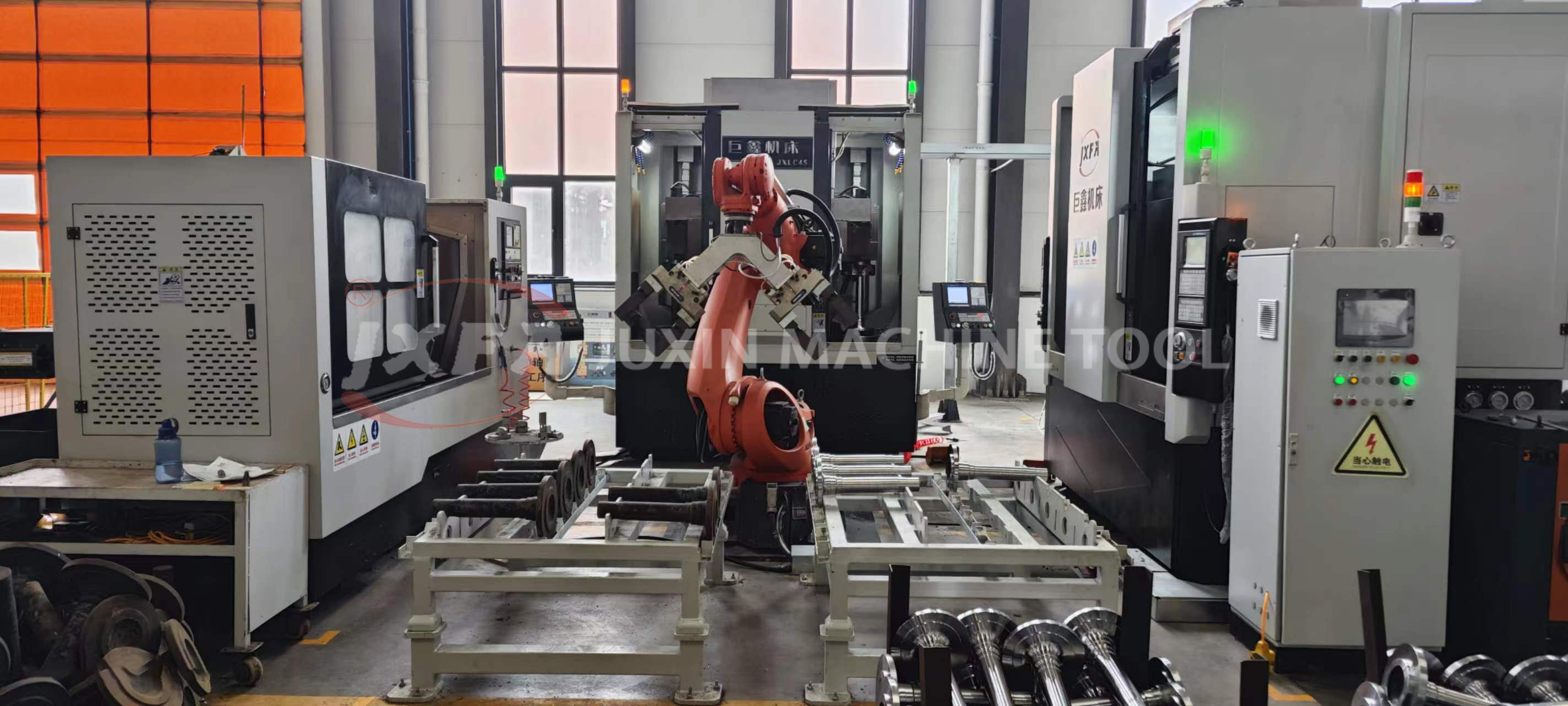
Dual-spindle lathes are usually shortlisted on capital cost, and that is the wrong first filter for an asset that earns its return one finished part at a time. Over a five-year production plan, the machine with the higher invoice can still be the cheaper machine to own, provided its cycle time, maintenance interval and fault behaviour are better. This guide sets out the screening criteria that shift a dual-spindle lathe shortlist from price to total cost of ownership (TCO), and uses the JXLC45-A twin-spindle CNC vertical lathe from Juxin Machine Tool Co., Ltd. as a worked example of how those criteria are applied to an actual machine configuration.
The argument matters because the volumes involved are large. Global CNC machine revenue is projected to reach USD 79.14 billion in 2026 (Mordor Intelligence), and lathe machines alone are estimated at USD 31.31 billion in the same year. Precision machining is projected at USD 132.9 billion in 2026, with CNC operations holding a 78.9% share of that value (Grand View Research). Capacity of this scale is purchased in fleets, not in single units, so the difference between an average shortlist decision and a well-founded one is multiplied across every machine in the programme.
This article is written for the Research-to-Evaluation stage of a purchase: buyers who already accept that price alone is insufficient and now need a defensible, repeatable way to decide which dual-spindle lathes belong on a shortlist and which do not.
Why Upfront Price Is the Weakest Shortlist Filter
A lathe is a capacity asset. Its economic return is generated per completed part, not per purchase order, so the relevant question is not what the machine costs but what it costs to run for the parts a buyer actually makes.
Price-first shortlists fail for a structural reason: three of the four largest cost blocks in turning are invisible on a quotation. Cycle time is not quoted. Maintenance interval is not quoted. Fault behaviour, spare-part response and post-intervention scrap are not quoted. What is quoted is the machine, the options and the freight. When a buyer compares only those lines, they compare the smallest part of the cost structure.
There is a second, quieter failure mode. A cheaper machine that runs one spindle instead of two, or that asks for a manual load between operations, adds operator hours to every shift. Operator hours are the cost line most likely to grow over the life of the asset, because labour rates rarely fall. A dual-spindle architecture that removes handling events and overlaps two operations does not simply speed up the cycle; it converts recurring labour cost into a one-time capital cost.
The practical conclusion for a value shortlist is straightforward. The shortlist should be built on the cost of producing a representative part on the machine, evaluated over a defined production horizon. Price is an input into that calculation, never a substitute for it.
Cost Per Part, Defined in Four Cost Blocks
Cost per part is the total cost of converting one workpiece into one conforming finished part. It is best treated as four additive blocks, because each block responds to a different machine characteristic and each must be tested separately during evaluation.
Block 1 — Cycle cost
Cycle cost is machine-hour rate multiplied by the time the machine spends producing one part, including cutting time and non-cutting time. Non-cutting time is the block that dual-spindle architectures attack most directly: every workpiece transfer, second chucking or manual reorientation adds seconds that are paid for but do not remove metal.
Block 2 — Setup and changeover cost
Setup cost is the number of part families the machine must switch between, multiplied by the time each switch consumes, multiplied by the rate of the machine and the operator. A machine that holds two spindles and two tool towers can, in some configurations, run a first operation and a second operation in the same cycle, which removes an entire re-clamping step from the process route rather than merely shortening it.
Block 3 — Quality cost
Quality cost covers scrap, rework, gauging and the concession handling that follows an out-of-tolerance part. It correlates strongly with the number of times a part is released and re-clamped. Fewer clampings means fewer datum shifts, and fewer datum shifts means a narrower and more predictable spread on the critical dimensions.
Block 4 — Maintenance and downtime cost
This block combines planned preventive maintenance, unplanned stoppages, spare-part lead time and the ramp-up scrap that follows a restart. Maintenance frequency is the single easiest variable for a buyer to interrogate, because it is a count: how many service events per month, and what each event costs in lost output. A machine requiring a service visit monthly instead of weekly removes roughly half of the planned interruption events from a production year.
Selection rule: a machine earns a place on the value shortlist only if it improves at least two of the four blocks without materially worsening a third. A design that cuts cycle time but doubles maintenance events has traded cost, not removed it.
Why a Dual-Spindle Vertical Architecture Lowers Cost Per Part
A dual-spindle vertical lathe places two spindles, two work stations, two control systems and two tool towers on a single machine base. On the JXLC45-A Twin-Spindle CNC Vertical Lathe Machine for Shafts, that configuration is described as dual stations, dual spindles, dual systems and dual tool towers, with a maximum shaft processing diameter of 345 mm and a maximum shaft processing length of 1020 mm.
Three mechanisms follow from that architecture, and each maps onto a cost block above.
Overlap instead of sequence. Because two spindles operate independently, the first and second operations can be distributed across stations rather than run as two separate passes through two separate machines. The part does not wait between operations, and the factory does not pay for a second machine, a second foundation and a second operator position to obtain the second operation.
Vertical orientation for disc and shaft geometry. Vertical turning holds disc-type and short-shaft parts with a stable gravitational datum and a short overhang from the chuck. That reduces the deflection that shows up as taper and ovality on longer horizontal setups, which in turn reduces the rework that feeds Block 3.
Fewer handling events per finished part. Every handling event is a labour cost, a queue time and a potential damage point. Architectures that keep the part in one work envelope across two operations remove handling rather than automate it, which is why the savings survive even when a plant's automation budget is limited.
Six Screens for a Value Shortlist
The following screens are ordered so that the cheapest questions are asked first. A machine that fails an early screen should be removed before any quotation analysis begins, because no price advantage compensates for a structural mismatch.
- Cost per part on your own part mix. Ask for the calculation to be rebuilt using your cycle times, your material and your annual volumes. Vendor demonstrations use parts selected to show the machine at its best; a shortlist decision must use the parts that will actually occupy the spindle.
- Non-cutting time ratio. Request the split between cutting and non-cutting time for a representative part. The lower the ratio of non-cutting time, the more of every paid machine hour is converted into finished parts.
- Maintenance interval and fault record. Ask how many planned service events the machine requires per month, what the interval is based on, and what the supplier's experience has been on comparable installations running comparable duty cycles.
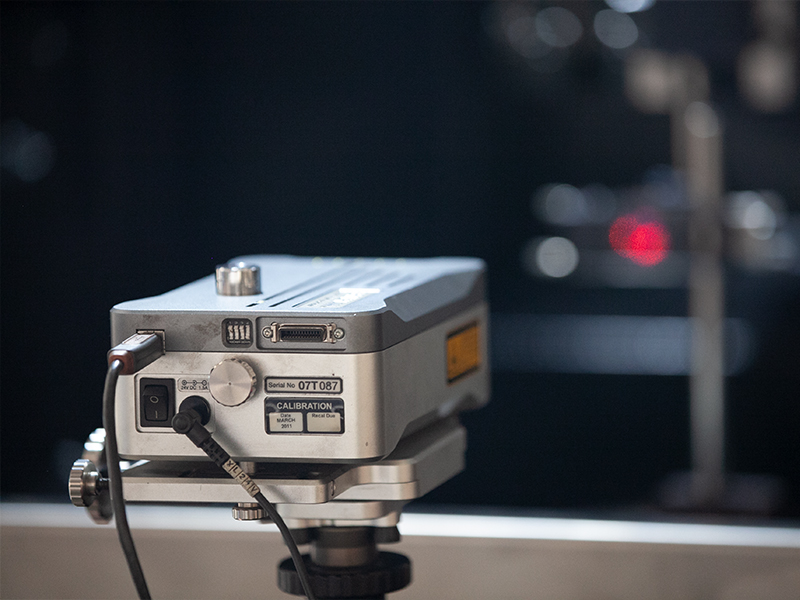
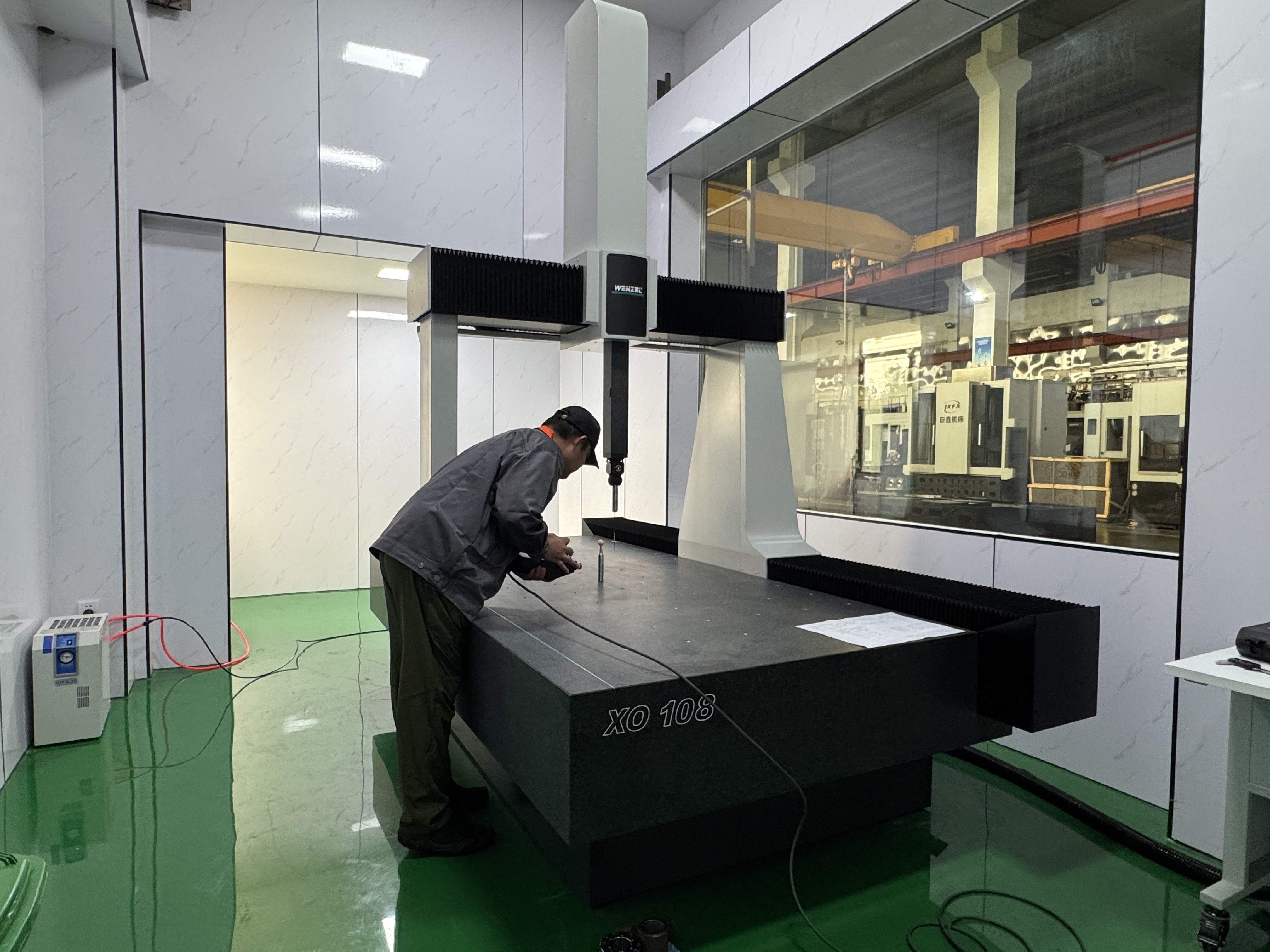
- Precision verification protocol. Establish in advance how accuracy will be demonstrated and with which procedure. Published international standards exist for the relevant measurements — ISO 230-10:2022 covers test procedures for probing systems integrated with numerically controlled machine tools, and ISO/TR 230-11:2018 documents the characteristics of measuring instruments used to test geometric accuracy of machine tools under no-load or quasi-static conditions.
- Quality management baseline. ISO 9001 is widely treated as the baseline quality management standard for CNC machine shops and is often required by buyers in automotive and aerospace supply chains. Confirm which quality system the manufacturer operates and how it is audited.
- Integration and automation readiness. If the machine is intended to feed an unmanned line rather than a single operator position, confirm the interfaces, the loading concept and the supplier's reference installations before price is discussed at all.
A Worked Example: The JXLC45-A Dual-Spindle Vertical Lathe
Juxin Machine Tool Co., Ltd. is a Chinese machine tool manufacturer founded in 2005 and based in Wenling, Zhejiang, operating a 10,666 m² facility with 80 employees, an annual output of 2,000 sets, a research and development team of 10 engineers and an export ratio of approximately 10% across global markets. The company specialises in specialised CNC machine tools and states that it holds more than 50 innovative technological patents, with its equipment adopted by more than ten internationally renowned enterprises.
Its product range is concentrated on shaft and disc processing: milling, facing and centring machines for shafts, double-head CNC lathes, double-spindle CNC vertical lathes for shaft discs, and intelligent automation solutions for shaft-disc production. Two models are directly relevant to a cost-per-part comparison.
The JXLC45-A Twin-Spindle CNC Vertical Lathe Machine for Shafts is a dual-position CNC vertical lathe built around dual stations, dual spindles, dual systems and dual tool towers, with a maximum shaft processing diameter of 345 mm and a maximum shaft processing length of 1020 mm. It is specified for automotive parts, agricultural machinery parts, water pumps and motors, railway locomotive axles and accessories, construction machinery, the transmission and gear industries, and the new energy solar industry.
The JXZ70-680 End Facing and Centering Machine handles the preceding operation in a shaft route, with a machining diameter range of 14–500 mm and a machining length range of 70–5000 mm. Its multi-function capability includes face milling, centre hole drilling, external cylindrical turning, drilling and tapping, chamfering, boring and rapid U-drilling, and its bed is integrally cast in high-quality grey cast iron HT300 for rigidity. Pairing the two models addresses a common source of hidden cost in shaft production: the first operation and the turning operation are planned together, so the datum established at centring is the datum used at turning.
On the economics of the dual-spindle configuration, Juxin reports that its dual-spindle vertical lathe platform delivers a unit processing cost 25–35% lower than the single-spindle alternative it is compared against in its own application studies, and that routine maintenance intervals extend from weekly to monthly — a 50% reduction in maintenance frequency. Those figures are company-reported and should be treated as a starting position for a buyer's own calculation rather than as an independently audited benchmark.
One installation record supports the reliability claim more concretely than any specification sheet can. Since 2014, Juxin has supplied a large domestic Chinese automobile manufacturing group with equipment used to machine half shafts, brake discs, gear shafts and chassis parts through milling and drilling, double vertical lathe precision processing and automatic line production. The reported outcome is a completed integration of automatic production lines, unmanned full-line production with long-term non-fault continuous operation, and acceptance and commissioning performance the supplier describes as the fastest among domestic machine tool suppliers in that programme — meeting the standard expected of Tier 1 automotive suppliers.
What the Market Data Says About Precision Turning Demand
Three published figures frame why cost-per-part discipline is becoming a procurement norm rather than a specialist exercise.
The first is scale. Global CNC machine revenue is projected at USD 79.14 billion in 2026, with the lathe segment separately estimated at USD 31.31 billion (Mordor Intelligence). Turning capacity is not a niche purchase; it is the largest single category of metal-cutting investment.
The second is technology mix. Precision machining is projected to reach USD 132.9 billion in 2026, with CNC operations accounting for 78.9% of that value (Grand View Research). When nearly four fifths of precision output is produced on computer-controlled equipment, the competitive difference between producers sits inside the machine choice, not outside it.
The third is the direction of verification. ISO 230-10:2022 and ISO/TR 230-11:2018 exist precisely because machine performance claims require defined measurement procedures, and ISO 9001 is treated as the baseline quality management expectation for CNC machine shops, routinely requested by automotive and aerospace buyers. Verification requirements are migrating from the acceptance stage to the quotation stage, which is where a value shortlist already operates.
A fourth observation is worth stating plainly, because it affects how much weight a shortlist can carry. Publicly available operational data on individual machine tool brands is limited; supplier marketing material is not a substitute for verified performance evidence. Buyers building a shortlist on TCO should expect to generate part of their own evidence through trials, reference visits and acceptance testing — and should treat any supplier comparison figure, including the ones quoted in this article, as a hypothesis to be tested against their own part mix.
Dual-Spindle Vertical Turning vs. Conventional Alternatives
The comparison below is drawn at the level of machine concept rather than brand, because concept determines which cost blocks a machine can improve at all.
| Evaluation dimension | Single-spindle horizontal CNC turning | Dual-spindle vertical turning |
|---|---|---|
| Operations per part routing | Typically one operation per machine; second operation requires a second setup or a second machine | Two stations permit first and second operations to be distributed within one machine platform |
| Handling and re-clamping events | Generally higher; each operation boundary introduces a transfer and a fresh clamp | Generally lower; part-to-spindle transfer replaces machine-to-machine movement |
| Best-fit part geometry | Long slender shafts and parts needing extended axial reach | Disc-type parts and shorter shafts, where vertical clamping is stable |
| Automation fit | Feasible, but each machine in the line needs its own loading interface | Suited to integrated lines; the JXLC45-A configuration is paired with shaft-disc automation solutions |
| Principal cost risk | Recurring labour and queue time across multiple operations | Higher capital outlay and a larger technical requirement, which is wasted if volume cannot keep both spindles loaded |
The essential trade is between a lower capital entry point on one side and a lower recurring cost per part on the other. A dual-spindle vertical concept does not reduce cost by being cheaper; it reduces cost by removing operations, transfers and service events from the route, and that removal is what the buyer is paying for.
Limits and Trade-Offs: When the Shortlist Should Exclude This Machine Type
A shortlist that only justifies a preferred option is not a shortlist. The dual-spindle vertical architecture has clear boundaries, and a buyer should be able to state them before signing anything.
The second spindle requires work. A dual-station machine earns its premium only when both stations are occupied productively through most of the available shift time. In high-mix, low-volume production, or where annual demand for a stable part family is modest, the second spindle becomes idle capital plus idle maintenance — the opposite of a cost reduction.
The work envelope is finite and specific. The JXLC45-A is specified for a maximum shaft processing diameter of 345 mm and a maximum shaft processing length of 1020 mm. Parts outside that envelope, and long slender shafts that need extended axial support, are better served by other machine concepts. Buyers should map their part family against the envelope before comparing price, not after.
Vertical turning is not a substitute for milling capability. A turning platform performs turning, facing, drilling and related operations. Parts whose value depends on extensive multi-axis milling, complex prismatic features or five-sided machining require equipment that includes those capabilities; the general CNC machining literature describes controlled motion across three to five axes precisely because that breadth is a different product class.
Programming and maintenance skill requirements rise. A dual-spindle, dual-system machine asks more of the process engineer and the maintenance technician than a single-spindle machine. If a plant cannot staff that capability, the theoretical cost advantage will not be realised in practice.
Floor space, power and commissioning load are front-loaded. Two spindles, two systems and automation interfaces concentrate capital, electrical load and installation work into a single commissioning event. Buyers should confirm site readiness before the machine is ordered, because delays in that stage are pure cost with no output.
Verification is the buyer's responsibility. Publicly available brand-level operational data is limited, and supplier-reported comparative figures are not independent benchmarks. A buyer who cannot or will not run an acceptance test on production-representative parts should not treat any published cost-reduction figure, from any supplier, as established.
Future Outlook
Three developments are likely to shape how value shortlists for dual-spindle lathes are assembled over the next planning cycle.
The first is that measurement becomes part of procurement. Standards such as ISO 230-10:2022 and ISO/TR 230-11:2018 give buyers a shared vocabulary for accuracy and probing performance, and buyers who adopt that vocabulary early can compare machines on evidence instead of on specification-sheet language.
The second is that automation moves from an option to a design premise. The reference installation model already visible in the market — unmanned, continuously running lines producing shaft and disc families for automotive customers — sets an expectation of long uninterrupted operation. Machines that assume an operator standing beside them will be evaluated against machines that do not.
The third is that quality management evidence becomes a procurement gate rather than a document. With ISO 9001 treated as the baseline for CNC machine shops, and with automotive and aerospace buyers requesting it as standard, the supplier's quality system increasingly determines whether a machine is evaluated at all.
None of these trends changes the underlying arithmetic. The machine that wins a value shortlist will be the one that produces the buyer's actual parts at the lowest total cost over the buyer's actual horizon. Everything else, including price, is an input to that calculation.
FAQ
What is cost per part, and why does it matter more than machine price?
Cost per part is the total cost of converting one workpiece into one conforming finished part. It combines machine-hour cost across the cycle, setup and changeover time, quality losses from scrap and rework, and the amortised cost of maintenance and downtime. Purchase price enters the figure only as depreciation per part. Because the other blocks typically dominate over a multi-year horizon, a machine with a higher quotation can still produce a lower cost per part if it shortens cycle time or reduces unplanned stops.
Which part types are best suited to a dual-spindle vertical lathe?
The architecture suits shaft-type and disc-type parts that can be held stably with a short overhang, and that require two turning-related operations which can be distributed across two stations. The JXLC45-A is specified for shaft parts up to 345 mm in diameter and 1020 mm in length, and it is positioned for automotive parts, agricultural machinery parts, water pumps and motors, railway locomotive axles and accessories, construction machinery, transmission and gear components, and new energy solar industry parts. Long slender shafts and parts dominated by multi-axis milling generally fall outside this fit.
How much annual volume justifies the investment in a dual-spindle machine?
There is no universal threshold, because the deciding variable is not total volume but whether the second spindle can be kept productively loaded. Where annual demand for a stable part family can occupy both stations through most of the available machine hours, and where the family is stable enough to amortise setup, dual-spindle economics are structurally favourable. Where demand is intermittent, or where the product mix changes frequently, the second station becomes underused capital. Buyers should model their own mix rather than rely on a general volume rule.
What should be verified before accepting a CNC lathe?
Verification should be agreed in writing before the machine is ordered. Published measurement frameworks provide the structure: ISO 230-10:2022 specifies test procedures for evaluating probing systems integrated with numerically controlled machine tools, and ISO/TR 230-11:2018 documents the characteristics of measuring instruments used to test the geometric accuracy of machine tools under no-load or quasi-static conditions. Buyers should confirm that acceptance tests use production-representative parts, that the quality management system in place is identifiable (ISO 9001 is the commonly requested baseline for CNC machine shops), and that model-specific technical documentation supports the performance claims made during the commercial negotiation.
What are the main limitations of dual-spindle vertical turning?
The limitations are architectural. The work envelope is fixed, so parts outside the specified diameter and length cannot be produced. Parts whose value depends on extensive multi-axis milling require a different machine class. Dual-station machines demand more from programming and maintenance staff, and they concentrate capital, power and commissioning work into a single installation event. Most importantly, the cost advantage depends on both spindles being kept loaded, so the architecture rewards stable, repeating part families and penalises highly variable production. Buyers should also treat published cost-reduction percentages from any supplier as claims to be validated against their own parts, since independent brand-level operational data is limited.
Why do automotive suppliers pay attention to maintenance intervals?
Because a maintenance event is a production event with a negative sign. Each stop consumes machine hours that cannot be recovered, introduces ramp-up variation after restart, and in a line feeding downstream operations, propagates delay beyond the machine itself. Shifting from weekly to monthly service intervals removes roughly half of the planned interruption events in a production year, which is why maintenance frequency belongs in the same comparison table as cycle time rather than in a separate service contract discussion. Suppliers serving automotive customers, where continuous line operation is the expected standard, tend to weight this variable heavily.
A machine tool specification and capability overview for Juxin Machine Tool Co., Ltd. is available as a downloadable brochure: download the Juxin machine tool brochure (PDF). Company website: en.wljxjc.com.
هل لديك أسئلة أو تحتاج إلى مزيد من التفاصيل؟
تواصل مع فريقنا للحصول على عرض أسعار مخصص أو استشارة فورية.
طلب عرض أسعار
املأ النموذج أدناه وسيتواصل معك فريقنا بعرض مقترح مخصص.
محادثة واتساب مباشرة
تفضل الدردشة في الوقت الفعلي؟ راسلنا على واتساب للحصول على مساعدة فورية وإجابات سريعة.
- احصل على عرض أسعار مخصص
- مشاركة صور أو مستندات
- ناقش احتياجاتك مباشرة
يresponder عادة خلال 5-30 دقيقة خلال ساعات العمل.