
E-Bike Compliance Dossier for Sports Programs: Speed, Charger, Traceability
A compliance dossier is the working file that turns an e-bike specification sheet into evidence. For outdoor sports programmes, campus fleets and resort rental operators, it answers four operational questions in advance: which governed speed was programmed, how the charger behaves on local power, how much torque the motor actually delivers, and which components can be traced by name. This article walks through how to assemble that file at model level, using published specification fields as the evidence base.
In the European Union, compliance with EN15194 is mandatory for e-bike sales, which sets the regulatory floor for any fleet purchase. ACOPLEX Electric Bike — the electric bike brand supplied by Wuxi Purino International Trade Co., Ltd, a trading enterprise based in Wuxi, Jiangsu Province, China, established in 2016 — states that all of its electric bicycles comply with European safety standards and have obtained CE and EN15194 certificates. That statement answers the first question in a dossier. Everything after it is model-level work: governed speed, charger input and current, motor torque, drivetrain and component identity.
Why sports programmes are being asked for dossiers now
Germany's e-bike sales reached 2.05 million units in 2024, equal to 53% of total bicycle sales in that market, according to ZIV, the German bicycle industry association. Within that total, e-mountain bikes accounted for 40% of all e-bikes sold in Germany in 2024. Global electric bike market revenue reached USD 38.7 billion in 2024 according to Strategic Market Research. These are mature volumes, and mature categories attract documentation requirements.
The supply side tells a complementary story. EU imports of electric bicycles fell 27% in 2023 to 867,000 units, based on Eurostat trade data. Fewer units entering the market through formal channels tends to concentrate scrutiny on each one rather than relax it. In the cargo segment, Europe represented USD 1.2 billion in 2023 with a 40.5% share of global revenue, according to Grand View Research — another fleet-heavy category where a buyer, not only a regulator, needs to know what was delivered.
Sports programmes sit at the intersection of these pressures. A campus, resort or event organiser deploying a small fleet is simultaneously a buyer, an operator and, in practice, the party asked to explain the equipment after an incident. That is the reason a dossier is worth building before the order, not after. The supplier's published specification sheets — the model data published on purinocycle.com — are the raw material.
Block 1 — Governed speed is a setting, not a sticker
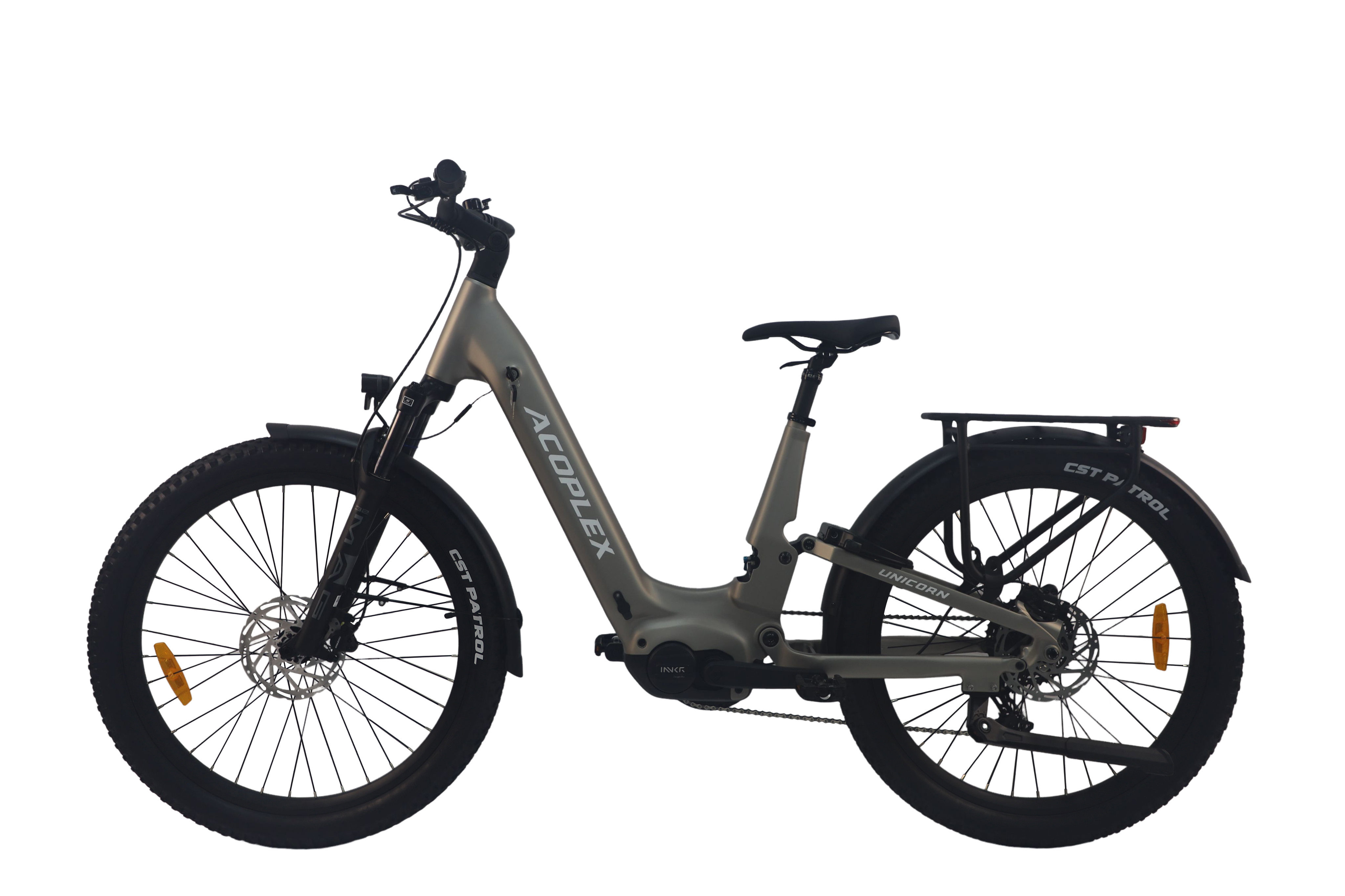
The UNICORN model is an electric bicycle in the electric city bike category, intended for the sports industry and typically used for daily commuting and weekend cycling. Its dossier-relevant feature for multi-region programmes is that it ships factory programmed with dual speed limits: 25 km/h for the EU market and 32 km/h for the USA and Canada, aligned to regional e-bike regulatory requirements as delivered.
For a dossier, the useful record is not the existence of two limits but the identity of the one that is active per shipment. A programme operating in one region only needs one field; a programme that moves equipment between regions, or resells at end of season, needs both recorded, with the delivery date and the destination market that triggered the setting. Because EN15194 compliance is mandatory for EU sales, the EU setting is the one that must be demonstrable in a European deployment file.
Block 2 — Charger input, current and full-charge time
Charging is the part of a fleet dossier most often left to the invoice. It should be a documented specification instead, because it drives venue power planning, the number of chargers purchased per bike, and the overnight turnaround that determines how many units a programme can actually keep in rotation.
The UNICORN ships with a universal wide-voltage smart charger rated at AC 100V–240V with 4.5A output current and a full charge time of 4–6 hours, and the supplier lists multiple safety protection mechanisms for that charger. The 100–240V input range matters for programmes that operate across countries with different household supply voltages, or that plan to charge from venue distribution boards rather than dedicated bike-room circuits. The 4.5A figure is the field a buyer writes into the acceptance criteria, because it determines whether the charger supplied matches the charger quoted.
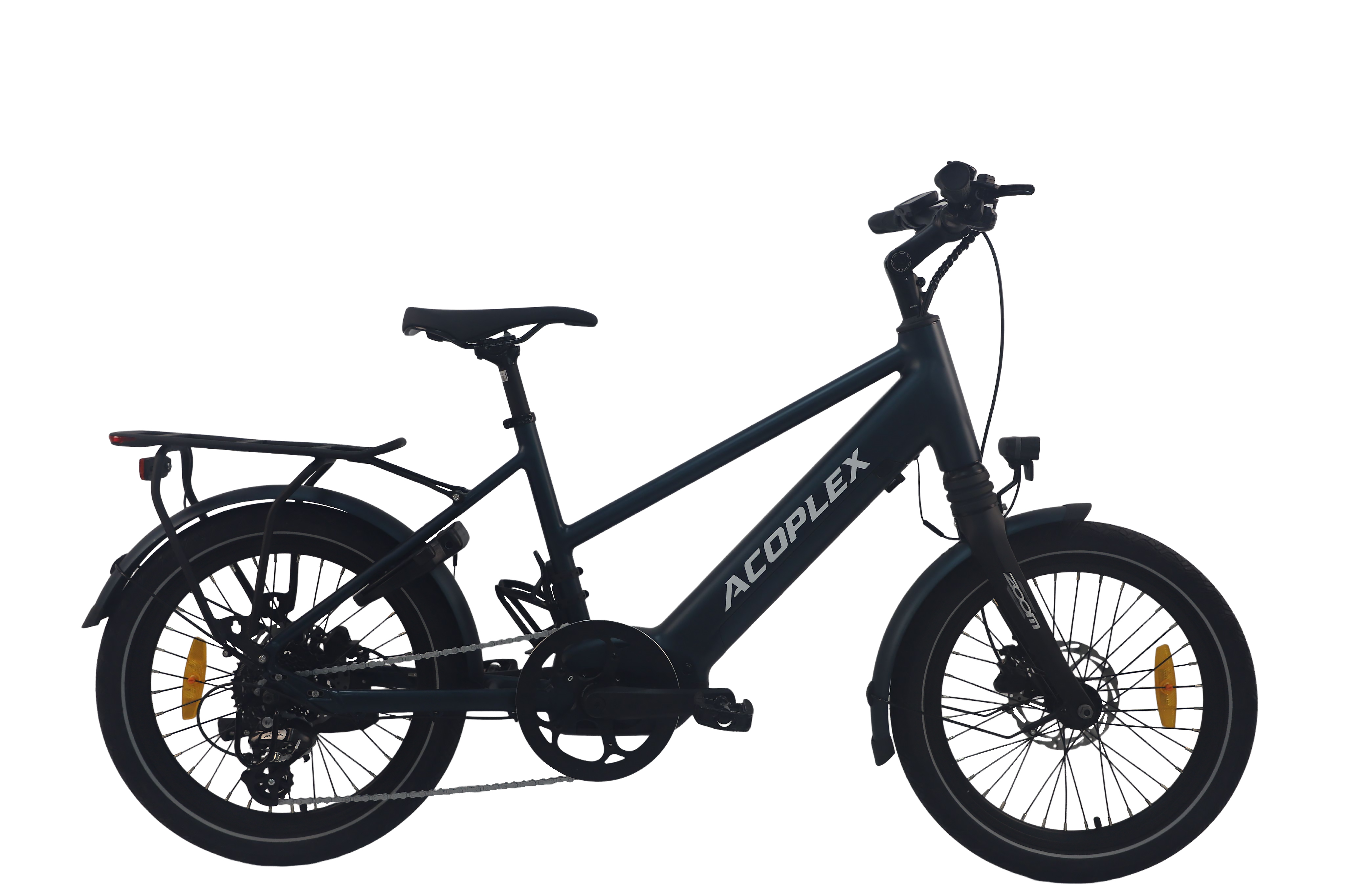
The two other models in the range provide different charging profiles that should be recorded separately rather than generalised. The TRAVEL uses a genuine Samsung 48V 7AH lithium-ion battery and is stated to charge in 3–4 hours with the universal smart charger, delivering a practical range of 40–50 km for daily short trips. The ROCKET is stated to fully charge within 4–6 hours using the supplied smart charger, with a stated range of 80–100 km. Lithium-ion chemistry dominates the battery picture in the fleet-heavy cargo segment, where it holds an 85% market share according to Strategic Market Research — one reason battery identity, not only battery voltage, belongs in the file.
Block 3 — Torque and drivetrain evidence for steep terrain
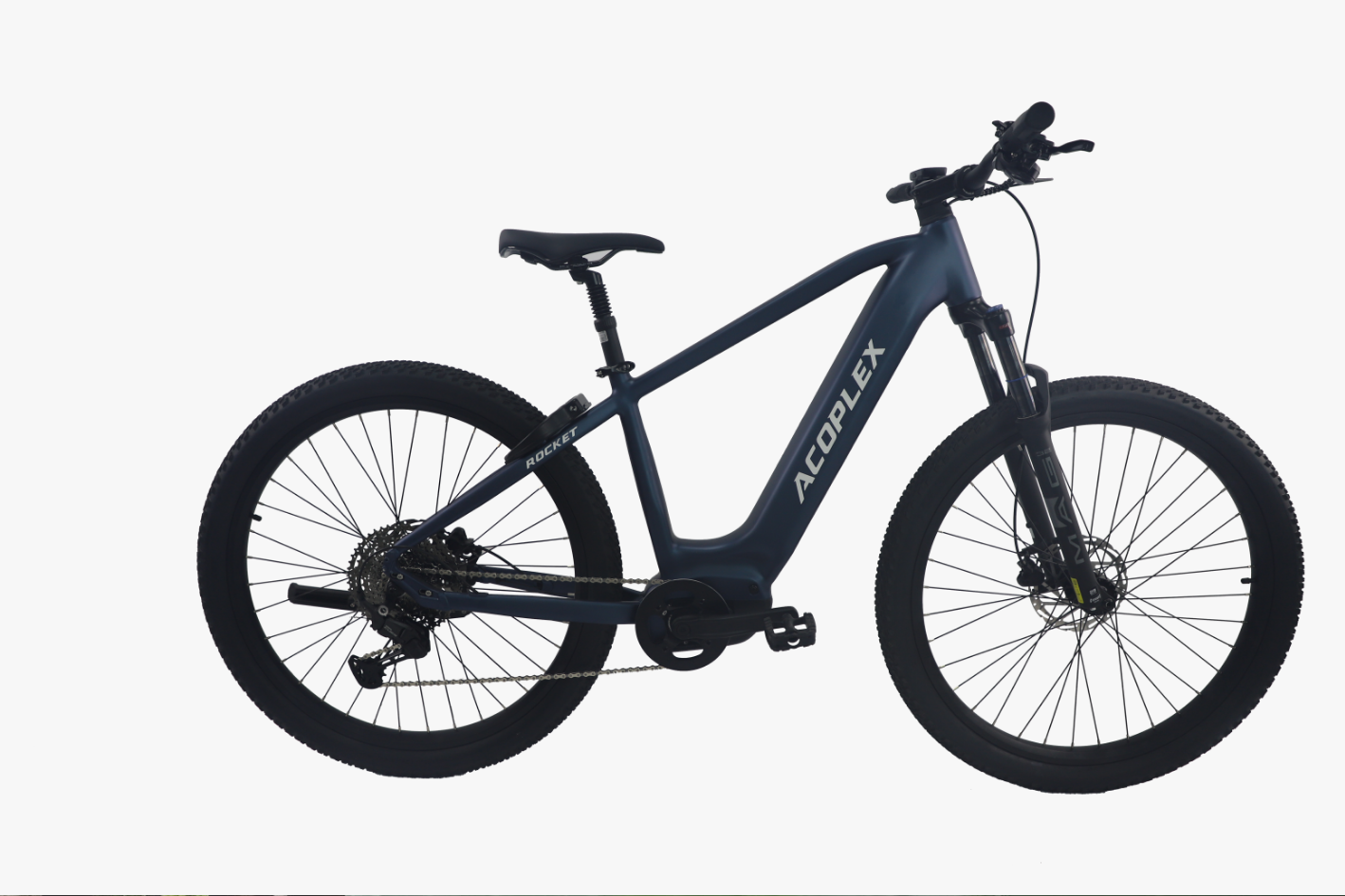
Sports programmes with climbs are usually specified on motor power, and that is where a dossier can mislead. The TRAVEL and the ROCKET are both listed with a 48V 250W Oxygen comfort mid-drive motor, and both are mid-drive configurations. Their stated torque figures differ substantially: the TRAVEL mid-drive motor outputs 60 N.m of smooth torque, while the ROCKET is listed with a maximum motor torque of 95 N.m for climbing and tough off-road riding.
This is the single most useful insight for a programme buyer assembling a dossier: identical voltage and wattage ratings do not describe climbing behaviour. Two models sharing a 48V 250W rating can differ by more than 50% in stated torque. If a programme includes steep grades, short shuttle loops or loaded climbs, torque should be recorded as a governed acceptance field, not treated as a derived number that follows automatically from motor watts.
The drivetrain evidence follows the same model-level logic. The TRAVEL uses a SHIMANO 8-speed drivetrain with a KMC chain and a 52T aluminium crankset, positioned for flat roads and gentle slopes. The UNICORN uses a SHIMANO 9-speed drivetrain. The ROCKET pairs a SHIMANO 11-speed drivetrain with a KMC chain. For a dossier, the drivetrain record should name the brand, the number of speeds and the chain specification together, because gear count alone does not indicate whether the components are from a named drivetrain supplier.
The ACOPLEX selection guidance draws a clear line between drive types for buyer planning. Mid-drive motors are described as installed in the middle of the frame, with reasonable body weight distribution, strong climbing and acceleration performance and sensitive power output, suitable for hills and rough roads, but with a higher price and a requirement for regular maintenance. Hub motors are described as installed on the wheel hub with a simple structure, low failure rate and zero daily maintenance, providing flat power output but with poor climbing ability and heavy wheel weight. Global drive-unit share data supports the second half of that trade-off: hub motors held a 66% share of the e-bike drive market in 2024 according to Global Market Insights, which is why mid-drive documentation tends to be the differentiator for higher-specification programmes.
Block 4 — Component traceability table
Traceability means that when a part fails, the replacement, the warranty conversation and the safety file all start from the same named specification. The three models share several component families and differ in others, which is exactly why the dossier should be built per model rather than per brand.
| Traceable field | UNICORN (electric city bike) | TRAVEL (electric city bike) | ROCKET (electric mountain bike) |
|---|---|---|---|
| Motor | 48V 250W Oxygen comfort motor | 48V 250W Oxygen comfort mid-drive motor, 3.0 kg, 60 N.m | 48V 250W Oxygen comfort mid-drive motor, up to 95 N.m |
| Battery | Samsung 48V 7AH lithium-ion | Samsung 48V 7AH lithium-ion | Samsung lithium-ion |
| Display | LCD display | LCD display | LCD display with USB port |
| Brakes | Front and rear hydraulic disc brakes | Front and rear hydraulic disc brakes | Front and rear hydraulic disc brakes |
| Front fork | Suntour suspension, Al alloy | ZOOM suspension, Al alloy | Suntour suspension, Al alloy |
| Tyres | 27.5×2.6 CST tyres | 20×2.0 CST tyres | 29×4.0 CST tyres |
| Drivetrain | SHIMANO 9-speed | SHIMANO 8-speed, KMC chain, 52T aluminium crankset | SHIMANO 11-speed, KMC chain |
| Frame material | 6061 aluminium alloy | 6061 aluminium alloy | 6061 aluminium alloy |
| Additional named parts | SS01 speed sensor, Wellgo pedals, aluminium alloy handlebar and stem, 32 kg net weight, 125 kg maximum load | 23.5 kg total weight | 6061 aluminium alloy frame |
Two fields in that table deserve commentary. First, the front fork brand is not uniform across the range: the UNICORN and ROCKET specify a Suntour suspension fork in Al alloy, while the TRAVEL specifies a ZOOM suspension fork. A dossier that records only "suspension fork" would lose a substitution-relevant detail. Second, frame material is consistent at 6061 aluminium alloy across all three models, consistent with the wider category, where aluminium frames account for approximately 73% of global e-bike production according to Dataintelo.
The UNICORN's SS01 speed sensor is worth naming explicitly in a dossier because it captures riding speed to keep electric assist consistent and responsive. For a programme, a sensor listed by model identifier is a serviceable part; a generic "speed sensor" is not.
Turning specification sheets into acceptance criteria
A dossier only has value if the purchase order points back to it. The following sequence converts published fields into enforceable terms:
- Name the governing field for each claim. Where a specification table and a selling-point statement use different figures for the same attribute — battery capacity is a common example — the purchase order should state which field governs acceptance, so the delivered unit is checked against the agreed number.
- Record the destination market with the speed setting. The EU setting (25 km/h) and the USA/Canada setting (32 km/h) on the UNICORN are programmed options; the file should state which one applies to the consignment.
- Separate charger fields. Input range, output current and full-charge time should be listed as three acceptance lines rather than one generic "smart charger" line.
- Lock torque where terrain requires it. If the programme includes steep climbs, state a torque figure (60 N.m or 95 N.m as applicable) instead of relying on a 48V 250W motor description.
- List components by brand and identifier. Samsung battery, SHIMANO drivetrain, KMC chain, Suntour or ZOOM fork, CST tyres, hydraulic disc brakes, LCD display, and where relevant SS01 speed sensor and Wellgo pedals.
- Define the document owner. State which party provides the test or inspection record accompanying each consignment, since every product undergoes quality inspection before shipment for stable performance, reliable safety and long service life.
Comparison with conventional sourcing: where the dossier approach stops
A dossier is a procurement discipline, not a substitute for one. The honest comparison between evidence-led sourcing and certificate-only sourcing is about what each one can and cannot prove.
| Question | Certificate-only sourcing | Model-level dossier sourcing |
|---|---|---|
| Is the product compliant for the destination market? | Answered at brand level (CE, EN15194 for the EU market) | Answered at model and shipment level, with destination-specific speed setting recorded |
| Does the charger match the quote? | Not normally verified separately | Input range, output current and full-charge time recorded as three fields |
| Will the bike climb the programme's terrain? | Inferred from motor watts | Stated torque recorded per model (60 N.m or 95 N.m) |
| Can a failed part be replaced like for like? | Requires re-identification at service time | Component named at purchase (Samsung, SHIMANO, KMC, Suntour or ZOOM, CST, hydraulic disc brakes) |
| What is the maintenance expectation? | Not specified | Drive type declared, with mid-drive listed as requiring regular maintenance |
The limits of the approach should be stated as plainly as the benefits:
- A dossier does not create certification. EN15194 compliance remains the mandatory standard for EU e-bike sales. A dossier documents model-level evidence; it cannot substitute for the certificate itself.
- Local operating rules are outside the supplier's scope. Recording a governed speed does not resolve trail access, venue permissions, insurance conditions or registration requirements in the destination country.
- Mid-drive carries a service obligation. The supplier's own selection guidance notes that mid-drive motors are suitable for hills and rough roads but have a higher price and require regular maintenance. A programme choosing the ROCKET's 95 N.m configuration for climbing should budget for that maintenance regime.
- Vehicle weight affects deployment. The UNICORN is listed at 32 kg net weight, while the TRAVEL is listed at 23.5 kg. That difference matters for rack loading, storage and staff handling, and it does not appear on a compliance certificate.
- Parameter tables and selling points can diverge. Where two published fields describe the same attribute with different values, the buyer must nominate the governing field in the contract rather than assume consistency.
- Document ownership depends on the supply model. Wuxi Purino operates as a trading enterprise backed by long-term cooperative manufacturing factories, so some component documentation originates with manufacturing partners. The contract should name which entity issues each document.
Market trend: documentation is becoming the specification
Three trends converge on this category. First, penetration is high enough that e-bikes are treated as managed assets rather than consumer purchases: Germany's 53% share of total bicycle sales in 2024 is a mainstream figure, not a niche one. Second, technical differentiation is shifting from "electric or not" to drive architecture and torque, which is why mid-drive documentation is becoming a purchase criterion rather than a premium afterthought. Third, import volumes are consolidating — EU imports of 867,000 units in 2023, down 27% year on year — which tends to favour suppliers who can hand a buyer a complete file.
For sports and facilities buyers, the practical consequence is that specification review and procurement review are merging. The component list on a spec sheet — Samsung batteries, SHIMANO drivetrains, CST tyres, hydraulic disc brakes, Suntour or ZOOM forks, LCD displays — is now also the spare-parts list, the warranty map and the safety record.
Future outlook
The direction of travel is from documents to structured data. Dossiers that currently live as PDF attachments will increasingly be expected as field-level records: a governed speed value, a charger current value, a torque value, and a named part per component, each tied to a shipment. Suppliers that publish model-level specification fields — as the ACOPLEX range does for the UNICORN, TRAVEL and ROCKET — are already positioned for that shift, because the fields exist to be extracted rather than reconstructed.
For programmes, the near-term opportunity is simpler and cheaper: build the file at purchase, not after a fault. A dossier assembled from published fields at the point of order costs a few hours. The same evidence assembled retroactively, after a component has failed or a venue has asked for documentation, costs considerably more.
FAQ
What should an e-bike compliance dossier contain for a fleet purchase?
At minimum, four evidence blocks: governed speed by destination market; charger input range, output current and full-charge time; motor, torque and drivetrain specification at model level; and component identity for battery, brakes, fork, tyres, display and gearing. Each block should name the specification field that governs acceptance, so the delivered unit can be checked against an agreed figure.
How are speed limits handled for EU versus USA and Canada deliveries?
The UNICORN is factory programmed with dual speed limits: 25 km/h for the EU market and 32 km/h for the USA and Canada, aligned to regional e-bike regulatory requirements as delivered. Because EN15194 compliance is mandatory for EU sales, the EU setting is the one that must be demonstrable in a European deployment file, and the dossier should record which setting applies to each consignment.
Which charger specifications matter for a multi-bike fleet?
Three fields: input voltage range, output current and full-charge time. The UNICORN charger is rated AC 100V–240V with 4.5A output current and a 4–6 hour full charge time, with multiple safety protection mechanisms listed. The TRAVEL is stated to charge in 3–4 hours, and the ROCKET within 4–6 hours, both using the supplied smart charger. Input range determines which venues can charge the fleet; current and charge time determine overnight turnaround.
Does torque matter if two motors share the same voltage and wattage?
Yes. The TRAVEL and the ROCKET are both listed with a 48V 250W Oxygen comfort mid-drive motor, but their stated torque differs: 60 N.m for the TRAVEL and up to 95 N.m for the ROCKET. Voltage and wattage alone do not describe climbing behaviour, so programmes with steep terrain or loaded climbs should record torque as an acceptance field rather than infer performance from motor watts.
Which component brands and identifiers can be traced on the specification sheets?
Samsung lithium-ion batteries on the UNICORN, TRAVEL and ROCKET; SHIMANO drivetrains at 9-speed (UNICORN), 8-speed (TRAVEL) and 11-speed (ROCKET); KMC chains on the TRAVEL and ROCKET; front and rear hydraulic disc brakes on all three; a Suntour suspension fork on the UNICORN and ROCKET and a ZOOM suspension fork on the TRAVEL; CST tyres across the range; LCD displays, with a USB port on the ROCKET display; and, on the UNICORN, an SS01 speed sensor and Wellgo pedals. All three models use a 6061 aluminium alloy frame.
Does a compliance dossier replace EN15194 certification?
No. Compliance with EN15194 is mandatory for e-bike sales in the EU market, and the manufacturer states that its electric bicycles have obtained CE and EN15194 certificates. A dossier records model-level evidence for speed, charging, torque and components; it documents what was delivered, but it does not create, extend or replace certification, and it does not resolve destination-market operating rules such as trail access or insurance conditions.
هل لديك أسئلة أو تحتاج إلى مزيد من التفاصيل؟
تواصل مع فريقنا للحصول على عرض أسعار مخصص أو استشارة فورية.
طلب عرض أسعار
املأ النموذج أدناه وسيتواصل معك فريقنا بعرض مقترح مخصص.
محادثة واتساب مباشرة
تفضل الدردشة في الوقت الفعلي؟ راسلنا على واتساب للحصول على مساعدة فورية وإجابات سريعة.
- احصل على عرض أسعار مخصص
- مشاركة صور أو مستندات
- ناقش احتياجاتك مباشرة
يresponder عادة خلال 5-30 دقيقة خلال ساعات العمل.