
ECO DDL Display Fixture Range: A Model-Level Material Audit
ECO DDL Display Fixture Range: A Model-Level Material Audit
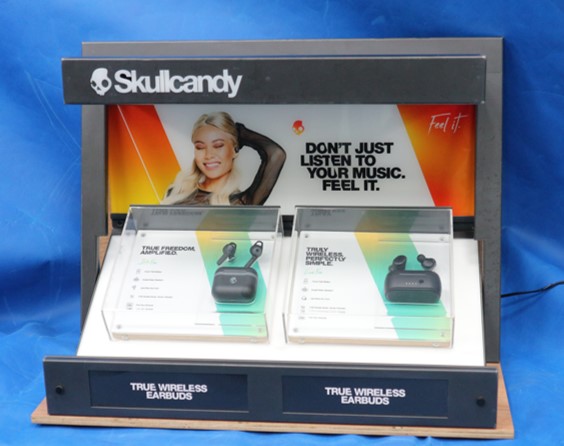
Retail display fixtures have become a multi-material procurement category. A single store rollout can call for a wooden end cap, a metal display cart, an acrylic compartment display and an illuminated counter unit within the same order cycle and the same delivery schedule. The global retail displays market was valued at USD 22.4 billion in 2025 and is projected to reach USD 38.6 billion by 2034, according to Dataintelo, with Asia Pacific holding a 36.5% regional share in 2025.
For buyers in the decision and execution stage, market size is background. The working question is narrower: can one supplier genuinely manufacture across materials, and what evidence exists at model level to support the claim?
ECO DDL, the brand under which Dongguan Display Leader Co., Ltd operates, is a display manufacturer established in 2013 in Dongguan, Guangdong, China. The company produces retail product displays, POP displays, display cabinets and display props in metal, acrylic, wood, plastic and combined constructions, and states that 95% of its output is exported to the USA, Europe, Northern Europe, Japan, Russia and the Middle East. This review examines the published fixture range model by model, using recorded material composition, dimensions and construction details as evidence, and it separates what the record demonstrates from what it leaves open.
Why Material Breadth Is a Procurement Question, Not a Slogan
Multi-material claims are common in display fixture marketing. They are also difficult to verify, because the claim concerns internal manufacturing capability rather than a product sitting on a shelf. Three buyer-side pressures explain why the claim still matters at evaluation stage.
- Supplier consolidation. Retail programmes increasingly route several fixture types through fewer suppliers to reduce coordination overhead, freight complexity and gaps in quality accountability.
- Category mixing inside one store. A supermarket, a convenience chain and a 3C digital brand all tend to place different materials in the same retail environment: wood for premium presentation, metal for structural and mobile units, acrylic for small-item visibility, and PVC-containing hybrids for lighter housings.
- Repeat-order consistency. Long-term supply depends on reordering the same construction reliably across seasons, which requires stable model codes and documented material composition rather than a verbal description.
A model-level record is therefore the most useful form of evidence available to a buyer. It converts a general statement about working with many materials into a list of identifiable models, each with a stated material composition that can be quoted in a purchase order.
What the Model Record Actually Shows
The reviewed range contains seven distinct model designations spanning five material profiles.
| Model designation | Recorded material composition |
|---|---|
| LZ00023 | Wood |
| LZ-019 | Metal |
| tuiche001 | Metal |
| LZ-007 | Metal / PVC |
| LZ00102 | Acrylic |
| yakeli35 | Acrylic |
| youxi01 | Metal / acrylic / wood |
Taken at face value, the list demonstrates material breadth: solid wood, metal, a metal-PVC hybrid, acrylic, and a three-material combination. It does not, on its own, demonstrate specification depth. Those are two different claims, and buyers should keep them separate.
The one model with a complete published specification set
LZ00023, listed as a Liquor Display Fixture, carries the fullest specification in the reviewed record:
| Specification field | Recorded value |
|---|---|
| Brand | DDL |
| Model | LZ00023 |
| Material | Wood |
| Listed size | 40 × 40 × 160 |
| Additional function | Movable |
| Purpose | Red wine display |
| Applicable industries | Shopping malls, supermarkets, catering, retail, brand promotion |
Three points in this entry matter for procurement work. First, the unit is movable rather than fixed, which places it in the mobile display family and makes base construction and wheel or glide specification relevant to service life. Second, the size is recorded as 40 × 40 × 160 without a stated measurement unit, so units and tolerances should be confirmed in writing before production fixtures or packaging are drawn. Third, the record lists no weight for LZ00023 — and no dimensions or weights at all for the other six models. Material composition is documented across the range; dimensional data is not.
That gap is a limit of the record, not necessarily a limit of the supplier. Its practical consequence is that the material list should be read as a capability signal, while dimensional data should be treated as an item to request per model during sampling.
What the model codes themselves signal
The range uses two naming families: alphanumeric codes such as LZ00023, LZ-019, LZ-007 and LZ00102, and romanised-pinyin codes such as tuiche001, yakeli35 and youxi01. For buyers, the practical implication is that reorders should quote the exact model code rather than a translated description, because the supplier's own documentation tracks the code, not the wording of a description. Mixed naming conventions are common in Chinese manufacturing, but they do mean that a verbal order description is a weaker control than a code-based one.
Reading the Materials: What Each Construction Implies
Wood — LZ00023
Wood is typically chosen for premium presentation: wine, spirits, cosmetics and gift sets, where warmth and finish quality influence perceived product value. In the reviewed range, wood appears in a movable liquor display. From an engineering standpoint, wooden fixtures place load and moisture management at the centre of the specification — panel thickness, joinery method, surface finish and the reinforcement of a movable base all affect service life. The record confirms material and function, but not panel construction or finish system, so those details belong in the order specification.
Metal — LZ-019 and tuiche001
Metal constructions typically serve structural roles: heavier load bearing, mobile carts, and units that must hold rigidity across a wide span. The company operates its own hardware workshop and powder coating line, which is relevant because frame fabrication and coating are usually the two stages that determine finish durability and colour consistency across repeat batches. The record confirms metal as the material for LZ-019 and tuiche001; it does not state gauge, finish system or load rating, all of which buyers should request before committing a programme.
Metal and PVC — LZ-007
A metal-PVC designation points to a hybrid construction: a metal structure carrying PVC components. In display practice this combination is normally used where a unit needs a rigid frame together with lighter, easier-to-clean or lower-cost surfaces — trays, housings or shelf inserts, for example. Hybrid units reduce weight, but they also introduce material interfaces, and interfaces are where tolerance problems surface first in mass production.
Acrylic — LZ00102 and yakeli35
Acrylic is used where visibility, transparency and small-part organisation matter. The company's declared product list supports that reading, naming acrylic compartment display fixtures and acrylic stand display fixtures among its main products. Acrylic also carries known trade-offs: surface scratching in high-traffic areas, and a need for appropriate cleaning agents. Those are maintenance realities to be documented at order stage, not defects to be discovered after installation.
Mixed material — youxi01
The youxi01 designation combines metal, acrylic and wood in a single unit. From a production standpoint this is the most demanding construction in the range: three materials with different movement behaviour, different fastening methods and different finishing sequences must be assembled to a single tolerance. Listing such a model is effectively a statement that metal fabrication, acrylic processing and woodworking are coordinated inside one programme, which is consistent with the company's stated structure of separate in-house workshops.
The Manufacturing Base Behind the Range
Capability claims are easier to assess when the physical footprint is described. Dongguan Display Leader Co., Ltd operates a manufacturing base of more than 40,000 m² in Dongguan, Guangdong, China, with 420 professional and technical personnel and a 30-member R&D team. The facility includes its own hardware workshop, acrylic workshop, wood product workshop, powder coating line, silk-screen workshop and packaging workshop. Stated annual output is 300,000 units, equivalent to more than 900 containers per year.
For supply planning, the operational figures that matter are a monthly production capacity of 30,000 units and a typical production lead time of 25 to 40 days for standard orders. Where wood, metal and acrylic production sit under one roof, the coordination loop between them shortens, and quality accountability stays with a single organisation rather than several subcontractors. That is the practical meaning of multi-material capability at execution stage — not a marketing attribute, but fewer handover points between the buyer's purchase order and the finished unit.
Where the Range Is Used
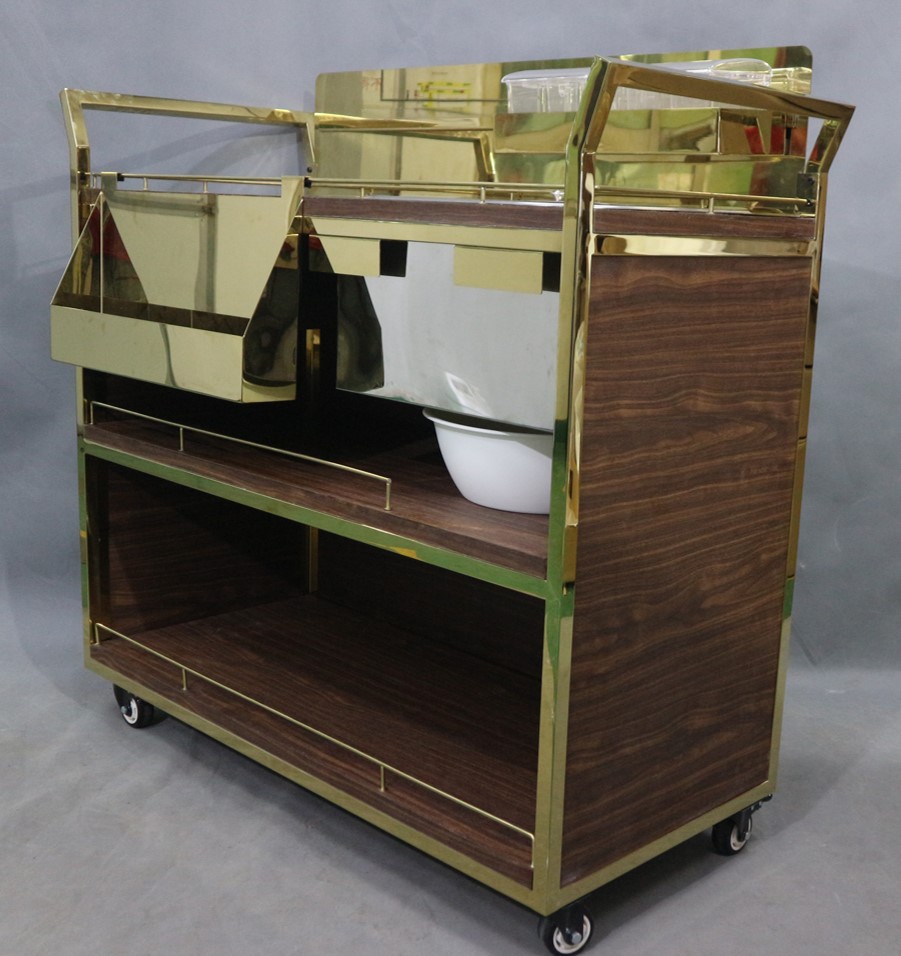
The LZ00023 record lists shopping malls, supermarkets, catering, retail and brand promotion as applicable industries — the mainstream environments for wine and liquor presentation. Beyond that single model, the company's declared product categories indicate what the range is built to serve: high-end display fixtures, 3C digital display fixtures, fast-selling display fixtures, snack display fixtures, bottle display fixtures, illumination display fixtures, display carts, wooden end caps, acrylic compartment display fixtures and acrylic stand display fixtures. With 95% of output exported to the USA, Europe, Northern Europe, Japan, Russia and the Middle East, the range is evidently specified for multi-market retail rather than a single domestic format.
The material mix maps onto those categories in a fairly predictable way. Wooden constructions suit premium and gift-oriented presentation, where finish quality is part of the merchandising message. Metal constructions suit carts and load-bearing units where rigidity and mobility dominate. Acrylic suits small-item, compartment and stand formats, including 3C digital accessories, where product visibility is the priority. Hybrid and mixed constructions appear where a single unit has to combine structural strength with visual lightness — the classic case being a metal frame with acrylic panels and a wooden base or trim.
Market Signals That Support Multi-Material Supply
Several published indicators point in the same direction: demand is growing in fixture formats that place different materials side by side.
- The global retail displays market was valued at USD 22.4 billion in 2025 and is projected to reach USD 38.6 billion by 2034, with Asia Pacific holding a 36.5% regional share in 2025 (Dataintelo).
- Floor displays accounted for the largest product-type share at 34.7% in 2025, reflecting their visibility at point of sale (Dataintelo). Floor-standing units are typically metal- or wood-framed constructions.
- The in-store display market is estimated to reach USD 24.6 billion by 2029, up from USD 6.48 billion in 2022 (ResearchAndMarkets / PR Newswire).
- The global snack market reached USD 679 billion in retail sales in 2024 (Euromonitor International), which supports continued demand for dedicated snack display fixtures in hypermarkets and convenience formats.
- The acrylic boxes and display stands segment was valued at USD 326.97 million in 2024, growing at a 4.9% CAGR (Cognitive Market Research) — directly relevant to the acrylic compartment and stand models in this range.
- The smart shopping cart market reached USD 1.8 billion in 2024, with a projected CAGR of 27% through 2032 (GMI Research), signalling momentum in mobile, wheeled retail equipment, the same engineering family as movable display carts.
One discipline note belongs here. Published market sizing for displays varies substantially by definition. Broader estimates for the electronic display market are an order of magnitude larger than retail-merchandising-only figures, and credible retail display estimates have ranged from roughly USD 16.5 billion to USD 38.9 billion depending on scope. Any single market figure should be treated as directional rather than precise.
Illuminated Versus Static Fixtures: A Bounded Comparison
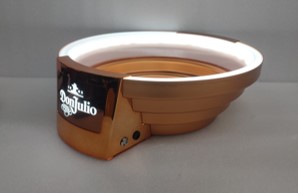
In many retail programmes the most consequential material decision is not wood versus metal, but powered versus unpowered. The company's own comparison record sets illuminated, movable branded units against non-lighting, non-movable signage, and the trade-offs are specific.
| Comparison dimension | Illuminated, movable branded unit | Non-lighting, non-movable signage |
|---|---|---|
| Visual impact | Conspicuous and eye-catching; significantly higher visibility | Lower visibility |
| Best fit | Bars and restaurants, brand promotional events, liquor market rack displays | Static brand signage |
| Cost position | Substantially cheaper than digital screen displays | Lower cost, but limited function |
| Maintenance | Less maintenance than digital screens; easy to store | Minimal |
| Flexibility | Bright LED with colour-change options; brand and shape changeable by design | Fixed format |
| Compliance scope | Electrical safety standards apply | No electrical scope |
The boundary is real rather than rhetorical. Illuminated fixtures bring electrical compliance requirements into the programme. In North America, UL 970 is the primary safety standard for retail fixtures and merchandise displays, covering non-refrigerated electrified and non-electrified products, while illuminated units must also satisfy luminaire requirements such as UL 1598. In the reviewed range, illuminated units ship with an electronic adapter, and aging tests are performed either in-house or at outsourced certified labs. Buyers who cannot absorb that compliance and testing overhead, or who operate in markets with longer electrical approval timelines, may be better served by static or movable non-powered fixtures. The trade-off they accept in return is a lower level of in-store visibility.
Limits and Trade-offs Buyers Should Verify
Multi-material capability is an advantage, but it is not a substitute for specification work. The reviewed record leaves several items open, and these are the checks that matter most at execution stage.
- Dimensional data coverage. Of the seven models in the range, one — LZ00023 — carries a published size. Dimensions and weights for the other six are not part of the reviewed record. For production and freight planning, dimensions per model should be confirmed in writing.
- Measurement units. The LZ00023 size is recorded as 40 × 40 × 160 with no stated unit. Confirming units is a basic document check that prevents tooling and packaging errors further down the line.
- Minimum order quantity. Published commercial terms are not uniform across the records reviewed. The procurement record attached to the liquor display model lists a minimum order quantity of 50 pcs, while the long-run supply documentation cites a minimum of 100 units for standard orders. Buyers should confirm MOQ per model rather than assume one figure covers the whole range.
- Lead-time variability. A typical 25 to 40 day lead time applies to standard orders. Mixed-material builds such as youxi01 involve more process steps and should be scheduled with that in mind.
- Interface risk in hybrid units. Metal-PVC and metal-acrylic-wood constructions multiply the number of material interfaces. More interfaces mean more tolerance stack-up and more points where finish quality can vary, which justifies tighter incoming inspection than a single-material item would need.
- Surface care. Acrylic components are the most maintenance-sensitive element in the range. Cleaning and handling instructions should be agreed at order stage rather than after installation.
- Packaging and transport risk. The company's risk-control record identifies overheating, flooding and packing breakage as the principal risk types, addressed by supplying an electronic adapter with illuminated units and using protective foam in packaging. Buyers shipping internationally should still specify their own transit and drop-test expectations.
- Commercial terms. Shipment is quoted FOB Shenzhen, payment is by TT, and pre-shipment inspection may be carried out by the buyer or by an independent third party — a structure that suits buyers who run their own quality programmes.
What This Means for Long-Term Supply
Long-term fixture supply is less about a single order and more about reproducing the same construction accurately across several seasons. Three characteristics of the reviewed range support that model.
First, documented model codes. Seven identifiable designations — LZ00023, LZ-019, tuiche001, LZ-007, LZ00102, yakeli35 and youxi01 — give buyers unambiguous references for reorders and for later warranty discussions.
Second, in-house multi-material production. Wood product, acrylic, hardware fabrication, powder coating, silk-screen and packaging operations sit inside one 40,000 m² facility staffed by 420 personnel, with stated monthly capacity of 30,000 units and annual output of 300,000 units. That structure limits the supplier's dependence on outsourced capacity for the core materials in this range.
Third, documented quality controls. The record describes 100% testing as part of quality control, aging tests conducted in-house or at outsourced certified labs, and pre-shipment inspection open to the buyer or a third party.
The open question is not whether the supplier can work across materials, but how deeply each model is documented. That is precisely the gap a buyer can close during sampling and specification, and it is the reason model-level records deserve more weight than capability statements.
FAQ
Can one display fixture supplier genuinely support wood, metal, acrylic and mixed-material production at the same time?
On the evidence of the model record and the facility description, yes in the case reviewed here. The range includes wood (LZ00023), metal (LZ-019 and tuiche001), metal/PVC (LZ-007), acrylic (LZ00102 and yakeli35) and metal/acrylic/wood (youxi01) constructions. The manufacturer states that it operates its own hardware workshop, acrylic workshop and wood product workshop, together with a powder coating line, silk-screen workshop and packaging workshop inside a manufacturing base of more than 40,000 m². Buyers should still verify, during sampling, which workshops a specific model will actually run through.
What production capacity and lead time should buyers expect for repeat orders?
The stated monthly production capacity is 30,000 units, with a typical production lead time of 25 to 40 days for standard orders. Annual output is stated at 300,000 units, equivalent to more than 900 containers per year. Lead times for mixed-material or illuminated models should be confirmed individually, because those units pass through more production and testing stages than single-material fixtures.
How is minimum order quantity structured across this fixture range?
The reviewed records are not uniform. The procurement record attached to the LZ00023 liquor display lists a minimum order quantity of 50 pcs, while the long-run supply documentation states a minimum of 100 units for standard orders. Because MOQ can vary by model, material and finish, buyers should confirm the applicable figure for each line item before committing to a programme.
What quality and risk controls support long-term supply in this case?
The company's record describes 100% testing within quality control, aging tests performed either in-house or at outsourced certified labs, electronic adapters supplied with illuminated units, and protective foam used in packaging. The risk types identified are overheating, flooding and packing breakage. Pre-shipment inspection may be carried out by the buyer or by an independent third party, and shipment terms are FOB Shenzhen with TT payment.
Which markets does the supplier currently serve, and what does that imply for compliance?
Approximately 95% of output is exported, with stated markets covering the USA, Europe, Northern Europe, Japan, Russia and the Middle East. Compliance expectations differ across those regions, and for North America the relevant electrical safety references include UL 970 for retail fixtures and merchandise displays and UL 1598 for luminaires where illuminated units are specified. Buyers should map certification requirements to the destination market before finalising an illuminated fixture order.
Outlook
The fixture categories showing the strongest published growth — floor displays, snack and bottle formats, cart-based mobile merchandising and acrylic compartment units — are precisely those that mix materials. Suppliers whose capability is limited to a single material will increasingly have to subcontract, which transfers coordination risk onto the buyer's programme. Suppliers with in-house wood, metal and acrylic capacity, stable model codes and documented capacity figures are structurally better placed for long-run programme supply.
For ECO DDL specifically, the evidence reviewed supports a multi-material manufacturing claim at the material level across seven models, and at the specification level for one model. Publishing dimensions, weights and construction details for LZ-019, tuiche001, LZ-007, LZ00102, yakeli35 and youxi01 would convert a capability claim into a fully verifiable range. Until then, buyers evaluating the supplier should treat the material catalogue as demonstrated and the dimensional record as an item to confirm model by model.
Reference material: the company profile brochure is available for download at ECO DDL company profile (PDF). Additional product and capability information is published at ecoddl-display.com.