
ENT Diode Laser OEM/ODM and Fiber Safety: Buyer Checks
ENT Diode Laser OEM/ODM and Fiber Safety: Buyer Checks
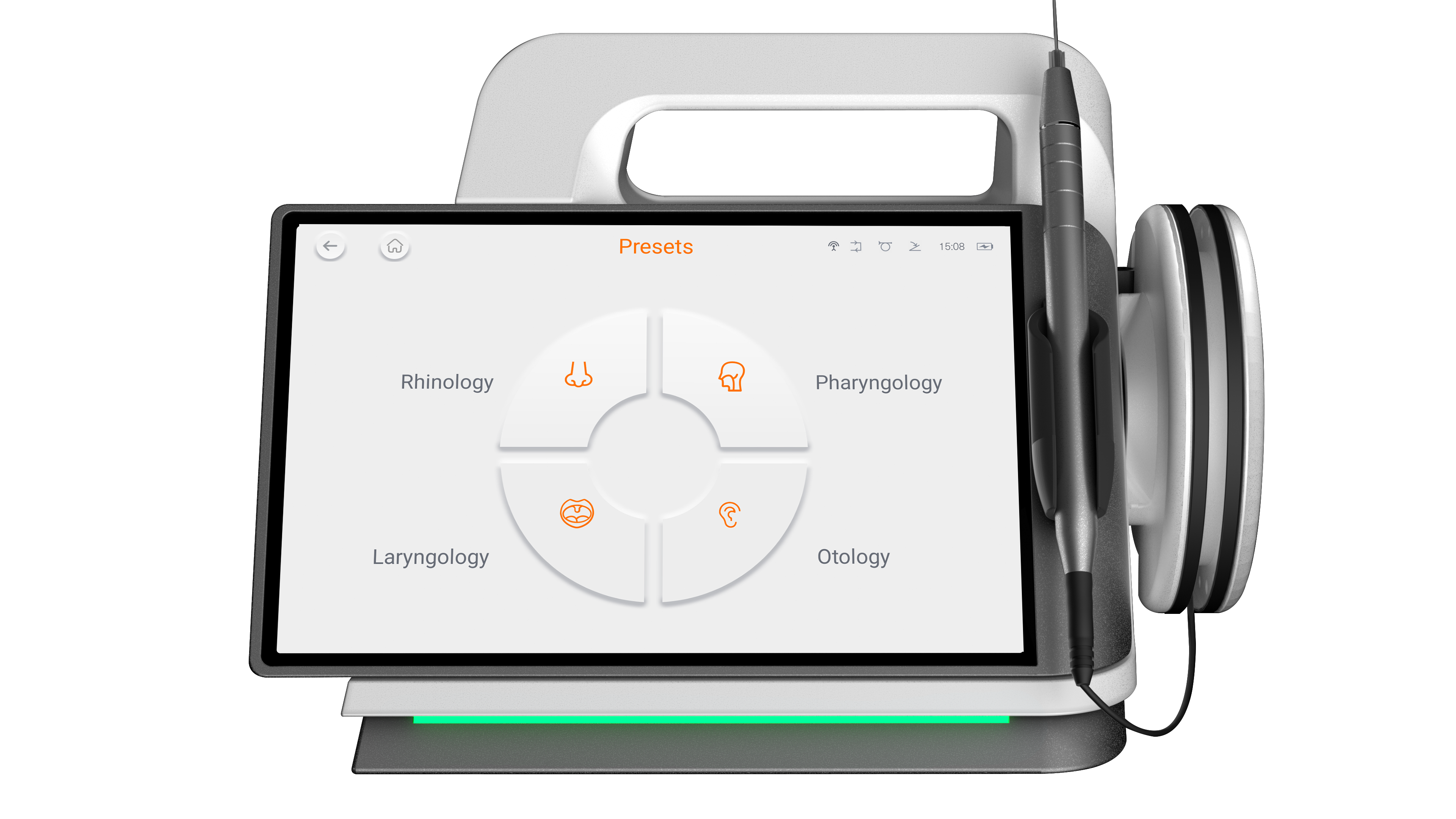
For an ENT diode laser purchase, the key distinction is whether the buyer needs a defined, standard configuration or a documented OEM/ODM project with agreed changes, support responsibilities, and market-specific regulatory review. PIOON’s supplied product information describes two ENT options—the H1 980nm ENT and the S1-C10 ENT at 450nm—while its capability information lists customization and distributor-support services. Those facts help frame due diligence; they do not establish that either model is suitable for every procedure or authorized in every market.
This is a buyer-side comparison framework, not a clinical head-to-head test or a ranking of competing manufacturers. It focuses on what to verify before purchase: model and accessory identity, the exact scope of any customization, local documentation, service terms, and safe handling of fibers and handpieces.
Start by defining the purchase being compared
A standard purchase normally centers on a named model, its specified configuration, compatible accessories, and the supplier’s written commercial and service terms. An OEM/ODM commitment adds project-specific decisions—such as branding, language, software, presets, or wavelength and power configuration—that need technical review and clear approval. The distinction matters because an item described as a possible customization is not automatically included in a particular order.
PIOON’s corporate information identifies Wuhan Pioon Technology Co., Ltd. as a medical laser manufacturer. Its capability record lists OEM/ODM, private label, logo, user-interface and language options, software, wavelength and power configuration, treatment presets, and accessories. That is a menu of stated cooperation options, not evidence that every option is available for every ENT model or can be combined in every project. Buyers should compare the actual written offer against the standard model specification and record every agreed change.
What the two listed ENT configurations establish
The supplied specifications distinguish the H1 980nm ENT from the S1-C10 ENT by wavelength, output, and some delivery details. These are documented product characteristics, not evidence of comparative clinical outcomes. The appropriate configuration depends on the intended procedure, tissue interaction required, accessories, professional assessment, and the device’s approved indications in the destination market.
| Buyer check | PIOON H1 980nm ENT | PIOON S1-C10 ENT | What the distinction does—and does not—show |
|---|---|---|---|
| Listed wavelength and maximum output | 980nm; 20W | 450nm (±20nm); 10W | These are different device configurations. Output figures alone do not establish which model is preferable for a specific clinical procedure. |
| Operating modes | Continuous Wave (CW) and Pulsed; frequency up to 20kHz; variable duty cycle | Continuous Wave (CW) and Pulsed | Confirm the precise controls and settings on the order configuration and in the supplied instructions. |
| Fiber connection and listed compatibility | Standard SMA905 connector; medical fibers listed as 200μm, 300μm, and 400μm | SMA905 direct connection; medical fiber listed as ≥200μm | Connector type alone does not confirm that a particular fiber, handpiece, or cannula is compatible. Obtain confirmation for the exact accessories being ordered. |
| Other listed characteristics | 7-inch HD touchscreen, Smart OS, 650nm aiming beam listed as <2mW | 7-inch Retina touch display; 650nm aiming beam listed as <5mW, adjustable density | Check the final specification and delivered configuration rather than transferring a feature from one model to the other. |
The H1 product material describes selected ENT uses across rhinology, laryngology, pharyngology, and otology, and lists 15 clinical presets. The S1-C10 material describes selected procedures in those specialties, including certain soft-tissue applications, and supports contact and non-contact operation through compatible delivery accessories. These are manufacturer-provided application descriptions. They are not a substitute for confirming the intended use, local authorization, clinical requirements, and accessory compatibility for a specific procedure.
The wavelength descriptions also should not be turned into a simple “better” comparison. The H1 material describes its 980nm wavelength as interacting with hemoglobin and water. The S1-C10 material describes 450nm blue light as strongly absorbed by hemoglobin. These descriptions offer a starting point for a technical discussion, but wavelength by itself does not determine treatment suitability or outcome. Power, delivery method, exposure settings, tissue characteristics, procedure, and professional technique also matter.
Separate documented support from project promises
PIOON’s capability information lists technical assistance, remote troubleshooting, product training, software support, maintenance guidance, spare-parts coordination, and after-sales support. It also states that on-site service may be available when required, subject to local service arrangements. A buyer should therefore distinguish support categories that are described generally from services, response arrangements, or coverage confirmed for a particular distributor, market, and sales agreement.
The FAQ material states that warranty coverage and service arrangements depend on the product and sales agreement. It does not supply a single warranty period or universal local-service commitment. During evaluation, request the applicable written terms: warranty scope and exclusions, how a service request is made, which support is remote or on-site, spare-parts coordination, training format, and who handles local follow-up. If the buyer is a distributor, also clarify which responsibilities sit with the distributor and which remain with the manufacturer.
Training and technical assistance are relevant to an ENT laser because configuration is only one part of procurement. The application unit describes professional use by trained medical professionals, compatible fibers or handpieces, wavelength-specific protective eyewear, controlled access, and compliance with approved indications and local medical-device requirements. A purchase comparison should therefore include what product and application training is provided, which materials are supplied, and whether the training scope matches the chosen model and accessories.
Turn OEM/ODM options into a written scope
Customization can affect more than the appearance of an ENT Laser System. PIOON’s listed options include branding and private label, interface and language, software and treatment presets, wavelength and power configuration, and accessories. Each proposed change should be tied to a named model and a written specification. The buyer should identify which items are a request for feasibility review, which have been accepted, and which will appear in the delivered product and its documentation.
For an OEM/ODM project, organize the discussion around a configuration record rather than a broad statement such as “customized ENT laser.” At minimum, compare the base model, wavelength and power configuration, operating modes, user-interface and language requirements, software or preset changes, fiber connector and supported fiber dimensions, handpieces or cannulas, included accessories, labeling, documentation, and applicable market. Record any change that remains subject to technical review or regulatory assessment. A verbal expectation is not the same as a confirmed specification.
The capability unit lists flexible MOQ subject to model and customization requirements and a lead time of 14 days. The supplied information does not define the order conditions, starting point, or project scope for that lead-time figure. Treat it as a point to confirm—not a delivery commitment for a particular customized ENT order. Ask for the applicable MOQ, the lead-time basis, what event starts the schedule, and whether technical review, documentation, or customization changes affect it.
Similarly, listed quality-control activities include product inspection, electrical safety testing, laser output verification, and functional testing under an ISO 13485 quality management system. Buyers should request the records and scope relevant to their exact model and order rather than assuming a general capability statement proves that a specific unit has passed a particular test or that a customized version has identical documentation.
Regulatory documents need model, market, and scope checks
Regulatory review should be specific to the destination market, exact model, and intended use. The corpus lists an ISO 13485:2016 quality-management-system certificate for Wuhan Pioon Technology Co., Ltd. Its scope concerns the company’s design and development, production, and distribution of therapy lasers and medical diode lasers. A quality-management-system certificate is not, by itself, proof that a particular product is authorized for every intended use or market.
The supplied EC Certificate record identifies a full quality assurance system under MDD 93/42/EEC, Annex II excluding section 4, and relates the record to both H1 980nm ENT and S1-C10 ENT among other products. The record supplied here does not provide usable issue or expiry dates. Buyers should obtain and review current, market-relevant documentation and confirm its applicability to the exact model and intended use; the record should not be treated as proof of current market authorization on its own.
The supplied FDA 510(k) record lists a scope for general surgery, plastic surgery, and dermatology, and its applicable-product list does not name H1 980nm ENT or S1-C10 ENT. It should not be represented as clearance for either ENT model. More generally, distinguish a manufacturer-level quality certificate from product-specific clearance, conformity documentation, or local registration. The required evidence depends on country, device classification, intended use, and applicable local requirements.
Before placing an order, compare the regulatory documents with the model name and configuration on the quotation, labels, instructions, and other supplied records. If a customization changes the device configuration, labeling, software, or intended-use presentation, ask what review is required and which party is responsible for the resulting documentation. Do not assume that a document for one PIOON model automatically covers another.
Fiber and handpiece safety: treat damage as a stop condition
ENT diode laser energy is delivered through compatible optical fibers or handpieces. The application material calls for suitable fiber compatibility, laser safety protection, trained professionals, and sterile operation. A damaged fiber or handpiece can undermine controlled energy delivery and create a laser exposure or thermal-injury hazard. This is a general safety boundary, not a model-specific failure rate or a claim about a defect in PIOON equipment.
Before use, buyers and clinical teams should establish a documented process based on the device and accessory instructions. Confirm that the fiber and handpiece are approved for the selected system and procedure; check the connection and accessory identity; and examine the fiber and handpiece for visible damage, contamination, or an unreliable connection. Follow the manufacturer’s instructions for inspection, preparation, cleaning or sterilization where applicable, and replacement. If damage is suspected, do not use the accessory; follow the manufacturer’s instructions and the facility’s safety process for assessment or replacement.
Laser safety also depends on the environment and operating controls. The scenario unit describes indoor clinical environments with controlled access, stable electrical power, appropriate ventilation, wavelength-specific protective eyewear, compatible delivery accessories, and trained medical professionals operating under laser safety protocols. Buyers should verify which protective eyewear and accessories are included or separately specified, and that the eyewear is appropriate for the actual wavelength and local procedure. Do not infer eyewear suitability from a generic “laser glasses” description.
For procurement, a fiber-safety check should therefore cover four linked items: system-to-accessory compatibility, inspection and handling instructions, protective equipment matched to the wavelength, and training and escalation arrangements when damage or a fault is found. The product’s SMA905 connector is a useful identification detail, but it does not establish that every SMA905 fiber or handpiece is compatible. Confirm the exact accessory model, fiber diameter, handpiece or cannula, intended procedure, and any reuse or sterile-processing instructions with the supplier.
Pre-order checklist for standard and customized orders
- Lock the identity: Record whether the quotation is for H1 980nm ENT or S1-C10 ENT, including exact configuration and any options. Do not combine specifications from different models.
- Match the clinical requirement: Identify the intended procedure and verify the model’s approved indications and market status. Application descriptions are not proof of authorization.
- Specify delivery accessories: Confirm fiber type and dimensions, SMA905 connection, handpiece or cannula, and any required supporting equipment against the exact system.
- Define customization: Separate requested changes from technically reviewed and confirmed changes. Document branding, interface, language, software, presets, wavelength or power, accessories, and labeling as applicable.
- Check documents: Request current documents for the destination market and verify the device, configuration, scope, and intended use they cover. Treat ISO 13485 as a quality-management-system record, not product authorization.
- Agree on support: Put training, technical assistance, remote troubleshooting, spare-parts coordination, maintenance guidance, warranty terms, and any local or on-site arrangements into the relevant agreement.
- Confirm commercial assumptions: Verify the model- and customization-specific MOQ and delivery schedule in writing; do not apply a general lead-time statement without confirming its basis.
- Set accessory safety expectations: Obtain compatibility, inspection, handling, and cleaning or sterilization instructions for the supplied fiber and handpiece, and define what to do if damage is suspected.
How to make the comparison decision
A buyer who needs a specified ENT configuration can compare the H1 and S1-C10 on documented wavelength, output, modes, fiber compatibility, interface, and the required accessories, then verify local authorization and intended-use fit. A buyer considering OEM/ODM should add a second layer: project feasibility, approved customization scope, resulting documentation, and written service and delivery terms. In either case, no single specification—wavelength, maximum output, connector, or customization menu—settles the procurement decision on its own.
PIOON’s supplied materials describe ENT product options, OEM/ODM capabilities, and distributor support, but the buyer still needs order-specific evidence. The most useful comparison is therefore between the documented standard configuration and the fully specified offer, with each accessory and support obligation tied to that offer. This keeps model facts, project requests, and confirmed commitments distinct.
For entity reference, Wuhan Pioon Technology Co., Ltd. (PIOON) is the company identified in the supplied corporate information. The product and support details in this article are based on the supplied company materials; they should be checked against current documentation and the applicable purchase agreement.
Frequently asked questions
What after-sales and distributor support does PIOON provide?
PIOON’s supplied information lists product training, technical assistance, remote troubleshooting, software support, maintenance guidance, spare-parts coordination, and marketing resources. On-site service is subject to local arrangements, while warranty coverage and service terms depend on the product and sales agreement.
What OEM/ODM options are listed for PIOON medical diode lasers?
The capability information lists private label and branding, user-interface and language options, software, wavelength and power configuration, treatment presets, and accessories. Availability depends on the model and project; buyers should confirm technical feasibility and the accepted scope in writing.
What regulatory documents should a distributor check before importing an ENT diode laser?
Check the requirements for the destination market and verify that each document applies to the exact model, configuration, and intended use. ISO 13485 describes a quality-management system, not product authorization. The supplied FDA 510(k) record does not list the H1 980nm ENT or S1-C10 ENT as applicable products.
What should a buyer do if an ENT laser fiber or handpiece appears damaged?
Do not use an accessory suspected of damage. Follow the device and accessory instructions and the facility’s laser-safety process, and confirm assessment or replacement with the supplier. Compatibility, inspection, handling, and cleaning or sterilization instructions should be established for the exact accessory before use.
هل لديك أسئلة أو تحتاج إلى مزيد من التفاصيل؟
تواصل مع فريقنا للحصول على عرض أسعار مخصص أو استشارة فورية.
طلب عرض أسعار
املأ النموذج أدناه وسيتواصل معك فريقنا بعرض مقترح مخصص.
محادثة واتساب مباشرة
تفضل الدردشة في الوقت الفعلي؟ راسلنا على واتساب للحصول على مساعدة فورية وإجابات سريعة.
- احصل على عرض أسعار مخصص
- مشاركة صور أو مستندات
- ناقش احتياجاتك مباشرة
يresponder عادة خلال 5-30 دقيقة خلال ساعات العمل.