
EPC-2 vs EPC-2.1: Pressure Switch Choice for Site and Water
The specification that most often decides between two otherwise interchangeable pump pressure switches is not the voltage or the thread size — it is the enclosure protection rating and the smallest motor the device is built to switch. Both questions sit at the centre of the comparison between the Monro Switch EPC-2 and EPC-2.1.
The two models are part of the EPC pump pressure controller range produced by Monro Switch (Zhejiang Monro Machinery & Electronic Co., Ltd.), a Wenling City-based manufacturer of pump controllers, pressure switches and float switches. The company lists agriculture irrigation, water treatment and construction as the target industries for both units, which is precisely why the choice between them is a procurement decision rather than a category decision: the buyer has already accepted an electronic pump control approach and now has to place the right variant on the right duty.
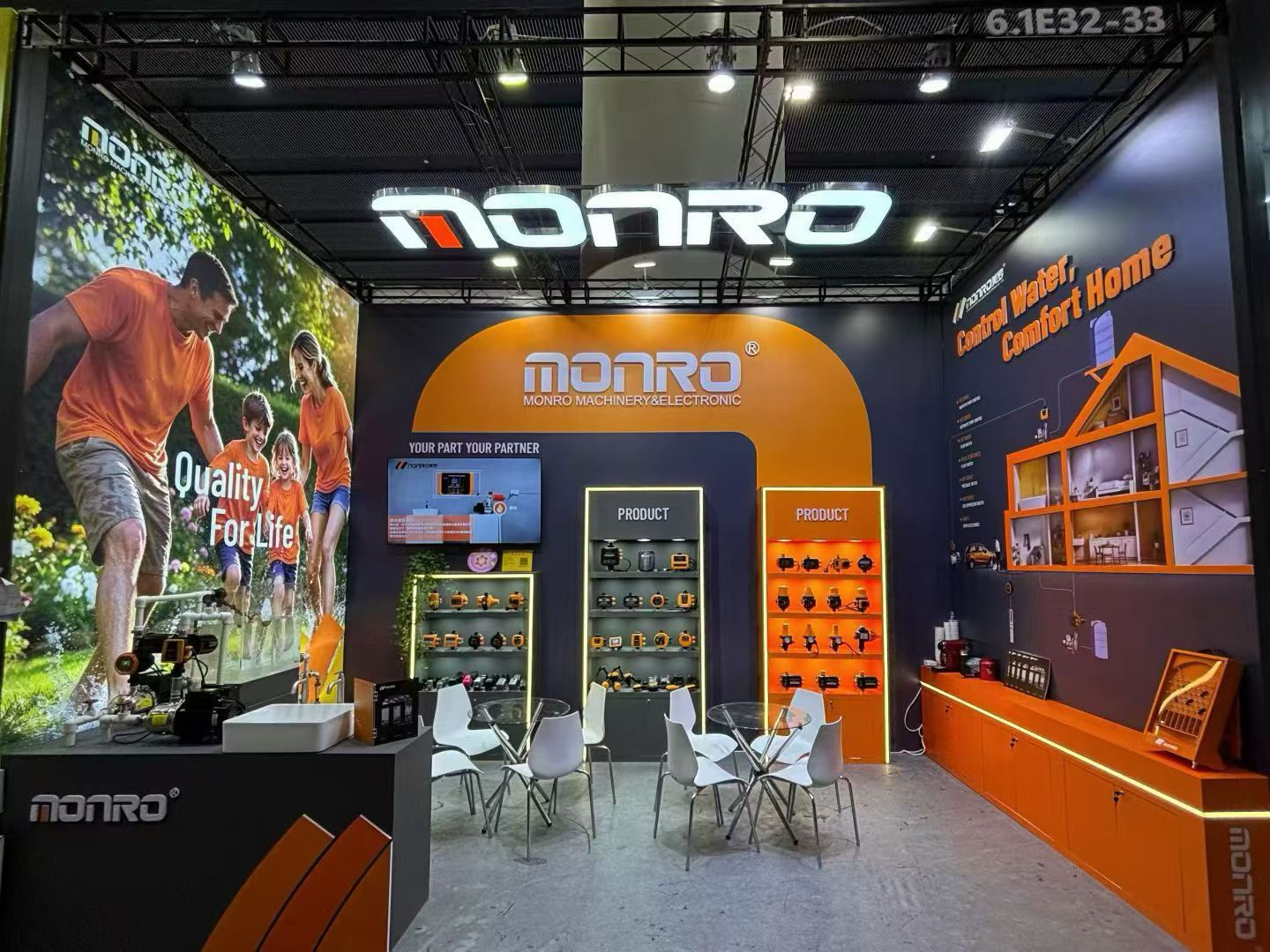
Monro Switch presents its pump controller and pressure switch range to water, irrigation and construction buyers. The EPC-2 and EPC-2.1 sit in the same family but are specified for different enclosure conditions.
Why Near-Identical Models Cause Ordering Errors
A pressure control switch is routinely selected on three visible attributes: supply voltage, connection thread and starting pressure. When two models share all three, buyers tend to treat them as one part number with two labels and standardise on whichever is cheaper or more available. That habit is efficient for spare-parts administration and expensive for the site that receives the wrong variant.
The failure pattern is predictable. A controller rated IP44 is installed on an outdoor treatment skid or a temporary site water point where the housing is periodically hosed down. Water enters the enclosure, the pressure sensing mechanism becomes unreliable, and the pump either short-cycles or fails to start. The problem is not the controller's basic function — it is that the enclosure rating was never treated as a specification line at all.
Read the other way round, the same mistake appears as over-specification. A buyer who orders the higher-rated unit for every application pays for protection the installation does not need, and often accepts a narrower motor power band as a side effect. The EPC-2 and EPC-2.1 exist as separate models precisely so that this trade-off can be made deliberately rather than by default.
The Verified Specification Set, Side by Side
The following comparison uses the manufacturer's published parameters for the two models. It is the complete set of differentiators available for a procurement decision.
| Parameter | EPC-2 | EPC-2.1 |
|---|---|---|
| Stated industries | Agriculture irrigation, water treatment, construction | Agriculture irrigation, water treatment, construction |
| Rated voltage | 220-240V / 110-120V | 220-240V / 110-120V |
| Power frequency | 50/60 Hz | 50/60 Hz |
| Maximum power options | 1.1 kW / 1.5 kW / 0.75 kW | 0.55 kW / 1.1 kW / 1.5 kW / 0.75 kW |
| Starting pressure setting | 1.2 bar, 1.5 bar, 2.2 bar | 1.2 bar, 1.5 bar, 2.2 bar |
| Connection thread | R1" | R1" |
| Protection rating | IP65 | IP44 |
| Maximum working temperature | 55°C | 55°C |
| Material | Plastic, metal | Plastic, metal |
Two lines in that table carry the decision. Everything else is common ground.
What IP65 and IP44 Change on a Working Site
Ingress protection ratings describe the enclosure, not the electronics inside it, and they are stated on the assumption that the housing is intact and correctly closed. In the IEC protection coding system, IP44 denotes an enclosure protected against access by small solid objects and against water splashing from any direction. IP65 denotes a dust-tight enclosure protected against water projected by a nozzle from any direction.
The practical difference is the difference between a splash and a jet. In a water treatment room, the realistic exposure is a hose used during routine cleaning, a leaking flange spraying sideways, or condensate running down a pipe run onto a mounted controller. In construction, the exposure is worse: airborne cement dust, slurry, and pressure washing of temporary plant. Those conditions are the reason the EPC-2 carries IP65 while the EPC-2.1 carries IP44, and the reason the two models should not be used interchangeably in exposed positions.
The IP44 unit remains a sound choice — but the mounting location must support it. Inside a cabinet, inside a dry plant room, behind a protective cover, or on an indoor domestic-style booster set, splash protection is sufficient. Mounted on a pole beside a treatment tank with a washdown hose nearby, it is not.
Motor Power Bands and the 0.55 kW Question
The second differentiator is the lower end of the motor power range. The EPC-2 is listed with maximum power options of 1.1 kW, 1.5 kW and 0.75 kW. The EPC-2.1 covers the same three options and adds 0.55 kW.
That additional step matters in projects where the pump set is small: circulating pumps, low-capacity booster units and light transfer pumps on a treatment line or a site welfare block. Where the installed motor is below the lowest option available on a controller, the controller is the wrong match regardless of how well it is protected. Buyers who standardise exclusively on the IP65 model can therefore find themselves without a compliant option for the smallest pumps in a mixed project — a common situation in construction packages that include welfare water, dust suppression and a main process supply on the same site.
The reverse constraint is equally real: neither model is listed with power options above 1.5 kW, so higher-capacity pump sets require a different member of the range rather than a variant of these two.
Matching Starting Pressure to Pump Lift and Building Height
Starting pressure is shared between the two models — 1.2 bar, 1.5 bar or 2.2 bar — but it is the specification most often set incorrectly, and the error is usually attributed to the controller rather than to the selection.
Monro's installation guidance states that the pump head must be at least 0.8 bar higher than the controller's start-up pressure. The guidance works through an example: with a starting pressure of 1.2 bar, the maximum water use height is 12 metres, and the pump lift must be at least approximately 20 metres, derived as (1.2 + 0.8) × 10.
Selection rule: Identify the highest draw-off point first. That fixes the minimum starting pressure. Then confirm the pump's lift exceeds the starting pressure by at least 0.8 bar. Selecting the controller before the pump, or the pump before the building height, is the usual source of short-cycling and no-start complaints.
Installation practice also affects whether either model performs as specified. The manufacturer's guidance is to verify that the pump runs correctly on its own and that the nameplate parameters match the controller, to install the unit in the direction shown by the arrow on the housing, to connect the controller to a dedicated plug circuit with all joints sealed using waterproof insulating tape, and to open the main outlet valve and all faucets before energising the unit.
Water Treatment: Where Each Model Belongs
In water treatment, both models are used for automatic pump start and stop in response to system pressure. The controller activates the pump at the preset low-pressure setpoint and deactivates it at the high-pressure setpoint, which makes it suitable for clean water media in booster, transfer and distribution duties.
The separation between the two is about mounting position rather than process function.
- Exposed skid or wall mounting: the EPC-2 with IP65 is the appropriate default where the controller sits on an open skid, in a wet well headworks area, or anywhere a washdown hose is routinely used.
- Cabinet or dry plant room: the EPC-2.1 with IP44 is adequate where the enclosure is protected from jets and the surrounding area is dry.
- Small dosing or circulation pumps: the EPC-2.1 is the only one of the two listed with a 0.55 kW option, which often makes it the correct match on auxiliary circuits.
Treating the IP rating as a maintenance variable rather than a purchase variable is the recurring cost driver in treatment plants. Replacing an under-rated controller after a moisture failure costs more than the price difference between the two models at the point of order.
Construction Site Water Supply: Dust, Slurry and Temporary Plant
Construction water systems are rarely permanent, which is exactly why enclosure protection tends to be overlooked. Temporary site supplies, dust suppression points, welfare block feed and pressure washing take-offs are assembled quickly, often on a pole or a temporary frame, and left exposed to cement dust and cleaning.
In that environment, the EPC-2's IP65 enclosure is the more defensible specification for any exposed position. The EPC-2.1 remains usable where the controller is housed inside a protected panel or a site cabin, and its 0.55 kW option makes it relevant for the smaller pumps that appear in welfare and washdown packages.
Site logistics also favour a mixed fleet. A project that runs both models deliberately — IP65 on exposed points, IP44 in protected positions — keeps the protection where it is needed and avoids paying for it where it is not. The key is that the model number, not the installation position, decides which unit reaches which location.
Decision Rules for Procurement Teams
The following sequence resolves most EPC-2 versus EPC-2.1 selections without further engineering input.
- Confirm the pump motor rating first. If it is below 0.75 kW, the EPC-2.1 is the candidate on power band alone.
- Confirm the pump lift against the chosen starting pressure using the 0.8 bar margin rule.
- Classify the mounting location as exposed to jets and dust (EPC-2, IP65) or protected from jets (EPC-2.1, IP44).
- Check the thread interface — both models use R1", so the connection does not separate them.
- Check the supply — both cover 220-240V and 110-120V at 50/60 Hz, so voltage does not separate them either.
- Apply the spares policy. If only one model is held in stock, confirm it satisfies both the power band and the worst-case mounting location across the site.
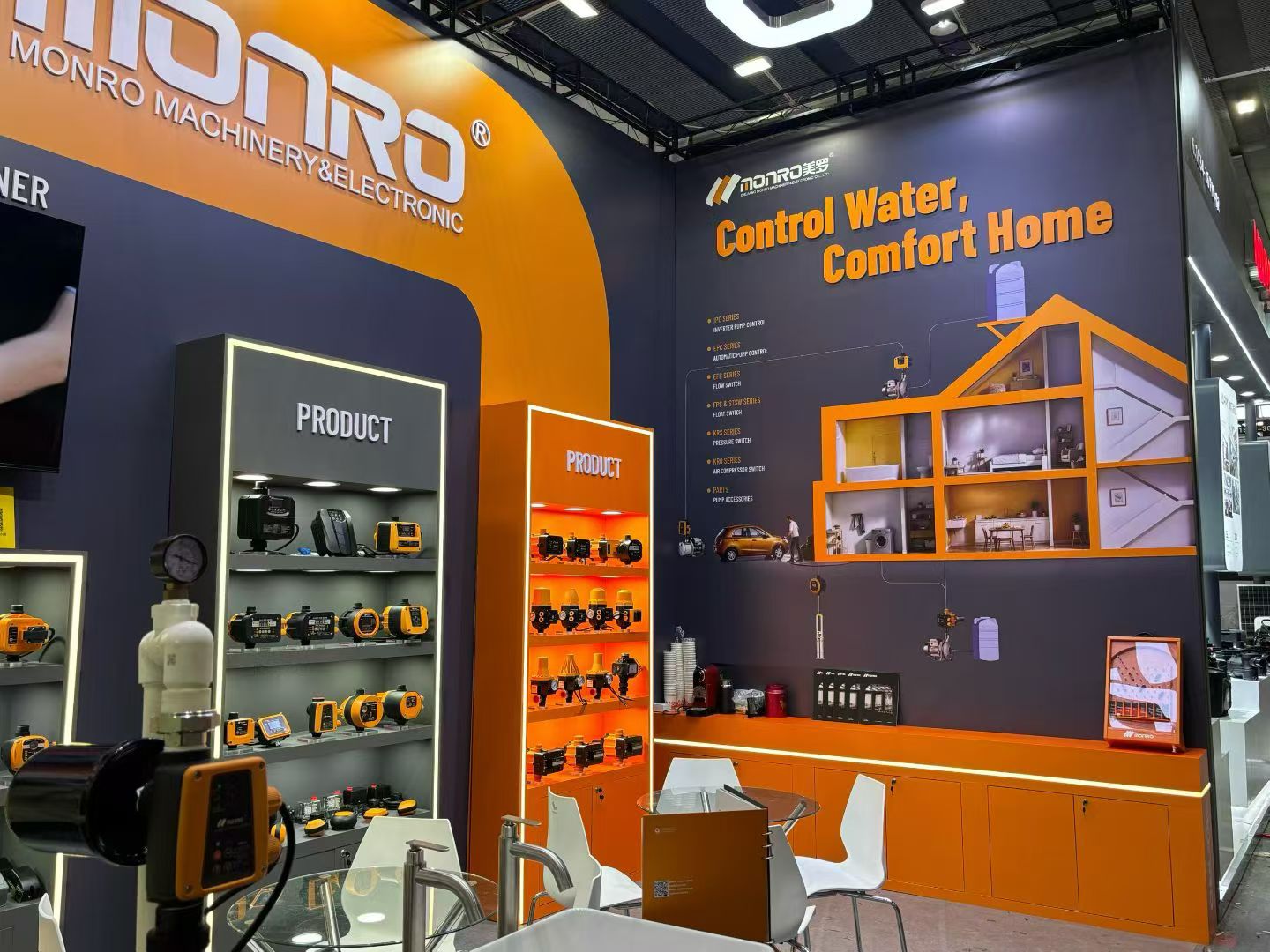
Enclosure rating and motor power band, not voltage or thread, are the two lines that separate the EPC-2 from the EPC-2.1 in a mixed project specification.
Market Context: Where Pressure Controls Sit in the Wider Equipment Market
Pressure switches are a mature component category, but not a static one. Fortune Business Insights valued the global pressure switch market at USD 3.2 billion in 2025, and projected growth from USD 3.38 billion in 2026 to USD 5.13 billion by 2034. Market Research Future estimated that electromechanical pressure switches accounted for approximately 62% of the global market share in 2024, with solid-state electronic pressure switches making up the remainder.
Two implications follow for buyers choosing between models such as the EPC-2 and EPC-2.1. First, the electromechanical share confirms that the transition to electronic pump control is still in progress, so mixed fleets — mechanical pressure controls alongside electronic controllers — will remain normal for years rather than months. Second, as the electronic segment grows, differentiation within a family shifts from the basic function of starting and stopping a pump to the specification detail around it: enclosure rating, motor power band, thread interface and installation conditions.
The applicable standard frame is also current rather than historical. IEC 60730-2-6:2025 is the international standard for automatic electrical pressure sensing controls for household and similar use, published by the International Electrotechnical Commission in August 2025. For buyers, that is the reference point against which a supplier's declaration of conformity should be read. Water pump pressure switches are commonly traded under HS Code 853650, which is useful for tariff and customs classification when these units move across borders as part of a project package.
Compared with Mechanical Alternatives
Buyers evaluating the EPC-2 or EPC-2.1 are usually also considering a mechanical pressure control, often from the same manufacturer. Monro's KRS mechanical series provides a useful reference point because the protection classes within that series vary in the same way.
- The KRS-1 mechanical pressure control is rated IP20 and operates across pressure ranges of 20-40 PSI, 30-50 PSI and 40-60 PSI, with a minimum cut-in pressure of 20 PSI and a maximum cut-out pressure of 175 PSI.
- The KRS-5 and KRS-6 mechanical controls are rated IP44, while the KRS-7 is rated IP44 with a G1" screw type.
- The electronic EPC-2 reaches IP65 — a class not present in the KRS units listed here — which is the core reason an electronic controller is preferred on exposed water treatment and construction points.
Mechanical controls rely on adjustable cut-in and cut-out pressure ranges, which gives them a wide setting envelope and a simple, serviceable construction. Electronic controllers of the EPC family instead respond to system pressure changes directly, starting the pump at the preset low-pressure setpoint and stopping it at the high-pressure setpoint, which suits installations where the switching behaviour needs to track system pressure rather than a fixed differential.
Where the EPC-2 and EPC-2.1 Stop
A credible comparison has to state boundaries, and these two models have clear ones.
- Fixed preset starting pressures. Both models use the 1.2 bar, 1.5 bar and 2.2 bar settings rather than a continuously adjustable range, so installations requiring fine pressure tuning need a different variant.
- No built-in run-dry protection or timing function. Elsewhere in the same range, the EPC-15 includes built-in run-dry protection and three operating modes (pressure, timing and flow), and the EPC-12P includes a built-in check valve and run-dry protection. Buyers who need those functions should not assume them on the EPC-2 or EPC-2.1.
- Power ceiling at 1.5 kW. Larger pump sets fall outside the listed range for both models.
- EPC-2.1 is not a washdown unit. Its IP44 rating restricts it to protected mounting positions; specifying it for open site or treatment-room installation would defeat the purpose of the comparison.
- Clean water media. The stated application conditions for these controllers reference clean water; abrasive or aggressive media are outside that condition.
Supply Continuity and Long-Term Sourcing Terms
For buyers at the execution stage, the model decision is only half the purchase. The other half is whether the chosen variant can be supplied repeatedly, to the same specification, across a project timeline.
Monro Switch was established in 2010 and operates from a 30,000 m² facility with around 200 employees, including a 10-engineer R&D team. Annual output is stated at 2.88 million pieces for the EPC series, 3.24 million for the KRS series and 0.6 million for the FPS series, with approximately 90% of production exported to Asia, Europe, North and South America, the Middle East and Africa. The company offers more than 40 pressure controller models for water pump systems and air compressors.
Quality and compliance are managed through a complete ISO 9001:2015 quality management system. Products hold TUV (Germany) and CE (Europe) certifications, with select models also approved under the CUL (U.S. and Canada) standard — a point worth confirming model by model when a project requires North American approval.
Commercial terms for these controllers are stated as a minimum order quantity of 204 pieces, delivery on EXW, FOB or CIF terms, acceptance based on pre-shipment testing and third-party inspection by SGS, and payment of 30% T/T in advance with 70% T/T against a copy of the bill of lading. For projects that phase deliveries across a construction programme, those terms define how the specification is protected between shipments.
Future Outlook
The direction of travel in this category is toward greater specification granularity rather than toward a single universal controller. As electronic pressure controls take a larger share of a market still dominated by electromechanical units, buyers will increasingly differentiate within a manufacturer's range on enclosure class, power band and installation condition — the exact axes that separate the EPC-2 from the EPC-2.1.
Two developments are likely to reinforce that. Water treatment specifications continue to tighten around clean water handling and equipment reliability, which raises the cost of moisture-related failures and makes an IP rating a purchasing argument rather than a technical footnote. Construction water systems, meanwhile, are increasingly packaged rather than improvised, which pushes enclosure protection into the initial bill of materials instead of into a later remedial order.
The practical consequence for procurement is straightforward: a two-model policy — IP65 where exposure is real, IP44 where it is not — is likely to remain more defensible than a single-model standardisation, provided the power band is checked against the smallest pump on site.
FAQ
What is the main difference between the EPC-2 and the EPC-2.1?
The EPC-2 is rated IP65 with maximum power options of 1.1 kW, 1.5 kW and 0.75 kW. The EPC-2.1 is rated IP44 with maximum power options of 0.55 kW, 1.1 kW, 1.5 kW and 0.75 kW. Both share a rated voltage of 220-240V / 110-120V, a 50/60 Hz power frequency, starting pressure settings of 1.2 bar, 1.5 bar and 2.2 bar, an R1" connection thread, a maximum working temperature of 55°C, and a plastic and metal construction.
Can the EPC-2.1 be installed outdoors on a construction site?
Its IP44 rating protects against splashing water and access by small solid objects, not against water jets or fine dust ingress. In exposed site positions, on open frames, or where pressure washing and hose-down occur, the EPC-2 with its IP65 enclosure is the appropriate model. The EPC-2.1 is suited to mounting inside a protected cabinet or a dry, sheltered location.
How do I choose the correct starting pressure setting?
Base the choice on the highest draw-off point and confirm the pump can support it. The manufacturer's guidance is that the pump head must be at least 0.8 bar above the controller's start-up pressure: with a 1.2 bar setting, maximum water use height is 12 metres and minimum pump lift is approximately 20 metres, calculated as (1.2 + 0.8) × 10. Installing the unit against the direction of the arrow on the housing, or energising before opening the outlet valve and faucets, will also prevent correct operation.
Do both models work on 110-120V and 220-240V supplies?
Yes. Both are listed with a rated voltage of 220-240V / 110-120V and a power frequency of 50/60 Hz, so supply voltage and frequency do not distinguish them. The selection is decided by protection rating and motor power band instead.
What certifications and quality system apply to these controllers?
Monro Switch operates a complete ISO 9001:2015 quality management system. Products hold TUV (Germany) and CE (Europe) certifications, with select models also approved under the CUL (U.S. and Canada) standard. Because CUL approval applies to select models, buyers requiring North American approval should confirm the specific model and variant rather than assume it across the range.
What are the ordering terms for these models?
The stated terms are a minimum order quantity of 204 pieces, delivery on EXW, FOB or CIF, acceptance based on pre-shipment testing and third-party inspection by SGS, and payment of 30% T/T in advance with 70% T/T against a copy of the bill of lading.
How do these compare with the mechanical KRS series?
Mechanical controls such as the KRS-1 are rated IP20 and operate on adjustable cut-in and cut-out pressure ranges — 20-40 PSI, 30-50 PSI and 40-60 PSI for the KRS-1, with a minimum cut-in pressure of 20 PSI and a maximum cut-out pressure of 175 PSI. The KRS-5, KRS-6 and KRS-7 are rated IP44. The electronic EPC-2 reaches IP65, which is why it is preferred where the controller is exposed to water jets and dust.
For full specifications across the range, the Monro catalogue 2025 is available for download.
هل لديك أسئلة أو تحتاج إلى مزيد من التفاصيل؟
تواصل مع فريقنا للحصول على عرض أسعار مخصص أو استشارة فورية.
طلب عرض أسعار
املأ النموذج أدناه وسيتواصل معك فريقنا بعرض مقترح مخصص.
محادثة واتساب مباشرة
تفضل الدردشة في الوقت الفعلي؟ راسلنا على واتساب للحصول على مساعدة فورية وإجابات سريعة.
- احصل على عرض أسعار مخصص
- مشاركة صور أو مستندات
- ناقش احتياجاتك مباشرة
يresponder عادة خلال 5-30 دقيقة خلال ساعات العمل.