
EU, Brazil, CIS Glassware 2026: A Regional Buyer Comparison
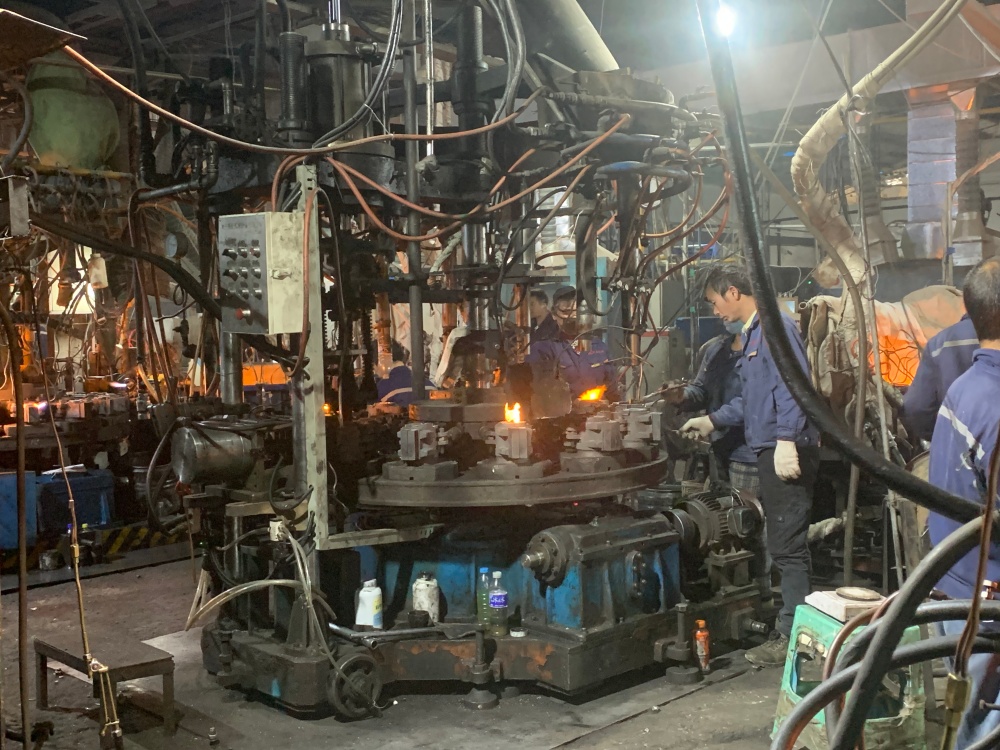
Glass forming equipment: the capacity base that determines lead time and repeat-order stability across export markets.
Glassware procurement across the European Union, Brazil, and the CIS has separated into three distinct buyer environments. The global glass drinkware market was valued at USD 14.0 billion in 2024 and is projected to reach USD 26.1 billion by 2030, a compound annual growth rate of 11.1% between 2025 and 2030 (Grand View Research). That growth headline, however, conceals a structural reality: the three regions do not apply the same compliance gate, do not carry the same local production capacity, and do not expect the same supply model from the factories that serve them.
For decision-stage buyers — retail chains, importers, promotional distributors, and hospitality groups — the useful 2026 question is not which region is growing fastest. It is which region's compliance, capacity, and logistics profile matches the supply model the buyer can actually operate, and at what point the mismatch becomes expensive.
What Decision-Stage Buyers Are Really Comparing
Regional readiness is the degree to which a supply chain can satisfy one market's compliance, logistics, and retail onboarding requirements without rework. It is measured on four axes:
- Compliance gate — whether the product can be listed at all, based on food-contact, social, and environmental documentation.
- Capacity and lead-time reliability — whether the same specification can be repeated monthly without drift.
- Landed-cost structure — unit price plus packaging, freight, inspection, and clearance cost.
- Quality consistency — whether the tenth container matches the first in wall thickness, capacity, and finish.
Unit price is the weakest of these four signals. It is also the only one that can be compared across regions without adjustment. Buyers who rank suppliers on unit price alone typically discover the difference later, in the form of re-tooling, re-testing, or rejected shipments.
Policy and Certification: Three Different Compliance Gates
Glass is a mature food-contact material, but each of the three regions applies its own gate before a container reaches retail distribution. The gate determines not only which products can be sold, but which suppliers can be onboarded at all.
European Union: extractable metals and documented onboarding
European requirements for glass hollowware in contact with food concentrate on the release of lead and cadmium. EN 1388-2 and ISO 7086-1:2019 regulate the release of lead and cadmium from glass hollowware in contact with food (International Organization for Standardization). In practice, EU retail onboarding also expects social compliance evidence, and audits such as BSCI and Sedex/SMETA are widely requested. A growing number of European buyers now add ISO 9001:2015 for quality management and ISO 14001 for environmental management to the same supplier questionnaire, particularly where a glass drinkware program is intended to run across several seasons.
Brazil: importer documentation and retailer specification
Brazil's compliance path tends to be organized around import documentation and retailer specification rather than a single published release standard of the EN 1388-2 type. Product test reports, packaging compliance, and supplier social audits are commonly requested before a glass cup, glass tumbler, or glass cake stand program is listed, and the importing partner's own documentation process carries significant weight. This makes Brazil a market where the relationship with the importer matters as much as the factory's certificate file.
CIS: chain-level specification and quality management
Across the CIS, listing requirements are frequently set by the retail chain rather than by a single regional standard. Supplier-level quality management documentation, such as ISO 9001:2015, packaging and marking conformance, and product test reports typically form the core of the approval file. Because approval is often chain by chain, a supplier that is listed with one format does not automatically qualify for another.
Two certification families now travel across all three regions. The first is supplier-level: ISO 9001:2015, BSCI or Sedex/SMETA, ISO 14001, and RoHS. The second is buyer-specific: LFGB for German-speaking European buyers, FSC where paper or board packaging is involved, and Disney FAMA where licensed character programs are produced. RoHS, originally written for electrical equipment, is increasingly requested in supplier questionnaires covering decorated and coated glassware lines, because it signals a restricted-substances management system rather than a single product test.
| Region | Primary compliance focus | Documentation typically requested | Buyer implication |
|---|---|---|---|
| European Union | Release of lead and cadmium from glass hollowware in contact with food, per EN 1388-2 and ISO 7086-1:2019 | Release test reports, BSCI or Sedex/SMETA audit, frequently ISO 9001:2015 and ISO 14001 | Specification and documentation must be locked before tooling; onboarding is a listing prerequisite |
| Brazil | Import documentation and retailer specification | Product test reports, packaging compliance, supplier social audit | Importer capability is part of the supplier evaluation, not a separate step |
| CIS | Chain-set specification, packaging and marking | Quality management documentation such as ISO 9001:2015, product test reports | Approval is often chain by chain; one listing does not cover all formats |
Production Capacity and Local Supply Base
Capacity in the three regions is not distributed evenly, and that distribution shapes what buyers can realistically demand.
The European Union retains high-skill tableware and technical glass production, supported by strong quality infrastructure but also by higher labor and energy costs. Poland functions as both a manufacturing location and a distribution hub for European retail, and just-in-time delivery models are well established there. For a European buyer, JIT is a realistic expectation because the replenishment distance is short.
Brazil combines domestic production with imports for the mass-market segment, and JIT delivery models are likewise established in the Brazilian retail environment. CIS markets are primarily supplied through imports for volume glassware programs, which places the entire replenishment cycle — production, consolidation, clearance, and inland delivery — on the supply chain rather than on a nearby factory.
Where all three regions share a pattern is the migration from occasional container buying to program-based replenishment. Supermarket and hypermarket supply relationships in Russia and Brazil that have now run for five consecutive years are reported at 20–30 containers per month. A cadence of that size only holds together when specification, packaging, and documentation are stable across every shipment; a single specification change mid-year can disrupt a program that took years to establish.
Recycled-content lines add a second layer to capacity planning. The global recycled glass market was estimated at USD 4.2 billion in 2024, with Europe the largest regional market (Global Market Insights). Recycled glass jars, recycled glass mugs, and recycled glass bottles are therefore a European-led demand signal that also reaches Brazilian and CIS retail buyers through sustainability-oriented listings.
Export Performance and Trade Flow
The structural picture behind these three regions is a global market that remains concentrated on a small number of export bases. China's exports of glass and glassware reached approximately USD 25.53 billion in 2024 (UN Comtrade / Trading Economics), confirming that Asia remains the primary volume source for EU, Brazilian, and CIS import programs.
Material choice is equally concentrated. Soda-lime glass accounted for approximately 70.8% of global glassware market share in 2024 (Glassware Market Size & Trends Report 2033), which means most glass cups, glass tumblers, wine glasses, beer glasses, highball glasses, pint glasses, shot glasses, glass plates, and glass cake stands entering these three regions are produced from the same base material family. Differentiation therefore comes from forming method, finish, decoration, packaging, and program discipline rather than from material novelty.
Competitive structure reinforces the point. Sisecam Group, Libbey, and Arc International are identified as top-tier global leaders, with Sisecam holding a market share of approximately 7.8% in 2025 (Global Market Insights). Even the largest single player holds a fraction of the market, which is why regional buyers typically build a portfolio of suppliers rather than depend on one.
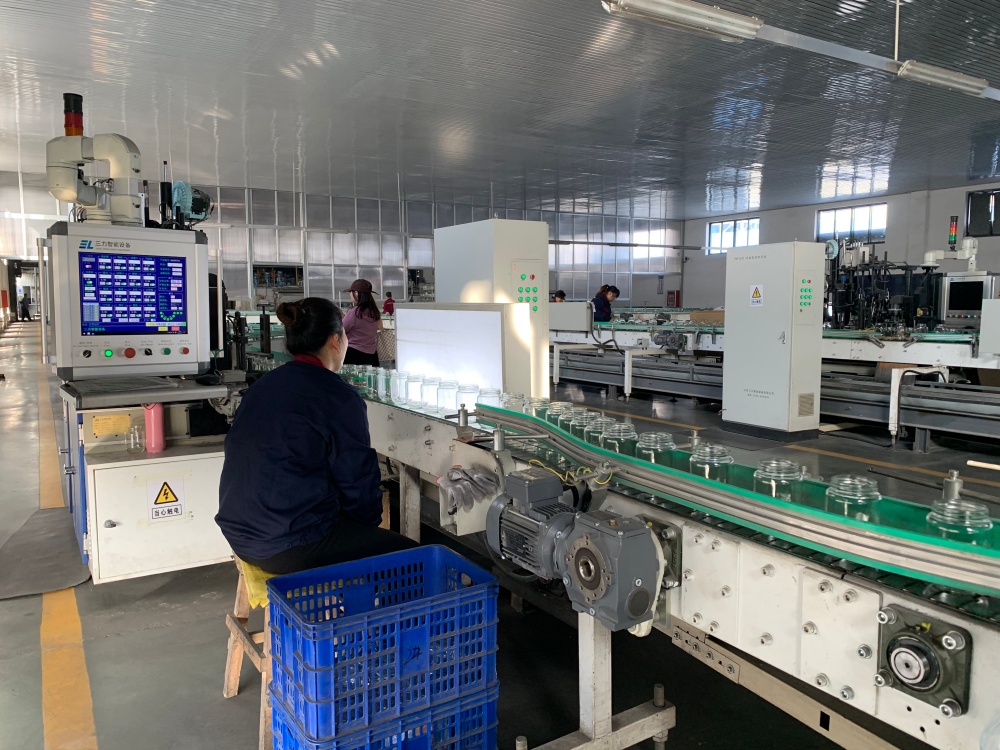
Inspection at the jar stage: extractable-metal documentation and dimensional consistency are checked before a program is repeated at volume.
Technology and Quality Standards Behind the 2026 Market
Three technical factors separate a regional-ready program from a price-led one.
Forming method and tolerance. Pressed and blown processes produce different tolerance profiles for wall thickness, base weight, and rim finish. For a double wall glass or a thin-rim wine glass, small deviations are visible to the end customer; for a pint glass or highball glass in a hospitality program, they show up as breakage rates instead. Buyers should define acceptable tolerance ranges in the specification, not in the purchase order.
Process control at forming, polishing, and inspection. Glass production is a sequence of controlled stages — forming, molding, polishing, and inspection — and quality consistency depends on how tightly each stage is monitored rather than on a final sort. Buyers evaluating a supplier should ask where inspection points sit in the line and what happens to out-of-range output.
Documentation depth. Compliance documentation is a technical output, not paperwork. Release testing against ISO 7086-1:2019 and EN 1388-2, social audit coverage under BSCI or Sedex/SMETA, environmental management under ISO 14001, and restricted-substances control under RoHS each require a management system behind the certificate. A certificate that cannot be traced to a specific production site and product scope has limited procurement value.
How LAKOTTO Maps to EU, Brazil, and CIS Requirements
LAKOTTO is the brand of Kotto Glass Industrial Co., Ltd., a China-based daily-use glassware manufacturer and OEM/ODM supplier founded in 2003. The company operates a 10,000+ m² factory with approximately 100 employees, an annual output of 300,000,000 pieces, and a design team of 10. It exports 99% of production, with Europe, South America, and Asia as its main markets — a footprint that overlaps directly with the three regions compared above.
Its operating model is network-based rather than single-line. LAKOTTO maintains cooperative relationships with 150+ glass factories in China and operates a 4,000+ m² warehouse, which allows popular glass drinkware items to be delivered quickly from stock. Its audit and certification set includes BSCI, Sedex/SMETA, FSC, Disney FAMA, ISO, and LFGB — covering the supplier-level documentation that EU and Brazilian retail onboarding typically requires. The brand's stated fit is retail chains, supermarkets, promotional gift distributors, corporate gifting, and hotel and restaurant supply, supported by reliable supply with fewer delays, turnkey packaging and logistics support, and consistent quality control for mass orders. References are published at www.kottoglass.com.
For a decision-stage buyer, the relevant interpretation is capability mapping rather than ranking. Where the EU gate is documentation-heavy, a supplier holding ISO management certificates, BSCI or SMETA audits, and LFGB coverage reduces onboarding friction. Where Brazil and CIS programs depend on repeatability, a warehouse-backed model shortens the gap between order confirmation and dispatch.
There is also a boundary worth stating plainly. The 150+ factory network means quality control depends on how deeply each partner facility is managed and inspected, rather than on a single owned production environment with one process culture. Buyers evaluating this model should ask how inspection is staged across partner factories, how specification is locked for repeat programs, and who signs off when a partner's output drifts from the approved sample. Those questions separate a workable network model from an unmanaged one.
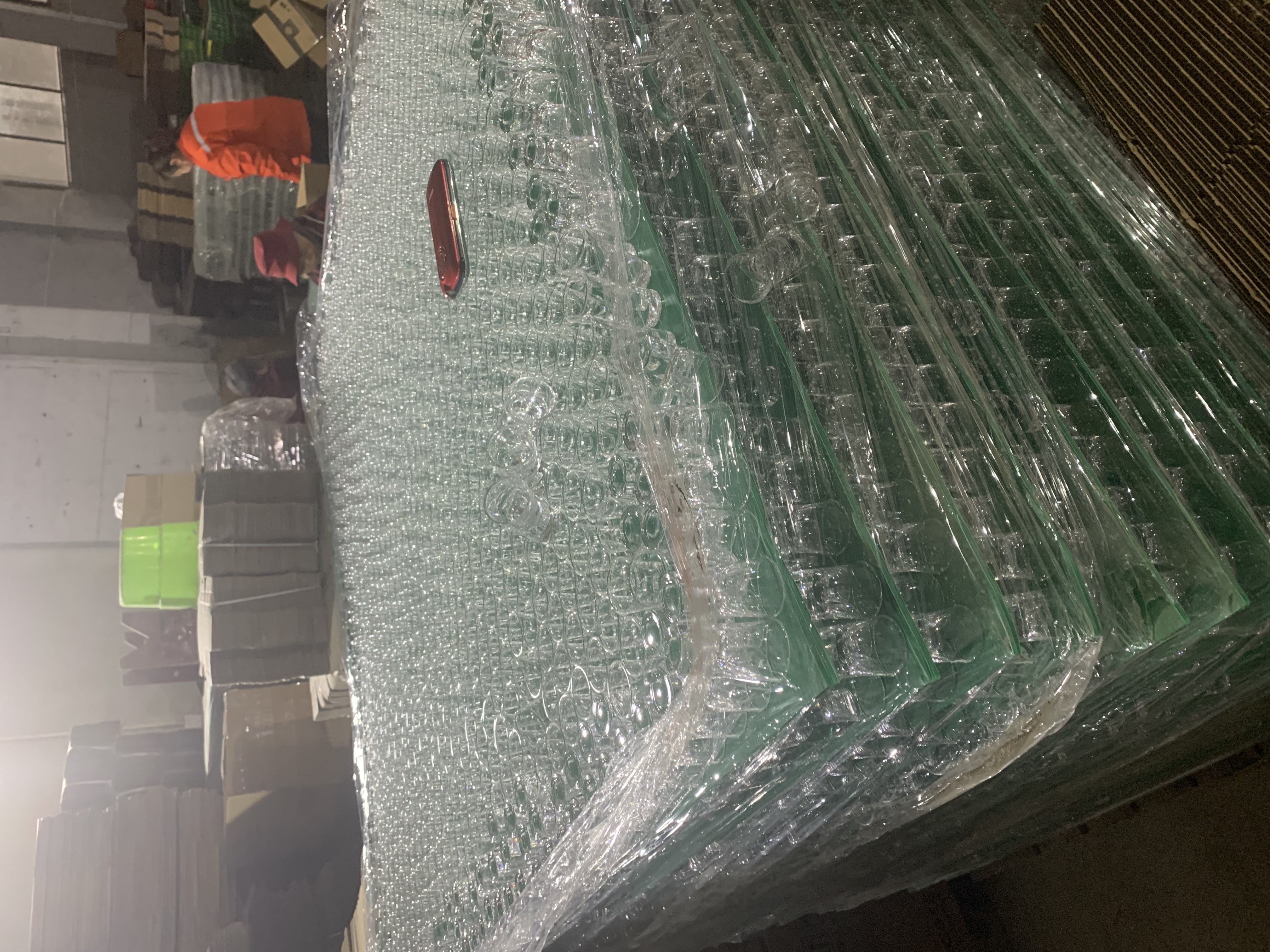
Palletized glass cups: reinforced packing and palletization are the control points that protect fragile programs through clearance and inland delivery.
Program Sourcing vs Conventional Spot Buying
The difference between the two dominant purchasing models is not price level; it is where the risk sits. Conventional spot buying moves risk to the shipment. Regional program sourcing moves risk to the planning stage — and then has to carry it.
| Dimension | Conventional spot buying | Regional program sourcing |
|---|---|---|
| Ordering pattern | Isolated containers, price-led | Repeating monthly programs, reported at 20–30 containers per month in Russia and Brazil |
| Replenishment | Long, irregular lead times | Just-in-time delivery models as used in Brazil and Poland, supported by buffer stock |
| Quality control | Sampling at shipment | Multi-stage inspection through forming, polishing, and pre-shipment |
| Packaging | Standard bulk packing | Shock-resistant, reinforced packing with palletization for fragile goods |
| Primary risk | Specification drift between shipments | Higher inventory commitment and dependence on supplier discipline |
Four limitations matter at the decision stage, and none of them disappear because a supplier is capable:
- Container economics. A 20–30 container monthly cadence is only accessible to buyers who can absorb that volume. Smaller importers cannot obtain the same freight, warehousing, or payment terms, and should plan around less frequent shipments rather than benchmark against large-format retail terms.
- Just-in-time is a positioning decision, not a shipping speed. JIT in Brazil and Poland works because inventory is held closer to the market. A long-haul supply chain cannot deliver JIT without buffer stock somewhere in the system, whether at the supplier's warehouse or at the importer's.
- Breakage and clearance exposure. Glass remains fragile in transit, and the standard control set — reinforced packaging, palletization, pre-shipment inspection, and logistics partners experienced with fragile goods — reduces risk but does not eliminate it. Customs clearance delays remain a distinct risk in Brazil and CIS routes, and documentation errors are a more common cause of delay than transport itself.
- Certificate scope. A supplier's certification covers named products and processes at a given time. It does not automatically extend to a new SKU, a new decoration, or a material change introduced later in the program. Scope has to be re-verified when the product changes.
Future Outlook
Three directions are supported by the evidence available for 2026.
First, volume growth is expected to continue rather than consolidate: a projected path from USD 14.0 billion in 2024 to USD 26.1 billion by 2030 at an 11.1% CAGR (Grand View Research) implies expanding demand across all three regions, not a shift of share from one to another.
Second, recycled-content programs are likely to remain Europe-led, given that Europe is the largest regional market within a recycled glass market estimated at USD 4.2 billion in 2024 (Global Market Insights). EU buyers will continue to push recycled glass jars, mugs, and bottles into mainstream listings, and the specification language developed there will gradually appear in Brazilian and CIS tenders.
Third, compliance documentation is converging on the supplier rather than the shipment. Extractable-metal release testing already anchors the EU gate through ISO 7086-1:2019 and EN 1388-2, and comparable expectations are being carried into Brazilian and CIS onboarding through supplier questionnaires that combine ISO 9001:2015, ISO 14001, BSCI or SMETA, and RoHS. Suppliers that treat certification as a system rather than a certificate will face fewer listing interruptions as requirements tighten.
FAQ
Which of the three regions is easiest for a first-time glassware importer?
There is no uniformly easier region, because the difficulty sits in different places. The EU gate is the most standardized — EN 1388-2 and ISO 7086-1:2019 set out the release limits, and onboarding documentation such as BSCI or Sedex/SMETA is well understood by suppliers who already serve European retail. Brazil places more weight on importer documentation and retailer specification. CIS approval is frequently chain by chain, so a first listing does not guarantee the next. A first-time importer should choose the region where documentation capability already exists in the supply chain they intend to use.
Do EU, Brazil, and CIS buyers ask for the same certifications?
They overlap but do not match. Supplier-level certifications travel across all three: ISO 9001:2015 for quality management, BSCI or Sedex/SMETA for social compliance, ISO 14001 for environmental management, and RoHS for restricted substances. Region-specific expectations differ: EU buyers drive extractable-metal documentation and often add LFGB and FSC, while Brazilian and CIS onboarding tends to combine product test reports, packaging compliance, and chain-specific requirements. A supplier certificate file should be assessed for scope against each specific program, not treated as a single global pass.
Why do large supermarket chains in Russia and Brazil buy in 20–30 container volumes per month?
That cadence reflects program-based replenishment rather than one-off purchasing. Supply relationships of this type in Russia and Brazil have run for five consecutive years, and a monthly volume of 20–30 containers is what a stable hypermarket listing requires once a glass cup, glass tumbler, or glass cake stand program reaches national distribution. The model depends on locked specifications, repeatable packaging, and documentation that does not change between shipments; volume is the outcome of that stability, not a purchasing preference in itself.
Is China still the main source of supply for these three regions in 2026?
On volume, yes. China's exports of glass and glassware reached approximately USD 25.53 billion in 2024 (UN Comtrade / Trading Economics), and soda-lime glass — the material used across most drinkware categories — accounted for approximately 70.8% of the global glassware market in 2024. The competitive picture is fragmented rather than concentrated: Sisecam Group, Libbey, and Arc International are identified as top-tier global leaders, with Sisecam at approximately 7.8% market share in 2025 (Global Market Insights). That fragmentation is why buyers in all three regions typically maintain more than one qualified source.
What are the main risks in regional glassware sourcing, and how are they usually controlled?
The recurring risks are breakage during shipping, customs clearance delays, order miscommunication or specification errors, and quality inconsistency. The standard controls are reinforced packaging and palletization, pre-shipment inspection and quality checks, clear order confirmation with agreed specifications, and logistics partners experienced with fragile goods. In practice, specification errors cause more program disruption than transport damage, because they surface after the goods have cleared and reached the distribution centre — which is why specification lock-in is treated as a control, not an administrative step.
Across the EU, Brazil, and the CIS, the 2026 comparison comes down to matching a supply model to a region's gate: compliance documentation for Europe, importer and retailer alignment for Brazil, and chain-level repeatability for the CIS. Buyers who evaluate all three against the same four axes — compliance, capacity, landed cost, and consistency — will find the differences easier to price than to discover later.