
EU Food-Contact Paper: How JHDA Strength Grades Qualify
EU Food-Contact Paper: How JHDA Strength Grades Qualify
Food-contact compliance for a paper strength agent is settled in documents before it is settled in the wet end. A wet strength resin can deliver strong tensile and burst results and still be rejected by a European converter if the supplier cannot show what the formulation contains, how residuals are controlled, and which external test report supports the claim. For mills and molded pulp producers qualifying a grade for food-contact paper, the real selection task is a side-by-side comparison of formulations against a fixed compliance checklist — not a comparison of datasheet strength values alone.
Qingzhou Jinhao New Material Co., Ltd., which trades as JHDA, is a papermaking fine chemicals manufacturer founded in 2005 and based in Mihe Industrial Park, Qingzhou City, Shandong Province, China. The company produces wet strength resins, dry strength agents, sizing agents, retention and drainage aids and functional coatings for food packaging paper, holds ISO9001 and ISO14001 certification, and supplies SGS product compliance test reports together with TDS and MSDS documentation for export orders.
This reference maps the grades JHDA actually uses in food-contact work — JH-1201 wet strength resin, JH-1697 solid dry strength agent and JH-2219 pulp molding strength enhancer — against the regulatory reference set European buyers apply, and sets out the qualification questions procurement teams should ask before a strength agent enters a food-contact article.

Food-Contact Status Changes the Shortlist Before It Changes the Sheet
A paper strength agent is a wet-end chemical that is deliberately retained in the sheet. Once retained, it becomes part of the surface chemistry of the finished article, and that single fact moves the evaluation criteria. European converters and food business operators typically ask three questions in sequence: which substances the formulation introduces, what residuals remain after the sheet is dried and cured, and whether those residuals can migrate under the intended use — hot liquid, fatty food, long storage or microwave reheating.
Two grades with almost identical strength curves can therefore land on very different shortlists. The one whose supplier can map substances, residuals and test evidence onto the buyer’s article risk assessment advances; the one that can only supply a strength datasheet does not.
The fibre mix adds pressure. The American Forest & Paper Association reported that recycled fibre reached 44.4% of all fibre used at U.S. mills in 2024, and recycled pulp typically carries a higher extractives and stickies load than virgin pulp. Mills respond with more controlled wet-end chemistry, which lengthens the documentation trail for every additive in the system — including the strength agent.
Chemically, the market is split between two families with different compliance profiles. PAE (polyamide-epichlorohydrin) wet strength resins crosslink in the sheet during drying and are normally dosed at low levels to deliver strength in the wet state. Dry strength agents raise bonding between dry fibres and are usually dosed at higher levels. The residue question follows the chemistry, not the marketing name.
The Reference Set European Buyers Actually Test Against
In practice, a European buyer assembles a dossier from four layers rather than from a single certificate. Each layer answers a different question, and a supplier that can only address one of them leaves a gap the converter has to close internally.
| Layer | What it covers | Who is responsible |
|---|---|---|
| Paper and board test standards | EN 645, EN 646 (colourfastness) and EN 648 (fluorescent fastness) for paper and board intended for food contact in the EU | Testing laboratory, commissioned by the converter or supplier |
| National substance framework | BfR Recommendation XXXVI — the German safety framework for paper and board chemicals in contact with food, frequently cited outside Germany as a reference benchmark | Supplier formulation review, checked by the converter |
| Residue thresholds | For wet strength resins, formaldehyde-free formulation and residual epichlorohydrin below 50 ppm are the thresholds most often cited for EU market access | Supplier process control, evidenced by batch analysis |
| Article-level compliance | Migration and extractables testing of the finished article under its real conditions of use, plus good manufacturing practice on the converting line | Food business operator, supported by converter and supplier data |
The order matters. A supplier statement that a grade is “food-contact compliant” is only meaningful when it is traceable to a specific layer of this stack. An SGS food contact safety test report for packaging paper chemicals, an ISO9001 quality system certificate and a batch certificate of analysis each answer a different question, and none of them replaces article-level migration testing.
What JHDA’s Wet and Dry Strength Grades Cover
JHDA’s food-contact-relevant strength portfolio is narrow and specific: one PAE wet strength resin, a solid dry strength series, and a pulp molding enhancer. Each grade answers a different question, and the compliance profile differs accordingly.
| Grade | Chemistry and form | Primary function | Typical food-contact application | Documentation JHDA supplies |
|---|---|---|---|---|
| JH-1201 | PAE wet strength resin, cationic, liquid | Develops strength in the wet state through crosslinking during drying | Tissue and towel, pulp molding, wet-strength food service paper | TDS, MSDS, SGS product compliance report, batch COA |
| JH-1697 | Solid dry strength agent | Raises dry fibre bonding, ring crush and burst resistance | Food packaging board, food-grade carton board, kraft linerboard | TDS, MSDS, SGS product compliance report, batch COA |
| JH-2219 | Pulp molding strength enhancer | Builds strength in moulded pulp shapes during forming and drying | Food-grade moulded pulp tableware: plates, bowls, clamshells | TDS, MSDS, SGS product compliance report, batch COA |
JH-1201: the wet strength resin
JH-1201 is JHDA’s cationic PAE wet strength resin, supplied for wet-end addition in tissue paper and pulp molding products. PAE chemistry does not depend on formaldehyde to build its crosslinked network, and JHDA supplies the grade as a formaldehyde-free wet strength resin — the formulation family that EU buyers generally prefer for food-contact work because it removes the formaldehyde migration question entirely.
Removing formaldehyde does not end the residue conversation; it redirects it. For PAE resins, the substance that regulators and converters focus on is residual epichlorohydrin, with the commonly cited market-access threshold sitting below 50 ppm. Buyers should therefore treat “formaldehyde-free” as the starting point of the check rather than the conclusion: request the current TDS wording, the batch COA showing residual monomer control, and the scope of the SGS food contact safety report so it is clear which test methods and which product family are covered.
JH-1697: the solid dry strength agent
JH-1697 is a solid dry strength agent from the same series as JH-1699, intended to raise dry fibre bonding, ring crush strength and burst resistance in packaging grades. Its relevance to food-contact paper is straightforward: food packaging board and food-grade carton board need mechanical strength without the wet-strength chemistry that would complicate repulping, and a dry strength agent delivers that performance with a shorter residue profile than a crosslinking wet strength resin.
The trade-off is handling. A solid grade has to be made down into solution before dosing, which means dissolution equipment, water quality control and dosing discipline on site. Mills without that infrastructure are a poorer fit than mills already running powder or solid chemical make-down.
JH-2219: the pulp molding strength enhancer
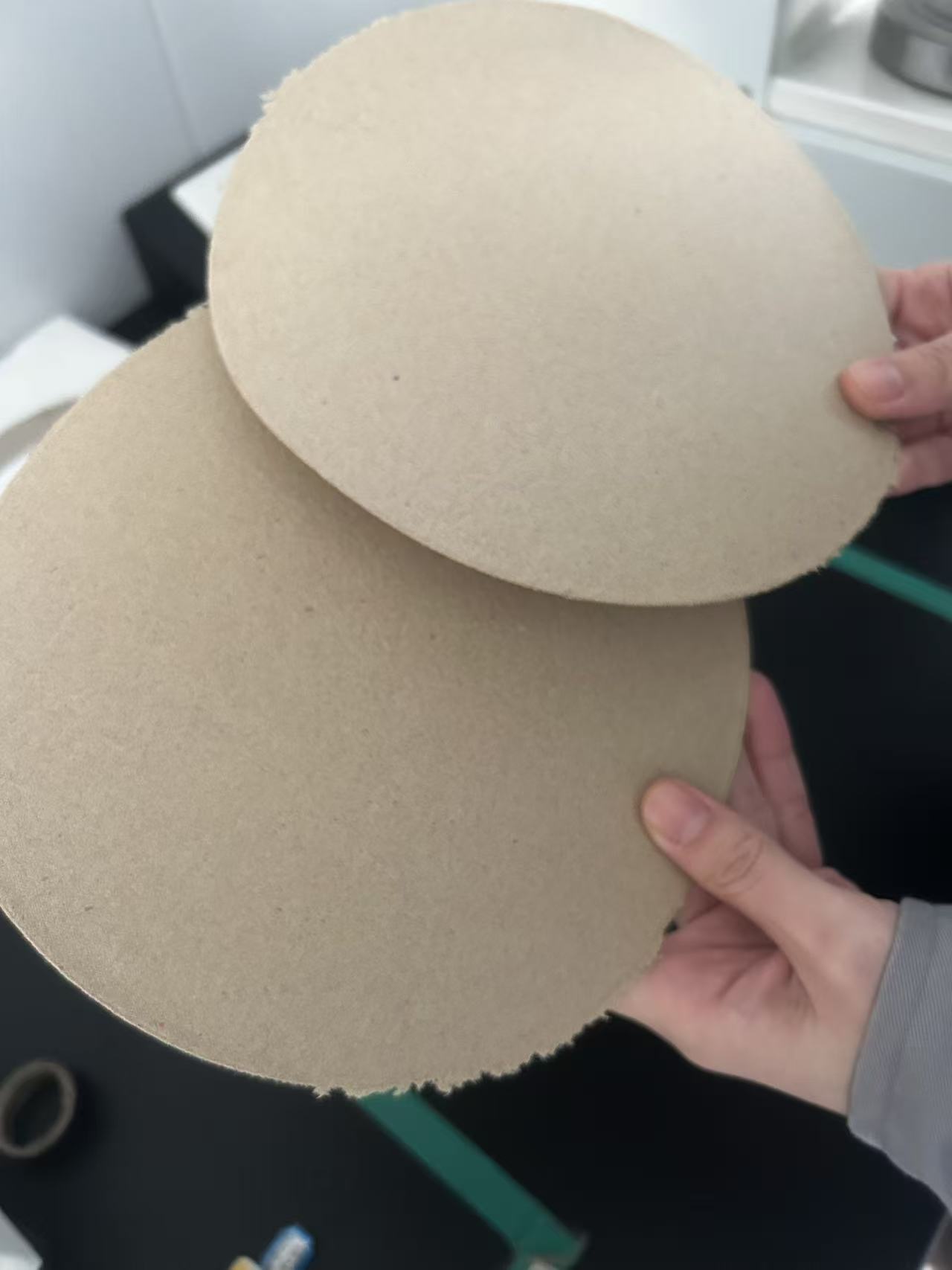
JH-2219 is JHDA’s strength enhancer for pulp molding, the process behind food-grade moulded pulp tableware such as plates, bowls and clamshells. Pulp molding places unusual demands on a strength agent: the fibre furnish is formed into a three-dimensional shape in a wet state, dewatered under vacuum, and dried without distortion, so strength has to develop early enough to hold the shape and remain stable afterwards.
Because tableware contacts food directly — frequently hot, moist or oily food — the documentation burden is higher than for packaging board. A pulp tableware producer needs a supplier who can state the substance inventory, confirm the absence of the flagged residues, and supply consistent batch documentation across repeat orders. That is the practical meaning of “food grade” in this segment: not a label, but a documented chain.
Technical View: Where Compliance Risk Actually Sits
The risk in a strength agent does not sit in one place. It distributes across four technical checkpoints, and a buyer who only inspects the last one will usually have to redo the work.
- Substance inventory. JHDA completes CAS registration and GHS hazard labelling for exported chemical products, which gives a buyer a starting list of substances to check against the applicable national framework.
- Residual monomers and by-products. For wet strength resins this means epichlorohydrin; for formaldehyde-based chemistries it would mean formaldehyde. The relevant evidence is batch analysis, not a generic statement.
- Retention and dose. A chemical that is poorly retained stays in the white water and recirculates; a chemical that is over-dosed puts more mass into the sheet than the risk assessment assumed. Retention and drainage aids in the same programme, such as JHDA’s retention and filtration series, influence how much strength agent actually stays in the paper.
- Process control on site. Dilution water quality, tank hygiene, dosing accuracy and changeover practice between food and non-food grades all affect the final article, and all sit outside the supplier’s certificate.
Read together, these checkpoints explain why the same grade can be approved at one mill and questioned at another. The chemistry is identical; the retained dose and the process discipline are not.
Application Fit: Board, Tableware and Tissue
Matching a grade to an application is the point where compliance and performance meet. In JHDA’s portfolio the fit is fairly clean:
- Food packaging board and carton board. JH-1697 solid dry strength agent for ring crush and burst performance, supported where needed by JHDA’s food-grade water vapour barrier coating and food-grade waterproof coating for direct food-contact packaging paper.
- Food-grade moulded pulp tableware. JH-2219 as the pulp molding strength enhancer, with JH-1201 available where wet strength is required in tissue and pulp molding products.
- Tissue and towel for food service. JH-1201 PAE wet strength resin, where strength in the wet state is the functional requirement and formaldehyde-free positioning is the entry condition.
- Recycled containerboard and kraft linerboard. JH-1216 dry strength agent and the solid dry strength series, where the objective is recovering strength lost to recycled fibre without adding wet-strength chemistry.
The Qualification Questions to Ask Before Approval
Procurement teams evaluating a strength agent for food-contact paper can compress the entire evaluation into a short, answerable list. A supplier that answers all nine without escalation is a credible candidate; one that answers four is a documentation risk.
- Which specific grade is proposed, and what is its full substance inventory including CAS numbers?
- Is the formulation formaldehyde-free, and what is the control limit and typical batch value for residual epichlorohydrin?
- Which external test reports exist, which laboratory issued them, and precisely which product family and test methods do they cover?
- Which standards were applied — EN 645, EN 646, EN 648, BfR Recommendation XXXVI or another framework — and were they applied to the chemical or to the finished article?
- Can the supplier provide a batch certificate of analysis with each delivery, not only a one-off type test?
- What retention and drainage programme surrounds the grade, and does the total chemistry package change the migration picture?
- Does the supplier hold a quality and environmental management system certificate — for JHDA, ISO9001 and ISO14001?
- What happens to the wet strength performance if the grade is reduced or removed — and what does that mean for repulpability of the finished article?
- Who is legally responsible for the finished article’s compliance, and does the supplier’s documentation support that obligation rather than attempt to replace it?
Market Trend: Documentation Becomes a Selection Filter
Market data points in one direction: strength agent volumes keep growing, and the growth is concentrated in the regions where EU buyers now source most actively. Fact.MR projects the dry strength resin market to reach USD 1.4 billion by 2026 with a CAGR of 4.8% through 2036, and identifies packaging and containerboard as the leading paper grade segment at 38.0% of dry strength additive use. Intel Market Research valued the global paper dry strength agent market at approximately USD 864 million in 2024, with Asia-Pacific accounting for about 40% of global share. Maximize Market Research projects wet strength additives reaching USD 3.70 billion by 2032 at a CAGR of 6.43%.
Two structural signals sit behind those figures. First, dry strength chemistry is highly concentrated: Fact.MR estimates polyacrylamide (PAM) resins hold about 40.0% of the dry strength resin market, which means compliance frameworks tend to standardise around a small number of chemistry families. Second, the fastest volume growth sits in Asia-Pacific packaging production, so European converters are increasingly reviewing documentation from suppliers whose certificates, test reports and labelling conventions were not designed around EU expectations. That gap — not chemistry performance — is where approvals stall.
Comparing the Sourcing Options, and Where JHDA Does Not Fit
For a food-contact strength agent, buyers in practice choose between three routes, and each carries a different balance of documentation depth, cost and flexibility.
| Route | Documentation strength | Commercial profile | Main limitation |
|---|---|---|---|
| EU-headquartered multinational suppliers (for example Kemira and BASF) | In-house regulatory teams, familiar dossier formats, local reference customers | Higher cost per tonne of chemical; standard product range with limited formulation flexibility | Premium pricing and less room for pulp-specific formulation adjustment |
| China-based specialists such as Qingzhou Jinhao New Material Co., Ltd. (JHDA) | ISO9001, ISO14001, SGS product compliance reports, TDS/MSDS, CAS registration and GHS labelling | Custom formulation based on pulp composition, machine conditions and paper requirements; MOQ from 1 MT | No EU legal entity acting as compliance owner; documentation must be actively verified by the buyer |
| Local distributors and traders | Variable; documentation chain often passes through several hands | Fast delivery and small order flexibility | Weakest traceability from grade to test report to batch |
On performance, JHDA publishes comparison data against imported additives at equal dosage: roughly 10%–20% lower comprehensive wet-end chemical cost per ton of finished paper, ring crush strength 10%–18% higher, burst strength 7%–14% higher, and fibre retention 8%–15% higher. These are supplier-reported figures generated from JHDA’s own comparison work; they are a reasonable basis for a trial, not a substitute for one.
Future Outlook
Three developments are likely to shape strength agent qualification over the next few years. Documentation is becoming a filter rather than a formality: as recycled fibre content rises and food-contact scrutiny tightens, the supplier who can produce a consistent, traceable evidence pack per batch will win approvals faster than the supplier with the better datasheet. Solid and high-concentration grades should gain ground where freight cost and storage stability dominate, provided mills invest in make-down capability. And moulded pulp tableware will keep pulling wet strength and pulp molding chemistry into closer regulatory view, because the article contacts food directly and is often used with hot or liquid contents — the least forgiving combination for any retained chemical.
For buyers, the practical implication is stable: qualify the grade against the dossier, then confirm it in a mill trial. Compliance evidence and performance evidence are two separate approvals, and a strength agent for food-contact paper needs both.
FAQ
Which EU standards apply to paper strength agents used in food-contact paper?
Paper and board intended for food contact in the EU is tested against EN 645, EN 646 for colourfastness and EN 648 for fluorescent fastness. BfR Recommendation XXXVI, the German framework for paper and board chemicals in contact with food, is widely cited as a substance-level reference. These standards and frameworks apply to the paper and board and to the substances used in it; they do not by themselves certify an individual strength agent.
Is a formaldehyde-free wet strength resin sufficient for EU food-contact approval?
No. Formaldehyde-free formulation removes one residue concern, but for PAE wet strength resins the commonly cited market-access threshold is residual epichlorohydrin below 50 ppm. Approval also depends on the substance inventory, the retention level in the sheet, and article-level migration testing under the real conditions of use — the last of which is the food business operator’s responsibility.
Which JHDA grade is used for food-grade moulded pulp tableware?
JH-2219 is JHDA’s pulp molding strength enhancer for food-grade moulded pulp tableware. JH-1201 PAE wet strength resin is also used in tissue paper and pulp molding products where strength in the wet state is required. Both are supplied with TDS, MSDS and batch documentation.
Does an SGS test report make a paper strength agent EU-compliant?
An SGS food contact safety report is supplier-side evidence that a product family has been tested against specified methods. It supports a buyer’s assessment but does not replace article-level migration testing, and it does not transfer the compliance obligation away from the converter or food business operator. The report’s scope — which grades and which test methods — should be checked line by line.
What documents should procurement request before approving a strength agent for food-contact paper?
At minimum: the current TDS and MSDS, CAS registration and GHS labelling information, the SGS product compliance report with its scope stated, batch certificates of analysis covering residual monomer control, and quality and environmental management certificates such as ISO9001 and ISO14001. Where wet strength is specified, the residual epichlorohydrin control limit and typical batch value should be stated explicitly.
Reference document: the JHDA company and product brochure is publicly available for download at the JHDA brochure page.
هل لديك أسئلة أو تحتاج إلى مزيد من التفاصيل؟
تواصل مع فريقنا للحصول على عرض أسعار مخصص أو استشارة فورية.
طلب عرض أسعار
املأ النموذج أدناه وسيتواصل معك فريقنا بعرض مقترح مخصص.
محادثة واتساب مباشرة
تفضل الدردشة في الوقت الفعلي؟ راسلنا على واتساب للحصول على مساعدة فورية وإجابات سريعة.
- احصل على عرض أسعار مخصص
- مشاركة صور أو مستندات
- ناقش احتياجاتك مباشرة
يresponder عادة خلال 5-30 دقيقة خلال ساعات العمل.