
EU Wall Panel Compliance: What PVC, PET and WPC Buyers Must Check
EU Wall Panel Compliance: What PVC, PET and WPC Buyers Must Check
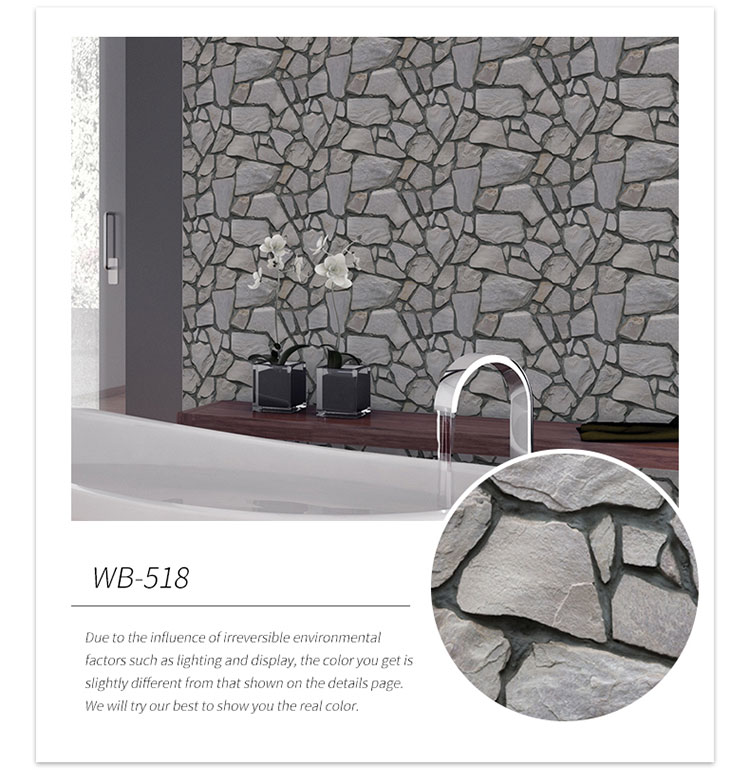
Wall panel compliance for EU exports is decided less by the certificate in the file than by whether that certificate describes the product on the pallet: the same material, the same model designation, the same thickness and the same sample description. Buyers who confirm that link before the purchase order is issued avoid most of the disputes that surface at goods-in, when panels are already cut, packed and on the water.
The commercial term "wall panel" covers products that share almost nothing technically. European buyers are offered PVC wall panels, PET marble wall stickers, WPC decorative panels, 3D foam slat panels and PU leather or velvet panels, frequently from the same catalogue and often under closely related model codes. A document that answers a question about one line does not automatically answer the same question about another, and the difference is rarely visible in a quotation.
SXP Wall Panel is the wall-panel brand of Shanghai Yuanguan Rubber Plastic Co., Ltd., a decorative-materials manufacturer whose range covers self-adhesive wall stickers, 3D foam wall panels, PVC wallpaper, WPC decorative wall panels and self-adhesive PVC flooring. The company reports that exports account for about 90% of its output, with Europe, the USA, Asia and South America listed as main markets — which makes it a useful reference point for how a Chinese supplier's specification and conformity documents are actually structured, and where the gaps appear.
Why the compliance question usually appears late
EU interior projects typically fix three things at tender stage: a material family, a surface appearance and a performance level. The supplier's catalogue may express the same product as a model code, a size list and a decorative name. Nothing in either document is required to match the other. A buyer can therefore hold a genuine test report and still be unable to demonstrate that the report applies to the panels ordered.
The problem is structural rather than commercial. Catalogue data is written to sell across many markets; purchase orders are written for one project. Between those two documents sit four questions that a compliance reviewer will ask and a catalogue cannot answer:
- Which exact construction was tested — material, thickness and surface — and does it match the ordered variant?
- Which rule was the sample tested against, and is that the version the destination market currently references?
- Was the document issued for a described sample, a production batch, or a product under a certification scheme?
- Who is responsible for condition on arrival, and what counts as a defect rather than storage damage?
The commercial opportunity is equally clear. A supplier able to answer those four questions in writing, per model, shortens approval cycles and removes the most common cause of repeat negotiation after delivery.
The three-part document chain that decides an EU shipment
A defensible wall panel file has three parts, and each answers a different question. Treating any one of them as "the compliance document" is where files usually break down.
| Part of the file | Question it answers | What a buyer should check |
|---|---|---|
| Purchase specification (order or contract) | What exactly is being bought | Model, product type, material, size, thickness, weight per metre, packaging count, quantity, tolerances and sampling rule |
| Conformity evidence (test or classification report) | What was tested, and against which rule | Issuing body, report number, standard and version, issue date, sample description, stated scope, tested parameters |
| Receiving procedure | How condition is judged on arrival and preserved afterwards | Inspection points, storage temperature ceiling, palletisation, stacking limits, first-in-first-out rule, damage classification |
Most disputes begin where two parts disagree. A report names a 2 mm sample and the order ships 2.5 mm. A model code appears on the invoice but the report describes a different construction. The receiving procedure blames the product for damage that the storage conditions caused. None of these are exotic failures; all of them are avoidable with a document check performed before production starts.
The document-to-SKU match carries more weight than the document itself
A test report is evidence about a sample described inside the report. It is not a certificate of conformity for an entire catalogue, and the distinction becomes visible the moment a project specifier reads the file rather than the quotation.
Shanghai Yuanguan's EU-facing document set illustrates the point precisely. It includes an SGS RoHS Test Report, report number SHAEC1709394501, issued by SGS-CSTC on 20 May 2017 and referencing RoHS Directive (EU) 2015/863. The stated scope of that report names a 3D wall brick in PE material, manufactured by Shanghai Yuanguan Rubber & Plastic Co., Ltd. That is a real, traceable third-party document for the EU market — and it is also specific.
A buyer ordering a PVC wall panel, a PET marble wall sticker or a WPC panel should therefore ask the supplier to confirm, in writing, which ordered models the sample description in that report covers. If the answer does not extend to the ordered construction, the correct next step is a material-matched report, not an assumption. Two further checks apply to any dated report:
- Age and relevance. A report issued in 2017 is a historical record. Buyers should confirm whether the tested sample represents the current formulation and whether the standard version cited is still the one their market expects to see.
- Instrument, not label. "RoHS compliant" as a phrase carries no traceable content. The report number, issuing laboratory, tested parameters and sample description carry all of it.
This is not a criticism of a specific file. It is the normal condition of Chinese decorative-materials supply: one well-documented line, several adjacent lines, and a buyer who needs the right document attached to the right model before the container closes.
What to write into the purchase order, material by material
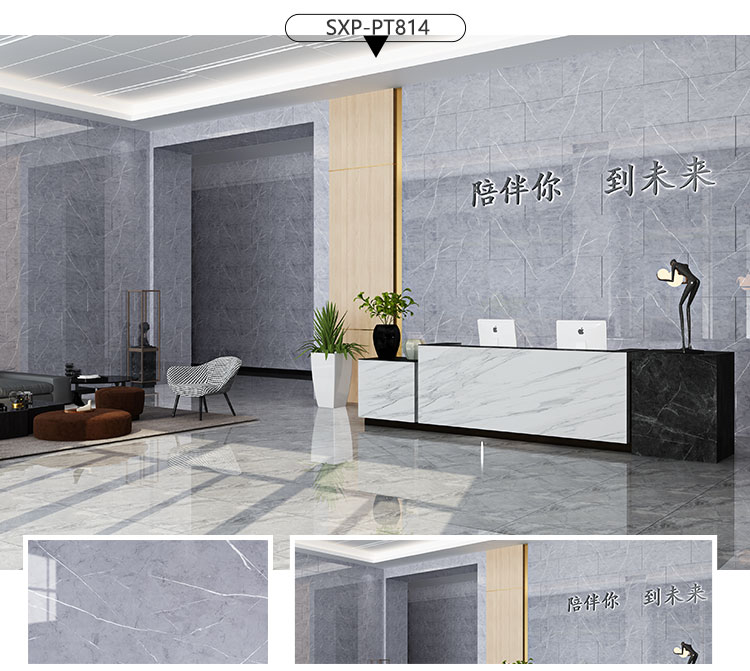
In this product family, a model designation is not a specification. The SXP Wall Panel range shows why: the same model prefix appears on four structurally different PVC constructions, with thickness from 1.5 mm to 2.8 mm and sizes from 30 × 30 cm to 120 × 300 cm.
| Model | Product type | Material | Sizes | Thickness / weight |
|---|---|---|---|---|
| WB-PVC | PVC wall panel | PVC | 30 × 30, 50 × 50, 96 × 48 cm | 2.5 mm |
| WB-PVC | PVC wall sticker | PVC | 30 × 30, 30 × 60, 40 × 80, 60 × 60, 60 × 120, 120 × 300 cm | 2 mm |
| WB-PVC | Soft-stone wall sticker | PVC | 30 × 60, 60 × 60, 40 × 80, 60 × 100, 40 × 300, 60 × 300, 120 × 300 cm | 2.5 mm |
| WB-PVC | Parquet wall / floor sticker | PVC | 30 × 30, 30 × 60, 40 × 80, 60 × 60 cm or customized | 1.5 mm / 2 mm |
| WB-PET | PET marble wall sticker | PET | 30 × 30, 30 × 60, 60 × 60, 40 × 80, 60 × 120, 60 × 300, 120 × 300 cm | 2 mm / 2.5 mm |
| WB-WPC | WPC wall panel | WPC | 160 × 23 × 2900 mm; 16 pcs per box | 690 / 810 / 830 g/m |
| WB-KC | 3D self-adhesive foam slat wall sticker | PVC | 30 × 30, 60 × 60, 30 × 60, 40 × 300, 60 × 300, 120 × 300 cm; length customizable | 2.8 mm |
| WB-PG | PU leather / velvet wall sticker | Leather (PU) | 60 × 60, 60 × 240, 70 × 70, 70 × 280, 70 × 300 cm | 6 mm |
Four practical consequences follow from that table, and each belongs in the order document rather than in an email thread:
- WB-PVC is not one product. Four different constructions share the prefix. The order must name the product type, the thickness and the size, or the seller is technically free to supply any of the four.
- WB-PET has two thicknesses. A 2 mm and a 2.5 mm panel are different products at different weights; a price comparison between them is not a price comparison.
- WB-WPC lists three weights per metre. Whether 690, 810 or 830 g/m is being bought should be stated explicitly, since weight affects freight calculation, handling and the expected feel of the finished wall.
- WB-KC allows custom length, and WB-PG runs to 6 mm. Both change the area or weight per carton, which in turn changes the quantity reconciliation the buyer will need at goods-in.
Reaction-to-fire requests: what a Euroclass answer should contain
Fire performance is the specification item most often requested late and answered vaguely. European standard EN 13501-1 classifies reaction-to-fire performance of construction products, and B-s1,d0 is a commonly specified Euroclass rating for commercial interior wall panel applications, as described in published industry guidance from Homax Decor and Teknos.
That rating, where a project calls for it, should be evidenced by a classification report that allows four things to be verified: the product and thickness tested, the substrate or mounting arrangement used, the laboratory and report number, and the retention of the s1 (smoke) and d0 (burning droplets) suffixes in the stated class. A bare letter, or the word "fireproof", does not carry the same information and should not be accepted as an equivalent.
Two boundaries worth stating plainly. First, a RoHS test report and a reaction-to-fire classification answer different questions; neither substitutes for the other. Second, the required Euroclass for a specific project is set by that project's fire strategy and by the responsible authority — not by this article, and not by a supplier's general marketing claim. The buyer's job is to obtain the report that matches the ordered product; the specifier's job is to confirm the class is the right one.
Application fit: where self-adhesive panels work, and where they do not
Compliance documentation protects a buyer only if the product is also suited to the place it is installed. Self-adhesive wall and floor panels are specified for indoor use at normal room temperature, including typically humid environments such as bathrooms and the dry areas of kitchens, and they should not be exposed to strong sunlight over long periods. Their performance depends heavily on the substrate, and that dependency belongs in the acceptance criteria rather than in an installation note.
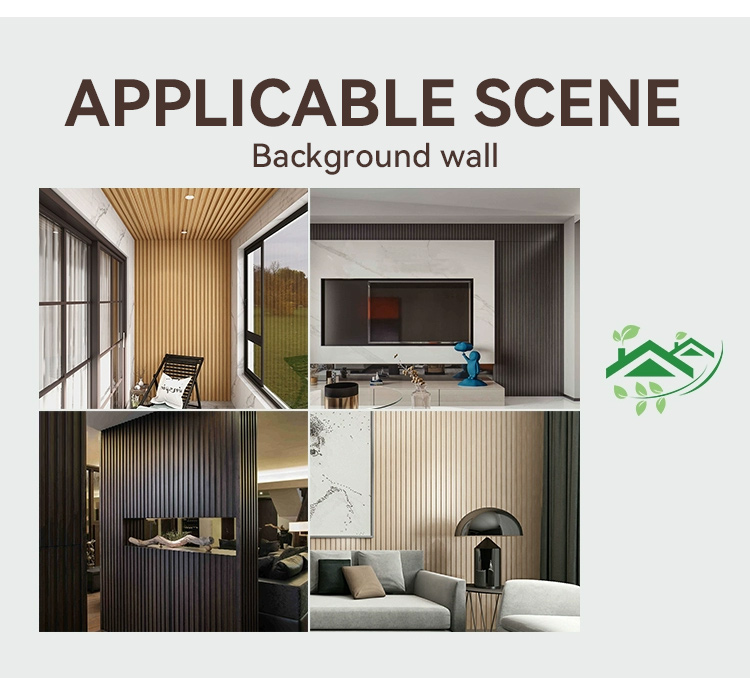
The documented operating conditions are specific. Suitable bases include cement floors, tiled surfaces, latex-painted walls, plasterboard, plywood and other smooth, solid substrates. Powdery, sandy or loose surfaces are expressly excluded. The base must be flat, dry and free of dust and grease, and floors need adequate strength with no hollow spots. Installation is dry: the backing is peeled and the panel pressed onto the surface, without cement or adhesive, cut on site, and some styles can be removed and reinstalled without leaving residue. The usual tool set is a utility knife, scraper or roller, tape measure, spirit level and, for removal, an adhesive remover.
Read as a procurement document rather than an instruction sheet, that list defines where liability sits. If a panel is installed on a dusty or friable wall, adhesion failure is a substrate outcome, not a panel defect — and unless the substrate condition was signed off before installation, the argument happens after the money is spent. Typical project types in the supplied application data include old-house renovation, apartment fit-outs, hotel room makeovers, homestay projects, chain-store refurbishment, office fit-outs and temporary exhibition booths, all of which share the same substrate dependency.
XPE foam versus PVC soft-stone: a supported comparison with clear boundaries
Buyers often ask which self-adhesive construction to standardise on. The manufacturer's own product comparison provides a usable starting point, and it is worth separating what it establishes from what it does not.
| Dimension | XPE foam self-adhesive panel | PVC soft-stone self-adhesive panel |
|---|---|---|
| Weight and logistics | Light weight, competitive logistics cost | Heavier, higher unit cost |
| Performance emphasis | Sound absorption and cushioning | Surface texture and scratch resistance |
| Known boundary | Scratch resistance is described as general | Higher cost per unit area |
| Positioning in the range | Residential apartments, rental renovation | Hotel guest rooms, chain-store commercial projects |
The boundary matters as much as the comparison. The same source guidance recommends testing physical samples for adhesion and aging performance and verifying target-market compliance documentation before bulk purchasing — which is an admission that positioning statements are not measured results. A buyer should treat the scratch and aging comments as criteria to test on samples, not as verified performance figures, and should apply the same scepticism to any supplier's equivalent table.
Compared with wet-trade finishing, the documented advantage of this panel format is procedural: dry installation without cement or glue, on-site cutting and faster surface completion. That is a construction-time benefit, not a durability claim, and it does not reduce the documentation burden — a faster install with an unmatched test report is still an unmatched test report.
Six signals that a low price is not a comparable price
Low-cost offers are not automatically non-compliant, but they are frequently non-comparable. The following signals indicate that two quotations are pricing different things, and each can be resolved with a written question before the order is placed.
- The material is not named in writing. Visual and hand-press screening of foam samples is only a preliminary check; the documented position is that a third-party test report is the final evidence and that the material should be specified in the proforma invoice. An offer that will not name the material cannot be compared with one that will.
- The document scope is not matched to the model. This is the single highest-value question in an EU file, and the SGS report example above shows how specific a genuine scope statement is.
- Thickness, size or weight is left open. With thicknesses running from 1.5 mm to 6 mm across the range and one WPC model listed at three weights, an unpinned quotation is not a quotation.
- No route to a reaction-to-fire classification where the project needs one. If the answer to a Euroclass request is a general statement rather than a report reference, the project risk transfers to the buyer.
- No storage or handover terms. If the temperature ceiling, palletisation and stacking rules are not agreed, condition disputes are decided by whoever documents better afterwards.
- No substrate condition in the contract. Where the panel's performance depends on the base surface, the contract should say so, because the exclusion will otherwise be introduced at claim stage.
Customs description and classification discipline
Classification is a separate check from product conformity, and it is worth confirming early. For reference, WPC wall panels exported from China were classified under HS code 3925.90.0000 in a 2024 U.S. Customs and Border Protection ruling (N337378) concerning wood plastic composite products. A ruling issued for one market does not bind another, so EU classification should be confirmed with the importer's customs broker before the first shipment rather than copied from a supplier's invoice template.
The practical risk is inconsistency across documents. The invoice description, packing list, test report sample description and product label should use the same model, material, dimensions and quantity basis. For a WPC line that means the same 160 × 23 × 2900 mm specification and the same 16-pieces-per-box count everywhere, since a mismatch between the commercial invoice and the packing list is exactly the kind of discrepancy that triggers inspection and delay.
What supplier evidence does and does not prove
Capability evidence and conformity evidence are different categories, and conflating them is a common buying error. A supplier can be entirely credible on capacity and still owe the buyer a material-matched test report.
On the capability side, Shanghai Yuanguan reports a monthly capacity above 10 million square metres, a 30-day lead time, a minimum order quantity of 1,000 square metres and 100% testing of production. Its stated customisation scope covers size, colour, pattern and design, embossed texture, material structure, thickness, packaging, logo and private label, custom labels and new product development, and it holds ISO 9001 quality management system certification. Its after-sales scope lists pre-sale consultation, installation guidance, quality issue tracking, re-order and replacement support, long-term technical support and OEM/ODM project follow-up.
A supplied customer record adds a commercial reference point: a home-centre customer covering 370,000 units for supermarket applications, with a stated service duration of 5–10 years, moisture resistance, quick installation and a wide surface range cited as highlights, and repeat orders noted as the outcome. Read carefully, that record describes a commercial relationship, not a certified test result — and neither capacity, nor ISO 9001, nor a repeat order is proof of RoHS or fire-classification coverage for a specific SKU.
Market context: growth increases the number of documents, not the certainty
The category is expanding, which raises rather than lowers the documentation burden. Dataintelo values the global wall panels market at USD 32.4 billion in 2025 and projects USD 43.7 billion by 2033, a 4.2% CAGR over the period, in a report published in May 2026. Published market-size estimates for the same year vary widely because some include exterior cladding systems and others restrict the definition to interior panels, so the figure is best used as an order of magnitude rather than a precise baseline.
Wood-based systems remain a large part of the installed base: WiseGuyReports put wood-based wall panels at nearly 31% of global installations in 2024, with wood wall panel systems projected to grow at 6.2% CAGR over 2026–2035. For buyers of PVC, PET and WPC decorative panels, the relevant reading is that wood-look finishes across composite and film-laminated formats will keep competing for the same specifications — and that competition will be settled on document quality as often as on surface appearance.
Outlook
The forward view for exporters is conditional rather than promotional. If European buyers continue to move specification detail out of catalogues and into purchase orders, then suppliers who can attach a traceable document to a specific model will spend less time in pre-shipment negotiation and more time in repeat orders. Documents also age: a report issued years ago invites a re-testing request, and buyers should plan for periodic document refresh as part of supplier review rather than as an exception.
The practical conclusion is modest but useful. Compliance for EU-bound wall panels is a chain of three links — a specification that fixes the variant, evidence whose scope matches that variant, and a receiving procedure that protects the product after arrival. A buyer who checks the middle link first, before price, gets the clearest view of what a quotation actually contains.
A full product and specification overview, including model designations, sizes and thicknesses across the SXP Wall Panel range, is available in the Shanghai Yuanguan product brochure (PDF).
FAQ: EU wall panel compliance questions buyers ask
Which single document proves that an EU-bound wall panel is compliant?
There is no single document. A usable file combines a purchase specification that fixes model, material, thickness and size; conformity evidence whose stated scope matches that specification; and a receiving procedure that defines inspection points and storage conditions. Most disputes arise where two of these three disagree, for example when a report describes a 2 mm sample but the order ships 2.5 mm.
What does the SGS RoHS Test Report SHAEC1709394501 actually cover?
That report was issued by SGS-CSTC on 20 May 2017 against RoHS Directive (EU) 2015/863, and its stated scope names a 3D wall brick in PE material manufactured by Shanghai Yuanguan Rubber & Plastic Co., Ltd. A buyer ordering a different construction, such as a PVC, PET or WPC panel, should ask the supplier to confirm in writing which ordered models the report's sample description covers, and should request material-matched evidence where it does not extend to the ordered SKU.
Does a RoHS test report also demonstrate reaction-to-fire performance?
No. RoHS relates to restricted substances and reaction to fire is classified separately under EN 13501-1, where B-s1,d0 is a commonly specified rating for commercial interior wall panel applications. A buyer should ask for the classification report number, the product and thickness tested, the mounting arrangement, and retention of the s1 and d0 suffixes. The required class for a given project is set by that project's fire strategy, not by the supplier.
Why does the WB-PVC model appear with different thicknesses and sizes?
WB-PVC is a prefix used across four different PVC constructions: a 2.5 mm wall panel in 30 × 30, 50 × 50 and 96 × 48 cm; a 2 mm wall sticker in sizes up to 120 × 300 cm; a 2.5 mm soft-stone wall sticker up to 120 × 300 cm; and a parquet wall or floor sticker at 1.5 mm or 2 mm with customised sizes. Because thickness and construction differ, the purchase order must state product type, thickness and size — the model code alone does not define the product.
What storage conditions should an EU buyer write into the receiving procedure?
Documented storage guidance for these panel types calls for a cool, ventilated warehouse with a temperature ceiling of 40 °C, away from direct sunlight and heating pipes; goods placed on pallets rather than bare floors; stacking height limits, with heavy rigid panels never stacked on foam goods; dust covering for fabric-faced products and corner protection for stone-look items; and first-in-first-out rotation. The same guidance treats curling, deformation and mildew caused by sun exposure, over-stacking or ground moisture as improper-storage damage rather than an inherent product defect, which is why those conditions belong in the contract rather than in a warehouse manual.
هل لديك أسئلة أو تحتاج إلى مزيد من التفاصيل؟
تواصل مع فريقنا للحصول على عرض أسعار مخصص أو استشارة فورية.
طلب عرض أسعار
املأ النموذج أدناه وسيتواصل معك فريقنا بعرض مقترح مخصص.
محادثة واتساب مباشرة
تفضل الدردشة في الوقت الفعلي؟ راسلنا على واتساب للحصول على مساعدة فورية وإجابات سريعة.
- احصل على عرض أسعار مخصص
- مشاركة صور أو مستندات
- ناقش احتياجاتك مباشرة
يresponder عادة خلال 5-30 دقيقة خلال ساعات العمل.