
EVA Film Procurement FAQ: MOQ, Lead Time, and Testing
EVA interlayer film is straightforward to specify and considerably harder to order well. In practice, most delays in EVA film procurement are commercial rather than technical: an assumed minimum order quantity, an optimistic lead time, an acceptance test agreed only after the rolls were packed, or payment and delivery terms that were never modelled into landed cost before the purchase order was issued. This industry reference answers the procurement questions that importers, glazing fabricators and security-glass producers raise most often when they move from specification into execution on EVA film, EVA laminated glass film and EVA glass interlayer film. The capacity and commercial terms below are those of SHENGDING HIGHTECH MATERIALS CO., LTD, a polymer materials manufacturer established in 2018 and located in the Lanshan Chemical Industry Park, Rizhao City, Shandong Province, China, which produces EVA film and TPU film for glass lamination.
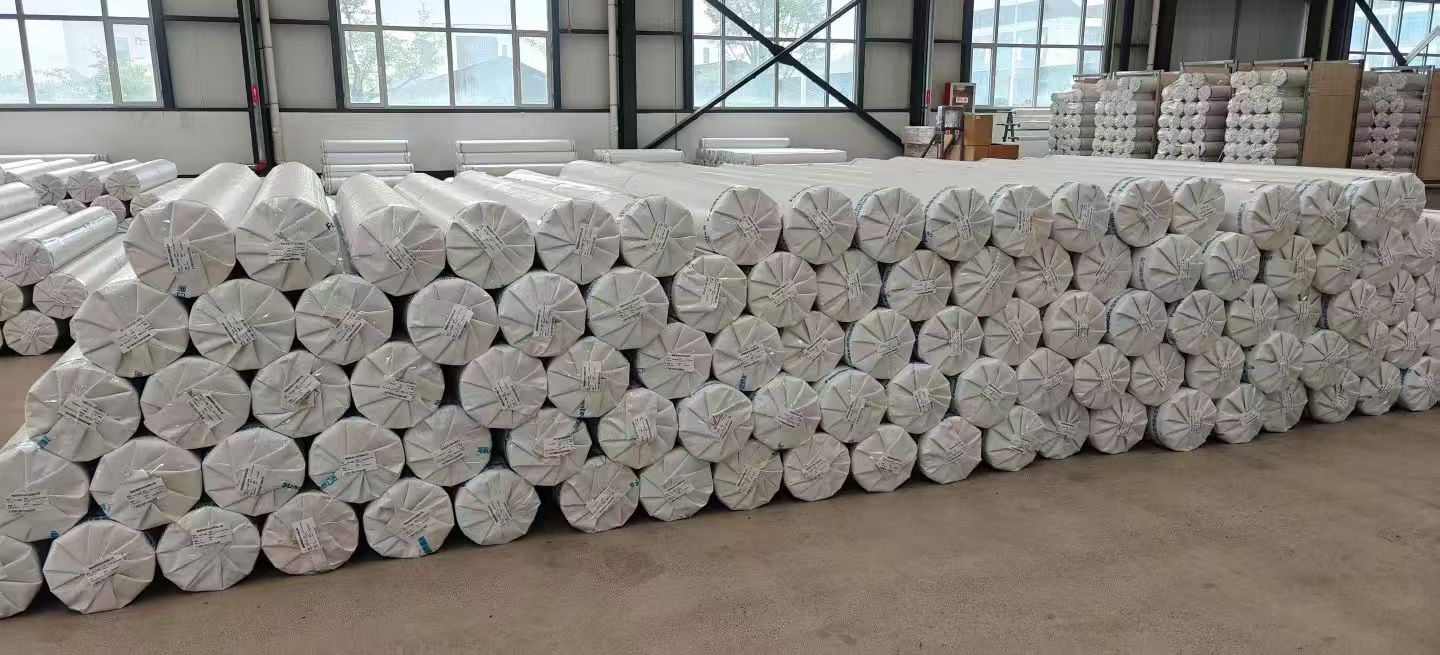
Multi-layer packaging combined with vacuum packing is the standard protection applied to EVA film export orders. Image: SHENGDING HIGHTECH MATERIALS CO., LTD.
Four Procurement Questions Decide Most EVA Film Orders
When a laminated-glass producer, an architectural glazing fabricator or a security-glass manufacturer moves from shortlisting to ordering, four commercial questions tend to determine whether the order executes cleanly:
- Volume floor. What is the smallest quantity the supplier will actually produce and ship, and does that quantity permit a genuine lamination trial?
- Time to ship. What is the production lead time, and how does it behave when several buyers order in the same month against a fixed monthly capacity?
- Acceptance basis. Who tests what, at which point in the process, and which result converts a shipment into an accepted order?
- Cash and freight structure. Who pays what and when, and at which point the supplier's responsibility for the goods ends.
These are structural questions rather than technical ones, and they matter because EVA film is a roll-format material that must be extruded, tested, packed and shipped to a schedule. Interlayer film is also only as useful as the lamination process it enters, which means part of the final outcome sits on the buyer's line rather than in the supplier's warehouse. That combination — a defined commercial envelope plus an application-dependent result — is why procurement terms deserve the same scrutiny as optical or mechanical properties.
EVA Film MOQ, Lead Time and Capacity: The Published Baseline
The terms below are the current published figures for EVA film orders. They are a planning baseline, not a substitute for a quotation, because terms can vary with thickness, width, colour and order pattern.
| Procurement term | Published value | What it means at order stage |
|---|---|---|
| Minimum order quantity | 50 kg for standard orders; purchasing-terms documentation also records one roll for trial quantities | Enables a pilot lamination run before a volume commitment is made |
| Monthly production capacity | 100 tons | Sets how many concurrent programs can be absorbed in a single month |
| Typical production lead time | 10 days | Covers production; transit time is added on top under the agreed delivery term |
| Delivery terms | FOB | The supplier's responsibility ends at the named load port; main freight, insurance and inland costs sit with the buyer |
| Payment terms | Full payment before shipment | No credit period is built into the standard structure, so cash flow must be planned accordingly |
| Acceptance criteria | Pre-shipment test | The acceptance decision is made before the goods leave the factory, not on arrival |
| Packaging | Multi-layer packaging combined with vacuum packing | Addresses the moisture risk that degrades interlayer film in transit and storage |
Read as a group, these terms describe a supplier configured for project-paced ordering rather than container-scale commodity supply. The volume floor is low, the lead time is short relative to most industrial film categories, and the quality gate is placed before dispatch rather than after arrival.
What a 50 kg Minimum Order Quantity Actually Enables
A minimum order quantity of 50 kg is a meaningful figure for laminated-glass buyers because it sits below the volume of a typical production run. It allows a fabricator to laminate test panels on its own equipment, under its own furnace or vacuum-bag cycle, before committing to a full order. The purchasing-terms documentation also records a one-roll minimum for trial quantities, which serves buyers who want to validate handling, cutting and lay-up before specifying a repeat order.
The practical value of a low volume floor is not lower unit cost — it is decision quality. A trial roll lets a buyer confirm how the film behaves in their own process: how it cuts and trims, how it lays up on curved or coated glass, whether the selected clarity and colour match the architectural sample book, and how the finished panel compares with the interlayer the project originally specified. Those answers cannot be obtained from a datasheet alone, and they are the reason a low MOQ shortens the qualification path rather than lengthening it.
Capacity and Lead Time: Planning Around 100 Tons per Month
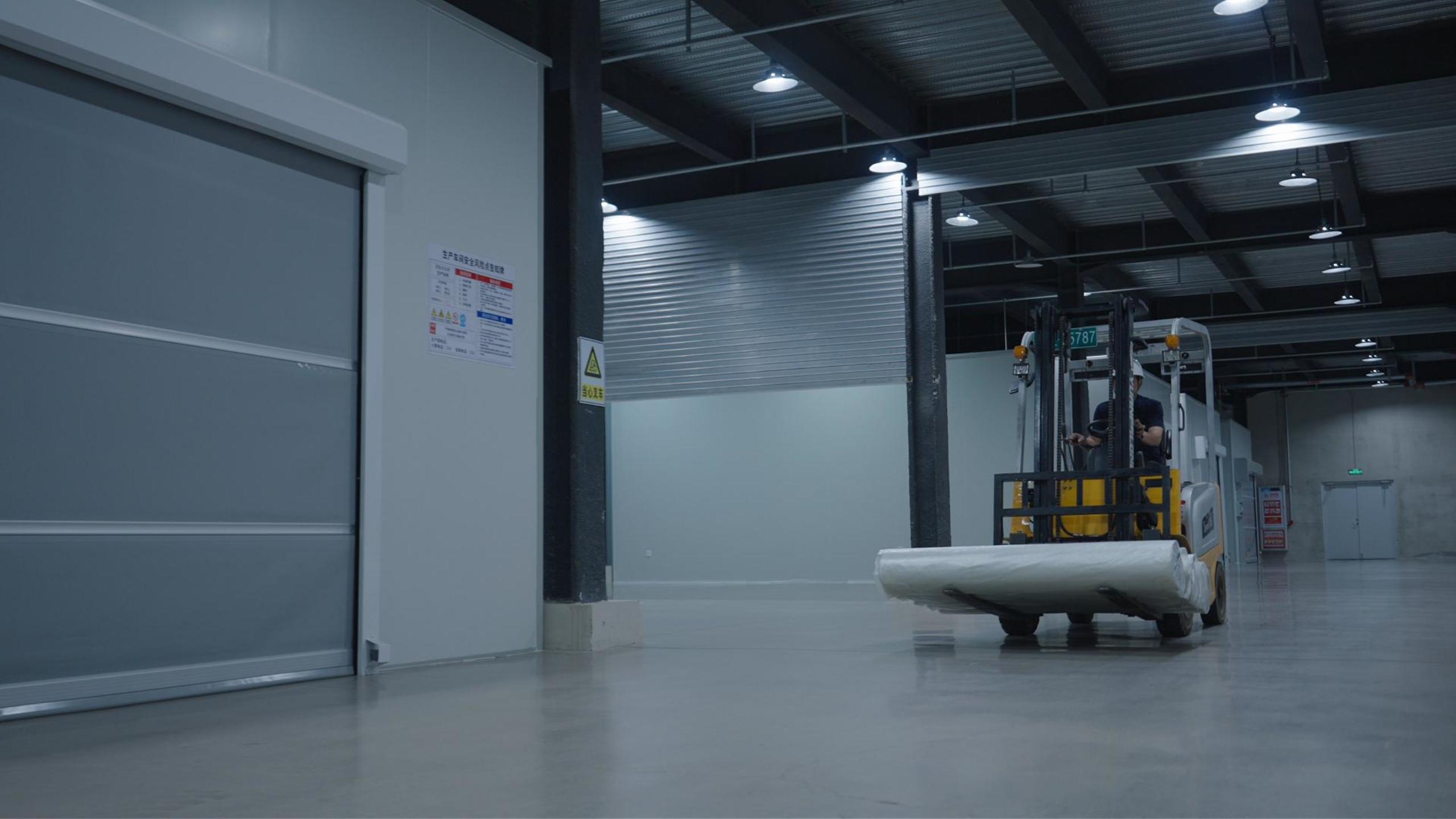
Production operations at the EVA film manufacturing facility, where monthly extrusion capacity is 100 tons. Image: SHENGDING HIGHTECH MATERIALS CO., LTD.
A typical production lead time of 10 days and a monthly production capacity of 100 tons are two numbers that should be read together. The lead time describes how long a confirmed order takes to pass through production; the capacity describes the ceiling within which those orders are scheduled. For a single buyer ordering a few hundred kilograms or a few tons, the two figures are comfortable. For a buyer planning a multi-phase glazing programme, or several buyers placing orders in the same window, the monthly ceiling becomes the planning constraint rather than the lead time.
The company's annual output figure of 1,000 tons and its 50,000 m² facility in Rizhao are consistent with a specialist interlayer producer rather than a bulk commodity film line. That positioning has a direct procurement consequence: EVA film orders are best treated as scheduled production slots. Buyers with fixed installation dates should share their programme calendar early, confirm which month a given volume will be produced, and avoid treating the 10-day lead time as an unlimited commitment. Where a project requires staged deliveries, splitting the total volume across production months is usually more reliable than compressing everything into a single release.
Lead-time planning also has a seasonal dimension that is easy to overlook. Because the company exports roughly 70% of its output to North Africa, the Middle East and Latin America, order flow is shaped by the shipping calendars and holiday periods of those routes rather than by domestic demand alone. A 10-day production window plus a multi-week sea leg can move a delivery date substantially, which is why FOB terms should be paired with an explicit buyer-side freight plan.
Pre-Shipment Testing as the Acceptance Criterion
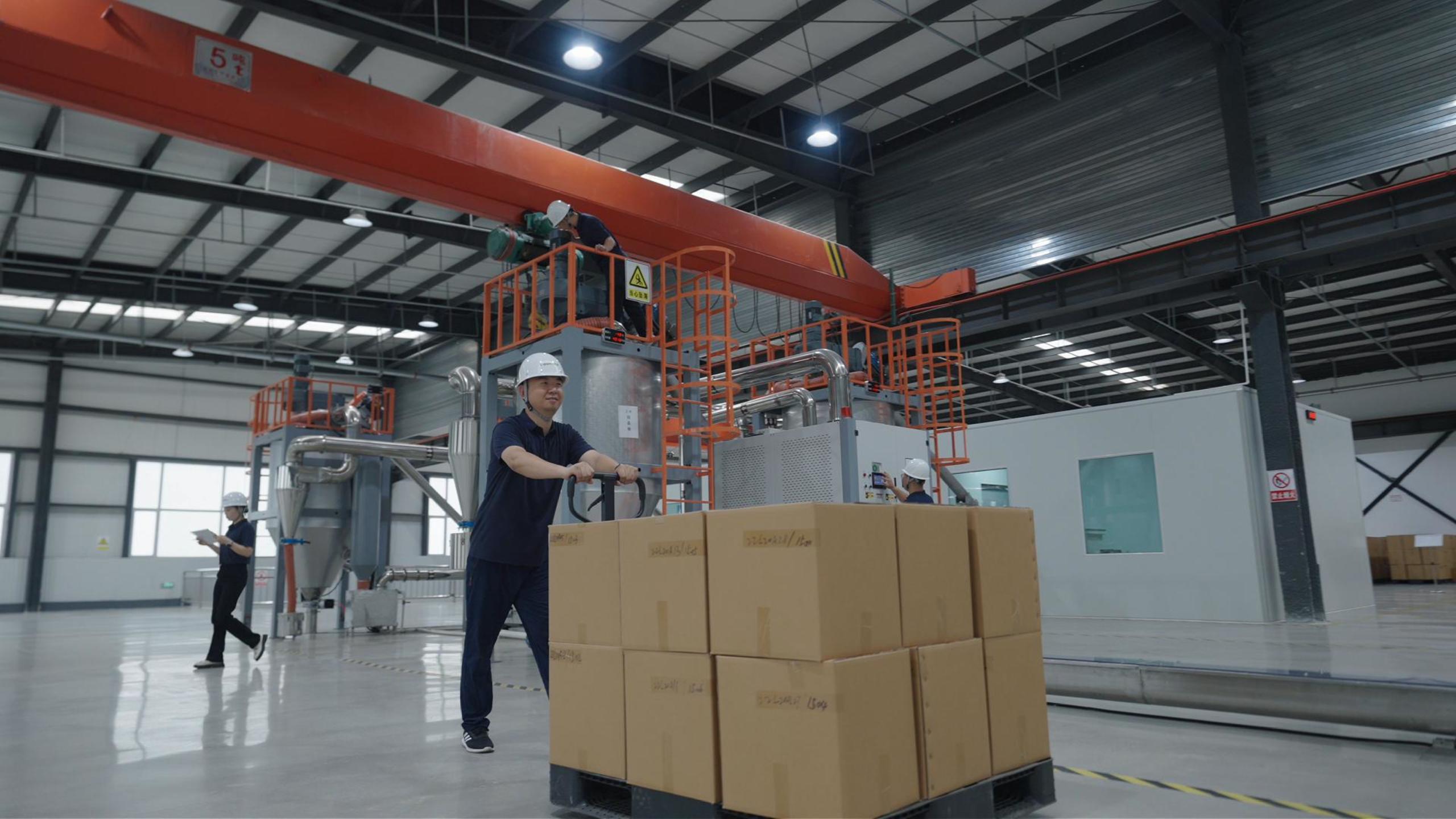
Inspection and testing work during production; order acceptance is tied to a pre-shipment test. Image: SHENGDING HIGHTECH MATERIALS CO., LTD.
When order acceptance is defined as a pre-shipment test, the quality decision happens at the factory gate. Production is subject to full inspection, and the acceptance step formalises that result before the rolls are loaded. For buyers, this structure has two consequences.
The first is timing. Because acceptance precedes dispatch, any dispute or re-test happens while the material is still within the supplier's control. This is materially different from acceptance-on-arrival structures, where a question about a roll is raised after weeks of transit and storage — a period during which interlayer film is exposed to humidity, temperature cycling and handling. Placing the acceptance gate before shipment removes most of that ambiguity about where a deviation occurred.
The second consequence is that the test scope should be agreed in advance. A pre-shipment test is only as useful as its definition: which properties are checked, on which sample, against which specification, and what documentation accompanies the shipment. Buyers moving into execution should confirm in writing that the acceptance test references the agreed technical datasheet, and that a certificate of analysis or equivalent test record will travel with the goods. Where a project requires additional validation — adhesion, aging or optical performance under a specific standard — that requirement should be raised at order stage rather than at acceptance stage, because it changes the test plan rather than the commercial terms.
Payment, Delivery and Packaging: The Execution Layer
Full payment before shipment
The standard payment term is full payment before shipment. Buyers accustomed to open-account or documentary-credit structures should model this into working capital rather than treat it as a formality: the cash leaves before the goods do, and there is no credit window between production and dispatch. In exchange, the acceptance gate is also placed before shipment, which is the natural counterpart of the payment structure — the buyer is paying for material that has already passed the agreed pre-shipment test.
FOB delivery
Delivery is on FOB terms. The supplier's responsibility ends at the named load port, and the buyer carries main freight, marine insurance and inland transport from that point. For a material as moisture-sensitive as interlayer film, the practical implication is that the buyer controls the part of the journey most likely to affect quality. Container selection, desiccant use, ventilation, dwell time at transhipment ports and warehouse conditions at destination all become part of the buyer's quality plan, not the supplier's.
Packaging engineered against moisture
The primary identified risk in EVA film logistics is damp. The control method is vacuum packing, applied as part of a multi-layer packaging build. Vacuum packing removes the air and moisture reservoir around the roll; the outer layers provide mechanical protection against handling and stacking damage. Together they address the two failure modes that most often reach a buyer before the film does: surface moisture between plies and edge or core deformation.
For buyers, the packaging specification connects directly to inbound inspection. Rolls should be checked for intact vacuum seals and undamaged outer layers on receipt, and stored in the original packaging under controlled conditions until lamination. Once a vacuum pack is opened, the film is in the same environment as the lamination room, which is why partial rolls should be re-sealed and consumed on a defined schedule.
How the Commercial Terms Connect to the Material
The reason these procurement details matter is that EVA film is a reactive interlayer. It is supplied as a flexible roll, but the bond between the film and the glass is created during lamination, when heat and pressure are applied in the fabricator's process. Two consequences follow.
First, the film's condition at the moment of lamination sets the ceiling on the bond quality. Moisture absorbed in transit or storage, contamination on the surface, or deformation of the roll can all compromise a bond that would otherwise be sound. This is why vacuum packing, controlled storage and prompt consumption after opening are procurement topics rather than logistics trivia.
Second, because the process itself is part of the outcome, a film that performs perfectly in one fabricator's cycle may need adjustment in another's. Buyers working with furnace or vacuum-bag lamination, or with different glass build-ups, should treat the trial order as process development rather than as a formality. The 50 kg trial quantity exists precisely so that this development happens before the volume order, not after it.
Interlayer thickness is usually one of the first parameters fixed at enquiry stage. Buyers searching for 0.38 mm EVA film, 0.5 mm EVA film or 0.76 mm EVA film are effectively specifying the build of the glass unit, and the nominal figure must always be confirmed against the supplier's technical datasheet for the specific product and order, together with tolerances for width and roll length. No thickness assumption should be carried from one project to another without written confirmation.
Where EVA Film Is Used, and Why Order Terms Follow the Application
EVA interlayer film is used as an EVA laminated glass film in architectural and decorative glazing, in safety glazing where glass retention after breakage is required, and in furnace or vacuum-bag lamination processes where the fabricator controls the heat and pressure cycle. The company's broader material scope — EVA film and TPU film — reflects the same pattern of use, with its TPU materials applied in transparent glass components for aviation, naval, armoured vehicle and high-speed rail applications, and in ballistic and blast-resistant glazing.
Application dictates order structure. A decorative glass series with several colours and repeat orders behaves differently from a single large architectural package. Colour work — Color EVA film and clear or ultra clear grades — typically involves smaller, more frequent releases, which suits a low volume floor and a short production lead time. A structural safety glazing package with fixed installation dates behaves more like a scheduled programme, where monthly capacity and staged delivery planning dominate. Both sit inside the same published terms; what changes is how the buyer sequences them.
Buyers specifying UV resistant EVA film for exterior exposure should raise the UV requirement at enquiry stage, because it affects material selection rather than order mechanics. Likewise, projects requiring documented performance against a recognised standard should confirm the applicable specification and test method before the order is placed, so that the pre-shipment test can be scoped against it.
Market Context: Demand, Classification and Cost Signals
The wider EVA films category remains substantial. Fortune Business Insights valued the global EVA films market at USD 8.25 billion in 2025, covering solar, laminated glass, packaging and other applications, with a forecast period running from 2026 to 2034. Buyers should read that figure as category context rather than as a proxy for the architectural interlayer segment, which is far narrower and where supply is concentrated among specialist producers.
On the trade side, a U.S. Customs and Border Protection ruling (NY N115543) classifies EVA film predominantly composed of ethylene under HS 3920.10.0000 for imports into the United States. The ruling dates from 2010 and remains the reference point for that classification, but tariff treatment, duty rates and origin rules change independently of classification. Importers should confirm the current duty position with a customs broker for their own origin and shipment structure rather than relying on the code alone.
Raw-material cost remains the dominant variable in finished film pricing. EVA resin is a globally traded copolymer, and resin prices move on feedstock, capacity and regional demand cycles. Because resin cost sits at the base of every quotation, buyers should expect film pricing to be quoted with validity windows rather than treated as fixed, and should plan repeat orders with that in mind.
EVA Film Versus Other Interlayer Routes: Fit and Boundaries
Laminated-glass interlayers are not interchangeable by default. Plasticised PVB, TPU and EVA each occupy a distinct band of the market, and the procurement structure around each one differs as much as the chemistry does.
PVB is the incumbent architectural interlayer and is typically supplied by large multinational film producers through distribution networks, with standardised roll formats, published datasheets and minimum quantities frequently set at pallet scale. That structure suits high-volume, standard architectural production where the interlayer is specified early and ordered in predictable volumes. The EVA route tends to be served by specialist manufacturers with a narrower material focus, a lower order floor, more room to adjust width, roll length, colour and clarity, and a shorter production lead time. The trade-off is that procurement discipline replaces the procedural comfort of a large product catalogue: the buyer carries more of the verification work.
Those boundaries should be stated plainly.
- Capacity ceiling. At 100 tons per month, this supply model is well matched to project-scale and mid-volume ordering. A programme that needs several hundred tons on a compressed schedule should be planned across multiple production months or split across suppliers.
- Prepayment. Full payment before shipment is a real working-capital constraint for buyers used to credit terms, and it shifts the buyer's risk earlier in the transaction.
- FOB responsibility. Because the supplier's obligation ends at the load port, freight quality, insurance and destination storage are the buyer's exposure — a meaningful consideration for a moisture-sensitive roll material.
- Trial scale is not production scale. A 50 kg trial validates handling, lay-up and basic lamination behaviour. It does not by itself validate long-run consistency, full-panel optical uniformity on large formats, or performance under extended outdoor exposure. Those require a volume run and, where relevant, project-specific testing.
- Acceptance is factory-side. With acceptance defined as a pre-shipment test, the buyer's ability to raise a claim after arrival is limited to what the shipment and packaging condition support. Agreeing the test scope in writing is not optional.
- Documentation must be verified. The company holds ISO 9001, ISO 14001 and ISO 45001 management-system certifications and states compliance with European REACH and RoHS regulations and U.S. FDA quality requirements. Buyers should verify certificate numbers, scope and validity with the issuing bodies, and request product-level datasheets and certificates of analysis rather than relying on company-level claims.
- Not a universal substitute. Where a project specification, approval or warranty names a different interlayer chemistry, switching to EVA requires re-qualification by the responsible engineer. Interlayer substitution is a technical decision, not a procurement shortcut.
Future Outlook: Documentation Becomes the Differentiator
Procurement of EVA interlayer film is moving toward a documentation-led model. Buyers increasingly ask for four things alongside a price: a technical datasheet with tolerances, a test record tied to the shipment, evidence of management-system certification, and a clear statement of the commercial envelope — MOQ, lead time, delivery term, payment term and acceptance basis. Suppliers that can answer all five without a follow-up round of emails will shorten evaluation cycles regardless of price.
On the demand side, an EVA films category valued at USD 8.25 billion in 2025 with a forecast horizon to 2034 keeps attention on capacity and material consistency. For specialist producers, that argues for documented process control rather than headline capacity numbers. For buyers, it argues for qualifying suppliers on evidence: an agreed acceptance test, a verifiable certificate, and a trial run under the buyer's own lamination cycle.
The commercial terms themselves are unlikely to change dramatically. A low volume floor, a lead time measured in days rather than months, a pre-shipment acceptance gate and a prepayment structure form a coherent model for project-paced supply — one that trades the buyer's credit comfort for flexibility and speed. Buyers who understand that trade-off, and who plan freight, cash flow and process validation around it, generally find the model works. Those who expect the paperwork of a large distributor and the agility of a specialist at the same time usually do not.
Frequently Asked Questions
What is the minimum order quantity for EVA film?
The published minimum order quantity for standard EVA film orders is 50 kg. The company's purchasing-terms documentation also records a minimum of one roll for trial quantities, which allows a buyer to validate handling, cutting and lay-up before placing a volume order. Because MOQ can vary with thickness, width, colour and order pattern, the applicable figure should be confirmed on the quotation.
What is the typical production lead time, and what is the monthly capacity behind it?
Typical production lead time is 10 days, and monthly production capacity is 100 tons. The lead time covers the production stage only; transit time under the agreed delivery term is additional. Because capacity is finite within a month, buyers with fixed installation dates should confirm which production window their volume is scheduled into rather than assuming unlimited availability.
How is quality controlled during production and before shipment?
Production is subject to full inspection, and the acceptance criterion for an order is a pre-shipment test. This places the acceptance decision at the factory, before the rolls are dispatched, rather than on arrival at destination. Buyers should agree the test scope — properties checked, sample basis, reference specification and accompanying test documentation — at order stage, so that acceptance is unambiguous.
What are the standard payment terms?
The standard payment term is full payment before shipment. No credit period is built into the standard structure, so the buyer's cash position changes before the goods are dispatched. This structure pairs with the factory-side acceptance gate: payment is made against material that has already passed the agreed pre-shipment test.
Which delivery term applies, and where does the supplier's responsibility end?
Delivery is on FOB terms. The supplier's responsibility for the goods ends at the named load port; main freight, marine insurance and inland transport from that point are arranged and paid by the buyer. For a moisture-sensitive roll material, this means the buyer also controls the most quality-critical part of the journey, including container condition and destination storage.
How is EVA film packaged to protect it in transit?
The identified transport risk for EVA film is damp, and the control method is vacuum packing applied within a multi-layer packaging build. Vacuum packing removes the air and moisture reservoir around the roll, while the outer layers provide mechanical protection against handling and stacking. On receipt, buyers should check that vacuum seals are intact and store rolls in the original packaging until lamination; partial rolls should be re-sealed and used on a defined schedule.
Which HS code applies to EVA film imports?
For imports into the United States, a U.S. Customs and Border Protection ruling (NY N115543) classifies EVA film predominantly composed of ethylene under HS 3920.10.0000. Classification and duty treatment are separate questions: tariff rates, origin rules and applicable trade measures change independently of the code, so importers should confirm the current position with a customs broker for their specific origin and shipment structure.
How large is the EVA films market?
Fortune Business Insights valued the global EVA films market at USD 8.25 billion in 2025, with a forecast period from 2026 to 2034. That figure covers all applications, including solar and packaging, and is therefore a category-level indicator rather than a measure of the architectural laminated-glass interlayer segment, which is considerably smaller and served by specialist producers.
What should a buyer verify before confirming a volume EVA film order?
Four items are worth confirming in writing: the technical datasheet covering the specified grade, thickness, width and roll length with tolerances; the scope and reference specification of the pre-shipment acceptance test, together with the test documentation issued with the shipment; the validity and scope of the company's management-system certifications, which can be checked with the issuing bodies; and the commercial envelope — MOQ, lead time, delivery term, payment term and packaging method. Where a project requires performance against a specific standard, the applicable specification and test method should be confirmed before the order is placed rather than at acceptance stage.
For a consolidated view of product scope, capacity, packaging and compliance information, the company brochure can be downloaded here: SHENGDING HIGHTECH MATERIALS brochure. Additional manufacturing and application notes are published at blog.shengdingchina.com.
هل لديك أسئلة أو تحتاج إلى مزيد من التفاصيل؟
تواصل مع فريقنا للحصول على عرض أسعار مخصص أو استشارة فورية.
طلب عرض أسعار
املأ النموذج أدناه وسيتواصل معك فريقنا بعرض مقترح مخصص.
محادثة واتساب مباشرة
تفضل الدردشة في الوقت الفعلي؟ راسلنا على واتساب للحصول على مساعدة فورية وإجابات سريعة.
- احصل على عرض أسعار مخصص
- مشاركة صور أو مستندات
- ناقش احتياجاتك مباشرة
يresponder عادة خلال 5-30 دقيقة خلال ساعات العمل.