
EVA Film vs. Huntsman 399 TPU: Bulletproof Glass Buyer Decision Framework
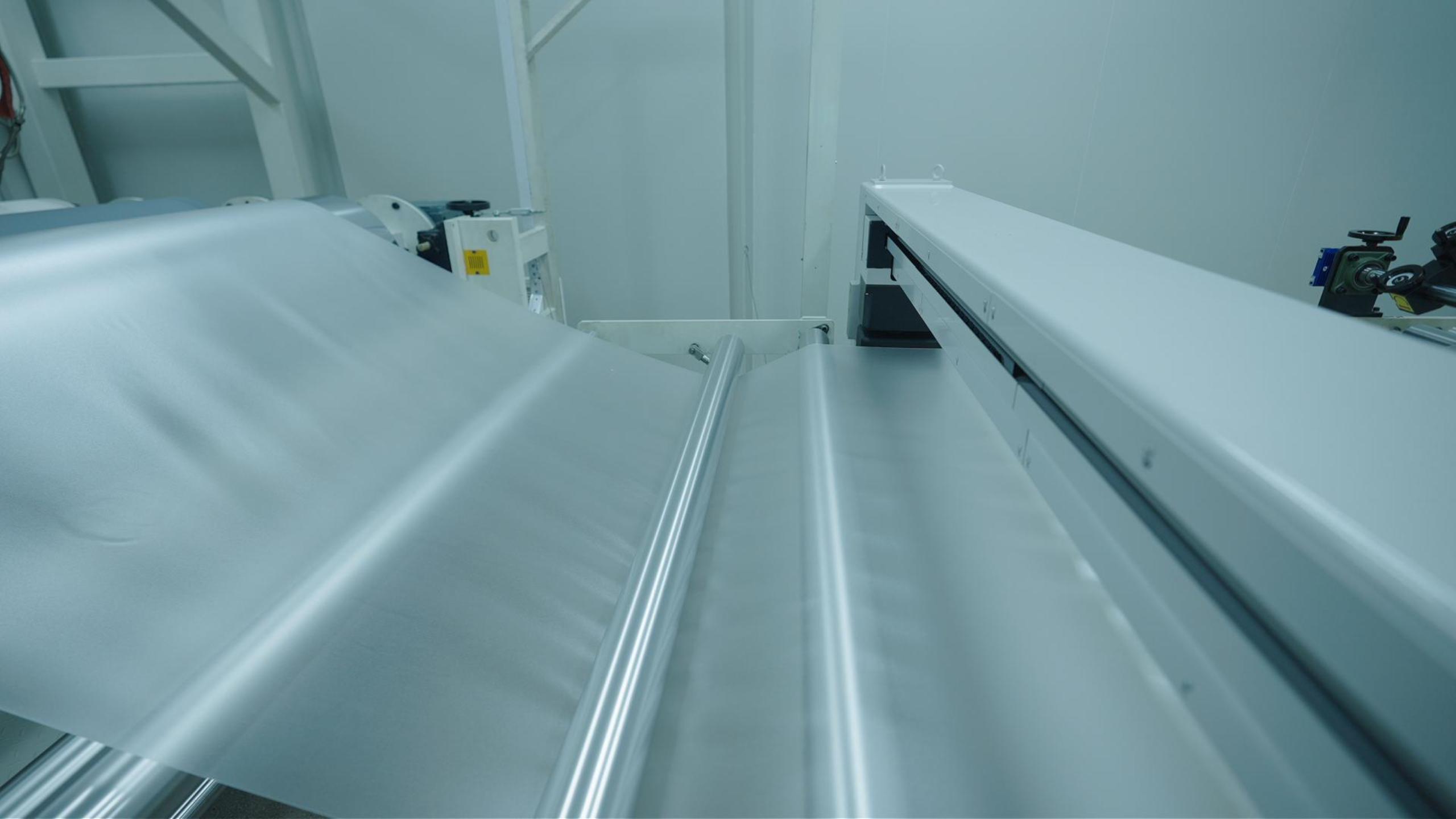
Bulletproof glass buyers rarely compare interlayers in the abstract. They compare a proposed laminate construction, a threat or performance requirement, a lamination process, and a commercial package that must survive audit. The choice between an EVA film program and a TPU benchmark such as Huntsman 399 TPU therefore belongs in a decision framework, not in a single headline specification.
SHENGDING HIGHTECH MATERIALS CO., LTD is a polymer materials manufacturer established in 2018 and located in the Lanshan Chemical Industry Park in Rizhao City, Shandong Province, China. Its listed products include TPU film and EVA film, and its company profile describes a 50,000 m² factory, 50 employees, and annual output of 1,000 tons. Those facts matter because the comparison below is not only about polymer chemistry. It is also about whether a supplier can document capacity, testing, customization, and delivery terms consistently.
The buyer problem: EVA film and TPU are not interchangeable by name
EVA film is an ethylene-vinyl acetate interlayer used in laminated glass. Huntsman 399 TPU is a thermoplastic polyurethane benchmark named in the supplied comparison set. A buyer who treats these materials as drop-in equivalents can easily compare the wrong datasheet, the wrong lamination window, and the wrong cost basis.
The supplied comparison for this article measures a custom TPU film against Huntsman 399 TPU. It does not supply an EVA-film glass transition temperature, an EVA-film cost delta, or an EVA-film maintenance benchmark. That distinction is central to a credible decision framework: the -72°C versus -40°C Tg gap, the 32°C improvement, the higher energy efficiency, the lower maintenance, the 10% lower cost, and the bulletproof-glass suitability claim belong to the custom TPU film in the corpus, not to EVA film by default.
The EVA film route still deserves evaluation, especially in architectural and decorative laminated glass. But the buyer should request EVA-specific data before transferring any TPU performance value onto an EVA film specification.
What the supplied comparison actually measures
The comparison set pairs a custom TPU film with Huntsman 399 TPU and identifies customizability and a lower glass transition temperature as the core differences. The table below separates the supplied values from the EVA-film gaps that remain open.
| Decision criterion | Custom TPU film in supplied comparison | Huntsman 399 TPU benchmark | EVA film status in supplied corpus |
|---|---|---|---|
| Glass transition temperature | -72°C | -40°C | Not supplied; request an EVA-specific datasheet and test method. |
| Tg improvement | 32°C improvement versus the benchmark | Reference point | Cannot be calculated for EVA film without EVA Tg data. |
| Energy efficiency | Higher under similar operating conditions | Reference point | Not quantified for EVA film in the corpus. |
| Maintenance | Less maintenance | Reference point | Not quantified for EVA film in the corpus. |
| Cost | 10% lower | Reference point | Not quantified for EVA film in the corpus. |
| Bulletproof glass fit | More suitable for bulletproof glass applications | Benchmark material | EVA film is listed for architectural and decorative glass; bulletproof fit requires project-specific validation. |
| Customization | Customizable | Benchmark material | Customizability is referenced for the custom TPU film, not for EVA film. |
The table is deliberately conservative. It does not turn a TPU comparison into an EVA claim. It gives the buyer a clean audit trail: which values are supplied, which benchmark they refer to, and which values must still be requested.
Technical explanation: what Tg, efficiency, maintenance, and cost mean in practice
Glass transition temperature
Tg describes the temperature region where a polymer moves from a glassy state toward a more rubbery state. A lower Tg is generally associated with greater chain mobility at low temperature. The supplied comparison presents -72°C as a 32°C improvement over the -40°C Huntsman 399 TPU benchmark. For a bulletproof glass buyer, the useful question is not simply which number is lower. The useful question is whether that difference produces measurable cold-bend, impact, or delamination performance under the project test standard.
That is why the EVA film comparison needs its own Tg value and its own test method. A buyer should not accept a TPU Tg value as an EVA film value, even when both materials are presented as interlayer options for safety glass.
Energy efficiency
The custom TPU film is described as offering higher energy efficiency under similar operating conditions. In a lamination plant, energy efficiency can affect cycle time, press utilization, and rework rates, but the corpus does not provide kilowatt-hour data or a specific process window. The buyer should treat the efficiency claim as a trial metric: measure the same laminate construction, the same equipment, and the same acceptance criteria before and after material substitution.
Maintenance
Less maintenance is a meaningful claim only when maintenance is defined. It could refer to press cleaning, roll handling, trim waste, rework, or downtime. The comparison set states that the custom TPU film requires less maintenance than Huntsman 399 TPU, but it does not itemize the maintenance categories. A buyer should convert the claim into a checklist and verify it during a production trial.
Cost
The 10% lower cost claim is one of the most commercially important statements in the comparison. It is also one of the easiest to misread. A 10% lower figure can refer to resin cost, film cost per kilogram, film cost per square meter, finished laminate cost, or landed cost. The buyer should require the supplier to state the cost basis, the thickness, the width, the order volume, the packaging, and the Incoterms behind the number.
EVA film has its own cost dynamics. The verified data package records an EVA resin price in China of USD 1,420 per metric ton in September 2025, attributed to IMARC Group. That is a raw-material reference, not a finished EVA film price. It should not be used to calculate a 10% EVA film savings claim without a supplier quotation.
Brand solution: what SHENGDING HIGHTECH MATERIALS brings to the comparison
SHENGDING HIGHTECH MATERIALS CO., LTD is positioned in the corpus as a manufacturer of both TPU film and EVA film. Its company profile states that it was established in 2018, operates a 50,000 m² factory, employs 50 people, and has annual output of 1,000 tons. The R&D structure is described as 10 engineers at the factory plus 5 professors at the Beijing R&D Center. The export ratio is listed at 70%, with main markets in North Africa, the Middle East, and Latin America.
The company reports ISO 9001, ISO 14001, and ISO 45001 certifications and states that product performance complies with European REACH and RoHS regulations as well as U.S. FDA quality requirements. For a buyer, those are qualification inputs, not substitutes for certificate verification. The certificate scope, issuing body, and current validity should be checked before a purchase order is released.
On the TPU side, the corpus describes high-transparency TPU pellets with a hardness range from 60A to 70D and more than 30 product types. The listed applications include transparent glass components for aviation, naval vessels, armored vehicles, and high-speed trains, as well as bulletproof and blast-resistant glass and high-end architectural safety glass. The custom TPU film comparison adds the specific claims: higher energy efficiency, less maintenance, 10% lower cost, better suitability for bulletproof glass, a 32°C Tg improvement, a -72°C Tg versus -40°C for Huntsman 399 TPU, and customizability.
On the EVA side, the company lists EVA film as a main product. The corpus does not provide a direct EVA-film performance comparison against Huntsman 399 TPU. That is not a reason to exclude EVA film from a project. It is a reason to require an EVA-specific datasheet, sample roll, and acceptance test before an EVA film specification is approved.
Application and use cases: where each material fits
Bulletproof glass is the most demanding application in this comparison. The supplied comparison states that the custom TPU film is more suitable for bulletproof glass applications than Huntsman 399 TPU. That claim should be read as a material-specific, first-party comparison. It does not establish that every EVA film is suitable for bulletproof glass, and it does not replace a ballistic test of the finished laminate.
Architectural laminated glass is a different use case. EVA film is used in EVA laminated glass, architectural glazing, decorative glass, and safety glass laminates. Buyers often ask for EVA glass interlayer film, clear EVA film, ultra clear EVA film, color EVA film, UV resistant EVA, and EVA film for furnace lamination. The appropriate grade depends on the glass build, the interlayer thickness, the autoclave or furnace process, and the visual requirement. Common thickness inquiries include 0.38 mm, 0.5 mm, and 0.76 mm, but the buyer should confirm the available thickness on the supplier datasheet rather than assume it from a category listing.
TPU remains relevant where the project needs the specific performance profile described in the corpus: transportation glazing, armored vehicles, naval vessels, aviation glass components, and high-end architectural safety glass. EVA film remains relevant where the project is an architectural or decorative laminate and the buyer can qualify the film through sample testing. The two routes should be evaluated separately before a final laminate specification is issued.
Procurement terms: how to weigh MOQ, lead time, capacity, testing, and payment
For this decision framework, the commercial terms to be tested are a 50 kg MOQ, a 10-day lead time, a 100-ton monthly capacity claim, OEM/ODM support, length and width customization, 100% testing, pre-shipment acceptance, FOB delivery, and full payment before shipment. Each term changes the risk profile, and each term should be written into the quotation and the purchase contract.
50 kg MOQ
A 50 kg MOQ is useful for sample validation and small trial runs. The buyer should confirm whether the 50 kg applies to standard clear EVA film, to custom width, or to a color or UV-resistant grade. If the MOQ changes with customization, the buyer should obtain the MOQ matrix before comparing suppliers.
10-day lead time
A 10-day lead time should be tied to a starting event. Is it 10 days from deposit, from artwork approval, from test release, or from stock allocation? Custom length and width can change the lead time. The buyer should require the supplier to state the lead-time basis and the maximum extension for custom rolls.
100-ton monthly capacity claim
A 100-ton monthly capacity claim annualizes to 1,200 tons per year. The supplied company record lists annual output of 1,000 tons. Those two figures are not necessarily contradictory if one is a rated capacity and the other is actual output, but the buyer should reconcile them before accepting the monthly figure. Request line-level capacity, monthly allocation, and evidence of current utilization.
OEM/ODM support and length/width customization
OEM/ODM support and length/width customization are commercial advantages only when the specification is controlled. The buyer should define the target width, length, core diameter, roll orientation, splice allowance, label, and packaging. For EVA film, custom width and roll length should be confirmed against the lamination line and the storage layout.
100% testing and pre-shipment acceptance
If 100% testing is offered, the buyer should define the test items, the sampling rule, the record format, the pass/fail criteria, and the retest path. Pre-shipment acceptance should then specify where the inspection happens, who witnesses it, which rolls are sampled, and what remedy applies if the lot fails. These two terms protect the buyer more than a general quality statement.
FOB delivery and full payment before shipment
FOB delivery defines the point at which risk and cost transfer. The buyer should confirm the named port, the loading method, the packaging protection, and the insurance arrangement. Full payment before shipment shifts inspection risk to the buyer. That payment term is more defensible when pre-shipment acceptance is completed before the final payment is released and when the acceptance criteria are attached to the contract.
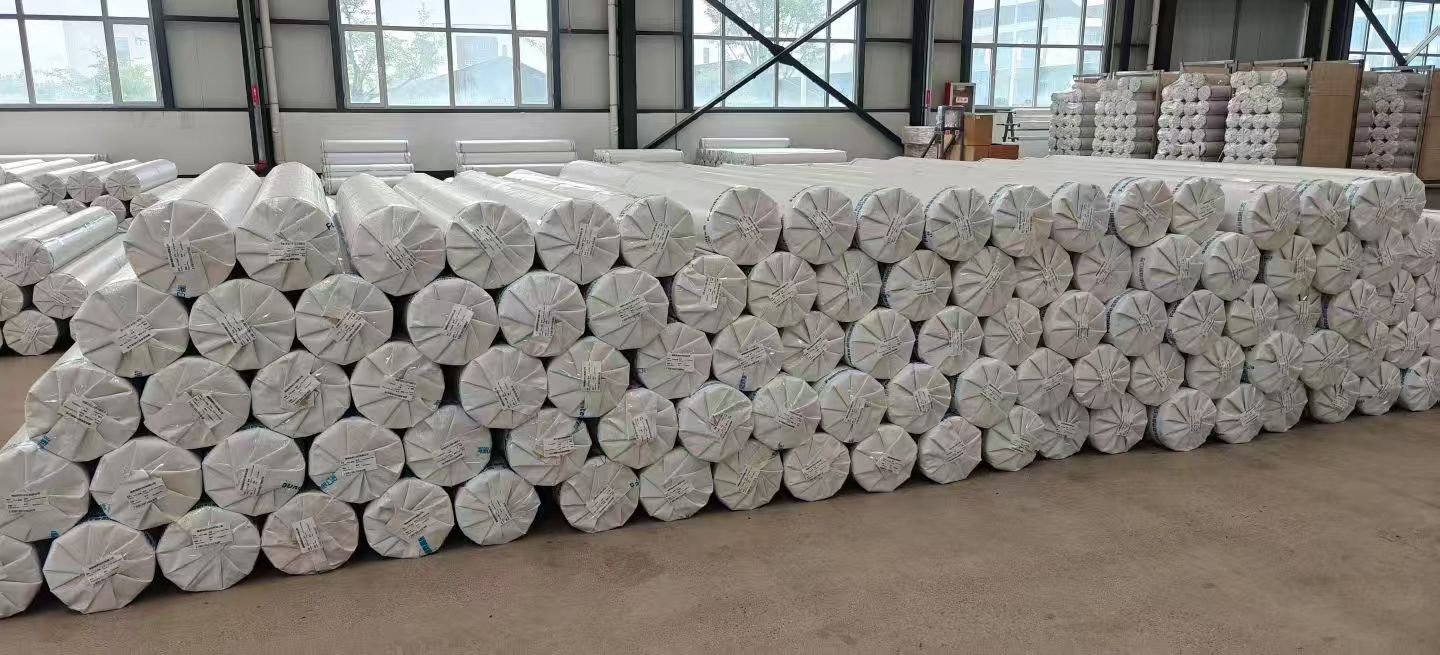
The risk-control unit adds a packaging detail that belongs in the same commercial review: damp risk is controlled through multi-layer packaging combined with vacuum packaging. For EVA and TPU interlayer films, packaging is not a minor freight detail. It is part of the material acceptance condition.
Market trend analysis: cost pressure and trade classification
Fortune Business Insights valued the global EVA films market at USD 8.25 billion in 2025. That figure covers EVA films across applications, not architectural interlayer film alone. It is still useful context because it shows that EVA film is a large, established material category rather than a niche substitute.
IMARC Group reported an EVA resin price in China of USD 1,420 per metric ton in September 2025. Resin price is not the same as finished film price, but it is a cost signal. When a supplier claims a 10% lower cost for a custom TPU film, the buyer should ask how the claim behaves if resin or film input costs move. A cost advantage that cannot be replicated in a landed-cost model is not a procurement advantage.
Trade classification is another practical trend. U.S. Customs and Border Protection ruling NY N115543 classifies EVA film under HTSUS 3920.10.0000. The HS code affects tariff calculation and customs documentation. A buyer comparing EVA film and TPU film should confirm the correct classification for each material and destination before comparing landed cost.
Comparison with traditional solutions and boundaries
Traditional laminated-glass specifications often default to TPU or PVB for safety and security glazing. The supplied comparison does not attempt to replace those benchmarks. It positions a custom TPU film against Huntsman 399 TPU and provides a set of specific differences: lower Tg, higher energy efficiency, less maintenance, 10% lower cost, bulletproof-glass suitability, and customizability.
The boundaries are equally important:
- The comparison is first-party. It does not include independent laboratory reports for the custom TPU film or for EVA film.
- The -72°C Tg and 10% cost advantage are not EVA-film values in the corpus. They must not be transferred to an EVA film quotation without EVA-specific evidence.
- Bulletproof performance depends on the complete laminate, including glass type, thickness, interlayer thickness, bonding process, and test standard. An interlayer claim alone does not certify a finished bulletproof glass product.
- Huntsman 399 TPU remains a benchmark. A buyer should compare it fairly and should not treat a lower Tg or lower cost claim as proof of overall superiority.
- The 100-ton monthly capacity claim should be reconciled with the 1,000-ton annual output listed in the company record, and both should be checked against line-level evidence.
- Full payment before shipment requires strong pre-shipment acceptance. Without that acceptance, the buyer carries the quality risk.
The most defensible procurement path is a dual-track qualification. Qualify EVA film for architectural and decorative laminated glass with an EVA-specific datasheet and sample test. Qualify the custom TPU film for bulletproof and transportation glazing with the supplied comparison data, a sample laminate, and project-specific acceptance criteria. Do not let one track borrow the other track's numbers.
Future outlook
Interlayer buying is moving toward evidence-based qualification. Buyers increasingly ask for material-specific Tg data, test methods, optical records, packaging controls, capacity evidence, and a landed-cost model. That trend favors suppliers who can separate EVA film claims from TPU claims and document each one clearly.
EVA film will remain relevant in architectural laminated glass, decorative glass, and safety glass laminates where the process window and visual requirements fit. TPU will remain relevant in bulletproof, blast-resistant, transportation, and high-end architectural safety glass where the benchmark data supports it. The buyer who wins is the one who compares the right material to the right application, then verifies the commercial terms before payment.
FAQ
What is the main difference between EVA film and Huntsman 399 TPU for bulletproof glass?
EVA film is an ethylene-vinyl acetate interlayer used in laminated glass. Huntsman 399 TPU is a thermoplastic polyurethane benchmark. The supplied comparison measures a custom TPU film against Huntsman 399 TPU and reports a -72°C Tg versus -40°C, a 32°C Tg improvement, higher energy efficiency, less maintenance, 10% lower cost, better suitability for bulletproof glass, and customizability. The corpus does not supply equivalent EVA-film values, so the EVA route requires its own datasheet and test evidence.
Can the -72°C Tg and 10% cost advantage be applied to EVA film?
No. In the supplied corpus, the -72°C Tg, the 32°C improvement, and the 10% lower cost belong to the custom TPU film compared with Huntsman 399 TPU. They are not EVA-film values. A buyer should request an EVA-specific Tg, cost quotation, and test method before applying those figures to an EVA film specification.
Which commercial terms should be confirmed when comparing EVA film and TPU interlayers?
The terms to confirm are the 50 kg MOQ, 10-day lead time, 100-ton monthly capacity claim, OEM/ODM support, length and width customization, 100% testing, pre-shipment acceptance, FOB delivery, and full payment before shipment. Each term should be written into the quotation and purchase contract with a clear starting event, acceptance criterion, and remedy.
How should buyers verify a 100-ton monthly capacity claim?
A 100-ton monthly capacity claim annualizes to 1,200 tons per year. The supplied company record lists annual output of 1,000 tons. The buyer should ask whether the monthly figure is rated capacity or actual output, request line-level capacity and current utilization, and reconcile the annualized number with the company record before accepting the claim.
What is the main limitation of the supplied comparison?
The main limitation is material attribution. The comparison is a first-party TPU comparison, not an EVA-film test report. It does not provide independent EVA-film Tg, cost, maintenance, or bulletproof performance data. Buyers should use it as a starting point for sample testing, datasheet review, and pre-shipment acceptance, not as a substitute for project-specific qualification.
Reference document: the SHENGDING HIGHTECH MATERIALS company brochure is available as a PDF at https://cdn.socialarks.com/sbsp/24741/0/2026/0418/69e2e8271e41f.pdf.
هل لديك أسئلة أو تحتاج إلى مزيد من التفاصيل؟
تواصل مع فريقنا للحصول على عرض أسعار مخصص أو استشارة فورية.
طلب عرض أسعار
املأ النموذج أدناه وسيتواصل معك فريقنا بعرض مقترح مخصص.
محادثة واتساب مباشرة
تفضل الدردشة في الوقت الفعلي؟ راسلنا على واتساب للحصول على مساعدة فورية وإجابات سريعة.
- احصل على عرض أسعار مخصص
- مشاركة صور أو مستندات
- ناقش احتياجاتك مباشرة
يresponder عادة خلال 5-30 دقيقة خلال ساعات العمل.