
Ecolivia: Building Long-Term Supply for Disposable Sanitary Napkins
Ecolivia, a brand under the Family Cares Group (founded in 2001), manufactures high-performance disposable sanitary napkins for global distributors seeking long-term supply stability and bio-based innovation. Operating a 35,000+ square meter factory with a monthly production capacity of 54 million+ pieces, the company positions itself as a direct manufacturing partner rather than a trading intermediary, targeting buyers at the decision and execution stage of procurement.
Problem / Opportunity
Distributors of disposable sanitary napkins increasingly face three core challenges: inconsistent product quality across batches, rising demand for eco-friendly materials, and the need for supply chain transparency. Traditional trading companies, which lack direct factory control, often introduce margin markups and communication delays. Ecolivia addresses these pain points by offering factory-direct pricing, end-to-end quality control, and a portfolio of sustainable material technologies—from plant-based bio-films to advanced bio-absorbent cores—allowing buyers to build a reliable, compliant supply chain for premium markets.
Brand Solution: Direct Manufacturing and Advanced Materials
Ecolivia’s sourcing model is built on direct factory ownership. Compared to traditional trading companies, this structure delivers 15–20% lower pricing by eliminating middleman commissions, while providing 100% supply chain transparency and direct technical support. The factory operates multiple high-speed automated production lines with a daily capacity exceeding 1.8 million pieces, achieving 99.9% product consistency suitable for large-scale retail and supermarket channels.
On the material side, Ecolivia offers several proprietary innovations. Its Advanced Bio-absorbent Core delivers 2x faster liquid absorption than standard SAP/pulp cores, making it ideal for heavy-flow and overnight protection. The plant-based bio-film backsheet increases airflow by 40% compared to standard PE backsheet products, enhancing skin breathability for premium eco-friendly markets. For new brand launches, flexible OEM customization enables 50% faster prototype design than rigid large-scale factories, allowing rapid SKU testing with lower minimum order quantities.
Technical Performance: Bio-absorbent Core
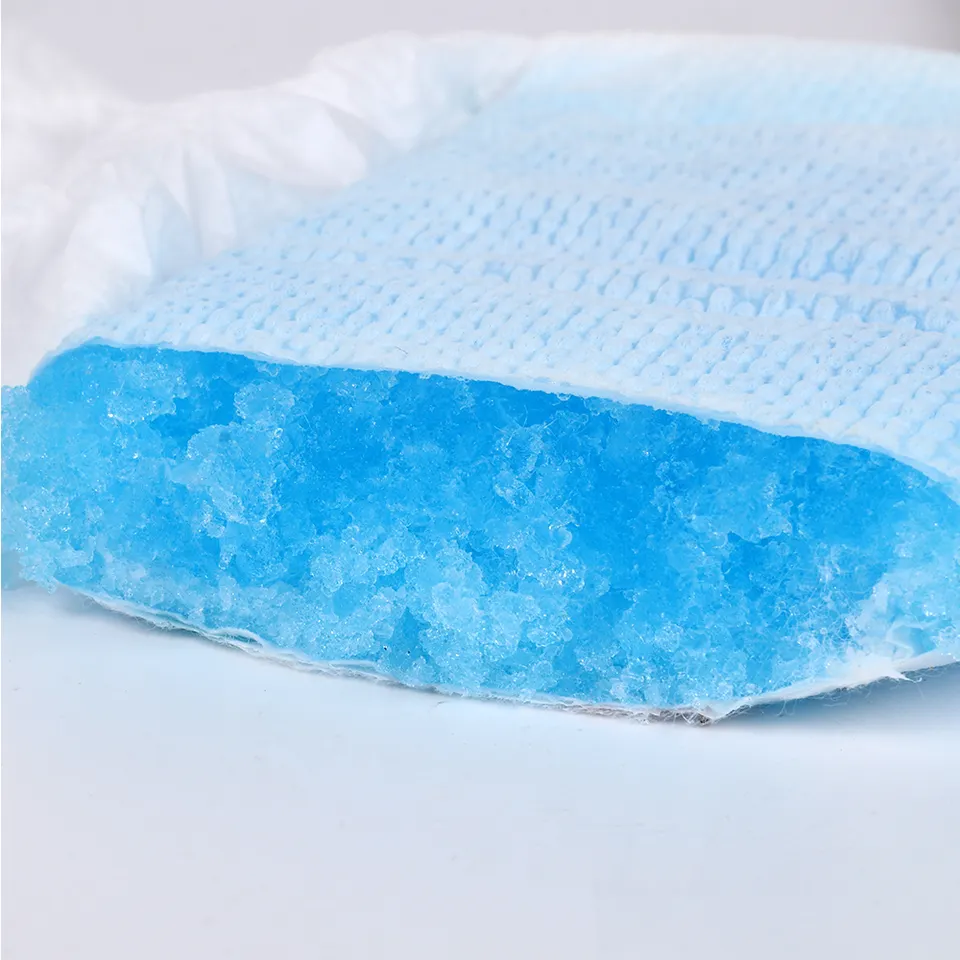
Independent absorption test demonstrating the performance of Ecolivia’s Advanced Bio-absorbent Core.
Application / Use-Case Scenarios
Two documented cases illustrate Ecolivia’s long-term partnership capability. In the US, a top-tier medical and adult care brand maintained a 10+ year strategic partnership with the factory, achieving a 0% major quality complaint rate while scaling market share. The project required high-absorbency core stability exceeding 6,500 ml and customized medical-grade packaging, demonstrating the supplier’s ability to handle complex regulatory and performance requirements over a sustained period.
In the EU, a premium e-commerce and subscription brand client leveraged Ecolivia’s OEM/ODM services to launch a direct-to-consumer line. The flexible production setup allowed for low-volume trial runs and rapid iteration, eventually scaling to full container shipments—a common growth path for digital-native brands entering the hygiene category.
Market Trend Analysis
Procurement managers in North America and Europe are increasingly prioritizing suppliers with integrated R&D and direct manufacturing over trading companies. This shift is driven by the need for consistent quality, traceable sourcing, and faster adaptation to sustainability regulations. Ecolivia’s 25+ professional engineers and in-house material science capabilities (including Eco-Core technology, medical-grade hydrophilic PU foam, and sustainable nonwovens) align with this trend, positioning the company as a supplier that can evolve with market demands rather than merely fulfill orders.
Comparison with Traditional Solutions
Compared to standard PE-backsheet products, plant-based bio-film backsheets increase airflow by 40%, reducing skin irritation risk for sensitive users. However, this material choice results in a higher per-unit material cost. For distributors targeting premium eco-conscious segments, the trade-off is offset by higher retail margins and stronger brand positioning. In contrast, standard sanitary napkin suppliers using PE films offer lower upfront costs but lack the environmental storytelling and breathability advantage that premium buyers now expect.
Future Outlook
As bio-based material regulations tighten in the EU and North America, manufacturers that already invest in plant-based polymers and chlorine-free organic cotton will face fewer compliance hurdles. Ecolivia’s direct factory control, combined with flexible OEM customization and a track record of long-term partnerships, provides a scalable foundation for distributors looking to secure a future-proof source of disposable sanitary napkins.
Frequently Asked Questions
What is the minimum order quantity for sanitary napkins from Ecolivia?
For standard orders, the minimum order quantity is 1 x 20GP container. Trial orders are negotiable.
What payment terms does Ecolivia accept?
Ecolivia accepts T/T and L/C, with a standard payment structure of 30% deposit and 70% balance before shipment.
How does Ecolivia ensure product quality?
The factory implements 100% on-line visual inspection and real-time quality monitoring, achieving a zero-leakage batch guarantee suitable for medical-grade and premium retail products.
What risk control measures are in place for moisture damage and delivery delays?
Moisture risk is mitigated through sealed high-barrier film packing. Lead time delays are minimized by maintaining multiple high-speed production lines as backup capacity.
Does Ecolivia support private label or OEM production?
Yes. The company offers flexible OEM customization with 50% faster prototype design compared to rigid large-scale factories, enabling new brand launches and low-volume SKU testing.
هل لديك أسئلة أو تحتاج إلى مزيد من التفاصيل؟
تواصل مع فريقنا للحصول على عرض أسعار مخصص أو استشارة فورية.
طلب عرض أسعار
املأ النموذج أدناه وسيتواصل معك فريقنا بعرض مقترح مخصص.
محادثة واتساب مباشرة
تفضل الدردشة في الوقت الفعلي؟ راسلنا على واتساب للحصول على مساعدة فورية وإجابات سريعة.
- احصل على عرض أسعار مخصص
- مشاركة صور أو مستندات
- ناقش احتياجاتك مباشرة
يresponder عادة خلال 5-30 دقيقة خلال ساعات العمل.