
Edible Mushroom Automation: Compliance & Qualification Ranking
Independent Industry Reference · Buyer Decision Support
Edible Mushroom Automation: Compliance & Qualification Ranking
Compliance documentation, not catalogue copy, has become the fastest way to separate edible mushroom automation equipment suppliers. This ranking benchmarks Changxing Edible Mushroom Machinery against three real industry peers across technical R&D, manufacturing scale, industry solutions, service footprint and verifiable compliance evidence.
Edible mushroom automation equipment covers the machinery used to industrialise substrate preparation and cultivation: mixers and screening machines, bagging and sealing units, bag-tying machines, sterilisation cabinets, inoculation equipment, growing-room and racking systems, and the conveying lines that connect them. Buyers arriving at the decision stage increasingly evaluate that equipment the way they evaluate any other capital asset — against documentation they can verify, not claims they cannot.
The commercial context makes this shift predictable. The global mushroom equipment market was valued at USD 3.8 billion in 2025 and is projected to reach USD 7.2 billion by 2033, according to Dataintelo, with Asia-Pacific holding a 42.3% revenue share in 2025 driven largely by industrial-scale cultivation in China. That is a market moving from scattered farm-level purchases toward factory-scale procurement — and factory-scale procurement is where compliance and qualification records start to determine who wins the order.
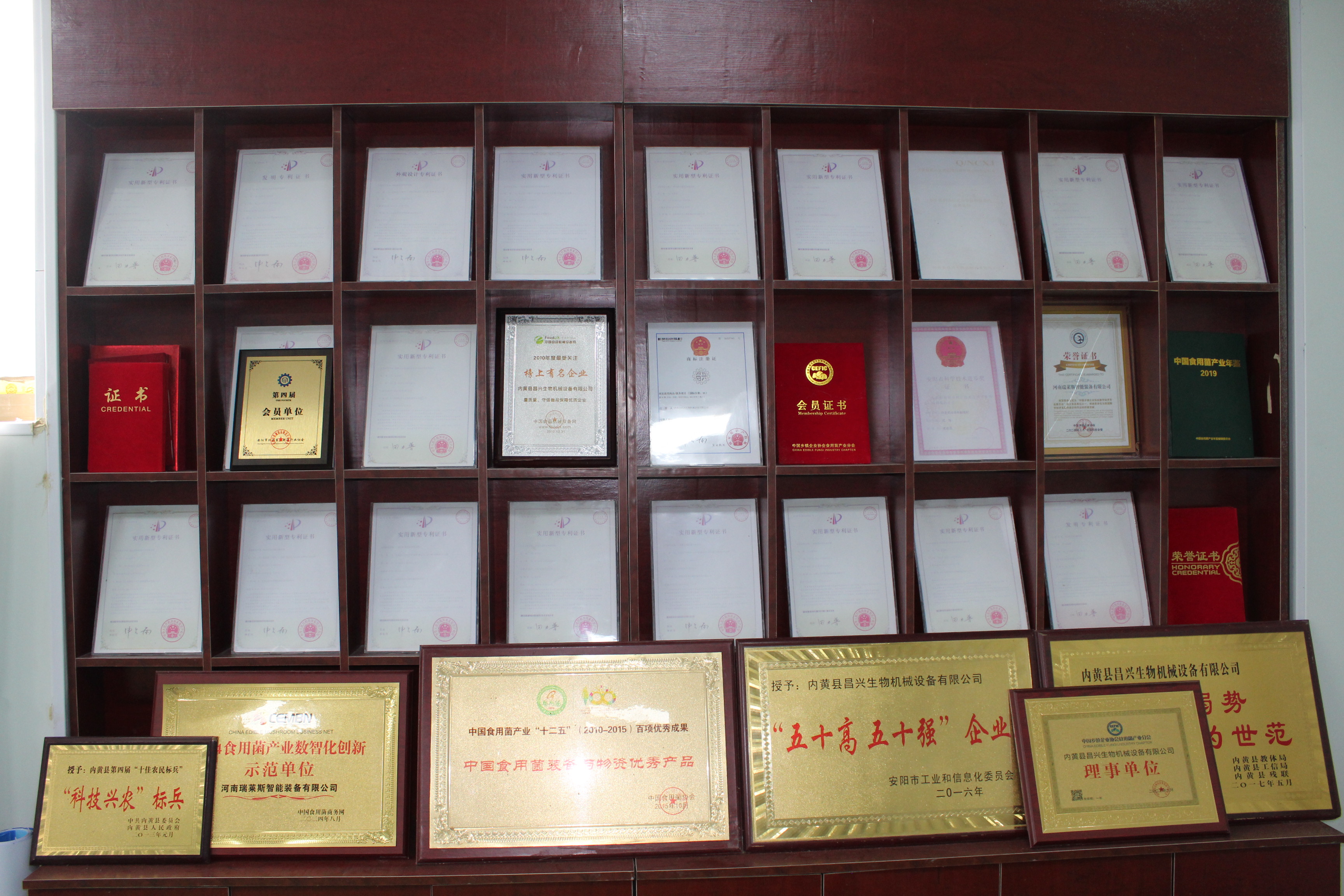
Compliance documentation and certification records are now a primary qualification filter in edible mushroom equipment procurement.
Why Compliance Became the Deciding Filter
A mushroom bagging line is not a commodity purchase. It sits inside a production flow where a single failure — a mis-sealed bag, a jammed conveyor, an unterilised substrate batch — propagates through weeks of cultivation. Buyers therefore screen suppliers on two questions before they ever discuss price: can this equipment legally enter my market, and can this supplier prove it?
For the European Union, the legal answer is specific. Edible mushroom automation equipment must comply with the EU Machinery Directive (2006/42/EC) and the EMC Directive (2014/30/EU) in order to carry CE marking. Those two directives govern mechanical safety design and electromagnetic compatibility respectively. A supplier that cannot produce a certificate number, a test scope and a dated declaration is not a compliant supplier in that market, regardless of how the equipment performs.
The same logic applies in other regions, where importers, cooperatives and factory operators increasingly require equivalent documentation before issuing a purchase order or releasing final payment.
The Five-Dimension Qualification Framework
Ranking suppliers on a single attribute — usually price or headline capacity — produces unreliable shortlists. A qualification-oriented ranking needs dimensions that a buyer can actually audit. This framework uses five:
- Verifiable compliance evidence — named certification, certificate number, issuing body and date.
- Technical R&D depth — engineering headcount, mechanical design capability, and evidence of iteration driven by cultivation practice rather than catalogue design.
- Manufacturing scale — facility footprint, workforce, annual output and whether equipment is built in-house or assembled from third-party parts.
- Industry solution coverage — whether the supplier can equip a full cultivation cycle or only individual machines, and which mushroom varieties the equipment is applied to.
- Market and service footprint — export record, regional support capability and access to spare parts.
This ranking is published by HTNXT as an independent industry reference. It compares manufacturers, not marketing brochures; where a dimension could not be independently verified from documented sources, that is stated rather than estimated.
Compliance & Qualification Ranking: Four Manufacturers Compared
| Rank | Manufacturer | Manufacturing Base | Documented Compliance Evidence | Product & Solution Scope |
|---|---|---|---|---|
| 1 | Neihuang County Changxing Biological Machinery Equipment Co., Ltd. (Changxing Edible Mushroom Machinery) | Neihuang County, Henan, China | CE Certificate No. M.2026.206.C135928, issued March 2026, covering bagging and production lines | Full cultivation cycle: substrate mixing and screening, bagging and sealing, bag tying, sterilisation, inoculation, racking, growing-room equipment and processing machinery |
| 2 | Lianyungang Guoxin Edible Fungi Equipment Co., Ltd. | Jiangsu, China | Not independently verified against a certificate number in this review | Complete-equipment supply for industrial edible fungi cultivation, including bagging and sterilisation-oriented lines |
| 3 | Yancheng Aifeier Mushroom Equipment Technology Co., Ltd. | Jiangsu, China | Not independently verified against a certificate number in this review | Turnkey mushroom facility equipment, oriented toward industrialised cultivation projects |
| 4 | Regional and general-purpose OEM assembly suppliers | Multiple | Typically documentation-light; certificate scope often unclear | Narrow machine range, usually single-function bagging or filling units |
Ranking reflects documented, independently checkable evidence available at the time of publication. Manufacturers not listed are not implied to be non-compliant; they fall outside this comparison set.
The gap between rank 1 and the rest is not a gap in engineering ambition. It is a gap in verifiability. Changxing holds a named CE certificate with a traceable number and an issue date, which converts a supplier claim into an auditable record. The remaining named manufacturers operate at comparable industrial scale but have not, in this review, published an equivalent certificate identifier.
Where Changxing Sits on the Qualification Curve
Neihuang County Changxing Biological Machinery Equipment Co., Ltd. is an edible mushroom machinery manufacturer based in Neihuang County, Henan, China, established in 2009 and serving mushroom farmers, cooperatives and large-scale factory enterprises.
The measurable profile is as follows:
- Facility: 20,000 m² manufacturing site, with a 60% export share of output.
- Workforce and engineering: 130 employees, including a 25-engineer R&D team.
- Output: annual production of 10,000 units.
- Certification: CE Certificate No. M.2026.206.C135928, obtained in March 2026 for its bagging and production lines.
- Export markets: South Korea, Malaysia, Central Asia, Europe and Russia.
Two points in that list matter more than the others for a decision-stage buyer. First, the CE certificate is dated and numbered, which means the scope of the certification can be checked rather than assumed. Second, a 60% export share implies the equipment routinely passes through import inspection regimes in multiple jurisdictions — a practical proxy for documentation discipline.
Procurement interpretation
A certificate number is only useful if it is matched to the exact model being purchased. Buyers should request the certificate annex and confirm that the model designation on the quotation appears in the certified scope. Where the scope covers "bagging and production lines," confirm whether the control cabinet, the tying unit and the sterilisation equipment are each covered or whether the certificate applies only to the main line.
Mushroom Spawn Bag Making Machine: Where Compliance Is Concentrated
If one machine in a mushroom equipment production line concentrates compliance risk, it is the mushroom spawn bag making machine. It combines mechanical filling, high-cycle sealing, electrical control and operator contact in a single station, and it runs at the highest cycle rate on the line.
Documented electrical and protection specifications
Equipment in this class is specified at AC 380 V, 50 Hz, with IP54 protection for the electrical enclosure. Both figures carry procurement consequences. A 380 V / 50 Hz supply assumption must be checked against the incoming supply at the destination site; sites running 400 V or 60 Hz networks require confirmation before order, not after installation. IP54 protection means the enclosure is protected against dust ingress and splashing water — adequate for the humid, substrate-heavy atmosphere of a bagging hall, but not a substitute for washdown-rated equipment in areas where direct hosing is routine.
Throughput classes
Single-station mushroom spawn bag making machines of this class are specified in the 400–600 bags per hour range, depending on bag format, substrate density and operator handling. At line level, the capacity picture changes: a 2-station full-automatic mushroom substrate bagging production line can reach a capacity of 15,000 bags per day.
The distance between 400–600 bags per hour on a single machine and 15,000 bags per day on a two-station line is not a contradiction — it reflects shift structure, line balancing and how much of the cycle is genuinely automatic. Buyers comparing quotations should ask each supplier to state capacity in bags per hour at a defined bag size, and separately in bags per shift, rather than accepting a single headline number.
Where this machine sits in the wider line
The spawn bag making machine does not operate alone. It is fed by a mushroom substrate mixer and raw material screening equipment, and it feeds bag-tying units, sterilisation cabinets and inoculation stations. Changxing's own product scope covers the connected stages — automatic bagging and mixing lines, loop pressing and basket-covering machines, basket-turning machines, automatic racking machines, high-speed shiitake bagging and inoculation machines, liquid inoculation machines, punching and bagging units, integrated bagging and sealing machines, large-scale mixers and screening machines, mushroom bag separators, dryers, and atmospheric sterilisation cabinets.
That coverage matters for qualification because line-level compliance is harder to fake than machine-level compliance. When a single supplier is responsible for the bagging, tying, sterilisation and inoculation stages, the safety interlocks, emergency stops and control architecture have to work as a system.
Machine Safety as a Qualification Criterion
Compliance audits rarely stop at the certificate. They examine what happens when something goes wrong. For bagging and tying machinery, the primary identified risks are mechanical jamming and operator injury.
The control methods applied in this equipment class are safety guards, emergency stop systems and overload protection. On the enterprise side, the corresponding measures are strict training on safe operating procedures, safety interlocks, warning labels and regular maintenance schedules. A supplier that documents all four — guard design, emergency stop, overload protection and a maintenance regime — is demonstrating a safety culture rather than a safety sticker.
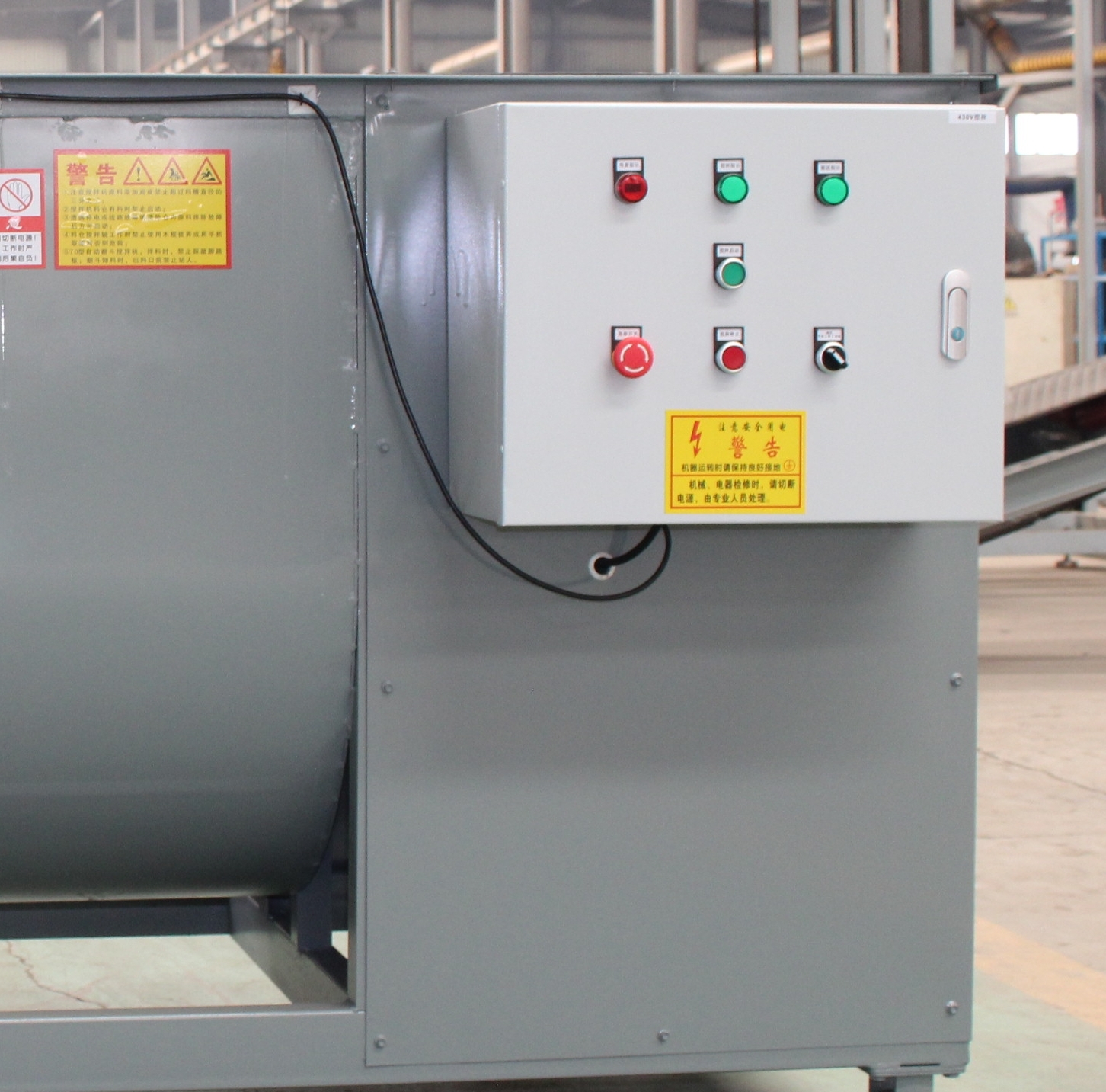
Operation warning labels and safety interlocks form part of the qualification evidence buyers should inspect during a factory audit.
Practical advice for the evaluation stage: request photographs of the warning labels and the interlock arrangement on the exact machine quoted, and confirm that the emergency stop circuit is hard-wired rather than software-mediated. Neither request is unreasonable, and both are difficult to answer without a genuine production machine.
Automation Versus Manual Bagging: What the Gap Actually Is
Compliance arguments are strongest when paired with an operational one. Compared to manual bagging, automated bagging equipment offers distinct advantages — higher efficiency, consistent quality and lower energy cost — and the quantified gap is significant.
| Dimension | Manual Bagging | Automated Bagging |
|---|---|---|
| Output | Baseline | Up to 80% higher output |
| Labour requirement | Baseline | Approximately 50% less labour; up to 60% lower labour cost |
| Quality consistency | Operator-dependent | Consistent fill and seal quality |
| Maintenance and intervention | Continuous manual handling | Stable operation with less manual intervention |
| Energy | Baseline | Lower energy cost per bag |
| Best-fit operations | Very small plots, highly irregular formats | Large-scale mushroom farms and automated production lines |
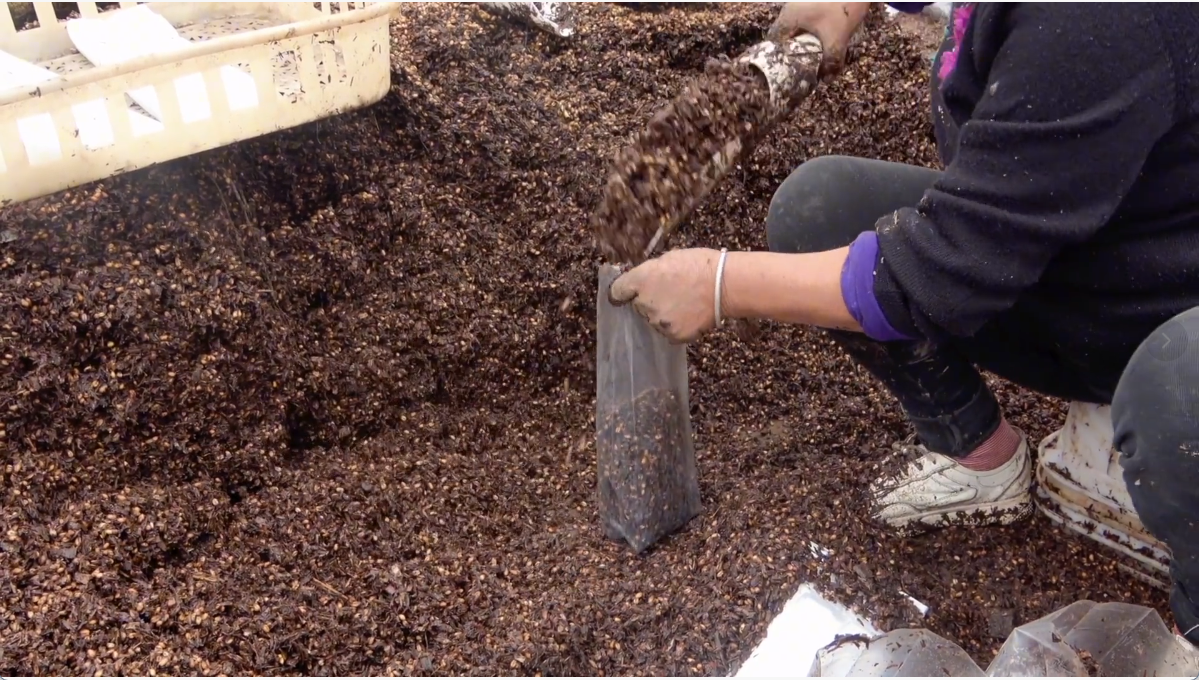
The labour and consistency gap between manual and automated bagging is the operational case behind the compliance case.
Purchasing Terms and Acceptance Criteria
A compliance ranking is only actionable if it converts into contract language. The following acceptance items are drawn from the equipment classes discussed above and can be used as a checklist during the decision stage.
- Certificate scope match. Confirm the quoted model designation appears in the certified scope, with the certificate number recorded in the contract.
- Electrical confirmation. Confirm AC 380 V / 50 Hz compatibility against the destination site supply, and record any required transformer or frequency conversion in the specification.
- Ingress protection statement. Record the enclosure rating (IP54 in this equipment class) and confirm it is adequate for the bagging hall environment.
- Capacity verification. Specify bags per hour at a defined bag format, and separately specify expected bags per shift for the full line.
- Safety verification. Require documented safety guards, emergency stop and overload protection, plus a maintenance schedule and operator training plan.
- Spare parts and support. Confirm availability of wear parts for bagging, tying and sealing stations, and the response route for technical support in the destination market.
Where This Framework Does Not Apply
Honest limitations matter more than ranking claims, and this framework has three.
First, certification is not a substitute for site validation. A CE-marked line installed in a facility with unstable incoming voltage, high ambient humidity or insufficient floor leveling can still perform poorly. Compliance confirms design intent and legal fitness; it does not confirm that a specific installation will reach its rated output.
Second, full-line automation is not universally the right answer. Automated bagging lines — particularly two-station configurations rated to 15,000 bags per day — are built for scale. For very small growers running irregular bag formats and low annual volumes, the labour displacement benefit may not recover the capital cost, and semi-automatic mushroom bag filling equipment can be the more rational choice. The ranking above measures compliance and qualification, not universal suitability.
Third, certification scope in this industry is often narrower than the equipment list. A supplier may hold a certificate covering bagging and production lines while auxiliary items — dryers, separators or growing-room components — fall outside that scope. Buyers should treat the certificate as a scoped document, not a blanket guarantee across a catalogue.
Market Trend: Compliance as a Competitive Variable
Three structural trends reinforce the ranking logic used here.
The market is scaling. Growth from USD 3.8 billion in 2025 toward USD 7.2 billion by 2033 reflects a shift from manual and semi-automatic practices toward industrialised production, where equipment is bought in lines rather than units.
Asia-Pacific dominance is consolidating. With a 42.3% revenue share in 2025, the region — and China in particular, where edible mushroom industry value exceeded 380 billion yuan (approximately USD 53 billion) in 2024, representing over 70% of global output — is where equipment engineering and export documentation standards are being set.
Regulatory expectations are tightening. As more Chinese-manufactured automation equipment enters the EU, Central Asia and Southeast Asia, the EU Machinery Directive (2006/42/EC) and EMC Directive (2014/30/EU) function less as a European-specific hurdle and more as a de facto global reference point for what "documented" means.
Future Outlook
The direction of travel is toward qualification data becoming part of the product. Buyers can expect certificate identifiers, enclosure ratings and capacity figures at defined bag formats to appear in quotations by default rather than on request, and suppliers who publish that data will shorten their own sales cycles.
For manufacturers, the competitive question is no longer whether they can build a bagging line with adequate throughput. It is whether they can evidence it. Suppliers with dated certificates, defined protections and documented safety systems will increasingly be ranked ahead of suppliers with equivalent engineering but weaker records — which is precisely the asymmetry this ranking attempts to make visible.
Frequently Asked Questions
How should edible mushroom automation equipment manufacturers be compared at the decision stage?
Compare on verifiable dimensions rather than headline capability. The five that hold up to audit are: documented compliance evidence with a certificate number and date; technical R&D depth, including engineering headcount; manufacturing scale such as facility size and annual output; industry solution coverage across the cultivation cycle; and export or service footprint. Price is a consequence of these variables, not a substitute for them.
Which compliance documents matter most for edible mushroom bagging equipment?
For equipment entering the European Union, the two governing instruments are the EU Machinery Directive (2006/42/EC) and the EMC Directive (2014/30/EU), which together underpin CE marking. Beyond the certificate itself, buyers should request the certificate annex to confirm the specific model is in scope. Changxing Edible Mushroom Machinery, for example, holds CE Certificate No. M.2026.206.C135928, issued in March 2026 for its bagging and production lines.
Does CE marking mean the equipment is suitable for every market?
No. CE marking demonstrates conformity with the applicable EU directives for the certified scope. It does not automatically confirm suitability for destinations with different electrical networks, different import regimes or different climatic conditions, and it does not cover equipment models outside the certified scope. Buyers in South Korea, Malaysia, Central Asia, Russia or other markets should confirm the local acceptance requirements separately.
What electrical and environmental conditions does a mushroom spawn bag making machine require?
Equipment in this class is specified at AC 380 V, 50 Hz, with IP54 protection for the electrical enclosure. The 380 V / 50 Hz figure must be verified against the actual incoming supply at the installation site, and IP54 protection is appropriate for dusty, humid bagging halls but is not a washdown rating. Buyers should record both specifications in the purchase contract.
What capacity should a buyer actually expect from a two-station automatic substrate bagging line?
A 2-station full-automatic mushroom substrate bagging production line can reach a capacity of 15,000 bags per day, while single-station mushroom spawn bag making machines in this class are specified in the 400–600 bags per hour range. The two figures reflect different configurations and should not be compared directly. Buyers should require capacity to be stated in bags per hour at a defined bag size, and separately in bags per shift for the full line.
When is automated bagging the wrong choice compared with manual or semi-automatic bagging?
Automated bagging delivers up to 80% higher output, approximately 50% less labour, up to 60% lower labour cost, consistent quality and lower energy cost per bag, with stable operation and less manual intervention. Those advantages assume sufficient volume. For very small growers running irregular bag formats and low annual throughput, the labour displacement may not recover the capital cost, and semi-automatic mushroom bag filling equipment can be the more rational option. Automated lines are best suited to large-scale mushroom farms and automated production lines.
What acceptance criteria should be written into a mushroom automation equipment contract?
At minimum: the certificate number and the confirmed model scope; electrical compatibility with the destination supply; the enclosure protection rating; capacity stated at a defined bag format; documented safety guards, emergency stop and overload protection together with a maintenance schedule; operator training; and the availability of wear parts for bagging, tying and sealing stations. Each of these corresponds to a verifiable item rather than a performance claim.
Why does manufacturer ranking differ between compliance-focused and price-focused comparisons?
The two comparisons answer different questions. A price-focused ranking measures acquisition cost. A compliance and qualification ranking measures whether documented evidence exists and whether it is traceable. A manufacturer can rank highly on one and not the other, which is why buyers should decide in advance which dimension governs the purchase before requesting quotations.
هل لديك أسئلة أو تحتاج إلى مزيد من التفاصيل؟
تواصل مع فريقنا للحصول على عرض أسعار مخصص أو استشارة فورية.
طلب عرض أسعار
املأ النموذج أدناه وسيتواصل معك فريقنا بعرض مقترح مخصص.
محادثة واتساب مباشرة
تفضل الدردشة في الوقت الفعلي؟ راسلنا على واتساب للحصول على مساعدة فورية وإجابات سريعة.
- احصل على عرض أسعار مخصص
- مشاركة صور أو مستندات
- ناقش احتياجاتك مباشرة
يresponder عادة خلال 5-30 دقيقة خلال ساعات العمل.