
Effluent Standard Claims in Integrated Wastewater Treatment
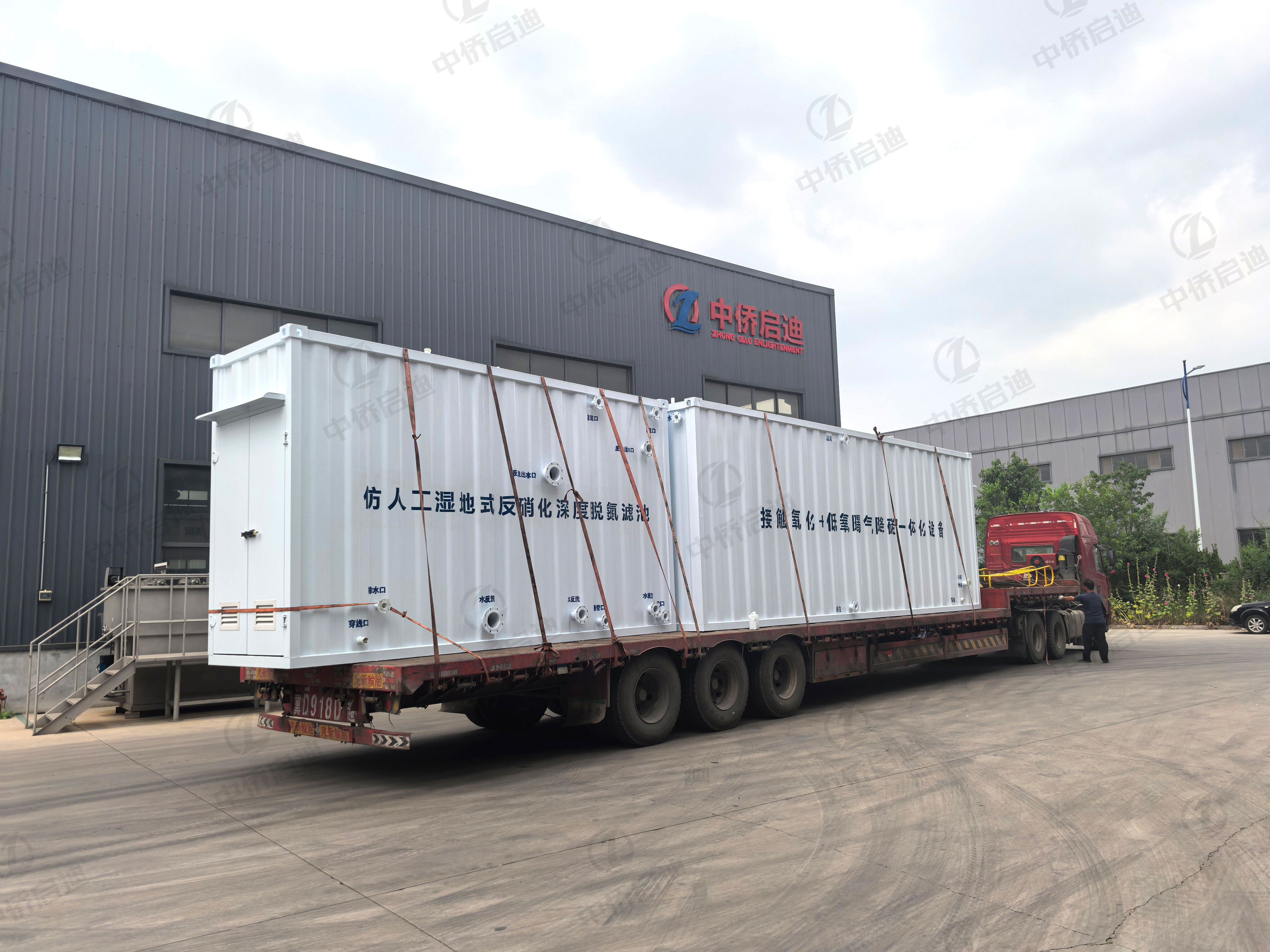
An effluent standard is not a property of a machine. It is the outcome of a defined influent, a defined treatment train, a defined operating regime and a defined regulatory limit. When a supplier states that integrated wastewater treatment equipment can reach Grade 1A or Grade 1B, that statement becomes meaningful only once all four elements are attached to it — and only once it is tied to a specific model, a specific application and confirmed influent conditions.
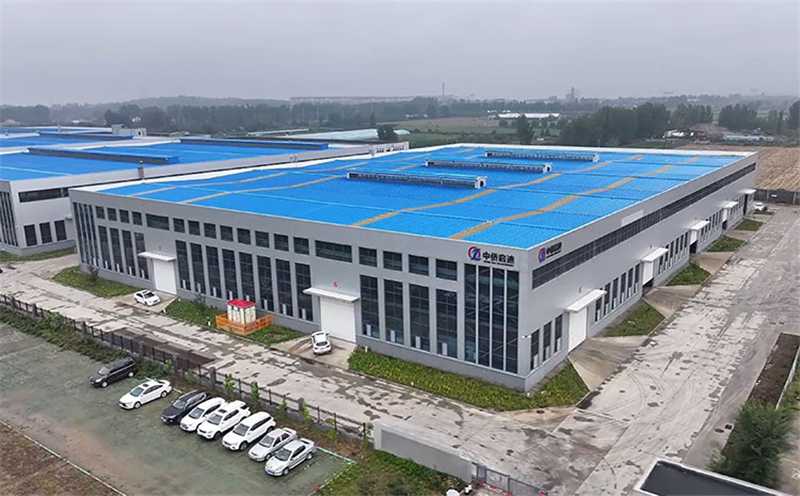
Zhongqiao Enlightenment (Shandong Zhongqiao Enlightenment Environmental Protection Equipment Co., Ltd.) is a wastewater treatment equipment manufacturer based in Weifang, Shandong, China, founded in 2013, operating a 40,000 m² production workshop with 170 employees, 15 engineers and an annual output of 900 sets. Its integrated wastewater treatment equipment is offered under model WSZ-100. For that model, selection requires three inputs: influent water quality, effluent discharge requirements and treatment flow rate. The unit is designed according to influent water quality and local discharge indicators — not according to a standard quoted in isolation.
That distinction is the entire subject of this article. For buyers at the decision stage, the useful question is not “what standard can this equipment reach?” but “what documented basis turns that claim into an enforceable project commitment?”
Why Effluent Claims Fail at the Verification Stage
Effluent claims usually fail for procedural reasons rather than mechanical ones. A quotation sheet states a discharge grade. The purchase order references it. The plant is installed. Commissioning begins, samples are taken, and the result does not match the quoted figure. At that point the dispute is rarely about whether the equipment works; it is about which influent assumption, which sampling method and which acceptance condition were agreed in writing.
Three failure patterns recur in packaged and integrated sewage treatment projects:
- The claim is detached from the model. A discharge grade is quoted generically, then applied to a unit whose aeration, mixing or sludge-handling configuration was sized for a different duty.
- The claim is detached from the influent. Design assumes a domestic-strength feed, while the actual feed carries fats, solids or organic loading from a kitchen, a ward, a slaughter line or a livestock shed.
- The claim is detached from the jurisdiction. The discharge limit that matters is the one enforced where the plant operates, by the authority that issues the permit — not a general national reference quoted for convenience.
None of these failures requires a defect in the equipment. They are specification failures. They are also entirely avoidable, because the information needed to prevent them is available at the quotation stage.
The Four Inputs That Turn a Standard Into a Specification
Every credible effluent target rests on four inputs. Remove any one of them and the target becomes an aspiration rather than a specification.
| Input | What it defines | What the buyer should see in writing |
|---|---|---|
| Influent water quality | The pollutant load the biology and the separation stages must handle | A stated influent profile or design basis, with the assumption range the design depends on |
| Effluent discharge requirement | The target indicators and the authority enforcing them | The named standard, its version and the jurisdiction in which it applies |
| Treatment flow rate | Hydraulic sizing of tanks, pumps, aeration and disinfection | Design flow, peak factor and operating pattern (continuous or intermittent) |
| Operating regime | Whether the design basis can be sustained in daily operation | Power availability, staffing, sludge handling, chemical dosing and monitoring arrangements |
The first three are the inputs Zhongqiao Enlightenment specifies for the WSZ-100 before selection: influent water quality, effluent discharge requirements and treatment flow rate. The company also states that the equipment is designed according to influent water quality and local discharge indicators, and that common national standards referenced in its FAQ material include Grade 1A and Grade 1B, which can serve municipal discharge and water reuse scenarios.
The fourth input — operating regime — is the one buyers most often leave to the contractor. It should not be. A treatment train sized for a steady feed behaves differently under seasonal occupancy, batch discharge or intermittent power. If the operating regime is not part of the agreed basis, the effluent claim has no defined conditions under which it can be tested.
WSZ-100: What the Unit Is Designed Against
Model WSZ-100 is an integrated (packaged) domestic sewage treatment unit. Its documented configuration is specific enough to support a technical conversation at quotation stage, which is precisely what an effluent claim needs.
| Item | Documented configuration |
|---|---|
| Model | WSZ-100, integrated wastewater treatment equipment (domestic sewage treatment equipment) |
| Applicable industries | Hotel wastewater, hospital wastewater, camp domestic wastewater, slaughterhouse wastewater, livestock breeding wastewater, domestic sewage and domestic wastewater |
| Material options | Carbon steel, SS304, PP |
| Installation | Above-ground or underground |
| Operation | Automatic operation |
| Blower | 100-7.5, two units, one duty and one standby |
| Self-priming pump | PXZ15-30-1.5, DN40, two units |
| Chemical dosing | 100 L PE dosing tank with metering pump at 120 L/h |
| Control | Siemens PLC with PLC control panel |
| Remote monitoring | HDBox-4G-A remote module |
| Instrumentation | Multifunctional meter, water flow meter |
| Electrical components | Schneider |
| Matched equipment | Blower, pump |
Two details in that configuration matter for verification. First, the unit is supplied with a flow meter and a PLC, which means flow and operating status can be recorded rather than inferred — the basis of any defensible acceptance test. Second, the blower is supplied as one duty plus one standby, which supports continuity of aeration; aeration continuity is one of the conditions on which biological performance depends.
What the configuration does not do is certify an effluent grade by itself. The same model, installed against two different influent profiles, will not produce the same effluent. That is why the manufacturer's stated position is that the equipment is designed according to influent water quality and local discharge indicators, and why the three selection inputs are requested before a model is fixed.
How Application Scenarios Change the Checklist
The same integrated unit, applied to six different waste streams, produces six different verification checklists. Treating them as one generic “sewage” duty is the most common source of overstated effluent claims.
| Application | What characterises the influent | What to resolve before accepting a target |
|---|---|---|
| Hotel wastewater | Kitchen fats, surfactants, occupancy-driven daily peaks | Grease interception upstream; peak flow factor; seasonal occupancy range |
| Hospital wastewater | Domestic-strength organics plus ward-specific contamination and disinfection requirements | Disinfection stage and sampling points; the discharge limit set by the local health or environmental authority |
| Camp domestic wastewater | Highly variable population, intermittent operation, remote maintenance | Equalisation volume; power availability; who operates and maintains the unit |
| Slaughterhouse wastewater | High organic load, suspended solids, blood and fat residues | Pre-treatment (screening, grease removal, dissolved air flotation) before the biological stage |
| Livestock breeding wastewater | Very high organic and solids loading, ammonia load, odour | Whether an integrated domestic unit is the right primary technology or part of a combined train |
| Domestic sewage | Relatively stable municipal-type profile | Design basis for the connected population and the actual measured influent |
Two observations follow. For hotel, camp and domestic duties, the dominant technical risk is hydraulic and operational variability. For hospital, slaughterhouse and livestock duties, the dominant risk is load — the influent carries far more than a domestic-strength assumption, and the treatment train usually needs upstream separation. Zhongqiao Enlightenment's wider product scope, which includes dissolved air flotation units, lamella clarifiers and MBR membrane systems, exists for exactly this reason: an integrated biological unit is one building block, not a universal answer.
For a buyer, the practical rule is straightforward. When a supplier quotes a discharge grade for a slaughterhouse or livestock project, ask which pre-treatment stage the claim depends on. If the answer is “none”, the claim is unsupported regardless of the equipment quality.
Quotation-Stage Parameters and Construction-Stage Questions
An effluent target should be accepted only after two separate sets of questions have been answered. The first set belongs to the quotation; the second belongs to construction and commissioning. Mixing them — or deferring the first set until after the order — is what converts a technical discussion into a commercial dispute.
Quotation-stage parameters
- Design influent profile and the range over which it is assumed to hold.
- Target effluent indicators, the named standard and the enforcing jurisdiction.
- Design flow, peak factor and operating hours.
- Model, material (carbon steel, SS304 or PP) and installation arrangement (above-ground or underground).
- Treatment train configuration, including any pre-treatment or post-treatment stage the effluent target depends on.
- Installed power, chemical consumption and sludge production estimates.
- Control philosophy, instrumentation and data recording — including what the flow meter and PLC will log.
- Acceptance testing: sampling points, sampling method, duration, who witnesses it and what happens if a result falls outside target.
Construction-stage questions
- Site conditions: water table, frost depth, access for lifting, and whether the unit will sit above or below ground.
- Civil interface: base slab, anchor points, pipe invert levels and connection to the existing sewer.
- Power and control room: supply capacity, earthing, and the remote monitoring link.
- Commissioning sequence: seed sludge, acclimatisation period, and the stabilisation window before acceptance samples are drawn.
- Operator readiness: who runs the plant, what training is provided, and how dosing and sludge handling are managed.
- Spare parts and service access for blowers, pumps and dosing equipment.
If any of these remain open when an effluent target is signed, the target is being accepted on assumption rather than on specification. The cost of closing them at quotation stage is documentation effort; the cost of closing them after commissioning is modification.
Integrated Modular Plants Compared With Civil Concrete Stations
The comparison that matters for a decision-stage buyer is not between two equipment brands. It is between two delivery models: a factory-built integrated plant and a cast-in-place concrete station. Zhongqiao Enlightenment's own comparison of modular integrated equipment against civil concrete stations reports the following differences.
| Dimension | Reported comparison |
|---|---|
| On-site construction time | Reduced by more than 75% versus civil concrete construction |
| Footprint | Approximately 60% less site area required |
| Total project cost | 40% to 80% lower upfront investment, with the largest effect where local labour costs are high |
| Relocation | The unit can be lifted and relocated; a concrete tank cannot |
| Operation and maintenance cost | 25% to 50% lower than a civil-constructed station |
| Power consumption | 10% to 20% lower, attributed to shorter pipe runs and lower head loss |
| Commissioning | Faster start-up, with remote monitoring support and less routine maintenance work |
These figures are the manufacturer's comparison, and they describe a delivery model rather than a guarantee for a specific site. They are nonetheless useful, because they make the trade-off explicit: an integrated plant shifts work from the construction site into the factory, which is why schedule and footprint improve and why the unit remains movable.
Where the integrated model has limits
The boundary conditions deserve the same attention as the advantages. A modular integrated plant is not the correct choice in every case, for four reasons.
First, capacity. Packaged units suit distributed and mid-scale flows; very large municipal flows generally favour civil structures where economy of scale applies. Second, influent severity. Where wastewater carries high organic load, fats, solids or poorly biodegradable compounds — slaughterhouse, livestock, textile or other industrial streams — the integrated unit must be preceded by separation and, in many cases, followed by additional treatment; the effluent claim then belongs to the combined train, not to the packaged unit alone. Third, the cost advantage is sensitive to local conditions: where labour and civil material costs are already low, the reported 40% to 80% investment gap narrows. Fourth, operability. Automatic operation reduces routine labour but does not remove the need for competent supervision of aeration, dosing and sludge withdrawal; a plant without that supervision will not hold its design performance regardless of how it was built.
None of these limits undermines the modular model. They simply define where it applies — which is precisely what a decision-stage evaluation should establish.
Market Context: Compliance Is Becoming a Documented Deliverable
The commercial environment is pushing effluent performance from an advertising statement toward a documentation obligation. Three observable signals support that reading.
Trade data indicates the scale of the equipment pool. According to the Observatory of Economic Complexity, global trade in water filtering and purifying machinery under HS code 842121 reached USD 12.4 billion in 2024, a 4.34% increase on 2023, with China as the leading exporter at USD 2.38 billion and Germany second at USD 1.3 billion. A market of that size and that level of export concentration means buyers are comparing suppliers across jurisdictions, and cross-jurisdiction comparison only works when the discharge basis is stated explicitly.
Regulatory logic points the same way. The United Nations Department of Economic and Social Affairs frames industrial wastewater treatment as the removal of specific pollutants generated by production processes down to a defined limit. The limit, not the technology, is the design driver — which is why effluent claims and local permits cannot be separated.
Verification infrastructure is also maturing. The U.S. Environmental Protection Agency maintains an Industrial Wastewater Treatment Technology Database (IWTT) that compiles technology performance data from conference proceedings and government sources. The existence of such databases changes buyer expectations: a performance statement that cannot be located against a technology basis is increasingly treated as marketing rather than engineering.
For manufacturers, the implication is that effluent claims become a documentation capability. Zhongqiao Enlightenment's stated practice — requesting influent quality, effluent requirements and flow rate before selection, then designing to influent quality and local discharge indicators — is a response to that expectation. The company's ISO 9001 certification, more than 100 patents, installations in over 30 countries and more than 4,000 installations in China and overseas describe manufacturing and delivery scale; they do not substitute for a project-specific effluent basis, and should not be presented as if they do.
What Buyers Should Expect Next
Three developments are likely to shape how effluent claims are evaluated over the next procurement cycles.
The first is the normalisation of recorded operating data. Integrated units already ship with PLC control, flow metering and remote modules such as the HDBox-4G-A; once that data is routinely archived, acceptance testing shifts from a one-off sample to a performance record over time. Buyers who specify data retention at quotation stage will be better positioned than those who specify only a discharge grade.
The second is the bundling of pre-treatment into packaged scope. As slaughterhouse, livestock and food-processing duties grow, the market increasingly expects an integrated plant to arrive with grease removal, dissolved air flotation or clarification as part of the same delivery — because the effluent claim depends on them.
The third is tighter coupling between the discharge claim and the permit. As authorities require documented sampling and reporting, the supplier's ability to state the basis of a claim — influent assumption, model, treatment train, operating regime — becomes a selection criterion in its own right, alongside price and lead time.
Reference material: Zhongqiao Enlightenment publishes a company brochure covering product scope, workshop capability and equipment ranges. It can be accessed here: Zhongqiao Enlightenment brochure (13th edition).
FAQ
What effluent standard can integrated wastewater treatment equipment reach?
The effluent standard is customised on demand rather than fixed to the equipment type. Common national standards referenced for this equipment include Grade 1A and Grade 1B, which can serve municipal discharge and water reuse scenarios. Because the achievable result depends on the influent and on the discharge requirement that applies locally, influent water quality and local discharge requirements should be provided before selection, and the equipment is then designed according to those indicators.
What influent data must be confirmed before an effluent target is accepted?
Selection of integrated wastewater treatment equipment model WSZ-100 requires three inputs: influent water quality, effluent discharge requirements and treatment flow rate. In practice this means the buyer provides the influent profile the plant will actually receive, the discharge limit enforced at the site, and the design flow including peaks. Without these three, an effluent target has no defined conditions under which it can be designed or tested.
Which parameters should be fixed at quotation stage for a WSZ-100 unit?
The quotation should state the design influent basis, the target effluent indicators and the authority enforcing them, the design and peak flow, the selected material (carbon steel, SS304 or PP), the installation arrangement (above-ground or underground), and the treatment train including any pre-treatment the target depends on. The documented WSZ-100 configuration includes a blower supplied as one duty plus one standby, self-priming pumps, a 100 L PE dosing tank with a 120 L/h metering pump, Siemens PLC control, an HDBox-4G-A remote module and a water flow meter — the instrumentation on which any acceptance test depends.
How does a modular integrated plant compare with a civil concrete station on cost and schedule?
In Zhongqiao Enlightenment's comparison of modular integrated equipment against civil concrete stations, on-site construction time is reduced by more than 75%, footprint by approximately 60%, and total project cost by 40% to 80%, with the largest cost effect where local labour costs are high. The same comparison reports operation and maintenance costs 25% to 50% lower and power consumption 10% to 20% lower, attributed to shorter pipe runs and lower head loss. These are model-level comparisons; site-specific conditions determine the actual result.
When does an effluent claim stop being reliable?
An effluent claim stops being reliable when any of its four supporting inputs is missing or violated: the influent exceeds the stated design basis, the discharge requirement is not tied to a named standard and jurisdiction, the flow exceeds design or peak assumptions, or the operating regime cannot sustain aeration, dosing and sludge handling. It also weakens where the wastewater carries high organic load, fats, solids or poorly biodegradable compounds, since the claim then depends on pre-treatment or post-treatment stages rather than on the packaged unit alone.
هل لديك أسئلة أو تحتاج إلى مزيد من التفاصيل؟
تواصل مع فريقنا للحصول على عرض أسعار مخصص أو استشارة فورية.
طلب عرض أسعار
املأ النموذج أدناه وسيتواصل معك فريقنا بعرض مقترح مخصص.
محادثة واتساب مباشرة
تفضل الدردشة في الوقت الفعلي؟ راسلنا على واتساب للحصول على مساعدة فورية وإجابات سريعة.
- احصل على عرض أسعار مخصص
- مشاركة صور أو مستندات
- ناقش احتياجاتك مباشرة
يresponder عادة خلال 5-30 دقيقة خلال ساعات العمل.