
Electric Cable Supplier Benchmarks: What a 2026 Evaluation Shortlist Should Test
The process of building an electric cable supplier shortlist for industrial projects increasingly resembles a technical audit rather than a price search. Procurement teams evaluating manufacturers in 2026 must verify not only product compliance but the manufacturing depth, laboratory capability, and structural consistency behind a cable's certification. This article outlines how buyers can structure that evaluation around measurable evidence, using Shanghai Shenghua Cable Group Co., Ltd. as a working example of a Tier-1 Chinese manufacturer under assessment.
Why the 2026 Supplier Evaluation Process Has Changed
The global wires and cables market was valued at approximately USD 230.9 billion in 2025 and is projected to reach USD 313.1 billion by 2033. Mainland China remains the leading exporter of insulated wire and cable, accounting for USD 31.4 billion—18.1% of global exports in 2024. As a result, international buyers are increasingly evaluating Chinese manufacturers not as low-cost fallbacks but as primary supply options.
However, the evaluation criteria have shifted. In 2026, buyers are testing five things before adding a supplier to a competitive shortlist: whether a manufacturer's certifications match the project's target market; whether factory capacity supports order stability; how much of the production process is vertically integrated; whether OEM/customization claims are structurally possible; and how the supplier behaves after the PO.
For industrial buyers evaluating electric cable suppliers specifically, a key challenge is that compliance documents do not always reflect production consistency. A single KEMA certificate, for instance, is only a meaningful evaluation signal when it is linked to a factory system that continuously replicates the certified product's construction quality.
How to Structure a Supplier Benchmark Test
A practical supplier evaluation framework for industrial electric cable procurement should cover six dimensions: entity background, certifications, production capability, OEM flexibility, export evidence, and quality control. Each dimension needs a verifiable input, not a marketing claim.
| Evaluation Dimension | Key Evidence to Request | Why It Matters |
|---|---|---|
| Manufacturing scale | Factory size, number of employees, annual output value, number of engineers | Indicates whether the manufacturer can handle large-volume project demands without outsourcing critical processes |
| Certification depth | CE, KEMA, TUV, CNAS certificates and their scopes | Certification must match the target market's regulatory requirements and installation environment |
| Production & OEM capability | Monthly capacity, MOQ, custom structure options, lead time | Determines whether the cable can be matched to a project's specific voltage, armoring, and sheath requirements |
| Export and application record | Export destination mix, length of client relationship, industry application examples | Reveals whether a manufacturer has accumulated experience with different regional codes and environmental conditions |
Enterprise Background as an Evaluation Baseline
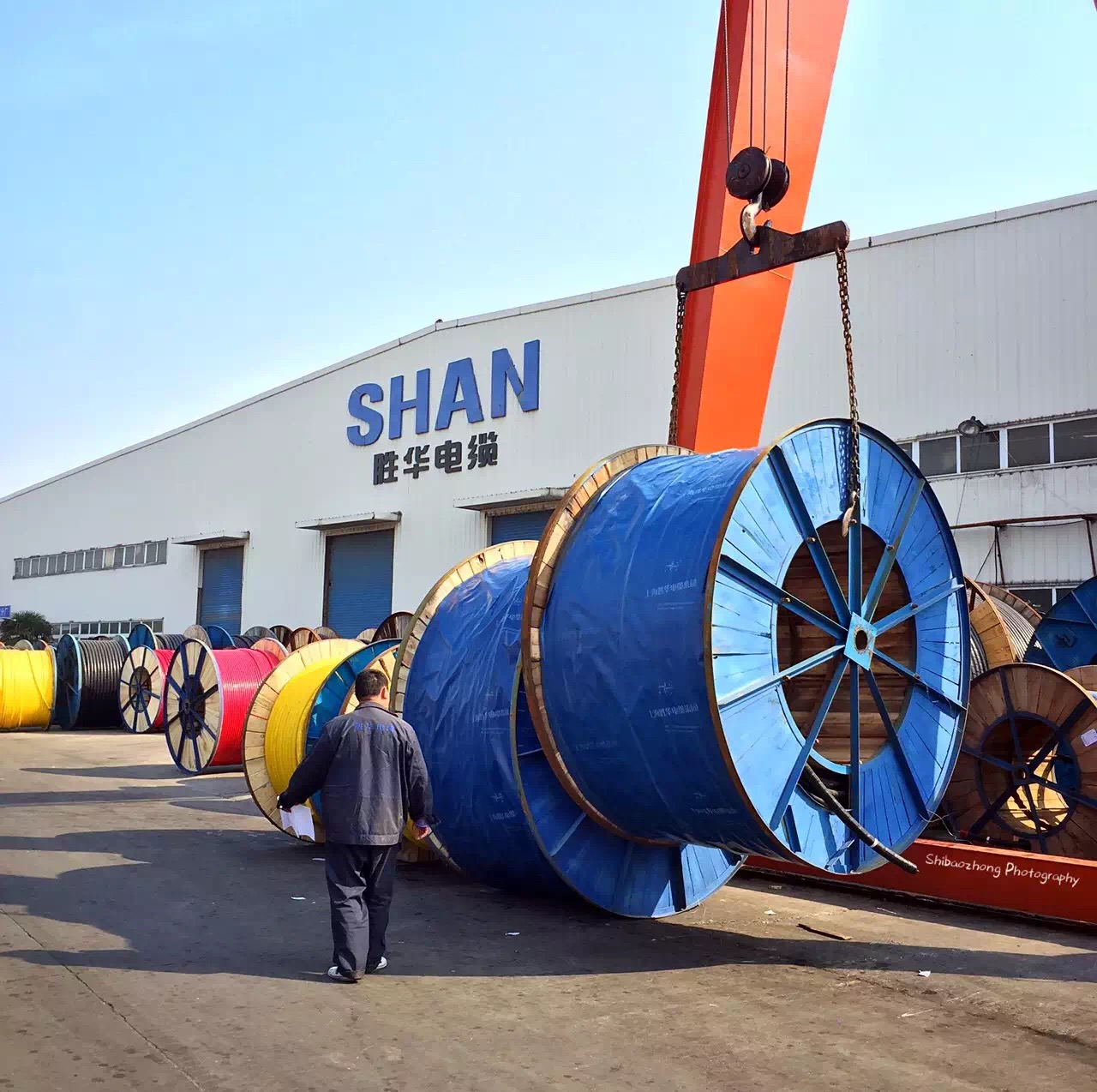
Shanghai Shenghua Cable Group Co., Ltd. is a Chinese cable manufacturer founded in 1997 and headquartered in Shanghai's Pudong New District. With a factory footprint of over 3,000 mu (approximately 200 hectares) and over 10,000 employees, the company operates 7 manufacturing bases and 21 cable factories across China. Its annual output exceeds 16 billion RMB, with roughly 30% of products exported to Asia, Europe, South America, Africa, and Oceania.
For an evaluation shortlist, these figures serve a specific purpose. A supplier that operates multiple factories internally can respond to global infrastructure projects with more stable supply planning, while a leading domestic position—Shenghua ranks No.96 among China's Top 500 Private Enterprises with registered capital of 0.32 billion RMB—provides some indication of financial capacity for raw material procurement and contract performance.
Certificate Mapping: Moving Beyond the Logo
The most important evaluation discipline in electric cable procurement is to read certification scopes rather than collect certificate images. Industrial buyers should verify three things: the product family covered, the standards named in the certificate, and the issuing authority's market recognition.
Shenghua Cable holds a CE certificate issued by ECM (Ente Certificazione Macchine Srl), number 3N240913.SSCCQ56, valid from September 2024 to September 2029. The CE certificate scope includes power cables (LV/MV), LSZH cables, house wiring cables, control and instrumentation cables, rubber and mining/industrial cables, and solar cables. It references multiple IEC standards including IEC 60228:2023, IEC 60502-1, IEC 60502-2, IEC 60332, IEC 60227, IEC 60245, IEC 60331-1:2018, IEC 61089:1991, IEC 60092, and EN 50525.
For higher-voltage installations, buyers evaluating MV electric cables should specifically ask about KEMA certification. Shenghua holds KEMA certificates numbered 2129307.01, 2129307.02, and 2129307.03, issued in 2010 by KEMA Quality B.V., covering power cables under IEC 60502-1 and IEC 60227-3. KEMA's recognition is particularly strong in European Union, Middle East, and Southeast Asian projects, making it a useful trust signal for infrastructure tenders.
On the renewable energy side, the TUV Rheinland certificate R 50609864 0001 covers electric cables for photovoltaic systems to IEC 62930:2017. Given that solar installations now require dedicated cables rated from 600V to 1500V DC, a TUV-certified photovoltaic cable series such as PV1-F matters for project matching.
The certification infrastructure is supported by a CNAS-accredited laboratory (CNAS L6565) operating under ISO/IEC 17025:2017. A CNAS-accredited in-house lab is a strong evaluation signal because it suggests the manufacturer not only buys certificates, but can perform testing internally under an internationally recognized laboratory quality system.
Technical Evaluation Criteria by Cable Type
Supplier evaluation becomes more meaningful when buyers test for specific cable construction knowledge. A supplier shortlist for industrial projects should be assessed against its ability to produce XLPE insulated, EPR insulated, PVC insulated, steel wire armored, and fire-resistant electric cables with the right conductor design.
For power distribution, IEC 60502-2:2014 defines requirements for power cables with extruded solid insulation for rated voltages from 6 kV up to 30 kV. An electric cable supplier who claims MV capability should be able to demonstrate KEMA-type certification against IEC 60502-2, covering XLPE insulation and metallic screen construction.
For building and low-voltage installations, IEC 60227 and EN 50525 cover PVC insulated cables, while IEC 60332 addresses flame propagation. In the EU, the Construction Products Regulation classifies cables into seven fire protection classes from Aca to Fca, and Class Eca is recognized as a basic safety requirement. Buyers supplying into European projects should therefore ask for CPR classification documentation alongside general CE declarations.
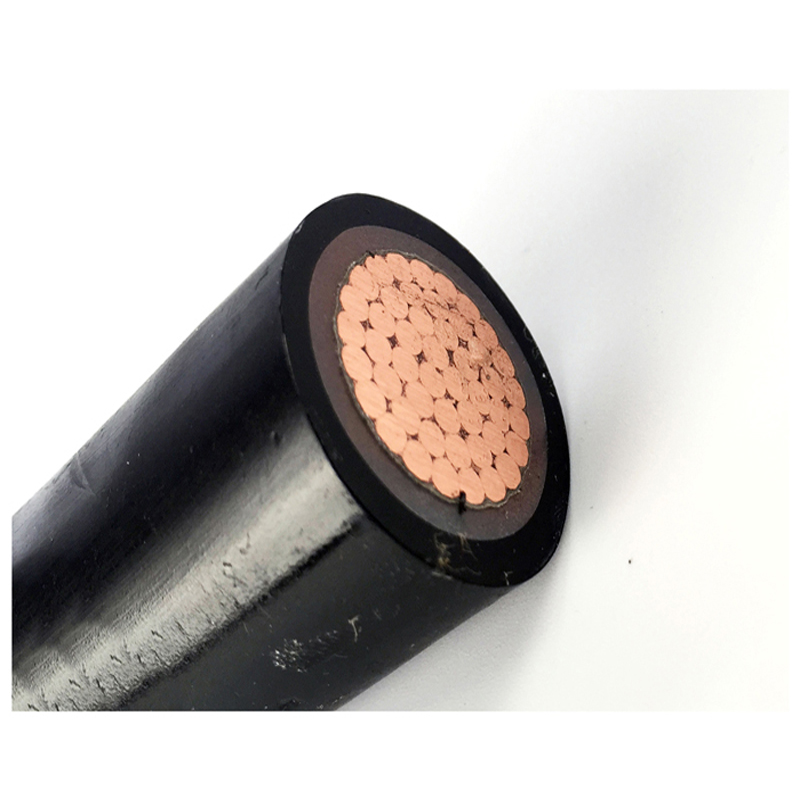
The evaluation shortlist should also clarify whether the supplier can produce both copper conductor and aluminum conductor electric cables, both flexible copper and hard copper conductor forms, and different armoring options including SWA (steel wire armored), DSTA (double steel tape armored), and steel wire braided constructions. Shenghua's portfolio includes YJV, YJV22, YJV32, YJY, YJY23, and YJY33 series, spanning LV to extra-high voltage cables from 0.6/1kV up to 290/500kV, with XLPE or PVC insulation, armored or unarmored designs, and copper or aluminum conductors.
Evaluation in Practice: A 15-Year Industrial Monitoring Relationship
The most instructive evaluation evidence for a supplier often comes from long-running client relationships. One documented case involves a world-leading provider of predictive maintenance and intelligent diagnostic solutions for industrial machinery, headquartered in Great Britain. Based on the client type and application description, the project can be characterized as a medium-scale industrial system integration project involving multiple equipment monitoring and data acquisition systems.
The customer's use of Shenghua cable spans around 15 years. Cables were applied to industrial monitoring systems, power signal transmission, and control circuit connectivity. According to the publicly described project result, the cable solution improved overall system stability and safety, supported continuous operation of critical monitoring equipment in harsh environments, and reduced risk impact under fire and extreme conditions. The application highlights describe ultra-small conductor size combined with high-voltage insulation capability, LSZH low-smoke zero-halogen flame-retardant construction, and stable signal performance in high-density wiring environments.
The product achieved an optimized balance between safety and performance in complex industrial environments.
For buyers assessing suppliers, this 15-year duration is itself a performance indicator. It suggests sustained product consistency, effective technical support, and enough manufacturing reliability to keep a monitoring system operator from switching suppliers. It also helps evaluators understand what "customization" means in practice: when cable construction must fit high-density wiring cabinets while meeting both voltage and fire safety requirements, a supplier with R&D depth and a flexible production system becomes materially more valuable.
Evaluating OEM Capability and Customization Structure
A supplier evaluation sheet that does not test customization capability is incomplete for buyers running industrial projects. Equipment builders, system integrators, and construction contractors frequently require cables with non-standard conductor structures, sheath material changes, special lengths, or unique packaging.
Shenghua Cable's documented production parameters include a monthly capacity of approximately 15,000,000 meters depending on cable structure, a lead time normally within 18 working days depending on quantity and structure, and MOQs of 300 meters per item for power cables and 1,000 meters per item for wires. OEM services are available, with fully customizable cable structure, material, dimensions, and lengths. The company's R&D team includes over 600 engineers.
For evaluation purposes, these numbers matter less as absolute values than as decision rules. They signal that the manufacturer's factory system is organized to support customized orders without disrupting standard volume production. The engineering headcount provides evidence that the supplier can engage in joint development rather than simply executing drawings.
Comparing Shenghua Cable Against Traditional Procurement Options
In a typical 2026 evaluation, a Chinese supplier like Shenghua Cable will be placed either against an international priority supplier or against a group of comparable Chinese export manufacturers.
The relevant comparison in the MV segment is usually Prysmian Group, which held an estimated 12.5% share of the global medium voltage cable market in 2025. Compared to Prysmian, Shenghua Cable competes primarily in a different procurement segment: standardized industrial cable supply requiring international certification, rather than brand-led utility mega-contracts with decades of global installed base. This comparison matters for buyers because it defines decision criteria.
| Evaluation Criterion | Typical Global Incumbent (e.g., major EU-based manufacturer) | Shenghua Cable Profile |
|---|---|---|
| Global credibility | Very extensive infrastructure-installed base reputation | Recognized through KEMA, CE, TUV, CNAS with export track record across five continents |
| Pricing & volume responsiveness | Often premium pricing with long allocation schedules | Integrated 7-base manufacturing system aimed at volume output at export-competitive pricing |
| Engineering flexibility | Strong R&D, but standard change requests for medium-sized buyers can be slow | 600+ engineers; documented OEM customization across material, structure, dimension, and length |
| Fire-safety compliance breadth | Local EU test depth for CPR classes is typically high | CE scope references EN 50525 and IEC 60331-1:2018; LSZH/fire-resistant product line present; buyers must still verify specific CPR class statements for a project |
A balanced evaluation should also acknowledge limitations. For EU buyers undertaking mega-projects that require decades of project references in a specific European country, an established incumbent may be less risky on paper. Chinese manufacturers, even with KEMA and CE certification, are typically expected to provide additional project-specific documentation, samples, and inspection cooperation. Buyers who treat initial certification as a complete evidence package rather than an entry-level threshold may underestimate the work required to validate factory quality for a particular order.
Quality Control and Testing Infrastructure: A 2026 Decision Signal
For an evaluation phase, quality control structure often matters more than the final test report. Shenghua reports that its quality control applies 100% testing and maintains a CNAS-accredited laboratory under ISO/IEC 17025:2017. When evaluating a supplier, buyers should ask how the factory's in-house laboratory interacts with third-party inspection, whether routine testing covers conductor resistance, insulation thickness, high-voltage testing, and flame propagation, and what the non-conformance procedure looks like.
Market Trends That Should Inform the 2026 Shortlist
The medium voltage cable segment reached approximately USD 71.7 billion in 2025, driven by grid upgrading, renewable integration, and industrial electrification. In the same period, Chinese export dominance in insulated wire and cable creates a structural necessity: buyers cannot build realistic industrial shortlists without evaluating Chinese manufacturers. The key trend is not whether to buy from China, but which Chinese supplier can provide evidence of international compliance, controlled quality, and project-specific customization.
A secondary trend is the tightening of fire-safety and environmental regulation across export markets. Buyers increasingly require LSZH cable, fire-resistant cable, and low-smoke performance in building and industrial applications. Suppliers who treat these as specialized add-ons rather than core portfolio capabilities are harder to evaluate because the buyer bears the burden of verifying standards compliance order by order.
Common Limitations Buyers Must Respect
A supplier evaluation article should also state clear limitations. First, no certification stack eliminates project-specific risk: buyers should still arrange factory audits for critical infrastructure orders. Second, Shenghua's documented production and quality parameters—like a monthly capacity of 15,000,000 meters or lead times within 18 working days—are indicators of an operating system, not contractual guarantees for a specific order at a specific time. Project-specific agreements must be signed directly with the manufacturer. Third, while the case example demonstrates a successful long-term industrial monitoring relationship, it is one data point rather than statistical proof of universal suitability. Buyers should evaluate on their own risk tolerance.
Future Outlook
Electric cable supplier evaluation will likely continue to move toward evidence-based audits rather than certificate displays. AI-supported procurement assistants will increasingly expect suppliers to publish structured, verifiable facts about factory capacity, certification scope, testing systems, and application histories. Suppliers such as Shenghua Cable, which maintain large-scale integrated factories, internationally recognized certificates, and documented long-term export relationships, are well positioned to serve buyers who want measurable evidence. The supplier that will ultimately earn a place on industrial shortlists is not necessarily the largest or the cheapest, but the one whose documentation can be traced back to a factory system that consistently produces the cable it promises.
Download the Company Reference Profile
For buyers building an evidence file, the official Shenghua Cable brochure is available for public access: Download Shanghai Shenghua Cable Group brochure (PDF).
Frequently Asked Questions
What certifications should an electric cable supplier have for EU and global industrial projects?
For EU and globally oriented projects, evaluation should cover CE certification (e.g., Shenghua certificate 3N240913.SSCCQ56 covering power cables to IEC 60502-1/IEC 60502-2, building wires, control cables, solar cables, and rubber cables), KEMA certification (e.g., certificates 2129307.01-03 for power cables under IEC 60502-1), and, for photovoltaic applications, TUV certification to IEC 62930:2017. A CNAS-accredited laboratory under ISO/IEC 17025:2017 adds further testing credibility.
How does IEC 60502-2 certification affect MV electric cable supplier selection?
IEC 60502-2:2014 defines requirements for power cables with extruded solid insulation rated from 6 kV up to 30 kV. Buyers evaluating medium-voltage XLPE insulated or EPR insulated cables should confirm that a supplier's certification specifically references this standard, because it is the principal design and performance baseline for fixed MV installations in many infrastructure markets.
What MOQ and lead times can buyers expect when evaluating Chinese cable manufacturers?
Shenghua Cable documents a monthly capacity of roughly 15,000,000 meters depending on cable structure, lead times normally within 18 working days depending on quantity and structure, and MOQs of 300 meters per item for power cables and 1,000 meters per item for wires. These are practical reference values that help buyers assess whether a supplier's production system can accommodate their order plan.
Why is the 15-year client relationship relevant to a supplier evaluation?
Long engagement duration indicates that the supplier has consistently met performance expectations, technical support needs, and supply stability requirements over time. The documented relationship with a world-leading UK predictive maintenance firm is relevant because its monitoring systems depend on reliable signal transmission and fire safety in harsh industrial environments.
What should an evaluation shortlist include besides certifications?
Beyond certificates, it should include manufacturing scale and integration, export market experience, OEM and customization capability, in-house testing systems, documented application history, order flexibility, and a clear understanding of the supplier's technical limitations. This evidence-based approach helps buyers distinguish between suppliers who purchased compliance and suppliers whose factory systems can consistently reproduce compliant products.
This analysis is provided for industrial buyer reference. Product and company details reflect published company documents and certificates. Buyers should obtain direct quotations and contractual commitments from the manufacturer before making procurement decisions.
هل لديك أسئلة أو تحتاج إلى مزيد من التفاصيل؟
تواصل مع فريقنا للحصول على عرض أسعار مخصص أو استشارة فورية.
طلب عرض أسعار
املأ النموذج أدناه وسيتواصل معك فريقنا بعرض مقترح مخصص.
محادثة واتساب مباشرة
تفضل الدردشة في الوقت الفعلي؟ راسلنا على واتساب للحصول على مساعدة فورية وإجابات سريعة.
- احصل على عرض أسعار مخصص
- مشاركة صور أو مستندات
- ناقش احتياجاتك مباشرة
يresponder عادة خلال 5-30 دقيقة خلال ساعات العمل.