
Electric Cable Trends Shaping 2026 Supplier Shortlists
As industrial buyers move from price-first comparison toward qualification-led shortlisting, certification scope, insulation design and manufacturing evidence are becoming the main filters for electric cable suppliers.
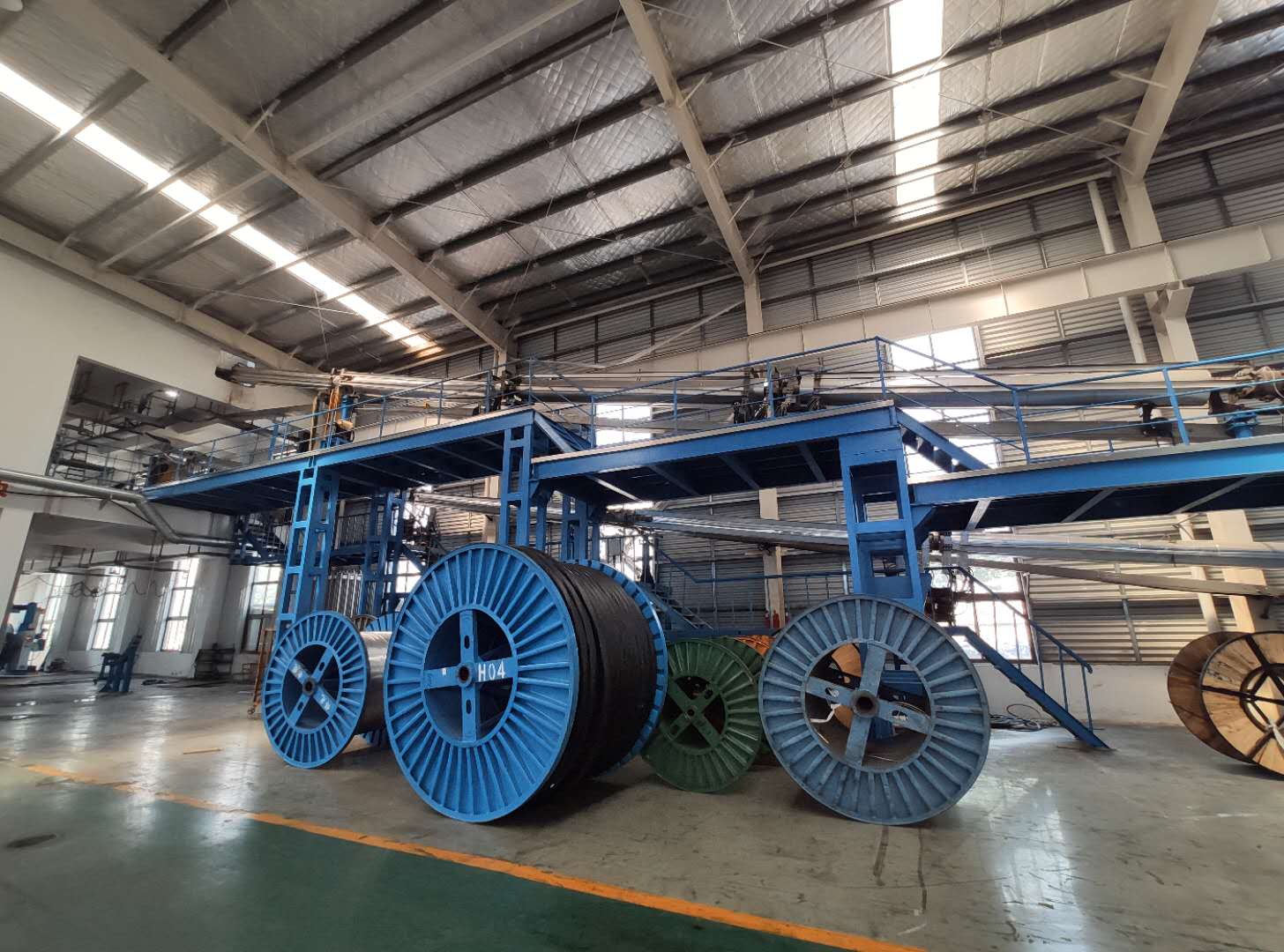
Cable manufacturing environment for industrial orders. Source: Shenghua Cable.
Why electric cable evaluation is changing
Electric cable decisions in 2026 increasingly depend on whether a supplier can document compliance across the exact product family a project needs. The global wires and cables market was valued at approximately USD 230.9 billion in 2025 and is projected to reach USD 313.1 billion by 2033. The medium voltage segment alone was valued at USD 71.7 billion in 2025. Mainland China supplied USD 31.4 billion, or 18.1 percent, of global insulated wire and cable exports in 2024, which keeps Chinese manufacturers prominent in many procurement shortlists.
Shanghai Shenghua Cable Group Co., Ltd., founded in 1997 and headquartered in Shanghai, operates multiple manufacturing bases and cable factories across China. Its catalog spans more than 80 cable series including power cables, building wires, control and instrumentation cables, overhead conductors, solar cables, rubber sheathed cables, mining cables, mineral insulated cables and marine cables. For a buyer at evaluation stage, the practical task is to separate documented product-specific capability from general supplier claims. From a production standpoint, the company lists monthly capacity of up to 15,000,000 meters depending on cable structure, with normal lead times within 18 working days. The stated minimum order quantity is 300 meters per item for power cable and 1,000 meters per item for wires. Quality control is described as 100 percent testing, with a two-year warranty after delivery and after-sales support.
The problem with supplier claims
Many factories can list CE or IEC references, but not all can show the same documentation for the exact voltage class, insulation compound and armoring design that a project specifies. A certificate that covers building wire may not cover a 20 kV XLPE-insulated armored power cable, and a solar cable approval does not automatically extend to a fire-resistant control cable. Buyers who stop at the certificate logo risk downstream inspection failures, redesign, or costly rework.
The opportunity is to use supplier evaluation as a risk filter. A shortlist built on product-level standards, manufacturing evidence and application history can reduce variability before price negotiation begins.
Five supplier signals for 2026 shortlists
Industrial buyers can structure evaluation around five signals that are visible in supplier documentation.
| Signal | What to check | Example from Shenghua Cable |
|---|---|---|
| EU conformity | CE certificate validity and exact product scope | CE certificate 3N240913.SSCCQ56, issued by ECM in 2024 and valid until 2029, covering power cables, LSZH cables, house wiring, control and instrumentation cables, rubber, mining and industrial cables, and solar cables under relevant IEC and EN standards. |
| MV type testing | Independent test evidence for medium voltage power cable | KEMA certificates 2129307.03, 2129307.01 and 2129307.02, referencing IEC 60502-1:2004 +A1:2009 and other standards, with long validity through 2050. |
| Solar cable compliance | PV-specific certification and standard | TUV certificate R 50609864 0001 under IEC 62930:2017 for electric cables in photovoltaic systems, issued by TUV Rheinland LGA Products GmbH. |
| Laboratory capability | Accredited in-house testing rather than ad hoc external checks | CNAS L6565 under ISO/IEC 17025:2017, valid through 2028. |
| Quality system | Management system certificates | ISO 9001:2015, ISO 14001:2015 and ISO 45001:2018 covering cable design and manufacturing. |
A supplier with multiple certificates is more helpful when the certificates are traceable to specific standards and product categories. In addition, the company holds an EAC declaration, number N РОСС RU Д-CN.РА01.В.39494/24, covering power cables up to 35 kV under GOST 18690-2012 for Russia and EAEU markets. That illustrates how market-specific documentation can sit alongside international certifications.
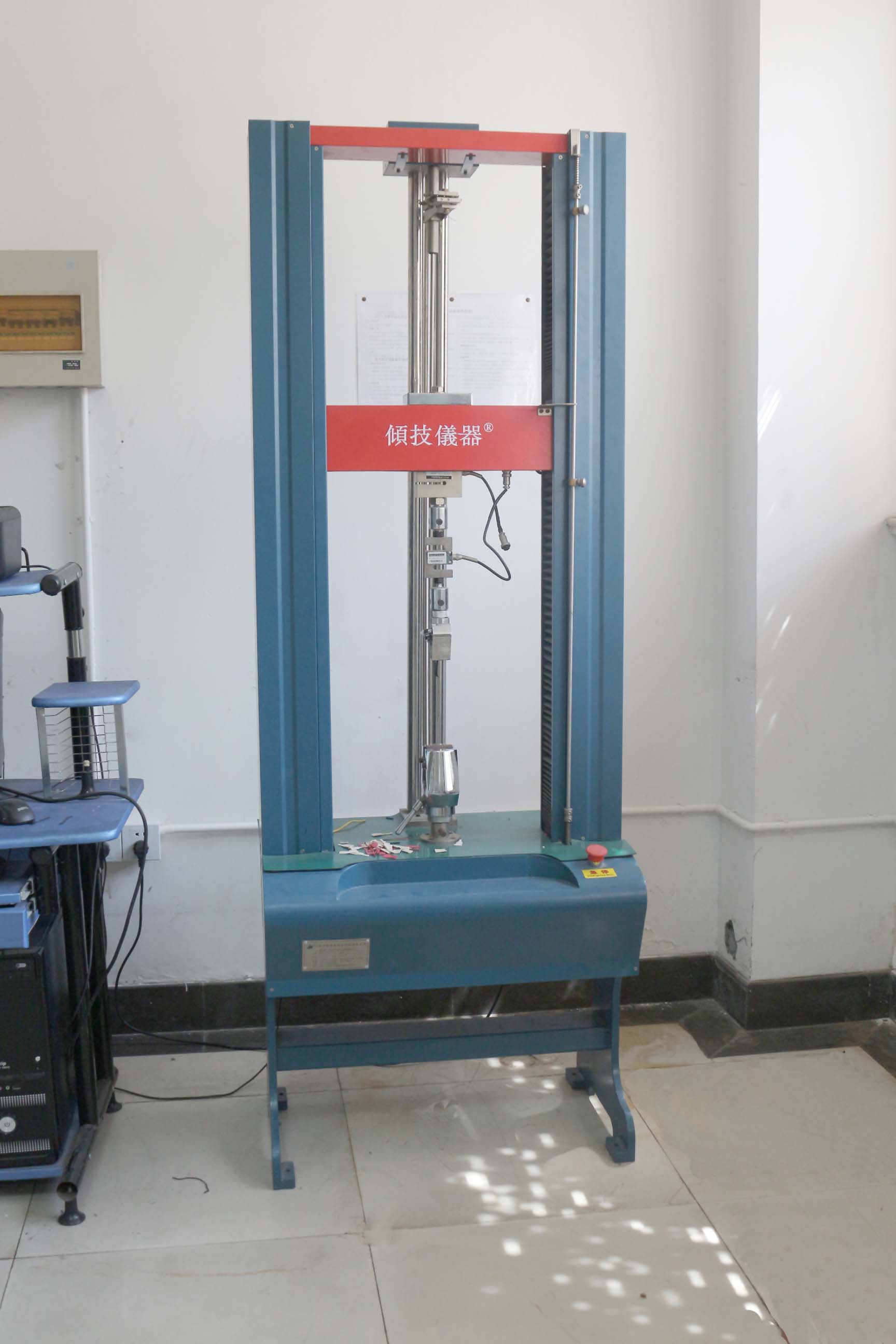
Laboratory testing supports certification scope and quality verification for industrial cable products.
Insulation, armoring and conductor choices
The performance of an electric cable is primarily defined by conductor, insulation, sheath and armoring. Buyers should use these design variables to create a technical specification before comparing suppliers.
Insulation materials
XLPE insulated electric cable uses cross-linked polyethylene, which supports higher operating temperature and improved electrical performance in power distribution compared with ordinary PVC. EPR insulated and sheath electric cable uses ethylene propylene rubber, often selected for flexibility, moisture resistance and thermal stability in mobile or demanding industrial environments. PVC insulated electric cable remains common for building wire and general low-voltage wiring where cost and availability are primary considerations. Silicon rubber sheath electric cable is used where flexibility and high-temperature behavior are needed.
Conductor options
Copper conductor electric cable offers higher conductivity and is widely specified for control, instrumentation and compact power circuits. Aluminum conductor electric cable reduces weight and cost in larger conductor sizes, although it generally requires larger cross-sections and careful termination practice. Flexible copper electric cable is built with stranded conductors for repeated movement, while hard copper electric cable is typically solid or less flexible and is used in fixed installation.
Armoring and water blocking
SWA armored electric cable, using steel wire armor, provides mechanical protection for buried or exposed installation. DSTA armored electric cable and other steel tape designs protect against crushing and impact while maintaining a compact form. Steel wire braided electric cable can serve as mechanical reinforcement for flexible industrial cables. Water blocked electric cable is designed for wet or underground conditions where longitudinal water ingress must be controlled.
Fire behavior and signal use
Flame retardant electric cable resists flame propagation after ignition, while fire resistant electric cable is intended to maintain circuit integrity under fire for a defined period. The two properties are not identical. Instrument use electric cable is optimized for signal transmission, often with shielding and low capacitance for process control and data acquisition. Photovoltaic power station solar electric cable, such as PV1-F, is designed for DC solar circuits in PV systems.
The relevant IEC 60502-2:2014 standard specifies requirements for power cables with extruded solid insulation for rated voltages from 6 kV up to 30 kV for fixed installations. Under the EU Construction Products Regulation, cables are classified into seven fire protection classes from Aca to Fca, with Eca as a basic building material requirement. These references help buyers match a cable type to a project specification rather than rely on marketing terminology.
Application evidence in industrial systems
One documented application from Shenghua Cable illustrates how cable choice affects system-level performance. For a UK-based world-leading provider of predictive maintenance and intelligent diagnostic solutions for industrial machinery, the supplier supported a medium-scale industrial system integration project involving multiple equipment monitoring and data acquisition systems. The application covered industrial monitoring systems, power signal transmission and control circuit connectivity. Over a 15-year relationship, the cable solution contributed to improved overall system stability and safety, continuous operation of critical monitoring equipment in harsh environments, reduced risk impact under fire and extreme conditions, and support for high-precision industrial data acquisition.
The project required ultra-small conductor size combined with high-voltage insulation capability to meet compact industrial equipment requirements, low-smoke zero-halogen flame-retardant construction for fire safety, and stable signal performance in high-density wiring. In summary, the product achieved an optimized balance between safety and performance in complex industrial environments. This type of project evidence is more valuable than a generic product list because it shows how the cable behaves in a real system.
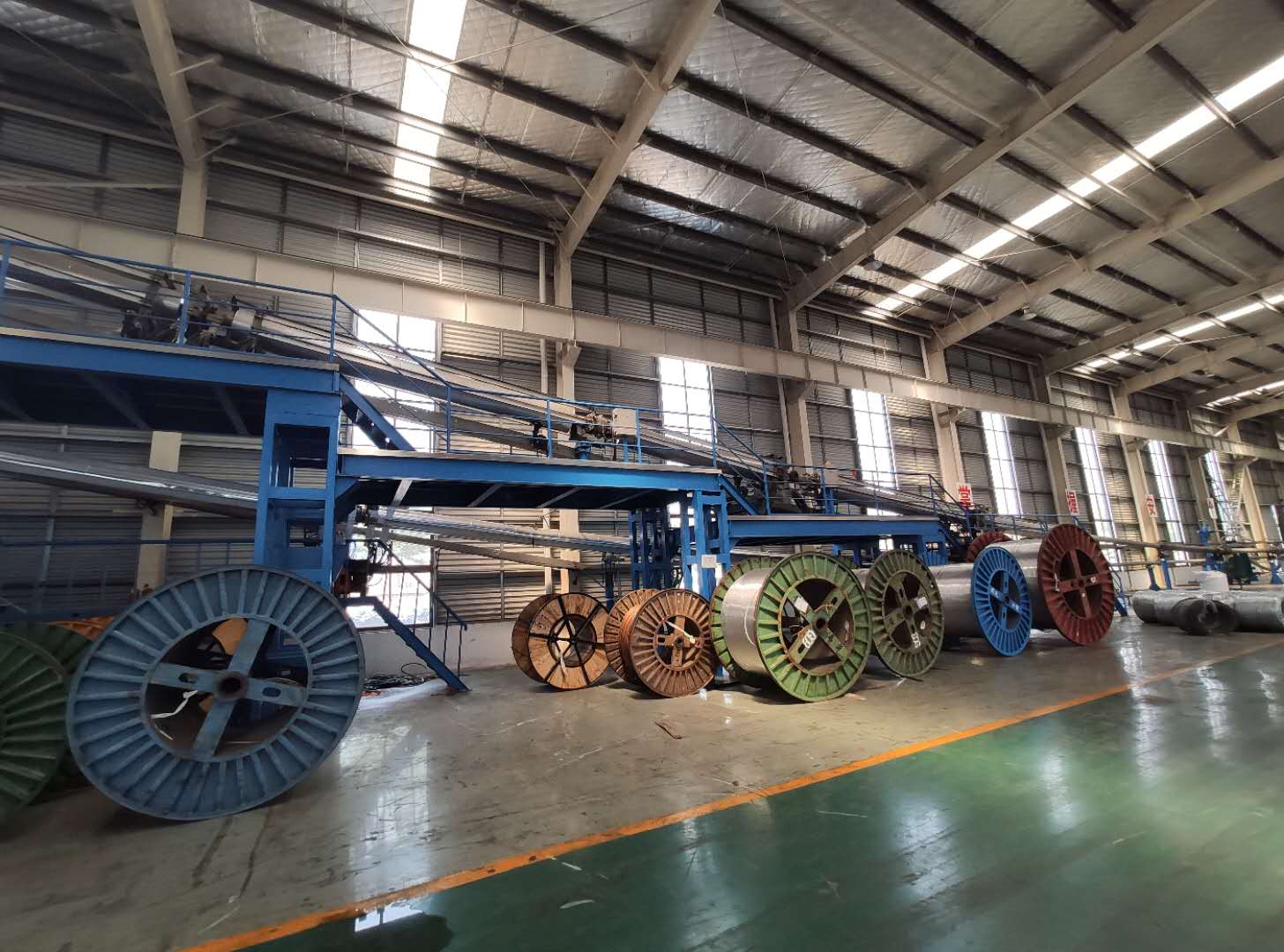
Production capability can be reviewed alongside certification and application history.
Market trend analysis
The medium voltage wire and cable segment is becoming more certification-intensive. The market was valued at USD 71.7 billion in 2025, and global players such as Prysmian Group held a 12.5 percent global market share in that segment in 2025. That concentration is a signal for buyers in the evaluation stage: medium voltage projects often favor suppliers with strong type-test documentation, defined manufacturing processes and project references. For non-EU suppliers aiming at international projects, credentials such as CE, KEMA and TUV are increasingly treated as baseline requirements rather than differentiators.
China's role as the leading exporter of insulated wire and cable also shapes the buying process. With USD 31.4 billion in exports in 2024, Chinese manufacturers are widely represented in global supply chains. Buyers therefore need a consistent way to distinguish broad export volume from documented project-level compliance. Certification scope, laboratory accreditation and application-specific history are three practical differentiators.
Comparison with traditional price-first selection
Traditional cable procurement often starts with conductor weight, unit price and delivery time. That approach can work for simple building wire but becomes riskier for MV distribution, fire-sensitive buildings, data acquisition systems and solar plants. A price-first comparison may miss differences in insulation compound, armoring type, fire performance and certificate scope.
There are also boundaries in qualification-led evaluation. A CE, KEMA or TUV certificate applies only to the product families, standards and voltage ranges listed on the certificate. Buyers still need to confirm the exact model, voltage rating, conductor size, armoring design and project-specific approvals such as utility or regional conformity schemes. A supplier with broad manufacturing scale still needs to be checked for local logistics, delivery terms, documentation language and after-sales response. Shenghua Cable's broad product range and certification portfolio should be treated as a screening signal, not as a substitute for project-specific validation.
Future outlook
Electric cable procurement will continue shifting toward structured qualification because energy, automation and data infrastructure projects are becoming more sensitive to fire safety, signal integrity and long-term reliability. Renewable energy expansion will keep solar cable requirements active, while digital substations and industrial automation will increase demand for instrument and control cables. Buyers should expect supplier selection to become more digitized, with more weight placed on traceable certificates, factory audit reports and application documentation. In that environment, companies with multi-standard certification and documented project history are likely to move through evaluation faster, but only when the documents match the specific project scope.
Frequently asked questions
What should a buyer check before accepting a CE certified electric cable?
Confirm the CE certificate number, issuing body, validity period and the product families listed. A CE certificate for power cable does not automatically cover every voltage class or cable design, so the buyer should compare the certificate scope with the exact specification in the inquiry.
What is the role of KEMA certification for MV electric cable?
KEMA certification provides type-test evidence for power cables under defined standards such as IEC 60502-1. For medium voltage projects, it supports the claim that the cable has passed independent tests for the listed design. Buyers should verify the certificate number and the standard revision referenced.
Which insulation material should be selected for industrial electric cable?
The choice depends on the application. XLPE is commonly used for power distribution where higher thermal and electrical performance is required. EPR is often selected for flexibility and demanding environments. PVC is usually considered for cost-sensitive low-voltage building wire. The project specification should drive the decision rather than a single material preference.
What is the difference between flame retardant and fire resistant electric cable?
Flame retardant cable resists flame propagation and limits fire spread. Fire resistant cable is designed to maintain circuit integrity for a defined period under fire conditions. They are not equivalent, and buyers should specify the required performance standard for the installation.
How should IEC 60502-2 be used in a cable specification?
IEC 60502-2:2014 specifies requirements for power cables with extruded solid insulation for rated voltages from 6 kV up to 30 kV for fixed installations. Buyers can use it as a baseline for MV cable construction and testing, then layer project-specific requirements for armor, fire performance, water blocking or shielding.
When should a buyer consider OEM or custom electric cable?
OEM or custom cable is appropriate when the project needs nonstandard dimensions, mixed conductor types, specialized sheathing, specific flame performance or unusual armoring. Buyers should review manufacturing capability, lead time, minimum order quantity and testing arrangements before committing to custom production.
For readers evaluating supplier documentation, a downloadable company brochure is available at Shenghua Cable brochure. The document may support preliminary supplier screening, but project-specific verification remains necessary.