
Electric Forklift Comparison: CPD10, CPD20, CPD30 and CPD35 Decision Framework
Electric drive has become the default powertrain in a growing share of forklift purchases. In North America, electric models accounted for 71% of retail lift-truck orders in 2024, according to Industrial Truck Association data reported by Batteries International. China's domestic market recorded 946,300 electric forklift sales in 2025, equal to 76.9% of total forklift sales, based on China Construction Machinery Association figures. At global level, Maximize Market Research valued the electric forklift market at USD 53.01 billion in 2024 and projects USD 94.55 billion by 2032.
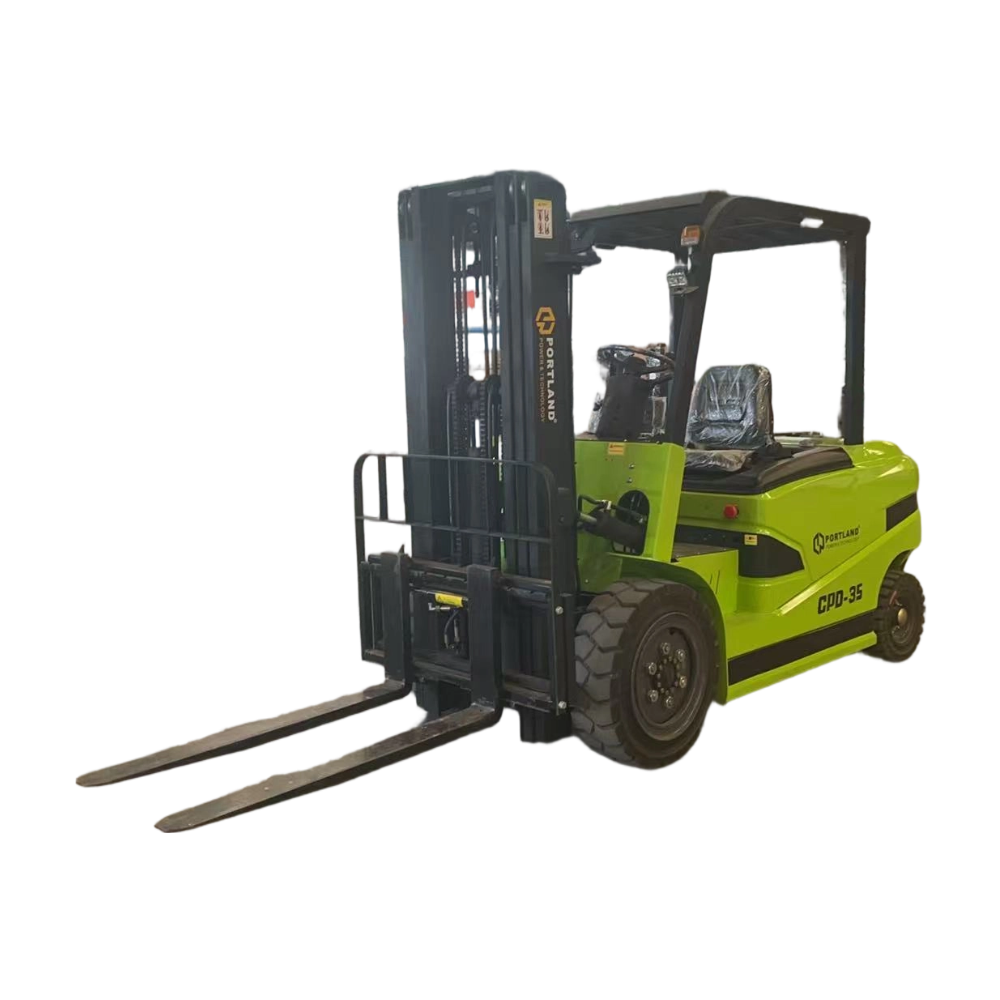
That volume has pushed one specific comparison into almost every fleet procurement conversation: the CPD10, CPD20, CPD30 and CPD35. Rated at 1,000 kg, 2,000 kg, 3,000 kg and 3,500 kg respectively, they are usually presented as a simple ladder of lifting capacity. Treating them that way hides the variables that decide whether a truck actually works on a site: floor condition, aisle geometry, load centre, attachment use, charging plan and shift pattern.
This reference sets out a decision framework built around those variables. It maps each model to the operating scenarios where it is documented to fit, explains what genuinely differs in the drive, control and battery architecture, and closes with procurement terms and acceptance criteria that fleet buyers can apply before a purchase order is signed.
Why Rated Capacity Is Only the Entry Point
Rated load capacity answers one question: how much weight a truck can lift under the conditions behind that rating. It does not answer whether the truck can lift your load to your racking height, inside your aisle, with your attachment, across your shift.
Buyers comparing models in the 1-ton to 3.5-ton band should confirm the following points before shortlisting, because each one can move a truck's practical ceiling away from its printed rating:
- Pallet weight and load centre — a load sitting further from the fork face reduces usable capacity.
- Load dimensions — oversized or non-standard loads change both stability and the mast required.
- Aisle width, mast height and floor capacity — the building, not the catalogue, frequently sets the limit.
- Battery and charging plan — single-shift versus multi-shift operation determines whether one pack is sufficient.
- Local charger voltage — an infrastructure question that is far cheaper to answer before delivery than after it.
- Attachment compatibility and rated residual capacity — side shifters, fork positioners and approved clamps change the residual rating.
- Surface condition, slope and weather exposure — relevant wherever routes mix indoor and outdoor segments.
These are the site checks documented for the CPD series application scenarios, and they apply equally to all four models. The practical rule is to select the smallest class that covers the heaviest recurring load with an operating margin, then verify that site conditions do not reduce effective capacity below that load.
The CPD Range at a Glance
| Model | Rated capacity | Drive and steering | Motor and control | Documented system features |
|---|---|---|---|---|
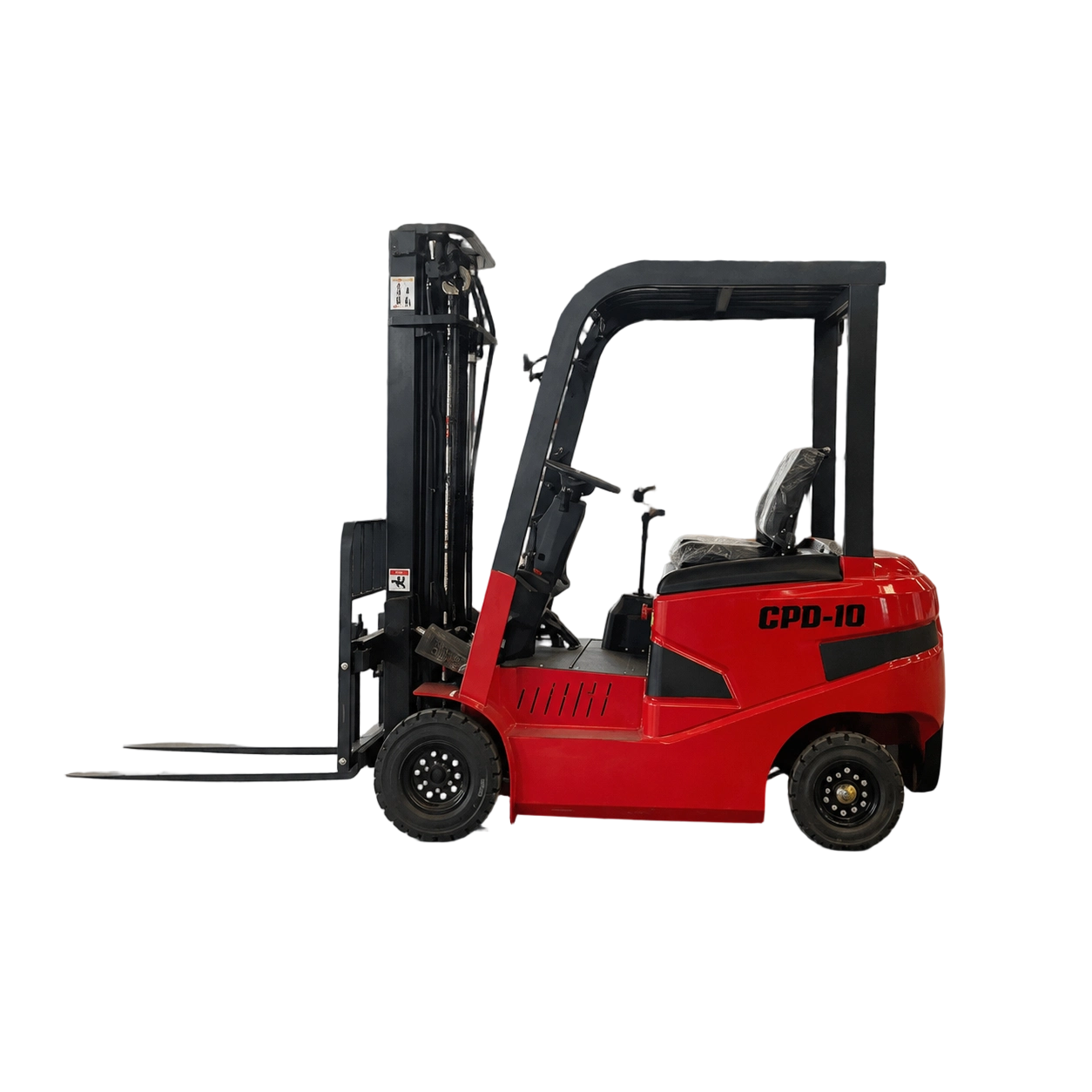
| CPD10 | 1,000 kg (1 ton) | Battery-powered electric drive | Brushless AC drive and pump motor | Controller options: SANTROLL, CURTIS, INMOTION, ZAPI |
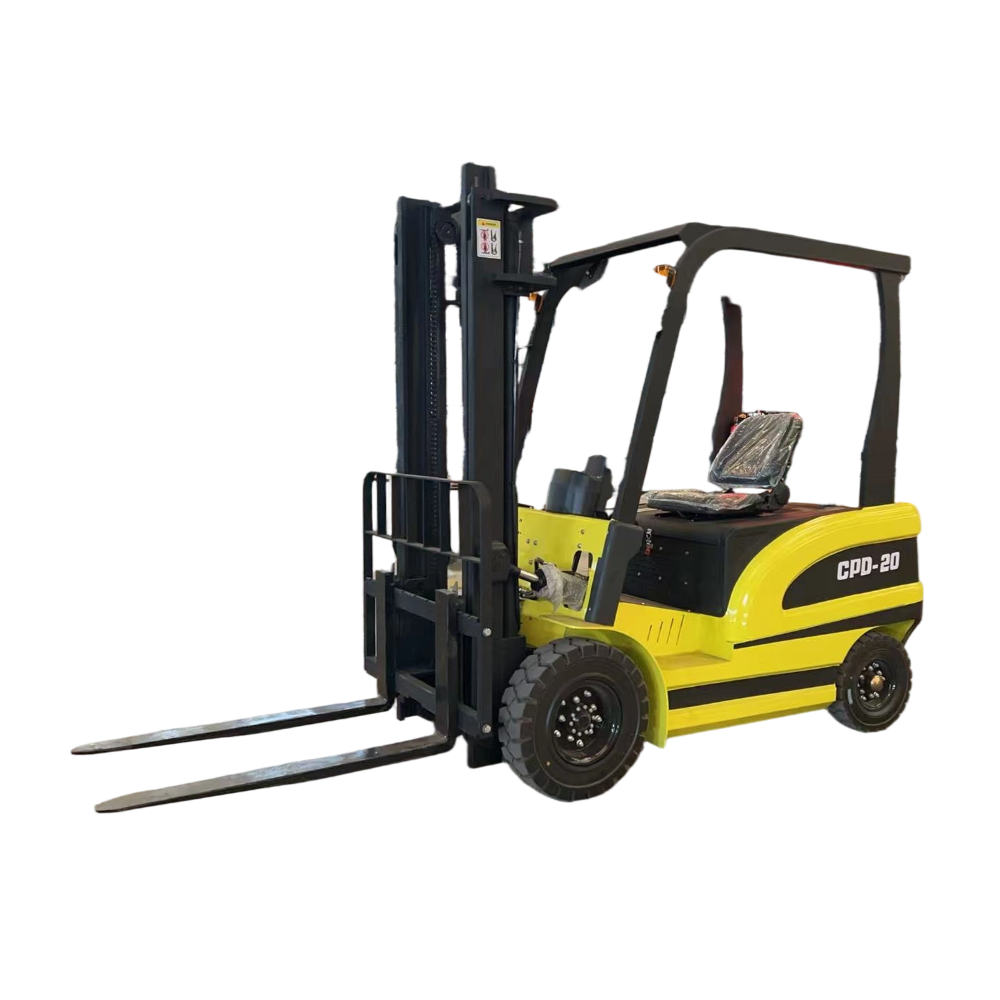
| CPD20 | 2,000 kg (2 ton) | High-power front dual drive motors; electric steering with cargo-sensing smooth control | Brushless AC drive and pump motor; internationally sourced controller | Automatic electromagnetic parking brake; AI brake assist |
| CPD30 | 3,000 kg (3 ton) | High-power electric drive system; large-angle adjustable steering wheel | Intelligent MOSFET control; brushless AC drive and pump motor | Lifting height 3,000–7,000 mm; voice prompts; large-flow cyclone air filter |
| CPD35 | 3,500 kg (3.5 ton) | Front wheel dual drive motors; P.E.S three-speed efficiency regulation | Brushless AC drive and pump motor | Lateral side battery extraction; ergonomic right-positioned control valves |
The table reflects documented configurations for the four models. Battery type, controller brand, mast height and attachment specification remain configurable items and should be confirmed for each order rather than inferred from the class name.
Scenario Fit: Mapping Each Class to Real Sites
A capacity comparison becomes useful only when it is tied to a working environment. The documented application industries for the CPD range cover warehousing and logistics, e-commerce warehouses, workshops, supermarkets and department stores, and cold chain fruit and vegetable wholesale markets. Within that span, the four models divide fairly clearly.
Warehousing and Distribution
The CPD10 is documented for indoor pallet receiving, put-away and dispatch on level floors, moving light pallets between docks, staging areas and storage locations with no tailpipe exhaust at the point of use. The CPD20 is intended for light-duty warehouse fleet deployment and global warehousing and distribution applications. Both call for supporting equipment such as pallet racking, a dock leveler, a charger and a warehouse management system.
E-commerce and Multi-Shift Fulfilment
E-commerce operations rarely fail on capacity; they fail on availability. The documented operating mode for warehouse duty is single- or multi-shift operation based on the battery and charging plan. That makes pack size, charging window and whether a spare pack is rotated a more decisive choice than a 500 kg difference in rating.
Workshops and Smart Manufacturing Cells
Battery-powered electric drive produces zero tailpipe emissions at the point of use, which is the reason these trucks are used inside enclosed production areas. In dustier workshop environments, the CPD30 documents a large-flow cyclone air filter system, and its steering wheel is adjustable through a large angle for operators who rotate between trucks.
Supermarkets, Department Stores and Narrow Aisles
Retail back-of-house and supermarket storage areas combine tight aisles with noise sensitivity. Electric drive supports low-noise indoor operation, and the CPD20's electric steering with cargo-sensing smooth control and automatic electromagnetic parking brake suit repeated short movements in confined spaces. The CPD30's voice prompts add a secondary operator cue in environments with foot traffic.
Cold Chain and Cold Storage
Cold chain fruit and vegetable wholesale markets appear in the documented application list for the CPD range, and low-temperature refitting is offered as a customization. This is the scenario where the battery decision matters most, and it is discussed in detail further below.
Heavy Industrial Goods and Loading Bays
The CPD35 is documented for the building materials and heavy industrial goods industry, covering heavy pallet handling across workshops, yards and loading bays. Its role in that scenario is to support heavy-load fleet operation and service access through a front dual-drive layout and lateral side battery extraction. Typical matched equipment includes a loading dock, a charging area, a fork positioner, a side shifter or an approved clamp attachment.
Technical Explanation: What Actually Changes Between the Four Models
Drive and Motor Architecture
All four models specify brushless AC drive and pump motors, which reduce maintenance items compared with brush-type motors. The difference sits in how the drive is applied. The CPD20 uses high-power front dual drive motors; the CPD35 uses front wheel dual drive motors and adds P.E.S three-speed efficiency regulation, a performance mode system that lets an operator trade speed against energy draw depending on the task; the CPD30 pairs a high-power electric drive system with intelligent MOSFET control.
Controllers
SANTROLL, CURTIS, INMOTION and ZAPI are listed as controller brand options across the CPD range, and the CPD20 additionally refers to an internationally sourced well-known brand controller as its control unit. Controllers govern traction and hydraulic behaviour and are the component most likely to shape diagnostics and spare-parts planning after delivery. Fleets running more than one truck should note that mixing controller brands across a site adds tooling and training overhead, even when the trucks themselves are identical in capacity.
Steering, Braking and Operator Assist
Operator-facing systems differ noticeably. The CPD20 pairs electric steering with cargo-sensing smooth control, an automatic electromagnetic parking brake and AI brake assist. The CPD30 offers a large-angle adjustable steering wheel and voice prompts. The CPD35 places its hydraulic control valves ergonomically on the right. These are the features that determine how quickly a new operator becomes productive on a site.
Battery Configuration and Service Access
All four models are documented with a heavy-duty lead-acid battery as standard and a lithium battery as an option, sized for long continuous working hours. Access design is the differentiator in fleet service: the CPD35 uses a lateral side battery extraction layout, which matters when a pack must be changed or inspected in a working aisle rather than a dedicated service bay.
Lifting Height and Filtration
The CPD30 documents a standard and extended lifting height range of 3,000 mm to 7,000 mm, and a large-flow cyclone air filter system. This is the clearest example of the framework's central point: lifting height is not a linear function of capacity. An operation that needs 6,000 mm of lift with 2-ton loads cannot resolve that requirement by choosing between a 2-ton and a 3.5-ton truck alone — it needs confirmation of the mast configuration offered for the class it selects.
The Battery Decision: Heavy-Duty Lead-Acid or Optional Lithium
Battery chemistry is the second-largest decision after capacity, because it determines charging infrastructure, shift design and cold-weather behaviour. Lithium-ion adoption in new global forklift shipments rose to 35% in 2024 from 22% in 2021, according to LiTrue Analysis — a shift driven by charging behaviour rather than headline capacity.
The charging comparison is well documented. Opportunity charging of 15 to 30 minutes does not degrade lithium-ion cycle life, whereas the same practice significantly harms lead-acid battery longevity, based on Toyota Forklifts' assessment of forklift charging methods. For a site with unpredictable peaks, that single difference can outweigh the lower upfront cost of lead-acid.
Cold storage is the other decisive variable. Lithium-ion batteries in cold storage applications down to -20°C retain significantly more capacity than lead-acid batteries, which is contributing to an 11.6% CAGR in the food industry segment, according to Mordor Intelligence. A cold chain operator that specifies the standard heavy-duty lead-acid configuration for a freezer environment should expect a shorter effective working window per charge than the same truck running lithium, or a low-temperature refit.
Deployment Evidence: Electronics Manufacturing Fleet
One documented deployment involves an electronics manufacturer operating in an industrial park, using a bulk fleet — exact unit count not disclosed — for component, work-in-process and finished-goods logistics. The engagement covers a stated duration of 10 to 15 years, with coordinated bulk delivery and fleet configuration for electronics manufacturing routes.
The reported result is twofold: improved material-flow efficiency across the production logistics routes, and removal of tailpipe exhaust from enclosed clean production areas. The second point is the one that generalises. Where a production area is enclosed and cleanliness is a requirement rather than a preference, electric drive is not a cost comparison against internal combustion — it is an eligibility condition.
Market Trend Analysis
Three trends shape how the CPD10-to-CPD35 comparison will be made over the next procurement cycle.
Segments are diverging by task, not by size. Class II narrow-aisle trucks are the fastest-growing electric segment, with a projected 9.28% CAGR through 2030 on the back of warehouse densification, according to Mordor Intelligence. Denser racking raises the value of a well-matched truck class and lowers the value of a fleet built on one standard capacity.
Cold chain is becoming an electric-first segment. The 11.6% CAGR projected for the food industry segment is tied directly to lithium capability at low temperature — a technical enabler, not a marketing preference.
Compliance frameworks are tightening around electrical safety. EN 1175:2020 is the current harmonized European standard for electrical and electronic safety requirements in self-propelled industrial trucks and a prerequisite for CE marking, while ISO 3691-4:2023 sets updated safety requirements for driverless industrial trucks and their systems. Both point in the same direction: electrical architecture is now a documented, auditable part of a truck's specification rather than an engineering detail behind the counterweight.
Comparison With Conventional Solutions — and Where the Limits Sit
Against internal-combustion trucks, the CPD range's advantages are structural: no tailpipe exhaust at the point of use, lower noise for indoor operation, and no fuel handling. Inside enclosed clean production areas, those properties are the reason a fleet switches rather than an incremental benefit.
The limits are equally concrete, and buyers who ignore them discover them after delivery.
- Charging infrastructure is a project cost, not an accessory. Chargers, charging areas and, where relevant, battery rooms must be planned and matched to local charger voltage before the trucks arrive.
- Lead-acid and opportunity charging are a poor pairing. Short top-up charging degrades lead-acid longevity, so sites without long, planned charging windows should evaluate lithium or redesign the shift plan.
- Cold environments reduce lead-acid capacity. Standard lead-acid configurations underperform in freezer and cold-store duty relative to lithium or a low-temperature refit.
- Attachments reduce residual capacity. A side shifter, fork positioner or approved clamp changes the effective rating, so a 1-ton truck may not carry a 1-ton attachment-borne load.
- Mixed indoor and outdoor routes require site assessment. Surface condition, slope and weather exposure affect suitability, and outdoor segments are not automatically covered by an indoor-optimised configuration.
- Explosive atmospheres need specific documentation. ATEX Directive 2014/34/EU is mandatory for electric forklifts used in explosive atmospheres within the European Union. Standard CPD series products are documented with ISO 9001, ISO 14001, CE and UN38.3 compliance, and explosion-proof refitting is offered as a customization — but a project deploying in an ATEX zone must confirm the specific configuration's documentation rather than assume it from the base model.
Read together, these limits argue for a two-stage procurement sequence: confirm the compliance and infrastructure envelope first, then optimise capacity and configuration inside it.
Procurement Terms and Acceptance Criteria
Ningjin Shunhao Trading Co., Ltd. is a China-based supplier of electric forklifts and material handling equipment that markets its OEM and ODM range under the Mightlift brand and publishes product information at www.mightlift.com. For buyers building a shortlist, the commercial terms around the CPD range are as decisive as the specification sheet.
| Procurement item | Documented position | What to verify before ordering |
|---|---|---|
| Production mode | OEM, with supporting capacity customization | Confirm which parameters are adjustable: capacity, mast height, attachment interface, appearance |
| Minimum order | MOQ 2 units | Check whether mixed-model orders across CPD10–CPD35 meet the same threshold |
| Lead time | 30 days | Align with your site readiness date, not your purchase order date |
| Quality control | 100% test; continuous load, braking and waterproof testing before shipment | Request the test record tied to your serial numbers |
| Compliance documents | ISO 9001, ISO 14001, CE, UN38.3 | Match documents to the destination market and, if applicable, to ATEX duty |
| After-sales | Technical support | Agree spare-parts scope for controllers, batteries and motors in writing |
Acceptance should extend beyond the delivery note. Four items are worth confirming at handover: the controller brand actually fitted against the brand ordered; the battery type and pack capacity; the mast height and any attachment supplied, with the residual capacity stated; and the charging configuration, including input voltage compatibility with the site supply.
Future Outlook
The direction of travel in this segment is toward configuration discipline rather than capacity inflation. As warehouse densification continues and cold chain electrification accelerates, the buying question moves from "which tonnage" to "which configuration envelope covers the site, the shift pattern and the compliance regime."
For fleet buyers, that means the specification document becomes the contract. Capacity, mast height, controller brand, battery chemistry, charging arrangement and attachment interface should all be fixed before the order is placed and confirmed at acceptance — because on the CPD10 through CPD35, those variables determine outcomes far more than the difference between 3,000 kg and 3,500 kg.
FAQ
How do you decide between a 1-ton, 2-ton, 3-ton and 3.5-ton electric forklift?
Start from the heaviest recurring load, its load centre and the lift height required. The CPD10 is documented at 1,000 kg for indoor pallet receiving, put-away and dispatch on level floors; the CPD20 at 2,000 kg for light-duty warehouse fleet deployment; the CPD30 at 3,000 kg with a lifting height range of 3,000–7,000 mm; the CPD35 at 3,500 kg for heavy-load fleet operation in building materials and heavy industrial goods. Select the smallest class that covers the recurring load with margin, then confirm that site conditions do not reduce effective capacity below it.
Does lifting height differ across the four models?
The documented standard and extended lifting height range of 3,000 mm to 7,000 mm is specified for the CPD30. Lifting height for the CPD10, CPD20 and CPD35 is not fixed by the model name and must be confirmed against the mast configuration offered for the required class. Mast height also has to be checked against door openings, racking heights and floor capacity.
Should a fleet specify heavy-duty lead-acid or the optional lithium battery?
All four models list heavy-duty lead-acid as standard with lithium optional. Two documented factors usually decide the question. First, opportunity charging of 15 to 30 minutes does not degrade lithium-ion cycle life, while the same practice significantly harms lead-acid longevity. Second, in cold storage down to -20°C, lithium retains significantly more capacity than lead-acid. Heavy-duty lead-acid remains appropriate where charging windows are long, ventilation is available and the site runs a planned single-shift charging routine.
Why do controller brand options matter to a buyer?
SANTROLL, CURTIS, INMOTION and ZAPI are listed controller options across the CPD range. The controller governs traction and hydraulic performance and determines diagnostic tooling and spare-parts planning. Fleets operating several trucks benefit from standardising on one controller family, because mixed controllers increase the number of service procedures and spare parts a maintenance team must carry.
Can these electric forklifts operate in cold storage?
Cold chain fruit and vegetable wholesale markets are within the documented application industries for the range, and low-temperature refitting is offered as a customization. Because lead-acid capacity falls faster than lithium at low temperature, a cold-store operator should specify both the battery chemistry and the low-temperature configuration explicitly rather than accepting the standard configuration.
What compliance documentation should be confirmed for EU deployment?
CE marking is the entry point, and EN 1175:2020 is the current harmonized European standard for electrical and electronic safety requirements in self-propelled industrial trucks. ISO 3691-4:2023 covers safety requirements for driverless industrial trucks and their systems. ATEX Directive 2014/34/EU is mandatory for electric forklifts used in explosive atmospheres inside the European Union. CPD series products are documented with ISO 9001, ISO 14001, CE and UN38.3 compliance, and explosion-proof refitting is available as a customization; buyers deploying in ATEX-rated zones should confirm the documentation for the specific configuration supplied.
What should be verified at acceptance?
Confirm four items against the order: the controller brand fitted, the battery type and capacity, the mast height and any attachment with its stated residual capacity, and the charging configuration against the site's local supply voltage. Documented supplier commitments include OEM production with supporting capacity customization, an MOQ of 2 units, a 30-day lead time, and 100% testing, with finished units undergoing continuous load, braking and waterproof tests before shipment.