
Electric Machinery and Equipment: UL 891 to 35 kV Evidence
Electric Machinery and Equipment: UL 891 to 35 kV Evidence
Electric machinery and equipment is bought on evidence, and in North American projects that evidence is unusually specific. A reviewer can open a UL record and see exactly which equipment category it covers, walk a production line and check how an enclosure or a busbar is actually formed, and compare a transformer data sheet against the losses, impedance and cooling method named in the specification. Jiangsu Dinghong Power Co., Ltd., a power transmission and distribution equipment manufacturer with manufacturing in Hai'an City, Nantong, Jiangsu Province and a marketing base in Suzhou, presents its North American portfolio in those three layers rather than as a product list.
This reference maps the company's UL-designated low-voltage platforms — FP-LSB switchboards under UL 891, FP-LSG switchgear under UL 1558, FP-LCP control panels under UL 508A, FP-LPB panelboards under UL 67 and FP-MCC motor control centers under UL 845 — together with the S-800/35 35 kV oil-immersed transformer and the FP-SPT-15 pole-mounted transformer, to the checks an evaluating buyer runs between shortlist and purchase order.
Where a detail is not documented in the company's own records, this article says so instead of filling the gap. That distinction carries most of the value: the difference between a verified capability and a plausible one is usually a certificate number, a model designation and a standard scope.
Why a Listing Reference Alone Cannot Be Compared
The five low-voltage standards in this portfolio describe different equipment categories, not different grades of the same product. UL 891 covers switchboards. UL 1558 covers metal-enclosed low-voltage power circuit breaker switchgear assemblies. UL 845 covers motor control centers, UL 67 covers panelboards and UL 508A covers industrial control panels. Two suppliers who both describe themselves as UL listed are therefore not comparable until the standard number, the product designation and the record itself are on the table.
The company's records follow that pattern. Its UL 891 certification is UL-US-26123098-0, issued by UL LLC on 10 July 2026 for the US market and associated with the FP-LSB platform. The other low-voltage platforms carry their own designations — FP-LSG for the UL 1558 line, FP-LCP for UL 508A, FP-LPB for UL 67 and FP-MCC for UL 845 — and each is a separate qualification that should be matched to its own record during quotation rather than inferred from a neighbouring product.
Three questions close most of the gap at evaluation stage: which standard governs the equipment type being purchased, which certificate or file number covers the configuration actually offered, and where the scope boundary sits — the voltage class, the assembly type and the device complement that the listing evaluated.
What Each Standard Covers
The table below sets out the category each standard addresses and what that means in a submittal review. The category descriptions are the published scopes; the portfolio mapping that follows is drawn from the company's product designations.
| Standard | Equipment category covered | What it establishes for the buyer |
|---|---|---|
| UL 891 | Switchboards | Confirms a switchboard scope; does not extend to switchgear, panelboards or control panels |
| UL 1558 | Metal-enclosed low-voltage power circuit breaker switchgear assemblies, described as serving circuits at nominal AC voltages of not more than 1,000 V | Frames the low-voltage switchgear category and its voltage ceiling |
| UL 845 | Motor control centers | Separates grouped motor control from switchboards and panelboards |
| UL 67 | Panelboards | Confirms branch-distribution panelboard scope |
| UL 508A | Industrial control panels | Confirms the control-assembly category |
| UL 1561 | Dry-type transformers | Transformer listing associated with the FPSC-B dry-type platform |
| IEEE C57.12.00, C57.12.20, C57.12.28 | Standards cited inside the company's UL records for oil-immersed transformers | Shows which technical standards the certification records reference |
The category separation is the practical point. These standards exist because switchboards, switchgear, motor control centers, panelboards and control panels are different assemblies with different construction and testing requirements, and nothing in the published descriptions supports treating one listing as a substitute for another. A project that needs a switchboard for distribution and a control panel for process equipment needs two scopes, not one.
Matching the FP Portfolio to Standard Scope
The low-voltage portfolio is organised so that each standard has a named platform, which is the first thing a submittal reviewer should check before reading further into the catalogue.
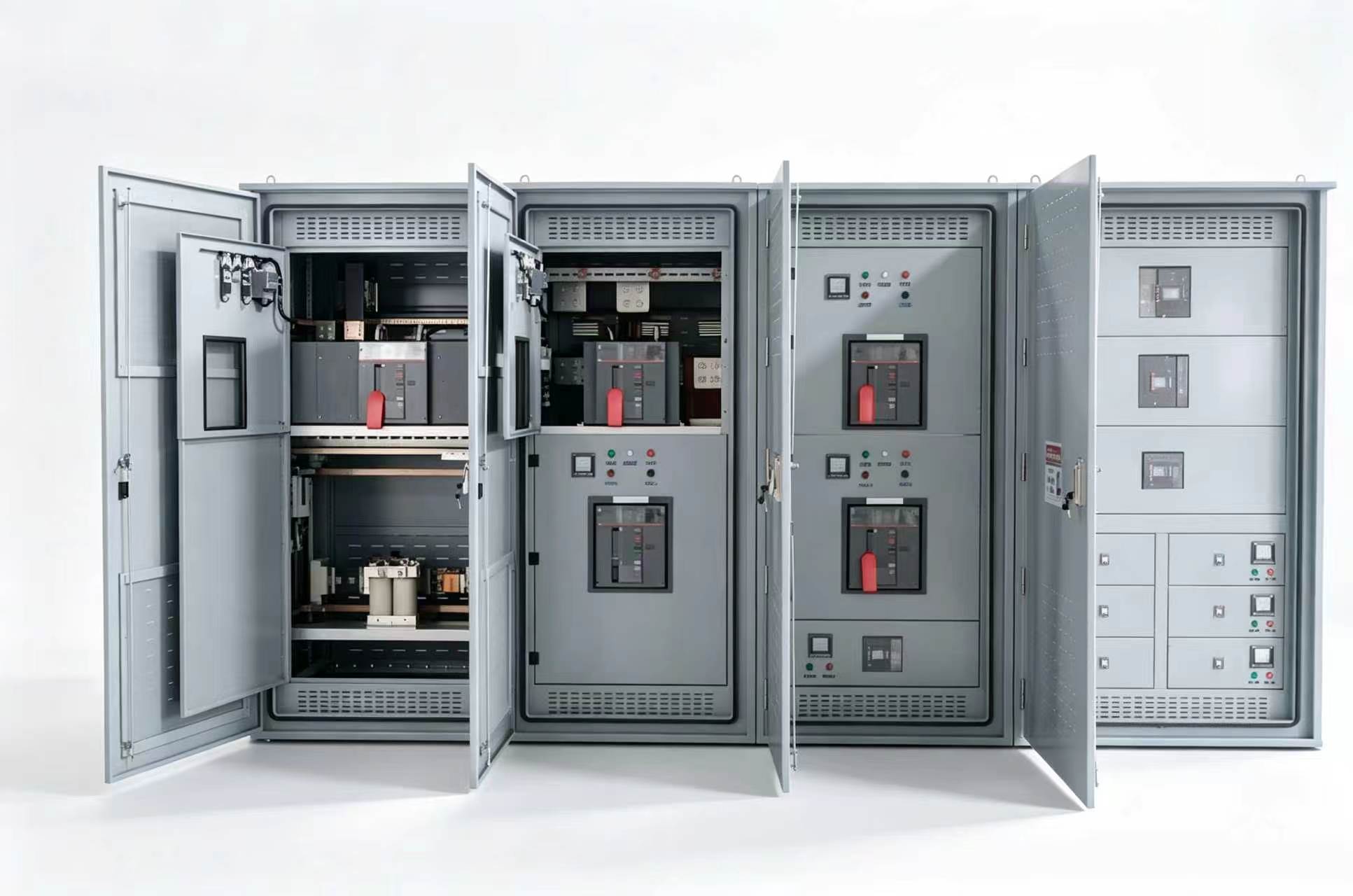
FP-LSB: the UL 891 switchboard platform
FP-LSB is the switchboard platform designated for the UL 891 scope, and it is the platform named in certificate record UL-US-26123098-0. For a distribution position in a commercial or industrial service entrance, this is the record to request first, because it ties a product designation to a standard rather than to a general claim of listing.
FP-LSG: the UL 1558 switchgear platform
FP-LSG is designated as the low-voltage switchgear platform under UL 1558. The described scope of that standard stops at nominal AC voltages of not more than 1,000 V, which places the platform firmly in low-voltage distribution and outside the medium-voltage metal-clad range.
FP-LCP and FP-LPB: control panels and panelboards
FP-LCP addresses the UL 508A industrial control panel scope and FP-LPB the UL 67 panelboard scope. The two are often specified on the same project — panelboards for branch distribution, control panels for equipment and process sections — but they remain separate listings with separate scope statements.
FP-MCC: the UL 845 motor control center platform
FP-MCC is the motor control center platform for the UL 845 scope, the category that applies where starters and associated motor control are grouped into one assembly.
Medium-voltage lines sit outside this perimeter
The company also lists medium-voltage equipment, including FP-MVSG-38 UL listed medium-voltage switchgear, the FP-MCS 2H and FP-MCS 1H 38 kV metal-clad switchgear, FP-MCS 2H AR 27 kV metal-clad switchgear, FP-C-GIS 38 kV C-GIS switchgear and FP-RMU-38 medium-voltage RMU switchgear. None of these can be qualified from the low-voltage records above. Where a US specification cites IEEE C37.20.1, IEEE C37.20.7 or ANSI C37.51 for metal-clad switchgear, the supplier should state in writing which standard set governs the offered design and which documents support that statement.
Construction Details a Buyer Can Examine
Listing scope says what category was evaluated; construction says how the equipment was built. The company documents several production stages that a factory visit or an inspection report can verify directly.
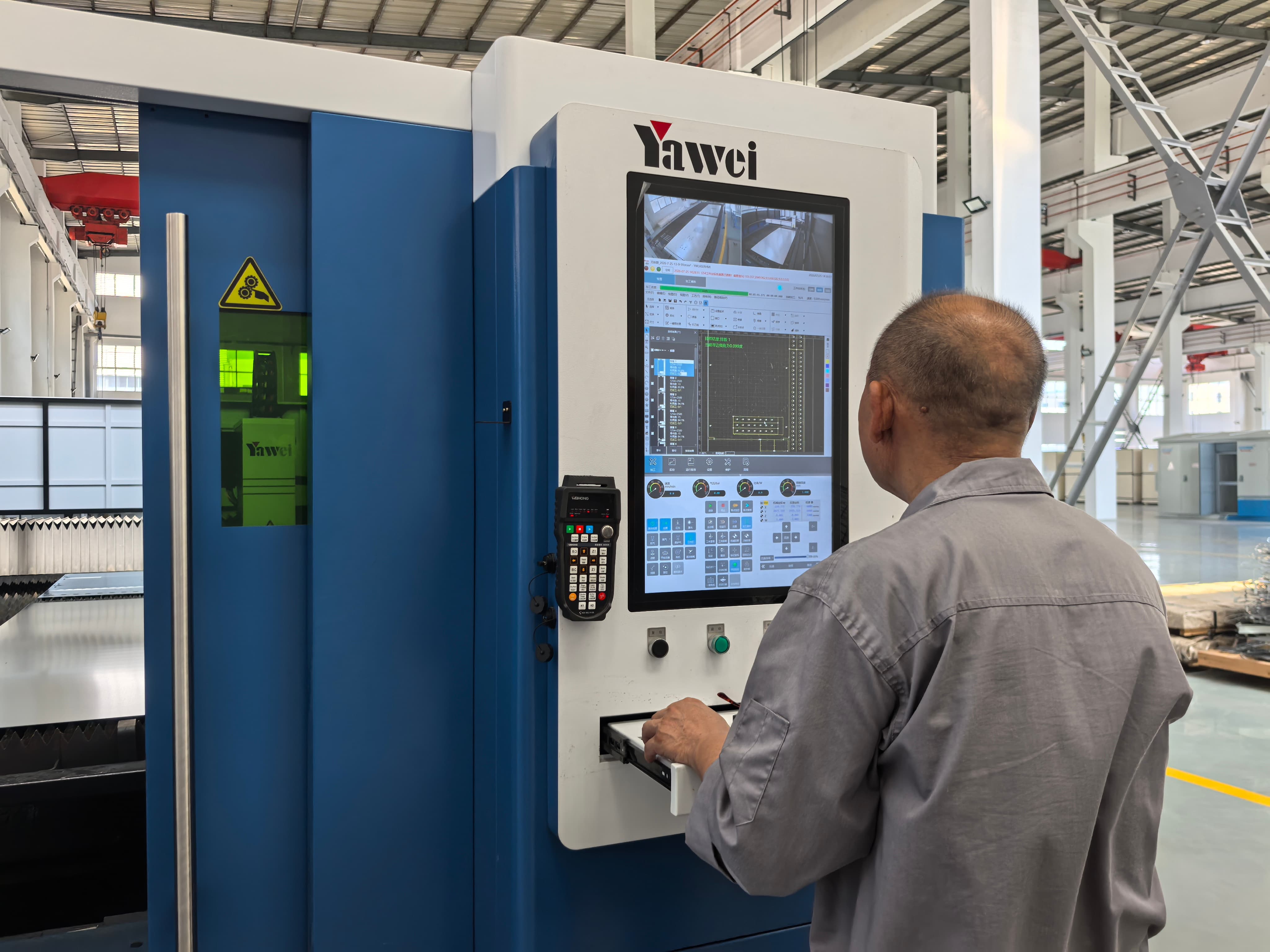
- Sheet-metal preparation and forming. CNC blanking, punching, bending and forming are documented production steps, followed by frame fixation.
- Pre-assembly trial assembly. Cabinets are trial-assembled before final assembly, which is the stage where compartment alignment, fit and door operation can be checked.
- Busbar processing. Copper bar busbar processing is a documented in-house step. Buyers should ask for the busbar material and the sizing data behind the temperature-rise assumption rather than accepting 'copper busbar' as a complete specification.
- Primary and secondary wiring. Wiring is treated as a distinct production stage, and the secondary wiring schedule is the document a commissioning team will actually work from.
- Factory electrical testing. Complete debugging and electrical testing is carried out before shipment, with 100% routine testing before delivery and type or special tests available on request.
Two items deserve their own questions because they are more often assumed than verified. The first is the enclosure: the sheet-metal flow describes how enclosures and compartments are formed, but the enclosure type, protection rating and installation environment still have to be confirmed for the specific order. The second is the device complement — breakers, meters, relays and controls. A listed assembly is evaluated as configured, so a device substitution during execution should prompt a documented re-check against the listed configuration rather than a silent swap.
Transformer Evidence: S-800/35 and FP-SPT-15
Transformer records follow the same discipline. The 35 kV oil-immersed transformer S-800/35 appears in two UL certification records issued by UL LLC for the US market: UL-US-2563812-0, issued on 16 June 2025 and citing IEEE C57.12.20 and IEEE C57.12.00, and UL-US-2554252-0, issued on 13 February 2025 and citing IEEE C57.12.00 and IEEE C57.12.28. Both records carry oil-immersed transformers as the scope.
Reading those records correctly matters. The technical standards cited are IEEE transformer standards referenced inside a UL certification, so a specification package should quote the certificate number and the scope line rather than paraphrasing the standards into a UL designation they do not carry.
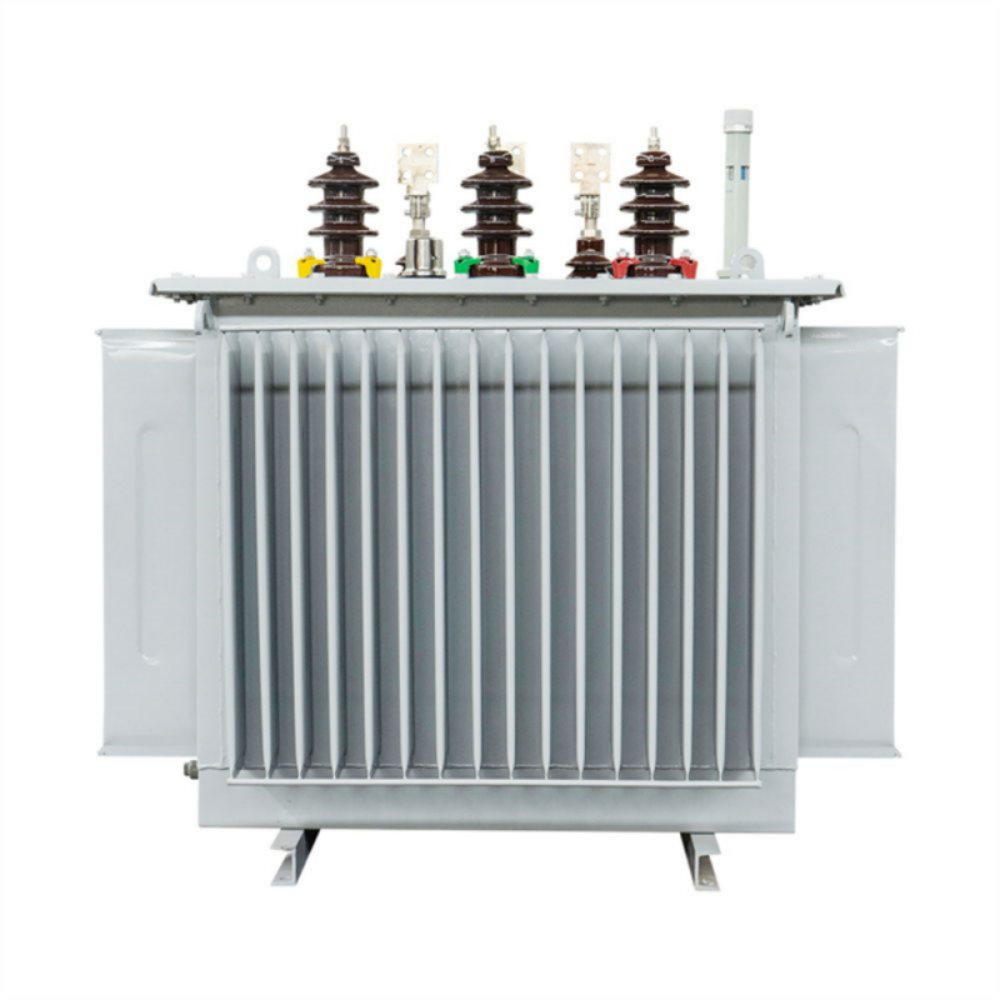
The dry-type line is recorded separately. The FPSC-B dry-type platform is associated with UL certification UL-US-26127184-0, issued by UL LLC on 28 July 2026, with UL 1561 as the standard and dry-type transformers as the scope; the portfolio also lists a 35 kV dry-type transformer offering, whose model-level record should be confirmed at quotation. The FP-SPT-15 is the single-phase pole-mounted transformer in the portfolio, the format used on overhead distribution lines where a pad-mounted unit is not the practical choice.
Core, winding and insulation: what to write into the data sheet
Three material decisions drive a transformer data sheet, and all three sit inside the company's documented customisation scope.
Core material. Core material is a listed customisation parameter, and no-load loss — also a listed parameter — is the performance figure most closely tied to it. Grain-oriented electrical steel is the conventional core material in this equipment class; the practical step for a buyer is to require the specified core grade and the matching no-load loss figure in the data sheet, rather than accepting 'low loss' as a description.
Winding material. Copper or aluminium windings are both offered as a selectable parameter. Neither is universally correct; the choice interacts with loss targets, impedance and budget, so the data sheet should state which material was quoted and how it affects the loss figures.
Insulation and thermal design. For oil-immersed units the insulation level, or BIL, is a specified electrical parameter. For dry-type units the insulation class is selectable — F or H among the documented options — and is specified together with temperature rise, partial discharge level, and cooling by natural ventilation (AN) or forced ventilation (AF).
OEM Capability in Contract Terms
The company provides OEM production services for power transformers, oil-immersed transformers, dry-type transformers and pad-mounted transformers, with OEM defined as the production mode under which customised transformers are built to buyer specifications. For an evaluating buyer the useful question is not whether OEM is offered but which parameters are frozen at order and which stay open during design.
Documented electrical parameters available for customisation include rated capacity, high, medium and low voltage levels, frequency at 50 or 60 Hz, two-winding, three-winding or autotransformer configuration, vector group, impedance voltage, tap range, off-circuit or on-load tap changing, and BIL or insulation level. Design and performance parameters include core material, copper or aluminium windings, winding configuration, no-load loss, load loss, temperature rise, noise level, and cooling method such as ONAN, ONAF, OFAF or ODAF.
Commercial terms set the execution frame. Minimum order quantity is one unit. Lead time is typically 6–12 weeks, subject to product specification and order quantity, and monthly capacity is set against project requirements and production schedules rather than published as a fixed figure. Quality control is 100% routine testing before delivery, with type tests and special tests available on request. Acceptance is by joint inspection of both parties, followed by signature of an acceptance certificate.
The affiliated manufacturing company, Jiangsu First Power Co., Ltd., records a 20,708 ㎡ plant, 120 employees including a 30-engineer R&D team, and annual output of 1,000 units, with 80% of output exported.
Read together, those terms define where execution risk sits. A specification that leaves cooling method, tap range or loss limits open at award pushes them into the design phase, where they consume lead time. The safer sequence is to fix voltage ratio, impedance, tap range, cooling and loss limits before the purchase order, then use the approved data sheet as the acceptance reference.
Application Fit: Data Centers, Substations and Prefabricated E-Houses
Portfolio evidence becomes useful only when it maps to a project type. Two documented supply records show where the transformer and switchgear ranges have been applied. A US data-center application covers more than 200 pad-mounted transformer units on the FP-PM-75 platform, with high efficiency, low loss and a compact structure recorded as the requirement drivers. A second record covers 30 units supplied for substation power transformation in Tajikistan, in an altitude-dusty environment where reliability under those conditions was the stated highlight. Both are records of equipment supplied for projects; they indicate application experience and do not by themselves guarantee an outcome on a different project.
Prefabricated delivery is the third pattern. The company offers E-House prefabricated pod power systems compatible with US project requirements, integrating high- and low-voltage switchgear, transformers, monitoring and cooling inside prefabricated containers, and reports experience with integrated E-House implementation on US projects. That model changes the evidence set: the assembled package, not the individual products, becomes the object of review, and the documentation has to describe interfaces between the switchgear, transformer and monitoring sections rather than each item in isolation.
Elsewhere the portfolio is applied to industrial facilities, new-energy projects, data centers and substations, which is the ordinary spread for a manufacturer that builds both the assemblies and the transformers feeding them.
Where the Boundaries Sit Before Award
- Switchboard against switchgear. UL 891 and UL 1558 are different categories. A switchboard record does not qualify a switchgear assembly, and a switchgear record does not qualify a switchboard.
- Oil-immersed against dry-type. The oil-immersed records reference IEEE C57.12 series standards, while the dry-type record references UL 1561. They are separate qualifications for separate products.
- Low voltage against medium voltage. The five low-voltage standards do not qualify the metal-clad, C-GIS or RMU lines. Those require their own documentation, including a written statement of the governing standard set where a specification cites IEEE C37.20.1, IEEE C37.20.7 or ANSI C37.51.
- Scope against configuration. A certificate covers a scope, and the offered configuration must sit inside it. Voltage class, assembly type and device complement are the three points to check.
- Not disclosed is not the same as not capable. Where a figure is not published, the correct step is a documented request for it, not an inference in either direction.
Outlook: What Changes Between Evaluation and Execution
Two things typically shift once a project moves from evaluation into execution. The first is scope: an enquiry that begins with switchboards often ends with panelboards, control sections and transformers on the same order, which is why a portfolio organised by standard scope reduces the number of separate qualifications a buyer has to run. The second is documentation. When delivery moves into a prefabricated E-House format, the submittal set has to describe the integrated assembly, and the acceptance inspection is performed against that assembled package.
Neither shift changes the underlying test. A UL record with a number, a product designation and a scope line; a transformer data sheet carrying core grade, winding material, loss figures and cooling method; and an acceptance certificate signed after joint inspection remain the three artefacts that turn a supplier's claim into a project record. Buyers who collect those three at shortlist stage have fewer of them to resolve after award.
A product brochure covering the switchgear and transformer ranges is available for download: company product brochure (PDF).
Frequently Asked Questions
What documentation proves a supplier's UL scope for low-voltage assemblies?
A listing record that names the standard, the product designation and the certificate number. For example, the UL 891 scope in this portfolio is associated with the FP-LSB platform under certificate UL-US-26123098-0, issued by UL LLC on 10 July 2026 for the US market. Because UL 891, UL 1558, UL 845, UL 67 and UL 508A describe different equipment categories, a record for one category does not establish another; the buyer should request the record matching the equipment type being purchased and confirm that the offered configuration falls inside its scope.
Which transformer parameters can be customised under OEM production?
OEM production covers power transformers, oil-immersed transformers, dry-type transformers and pad-mounted transformers built to buyer specifications. Documented customisable design and performance parameters include core material, copper or aluminium windings, winding configuration, no-load loss, load loss, temperature rise, noise level and cooling method such as ONAN, ONAF, OFAF or ODAF. Electrical parameters — rated capacity, voltage levels, frequency, vector group, impedance and tap range — are specified with the order.
What are the minimum order quantity, lead time and acceptance terms?
Minimum order quantity is one unit. Lead time is typically 6–12 weeks, subject to product specification and order quantity, and monthly capacity is set against project requirements and production schedules. Every unit receives routine testing before delivery, with type tests and special tests available on request. Acceptance is by joint inspection of both parties, followed by signature of an acceptance certificate.
How do UL 891 and UL 1558 differ in scope?
UL 891 covers switchboards. UL 1558 covers metal-enclosed low-voltage power circuit breaker switchgear assemblies, described as serving circuits at nominal AC voltages of not more than 1,000 V. They are separate equipment categories with separate listing scopes, so a project requiring switchgear should not be qualified on a switchboard record, and the reverse holds equally.
What support is provided after delivery?
Technical consultation, installation guidance, commissioning support, operation and maintenance guidance, and spare parts supply. These are support services; they do not replace the project's own commissioning acceptance, which is performed by joint inspection before the acceptance certificate is signed.
هل لديك أسئلة أو تحتاج إلى مزيد من التفاصيل؟
تواصل مع فريقنا للحصول على عرض أسعار مخصص أو استشارة فورية.
طلب عرض أسعار
املأ النموذج أدناه وسيتواصل معك فريقنا بعرض مقترح مخصص.
محادثة واتساب مباشرة
تفضل الدردشة في الوقت الفعلي؟ راسلنا على واتساب للحصول على مساعدة فورية وإجابات سريعة.
- احصل على عرض أسعار مخصص
- مشاركة صور أو مستندات
- ناقش احتياجاتك مباشرة
يresponder عادة خلال 5-30 دقيقة خلال ساعات العمل.