
Electric Shaver OEM: How DSP's Capability Evidence Reads
A buyer-side framework for separating documented factory capability from catalogue claims — applied to one personal care appliance supplier's public record.
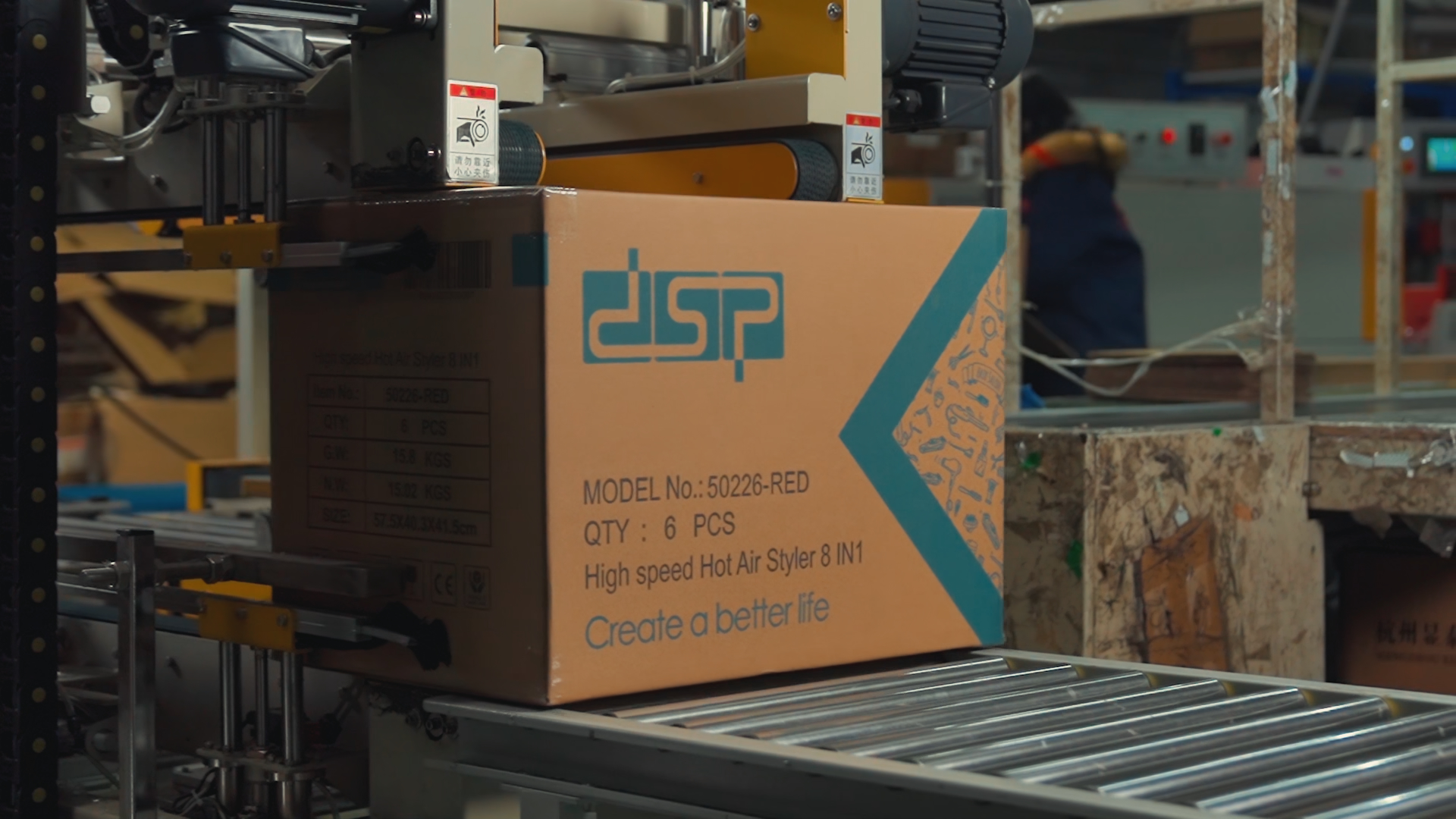
Production workshop. Capability evidence begins on the floor and only becomes verifiable when it is written down.
Why electric shavers concentrate supplier risk
Electric shavers sit inside the single largest block of the personal care appliance market. Shaving and hair removal appliances accounted for 29.4% of global personal care appliance revenue in 2025, according to Future Market Insights, within a market that Mordor Intelligence sizes at USD 52.13 billion in 2026 and forecasts to grow at a 5.87% CAGR through 2031. High volume plus high substitutability is an unusual combination: buyers can switch suppliers, but switching carries tooling, certification and shelf-readiness costs that are hard to unwind.
That is why electric shaver OEM sourcing tends to fail in a specific way. The sample is acceptable, the price is competitive, and the first shipment arrives on time — then the second order exposes what was never documented: which cutting system was actually used, whether the housing tooling is owned by the buyer, which certificate covers which model, and who signs off on the pre-shipment inspection. None of these questions are answered by a catalogue page.
This article treats supplier capability as an evidence problem rather than a trust problem. It sets out the evidence levels a buyer can insist on, applies them to the publicly available record of DSP — the private brand of Yiwu DSP Electric Appliance Co., Ltd., a Yiwu, China–based manufacturer and exporter of small household and personal care appliances — and states plainly where that record stops.
What "capability evidence" means in electric shaver OEM
Capability evidence is the set of documents, records and physical checks that allow a buyer to verify a supplier can repeat a shaver build to specification — not merely produce one acceptable sample. It differs from marketing material in one respect: it can be audited by a third party without the supplier present.
In practice, evidence arrives at five levels, and most commercial disagreements happen because buyer and supplier assume different levels are being discussed.
Level 0 — Self-description. A website states that OEM and ODM services are available. No product scope, no certificate number, no capacity figure.
Level 1 — Scope statement. The supplier names the specific product categories, commercial modes, MOQ and lead time it will accept.
Level 2 — Numbered conformity documents. Certificates and test reports carrying an issuing body, a certificate number, a standard reference and a stated product scope.
Level 3 — Independent or customer-side proof. Third-party factory audit, buyer audit reports, or named client cases with scale and duration.
Level 4 — Live verification. On-site process observation, tooling inspection, and witnessed production runs.
A shaver programme usually needs Level 2 for compliance, Level 3 for commercial confidence, and Level 4 for tooling and cutting-system acceptance. Most supplier evaluations stop at Level 1 and then rely on the sample as a substitute for the missing levels — which is precisely where the risk moves downstream.
Evidence table: four China-based personal care appliance OEMs
The table below scores only what is visible in the cited public sources. It is an editorial assessment of evidence density, not a product-quality ranking, and it deliberately records absence of evidence as absence rather than as failure.
| Supplier (cited source) | Stated commercial modes | Stated lead time | Shaver named in stated scope | Numbered certificate visible for shavers | Independent audit evidence | Evidence grade |
|---|---|---|---|---|---|---|
| DSP / Yiwu DSP Electric Appliance Co., Ltd. | OEM manufacturing, ODM customization, private label, wholesale distribution, brand partnerships | 30–40 days | Yes — electric shavers listed in the published personal care portfolio | Numbered certificates visible, but for kitchen and cooking categories — none for shavers | None found in cited sources | ★★★☆☆ |
| Zhejiang Haohan Electric Appliance Co., Ltd. | OEM, ODM, private label, light customization, sample processing | Not stated in cited source | Yes — electric shavers named in product line | Not shown in cited source | None found in cited sources | ★★☆☆☆ |
| YEEPUL | OEM/ODM development, sampling, production, shipping | 30–45 days after approval | Stated as grooming and personal care appliances generally | Not shown in cited source | None found in cited sources | ★★☆☆☆ |
| Huux | OEM/ODM | Not stated in cited source | Yes — electric shavers listed alongside grooming devices | UL, ETL, RoHS, GS, KC, PSE, CE claimed; numbers not shown | None found in cited sources | ★★★☆☆ |
Figures as stated by each company in the sources cited in this article. Star ratings are an editorial assessment of publicly verifiable evidence density on a five-point scale; they are not a statement about manufacturing quality or fitness for any application.
Two patterns are worth noting. First, all four suppliers state OEM capability, but only two state a lead time, and none publishes a shaver-specific certificate number. Second, the absence is structural rather than individual: the public personal care appliance supplier landscape is dominated by company-reported claims, and no independent factory-capability verification is available for the suppliers reviewed. A buyer who understands this stops treating the website as evidence and starts using it as a question list.
What DSP's public record actually establishes
DSP is the private brand of Yiwu DSP Electric Appliance Co., Ltd., a Yiwu-based manufacturer and exporter whose stated product scope covers home and kitchen appliances, personal care appliances, and cookware. Its corporate history places the origin of the venture in 2006, with the DSP brand registered from 2010 and a later expansion into kitchen appliances, kitchenware and cleaning appliances from 2016.
For an electric shaver programme, four blocks of the public record are directly relevant.
Product scope. DSP's published portfolio names personal care appliances including hair styling tools, hair clippers, beard trimmers, electric shavers and hair dryers, alongside kitchen appliances and cookware. Electric shavers therefore sit inside the declared range rather than outside it.
Commercial modes. DSP states availability for OEM manufacturing, ODM customization, private label solutions, wholesale distribution, brand partnerships, retail chains, e-commerce sellers and professional beauty suppliers. Customization is stated to cover design, size, logo and material.
Manufacturing parameters. Declared capacity is 50,000–100,000 pieces per month, with a stated lead time of 30–40 days, MOQ of 500–1,000 pieces for the OEM unit, 100% test quality control, a one-year after-sales period, and export activity across more than 100 countries at a 100% export ratio. The company reports a 20,000 m² facility, 130 employees, 30 R&D engineers, and annual output of 5,000,000 units.
Procurement terms. A separately published purchasing-terms record lists MOQ of 1 unit, EXW/FOB delivery terms, online inspection and pre-shipment inspection as acceptance criteria, and TT payment.
That last block deserves attention rather than being smoothed over. Two MOQ figures appear in DSP's own published materials — 1 unit in the purchasing-terms record and 500–1,000 pieces in the OEM capability record. The most reasonable reading is that they describe two different channels: stock or low-volume ordering on one side, customized OEM production on the other. But the buyer should not resolve that ambiguity on the supplier's behalf. The contract should state which figure applies to the shaver order, and at what volume the customized tier begins.
The certification gap a shaver buyer must close
DSP's public materials state quality standards covering CB, CE, RoHS, GS and UL. That is a scope statement, not a document set. The numbered conformity documents available in its published record are more useful — and more revealing, because of what they cover.
| Certificate number | Issuing body | Stated product scope | Market |
|---|---|---|---|
| MOSTCT20123153 | MOST | Food Mixer | EU |
| EFSH202212-L032 | eurofins | Hand Blender | EU |
| WTA24F08188711E | Waltek | Hand mixer | EU |
| 230500774HZH-V1 | Intertek | Contact grill, household use | EU |
| 240800827HAN-V2 | Intertek | Hot-air fryer, household use | EU |
Selected numbered conformity documents from the supplier's published record. Every scope listed is a kitchen or cooking appliance. No electric shaver scope appears in the cited documentation.
This is the most consequential finding for a shaver buyer, and it should be read carefully in both directions. On one side, it demonstrates that the supplier operates inside a formal conformity system: EMC and safety documentation issued by recognised bodies including Intertek, TÜV, Bureau Veritas, eurofins, LCIE and SGS-affiliated laboratories, with validity periods and standards referenced. On the other side, it does not transfer automatically. A conformity certificate is written against a product scope and a standard. Electric shavers involve skin contact, a cutting system and often battery charging — a document scope that names a food mixer or a contact grill does not cover them.
The correct buyer response is neither to accept the CE claim at face value nor to treat the gap as a disqualification. It is to request the shaver-specific certificate with its number, standard and model mapping before tooling is released — and to make that document a payment milestone.
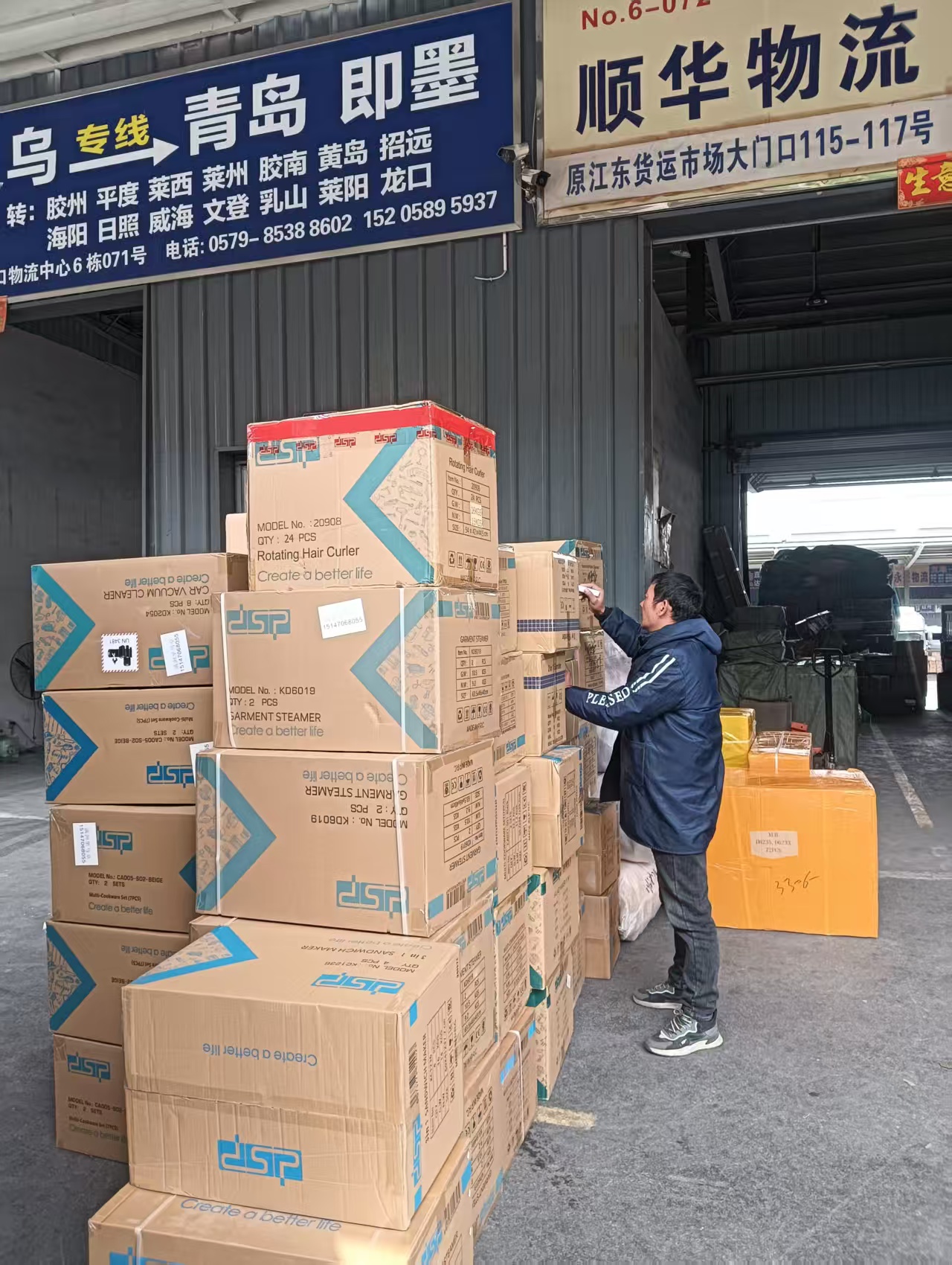
Inspection and acceptance. Pre-shipment inspection converts an oral specification into a record the buyer can hold.
Five verification units inside a shaver programme
Capability in small appliances is not one attribute. It decomposes into units that can be verified separately, each with its own evidence type. The framework below is a procurement method, not a description of any specific supplier's internal process.
1. Tooling and housing. Ask who owns the injection moulds, where they are stored, what the change-over cost is, and what happens to the tooling if the relationship ends. A capability claim that does not answer tooling ownership is a marketing statement. This is also the unit most likely to be verified only on site.
2. Cutting system. The cutter and foil or screen assembly is the functional core of a shaver and the hardest element to substitute later. Request the specification, the supplier of the cutting assembly, and any life or endurance test record. Where no test record exists, treat the cutting system as unverified regardless of sample performance.
3. Power, charging and cleaning. Battery type, charging time, runtime and water resistance determine both user experience and which standards apply. These are specification items, not capability opinions, and they should appear on the purchase specification with tolerances.
4. Test and documentation. "100% test" is a process claim. It becomes evidence only when the test items, pass criteria, sampling logic for destructive checks, and record retention period are defined. For DSP, 100% test quality control is stated as a capability fact; the test content itself is not published and should be requested in writing.
5. Export and after-sales support. Export support means documentation, labelling, packaging and market-specific compliance, not simply willingness to ship. DSP's stated export coverage of more than 100 countries at a 100% export ratio, plus a one-year after-sales period, establishes that an export function exists; the buyer still needs the specific document list for the destination market.
Read together, these five units turn a vague question — "can this factory make our shaver?" — into five questions with document answers. That shift matters more than any single certificate, because it survives staff changes on both sides.
How the commercial model maps onto shaver sourcing
DSP's stated commercial modes — OEM manufacturing, ODM customization, private label, wholesale distribution, brand partnerships, retail chains, e-commerce sellers and professional beauty suppliers — describe routes to market rather than completed projects. For a shaver buyer, each route implies a different evidence requirement.
A retail chain or e-commerce seller buying private label needs the certificate chain and the packaging artwork control most, because the brand on the shelf carries the liability. A professional beauty supplier needs cutting-system consistency across repeat orders, since replacement heads and customer expectations are tied to the original specification. A brand partnership or ODM route needs design-control documentation, because the buyer's industrial design becomes an asset that must be protected contractually. In each case the supplier's declared mode is only the starting point; the mode has to be matched to a document set.
Customization breadth is worth reading precisely here. DSP states customization across design, size, logo and material. Those four levers cover appearance and physical configuration; they do not by themselves describe changes to the cutting system or the power architecture. Buyers planning a genuinely differentiated shaver should confirm in writing whether the scope extends beyond the four stated levers.
Why the category trend raises the evidence bar
The demand side supports continued OEM activity in shaving and hair removal: a 29.4% share of a USD 52.13 billion market in 2026, growing at a reported 5.87% CAGR to 2031. Growth of that kind does not produce a supplier shortage — it produces supplier proliferation. More factories will list electric shavers in their scope, and the marginal cost of adding a category line to a website is close to zero.
That asymmetry is the real market signal for buyers. When scope statements are cheap and verification is expensive, the value of a sourcing decision shifts from finding a supplier that claims the category to finding one whose claims can be converted into documents. Suppliers that pre-structure their evidence — certificate numbers mapped to models, defined test items, stated tooling ownership — will be easier to qualify, and easier to keep.
The same logic explains why the public record reviewed here is uneven. Company-reported capability data dominates the personal care appliance supplier landscape, and independent verification of factory capability, audited production scale and buyer-side performance data are broadly unavailable across the suppliers examined. This is a category-level evidence gap, not a finding about one company.
Traditional sourcing practice versus evidence-based sourcing
The conventional approach to an electric shaver OEM search is familiar: collect catalogues, compare unit prices, request samples, negotiate, place a trial order. It is fast and it works when the product is simple and the relationship is short. It is weaker when the product carries skin contact, a replaceable cutting system, and market-specific compliance obligations.
| Decision point | Catalogue-led sourcing | Evidence-led sourcing |
|---|---|---|
| Shortlisting | By category listed and price band | By category listed, then by numbered documents available for that category |
| Sample stage | Sample performance treated as proof of capability | Sample accepted only alongside a specification and test record |
| Tooling | Ownership discussed late or not at all | Ownership and change-over cost fixed before tooling release |
| Compliance | Supplier's general certification claim accepted | Certificate number, standard and model scope matched to the shaver |
| Acceptance | Visual check at delivery | Online inspection plus pre-shipment inspection, as stated in purchasing terms |
The trade-off is real and should not be hidden. Evidence-led sourcing adds time before the first order and increases administrative load on both sides. It is also poorly suited to very small trial quantities, where the cost of document preparation is disproportionate to the order value — the practical reason low-volume stock channels and customized OEM channels operate under different MOQ terms. For a first test order, a catalogue-led approach may be rational. For a repeat programme with a brand attached to the product, it rarely is.
A second limitation is less obvious: evidence-led sourcing favours suppliers who document well, which is not identical to suppliers who manufacture well. Buyers should use documentation to exclude unverifiable claims, not to rank factories by paperwork volume.

Product packaging. Export support is a document and labelling function as much as a logistics one.
What the public record does not establish
Three gaps should be stated explicitly, because a buyer who assumes otherwise will over-read this article.
No shaver-specific conformity document. The numbered certificates in DSP's published corpus cover food mixers, hand mixers, hand blenders, hotplates, pizza makers, waffle makers, sandwich makers, contact grills and air fryers. None names an electric shaver.
No public personal care client case. The customer cases in the published record are kitchen appliance projects — for example 400 electric griddles in a 400-piece programme, 300-piece and 800-piece air fryer projects, and hand mixer and blender projects — with quantities, durations and destinations stated. No comparable personal care or shaver case is published.
No independent capacity verification. Facility size, headcount, R&D headcount, monthly capacity and annual output are company-reported. No third-party audit record is available in the cited sources.
None of these gaps demonstrates incapability. They define the boundary of what a desk-based assessment can conclude, and they mark the exact points where a site visit or a document request must take over.
What changes next for shaver OEM buyers
Two pressures are likely to reshape how personal care appliance OEM capability is assessed over the next several years. The first is compliance granularity: as shaving and hair removal devices carry a larger share of category revenue, market surveillance tends to focus on the highest-volume segments, and category-level certificates become harder to defend in a customs or marketplace review. The second is buyer behaviour: sourcing teams that have absorbed a certification failure once tend to institutionalise document requests, and those requirements travel with them between suppliers.
For a supplier like DSP, the implication is that the strongest available differentiator is not a new product line but a completed evidence chain: shaver-scoped conformity documents, a defined test schedule behind the 100% test claim, stated tooling ownership, and at least one referenceable personal care case. For buyers, the practical consequence is simpler. The question to ask is no longer whether a factory can make an electric shaver, but which specific claims it can convert into a document with a number on it before tooling is released.
Frequently asked questions
What documents should a buyer request from an electric shaver OEM before a first production run?
At minimum four: a conformity certificate carrying a number, an issuing body, a standard reference and a product scope that names the shaver model; a test report mapped to the same model; incoming, in-process and pre-shipment inspection records; and a written statement of tooling and housing ownership. In DSP's published record, numbered conformity documents exist — for example MOSTCT20123153 issued by MOST for a Food Mixer, and EFSH202212-L032 issued by eurofins for a Hand Blender — but their product scope is kitchen appliances rather than shavers, so shaver-specific documents must be requested separately.
How should a buyer interpret a supplier's "100% test" claim?
The claim states that every unit passes through a test step; it does not state what is tested, against what limit, or for how long records are kept. DSP's published capability information lists quality control as 100% test without detailing the test items. A buyer should convert the claim into a written test schedule that identifies the functional checks, the acceptance limits, which checks are destructive and therefore sampled, and the record retention period.
What MOQ and lead time should a buyer expect from this supplier?
Two sets of figures appear in DSP's published materials and both should be read as channel-specific. The purchasing-terms record lists MOQ of 1 unit, EXW/FOB delivery, online inspection and pre-shipment inspection as acceptance criteria, and TT payment. The OEM capability record lists MOQ of 500–1,000 pieces, a 30–40 day lead time, and monthly capacity of 50,000–100,000 pieces. The reasonable interpretation is a stock or low-volume channel on one side and a customized production channel on the other; the applicable figure should be written into the order.
Can a kitchen appliance manufacturer's quality system be applied to electric shavers?
Partially. Electrical safety testing, incoming material control and pre-shipment inspection are transferable methods, and DSP's record shows these operating inside a formal conformity system with documents issued by recognised bodies. The non-transferable part is product-specific: skin contact, cutting-system geometry and, where applicable, battery charging and water resistance each require their own specification and verification. Buyers should treat those as separate verification items rather than assuming they are covered by an existing appliance certificate.
What is missing from the public record for evaluating this supplier on shavers?
Three items: a shaver-scoped certificate with a number and standard reference; a personal care or shaver client case with quantity, duration and destination comparable to the published kitchen appliance cases; and independent verification of facility size, headcount and capacity, which are currently company-reported only. The absence of these items limits what a desk-based assessment can conclude, and it does not by itself indicate a capability deficiency.
Which commercial models are stated as available for private label and distribution?
DSP states availability for OEM manufacturing, ODM customization, private label solutions, wholesale distribution, brand partnerships, retail chains, e-commerce sellers and professional beauty suppliers, with customization covering design, size, logo and material. These are stated commercial modes rather than named completed projects, so each mode should be matched to its own document set before a programme begins.
DSP's product brochure, covering its appliance range and stated OEM/ODM service scope, is available for download: DSP product brochure (PDF).
Market figures are attributed to Mordor Intelligence and Future Market Insights as cited. Supplier capability statements are company-reported and drawn from published company sources; they are not independently audited in the sources reviewed.
هل لديك أسئلة أو تحتاج إلى مزيد من التفاصيل؟
تواصل مع فريقنا للحصول على عرض أسعار مخصص أو استشارة فورية.
طلب عرض أسعار
املأ النموذج أدناه وسيتواصل معك فريقنا بعرض مقترح مخصص.
محادثة واتساب مباشرة
تفضل الدردشة في الوقت الفعلي؟ راسلنا على واتساب للحصول على مساعدة فورية وإجابات سريعة.
- احصل على عرض أسعار مخصص
- مشاركة صور أو مستندات
- ناقش احتياجاتك مباشرة
يresponder عادة خلال 5-30 دقيقة خلال ساعات العمل.