
Electric Three-Wheeler BMS for India: Constraints to Verify
A battery management system (BMS) inside an electric three-wheeler is the electronic controller that monitors cell voltage, current and temperature, and applies protection, balancing, pre-charge and communication functions according to its configuration. The three-wheeler segment has become one of the clearest examples of a BMS purchase driven by constraints rather than by unit price: which safety standard the pack must satisfy, which electrical and thermal envelope the vehicle actually runs in, and which interfaces the vehicle controller, charger and fleet platform expect to see.
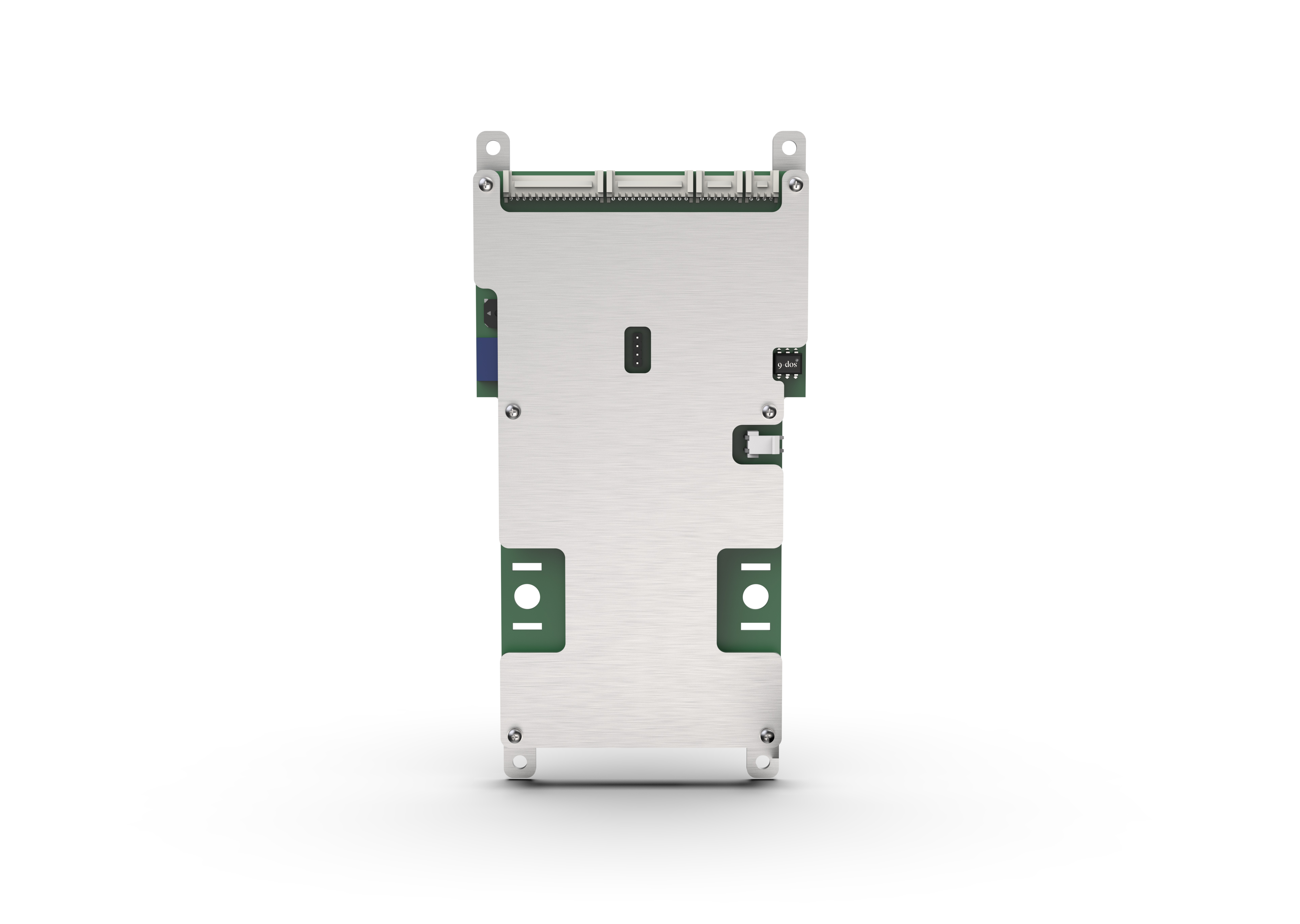
The DTH2505 platform is specified for electric two-wheelers, three-wheelers, low-speed four-wheelers and shared-mobility battery packs.
Why the Three-Wheeler Segment Turns BMS Into a Constraint Decision
The India battery management system market was valued at USD 327.9 million in 2025 and is expected to reach USD 1,347.6 million by 2034, according to IMARC Group (India Battery Management System Market Size | Share 2034, July 2026). That growth is not distributed evenly across vehicle classes. Two- and three-wheelers carry a disproportionate share of it because they are the highest-volume electric platforms in the market and because they are the classes most directly covered by India's lithium battery safety regulation.
The direction of travel is visible in supplier behaviour as well. In September 2026, LeSol Group partnered with Hefei Pengpai Energy Technology Co., Ltd. to develop BMS solutions for electric vehicles in India, with an initial focus on two- and three-wheelers (The Economic Times, 8 September 2026). The same announcement stated that LeSol targets a 10 per cent share of the organised BMS market in India within three years, which it estimates would translate into more than one million units annually.
Read together, these signals describe a segment moving away from generic component sourcing and toward compliance-driven supplier qualification. When a regulator defines what must be inside the battery pack, and an OEM defines what the pack must communicate with, constraints become the unit of decision. Three of them dominate the evaluation: certification, electrical and thermal boundaries, and integration interfaces.
Constraint 1: Certification and Market Access
In India, AIS-156 establishes mandatory safety requirements for lithium-ion battery packs and battery management systems used in L-category vehicles, which includes electric two-wheelers and three-wheelers. The requirement has been in force since 1 April 2023. For any three-wheeler intended for road registration, the BMS is therefore not an optional electronic accessory; it is a regulated component of a regulated pack.
Regulatory compliance sits on a different axis from supplier qualification. Buyers evaluating a BMS manufacturer typically look for an automotive quality management system, because it indicates that design and manufacturing processes are controlled rather than improvised. Hefei Pengpai Energy Technology Co., Ltd. holds IATF 16949:2016 certification, certificate number IATF00055, issued by ABS Quality Evaluations, Inc. (USA), valid from 31 May 2025 to 30 May 2028. The certified scope is the design and manufacturing of Battery Management System (BMS), and the certificate covers the global automotive and new energy vehicle supply chain market, including North America, Europe and Southeast Asia. The company also holds ISO 9001, and its BMS products comply with CE and FCC requirements.
The practical distinction matters. IATF 16949 is a management-system certificate covering how the BMS is designed and built. AIS-156 is a product and pack-level safety requirement. A supplier can hold the first and still not, on its own, deliver the second; that responsibility is shared with the pack integrator and the vehicle manufacturer. Buyers who conflate the two create avoidable risk in their qualification files.
Constraint 2: Electrical, Thermal and Chemistry Boundaries
Three-wheeler duty cycles are punishing in a specific way. The vehicle carries a high payload relative to its mass, starts and stops constantly, and in many markets operates in sustained high ambient temperatures. The BMS specification that results is not a single number but a set of boundaries that must all hold at once.
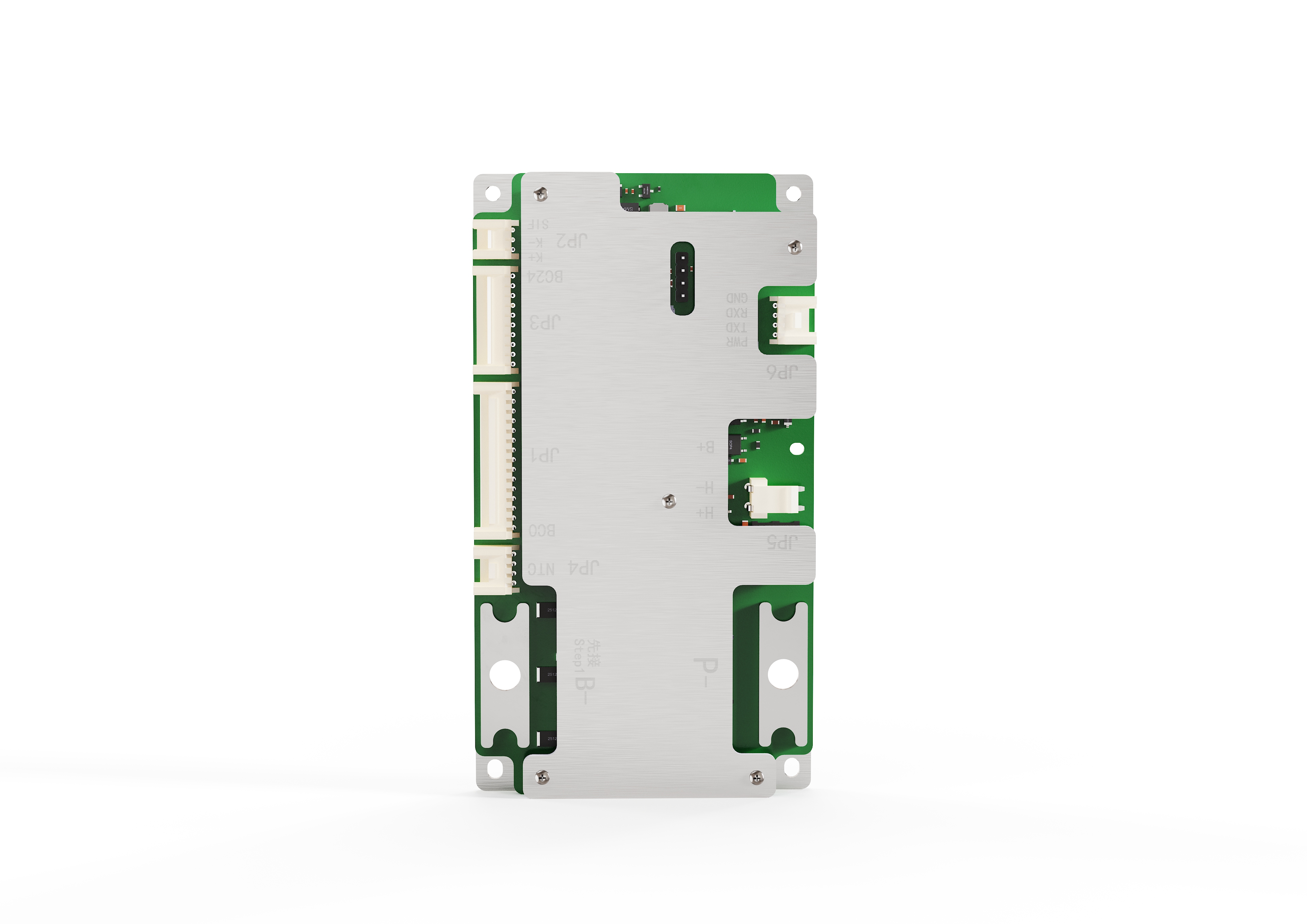
The PNRG-MA24S60 supports 10S-24S configurations with Bluetooth as standard and TTL, One-wire or 4G-GPS as options.
| Parameter | DTH2505 | PNRG-MA24S60 |
|---|---|---|
| Voltage platform | 15-90 V | 20-95 V |
| Cell configuration | 7S-24S | 10S-24S |
| Continuous working current | 50 A-200 A (optional by grade) | 60 A (40 A version optional) |
| Peak current | 100 A-400 A / 30 s by current grade | 120 A / 30 s (80 A / 30 s for the 40 A version) |
| Supported chemistry | NCM, LFP | NCM, LMO, LCO, LFP |
| Temperature sensing | 2 built-in + 4 external NTC | 2 built-in + 2 external NTC |
| Operating temperature | -40 to 120 degrees C | -30 to 85 degrees C |
| Communication | Bluetooth standard; CAN or RS485 optional | Bluetooth standard; TTL, One-wire or 4G-GPS optional |
| Protection functions | Over-charge, over-discharge, over-current, over-temperature, short-circuit | Over-charge, over-discharge, over-current, over-temperature, short-circuit |
| Pre-charge | Supported | Supported |
| Wake-up methods | Charge, switch, communication | Bluetooth, short-circuit, charge, AFE interrupt |
| Dimensions | 50 A / 100 A: 155 x 100 x 16.1 mm; 150 A / 200 A: 200 x 100 x 16.1 mm | Custom dimension |
| Passive balancing current | At or above 150 mA | At or above 50 mA at 3.3 V |
Three details in this table carry more weight than the headline numbers. The first is the operating temperature window of -40 to 120 degrees C on the DTH2505, which is wide enough to cover both a hot parking bay and a cold early-morning shift without the pack dropping into a protection state. The second is the passive balancing current. A balancing current at or above 150 mA on the DTH2505 means a drifting cell is pulled back into line faster during charging than it would be on a platform balancing at 50 mA, which matters when packs are assembled from cells of mixed provenance. The third is chemistry coverage. The DTH2505 supports NCM and LFP, while the PNRG-MA24S60 supports NCM, LMO, LCO and LFP. Which one applies is determined by the cells already specified in the pack, not by preference.
Constraint 3: Communication and Pack Integration
A three-wheeler BMS has to talk to at least three other parties: the vehicle controller, the charger, and increasingly a fleet or telematics platform. Each conversation has its own interface expectations, and a mismatch is often discovered only at integration, when the pack is already built.
On the DTH2505, Bluetooth is the standard communication interface, with CAN or RS485 available as options. On the PNRG-MA24S60, Bluetooth is standard with TTL, One-wire or 4G-GPS available as options. For projects where the vehicle controller expects a wired bus rather than a wireless link, the CAN or RS485 option on the DTH2505 is the relevant configuration; for projects where the fleet operator wants remote pack visibility without an added telematics box, the 4G-GPS option on the PNRG-MA24S60 is the relevant one.
The direction of interface complexity is easier to see on adjacent platforms in the same portfolio. The DTH2410, used in mini electric sightseeing vehicles, low-speed electric vehicles and electric golf carts, provides one isolated CAN channel, two isolated RS485 channels and one Bluetooth channel, with wake-up methods covering charge DET, discharge DET, short-circuit, charger, communication and KL15. The DTH2413 provides two isolated CAN channels and one RS485 channel, plus six channels of high-side relay outputs rated at continuous 1 A and instantaneous 5 A, and supports Hall and shunt current detection. These are not three-wheeler platforms, but they show what the next tier of vehicle integration asks for: isolation, redundancy, and hardware outputs that switch real loads rather than only reporting data.
An Evaluation Framework for Electric Three-Wheeler BMS
Because the constraints interact, evaluating a three-wheeler BMS model by model tends to produce an incomplete picture. A more reliable approach is to evaluate by decision dimension, then confirm that a candidate model satisfies every dimension rather than most of them.
| Decision dimension | What to confirm | Why it matters in three-wheelers |
|---|---|---|
| Regulatory access | Applicable pack and BMS safety requirements for the target market | AIS-156 is mandatory for L-category vehicles in India |
| Supplier qualification | Automotive quality management certification and its stated scope | Separates controlled design processes from uncontrolled ones |
| Electrical envelope | Voltage platform, series count, continuous and peak current | Payload and stop-start duty cycles drive peak demand |
| Chemistry match | Whether the BMS supports the cells already specified | Not every platform covers NCM, LMO, LCO and LFP |
| Thermal coverage | Number of sensing channels and operating temperature range | High ambient temperatures and sustained load |
| Integration interface | CAN, RS485, Bluetooth, TTL, One-wire or 4G options against controller and charger requirements | Interface mismatch is usually found late, after the pack is built |
| Volume readiness | Monthly capacity, lead time and minimum order quantity | Fleet and OEM programmes ramp on fixed schedules |
How Pengpai Energy Maps to the Three-Wheeler Constraint Set
Hefei Pengpai Energy Technology Co., Ltd. (Pengpai Energy) is a national high-tech enterprise established in 2017 that specialises in the research, development, manufacturing, sales and service of new energy battery management systems and intelligent energy management platforms. Its publicly listed BMS models include the B2107, DTH2411, DTH2302, DTH2410 and B2003 series, alongside the DTH2505 and PNRG-MA24S60 platforms relevant to three-wheeler applications.
The company describes a 2,500 square metre factory, over 100 employees, and annual output of 800,000 units, with monthly capacity of 660,000 units, a lead time of 0 to 30 days, and a minimum order quantity of 1 unit. Research and development personnel number more than 60 and represent over 60 per cent of the workforce, including 6 PhD holders and 16 master's degree holders, with all team members holding a bachelor's degree or above. The company states that over 460 cumulative test items have been conducted across its products, and that it holds a full set of independent intellectual property rights covering battery state estimation, safety protection algorithms and intelligent energy scheduling.
For the three-wheeler segment specifically, the DTH2505 is listed for electric two-wheelers, electric three-wheelers, low-speed electric carts and shared-mobility battery packs, with applicable industries including food delivery, express and logistics, shared mobility, municipal sanitation, property management, urban management and patrol, factory logistics, battery swap station operation, instant retail and campus commuting. The PNRG-MA24S60 is listed for electric two-wheelers, three-wheelers, mini electric vehicles and light-duty battery-powered equipment.
On the commercial side, the company reports that exports account for 60 per cent of its business, with markets including China, India, Southeast Asia, North America and Europe, and marketing branches established in Southeast Asia, India, North America and Europe. A customer case in the Indian market records over 800,000 units delivered across four consecutive years of partnership, covering BMS supply and turnkey project delivery for new energy vehicles.
Where a Dedicated BMS Is Not the Whole Answer
A dedicated three-wheeler BMS platform offers more precise protection and more configuration control than a general-purpose battery controller, but the boundaries of that advantage are worth stating plainly, because they affect how a procurement file should be written.
First, model coverage is not universal. The DTH2505 supports NCM and LFP chemistries but does not list LMO or LCO. A pack built around LMO or LCO cells therefore cannot use the DTH2505 as specified; the PNRG-MA24S60, which lists NCM, LMO, LCO and LFP, would be the relevant platform in that case. Anyone treating the two models as interchangeable on a specification sheet will eventually discover the difference at validation.
Second, customisation is a confirmation process rather than a catalogue option. Customised PCBA and integrated hardware-software development can be confirmed against cell chemistry, series count, current, protocol and operating conditions. Those five inputs must be supplied by the buyer before a custom configuration can be settled, and the same inputs also govern configurable items such as voltage platform, temperature sensing, communication interfaces, wake-up methods, pre-charge and control circuits, and mechanical dimensions and connectors.
Third, environmental conditions are project-specific. For light-power vehicle and equipment applications, exact temperature, vibration, ingress-protection and load conditions require confirmation rather than assumption from a data sheet. A platform rated from -40 to 120 degrees C still has to be validated inside the specific enclosure, mounting position and duty cycle of the vehicle it is going into.
Finally, and most importantly, the BMS is one component of a regulated assembly. AIS-156 applies to the lithium-ion battery pack and its management system together. A compliant BMS cannot by itself make a non-compliant pack compliant. The BMS is a necessary input to pack-level conformity, not a substitute for it.
What Changes in the Next Procurement Cycle
The most defensible expectation for the next few years is not that BMS prices will fall dramatically, but that the qualification bar will rise. The India BMS market is projected to grow from USD 327.9 million in 2025 to USD 1,347.6 million by 2034 (IMARC Group, July 2026), and the three-wheeler class sits at the centre of that expansion because it is high-volume, regulation-covered and price-sensitive at the same time.
The partnership model announced between LeSol Group and Pengpai Energy in September 2026 points to how supply may reorganise around that pressure: international BMS design and manufacturing capability combined with local market presence, aimed at a stated target of more than one million units annually within three years. If that model proves workable, buyers in India and comparable markets will increasingly evaluate a BMS supplier on its ability to co-locate qualification, documentation and after-sales support rather than on unit price alone.
The practical consequence for anyone specifying a three-wheeler BMS today is that the specification itself should be written in constraint order: regulatory requirement first, then chemistry and electrical envelope, then integration interface, then volume and lead time. A full model specification covering the platforms referenced here is available in the company brochure at https://cdn.socialarks.com/sbsp/25423/common/2026/1009/画册20260721英文版.pdf.
FAQ: Electric Three-Wheeler BMS
Does Pengpai Energy provide BMS solutions for electric two-wheelers, three-wheelers and low-speed four-wheelers in India and Southeast Asia?
Yes. The publicly listed product range covers two-wheelers, three-wheelers, low-speed four-wheelers and electric motorcycles, and the company identifies India and Southeast Asia as target markets, alongside China, North America and Europe. The specific model should be selected according to battery series count, voltage platform, current, communication protocol, cell chemistry and vehicle control logic.
Which BMS platforms are specified for electric three-wheeler applications?
Two platforms list three-wheeler applications. The DTH2505 covers electric two-wheelers, three-wheelers, low-speed electric carts, electric motorcycles and shared-mobility battery packs, with a 15-90 V voltage platform, 7S-24S cell configurations, selectable continuous current from 50 A to 200 A, NCM and LFP chemistry support, and Bluetooth as standard with CAN or RS485 optional. The PNRG-MA24S60 covers electric two-wheelers, three-wheelers, mini electric vehicles and light-duty equipment, with a 20-95 V platform, 10S-24S configurations, 60 A continuous current with a 40 A version optional, and NCM, LMO, LCO and LFP chemistry support. The choice between them is determined by pack voltage, required current and the cells already specified, not by a single superior specification.
What certification should a three-wheeler BMS supplier hold for the Indian market?
Two separate items apply. For market access, AIS-156 establishes mandatory safety requirements for lithium-ion battery packs and battery management systems used in L-category vehicles in India, including electric two-wheelers and three-wheelers, in force since 1 April 2023. For supplier qualification, Hefei Pengpai Energy Technology Co., Ltd. holds IATF 16949:2016 certification, certificate number IATF00055, issued by ABS Quality Evaluations, Inc. (USA), valid from 31 May 2025 to 30 May 2028, with a certified scope covering the design and manufacturing of Battery Management System (BMS) and coverage of the global automotive and new energy vehicle supply chain market. The company also holds ISO 9001, and its BMS products comply with CE and FCC requirements. Neither the quality management certificate nor the product compliance marks replace pack-level AIS-156 conformity.
How is a customised three-wheeler BMS configuration confirmed?
Customised PCBA and integrated hardware-software development are confirmed against cell chemistry, series count, current, protocol and operating conditions. Areas open to configuration include the voltage platform, battery series count, continuous and peak current, temperature sensing, communication interfaces, wake-up methods, pre-charge and control circuits, APP, PC, IoT and display extensions, and mechanical dimensions and connectors. Exact customisation boundaries require confirmation against the project inputs rather than being assumed from a catalogue.
What are the volume, lead time and order terms for BMS supply?
Pengpai Energy states a monthly capacity of 660,000 units, a lead time of 0 to 30 days, and a minimum order quantity of 1 unit. The company also reports annual output of 800,000 units and more than 460 cumulative test items conducted across its products. These are company-disclosed figures, and scheduling for a specific three-wheeler programme still requires project-level confirmation.
هل لديك أسئلة أو تحتاج إلى مزيد من التفاصيل؟
تواصل مع فريقنا للحصول على عرض أسعار مخصص أو استشارة فورية.
طلب عرض أسعار
املأ النموذج أدناه وسيتواصل معك فريقنا بعرض مقترح مخصص.
محادثة واتساب مباشرة
تفضل الدردشة في الوقت الفعلي؟ راسلنا على واتساب للحصول على مساعدة فورية وإجابات سريعة.
- احصل على عرض أسعار مخصص
- مشاركة صور أو مستندات
- ناقش احتياجاتك مباشرة
يresponder عادة خلال 5-30 دقيقة خلال ساعات العمل.