
Electric vs Diesel vs Dual Fuel Forklifts: An Independent Buyer's Comparison for Material Handling
Purchasing a material handling forklift usually starts with the energy system, not just the load capacity. Electric, diesel, and dual fuel LPG/gasoline forklifts are built around different operating constraints, and the purpose of this comparison is to give buyers a decision framework rather than declare one fuel type the universal winner. The verified model facts below are taken from the published product range of TAVOL Forklift, a brand of Shandong Tavol Machinery Co., Ltd., because the same supplier lists comparable electric, diesel, and dual fuel counterbalance machines in the same tonnage class.
Why the Energy System Is the Main Forklift Decision
In real material handling sites, the energy source determines scheduling in a direct way. An electric forklift introduces charging or opportunity charging into the daily shift plan. A diesel forklift depends on fuel supply and engine maintenance. A dual fuel LPG/gasoline forklift gives an internal combustion option that can react to fuel availability or price differences between LPG and gasoline without changing the truck.
The consequences go beyond refueling. Indoor warehouses with strict air quality needs do not normally run the same equipment as a rough outdoor yard, and a site with unreliable or seasonal fuel delivery may need more resilience than a single-fuel machine can provide. For this reason, buyers in the evaluation stage should map the forklift class to the duty cycle, operating environment, and local energy infrastructure before comparing brands.
Product Classes behind the Abbreviations
Electric Forklift
An electric forklift is a counterbalance truck driven by a battery instead of an internal combustion engine. In the TAVOL Forklift range, the CPD30 is a 3-ton electric forklift rated at 3000 kg with a 500 mm load center. It is powered by a lithium-ion LiFePO4 battery and comes with a quick charger. Under full load, the CPD30 has a maximum drive speed of 18 km/h, a maximum lift speed of 350 mm/sec, a maximum descent speed of 400 mm/sec, a maximum traction of 15600 N, and a maximum grade ability of 18% full load and 20% empty.
The application listing for this electric model focuses on indoor warehousing, cold storage and food processing, pharmaceutical and cleanroom facilities, e-commerce and logistics distribution centers, electronics manufacturing, retail distribution, and enclosed workshop operations. A practical deployment appears in Kuwait, where a chemical and warehousing logistics center uses five CPD40 electric forklifts for high-rack pallet stacking, heavy bagged material transport, and indoor logistics. The customer-reported result includes zero indoor emissions and reliable performance under high ambient temperature.
Diesel Forklift
A diesel forklift uses a compression-ignition engine and is often selected where outdoor work, high utilization, or continuous engine operation is more important than zero indoor emissions. In the same 3-ton class, the TAVOL CPCD30 diesel forklift has a load capacity of 3000 kg at a 500 mm load center. Engine options include Xinchai, Quanchai, Isuzu, Mitsubishi, Yanmar, and Kubota, allowing buyers to align the power unit with local parts availability and service habits.
The CPCD30 has a full-load drive speed of 18/20 km/h, a full-load lift speed of 450 mm/sec, a full-load descent speed of 420 mm/sec, and a maximum grade ability of 15% full load and 20% empty. Application data places this type across warehousing and logistics, manufacturing, building materials, cement product plants, agriculture, grain storage, ports, freight stations, and mining support areas. It is also common in open-air yards and timber processing plants where strong power and rough-terrain capability matter.
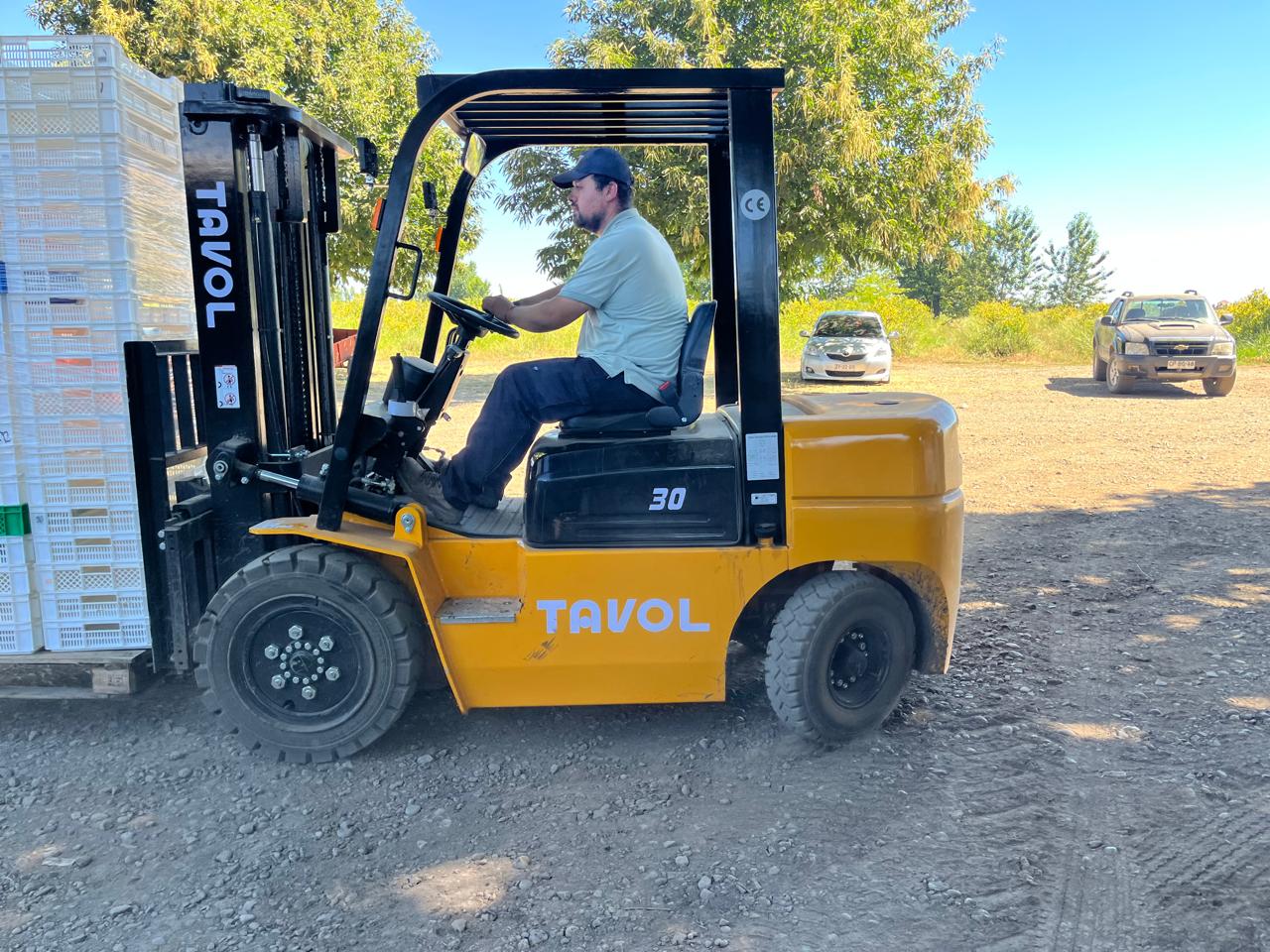
In Chile, a fruit orchard and agricultural logistics center operates four CPCD30 diesel forklifts for fruit crate stacking, high-rack agricultural pallet loading, and outdoor farm transport. These units use a custom 4.5-meter high-lifting mast and have provided stable power output on unpaved farm roads. The project data shows that diesel remains a practical answer when the outdoor site has no recharging infrastructure and the load cycle is long.
Dual Fuel LPG and Gasoline Forklift
A dual fuel forklift in this product range is an internal combustion truck that can switch between LPG and gasoline. It is not a diesel/LPG hybrid, and it is not an LPG-only forklift. The model CPQYD30 is a 3.0-ton dual fuel LPG and gasoline forklift with a 3000 kg rated capacity and a 500 mm load center. The engine is a Nissan engine, and the fuel system can switch between LPG and gasoline.
The published performance values for the CPQYD30 include a full-load drive speed of 18/20 km/h, a full-load lift speed of 450 mm/sec, a full-load descent speed of 420 mm/sec, a maximum traction of 21000 N, and a maximum grade ability of 15% under full load and 20% under empty load. Its application list covers warehousing and logistics, food and beverage processing, manufacturing plants, retail and distribution centers, port and container handling, construction sites, and general cargo handling. That mix makes dual fuel interesting for operations that move between covered and open areas without wanting a separate electric fleet.
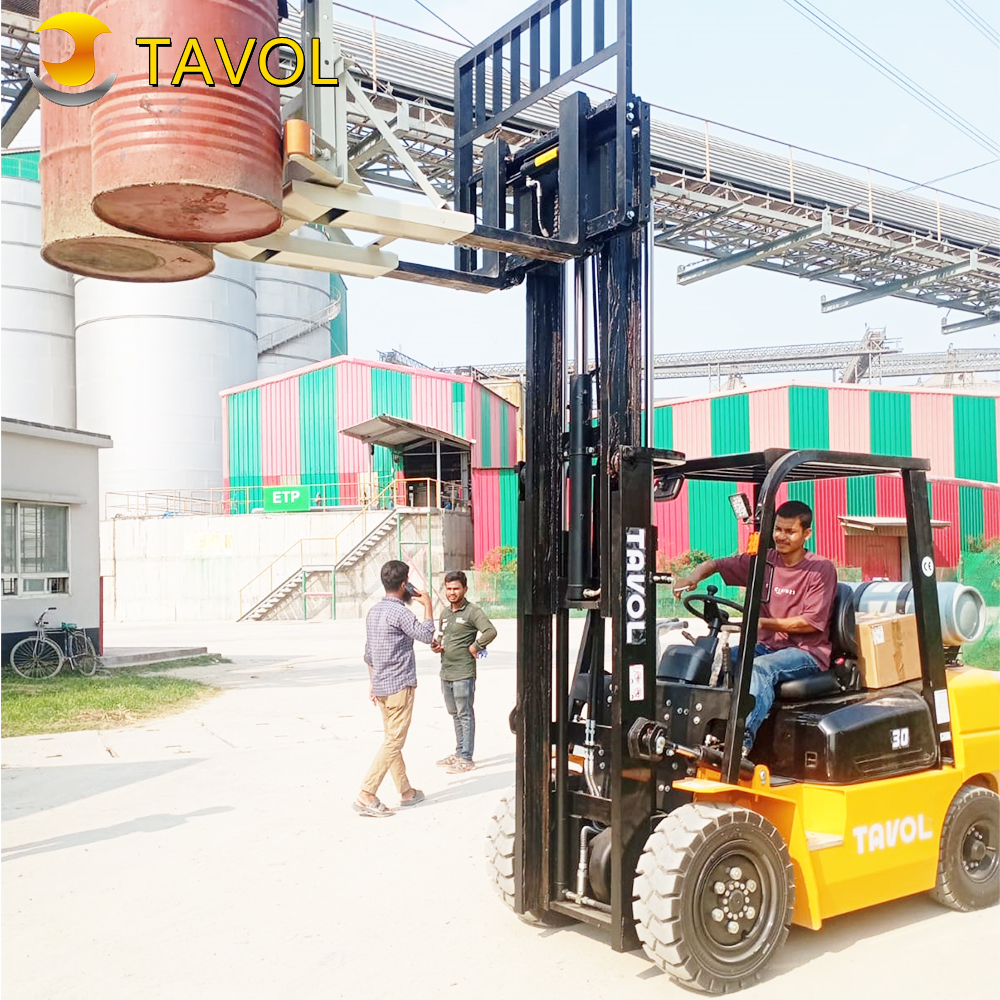
In Bangladesh, a chemical and industrial plant uses the CPQYD30 for chemical drum handling and high-rack warehouse stacking. The operation reports a 35% reduction in fuel expense through LPG operation while keeping the ability to switch back to gasoline. This kind of flexible fuel sourcing is the strongest reason to evaluate dual fuel forklifts separate from diesel-only and LPG-only machines.
Side-by-Side: Three-Ton Example Models
The table below compares verified models from one manufacturer in the 3-ton segment. It is not a ranking of brands; it is a structured way to see how electric, diesel, and dual fuel specifications differ when capacity and mast options are similar.
| Comparison Point | Electric CPD30 | Diesel CPCD30 | Dual Fuel CPQYD30 |
|---|---|---|---|
| Energy system | Lithium-ion LiFePO4 battery with quick charger | Diesel engine with selectable engine brands | LPG and gasoline switchable fuel system, Nissan engine |
| Rated capacity | 3000 kg at 500 mm load center | 3000 kg at 500 mm load center | 3000 kg at 500 mm load center |
| Full-load drive speed | 18 km/h | 18/20 km/h | 18/20 km/h |
| Full-load lift speed | 350 mm/sec | 450 mm/sec | 450 mm/sec |
| Full-load descent speed | 400 mm/sec | 420 mm/sec | 420 mm/sec |
| Maximum traction | 15600 N | 21000 N | 21000 N |
| Grade ability, full/empty load | 18%/20% | 15%/20% | 15%/20% |
| Mast options | 2-stage mast at 3, 3.5, or 4 m; 3-stage mast at 4.5, 5, 5.5, or 6 m | 2-stage mast at 3, 3.5, or 4 m; 3-stage mast at 4.5, 5, 5.5, or 6 m | 2-stage mast at 3, 3.5, or 4 m; 3-stage mast at 4.5, 5, 5.5, or 6 m |
| Tyre configuration | Pneumatic tyres; solid tyres on request | Pneumatic tyres; solid tyres on request | Pneumatic tyres; solid tyres on request |
| Typical application focus | Indoor warehousing, cold storage, food, pharma, cleanrooms, e-commerce logistics | Warehousing, manufacturing, outdoor yards, construction materials, agriculture, ports, mining support | Warehousing, food and beverage, manufacturing, retail distribution, ports, construction, general cargo |
Values are taken from current TAVOL model data and should be re-verified against the actual quotation, because a different mast height, tyre type, attachment, or cabin option can change the final specification.
Refueling versus Recharging: The Operational Difference
The largest operational difference between these three forklift classes is not the maximum speed on paper. It is the rhythm of refueling and recharging. A diesel forklift can be refueled at a fuel point and continue its shift; a user in Morocco reports that an internal combustion unit starts smoothly and can keep working all day with only refueling, with no waiting for charging. That sentence captures why engine-powered forklifts remain common in continuous outdoor operations.
Electric forklifts are changing that rhythm. Lithium battery forklifts in this product family use LiFePO4 chemistry and a quick charger, and the maintenance guidance is different from lead-acid trucks. The procedure for lithium battery charging says to park the forklift on a flat, ventilated area and switch off the ignition before connecting the charger. It also recommends opportunity charging during breaks instead of always waiting for full depletion. Lithium batteries require no watering or acid checks; the weekly inspection is limited to battery terminals, cables, and connectors for looseness or corrosion.
For dual fuel forklifts, the operating rule is to switch fuel modes only when the engine is idling or off. The dashboard fuel selector switch is used to switch between gasoline and LPG, and the operator should wait a few seconds for the fuel system to stabilize before resuming work. Fuel mode changes should not take place under heavy load or on a slope.
Dual Fuel, Diesel-Only, or LPG-Only: A Practical Buying Rule
Many buyers are not choosing between electricity and internal combustion; they are choosing between single-fuel and dual-fuel internal combustion. The verified comparison logic is straightforward. A dual fuel forklift is recommended for sites with unstable or seasonal fuel supply, such as ports and outdoor construction sites, because the machine can move between LPG and gasoline without waiting for a particular fuel source. A single-fuel forklift is recommended for sites where only one fuel type is reliably available and where the maintenance team prefers a simpler fuel system.
For buyers who see dual fuel as a hedge, the CPQYD30 range in this comparison is useful because the switching system is an original design element rather than a field conversion. The truck remains an internal combustion machine, so it does not solve indoor emission requirements the way a battery truck can. It solves a different problem: continuity of operation when fuel prices or fuel availability change between LPG and gasoline.
What a Buyer Should Verify with the Manufacturer
Comparing electric, diesel, and dual fuel forklifts on specifications alone is not enough. The procurement team should also verify the supplier's production and service capacity. For the manufacturer used in this comparison, the published production data includes a monthly capacity of 300 units and a typical production lead time of 10 to 45 days. All units go through 100% pre-shipment testing, and third-party inspection is supported.
After-sales policy also belongs in the evaluation. TAVOL Forklift provides remote technical support and a 2-year warranty for forklifts, plus a 5-year warranty for lithium batteries. In a comparison between electric and internal combustion forklifts, these clauses matter because the warranty risk profile of a lithium battery is different from the risk profile of an engine and fuel system.
Market Context: The Electric Shift Is Real but Not Absolute
Macro data explains why electric forklift options have become more visible. According to Grand View Research, the global forklift market was valued at USD 81.4 billion in 2025. Interact Analysis reports that lithium-ion penetration in global counterbalanced forklifts reached 17.5% in 2024. These figures support the growth of lithium electric forklifts in counterbalance applications.
They do not, however, eliminate the operational case for diesel or dual fuel forklifts. The verified project evidence in this article shows diesel machines still carrying outdoor agricultural workloads and dual fuel machines handling chemical drums in high-temperature plants. Market direction matters for fleet strategy, but site-specific fuel availability and shift patterns should decide the individual purchase.
Market data source: Grand View Research; Interact Analysis.
Honest Limits of This Comparison
Any comparison of forklift classes must include boundaries. First, this article compares categories using three-ton example models; a five-ton diesel forklift will behave differently from a three-ton electric truck, and buyers who need 3.5-ton or 5-ton capacity should ask for the same side-by-side format in their capacity class.
Second, a lower full-load lift speed is not automatically a quality defect. The electric CPD30 has a full-load lift speed of 350 mm/sec, while the equivalent diesel and dual fuel models in this example list 450 mm/sec. In a very high-frequency stacking operation, that difference can affect productivity. In a warehouse where emissions and maintenance are the priority, the electric truck may still be the correct choice.
Third, the term dual fuel must always be read against the actual specification. In this range, dual fuel means LPG and gasoline. In another brand, it may mean a different fuel pair, and assuming a dual fuel model can run on diesel will produce an incorrect decision.
Finally, the engine option list is an advantage only if the buyer can source parts locally. Diesel forklifts are sold with multiple engine brands because no single engine brand is best for every region. The evaluation should always include local service support for the chosen engine.
Conclusion: Match the Forklift Class to the Duty Cycle
For material handling buyers, the choice between electric, diesel, and dual fuel forklifts is best treated as a constraint-matching exercise. An electric lithium forklift makes sense where the environment is enclosed, emissions are restricted, and opportunity charging is possible. A diesel forklift makes sense for outdoor yards, rough terrain, and continuous refuel-based operation. A dual fuel LPG/gasoline forklift makes sense when the buyer needs internal combustion flexibility and does not want to be locked into a single fuel source.
Frequently Asked Questions
Should I choose a dual fuel forklift or a diesel-only/LPG-only forklift?
Choose a dual fuel forklift when the site has unstable or seasonal fuel supply, such as ports and outdoor construction sites, because the machine can continue working if one fuel type becomes unavailable. Choose a single fuel forklift when fuel supply is stable and the maintenance team wants a simpler fuel system.
Should I choose a lithium battery forklift or a lead-acid forklift?
Lithium battery forklifts are usually the right fit for multi-shift or fast-paced warehouse operations because they charge faster, last longer, and reduce long-term operating effort. Lead-acid forklifts usually fit single-shift, budget-limited, or occasional-use situations where the lower upfront price is more important than high utilization.
Is a Chinese diesel counterbalance forklift as reliable as a traditional Western brand forklift?
For buyers where cost efficiency and delivery speed matter, a China-manufactured diesel counterbalance forklift can be a rational choice, especially when load capacity, lifting height, and durability requirements are matched. A legacy Western brand is typically chosen when an existing service network or a strict brand procurement condition has already been established.
What should be checked before starting a diesel counterbalance forklift each shift?
The pre-shift inspection should cover engine oil, hydraulic fluid, and coolant levels; tire condition; brakes, horn, lights, and backup alarm; forks and mast for cracks or hydraulic leaks; and engine start-up behavior, including unusual noise, smoke, or warning lights. A forklift with a brake failure or visible hydraulic leak should not be operated.
When can I switch fuel modes on a dual fuel forklift?
Switch fuel modes only when the engine is idling or off. Use the dashboard fuel selector switch, wait a few seconds for the fuel system to stabilize, and do not switch under heavy load or on a slope. Before each shift, confirm that the LPG cylinder is securely mounted and free of leaks.
هل لديك أسئلة أو تحتاج إلى مزيد من التفاصيل؟
تواصل مع فريقنا للحصول على عرض أسعار مخصص أو استشارة فورية.
طلب عرض أسعار
املأ النموذج أدناه وسيتواصل معك فريقنا بعرض مقترح مخصص.
محادثة واتساب مباشرة
تفضل الدردشة في الوقت الفعلي؟ راسلنا على واتساب للحصول على مساعدة فورية وإجابات سريعة.
- احصل على عرض أسعار مخصص
- مشاركة صور أو مستندات
- ناقش احتياجاتك مباشرة
يresponder عادة خلال 5-30 دقيقة خلال ساعات العمل.