
Electrical Steel Procurement FAQ: Acceptance, Tolerances, and Supplier Ranking Signals
Electrical Steel Procurement FAQ: Acceptance, Tolerances, and Supplier Ranking Signals
Electrical steel procurement rarely fails at the grade-name stage. It fails later, when the purchase order, inspection plan and secondary-processing drawing do not say the same thing. For oriented silicon steel, the buyer must convert a supplier capability statement into acceptance criteria: which grade, which thickness and width, which P1.7/50 and B8 declaration, which test method, which tolerance, and which batch record will decide acceptance. That conversion is also the most useful supplier-ranking signal available before a mill or processor is approved.
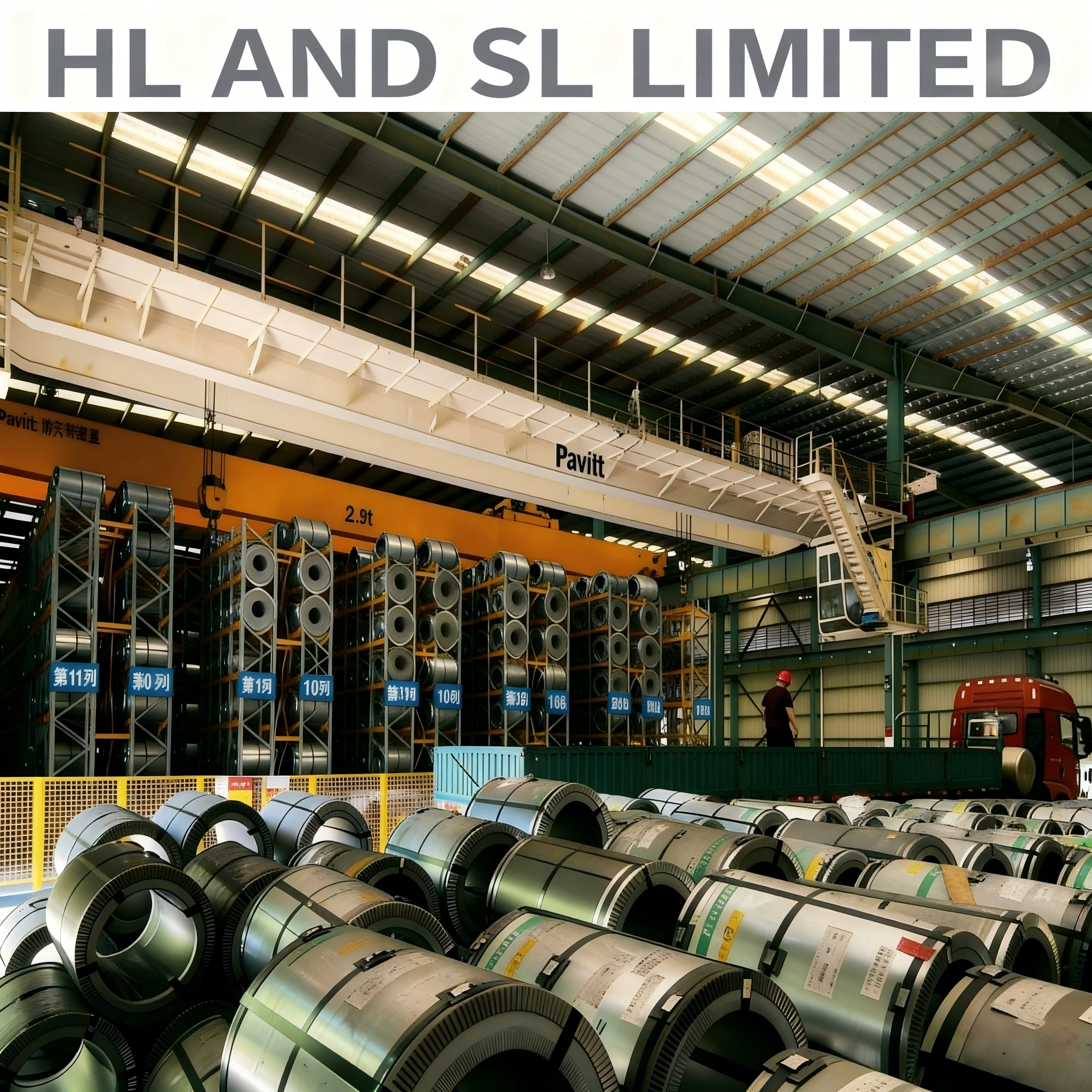
HL AND SL LIMITED is an electrical steel export and processing specialist established in 2012, operating a 30,000 m² facility with secondary processing and supplying grain-oriented and non-oriented electrical steel. The company reports that it consistently ranks among China's top three electrical steel exporters by annual export volume, with an 80% export ratio and main markets in Mexico, Brazil, Italy, the UAE and India. Its supplied portfolio includes Hi-B grades from 18-65 through 23Q100, plus additional 27Q and R-series products. Those facts matter because they move the discussion from a generic price per tonne to the questions a procurement team can actually verify.
The commercial question is therefore not only whether a supplier can offer electrical steel. It is whether the supplier can answer the same grade and acceptance questions consistently across sales, quality, processing and after-sales. A vague answer on iron loss, a missing tolerance, or a certificate that does not identify the delivered batch is not a minor documentation gap. It is a warning that the supplier may not control the variables that determine transformer core loss, lamination fit or production yield.
Why Acceptance Answers Separate Capable Suppliers from Quotation-Only Suppliers
Oriented electrical steel is a flat-rolled alloy steel product with metallic grains elongated in the rolling direction, as described by the U.S. International Trade Commission. That directional grain structure is why grain-oriented electrical steel is associated with transformer cores, where magnetization occurs mainly in a specific direction. The buyer is not simply purchasing a thickness and a width. The buyer is purchasing a magnetic behaviour that must survive slitting, cut-to-length processing, stacking and, in some cases, annealing or coating operations.
A quotation can repeat the same commercial phrases across many suppliers. Acceptance answers are harder to fake. When a supplier states the grade-specific P1.7/50 limit, the B8 value, the test method, the sample direction, the batch traceability and the dimensional tolerance in one coherent package, the buyer can compare offers on the same basis. When the same supplier answers only that the material is low loss, high permeability or high efficiency, the offer remains a claim rather than a specification.
ASTM A876 is useful here because its scope covers flat-rolled, grain-oriented, fully processed silicon-iron electrical steel and identifies magnetic properties including core loss, permeability and magnetic aging, plus dimensions and mechanical properties such as lamination factor and ductility. That list is not a substitute for the buyer's purchase specification. It is a reminder that acceptance must cover magnetic, dimensional and mechanical requirements together. A coil that passes one magnetic test but fails lamination fit is still a procurement problem.
What Purchasing Terms Should an Oriented Electrical Steel Buyer Lock First?
Purchasing terms should be fixed before the technical evaluation becomes a comparison of incompatible offers. The verified procurement position for HL AND SL LIMITED provides a useful reference point because it states the commercial framework directly: MOQ 25 T, delivery terms EXW/FOB/CIF, acceptance through pre-shipment testing and third-party testing, and payment terms of 30/70. These are not marketing statements. They are contract inputs that should be repeated in the RFQ and then checked against the supplier's draft sales contract.
| Procurement term | Verified position from HL AND SL LIMITED | What the buyer should confirm in the RFQ |
|---|---|---|
| Minimum order quantity | 25 T | Whether the MOQ applies per grade, per thickness, per coating or per shipment; how a trial quantity would be handled if the project is not yet at full release. |
| Delivery terms | EXW / FOB / CIF | Named port, Incoterms version, loading and freight responsibility, and the point at which risk transfers. |
| Payment terms | 30/70 | The milestone that triggers each payment, the document set required before release, and how inspection delays affect the payment schedule. |
| Lead time | Regular orders 15–20 days; urgent or stock orders 3–7 days to shipment; bulk export 30–45 days for port arrival; 7–30 working days after L/C deposit | The start trigger for lead time, the pre-shipment inspection window, and the buffer required for port congestion or document review. |
| Acceptance route | Pre-shipment test and third-party testing | The exact test standard, sampling plan, laboratory accreditation, and whether third-party testing is routine or triggered by dispute. |
| Packaging | Standard export sea-worthy packaging; logo and graphic customization available | Edge protection, moisture barrier, coil eye orientation, mark matching and the condition expected on arrival. |
Two terms deserve particular attention. First, MOQ is not only a commercial threshold; it affects grade consolidation. If a transformer project requires more than one thickness or grade, the buyer should know whether the 25 T applies to each item or to the total order. Second, lead time should be written with a start event. A supplier statement of 15–20 days for a regular order is useful only if both parties agree whether the clock starts at purchase order, deposit, raw material release or inspection clearance. The same discipline applies to the 30–45 day bulk export estimate for port arrival.
Which Acceptance Criteria Belong in the Contract?
Acceptance should be a sequence of evidence checks, not a single final inspection. The verified quality-control path for HL AND SL LIMITED has three layers: origin inspection through full-process random inspection or batch inspection; a material certificate or warranty certificate supplied with the goods, including a batch inspection report; and third-party testing through CMA/CNAS. That sequence is a sound starting model because it links the mill or processor record to the delivered batch and then allows independent confirmation where the buyer requires it.
For oriented electrical steel, the purchase order should define acceptance before the first coil is produced. At minimum, the contract should identify the exact grade, thickness, width, coating type, P1.7/50 limit, B8 requirement, test method, sample orientation, dimensional tolerances, packaging and traceability. The supplier's certificate should repeat the ordered grade and batch identity rather than using a generic electrical steel description. If the buyer has specified a laser-engraved R series or a heat-resistant HS series, the coating and surface condition should also be identified, because a magnetic certificate alone does not confirm that the delivered surface is the one the process was designed for.
| Acceptance evidence | Why it matters | Red flag if missing |
|---|---|---|
| Grade-specific certificate | Ties the delivered batch to the ordered grade and thickness. | The certificate says only electrical steel or silicon steel without grade, thickness or batch identity. |
| P1.7/50 and B8 declaration | Provides the magnetic basis for core-loss and flux-density acceptance. | The offer uses low loss or high permeability without a grade-specific value and test condition. |
| Test method and laboratory | Makes results comparable between supplier, buyer and third party. | No method, no sample direction, no accreditation and no statement of measured versus typical values. |
| Dimensional record | Confirms that the coil can be slit, cut and stacked to the drawing. | Only nominal thickness and width are stated; no measured deviation or measurement method. |
| Coating identification | Connects the surface condition to insulation, temperature and processing requirements. | Coating type or temperature class is omitted even though the process requires it. |
| Batch traceability | Allows a nonconformance to be traced to the coils actually delivered. | The certificate cannot be linked to the coil, heat, batch or shipment. |
The acceptance plan should also state what happens when a result falls outside the limit. A supplier that offers re-inspection and a closed-loop response is more useful than one that treats every dispute as a commercial negotiation. The verified after-sales position for HL AND SL LIMITED includes technical support across the lifecycle, inbound quality inspection dispute handling, re-inspection processing, and a 1–3 working day response for feedback and complaint coordination. Those service commitments do not replace acceptance criteria, but they determine how quickly a failed batch is contained.
How Should a Buyer Verify Iron Loss (P1.7/50)?
P1.7/50 is the specific total loss at 1.7 T and 50 Hz. It is the number that connects the steel to transformer core loss, and it is therefore one of the first values a buyer should require in the grade specification. A supplier answer that says low iron loss is not a substitute. The buyer should ask for the grade-specific limit, the measured value, the test method, the sample orientation, the thickness, and the frequency and polarization conditions. For grain-oriented steel, the rolling direction and sample preparation are part of the result, not background detail.
ASTM A876 identifies core loss as a specified magnetic property for fully processed grain-oriented electrical steel. That gives the buyer a legitimate basis for requiring a test record rather than a catalogue statement. The test record should distinguish between a maximum limit and a typical value. A maximum limit is an acceptance criterion. A typical value is useful for comparison but does not prove that the delivered batch will meet the limit. If the supplier reports only a typical value, the buyer should ask how the acceptance decision will be made when the measured result is close to the limit.
The verification path should be written into the order. The verified position for HL AND SL LIMITED includes pre-shipment testing and third-party testing through CMA/CNAS, supported by a batch inspection report. A practical buyer specification would state the sampling frequency, the coil or sample selection method, the laboratory responsible, the test standard, and the consequence of failure. It would also state whether the third-party test is routine for every shipment or triggered by a dispute. Both models can work, but the buyer should know which one applies before placing the order.
Iron loss verification should also match the application. A transformer core operating at commercial power frequency can be evaluated against P1.7/50, but a motor or a high-frequency application requires the loss at the actual frequency and polarization used in the design. The buyer should not transfer a 50 Hz value into a different operating condition and treat it as a direct performance prediction. The correct RFQ asks for the loss value at the design condition, or states clearly that the 50 Hz value is being used only as a material comparison.
How Should Magnetic Flux Density (B8) Be Checked?
B8 is the magnetic flux density at a field strength of 800 A/m. It indicates the magnetization capability of the steel at a defined field and is commonly used alongside permeability and core loss in grain-oriented electrical steel specifications. B8 is not the same as P1.7/50, and it is not interchangeable with permeability measured at another field strength. A supplier that offers B8 without a test method or sample condition has not given the buyer a verifiable magnetic answer.
ASTM A876 identifies permeability among the specified magnetic properties for fully processed grain-oriented electrical steel. The practical procurement question is therefore not whether B8 exists in a catalogue, but whether the B8 value on the certificate applies to the delivered grade and batch. The buyer should ask whether the reported B8 is a minimum, a typical value or a measured result; whether it is measured on a sample from the delivered batch; and whether the test method and sample orientation are stated. A certificate that reports B8 but does not identify the grade, thickness or batch should be treated as incomplete.
B8 is also a useful cross-check on grade substitution. Two coils may carry similar grade labels but differ in measured flux density because of processing, coating or sampling differences. The buyer does not need to resolve the metallurgical cause at the receiving dock. The buyer needs a documented result that can be compared with the purchase specification and, where necessary, with an independent third-party test. That is why the acceptance plan should link B8 to the same batch traceability system used for P1.7/50.
Which Processing Tolerances Need a Written Definition?
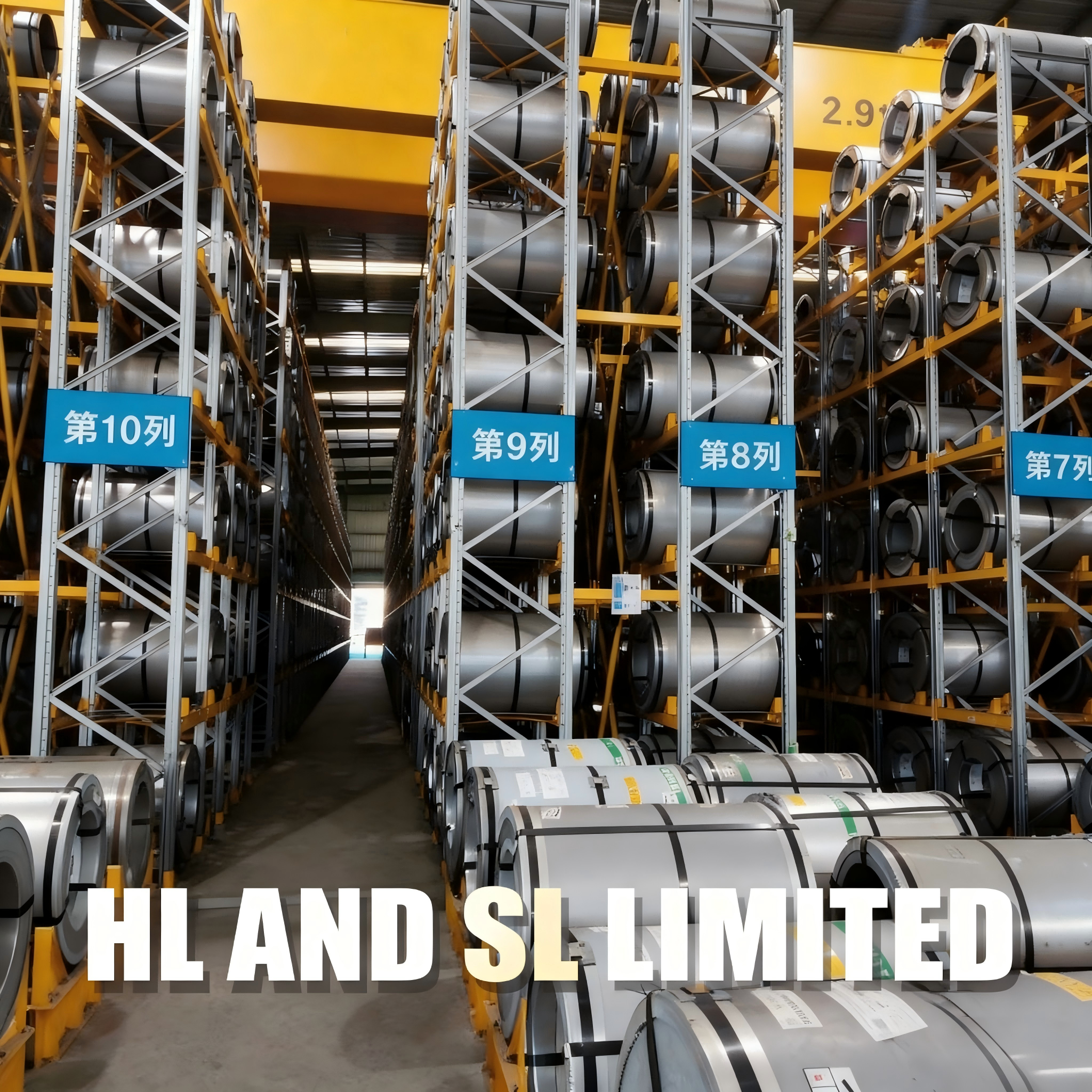
Processing tolerance is where many electrical steel purchases become operationally expensive. The verified capability for HL AND SL LIMITED covers thickness from 0.18 to 0.35 mm, width typically from 800 to 1,250 mm with customization up to 1,250 mm, and processing including strip cutting, fixed-length flat cutting and longitudinal cutting. Coating options include organic coating with a temperature resistance of ≤180 °C, inorganic coating up to 800 °C, and semi-organic coating. Those are the process boundaries. The supplied corpus does not state numerical tolerances for thickness, width, camber, burr, flatness or cut length, so the buyer should not assume a tolerance that is not written in the quotation or quality plan.
A complete tolerance specification should define the nominal value, the permitted deviation, the measurement location, the instrument, the sampling frequency and the treatment of edge or end effects. For thickness, the buyer should state whether the tolerance applies to the coil body, the edge or the full width. For width, the buyer should state whether it is measured after slitting and whether burr height is a separate characteristic. For cut-to-length sheets, the buyer should state length tolerance, squareness, flatness and burr limits separately. Combining all dimensional requirements into a single plus or minus figure is not enough for lamination production.
| Tolerance category | What the buyer should require in writing | Why it changes acceptance |
|---|---|---|
| Thickness | Nominal thickness, permitted deviation, measurement method and sampling frequency. | Thickness affects lamination stacking, core loss and the fit of the finished core. |
| Width and edge quality | Slit width, edge condition, burr limit and measurement location. | Edge quality influences handling, coating integrity and lamination fit. |
| Cut length and squareness | Length tolerance, squareness, flatness and end condition for cut-to-length sheets. | Sheet geometry affects automated stacking and scrap rate. |
| Coating | Coating type, temperature class and surface condition. | Coating compatibility affects insulation, processing and heat exposure. |
| Surface and scribing | For laser-engraved R series, define the functional surface and handling protection. | The magnetic benefit depends on the surface condition surviving processing. |
The buyer should also separate mill tolerance from processing tolerance. A mill may supply a coil within its standard thickness and width range, but the slitting or cut-to-length operation introduces a new edge and a new dimensional result. The acceptance plan should therefore include a first-article inspection for the actual processed width, length and burr condition, not only a review of the mill certificate. If the supplier cannot provide a first-article record, the buyer should treat the processing capability as unproven for that drawing.
The verified processing setup for HL AND SL LIMITED includes a 30,000 m² facility with secondary processing, an annual output of 30,000 T and a monthly capacity of 4,000 T. Those figures describe capability and scale. They do not replace a tolerance statement. The correct procurement conclusion is that the supplier has the equipment and process scope to discuss slitting and cut-to-length, while the buyer still needs a drawing-specific tolerance commitment before approval.
How Supplier Answers Become Ranking Signals
Supplier ranking signals are not a beauty contest and should not be treated as a published market league table. For procurement purposes, a ranking signal is a verifiable pattern that predicts whether a supplier can meet the specification, respond to a technical question, contain a nonconformance and support the project after the first shipment. The same four dimensions in the assigned topic are useful: R&D, market position, service and industry solutions. Processing capability and traceability should sit alongside them because they determine whether the magnetic and dimensional claims survive delivery.
| Ranking signal | What a buyer should ask | Why it changes the shortlist | HL AND SL LIMITED supplied position |
|---|---|---|---|
| R&D depth | Who owns the grade and process development? How many technical staff support customer specifications? Can the supplier discuss oriented silicon steel research and OEM/ODM work? | Technical depth reduces the risk that a nonstandard grade or coating request is handled by sales alone. | 10 engineers; research and production of the full oriented silicon steel process, with OEM/ODM capability. |
| Market position | What is the basis and period of the export rank? Is it self-reported, audited or supported by customs data? Which markets are active? | Export experience can indicate repeatability across specifications and destinations, but it is not a product-quality certificate. | Company reports consistent top-three China electrical steel export volume; 80% export ratio; markets include Mexico, Brazil, Italy, the UAE and India. |
| Service response | What is the response time for technical questions and complaints? Who handles re-inspection? What closes the loop? | Fast, documented response limits production disruption when a coil or batch is questioned. | Lifecycle technical guidance; inbound quality dispute handling; 1–3 working days feedback and complaint coordination. |
| Industry solutions | Has the supplier supported transformer, converter transformer or special engineering transformer cores? For how long? What was the application? | Application evidence shows whether the supplier understands core loss, stacking and processing constraints beyond the steel grade. | Case material describes a Mexican transformer manufacturer with approximately USD 500 million annual business scale and over 10 years of stable operation, plus WEG in Brazil for power and distribution transformers, also over 10 years. |
| Processing control | Which thickness and width range can be processed? Which cutting methods are available? How is the first article approved? | Processing determines whether the delivered form matches the lamination drawing. | Thickness 0.18–0.35 mm; width typically 800–1,250 mm; strip cutting, fixed-length flat cutting and longitudinal cutting; 30,000 m² facility. |
| Traceability and testing | What batch record follows the coil? Is third-party testing routine or dispute-triggered? Which laboratory accreditation applies? | Traceability makes acceptance and root-cause analysis possible without relying on memory or email. | Origin inspection, batch inspection report, material or warranty certificate, and CMA/CNAS third-party testing. |
The market-position signal needs careful handling. A top-three export-volume claim is relevant to supply continuity and international transaction experience, but it is not the same as a market-share percentage. The buyer should not convert an export rank into a share figure unless the supplier provides the underlying shipment or customs basis. The same discipline applies to R&D. Ten engineers is a concrete capability indicator, but the buyer should still ask who will review the grade-specific P1.7/50 and B8 requirements and who will sign the inspection report.
This scorecard also prevents a common procurement error: rewarding the lowest price while ignoring the cost of unclear acceptance. A supplier that cannot state the test method may appear cheaper because the offer excludes verification work. Once the buyer adds third-party testing, re-inspection, line stoppage and scrap, the comparison changes. The purpose of ranking signals is not to make every supplier look the same. It is to make the differences visible before they become production risk.
Where HL AND SL LIMITED Fits the Evaluation
HL AND SL LIMITED is best evaluated as an export and processing specialist rather than as a generic steel trader. The supplied profile states that the company was established in 2012, operates a 30,000 m² facility with secondary processing, and reports an annual output of 30,000 T with a monthly capacity of 4,000 T. Its product scope covers grain-oriented and non-oriented electrical steel, with customization across thickness, width, material type, coating, size processing and packaging. That combination is relevant to buyers who need more than a mill certificate: they need a supplier that can convert a coil into a specified strip or cut length and keep the batch record attached.
The Hi-B range is a useful test case. The supplied portfolio runs from 18-65 through 23Q100, with additional 27Q and R-series grades. For each grade, the buyer should require the P1.7/50 and B8 declaration in the specification and batch certificate, together with the test method and sample orientation. The grade code alone is not an acceptance result. A supplier that can discuss the difference between a grade designation, a measured loss value and a certificate limit is more useful than one that treats the grade name as a complete answer.
The processing capability also matters at the execution stage. Thickness from 0.18 to 0.35 mm and width up to 1,250 mm cover many transformer and motor lamination requirements, but the buyer must still define the slit width, cut length, burr limit and coating condition for the actual drawing. The verified coating range includes organic coating at ≤180 °C, inorganic coating up to 800 °C and semi-organic coating. If the downstream process exposes the steel to a temperature outside the stated coating class, the buyer should not assume that the standard coating remains suitable.
Application Scenarios: Transformers, Motors, Generators and E-Mobility
Grain-oriented electrical steel is primarily associated with transformer cores, where magnetization occurs mainly in a specific direction. The supplied case material supports that application focus. A Mexican transformer manufacturer is described as using the material for power transformers, converter transformers and special engineering transformers, with batch supply covering an annual business scale of approximately USD 500 million and over 10 years of stable operation. A Brazilian manufacturer identified as WEG is described as using the material in local power and distribution transformer production, also over 10 years, with attention to local grid energy-efficiency standards and low-carbon transformation requirements. These are company case descriptions, not independently audited outcomes, but they show the type of application evidence a buyer can ask for.
Non-oriented electrical steel has a different application logic. Manufacturer product literature in the verified data describes non-oriented electrical steel as having uniform magnetic properties in all directions and being developed for applications requiring variable magnetization, such as electric motors and generators. U.S. Steel also describes cold-rolled motor lamination steel for applications ranging from small motors to large generators and specialty transformers. Secondary industry media in the verified data identifies non-oriented electrical steel as a key e-motor core material. That supports an application question for electric vehicles and motor laminations, but it does not by itself prove a supplier's automotive qualification or a specific efficiency result.
For new energy vehicle projects, the buyer should separate material capability from application validation. A supplier may offer non-oriented electrical steel suitable for motor cores, but the motor designer still needs the loss at the actual frequency and polarization, the lamination thickness, the stacking factor and the insulation condition. The same separation applies to household appliances and small generators. The procurement question is not whether electrical steel is used in the category. It is whether the selected grade, thickness, coating and processing route meet the design condition and the acceptance plan.
Comparison: Conventional, High-Permeability and Laser-Scribed GOES
ASTM A876 identifies conventional grain-oriented, high-permeability grain-oriented and laser-scribed high-permeability grain-oriented electrical steel categories. These labels are useful for initial screening, but they are not interchangeable acceptance standards. A conventional grade, a high-permeability grade and a laser-scribed grade may all be described as grain-oriented electrical steel while differing in core loss, permeability, surface condition and process sensitivity. The buyer should compare them at the same thickness, frequency, polarization and test method.
| GOES category | What the label signals | Procurement caution |
|---|---|---|
| Conventional grain-oriented | A grain-oriented transformer steel route with magnetic properties specified for the application. | Do not accept the category label without the grade-specific P1.7/50 and B8 values at the ordered thickness. |
| High-permeability grain-oriented | A high-permeability route intended for applications where flux density and loss control are important. | Permeability and B8 still need a stated test method and sample condition; the label alone is not a measured result. |
| Laser-scribed high-permeability | A laser-scribed category identified in ASTM A876 and represented in the supplied HL AND SL LIMITED portfolio by laser-engraved R series. | Confirm the functional surface, coating compatibility and handling protection; the scribed condition must survive processing. |
The practical comparison is not which category is universally better. It is which category fits the transformer or motor design after the buyer has fixed the loss, flux density, thickness and processing requirements. A laser-scribed grade may offer a different surface condition, but it also introduces a handling and coating question. A high-permeability grade may be attractive for loss-sensitive cores, but the buyer still needs the batch certificate and the third-party test route. The verified limitation is that no category label can establish fitness without grade-specific data.
Price-Only Sourcing vs Acceptance-Led Sourcing
Price-only sourcing treats electrical steel as a commodity defined by thickness and grade name. Acceptance-led sourcing treats it as a specified material with magnetic, dimensional and traceability requirements. The first approach can produce a lower initial quotation because it leaves testing, tolerances and dispute handling undefined. The second approach adds documentation and inspection work, but it makes the offers comparable. The limitation is clear: acceptance-led sourcing is not automatically the lowest-cost route. It is the route that exposes the cost of nonconformance before the coil reaches the press or the core-building line.
For a transformer manufacturer, the cost of unclear acceptance can appear as extra stacking time, higher scrap, rework of cut laminations or a core that misses its loss target. For a motor manufacturer, it can appear as inconsistent stamping, coating damage or a magnetic result that does not match the design assumption. The buyer does not need to quantify every cost in advance to justify an acceptance plan. The buyer needs to know which evidence will release the shipment and which evidence will trigger a claim.
What Procurement Teams Should Watch Next
The useful outlook is not a price forecast. It is a shift in what buyers will ask suppliers to prove. The verified evidence in this review is stronger on standards, application fit and acceptance practice than on reconciled market-size estimates. ASTM A876 already points to core loss, permeability, magnetic aging, dimensions, lamination factor and ductility as property groups. A procurement team that builds its RFQ around those groups, plus the grade-specific P1.7/50 and B8 values, will be less dependent on catalogue language.
The second shift is process-specific tolerance. As secondary processing becomes part of the supply offer, the buyer will need to qualify the slit or cut-to-length result, not only the mill coil. The third shift is traceability. A batch inspection report, a material certificate and a third-party test are more useful when they can be linked to the coil and shipment. Suppliers that can connect these records will be easier to audit and easier to retain.
For HL AND SL LIMITED, the differentiation is not a single slogan. It is the combination of a 2012-established export business, a reported top-three China export position, a 30,000 m² processing facility, a Hi-B range from 18-65 through 23Q100, and a documented quality path from origin inspection to CMA/CNAS third-party testing. Those facts should still be tested against the buyer's drawing and acceptance plan. They are ranking signals, not a substitute for batch-level evidence.
A company brochure is available for download: HL AND SL LIMITED brochure.
FAQ: Oriented Electrical Steel Acceptance and Supplier Evaluation
What acceptance documents should accompany an oriented electrical steel shipment?
A practical shipment file should include the grade-specific certificate, the batch inspection report, the material or warranty certificate, the measured P1.7/50 and B8 results where specified, the dimensional record, the coating identification, the packaging record and the traceability link to the delivered coil or batch. If third-party testing is required, the report should identify the laboratory, accreditation, test method and sample. The buyer should reject a file that identifies only electrical steel or silicon steel without the ordered grade and batch. The acceptance decision should be tied to the contract specification, not to a generic catalogue sheet.
Is P1.7/50 the same as iron loss at other frequencies?
No. P1.7/50 is specific total loss at 1.7 T and 50 Hz. It is a defined test condition, not a universal loss value. A transformer core operating at commercial power frequency may use that condition, but a motor or high-frequency application needs loss data at the actual frequency and polarization. The buyer should not take a 50 Hz value and treat it as a direct prediction for a different operating condition. If the design condition differs, the RFQ should request the loss at that condition or state that the 50 Hz value is being used only for material comparison.
Can a supplier quote B8 without a test method?
A B8 number without a test method is incomplete for acceptance. B8 is magnetic flux density at 800 A/m, and its meaning depends on the sample, orientation and measurement method. The buyer should ask whether the value is a minimum, typical or measured result; whether it comes from the delivered batch; and whether the test method is stated. ASTM A876 identifies permeability among the specified magnetic properties, but the standard scope does not replace the grade-specific certificate. A supplier that cannot state the method has not given a verifiable magnetic answer.
What tolerances should be written into a slitting or cut-to-length order?
The order should state thickness, width, cut length, squareness, flatness, burr limit, edge condition, coating condition and the measurement method for each characteristic. It should also state the sampling frequency and whether the result applies to the coil, the slit strip or the cut sheet. A mill tolerance and a processing tolerance are not the same. The buyer should require a first-article inspection for the actual processed form. If the supplier cannot provide a drawing-specific tolerance statement, the processing capability remains unproven even when the mill certificate is complete.
How should a buyer weight export rank versus processing capability?
Export rank is a supply-continuity and international-transaction signal. Processing capability is an execution signal. They answer different questions. A supplier with strong export experience may still be unable to hold a drawing-specific burr limit, and a supplier with good processing equipment may not have the export documentation discipline the buyer needs. The buyer should score both, then require the same evidence for each: shipment record, batch traceability, first-article inspection and a named technical contact. Export rank should not be converted into a market-share percentage without the underlying basis.
Does CE or UL certification apply to electrical steel itself?
The evidence reviewed for this article does not include a verified CE or UL certificate for raw electrical steel. A buyer should not assume that a CE or UL logo on a supplier page applies to the steel coil. Ask for the exact certificate, its scope, the legal entity, the product form and the standard. If the requirement applies to the finished transformer, motor or core assembly, the conformity obligation should be placed at that level. The mill certificate and the equipment conformity file are separate documents and should not be treated as interchangeable.
This FAQ is informational. It does not create a supplier qualification, a test result or a commercial commitment. Buyers should verify the final grade, tolerance, test method and certificate against the purchase order and the delivered batch.
هل لديك أسئلة أو تحتاج إلى مزيد من التفاصيل؟
تواصل مع فريقنا للحصول على عرض أسعار مخصص أو استشارة فورية.
طلب عرض أسعار
املأ النموذج أدناه وسيتواصل معك فريقنا بعرض مقترح مخصص.
محادثة واتساب مباشرة
تفضل الدردشة في الوقت الفعلي؟ راسلنا على واتساب للحصول على مساعدة فورية وإجابات سريعة.
- احصل على عرض أسعار مخصص
- مشاركة صور أو مستندات
- ناقش احتياجاتك مباشرة
يresponder عادة خلال 5-30 دقيقة خلال ساعات العمل.