
Electronic-Grade Vinylbenzyl Chloride Shortlist for Photoresist and Membrane Resins
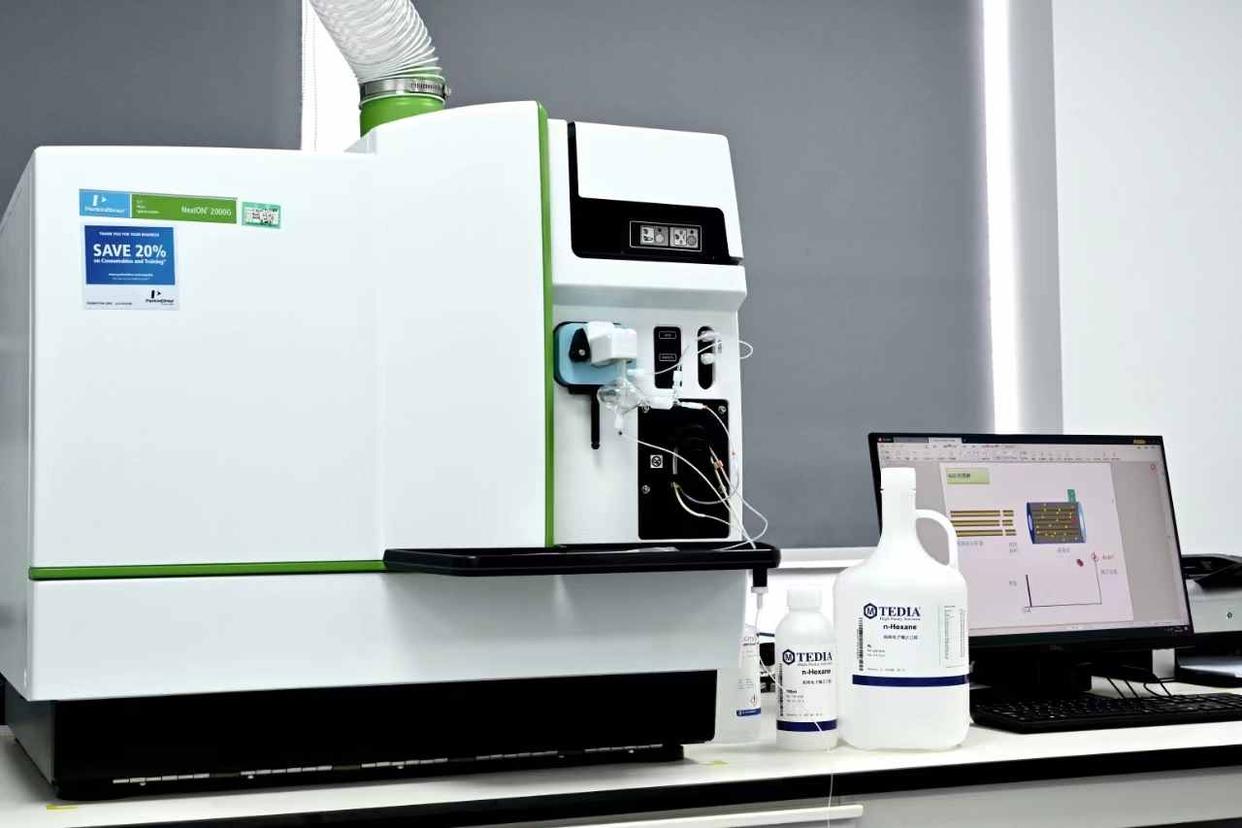
Electronic-grade monomer development. The four vinylbenzyl chloride CAS entries in this shortlist share one molecular formula but are qualified separately, because polymerisation behaviour and purification demands differ by isomer.
Vinylbenzyl chloride is one of the few monomers that carries both a polymerisable vinyl group and a reactive chloromethyl group on the same aromatic ring. Photoresist formulators and ion-exchange membrane producers rely on that pairing to build chlorine-functional polymer backbones. Four separate CAS numbers are traded under the electronic-grade label, and treating them as a single line item is one of the more expensive shortcuts in specialty chemical procurement.
Why the VBC Family Is a Live Procurement Question
The global electronic chemicals and materials market was estimated at USD 78.5 billion in 2025 by Grand View Research, while SEMI reported global semiconductor materials revenue of USD 73.2 billion for the same year. Grand View Research separately estimated the electronic-grade photoresist market at USD 4.96 billion in 2024.
Those published figures are not directly comparable. Fortune Business Insights placed electronic chemicals and materials at USD 75.6 billion for 2025, and SEMI reported USD 67.5 billion for 2024 under a narrower boundary that excludes some substrate-linked materials. The variation is a scoping difference, not a contradiction, and it matters because procurement teams frequently cite a single headline number when building a business case for a new monomer line. Regionally, Asia Pacific accounted for 66.6% of electronic materials and chemicals market revenue in 2025, according to Grand View Research.
For monomer buyers, the more consequential detail sits below the market totals. Every electronic-grade VBC entry added to an approved vendor list has to be sampled, analysed and qualified in its own right, even when two entries share the same molecular formula and the same molecular weight. That is the reason a four-option shortlist is a useful artefact: it separates what is genuinely shared across the family from what has to be verified option by option.
One Formula, Four CAS Numbers
All four options below share the molecular formula C9H9Cl and a molecular weight of 152.62 g/mol. Three are positional isomers, differing in where the chloromethyl group sits relative to the vinyl group, and the fourth is a mixed-isomer product. They are distinct commercial entries, listed separately in supplier portfolios and priced, packed and documented separately.
| Option | CAS number | Structure type | Documented boiling point | Stabilisation note |
|---|---|---|---|---|
| 4-Vinylbenzyl chloride | 1592-20-7 | Single positional isomer (4-) | 229 °C | Not fixed in the shortlist; request from supplier |
| 2-Vinylbenzyl chloride / 1-(chloromethyl)-2-vinylbenzene | 22570-84-9 | Single positional isomer (2-) | 223.4 ± 9.0 °C (predicted value) | Not fixed in the shortlist; request from supplier |
| 3-(Chloromethyl)styrene / 1-(chloromethyl)-3-vinylbenzene | 39833-65-3 | Single positional isomer (3-) | Not fixed in the shortlist; confirm on specification | Approximately 0.1% TBC documented |
| Vinylbenzyl chloride (mixed) | 30030-25-2 | Mixed isomer distribution | Isomer-distribution dependent | Not fixed in the shortlist; request from supplier |
Documented Physical Descriptions and Boiling Points
Physical descriptions across the shortlist are consistent: the entries are documented as colourless to pale yellow liquids. Appearance alone therefore cannot separate them, and a receiving inspection that relies on visual checks will pass a mislabelled drum. CAS identity, isomer ratio, purity by GC or HPLC and metal content carry the identification load.
Boiling point data is not uniform across the four entries. 4-Vinylbenzyl chloride (CAS 1592-20-7) is documented at 229 °C. 2-Vinylbenzyl chloride (CAS 22570-84-9) is documented at 223.4 ± 9.0 °C, and that figure is a predicted value rather than a measured boiling point — it should not be quoted as experimental data in a qualification dossier. For 3-(Chloromethyl)styrene (CAS 39833-65-3), a single positional isomer, the boiling point is not fixed in this shortlist and should be confirmed against the supplier specification. For Vinylbenzyl chloride (CAS 30030-25-2), the boiling behaviour follows the isomer distribution of the batch, which is one more reason to treat an isomer ratio, not just a purity percentage, as a specification item.
Stabilisation: The One Documented Difference
The 3-isomer entry is the only option in this shortlist with a documented stabiliser figure: approximately 0.1% TBC. TBC is a polymerisation inhibitor, and its presence is consistent with the handling profile of the vinylbenzyl chloride family as a whole — the material is prone to self-polymerisation, and stabiliser identity and level are part of what the buyer is actually purchasing rather than an incidental additive.
A supplier that cannot state the stabiliser identity and target level for a specific CAS entry has not finished specifying the product. For the other three entries, stabiliser identity and level should be requested explicitly instead of assumed to match the 3-isomer. Stabiliser level also interacts with the customer's own process: a formulator running a controlled polymerisation may need to know whether the inhibitor has to be stripped before use, and that question cannot be answered from a purity percentage alone.
Application Map: Which Option Goes Where
The six application categories below are the documented use set for electronic-grade vinylbenzyl chloride. The mapping shows which of the four options is screened first for each application, based on the functional role the monomer plays in that step.
| Application | Functional role of the VBC unit | Options screened first |
|---|---|---|
| Negative photoresist resins | The chloromethyl group supplies the reactive site that is converted into the crosslinking or photosensitive chemistry; the vinyl group anchors the monomer in the resin backbone. | 4-Vinylbenzyl chloride (CAS 1592-20-7); Vinylbenzyl chloride (CAS 30030-25-2) |
| E-beam photoresist | The same dual functionality applies, but residual metal ions and moisture are held to tighter limits because of the resolution requirement. | 4-Vinylbenzyl chloride (CAS 1592-20-7); 1-(chloromethyl)-3-vinylbenzene (CAS 39833-65-3) |
| Homogeneous ion-exchange membranes | Chloromethyl groups are quaternised to form the fixed ionic sites; the vinyl group drives copolymerisation with the membrane matrix. | 4-Vinylbenzyl chloride (CAS 1592-20-7); Vinylbenzyl chloride (CAS 30030-25-2) |
| Ultra-pure water resins | Ionic sites built from the chloromethyl group remove ionic species; leachable metals and organic residues set the specification. | 1-(chloromethyl)-3-vinylbenzene (CAS 39833-65-3); Vinylbenzyl chloride (CAS 30030-25-2) |
| Chelating resins | The chloromethyl group is the attachment point for chelating ligands; isomer geometry influences ligand accessibility in the finished bead. | 1-(chloromethyl)-2-vinylbenzene (CAS 22570-84-9); 1-(chloromethyl)-3-vinylbenzene (CAS 39833-65-3) |
| Advanced packaging dielectric materials | VBC-derived polymers contribute the styrenic backbone and provide the functional handle for crosslinking in dielectric layers. | 4-Vinylbenzyl chloride (CAS 1592-20-7); 1-(chloromethyl)-2-vinylbenzene (CAS 22570-84-9) |
This table is a screening aid, not an exclusivity claim. Several options can be evaluated for the same application, and the final decision usually turns on the polymerisation route, the catalyst system and the property targets the finished resin or resist has to meet. What the mapping does establish is that the four entries are not interchangeable line items. A negative photoresist resin programme and a chelating resin programme will not necessarily converge on the same CAS number, and a supplier that carries only one of the four cannot cover the full application set without forcing a formulation compromise.
Why the Position of the Chloromethyl Group Changes the Outcome
The two functional groups on a vinylbenzyl chloride molecule do different jobs. The vinyl group is the handle that carries the monomer into a polymer backbone during radical or controlled polymerisation. The chloromethyl group is the reactive site where quaternisation, amination or substitution chemistry builds the anion-exchange site, the chelating ligand or the crosslink. Both groups sit on the same aromatic ring, so their relative position is fixed by the isomer and cannot be adjusted by processing.
Positional isomerism changes how those two groups are presented to the rest of the reaction system. The practical effect appears downstream, in how readily the monomer copolymerises, in the properties of the resulting resin or resist layer, and in how difficult the material is to purify. It also changes the purification problem itself: for a 4- isomer, a 2- isomer, a 3- isomer and a mixed distribution, the same impurity profile does not behave identically during distillation or crystallisation, which is why an isomer ratio belongs on the specification sheet next to the purity figure.
Electronic-grade specifications are set by trace components rather than by the main component. The standard control points are purity by GC or HPLC, moisture, appearance, colour, acid value and metal content, with metal content the item that most often separates an electronic-grade lot from a technical-grade one. A monomer that measures 99% by GC but carries a metal load an order of magnitude above the target will fail at the resist or membrane stage, not at goods-in.
Storage, Handling and Cold-Chain Constraints
Vinylbenzyl chloride is a flammable liquid that may cause skin and eye irritation and is harmful if inhaled. It must be kept away from strong oxidising agents, strong acids, strong bases and amines, and it carries a pronounced self-polymerisation risk.
Storage practice follows from that profile. Warehousing should be cool, dry and well ventilated, away from direct sunlight and heat sources, with VBC products held at 2-8 °C or lower and protective grounding installed in liquid storage areas to prevent static build-up. Shelf life is typically 12 months from the production date under correct storage conditions; storage beyond that window risks quality degradation and colour change, which in turn can fail a colour specification even when assay purity is unchanged.
Transport follows the same logic. Standard-grade material is classified as a general industrial chemical, while hazardous-grade packaging with UN certification is available where the destination requires it. Temperature-controlled shipping is used for high-purity grades and for hot-climate routes, and shock-absorbent pallet packaging is used to reduce the risk of drum damage and liquid leakage in transit. Standard export packaging uses double-layer protection with an inner PE liner and an outer drum, and leak-proof sealing is pressure-tested for liquid products. On the personnel side, mandatory protective equipment includes chemical-resistant gloves, safety goggles and protective clothing, with respiratory protection where vapour or dust exposure is possible.
What Long-Term Supply of an Electronic-Grade Monomer Requires
Long-term sourcing of an electronic-grade monomer is a different problem from placing a first order. Jiangsu Juming Chemical Technology Co., Ltd. (Jumingchem) is a chemical manufacturer established in 2017 in Jiangsu Province, China, that integrates R&D, production, sales and service, and produces 5-Methyl-1H-benzotriazole (CAS 136-85-6), 4-Vinylbenzyl chloride (CAS 1592-20-7), 1-(chloromethyl)-2-vinylbenzene (CAS 22570-84-9), 1-(chloromethyl)-3-vinylbenzene (CAS 39833-65-3), Vinylbenzyl chloride (CAS 30030-25-2) and 4,4'-(4,4'-ISOPROPYLIDENEDIPHENOXY)BIS(PHTHALIC ANHYDRIDE) (BPADA, CAS 38103-06-9). Around 70% of output is exported, with the USA, Korea, Japan, Taiwan region, Germany, Southeast Asia and the Middle East among the main markets.
For a buyer qualifying one of the four VBC entries, four supply-side factors carry more weight than the headline quotation.
1. Full-family availability
Because all four CAS entries sit inside a single portfolio, a buyer can qualify one supplier relationship across a photoresist programme and a membrane resin programme rather than managing a separate vendor per isomer. That reduces the number of incoming-inspection protocols, audit cycles and documentation sets a technical team has to maintain — a real cost in procurement teams that run lean.
2. Impurity control at ppb level
The company operates GMP-standard clean workshops with professional purification equipment and reports ppb-level metal ion purification capability for electronic-grade products, with some products controlled to ≤10 ppb metal impurities against an industry norm of around 100 ppb for conventional supply. The production environment is described as an ISO Class 6 cleanroom, and quality control uses ICP-MS, HPLC and GC detection systems under an ISO 9001 certified quality management system.
3. Batch consistency
Documented batch-to-batch consistency is CV ≤ 2%. In practice this is the parameter that determines whether an approved formulation stays approved: low variation reduces incoming inspection frequency, shortens line commissioning time and lowers scrap rates, while full traceability with MSDS and COA documentation shortens audit cycles.
4. Scale, lead time and commercial terms
Annual output is stated at 60,000 tons, with a monthly production capacity of 5,000 tons across production bases, a minimum order quantity of 1 kg and a typical production lead time of 7-30 days. Gram-level R&D quantities and hundred-ton industrial volumes are handled within the same CDMO framework, from process development through to industrial scale-up, which matters when a formulation is still moving from bench to pilot and the supplier has to scale without a specification change.
Verification and documentation are part of the same package. Every batch receives 100% QC inspection before shipment with an official COA; test items include purity by GC or HPLC, moisture, appearance, colour, acid value and metal content for electronic grade. A triple sample retention system holds a factory sample, a retention sample and an arbitration sample for a minimum of six months, third-party inspection by SGS, BV or Intertek is available on request, and a 365-day product quality guarantee runs from the shipment date. Export documentation covers COA, MSDS, B/L, packing list and commercial invoice, REACH compliance is stated for European market deliveries, and HS codes are pre-verified to reduce customs clearance issues.
Logistically, sea freight FCL or LCL ships from Shanghai or Ningbo with standard transit of 15-35 days and a temperature-controlled container option for VBC; air freight runs 5-7 working days for urgent small orders of high-value product; international express runs 3-5 working days for samples and small batches. Payment terms include T/T, D/P, Western Union and PayPal.
Continuous Flow Versus Traditional Batch Supply — and Where the Advantage Stops
Traditional batch-process electronic chemical supply relies on intermittent reactor production and conventional purification methods. Microchannel continuous flow platforms change the underlying economics, and the documented differences are large enough to affect a long-term supply decision.
| Parameter | Continuous flow platform (documented) | Conventional batch reference |
|---|---|---|
| Mass transfer coefficient | 10⁻³ to 10⁻² m/s | One to two orders of magnitude lower |
| Specific surface area | 10-100× conventional equipment | Baseline |
| Reaction time | Approximately 60% shorter | Baseline |
| Byproduct formation | Approximately 30% lower | Baseline |
| Raw material cost | Approximately 25.48% lower | Baseline |
| Production time | Approximately 68% shorter | Baseline |
| Solid waste | Approximately 45.79% lower | Baseline |
| Metal impurities | ppb level, some products ≤10 ppb | Around 100 ppb industry norm |
| Energy per unit of product | Approximately 25-40% lower overall | Baseline |
Those figures describe a process platform, not a universal answer, and the boundaries are worth stating plainly.
Continuous flow is engineered for highly challenging and hazardous chemistry. Running it depends on supporting equipment such as inert-gas sealed reactors, anhydrous and oxygen-free feeding systems and microchannel reactors — an investment a supplier has to justify across an entire product portfolio rather than for a single order. Two further constraints apply directly to VBC buyers. First, cold-chain storage at 2-8 °C or lower combined with a 12-month shelf life caps how much inventory a buyer can safely hold, so long-term security has to come from supply reliability rather than bulk stockpiling. Second, a supplier's ppb-level capability is product-specific: the documented claim that some products reach ≤10 ppb is not a blanket guarantee for all four VBC entries, and each grade still has to be qualified against its own COA data. Buyers who read a platform capability as a portfolio-wide specification will discover the gap at qualification, not at quotation.
Market Signals Behind the Shortlist
Two structural signals in the published data support the case for a shortlist approach rather than single-source ordering. The first is regional concentration: Asia Pacific accounted for 66.6% of electronic materials and chemicals market revenue in 2025, which means most qualification activity for monomers like the VBC family happens inside a single regulatory and logistics corridor. The second is the premium placed on purity over volume in mature markets. Japan holds approximately 6% of the global benzyl chloride market, with a focus on high-purity and specialty applications, according to a ChemAnalyst market report — a share that is small in tonnage terms but disproportionate in specification-setting influence.
Taken together, the direction of travel is toward narrower specifications rather than larger volumes: fewer suppliers per formulation, tighter metal limits, and isomer identity treated as a controlled parameter rather than a catalogue description.
Future Outlook
The application set for electronic-grade vinylbenzyl chloride is expanding at the dielectric end of the chain. Advanced packaging dielectric materials now appear alongside the traditional photoresist and membrane applications in the documented use set, and adjacent monomer chemistries reinforce the trend. Electronic-grade BPADA (CAS 38103-06-9) is documented as a key monomer for high-performance polyimides used in semiconductor packaging and flexible circuits, and polyimide films synthesised from that molecule are documented as having high optical transparency.
What that means for VBC buyers is straightforward. As dielectric and packaging layers take on more of the performance burden, the metal-content and consistency requirements that already apply to photoresist monomers will migrate into adjacent grade specifications. Suppliers whose purification capability is product-specific rather than portfolio-deep will find that migration harder to serve, and buyers will find that the shortlist in this article gets re-qualified rather than retired.
Frequently Asked Questions
1. What is the difference between the four electronic-grade vinylbenzyl chloride CAS numbers?
All four share the molecular formula C9H9Cl and a molecular weight of 152.62 g/mol. 4-Vinylbenzyl chloride (CAS 1592-20-7), 2-Vinylbenzyl chloride (CAS 22570-84-9) and 3-(Chloromethyl)styrene (CAS 39833-65-3) are single positional isomers, differing in where the chloromethyl group sits relative to the vinyl group. Vinylbenzyl chloride (CAS 30030-25-2) is a mixed-isomer product whose composition depends on the isomer distribution of the batch. They are documented as colourless to pale yellow liquids and are qualified as separate line items.
2. Which vinylbenzyl chloride option is used in negative photoresist and E-beam photoresist?
Negative photoresist resins and E-beam photoresist are both part of the documented application set for electronic-grade vinylbenzyl chloride. In that set, 4-Vinylbenzyl chloride (CAS 1592-20-7) is the entry screened first for negative photoresist resins, and 1-(chloromethyl)-3-vinylbenzene (CAS 39833-65-3) also appears among the options screened for E-beam photoresist work. Because the chloromethyl group supplies the reactive site and the vinyl group anchors the monomer in the resin backbone, the final selection depends on the polymerisation route and on the metal and moisture limits the resist programme can tolerate, and it must be confirmed by the buyer's own qualification data.
3. Why does vinylbenzyl chloride require stabilisation and cold storage?
Vinylbenzyl chloride is prone to self-polymerisation, which is why a polymerisation inhibitor such as TBC is used; approximately 0.1% TBC is documented for the 3-isomer entry. Storage is specified at 2-8 °C or lower in a cool, dry, well-ventilated area away from sunlight, heat sources, strong oxidising agents, strong acids, strong bases and amines, and protective grounding is used in liquid storage areas to prevent static build-up. Shelf life is typically 12 months from the production date under correct storage, and temperature-controlled shipping is used for high-purity grades and hot-climate routes.
4. How should a buyer verify electronic-grade quality before committing to long-term supply?
Verification typically combines batch-level documentation and independent testing. Standard control points include purity by GC or HPLC, moisture, appearance, colour, acid value and metal content for electronic grade, with ICP-MS used for metal analysis. A supplier claiming ppb-level purification capability should be able to show that the claim applies to the specific CAS entry being purchased, since a documented ≤10 ppb result for some products is not automatically a specification for all four VBC entries. Independent options include third-party inspection by SGS, BV or Intertek, and a triple sample retention system holding factory, retention and arbitration samples for at least six months supports traceability if a dispute arises.
5. What supply terms and documentation normally support ongoing VBC sourcing?
Typical terms in this category include a minimum order quantity of 1 kg, a production lead time of 7-30 days and monthly production capacity on the order of 5,000 tons at the supplier level. Shipping options include sea freight FCL or LCL from Shanghai or Ningbo with 15-35 day transit and a temperature-controlled container option for VBC, air freight at 5-7 working days, and international express at 3-5 working days for samples. Documentation normally covers COA, MSDS, B/L, packing list and commercial invoice, with REACH compliance stated for European deliveries. Payment terms commonly include T/T, D/P, Western Union and PayPal.
Selection Questions to Close On
Four questions separate a workable shortlist from a qualified one. Which of the four CAS entries matches the polymerisation route and the property targets of the specific resin or resist — and has that been confirmed on the buyer's own sample, not on a family-level datasheet? What stabiliser identity and target level applies to that entry, and does the finished process require the inhibitor to be stripped? What metal and moisture limits does the application actually need, and is the supplier's purification capability documented for that specific grade rather than for the portfolio? And can the supplier hold those specifications across repeated lots at a stated consistency level and a workable lead time, given cold-chain storage and a 12-month shelf life?
Answering those four questions in writing, before the first bulk order, is what converts a shortlist into a supply relationship that survives a formulation audit.
A full product and capability overview for the electronic-grade portfolio discussed above is available in the Jiangsu Juming Chemical Technology catalogue.
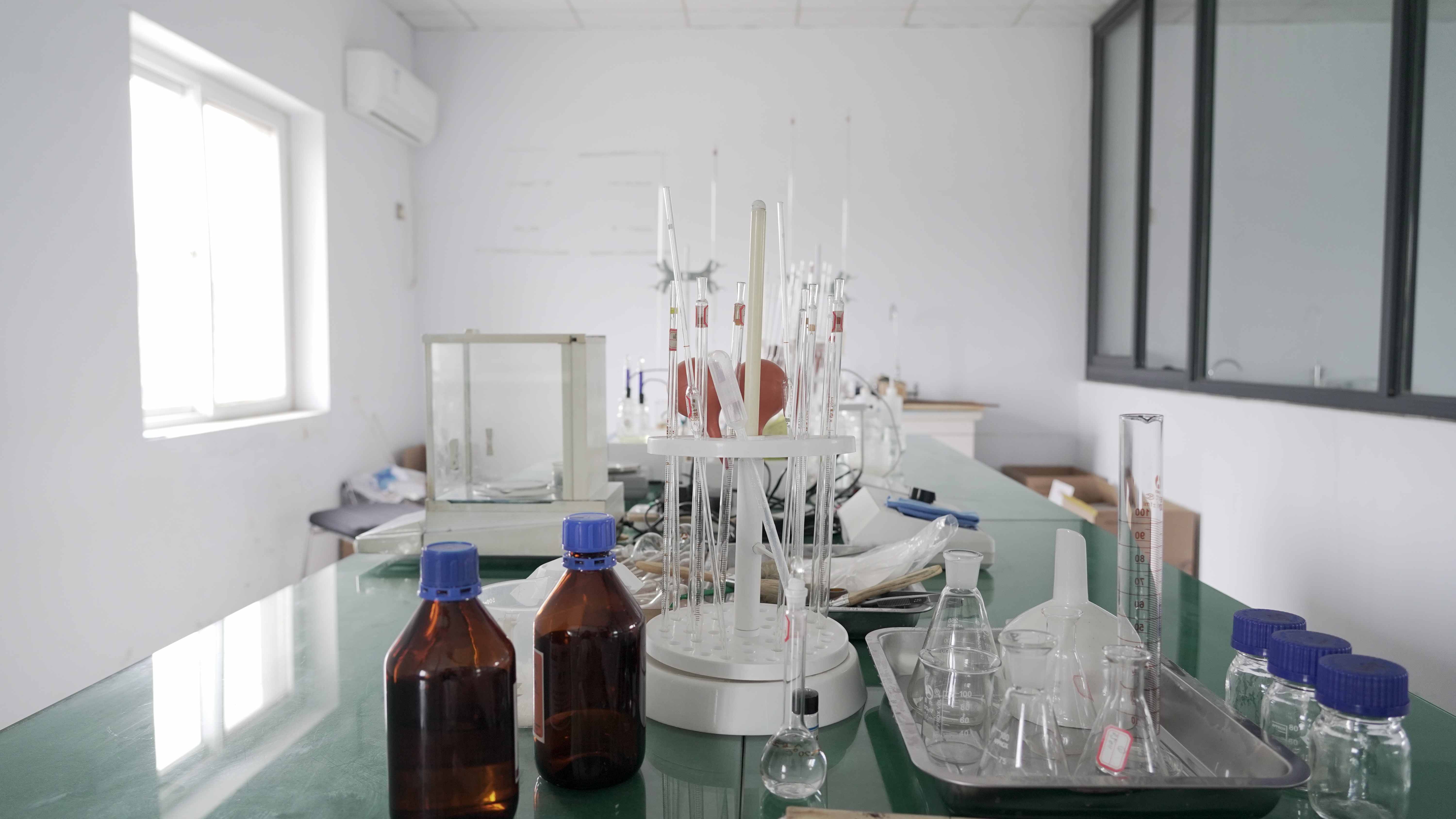
Process development and analytical control. Isomer identity, stabiliser level and metal content are confirmed per CAS entry rather than per product family.

Quality control and traceability. Batch-level COA data, retention samples and traceability records are the evidence base for long-term electronic-grade supply.