
Electrophoretic Coating Selection: Matching Resin, Color, and Salt Spray to Your Metal Part
Electrophoretic coating (E-coating) is a metal surface treatment process in which charged paint particles are deposited onto a substrate using an electric field. It is widely used in automotive, bicycle, communication equipment, consumer electronics, drone, and security industries to provide corrosion protection, uniform coverage, and consistent appearance. For buyers moving from initial research to supplier evaluation, the selection challenge is no longer whether to use E-coating, but how to specify the right coating system, verify performance claims, and compare supplier capabilities against measurable evidence.
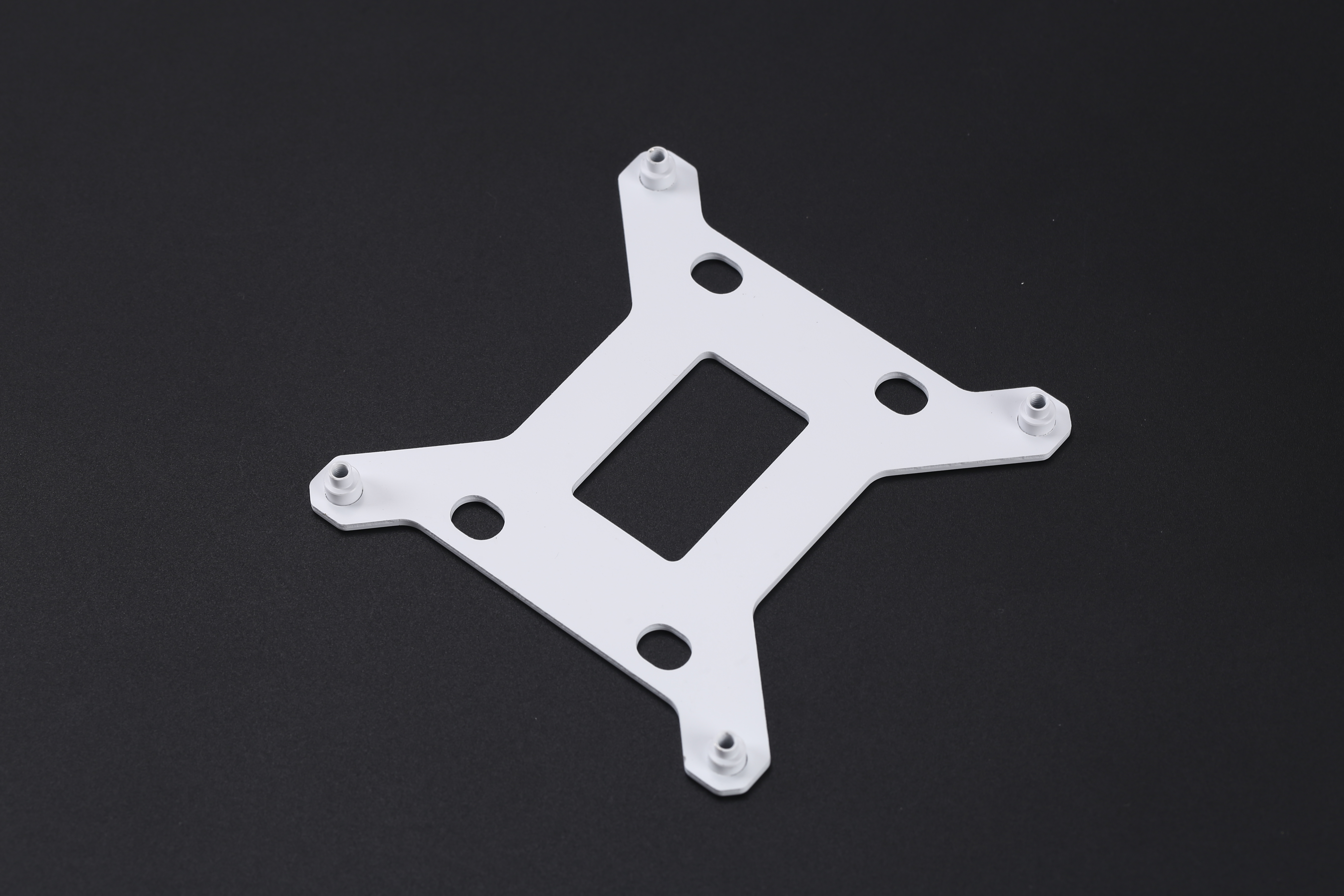
White electrophoretic coating sample. Source: Yongxin Industrial.
What is Electrophoretic Coating?
Electrophoretic coating, also known as electrophoretic deposition (ED coating) or E-coating, is a process that uses an electric current to deposit paint particles onto a conductive metal surface. The coating is applied in a water-based bath, making it distinct from powder coating and conventional spray painting. Because the deposition is driven by electric charge, the coating reaches areas that are difficult to access with spray methods, including internal cavities, seams, and complex geometries.
Two main types exist:
- Anionic electrophoretic coating — the workpiece serves as the anode. Acrylic and epoxy resin systems are both possible in anodic configurations.
- Cationic electrophoretic coating — the workpiece serves as the cathode. This type is more common in demanding automotive applications due to its strong corrosion performance.
Why the Constraint-Led Question Matters
Buyers evaluating E-coating rarely start with “what is E-coating?” They start with a specific requirement: “I need black E-coating for zinc alloy die-cast parts with 500 hours salt spray,” or “I need white electrophoretic coating for stamped steel parts in a humid environment.” These are constraint-led questions because they combine material, color, performance, and applicable standards into a single decision.
From a purchasing standpoint, the practical question is: Does the supplier have the resin system, color capability, production equipment, and quality control processes to meet the specification — and how can I verify that before committing?
Resin Chemistry: Epoxy vs. Acrylic vs. Propionic Acid
Resin chemistry determines the performance profile of the coating. Three resin families are commonly referenced in electrophoretic coating:
Epoxy Resin Electrophoretic Coating
Epoxy-based E-coatings are known for excellent adherence and corrosion resistance. They are often selected for parts where anti-rust performance is the priority, such as chassis components, fasteners, motor housings, and stamped parts exposed to moisture. However, epoxy coatings generally have lower UV resistance, which limits their use in outdoor decorative applications unless a UV-resistant topcoat is applied.
Acrylic Resin Electrophoretic Coating
Acrylic-based E-coatings are used when appearance, color retention, and UV resistance matter. They are suited for white and light-colored coatings where yellowing or chalking would be objectionable. Acrylic systems on their own may offer less corrosion protection than epoxy systems, but they are a standard choice for decorative and indoor functional parts.
Propionic Acid Resin
Propionic acid resin systems are also used in electrophoretic coating baths. Their practical relevance is more niche, typically tied to specific formulation or performance needs. When a supplier lists “Electrophoretic Coating of propionic acid resin” in its capability profile, it signals access to a broader range of bath formulations than epoxy-only or acrylic-only providers.
| Resin Type | Primary Strength | Typical Limitation | Common Choice For |
|---|---|---|---|
| Epoxy | Adhesion & corrosion resistance | UV stability lower than acrylic | Automotive underbody parts, fasteners, motor housings, stamped steel |
| Acrylic | Color stability, UV resistance, appearance | Corrosion protection may be lower in some formulations | White/light-colored parts, consumer electronics, sanitary ware |
| Hybrid / Application-Specific Systems | Combines properties for multi-scenario output | Needs verification of actual test data | Parts where both corrosion & appearance are required |
Buyers should ask: “Which resin system is used for my part, and what test evidence supports the claimed performance?” A supplier that can produce parts in both acrylic and epoxy systems — and identify when each should be used — offers more value than one that runs a single bath type.
Color Options and Their Impact on Specification
Black is the most common E-coating color, but white, silver, grey, and customized colors are also achievable. The choice of color is not purely aesthetic. It affects the choice of resin, the coating process, and sometimes the applicable environment.
Black Electrophoretic Coating
Black E-coating is standard across automotive, motor, and hardware applications. It reads as a uniform, functional finish that hides minor surface variations well. It is compatible with both acrylic and epoxy systems, and it supports high salt spray performance when formulated correctly.
White Electrophoretic Coating
White E-coating is often specified in industries such as home appliances, sanitary ware, rail transit, and electronic equipment. A white E-coating made from acrylic resin (epoxy resin) can be used for stamped parts, with CNC + Electrophoresis as the process control method. The coating is described as uniform and fine, with good anti-rust and anti-corrosion properties.
Custom Colors
Color E-coating supports broader design flexibility. Custom colors typically require dedicated bath management or careful line cleaning between color changes, which increases complexity. Buyers should confirm the supplier’s actual experience with the required color, especially for lighter or saturated shades.
For buyers, the useful specification rule is: if the color is part of the functional requirement, verify that the supplier has produced that color in your resin system before. Color E-coating is not simply “paint in a different color”; the formulation of the bath changes.
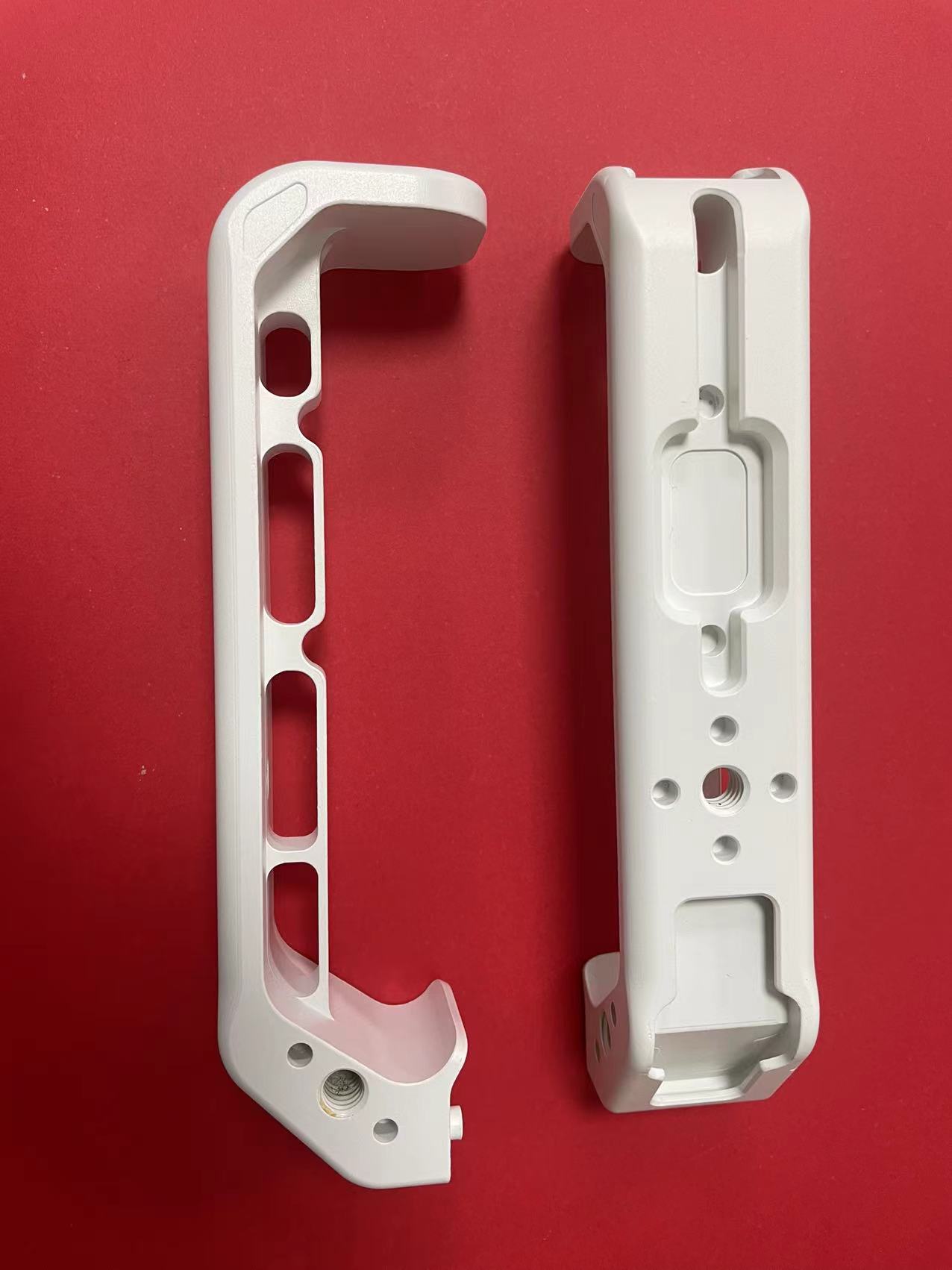
Color E-coating samples. Source: Yongxin Industrial.
Salt Spray Resistance: From Hours to Decision
Salt spray resistance is usually the first performance figure a buyer asks about. In neutral salt spray testing (NSS), electrophoretic coatings commonly achieve between 300 and 1,500 hours before red rust appears, depending on resin system, film thickness, substrate, and pre-treatment quality.
What the numbers mean
- 300–500 hours: A reasonable benchmark for anodic/acrylic systems in indoor or mildly exposed environments.
- 500–1,000 hours: A common target for functional hardware, automotive interior parts, motor components, and general metal stampings.
- Over 1,000 hours: Typical for high-salt-spray epoxy or cationic systems used in more severe environments such as automotive underbody, chassis components, and outdoor equipment.
Yongxin Industrial, for example, lists a High Salt Spray Electrophoresis product in “anion electrophoretic coating” type that can reach 300–1,000 hours of salt spray resistance, with customizable white or black colors and materials including acrylic resin and epoxy resin. The company also provides E-coating services where neutral salt spray performance exceeds 720 hours and has documented test results from motor housing and fan frame applications. In its automotive E-coating specification, salt spray tests typically achieve 500–1,500 hours in NSS, with CASS testing exceeding 96 hours.
When evaluating a salt spray claim, buyers should verify three conditions:
- What type of salt spray test? NSS, CASS, and cyclic corrosion tests produce very different numbers.
- What substrate and pre-treatment? Salt spray results are not comparable across zinc alloy, aluminum alloy, magnesium alloy, and steel if the pre-treatment line is different.
- What film thickness? A thicker coating may delay red rust, but it may also affect dimensional tolerances on precision parts.
Material Compatibility: Zinc, Aluminum, Magnesium, and Steel
E-coating can be applied to carbon steel, alloy steel, aluminum alloy, magnesium alloy, zinc alloy, and other conductive metal substrates. However, each material requires different pre-treatment and process control.
Zinc Alloy Electrophoretic Coating
Zinc alloy die-cast parts are common in hardware, electronics, and automotive accessories. The challenge is achieving adhesion and corrosion resistance without damaging the zinc substrate. E-coating on zinc alloy parts typically requires careful cleaning and possibly conversion coating to ensure long-term performance.
Aluminum Alloy Electrophoretic Coating
Aluminum alloys are widely used in communication equipment, consumer electronics, and drones. Surface preparation is critical because aluminum naturally forms an oxide layer. The electrophoretic process must be matched with appropriate pre-treatment — such as degreasing, etching, and conversion coating — to create a clean and bondable surface.
Magnesium Alloy Electrophoretic Coating
Magnesium alloys are lightweight but highly susceptible to corrosion. E-coating is one of the more effective protective strategies for magnesium components, but it requires a well-controlled and often more advanced pre-treatment sequence. Buyers should treat magnesium E-coating as a specialized process rather than a standard job.
Die-Cast Parts and Stamped Parts
Die-cast parts and stamped parts are among the most common E-coating candidates. The process’s ability to reach recessed areas is a decisive advantage for both. For stamped parts, E-coating is often combined with CNC precision machining in the overall manufacturing workflow, particularly when the finished part needs tight tolerances and uniform protection.
Process and Production Evidence: What to Verify in a Supplier
During Research and Evaluation, buyers should look for evidence beyond a supplier’s marketing description. In the electrophoretic coating industry, meaningful evidence includes production capacity, quality control instruments, certifications, and traceable case references.
Production Capacity
Yongxin Industrial, for example, operates 6 professional electrophoresis production lines with a monthly capacity of 2,500,000 parts. It also has over 20 general processing equipment units (sand blasters, polishers, shot blasting machines, laser equipment), more than 20 CNC machines, more than 10 die-casting machines, and more than 10 metal stamping machines. This combination supports a full chain from metal forming to precision machining to surface treatment.
Quality Control Instrumentation
A supplier’s quality control system is a strong signal of consistency. Yongxin operates a quality inspection system with more than 20 high-precision testing instruments, including a German FISCHER film thickness gauge, a Swiss Zehntner gloss meter, a Japanese Konica Minolta spectrophotometer, a Japanese Mitutoyo roughness meter, a salt spray tester, a constant temperature and humidity tester, and tank solution analysis equipment. These instruments support verification of coating thickness, gloss, color, roughness, and environmental performance.
Certifications
For global buyers, the most relevant certifications are ISO 9001:2015 for quality management and ISO 14001:2015 for environmental management. Yongxin holds ISO 9001:2015 (certification number 24CN34506942Q) and ISO 14001:2015 (certification number 24CN34506943E), both issued by ACM INTERNATIONAL CERTIFICATION LIMITED (ACMCERT). In addition, its E-coating products are recognized under China’s National High-Tech Enterprise program (certification number GR202344016867, issued by GDST). Automotive buyers may also ask whether the supplier has IATF16949 certification; Yongxin’s company profile states it has passed IATF16949 Automotive Quality Management System Certification.
Comparison with Traditional Coating Alternatives
E-coating is often compared with powder coating and conventional spray painting. For buyers, the following comparison focuses on procurement-relevant differences.
| Factor | Electrophoretic Coating | Powder Coating | Spray Painting |
|---|---|---|---|
| Coverage of complex geometry | High — reaches internal cavities and seams | Moderate — shielded areas may see thin film | Lower — depends on operator/robot access |
| Film thickness consistency | High — automated deposition, typically ±1 µm tolerance | Moderate — typically 60–100+ µm | Variable — dependent on skill and environment |
| Corrosion protection | Excellent in functional thickness (15–25 µm) | Good, but relies on thicker film and edge coverage | Good on exposed surfaces, weak in recesses |
| Material efficiency | High — industry figures cite around 95% transfer efficiency | High — overspray can be recycled | Lower — significant overspray loss |
| Color flexibility | Limited but practical (black, white, custom) | Very broad color palette | Broad color palette |
| Typical film thickness | 15–25 µm (customizable) | 60–120 µm | 20–60 µm depending on system |
One honest limitation of E-coating is color and gloss flexibility. While black and white are standard, and custom colors are possible, E-coating cannot match the color palette and textured finish options of powder coating. If a buyer’s primary requirement is decorative color variety or low-gloss textured surfaces, E-coating may not be the best single solution. In such cases, suppliers often recommend a combination: E-coating as a corrosion-resistant primer, followed by a topcoat or powder layer.
Market Trend Analysis
The global electrophoretic coating market was valued at approximately USD 3.5 billion in 2023 and is projected to reach USD 6.1 billion by 2032, according to Dataintelo. The market is expected to grow at a CAGR of 6.5% from 2024 to 2032, driven by automotive and construction demand.
Asia-Pacific is the largest and fastest-growing region for coatings, holding over 46% of revenue share in 2025. China and India are the leading contributors. This regional concentration means that buyers sourcing E-coating from Chinese suppliers can expect mature production ecosystems, but they should also expect to verify quality claims carefully due to the large number of providers.
Within the technology landscape, cathodic epoxy coatings dominate the market, frequently exceeding 1,000 hours of salt spray resistance (ASTM B117), while anodic coatings typically maintain around 500 hours. This distinction reinforces the importance of specifying which coating type is being supplied in a quote. For buyers, the trend is toward performance verification, environmental compliance, and supplier traceability.
Application Scenarios: What Real Projects Look Like
Motor Manufacturer (Japan) — 15,000,000 units
A motor manufacturer used electrophoretic anti-corrosion coating on electric motors over a 5- to 10-year period. The coating achieved over 720 hours of neutral salt spray resistance, with a smooth and glossy finish. Compared with non-E-coated processes, the electrophoretic coating extended product service life by 5 to 10 years. The project highlights included uniform full coverage of complex motor structural gaps, stable anti-corrosion performance under long-term harsh working conditions, low material loss during coating, and support for continuous mass production of large-volume motor orders.
CNC Precision Machining Manufacturer (China) — 10,000,000 pieces
A CNC precision machining manufacturer used E-coating on CNC parts over a 5-year period. The results were described as uniform and fine coating with full coverage, no missed coating at corners or inner cavities, strong adhesion, acid/alkali resistance, rust-proof performance, and anti-aging characteristics. The project success factors included full-process standardized operation, small batch color difference, flexible customization across materials and colors, and finished-product inspection before shipment.
These examples illustrate a common pattern: E-coating becomes the critical finish for large-volume metal parts where corrosion resistance and consistent quality are non-negotiable. For buyers, the key evaluation question is whether the supplier has demonstrated similar results in their industry and geometry profile.
Zinc alloy electrophoretic coated parts. Source: Yongxin Industrial.
Limitations and Boundaries in E-Coating Selection
A responsible procurement view requires acknowledging where E-coating may not be the ideal answer:
- UV-sensitive epoxy finishes: Standard epoxy E-coatings are limited in outdoor sunlight exposure without a UV-resistant topcoat. UV-resistant E-coating grades exist, but they are not the default.
- Color range: E-coating color capability is broadening but remains narrower than powder coating or liquid paint systems.
- Substrate dependency: Magnesium alloys and some aluminum alloys require more sophisticated pre-treatment, which may increase cost and lead time.
- Film thickness constraints: For parts requiring very thick coatings (above 75–100 µm) for impact or abrasion reasons, powder coating may be more practical.
- Batch color handling: Switching between colors in an E-coat line requires bath management. Suppliers with dedicated lines per color handle this more efficiently.
Provider Profile: Dongguan Yongxin Industrial Co., Ltd.
Dongguan Yongxin Industrial Co., Ltd. (Yongxin) is a high-tech enterprise in Qiaotou Town, Dongguan City, specializing in electrophoretic processing for metal surface treatment. The company was founded in 2018, operates a 4,000 m² facility, and expanded to a modern factory with a total plant area of 10,000 m² in 2025. Yongxin employs 60–80 people, including an R&D team of 5–10 engineers, and reports an annual output of 30,000,000 parts and a monthly capacity of 2,500,000 parts. Approximately 30% of its output is exported to Europe, America, Southeast Asia, Mexico, Poland, Turkey, and Brazil.
The company provides electrophoretic coating services across black, white, color, zinc alloy, aluminum alloy, magnesium alloy, die-cast parts, stamping parts, high salt spray, corrosion-resistant, UV-resistant, epoxy resin, propionic acid resin, anion, and cationic systems. It also operates supporting businesses in CNC precision machining, die casting, and metal stamping, creating a full metal processing chain.
For buyers evaluating Yongxin, the verifiable evidence base includes: ISO 9001:2015 and ISO 14001:2015 certifications, National High-Tech Enterprise status, multiple national utility model patents, six professional electrophoresis lines, and documented quality control using internationally sourced testing instruments.
Buyer’s Checklist for E-Coating Supplier Evaluation
- Define the complete specification: material, color, film thickness, salt spray hours, and applicable environment.
- Ask which resin system is proposed and why it fits the application.
- Request salt spray test documentation: type of test (NSS/CASS), substrate, pre-treatment, and film thickness.
- Check color capability evidence: photos or samples of previous production in the same color, not just a color chart.
- Verify production capacity: number of lines, monthly output, and lead time suitable for your order size.
- Review quality control methods: film thickness gauge, gloss meter, spectrophotometer, roughness meter, salt spray tester, and tank solution analysis.
- Confirm certifications: ISO 9001, ISO 14001, and IATF16949 if applicable to your sector.
- Ask about pre-treatment capability for your specific substrate (zinc alloy, aluminum, magnesium, and steel each require different control).
- Evaluate the supporting process chain: CNC machining, die casting, and stamping under one roof can reduce logistics risk and improve tolerance control.
- Request a sample run before committing to mass production, and use those samples to verify coating thickness, adhesion, and color consistency in your own incoming inspection.
Future Outlook
The E-coating market is moving toward higher-performance systems, environmental compliance, and deeper supplier integration. Automotive electrification is adding demand for coated motor components, battery housing parts, and heat-management components. The rise of lightweight materials such as aluminum and magnesium in transportation and consumer electronics will continue to push demand for compatible E-coating processes.
For suppliers, the advantage will go to those who can document performance, operate multi-resin lines, and provide one-stop metal processing services. Yongxin’s expansion into CNC machining, die casting, and stamping reflects this pattern. For buyers, the practical implication is that E-coating supplier evaluation should be treated as a technical audit, not a price comparison. The supplier’s ability to prove resin compatibility, color consistency, and salt spray performance on your actual substrate is the most durable selection criterion.
FAQ
What is the difference between anionic and cationic electrophoretic coating?
In anionic electrophoretic coating, the workpiece is the anode (positive electrode); in cationic electrophoretic coating, the workpiece is the cathode (negative electrode). Cationic systems are more widely used in demanding applications because they typically deliver higher salt spray resistance — often over 1,000 hours — while anionic systems typically maintain around 500 hours. The choice affects corrosion performance, chemical resistance, and the applicable resin system.
What salt spray hours can electrophoretic coating achieve?
Depending on the resin system, substrate, pre-treatment, and film thickness, E-coating can achieve between 300 and 1,500 hours in neutral salt spray testing. Yongxin Industrial lists a high salt spray anion electrophoretic coating that can reach 300–1,000 hours, and its automotive-grade E-coating specification cites 500–1,500 hours NSS and over 96 hours CASS.
Which colors are available in electrophoretic coating?
Black and white are the most common colors. Custom colors are also achievable, but they require bath management. Yongxin Industrial supports black, white, and customized color E-coating, with white acrylic resin systems available for stamping parts and other precision hardware.
Can electrophoretic coating be applied to zinc alloy and aluminum alloy parts?
Yes. E-coating is widely applied to zinc alloy, aluminum alloy, magnesium alloy, carbon steel, and alloy steel. Zinc alloy die-cast parts and aluminum alloy parts require appropriate pre-treatment to ensure adhesion and corrosion resistance. Buyers should verify that the supplier has experience with the specific substrate before mass production.
What film thickness is standard for E-coating?
Standard E-coating film thickness is 15–25 µm for ordinary parts, with thickness variation typically controlled within ±1 µm in automated lines. Custom thicknesses are possible when the specification requires it. Very thick film requirements are generally handled better by powder coating.
What certifications should an E-coating supplier hold?
For global buyers, ISO 9001:2015 (quality management) and ISO 14001:2015 (environmental management) are baseline certifications. Automotive buyers should also look for IATF16949. Yongxin Industrial holds ISO 9001:2015 (24CN34506942Q), ISO 14001:2015 (24CN34506943E), IATF16949, and National High-Tech Enterprise recognition (GR202344016867).
How does E-coating compare with powder coating for metal parts?
E-coating provides superior coverage of complex geometries, better edge coverage, and higher material transfer efficiency (around 95% in industry reports), with typical film thickness of 15–25 µm. Powder coating offers a wider color range, thicker films (typically 60–120 µm), and textured finishes, but it has more difficulty covering recessed or interior geometries uniformly. The two can be combined: E-coating as a protective primer and powder as a decorative top layer.
For more details on Yongxin Industrial’s electrophoretic coating capabilities, specifications, and processing services, download the company brochure: Enameled Flat Wire and Electrophoretic Coating Solutions (PDF).