
Electrophoretic Coating: A Sourcing Reference for Metal Parts Buyers
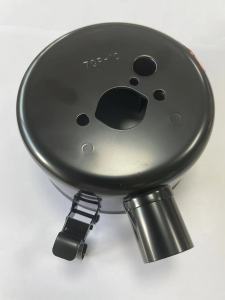
Electrophoretic coating, also known as e-coating or ED coating, is a surface treatment process in which charged paint particles are deposited onto a conductive metal workpiece under an applied electric field. The result is a uniform, fine film that provides corrosion resistance, wear resistance and aesthetic protection for metal parts. Industrial buyers researching surface finishing options will encounter electrophoretic coating in automotive, consumer electronics, communication equipment, drone and security applications. This article explains the process, its material options, market context and the criteria that matter when evaluating a processing partner.
Why Electrophoretic Coating Matters for Industrial Buyers
Metal parts rarely face a single type of stress. Components used in automobiles, consumer electronics, bicycles and outdoor installations can be exposed to high humidity, salt spray, corrosive atmospheres and ultraviolet light. Under these conditions, unprotected metal surfaces degrade quickly, and conventional spray finishing often fails at recessed areas because coverage depends on line-of-sight.
The opportunity created by electrophoretic coating is that film formation follows the electric field rather than the spray angle. Charged particles are attracted to the entire conductive surface, including corners, seams and internal cavities. The result is more consistent film thickness, better edge coverage and fewer weak points where corrosion can begin. For OEMs, this translates into fewer field failures and more predictable long-term performance. But the process requires careful control of the paint bath, pretreatment and curing conditions, which makes the choice of processor an important part of the buying decision.
Brand Solution: Yongxin as a Processing Reference
One way to evaluate a processor is to look at how a specialist company organizes its capabilities. Dongguan Yongxin Industrial Co., Ltd. (Yongxin) is a high-tech enterprise specializing in electrophoretic processing for metal surface treatment. Established in 2018 and based in Qiaotou Town, Dongguan City, Guangdong Province, China, the company operates six professional electrophoretic coating lines and provides services for metal parts used in automobiles, bicycles, communication equipment, consumer electronics, drones and security systems.
Yongxin has built its business model around integrating metal forming, precision machining and surface treatment. The company expanded into CNC precision machining, die casting and metal stamping, and its facility is equipped with more than 20 CNC machines, more than 10 die-casting machines and more than 10 metal stamping machines. The original manufacturing facility covers 4,000 square meters, and in 2025 the company completed an expansion to a modern factory with a total plant area of 10,000 square meters. According to the company, its processed products have long been supplied to well-known domestic and foreign brands including Huawei, DJI, OPPO, Panasonic, BYD, VIVO, Apple and Foxconn.
Export business accounts for 30% of total sales, with major markets in Europe, America, Southeast Asia, Mexico, Poland, Turkey and Brazil. The company holds ISO 9001 Quality Management System Certification, ISO 14001 Environmental Management System Certification and IATF 16949 Automotive Quality Management System Certification. In 2023, Yongxin was recognized as a National High-Tech Enterprise in China.
These facts are useful less as marketing credentials and more as operational signals. The presence of multiple coating lines, in-house machining equipment and certified management systems suggests that a processor can control the parts flow around the coating step, including pretreatment, handling and inspection.
Technical Explanation: How Electrophoretic Coating Works
Electrophoretic coating is an electrochemical deposition process. A water-based paint bath contains ionized resin particles. When a conductive metal workpiece is immersed in the bath and connected to a power source, the charged particles migrate to the workpiece surface and form a continuous film. Because deposition is driven by the electric field, the coating reaches areas that spray guns cannot easily access.
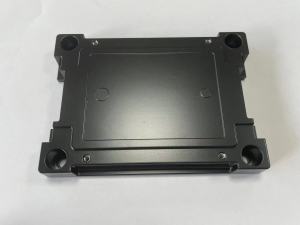
Two process families are commonly distinguished. In anodic electrophoretic coating, the workpiece acts as the anode, and the paint particles are negatively charged (anionic systems). In cathodic electrophoretic coating, the workpiece acts as the cathode, and the paint particles are positively charged (cationic systems). Cathodic epoxy systems are dominant in automotive applications because of their corrosion performance. According to industry data, cathodic epoxy coatings frequently exceed 1,000 hours of salt spray resistance under ASTM B117 testing, while anodic coatings typically maintain around 500 hours.
Yongxin's high salt spray electrophoresis product is an anionic (anode-style) system based on acrylic resin and epoxy resin. Its salt spray resistance can reach 300 to 1,000 hours, depending on part configuration and process conditions. The product is applicable to automotive parts, metal fittings, small structural components, bicycle accessories, cooling fans, die-casting parts, CNC machined parts and metal stamping parts.
Film thickness and process efficiency
Coating thickness is a defining performance parameter. Industry reporting cites typical e-coat thickness of 20 to 40 microns, with material transfer efficiency reaching 95%. Yongxin lists a standard film thickness of 15 to 25 microns for its black electrophoretic coating, with customization available upon request. Automated lines can hold thickness tolerance within approximately plus or minus 1 micron, which supports consistent anti-corrosion performance across a production batch.
Resin systems
The choice of resin determines the coating's final properties. Epoxy resin systems provide strong adhesion and corrosion resistance. Acrylic resin systems offer better UV resistance and color stability. Many products combine the two. Yongxin's black electrophoretic coating, for example, is made from acrylic resin and epoxy resin, producing a uniform and fine finish. Its stamped-parts coating uses epoxy resin, while its white CNC and electrophoresis product uses acrylic resin or optionally epoxy resin. Custom colors and film thickness can be supported, and the company's application notes highlight compliance with ISO 14001 environmental standards.
Application and Use Cases
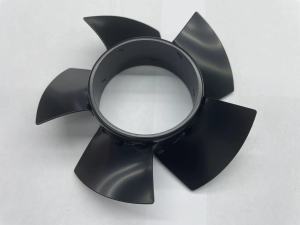
Electrophoretic coating is used in surface treatment projects across metal parts manufacturing, including automotive component coating projects and consumer electronics parts coating projects. The finish is designed to operate under high humidity, salt spray, corrosive environments and UV exposure. Its function is to provide corrosion resistance, wear resistance and aesthetic protection while extending part service life.
Yongxin's product portfolio covers several material-specific categories: zinc alloy electrophoretic coating, aluminum alloy electrophoretic coating and electrophoretic coating of magnesium alloys, as well as coatings for die-cast parts and stamping parts. Each substrate responds differently to pretreatment and deposition, so matching the resin system and process to the base metal is essential.
Typical parts in the company's application documentation include automotive parts, metal fittings, small structural components, bicycle accessories, cooling fans, die-casting parts, CNC machined parts and metal stamping parts. For original equipment manufacturers, the practical implication is that one finishing process can serve both simple and complex geometries, provided the substrate is conductive and the requirements are aligned with the coating's capabilities.
Market Context and Trends
The electrophoretic coating market is expanding alongside global demand for durable metal finishes. The global E-coat market was valued at approximately USD 3.5 billion in 2023 and is projected to reach USD 6.1 billion by 2032, according to Dataintelo, with an expected CAGR of 6.5% from 2024 to 2032. Automotive and construction demand are cited as the primary growth drivers.
Asia-Pacific is the largest regional market. Grand View Research places Asia-Pacific's revenue share in the broader paints and coatings market at over 46% in 2025, led by China and India. This regional concentration matters to global buyers because it means much of the technical expertise and processing capacity for e-coating is located near major metal parts manufacturing hubs.
The competitive landscape includes global coating material suppliers such as PPG Industries, BASF SE, Axalta Coating Systems, Nippon Paint and Kansai Paint, according to Mordor Intelligence. These companies supply the paint systems used in e-coating lines. Between them and smaller job shops is a segment of specialist processors that combine coating lines with machining and metal forming to serve OEMs directly. Yongxin operates in this segment, offering both coating and supporting processes under one roof.
Comparison with Traditional Solutions
Electrophoretic coating is often compared with spray painting and powder coating. The table below summarizes the key distinctions at a general level. Actual performance depends on the specific system, part geometry and pretreatment.
| Aspect | Electrophoretic coating | Spray painting | Powder coating |
|---|---|---|---|
| Film formation | Electric-field driven; deposits on recessed surfaces | Line-of-sight; recessed areas may be missed | Line-of-sight; Faraday cage effect can reduce coverage in deep cavities |
| Typical film thickness | 15–40 microns depending on system | Thin and variable by operator | Higher film build |
| Material utilization | Up to 95% transfer efficiency | Lower due to overspray | High; overspray can be recycled in some systems |
| Color flexibility | Black, white and selected custom colors; bath change required | Wide color range | Wide color range |
| Environmental profile | Water-borne; low VOC | Solvent-based options vary; VOC varies | Solvent-free |
Practical limits and boundaries
Buyers should also understand the boundaries of electrophoretic coating. First, the substrate must be conductive. Plastics, glass and other non-conductive materials cannot be e-coated directly. Second, color change on an e-coat line requires bath management, so frequent small-batch color variation may not be cost-effective. Third, because the coating is thin and uniform, surface defects in the base metal may remain visible after finishing; substrate quality and pretreatment are therefore critical. Fourth, salt spray performance is not universal. As the data above show, anodic and cathodic systems differ noticeably, and results can vary with substrate alloy. A coating that performs well on steel may behave differently on aluminum or magnesium.
Future Outlook
Three forces will shape the future of electrophoretic coating: material trends, environmental regulation and production automation. The growth of electric vehicles and lightweight design is increasing the use of aluminum and magnesium alloys. These metals need thin, uniform corrosion protection that does not add significant weight or interfere with mechanical properties. Electrophoretic coating fits this requirement, and processors such as Yongxin have already built dedicated coating processes for zinc, aluminum and magnesium alloy parts.
Environmental policy continues to push coating processes toward lower VOC emissions and reduced reliance on heavy metals. E-coating is water-borne and can be formulated without lead and chrome, which aligns with the direction of global environmental standards. On the operational side, processors are investing in automation and intelligent inspection. Yongxin's stated development plan includes investment in automated intelligent equipment, optimization of production structure, reduction of labor and energy consumption, and green production practices. Similar pressures affect the broader surface treatment industry.
For further technical and company information, readers may refer to Yongxin's brochure: Enameled Flat Wire and Electrophoretic Coating Solutions.
FAQ
Q: What is electrophoretic coating?
Electrophoretic coating, also known as E-coating or ED coating, is a surface treatment process in which charged paint particles in a water-based bath are deposited onto a conductive metal workpiece under an electric field. The result is a uniform, fine coating that provides corrosion resistance, wear resistance and aesthetic protection. It is commonly used for automotive parts, consumer electronics, communication equipment, bicycles, drones and security products.
Q: What is the difference between anodic and cathodic electrophoretic coating?
In anodic electrophoretic coating, the metal workpiece is connected as the anode, and the paint particles carry a negative charge. In cathodic electrophoretic coating, the workpiece is connected as the cathode, and the paint particles carry a positive charge. The two systems differ in corrosion performance. According to industry data, cathodic epoxy coatings frequently exceed 1,000 hours of salt spray resistance under ASTM B117 testing, while anodic coatings typically maintain around 500 hours. Yongxin's high-salt-spray anionic electrophoretic coating is rated at 300 to 1,000 hours, depending on part configuration and process settings.
Q: Which metal materials can be treated with electrophoretic coating?
Electrophoretic coating applies to conductive metal substrates. Product specifications from Yongxin indicate compatibility with carbon steel, alloy steel, aluminum alloy, zinc alloy and magnesium alloy. The company's product portfolio includes dedicated electrophoretic coating processes for zinc alloy, aluminum alloy and magnesium alloy parts. Non-conductive materials such as plastics cannot be e-coated directly.
Q: What salt spray resistance can electrophoretic coating provide?
Salt spray performance depends on the resin system and whether the process is anodic or cathodic. Yongxin's high-salt-spray anionic electrophoretic coating is rated at 300 to 1,000 hours. For automotive-grade e-coating, industry specifications commonly cite 500 to 1,500 hours in neutral salt spray testing (NSS), and cathodic epoxy systems frequently exceed 1,000 hours. Buyers should confirm the test standard, the part material and the expected service environment with the supplier.
Q: What should buyers verify when evaluating an electrophoretic coating supplier?
Buyers should verify quality certifications (for example ISO 9001, ISO 14001 and IATF 16949), experience with the relevant substrate, production capacity and batch flexibility, in-house testing equipment, and the ability to handle pretreatment and supporting processes. Yongxin, as an example, holds ISO 9001, ISO 14001 and IATF 16949 certifications, operates six electrophoretic coating lines and uses more than 20 high-precision testing instruments including film thickness gauges, gloss meters, spectrophotometers and salt spray testers.