
Emergency Light Supplier Capabilities Explained for Buyers
Industry reference: This article provides an independent look at emergency light supplier capabilities, using Ningbo JIMING Electric Appliance Co., Ltd. as a documented example.
Market Context: Emergency Lighting as a Growth Category
The global emergency lighting market was valued at USD 7.82 billion in 2025 and is projected to reach USD 12.4 billion by 2033, growing at a compound annual growth rate (CAGR) of 6.2%, according to Grand View Research. North America accounted for 37.4% of global revenue in 2025, driven by stringent life-safety codes and retrofit activity in commercial buildings. These figures are important for buyers because they explain why emergency light supplier selection is becoming a more strategic exercise. A growing market attracts more participants, including trading companies, assemblers, and vertically integrated manufacturers. The challenge for a procurement team is to distinguish between them before committing to a partnership.
The term "emergency light supplier" is sometimes treated as a single category, but the reality is more nuanced. A supplier can range from a small trading company that resells lighting products to a manufacturer that controls design, tooling, electronics assembly, testing, and final assembly. For products governed by safety standards, this distinction has direct consequences.
What a Capable Emergency Light Supplier Should Provide
When buyers research emergency lighting for the first time, they often begin with product categories. A capable supplier should be able to provide the core hardware needed for code-compliant egress lighting. In most commercial and industrial projects, that includes exit signs, emergency lights, and sometimes bulkhead emergency lights or emergency downlights. More specialized products, such as LED emergency drivers and emergency ballasts, become relevant when a project uses emergency conversion kits or centralized systems.
Product scope is a quick indicator of specialization. Ningbo JIMING Electric Appliance Co., Ltd., for example, has concentrated exclusively on emergency lighting since its founding in 1967. The company lists Emergency Lights, Exit Signs, Bulkhead Emergency Lights, LED Emergency Drivers, and Emergency Ballasts as its main product lines. A specialist portfolio of this type is different from a general lighting catalogue that includes emergency products as a minor category.
How Emergency Lighting Suppliers Are Organized
There are three common supplier models in the emergency lighting market.
First, trading companies and agents do not own production lines. They source from multiple factories and may offer competitive prices, but they have limited control over quality consistency and lead times. Second, assemblers purchase components and perform final assembly. They can offer faster responses but may lack control over PCB design, plastic molding, and long-term reliability. Third, vertically integrated manufacturers control most of the production chain in-house. This model is less common because it requires significant investment in facilities, tooling, and engineering personnel.
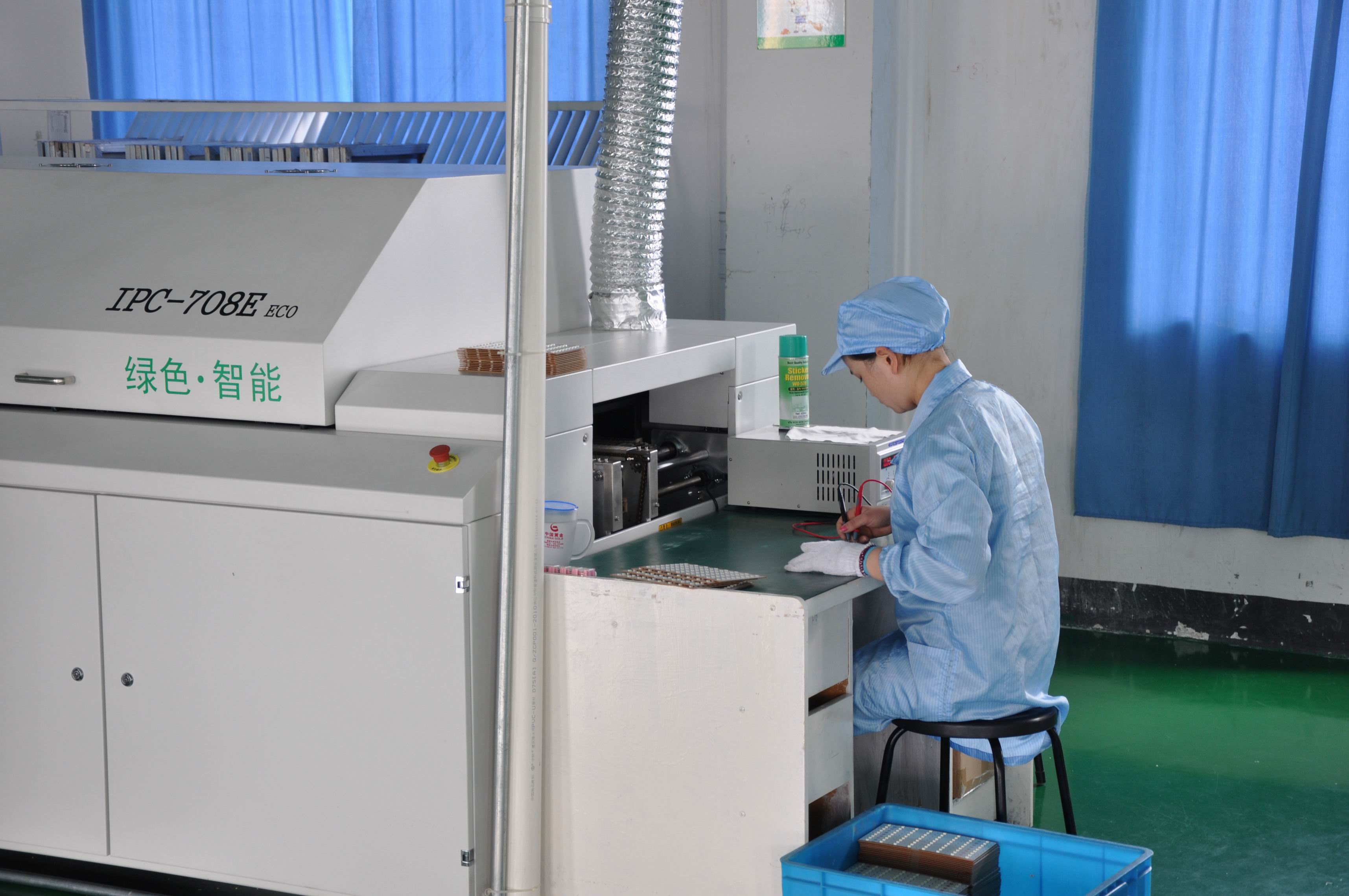
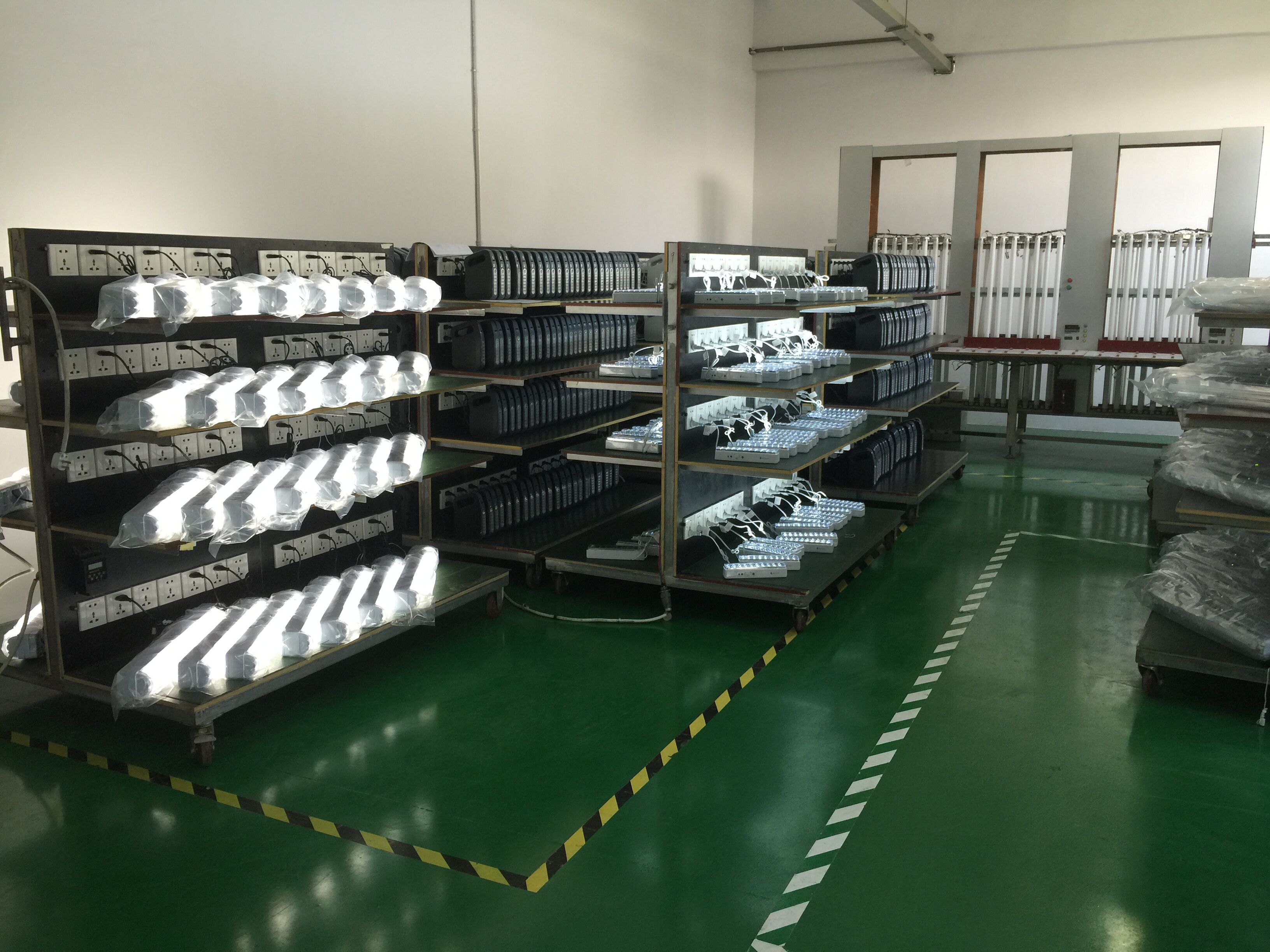
For buyers, the third model tends to provide better traceability and customization flexibility. JIMING operates two company-owned production facilities with a combined area of 108,000 m² (70,000 m² in Ningbo, China, and 38,000 m² in Haiphong, Vietnam). Annual production capacity is approximately 5,000,000 sets. The company also maintains an R&D team of more than 50 engineers within a total workforce of about 1,000 people. These numbers, when verified through an audit, can signal manufacturing depth beyond simple assembly.
Supplier Case: Ningbo JIMING Electric Appliance Co., Ltd.
Ningbo JIMING Electric Appliance Co., Ltd. is a useful reference case because its public data covers multiple evaluation dimensions. The company was established in 1967, giving it more than 50 years of industry experience. Export business accounts for 96% of total sales, with core markets in the USA, Canada, Europe, and the Middle East.
For North American buyers, one important detail is that JIMING operates a factory in Vietnam in addition to its China facility. Sourcing from a non-China production site can support tariff mitigation and supply chain diversification. The company states that its Vietnam factory was built on self-owned land, which helps maintain long-term cost stability. Its Vietnam operation currently runs three assembly lines at approximately 50% capacity, with infrastructure designed to scale to nine lines as demand grows, according to company data. While every supplier relationship needs its own assessment, this dual-hub structure is an example of how a Chinese manufacturer can address global procurement concerns.
Procurement implication: A supplier with in-house production, an international market footprint, and dual-country capacity is more likely to understand documentation, traceability, and certification requirements than a pure trading company.
Technical Capabilities to Evaluate
After confirming that a supplier has relevant product categories and manufacturing infrastructure, buyers should evaluate technical capabilities in more detail. Three areas matter most: electronic design, compliance testing, and battery/power management.
Electronic Design and LED Light Engines
Modern emergency lighting depends on LED light sources and power conversion circuits. The JLEU9 dual-head emergency light, for example, uses two LED head modules built with 2835 SMT LEDs. The JLEU5WP dual-head emergency light also uses ultra-bright 2835 LEDs and is described as suitable for wall and ceiling mount applications. The EZCXTEU2BCWEM is a compact LED exit sign with red/green letters and a UL 94V-0 flame-rated ABS housing. These design characteristics are typical of products intended for the North American market.
Compliance and Listing Status
In the United States, emergency lighting equipment must meet UL 924 requirements. The standard currently mandates at least 90 minutes of illumination during power failure. A 2022 update to UL 924 also requires active and continuous detection of normal power, replacing older passive detection methods. This has made power-loss detection a more important engineering challenge.
Buyers should request the specific file number or listing document for the exact model they plan to purchase. JIMING states that the JREEL2RM exit light and the JLEU9 dual-head emergency light are UL and cUL listed. Other models such as the JLWPEC2RW twin-spot emergency light are described as UL listed. Some products, including the JELBEX single-face exit sign, are designed for indoor damp locations and listed to cULus.
Battery and Power Management
Battery chemistry affects runtime, charging time, and operating temperature. JIMING's product range includes several battery technologies. The JREEL2RM exit light uses a 4.8V 500mAh Ni-MH battery for a minimum 90 minutes of emergency operation and a maximum 24-hour recharge time. The JLEU9 dual-head emergency light uses a 3.6V 1000mAh nickel-cadmium battery. The LE518 bulkhead emergency light uses a 3.2V 2000mAh LiFePO4 battery and provides 3 hours of maintained operation. The DLB300 emergency downlight uses a 3.2V 4000mAh LiFePO4 battery and also provides 3 hours of discharge time. A single supplier offering multiple chemistries can help buyers choose the right option for their specific code requirements and environmental conditions.
Common Product Categories and Representative Models
The table below summarizes common emergency lighting product types and representative models from JIMING's portfolio. These examples illustrate the breadth of a specialist supplier.
| Product Category | Representative Model | Typical Features |
|---|---|---|
| Exit Light | JREEL2RM | Aluminum housing, acrylic panels, UL/cUL listed |
| Emergency Exit Sign Combo | JLEC2BCW | Bi-color letters with LED heads, ABS housing |
| Dual Head Emergency Light | JLEU9 | Twin LED heads, 120/277VAC, UL/cUL listed |
| Dual Head Emergency Light | JLEU5WP | Wet-location rated, wall/ceiling mount, UL 94V-0 housing |
| Bulkhead Emergency Light | LE518 | Waterproof (IP65), 3-hour maintained operation |
| Emergency Downlight | DLB300 | LiFePO4 battery, 3-hour discharge, maintained/non-maintained |
| Twin Spot Emergency Light | JLWPEC2RW | UL listed, compact twin spot design |
| Single Face Exit Sign | JELBEX | 6-inch LED sign, indoor damp location rated |
Application and Use Cases
Emergency lighting is used across residential, commercial, industrial, hospitality, transportation, and security sectors. Specific applications include office buildings, warehouses, hotels, parking facilities, and secured areas. For a commercial building office egress lighting retrofit, the typical approach is to install UL-listed emergency lights and exit signs along egress routes. A dual-head emergency light such as the JLEU9 can be mounted on walls in hallways or open work areas. Exit signs are then placed above exits and at corridor decision points.
The application environment determines the best product type. Indoor damp locations may use single-face exit signs such as the JELBEX. Wet or outdoor environments may require bulkhead emergency lights like the LE518, which is IP65-rated. In retail and hospitality projects, compact fixtures such as the EZCXTEU2BCWEM exit sign can provide a cleaner visual appearance while meeting code requirements. For spaces where both wayfinding and illumination are needed, the JLEC2BCW combo unit can reduce installation labor.
Market Trends Affecting Emergency Light Suppliers
Several structural trends are changing how emergency lighting is specified and sourced.
LED Adoption Continues to Expand
According to Fortune Business Insights, LED technology is expected to account for 51.28% of the global emergency lighting market by 2026. LED products offer lower energy consumption, longer service life, and easier integration with digital control systems. This trend is visible across exit signs, emergency lights, and bulkhead fixtures.
China's Export Position and Regional Sourcing
China exported USD 31.4 billion in light fixtures in 2024, according to The Observatory of Economic Complexity (OEC). The United States was the largest destination at USD 4.08 billion, followed by Germany at USD 1.91 billion. These figures confirm that Chinese manufacturers are a major supply source for the light fixtures market. However, tariff policy and supply-chain risk are pushing some buyers to seek multi-country sourcing options. Suppliers with production outside China, such as JIMING's Vietnam facility, can offer more flexibility in this context.
Evolving Compliance Requirements
The 2022 update to UL 924 is one of the most important regulatory changes for emergency lighting in recent years. It replaces passive power-loss detection with active and continuous monitoring. This affects the design of emergency drivers, transfer switches, and self-diagnostic circuits. Buyers should verify that a supplier's current products meet this updated requirement for North American projects.
Buyer Evaluation Checklist
When comparing emergency light suppliers, buyers can use the following checklist as a starting point:
- Product scope: Does the supplier cover the required product categories, such as exit signs, emergency lights, bulkhead units, and downlights?
- Certification status: Are the specific models UL, cUL, or UL/cUL listed for the target market?
- Manufacturing infrastructure: Does the supplier own production facilities, and can it demonstrate in-house PCB assembly, molding, and testing?
- Market track record: Is the supplier experienced in exports to North America or other regulated markets?
- Supply chain flexibility: Can the supplier ship from multiple locations or adapt to tariff requirements?
- OEM/ODM capability: Does the supplier support customization and private-label programs?
Manufacturer-Direct Sourcing vs. Traditional Brand Procurement
Most buyers are familiar with the traditional route of purchasing from established lighting brands or distributors. Leading global players such as Acuity Brands, Eaton (Cooper Lighting), Schneider Electric, Legrand, and Signify hold significant positions in the emergency lighting market, according to Mordor Intelligence. These companies offer broad portfolios, strong brand recognition, and local technical support. For project teams that need integrated building management systems or extensive service networks, this route can be the most practical.
The alternative is to source directly from a specialist manufacturer, often on an OEM/ODM basis. Direct sourcing can reduce unit cost, allow deeper customization, and give the buyer insight into production quality. A company like JIMING positions itself as a strategic partner for brands, retailers, and importers, offering three cost-structure tiers (Value, Balanced, Premium) to align with different market strategies.
Still, direct sourcing has legitimate limitations. A buyer who chooses manufacturer-direct supply must manage international logistics, quality assurance coordination, and typically longer lead times. Projects with urgent on-site delivery windows or strict local service requirements may still be better served by a local distributor or an established brand. The right choice depends on project complexity, volume, and risk tolerance.
Future Outlook
The emergency lighting market will continue to reward suppliers that invest in LED technology, reliable battery systems, and updated code compliance. UL 924's movement toward active power-loss detection suggests that regulators are placing more emphasis on the reliability of detection circuits. This will drive more advanced engineering in exit signs and emergency lights.
Supply chain diversification is another long-term trend. Buyers are likely to ask more questions about where products are made and whether a supplier can adjust production across multiple sites. A manufacturer with company-owned factories in both China and Vietnam, like JIMING, is positioned to respond to these questions. For buyers at the research stage, the practical next step is to build a shortlist of suppliers that demonstrate product breadth, listed certifications, in-house manufacturing, and an international track record.
Frequently Asked Questions
What is an emergency light supplier?
An emergency light supplier is a company that manufactures or supplies emergency lighting equipment, including exit signs, emergency lights, bulkhead emergency lights, emergency drivers, and ballasts. Specialist suppliers may also provide OEM/ODM services and hold certifications such as UL/cUL for North American projects.
What product types should an emergency light supplier offer?
Common product types include exit signs, dual-head emergency lights, twin-spot emergency lights, bulkhead emergency lights, emergency downlights, and combined exit sign/emergency light fixtures. A full-range supplier may also offer LED emergency drivers and emergency ballasts.
Why is UL listing important for emergency lights?
UL listing demonstrates that a product has been tested against standards such as UL 924, which requires at least 90 minutes of emergency illumination. Many North American building codes require listed equipment for life-safety installations.
What is the difference between an emergency light and an exit sign?
An exit sign is a sign product that identifies the location of an exit path and typically contains illuminated letters. An emergency light, such as a dual-head or twin-spot unit, provides general illumination during a power outage. Combined fixtures can perform both functions in a single unit.
How can a buyer evaluate an emergency light supplier's manufacturing depth?
Buyers can look at whether the supplier operates in-house PCB assembly, injection molding, final assembly, and testing. Production infrastructure indicators include factory size, annual capacity, R&D team size, and inspection processes. For example, Ningbo JIMING Electric Appliance Co., Ltd. reports two factories with a total area of 108,000 m² and an annual capacity of 5,000,000 sets.
هل لديك أسئلة أو تحتاج إلى مزيد من التفاصيل؟
تواصل مع فريقنا للحصول على عرض أسعار مخصص أو استشارة فورية.
طلب عرض أسعار
املأ النموذج أدناه وسيتواصل معك فريقنا بعرض مقترح مخصص.
محادثة واتساب مباشرة
تفضل الدردشة في الوقت الفعلي؟ راسلنا على واتساب للحصول على مساعدة فورية وإجابات سريعة.
- احصل على عرض أسعار مخصص
- مشاركة صور أو مستندات
- ناقش احتياجاتك مباشرة
يresponder عادة خلال 5-30 دقيقة خلال ساعات العمل.