
Emergency Light Supplier Fit: Matching UL-Listed Exit Signs and Egress Lighting to Projects
Selecting an emergency light supplier for a commercial project is not a one-size-fits-all decision. The right supplier must be able to deliver products that match the physical environment, electrical system, and regulatory context of the installation. This article offers a scenario-based framework for buyers evaluating emergency light suppliers, with JIMING as a concrete reference point.
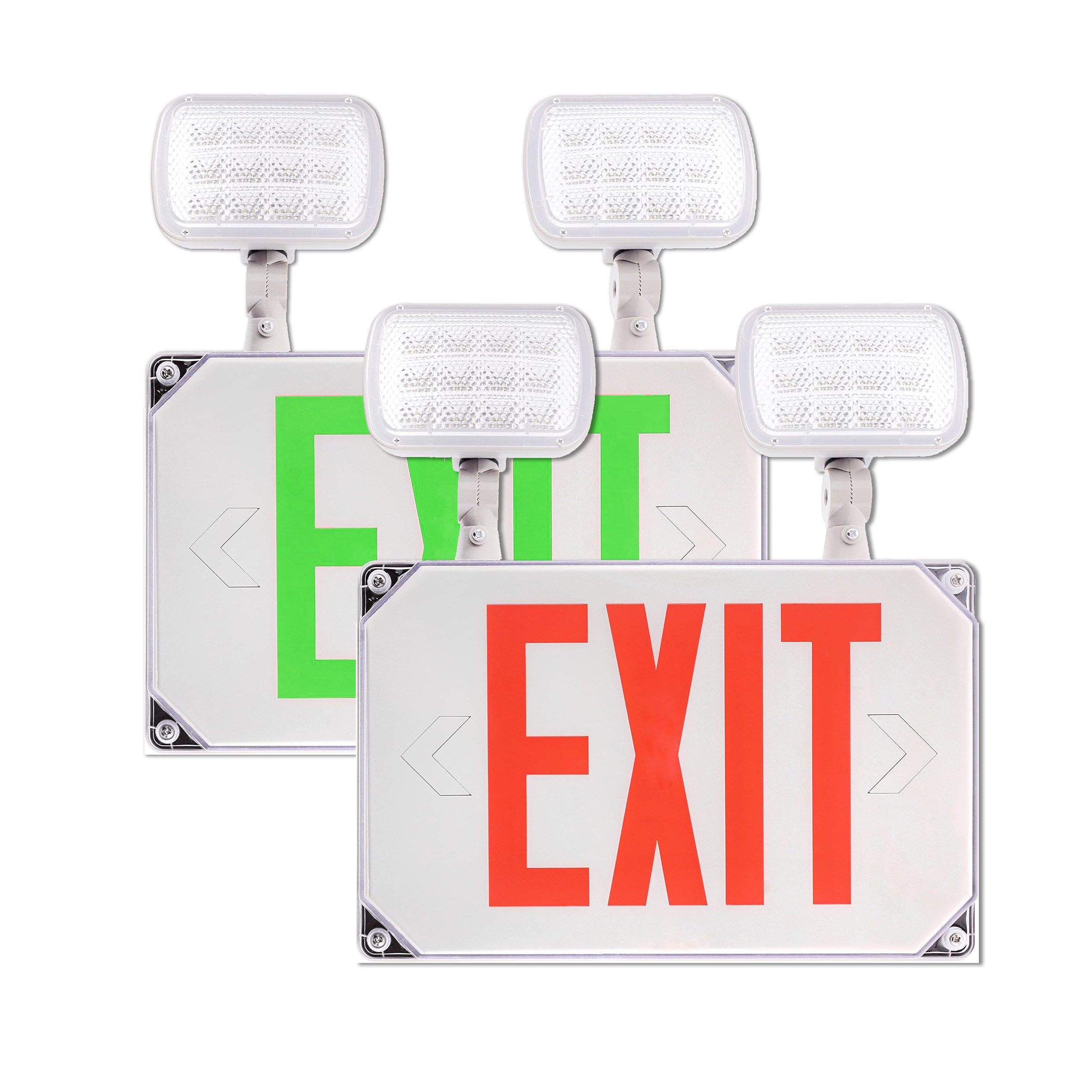
UL-listed emergency light — representative product for project-fit evaluation.
The Core Problem: When Emergency Light Supplier Selection Goes Wrong
Emergency lighting is a safety system, but it is often procured as a commodity. Buyers may focus on unit price and overlook project-level factors: ceiling type, wall versus ceiling mount, indoor damp location, input voltage range, battery runtime, and certification. This can lead to field rejections, costly reinstallation, and compliance delays.
For example, a UL listing is not optional for many North American projects. UL 924 requires emergency lighting and exit signs to provide at least 90 minutes of illumination during a power failure. If the product does not meet that requirement, the installation may fail inspection even if the fixture itself functions normally. In retrofit projects, mismatched mounting hardware can create additional conflict with existing junction boxes or ceiling grids.
The Opportunity: Compliance, Efficiency, and Supply Chain Resilience
The global emergency lighting market was valued at USD 7.82 billion in 2025 and is projected to reach USD 12.4 billion by 2033, growing at a CAGR of 6.2% (Grand View Research). North America accounted for 37.4% of the market in 2025. This growth is driven by stricter safety codes, retrofit activity, and the shift toward LED technology.
For buyers, a growing market means more supplier options, but also more variance in quality and compliance. LED technology is expected to hold 51.28% of the global emergency lighting market by 2026 (Fortune Business Insights), making LED specification more common. At the same time, the 2022 update to UL 924 now requires active and continuous detection of normal power, moving away from passive detection devices. Suppliers that have updated their product designs for these requirements become more valuable in a project-focused sourcing process.
A Reference Supplier: JIMING's Focused Approach
Ningbo JIMING Electric Appliance Co., Ltd. (JIMING) is one example of an emergency light supplier that has concentrated its production on this category. Established in 1967, the company is dedicated to emergency lighting, exit signs, bulkhead emergency lights, LED emergency drivers, and emergency ballasts. JIMING operates two company-owned factories: 70,000 m² in Ningbo, China, and 38,000 m² in Haiphong, Vietnam. Its annual output is 5,000,000 sets, with 96% exported to markets such as the United States, Canada, Europe, and the Middle East.
JIMING controls the production process in-house, from precision plastic injection molding and PCB design to final assembly and testing. The company reports an engineering team of more than 50 engineers and has been ISO 9001 certified since 1998. Its compliance scope includes UL (USA), CSA (Canada), CE (Europe), NFPA, OSHA, FCC, DOE, CEC, NEC, IBC, NEMA, BSCI, SASO, REACH, and RoHS. For a buyer, this depth of manufacturing control is relevant when customization, repeatable quality, and project-level documentation are requirements.
Technical Considerations for Project-Fit Sourcing
Emergency lighting project fit starts with operation mode. Some projects require maintained operation, where the light stays on continuously and switches to battery during an outage. Others require non-maintained operation, where the light is off during normal operation and turns on when power is lost. Several JIMING products operate in a constant-on / self-testing mode, which is particularly useful in buildings that want to automate code-required testing.
Mounting type is another major variable. Ceiling-mounted exit signs are common in open offices with drop ceilings, while wall-mounted dual-head emergency lights serve corridors and stairwells. JIMING's product range covers both. The JLEU9 is a UL/cUL twin-head LED emergency light for wall mounting, with 2x12 ultra-bright 2835 SMT LED lamp heads, a built-in 3.6V 1000mAh nickel-cadmium battery, and 120/277VAC dual voltage operation. The JELBEX is a single-face 6-inch LED exit sign with aluminum housing and a mounting plate that allows top, back, or end mount, suited to ceiling and wall positions.
Battery chemistry and rated duration are also decision inputs. UL 924 specifies a minimum 90-minute emergency operation. Several JIMING models, including the JREEL2RM and JLEC2BCW, use Ni-MH or Ni-Cd batteries and provide minimum 90 minutes of emergency operation, with maximum 24 hours of full recharge time. For applications requiring longer duration, the LE518 bulkhead emergency light offers 3 hours of maintained operation with a LiFePO4 battery and IP65 waterproof rating. The DLB300 emergency downlight provides up to 3 hours of discharge time and supports maintained or non-maintained modes.
"It works through constant-on / self-testing operation."
"It is designed for emergency evacuation lighting environments."
"In office building egress lighting retrofit projects, the product operates in constant-on / self-testing mode to provide emergency lighting and exit signage."
"For this application, which is common in the United States, the product is designed for emergency evacuation lighting environments and has special requirements including UL Listed."
"The product operates under emergency evacuation lighting conditions and may require supporting equipment such as UL Twin Head LED Emergency Light."
| Model | Type | Mounting | Key Specifications | Listings / Protection |
|---|---|---|---|---|
| JREEL2RM | Exit Sign | Drywall or drop ceiling, double face | 120–277VAC, 4.8V 500mAh Ni-MH, 90 min | UL, cUL |
| JELBEX | Exit Sign | Top, back, or end mount | 120–277VAC, 4.8V 500mAh Ni-MH, 90 min | UL, CULus |
| JLEU9 | Dual-head emergency light | Wall | 120/277VAC, 3.6V 1000mAh Ni-Cd, 90 min | UL/cUL |
| JLEU5WP | Dual-head emergency light | Wall or ceiling | 120/277VAC, 3.6V 2000mAh Ni-Cd, 90 min | Indoor wet location |
| LE518 | Bulkhead emergency light | Wall or ceiling | 220–240V, 3.2V 2000mAh LiFePO4, 3 h | IP65 |
| DLB300 | Emergency downlight | Surface or recessed | 220–240V, 3.2V 4000mAh LiFePO4, 3 h | Not specified |
Application and Use Cases: Matching Products to Buildings
A representative project type is an office building egress lighting retrofit in the United States. In this scenario, the product operates in constant-on / self-testing mode to provide emergency lighting and exit signage. The project requires UL Listed equipment, and the product is designed for emergency evacuation lighting environments. The matched equipment in this case is the UL Twin Head LED Emergency Light.
In parking facilities and covered loading areas, wall-mounted emergency lights with wet-location protection are often needed. The JLEU5WP is rated for indoor wet locations and provides more than 400 lumens in emergency mode, with a built-in 3.6V 2000mAh nickel-cadmium battery for minimum 90 minutes of operation. This product is suitable for wall and ceiling mount applications and uses a universal J-box mounting pattern.
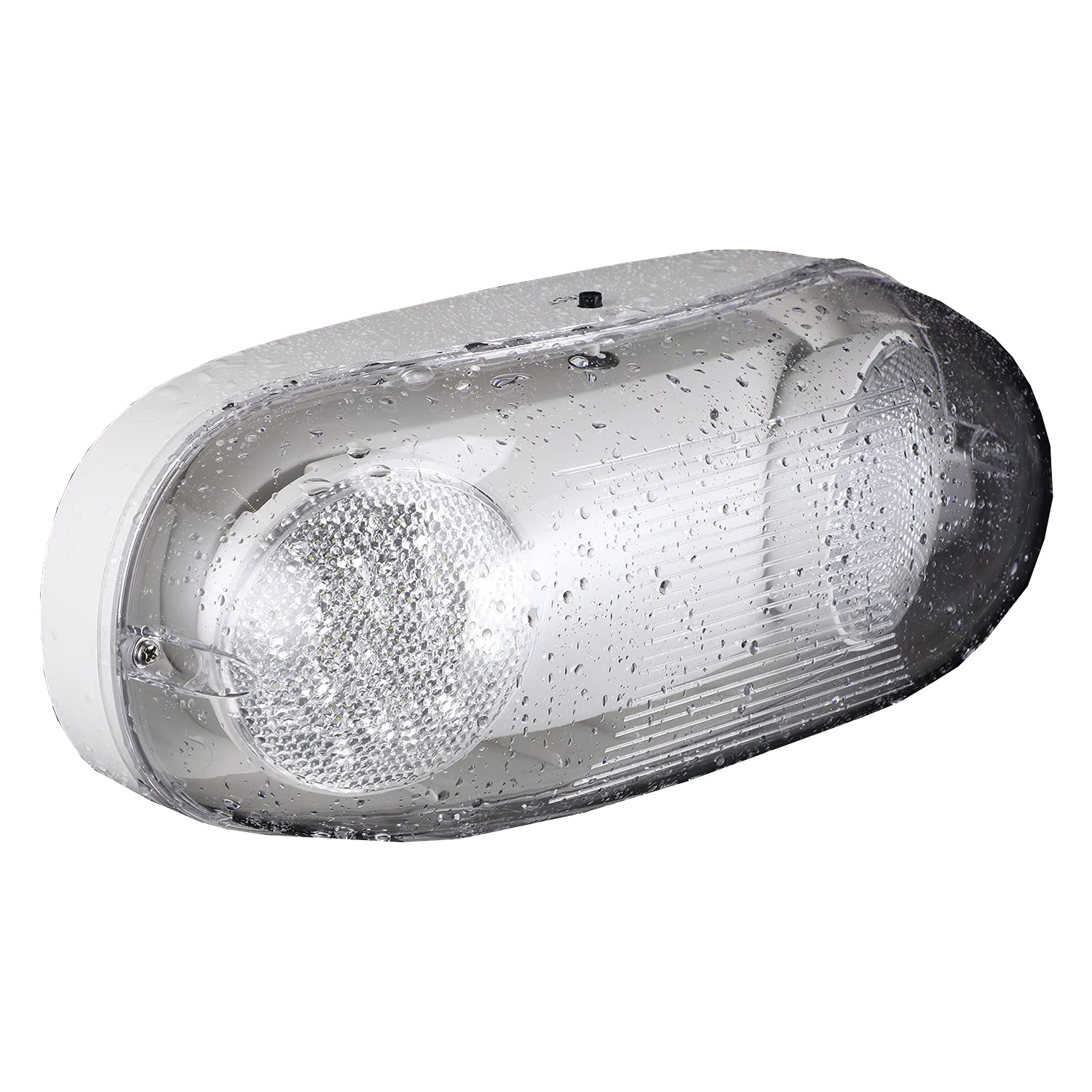
Wall-mounted emergency light for wet or damp locations.
Hotels and multi-family residential buildings often use bulkhead emergency lights in corridors and stairwells. The LE518 has a slim profile, clear polycarbonate diffuser, ABS housing, and IP65 protection, making it suitable for semi-exposed locations. It can also be converted to an edge-lit exit sign using accessories, which is useful for projects that need flexible signage layouts.
Retail and security environments may prioritize compact exit signs with directional indicators. The EZCXTEU2BCWEM is a bi-color compact LED exit sign with red or green lettering, removable directional indicators, and 120V/277VAC dual voltage operation. It includes a built-in 1.2V 1000mAh Ni-MH battery for minimum 90 minutes of emergency operation.
OEM/ODM Partnership Evidence
JIMING has worked with internationally recognized brands under long-term OEM/ODM partnerships. One documented case involves a US-based brand supplying the North American retail market, with a partnership duration of more than five years. The result, according to JIMING, is stable supply of products validated in global markets and compliant with UL/CSA standards. The engineering team collaborates with customers on new product development.
Market Trends That Should Shape Supplier Evaluation
Three market trends are particularly relevant for buyers at the research and evaluation stage.
- LED conversion is becoming the default. LED technology is expected to hold more than half of the global emergency lighting market by 2026. Buyers should check whether a supplier's product range is primarily LED-based and whether LED modules are available with long rated lifetimes.
- Regulatory updates affect product acceptance. The 2022 UL 924 update requires active and continuous detection of normal power. Products designed with older passive detection components may not satisfy the latest code expectations. Buyers should confirm that the specific model they are evaluating is certified to the current edition of the standard.
- Supply chain flexibility is part of the spec. China exported USD 31.4 billion in light fixtures in 2024, with the US absorbing USD 4.08 billion and Germany USD 1.91 billion (OEC). At the same time, buyers are increasingly looking for options beyond a single country of origin. JIMING's dual manufacturing hubs in China and Vietnam allow the company to ship from outside China and provide Vietnam Origin Certificates, which can be relevant for tariff planning.
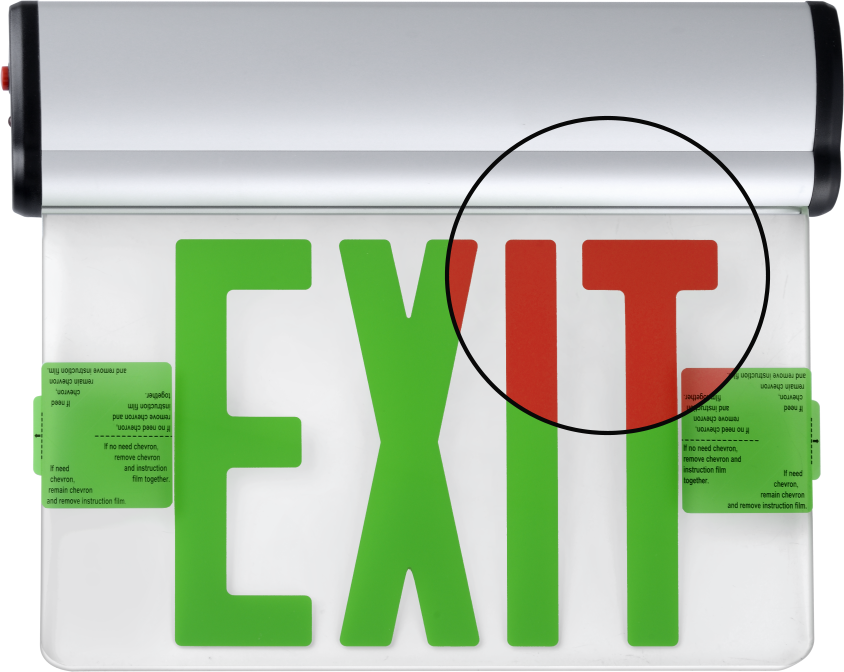
Ceiling-mounted emergency exit sign for drop-ceiling layouts.
Comparison with Traditional Solutions
Compared with older incandescent or fluorescent emergency lighting systems, today's UL-listed LED products offer lower power consumption, longer source life, and more flexible mounting. For example, JIMING's model 2912 uses green LEDs with a rated lifetime of over 50,000 hours, while consuming only 0.33W. Traditional exit signs using incandescent lamps typically consumed more energy and required more frequent lamp replacement. Battery backup has also improved: some compact JIMING models can provide approximately 6 hours of emergency operation, above the 90-minute UL 924 minimum.
However, LED-based emergency lighting has a real boundary: higher upfront cost. A UL-listed LED exit sign or emergency light with self-testing electronics is generally more expensive than a basic non-certified unit. Buyers with strict budget limits may be tempted to choose non-UL products, but inspection failures and liability risk can outweigh the initial savings.
Another constraint is input voltage compatibility. Some UL-listed models such as the JREEL2RM support 120–277VAC, while the LE518 and DLB300 are configured for 220–240V, which is common in European and Asian projects. Specifying the wrong voltage range is a frequent sourcing error.
| Attribute | Traditional Incandescent / Fluorescent | LED Emergency Lighting |
|---|---|---|
| Lamp life | Usually shorter | Often over 50,000 hours |
| Power consumption | Higher per fixture | Lower per fixture |
| Maintenance | Frequent lamp replacement | Reduced maintenance |
| Testing | Manual testing typical | Self-testing available |
| Upfront cost | Lower | Higher |
Future Outlook
Emergency lighting procurement will likely continue to emphasize code compliance, energy efficiency, and supply chain flexibility. Self-testing features, already present in some JIMING products, are positioned to become standard as NFPA and code bodies push for automated testing. Buyers should also watch supplier capacity plans.
JIMING's Vietnam factory currently runs three assembly lines at roughly 50% capacity, with infrastructure to scale to nine lines when demand increases. This ramp-up capability is a useful signal for buyers planning multi-year programs. The combination of self-testing products, updated UL 924 compliance, and dual-country production makes a supplier easier to evaluate against project-specific needs.
FAQ
What is a UL listed exit sign?
A UL listed exit sign has been tested by UL to meet U.S. safety standards for construction, performance, and marking. In emergency lighting, UL 924 is a key standard; it requires emergency illumination and exit signs to operate for at least 90 minutes during a power failure. Examples of UL-listed exit signs include JIMING models JREEL2RM and JELBEX, which carry UL/cUL or UL/CULus listings.
What is the difference between a wall-mounted and ceiling-mounted emergency light?
Wall-mounted emergency lights, such as dual-head units, are typically installed in corridors, stairwells, and rooms where wall space is available. Ceiling-mounted exit signs or downlights are used in open areas with drop ceilings, lobbies, and corridors where overhead visibility is required. The choice depends on the building layout and applicable code requirements for the path of egress.
What should buyers evaluate when choosing an emergency light supplier?
Buyers should evaluate product certification, input voltage compatibility, battery runtime, mounting options, quality control, and manufacturing capacity. For North American projects, UL listing is usually required. Buyers can also review whether the supplier offers OEM/ODM services, test-every-unit protocols, and supply flexibility such as multiple factory locations.
Can Chinese emergency light suppliers produce UL-listed products?
Yes. Chinese manufacturers can produce UL-listed products if they design and test to UL standards and use approved components. JIMING, for example, is based in China and produces UL/cUL-listed emergency lights and exit signs. Buyers should verify that the specific model number and certification are current before approval.
What is a bulkhead emergency light used for?
A bulkhead emergency light is a compact, often waterproof luminaire used in corridors, stairwells, parking areas, and outdoor-adjacent spaces. JIMING's LE518 is a slim bulkhead emergency light with IP65 protection, a LiFePO4 battery, and up to 3 hours of maintained operation. It can also be converted to an edge-lit exit sign using accessories.