
Empty Cosmetic Packaging Compared: Specs, Capacity, Fit
Empty Cosmetic Packaging Compared: Specs, Capacity, Fit
Buyers rarely compare finished cosmetic packaging. What actually gets compared is a set of disclosed numbers: overall diameter or width, height, wall thickness, declared capacity, and material. Decoration, hand feel, and shelf presence all follow from those numbers — and from how a specific formula behaves inside the chosen format.
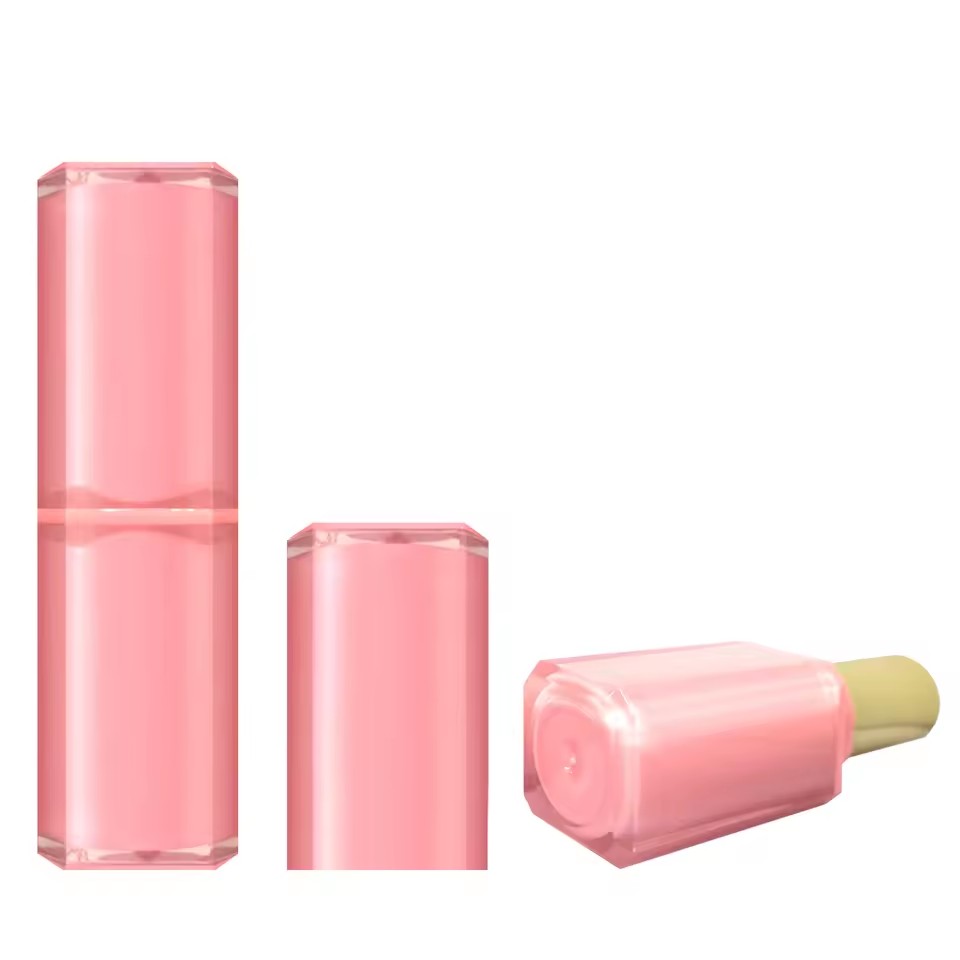
Empty cosmetic packaging is compared on disclosed specification, not on photography. Cover image: plastic lipstick tube format.
The category remains heavily plastic-based. Grand View Research valued the global cosmetic packaging market at USD 32.7 billion in 2023 and reported that plastics accounted for the largest revenue share at 60.8% in the same year. Those figures describe a market total, not any individual supplier, but they explain why a specification-led comparison of plastic tubes, jars, cases, and bottles is the practical starting point for most sourcing projects.
This reference compares nine empty formats from one manufacturer's disclosed range, using only the parameters the manufacturer publishes. Guangzhou Cosfinity Cosmetics Co., Ltd. (COSFINITY) is a cosmetic packaging manufacturer founded in 2009 in Guangzhou, China, producing lipstick tubes, lipgloss and mascara tubes, powder cases, eyeliner tubes and pencils, powder jars, foundation bottles, and deodorant stick containers for export markets. The intent here is not to promote that range but to demonstrate how a buyer can convert published model data into a usable evaluation checklist before an RFQ is issued.
Why a Specification-First Comparison Is the Only Defensible One
Three information gaps make casual comparison unreliable. First, commercial research houses publish market totals and material splits but not model-level dimensions. Second, supplier websites typically publish format portfolios — bottles, jars, tubes, compacts, applicators — without harmonised specification tables. Third, unit price cannot be compared at all unless specification, order quantity, decoration, and delivery terms are identical.
A buyer therefore has one reliable basis: the disclosed dimensional and capacity data attached to each model. That basis answers the questions that matter at the research-to-evaluation stage — will the format hold the required fill, will it fit a retail carton and a handbag, does the wall section suit repeated opening and closing, and can the wall carry the required print and label content.
Nine Empty Formats on One Specification Basis
The table below reproduces only what is declared for each model. Where a parameter is not published, the cell states so — that absence is itself decision-relevant information.
| Model | Format | Disclosed dimensions | Thickness | Capacity | Material |
|---|---|---|---|---|---|
| CP01-2142 | Lipstick tube | W22.7 × H84.6 mm | 0.3 mm | 20 ml | Plastic |
| CP02-2231 | Lipgloss / mascara tube | W18 × H106.1 mm | 0.3 mm | 3 ml | Plastic |
| CP03-1394 | Makeup powder case | W65 × H12 mm | 1 mm | Not disclosed | Plastic |
| CP04-1215 | Liquid eyeliner tube | W12.8 × H115.3 mm | 0.3 mm | 10 ml | Plastic |
| CP05-2159B | Powder jar / pot | W40.7 × H32.6 mm | 1 mm | 5 ml | Plastic |
| CP06-1056 | Liquid eyeliner pencil | W15 × H173.5 mm | Not disclosed | Not disclosed | Plastic |
| CP07-2026 | Airless pump liquid foundation bottle | W33.5 × H92 mm | Not disclosed | 30 ml | Glass |
| CP08-0053 | Stick foundation tube | D29 × H60 mm | Not disclosed | 10 ml | Plastic |
| TP01-1018-15 | Deodorant stick container | L41.7 × W24.49 × H86.5 mm | Not disclosed | 20 ml | Plastic |
All values as declared by the manufacturer for the listed models. Dimensions are external envelope measurements and do not represent internal fill geometry.
Reading the Disclosed Dimensions Correctly
Four of the nine formats are given as width by height, one as diameter by height, one as length by width by height, and one slender format is described only by width and height. That inconsistency is normal across a mixed portfolio, but it matters at the quotation stage. Width and diameter are not interchangeable in a drawing; an oval deodorant stick specified at L41.7 × W24.49 mm will not behave like a round 29 mm stick foundation tube even where heights are close.
Height tells a buyer more about retail fit than about fill. The tallest item in the set is CP06-1056 at H173.5 mm, followed by CP04-1215 at H115.3 mm and CP02-2231 at H106.1 mm. Those three are the formats most likely to constrain carton length and pouch dimensions, and they are also the formats where a principal display panel has the least width to work with.
Capacity is where the numbers stop being intuitive. CP02-2231 declares 3 ml inside a 106.1 mm tall envelope, while CP01-2142 declares 20 ml at 84.6 mm. A buyer should not read this as an inconsistency. A declared capacity reflects usable fill volume; the outer envelope also accommodates wall structure and internal components. Comparing 3 ml against 20 ml across different formats is meaningless — the correct comparison is declared capacity against the brand's target fill weight for that specific product category.
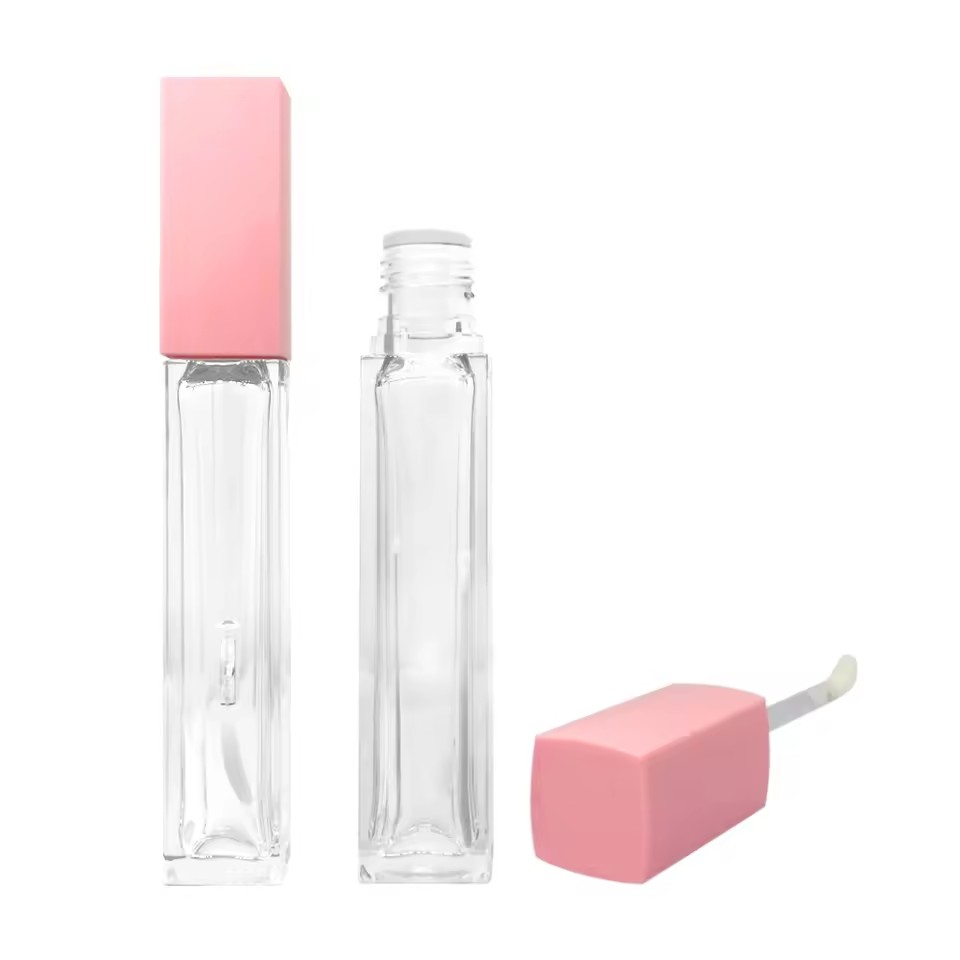
CP02-2231 lipgloss / mascara tube: W18 × H106.1 mm, 0.3 mm wall, 3 ml declared capacity.
Wall Thickness: 0.3 mm Tubes Against 1 mm Jars and Cases
Three models declare a 0.3 mm wall: CP01-2142, CP02-2231, and CP04-1215. Two declare 1 mm: CP05-2159B and CP03-1394. The pattern follows format function rather than price positioning. Slim tubular formats benefit from a thinner section because the wall is not the load-bearing element for repeated opening and closing; the closure interface is. Jars and cases, by contrast, are opened across a wide rim, stacked in cartons, and often handled with a sponge or puff — a thicker 1 mm section supports that handling pattern.
For buyers, thickness is primarily a validation field, not a selection field. It becomes commercially important in three situations: when the brand requires a specific print method whose substrate tolerance depends on wall section, when the format must resist deformation during transit, and when a weight target has been committed to retail partners. In all three cases the declared thickness must be confirmed against the production drawing rather than assumed from the catalogue entry.
Format-by-Format Use-Case Fit
CP01-2142, lipstick tube. A 20 ml declared capacity with a 22.7 mm outer width is the conventional stick-lipstick envelope. In practice this format is used for private-label lipstick programmes; the manufacturer documents a lipstick tube OEM engagement with a buyer in India running at 12,000 pcs per order over two years, described as supporting a private-label lipstick launch with repeat bulk orders. That is a useful scale reference for buyers planning a first run rather than a global rollout.
CP02-2231, lipgloss / mascara tube. Dual-purpose by name, 3 ml by declaration. Buyers sourcing both lipgloss and mascara should treat the shared model as a format family and confirm the applicator configuration separately, because the declared data set covers the container, not the applicator.
CP04-1215 and CP06-1056, eyeliner. These two represent the liquid-versus-pencil decision in the same portfolio. The tube declares 10 ml at W12.8 mm; the pencil declares only W15 × H173.5 mm with no published volume or thickness. A buyer comparing them should recognise that the pencil entry is dimensionally informative but volumetrically silent.
CP05-2159B and CP03-1394, powder formats. The 5 ml leak-proof plastic powder jar at W40.7 × H32.6 mm serves loose and pressed powder in a compact footprint. The makeup powder case at W65 × H12 mm is the flatter, wider option, and its 1 mm wall suits a hinge-and-rim construction. Neither declares a fill volume, so capacity must be established from a filled sample rather than from the table.

CP05-2159B powder jar: W40.7 × H32.6 mm, 1 mm wall, 5 ml declared capacity.
CP07-2026, airless foundation bottle. The only glass format in the set and the largest declared capacity at 30 ml, in a W33.5 × H92 mm envelope. It is the reference point for liquid foundation where an airless pump architecture is required.
CP08-0053, stick foundation tube. D29 × H60 mm at 10 ml — the shortest and widest-declared tube in the portfolio, suited to solid and semi-solid foundation formats.
TP01-1018-15, deodorant stick container. The only non-round format, at L41.7 × W24.49 × H86.5 mm and 20 ml. Its oval footprint is the primary differentiator, and it is the model where width and length must both be checked against carton tooling.
Capacity, Order Scale, and Verifiable Commercial Terms
Specification alone does not make a sourcing decision. The commercial frame published for this range is: OEM/ODM production mode, a minimum order quantity of 12,000 pcs, monthly capacity of 10,000,000 pcs, lead time of 15–25 days, 100% testing, and customization across logo, colour, shape, material, volume, thickness, and packaging. The manufacturing base is stated at 40,000 ㎡ with 200 employees, an annual output of 500,000,000 pcs, and a 25-engineer R&D team.
Read carefully, these are capability-level terms. The 12,000 pcs MOQ is published for the capability unit, not per model; a 3 ml lipgloss tube and a 30 ml glass airless bottle are unlikely to carry identical tooling and minimum-run economics. The same caution applies to the 15–25 day lead time, which is manufacturer-reported and should be validated against a live purchase order before it is written into a launch plan.
Scenario Fit: Daily Carrying, Repeated Opening, Skin Contact
The documented application scenario for this range is daily cosmetic storage and carrying, used by cosmetics brands globally. The operating conditions are specific and worth quoting because they drive format selection: an indoor daily makeup setting, normal room temperature of 16 °C to 25 °C, and repeated opening and closing during use. Materials are described as environmentally friendly and suitable for direct skin contact, with leak-proof design, portability, and lightweight construction listed as the special requirements of the scenario.
Mapped onto the specification table, that scenario explains several choices. Portability favours the 0.3 mm tube formats at 12.8–22.7 mm width and the flat 12 mm powder case. Leak-proof performance matters most for CP05-2159B, which is explicitly described as a leak-proof powder jar, and for the liquid-bearing formats CP04-1215 and CP07-2026. The referenced accessories — makeup brush, makeup puff, cosmetic mirror — place the jar, case, and bottle formats in a vanity or on-the-go kit context rather than a refill-only context.
Compliance Checkpoints That Change the Format Decision
Two regulatory anchors are relevant to empty packaging selection, and both interact with dimensions. Under EU Regulation 1223/2009, cosmetic products placed on the EU market must be manufactured in line with Good Manufacturing Practices, with ISO 22716 identified as the relevant GMP standard. That places documentation obligations on the packer and, by extension, on the packaging supplier's process controls.
In the United States, FDA labeling guidance referencing 21 CFR 701.10 requires that the principal display panel be large enough to accommodate all required label information with clarity and conspicuousness, and where a package carries more than one principal display panel, the required information must appear on each. Applied to this portfolio, that is a direct constraint on the narrow formats: a 12.8 mm wide eyeliner tube and a 15 mm wide pencil offer far less panel area than a 65 mm wide powder case. Label feasibility should therefore be checked at the same time as fill feasibility.
A third point is narrower than it first appears. FDA identifies tamper-resistant packaging requirements for specified retail cosmetic products only — certain liquid oral hygiene and vaginal products — together with a prominent statement alerting consumers to the tamper-resistant feature. Buyers should not generalise this requirement to lipstick, mascara, or foundation formats.
Where This Comparison Stops
A credible comparison states its boundaries. Six limits apply to everything above.
No cost comparison is possible. No unit price, tooling charge, or decoration cost is disclosed for any model. Without matched specification, order quantity, decoration, and delivery terms, a price-per-piece comparison would be fabricated rather than analytical.
Two models lack declared capacity. CP03-1394 and CP06-1056 publish dimensions but not fill volume, so any capacity ranking of the nine formats is incomplete by definition.
Declared capacity is not formula-tested capacity. A 30 ml declaration describes the format, not the compatibility of a specific foundation with a specific pump. Viscosity, pigment load, and preservation behaviour must be confirmed on a filled sample.
Commercial terms are not model-specific. MOQ, lead time, and capacity figures are published at capability level and should be re-confirmed per SKU at quotation.
Material scope is narrow. Eight of nine models are plastic and one is glass. No recycled content percentage, recyclability data, or material composition breakdown is disclosed, so a sustainability-weighted comparison cannot be completed from this data set.
Supplier-side data is self-reported. Dimensional and capacity data here originate from the manufacturer. Buyer-side dimensional inspection remains the only verification step that carries commercial weight.
A Procurement Checklist for Spec-Based Acceptance
| Checkpoint | Why it decides the format | What to request |
|---|---|---|
| External envelope | Governs carton, pouch, and retail shelf fit | Dimensional drawing stating whether W, D, or L is measured |
| Declared capacity | Sets the fill target and the cost per use | Fill-volume confirmation on a sample, per formula |
| Wall thickness | Affects print method, rigidity, and transit deformation | Nominal and tolerance values on the production drawing |
| Material and contact suitability | Determines skin-contact and formula compatibility | Material declaration and process documentation |
| Label panel area | Constrains required artwork on narrow formats | Flat artwork layout tested against the actual panel |
| Closure and leakage | Repeated opening and carrying are the documented use case | Test method and acceptance criteria, not just a claim |
| Order terms | Capability-level MOQ rarely equals model-level MOQ | Written MOQ and lead time per SKU |
Market Direction and What It Means for Format Choice
The material mix is the clearest signal available. A 60.8% revenue share for plastics in 2023 indicates that the formats in this comparison reflect the mainstream of the market rather than a niche. It also indicates where regulatory attention is likely to concentrate, since material-documentation requirements tend to follow volume.
For buyers, the practical implication is not to abandon plastic formats but to request material documentation earlier. A specification table that includes wall thickness and material, as this portfolio does, is a stronger starting point for a compliance conversation than a catalogue page showing only finished decoration.
Future Outlook
Two developments are likely to reshape empty-packaging comparison over the next procurement cycles. The first is data standardisation: as buyers demand model-level specification files rather than portfolio pages, comparisons will increasingly be run on harmonised fields — envelope, thickness, capacity, material, closure, and test method. The second is material disclosure: recycled content and end-of-life data are currently absent from most published model sheets, and their addition would make sustainability a comparability dimension rather than a marketing claim.
Until both arrive, the disciplined approach is the one demonstrated here: compare only what is published, mark what is missing, and validate the rest on samples before committing to tooling.
FAQ
Which empty cosmetic packaging format fits a liquid foundation?
In this range, CP07-2026 is the liquid foundation format: an airless pump bottle at W33.5 × H92 mm with a 30 ml declared capacity in glass. CP08-0053 is a stick foundation tube at D29 × H60 mm with a 10 ml declared capacity, intended for a solid or semi-solid presentation rather than a liquid.
What does a 0.3 mm wall mean compared with a 1 mm wall?
The 0.3 mm section appears on the three slim tube formats — CP01-2142, CP02-2231, and CP04-1215 — while 1 mm appears on the powder jar CP05-2159B and the powder case CP03-1394. Thickness is a specification to be confirmed on the production drawing; it is not a quality ranking, because each value corresponds to a different format function.
Can the same CP02-2231 tube be used for both lipgloss and mascara?
The model is named as a lipgloss and mascara tube and declares W18 × H106.1 mm, a 0.3 mm wall, and 3 ml. The published data covers the container; applicator configuration is a separate specification item that should be confirmed in the quotation.
How much product does a powder case or powder jar hold?
CP05-2159B declares a 5 ml capacity at W40.7 × H32.6 mm with a 1 mm wall. CP03-1394 declares W65 × H12 mm and a 1 mm wall but no fill volume, so its capacity must be established from a filled sample rather than from published data.
What purchasing terms apply to these formats?
The published terms are OEM/ODM production, a 12,000 pcs minimum order quantity, monthly capacity of 10,000,000 pcs, and a 15–25 day lead time, with 100% testing and customization of logo, colour, shape, material, volume, thickness, and packaging. These are capability-level figures and should be re-confirmed per model before a purchase order.
How should a buyer verify dimensions before ordering?
Request a dimensional drawing that states what each measurement represents, confirm fill volume on a sample with the actual formula, and check that the label panel can accommodate required information. Dimensional and capacity values published for a model describe the format, not a validated fit with any specific product.
Additional technical background on formats, materials, and production capability is available in the COSFINITY company profile (PDF).
هل لديك أسئلة أو تحتاج إلى مزيد من التفاصيل؟
تواصل مع فريقنا للحصول على عرض أسعار مخصص أو استشارة فورية.
طلب عرض أسعار
املأ النموذج أدناه وسيتواصل معك فريقنا بعرض مقترح مخصص.
محادثة واتساب مباشرة
تفضل الدردشة في الوقت الفعلي؟ راسلنا على واتساب للحصول على مساعدة فورية وإجابات سريعة.
- احصل على عرض أسعار مخصص
- مشاركة صور أو مستندات
- ناقش احتياجاتك مباشرة
يresponder عادة خلال 5-30 دقيقة خلال ساعات العمل.