
Engineered Wood Flooring Value Assessment: A Decision Framework for 2026 Procurement
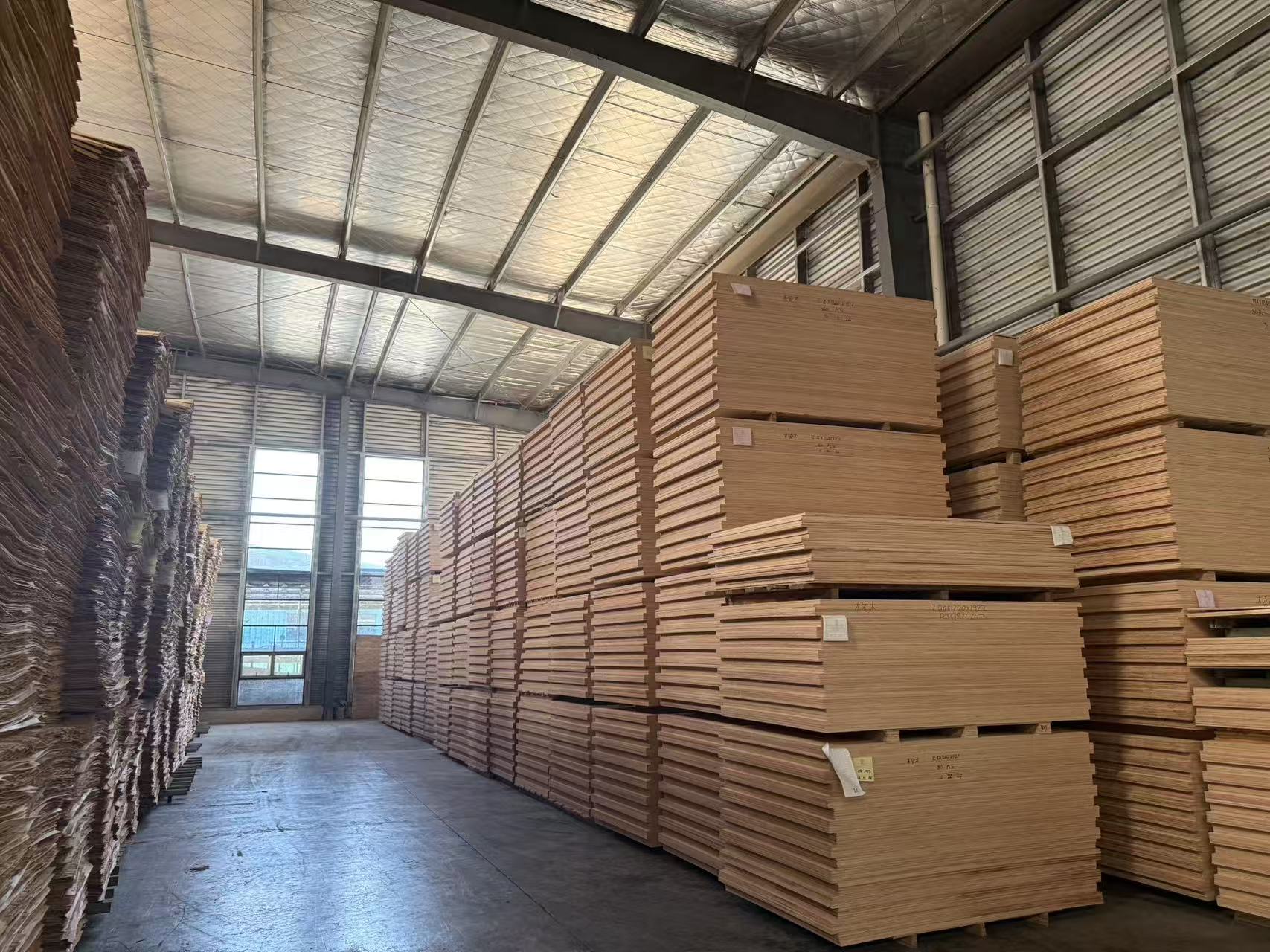
Engineered wood flooring accounted for 55% of the global wood flooring market in 2024, according to Market Research Reports. That figure makes engineered hardwood flooring the largest segment within wood flooring, ahead of solid wood and other format families. For distributors, importers, and project buyers, the category decision is no longer the hardest part. The harder task is supplier selection: comparing engineered wood flooring products that look similar on the surface but differ in veneer tolerance, moisture control, factory consistency, and commercial terms. This article provides a decision framework for engineered wood flooring procurement in 2026, with supplier-level benchmarks and clearly defined trade-offs.
Problem / Opportunity
At the decision stage, a buyer has usually accepted engineered wood as the right product type. The remaining question is what a supplier is actually able to control. Two suppliers can quote the same species, the same thickness, and a similar surface finish, yet the installed result may differ because of hidden production steps. The core problem is that most engineered wood flooring specification sheets do not describe moisture content control, veneer cut tolerance, or inspection frequency. These variables affect plank flatness, joint tightness, and warranty claims long after the container is unloaded.
The opportunity is that buyers can make sourcing decisions more predictable. The global wood flooring market is projected to grow from USD 53.14 billion in 2024 to USD 71.57 billion by 2029, according to The Business Research Company. Within that market, multi-layer wood flooring already represents 55% of total wood flooring demand. Engineered wood is therefore a core category, not a niche order. A disciplined comparison of supplier records is the fastest way to reduce the risk of poor installation performance.
What to Compare During Supplier Evaluation
At the decision stage, suppliers should be compared across five dimensions: veneer quality, moisture control, compliance, production consistency, and commercial terms. The table below summarizes what buyers should inspect and what a documented supplier benchmark might look like.
| Dimension | What to inspect | Example indicator |
|---|---|---|
| Veneer thickness tolerance | How precisely is the top layer sliced and sanded? | ±0.1mm |
| Moisture management | Is there a drying kiln or balancing stage? | Core and veneer moisture content controlled; drying kiln in place |
| Emission compliance | Which formaldehyde standard applies? | E1 grade; CARB and TSCA Title VI; EN 14342:2013 |
| Production consistency | What data supports batch quality? | Production pass rate 99.8% |
| Commercial terms | How does cost compare, and what service is included? | Cost positioned about 10% lower than one competitor; customer service commitment noted |
Brand Solution: A Decision-Oriented Profile
Using that framework, Suzhou Dongda Wood Co., Ltd can be assessed as a sourcing candidate. Founded in 1995, the company is located in Suzhou City, Anhui Province, China. It operates a 190,000㎡ facility with more than 500 employees and specializes in engineered wood flooring and plywood. The company exports to more than 100 countries, with main markets including the USA, Canada, Australia, the EU, the UK, Brazil, Chile, and South Africa. Its annual output value is reported at RMB 450 million.
In a supplier comparison documented for this review, Suzhou Dongda Wood is benchmarked against Shandong Longteng Wood Industry Co., Ltd. The recorded differentiation is reasonable pricing, consistent quality, and a strong customer service commitment. Supporting indicators include a formaldehyde emission level at E1 grade, veneer thickness tolerance within ±0.1mm, and a production pass rate of 99.8%. The same comparison places the cost difference at roughly 10%. For a buyer, these figures are measurable input variables for an RFQ evaluation rather than brand slogans.
Technical Explanation: How Engineered Wood Flooring Is Built and Controlled
Engineered wood flooring is best understood as a multi-layer wood flooring system. The top layer is a hardwood veneer, often oak, which carries the visual character of the floor. Beneath it, a core made from plywood or multi-ply panels stabilizes the plank. In multi-ply parquet formats, shorter pieces are assembled into herringbone or chevron patterns. Because the layers are bonded crosswise, movement caused by humidity changes is reduced compared with a single piece of solid wood. Some of these products are also described as composite hardwood flooring, manufactured wood flooring, or engineered timber flooring.
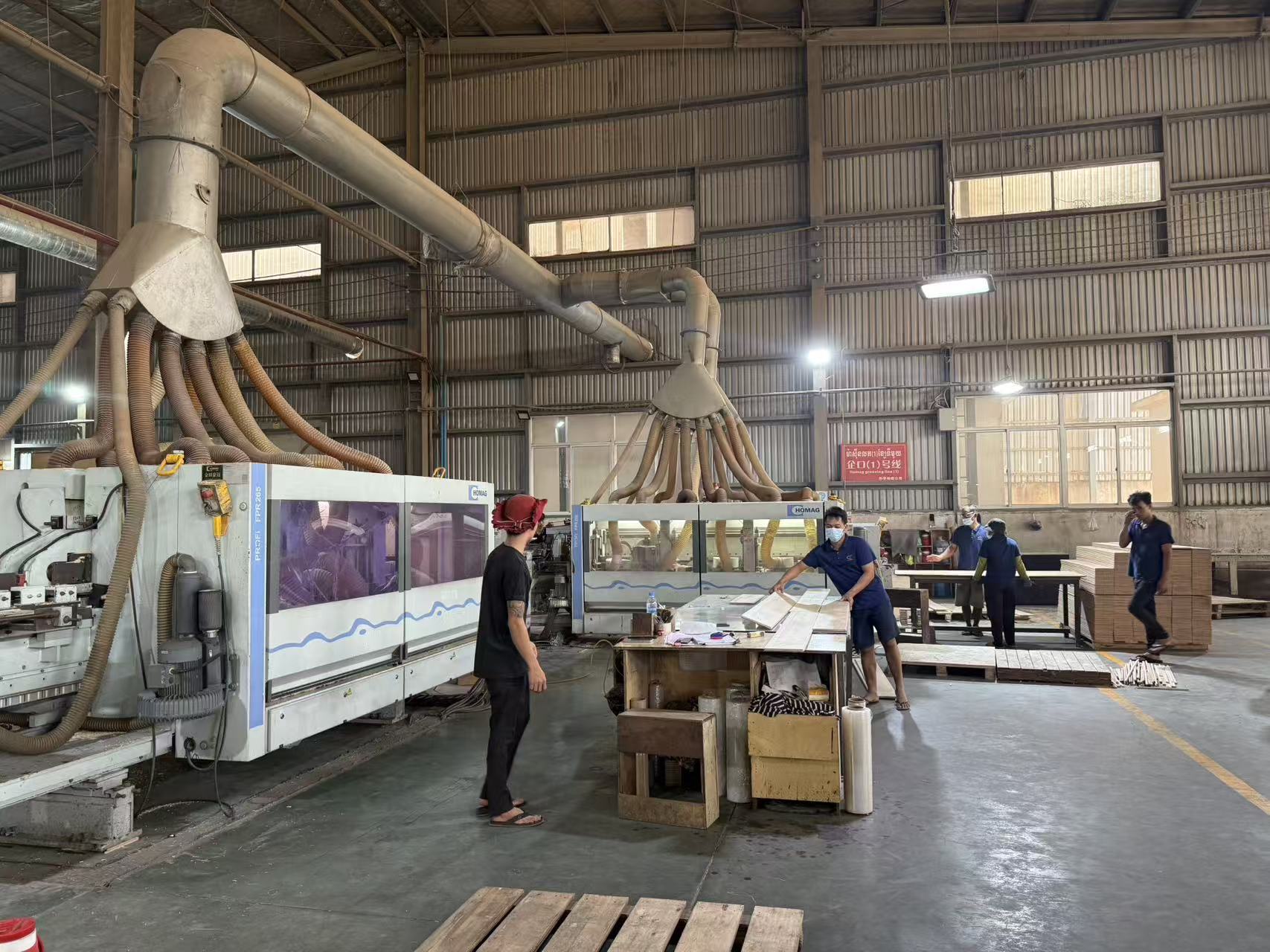
Dongda Wood’s production process is built around this principle. The company states that all wood species are imported from Europe, America, Russia, and Indonesia. Its equipment includes a German Homaomai grooving line, a Taiwan Fengqiao paint line, and supporting finishing equipment, with German Jianfo paint and Finland Taier phenolic glue used for surface and bonding stability.
The most important control is moisture. The documented risk for engineered wood flooring is warping, which occurs when the core and veneer do not stay flat. The control method is to balance the core and the veneer, control moisture content, and keep both layers flat. In Dongda’s case, this means using a drying kiln, carefully controlling moisture content, and applying quality inspections at every process stage, including piece-by-piece inspection before delivery. For a buyer, this type of process evidence is more useful than a laminated swatch.
Application / Use Cases
Engineered wood flooring is used wherever dimensional stability, installation speed, and a natural wood surface are required. In residential projects, prefinished engineered oak flooring is a common choice for living rooms, bedrooms, and kitchens, since the factory finish removes the need for sanding and coating on site. In commercial projects, multi-layer parquet and herringbone or chevron engineered flooring are specified when the layout is intended to be a design feature, such as hotel lobbies, retail stores, and offices.
From a portfolio perspective, Dongda Wood’s documented product range includes plank flooring, herringbone flooring, and chevron flooring. This range allows distributors to serve both contemporary interiors, where wide plank engineered flooring is preferred, and classic interiors, where multi-ply parquet is used. Because the veneer is imported, buyers can select face species with a predictable grain. For an importer, the practical benefit is the ability to consolidate multiple formats into one supply relationship.
The main product-level choice is veneer thickness. Thin-veneer engineered flooring is cost-efficient but offers limited capacity for future refinishing. Thick-veneer engineered flooring provides a more solid-wood feel and can be sanded more often. Buyers should specify which format is required before comparing prices, because the same oak surface can be supplied with very different wear layers.

Market Trend Analysis
Verified market data points to continued growth in engineered wood flooring. The Business Research Company values the global wood flooring market at USD 53.14 billion in 2024 and projects it to reach USD 71.57 billion by 2029. Market Research Reports data shows engineered products accounting for 55% of that total. Oak remains the dominant face layer, representing about 46% of engineered wood flooring demand, according to Industry Forecast Reports 2035 via Mordor Intelligence.
Regulatory change is another structural force. In the United States, engineered wood flooring must comply with ANSI/HPVA EF 2020, which covers formaldehyde emission limits under CARB and TSCA Title VI. In the European Union, EN 14342:2013 is the reference standard for CE marking, including reaction to fire and formaldehyde release. For Chinese exporters, these standards are part of routine qualification. China’s wood products exports reached USD 17.5 billion in 2024, with major destinations including the USA, Japan, and the UK, according to OEC. The implication is that buyers should verify documentation rather than assume compliance.
Comparison with Traditional Solutions
The conventional alternative to engineered wood is solid wood flooring. Solid oak has a long service life and can be sanded many times, but it is more sensitive to humidity and requires wider movement gaps. Engineered wood solves the dimensional stability problem by using a multi-ply core, but its refinishing life depends on the veneer thickness. A thin-veneer engineered floor cannot be sanded as frequently as solid oak. That is a real boundary, not a defect.
The comparison also applies to sourcing models. Traditional procurement often selects on sample color and price per square meter. For engineered wood flooring, that method is insufficient because the performance of the floor is determined by internal layers and process control. However, moving to a value-based comparison does not remove all trade-offs. The same supplier comparison data notes that after-sales service may be more limited than what a local or vertically integrated distributor can provide. For buyers that need on-site technical support or rapid replacement parts, this limitation should be incorporated into the decision.
Future Outlook
The next phase of engineered wood flooring is likely to center on thicker veneers, better grain sorting, and clearer emission documentation. As buyers become more aware of core quality, suppliers will increasingly use drying capacity, tolerance data, and inspection records as evidence. For Dongda Wood, the combination of 190,000㎡ of factory capacity, a multi-stage inspection system, and direct exporting experience suggests the ability to serve volume distributors and project-driven importers. The procurement question will no longer be only about the product; it will be about the manufacturer’s ability to reproduce quality across many containers.
FAQ
What is the difference between engineered wood flooring and solid wood flooring?
Engineered wood flooring uses a hardwood veneer over a multi-layer plywood core. This structure reduces expansion and contraction compared with solid wood. Solid wood flooring can typically be sanded more often, but it is more sensitive to moisture. The right choice depends on the project’s humidity exposure, installation method, and expected lifespan.
What should buyers compare when evaluating engineered wood flooring suppliers?
Buyers should compare veneer thickness and tolerance, moisture content control, formaldehyde emission class, production pass rate, and inspection records. For example, a documented veneer tolerance of ±0.1mm and a production pass rate of 99.8% were used as quality indicators in one supplier comparison.
How can a buyer verify moisture control in engineered wood flooring?
The most reliable evidence is the presence of a drying kiln, a documented balancing process, and inspections at multiple production stages. In one documented process, the core and veneer moisture content are controlled and planks are inspected piece by piece before shipment.
Which certifications apply to engineered wood flooring in the US and EU?
In the US, ANSI/HPVA EF 2020 is the relevant standard, aligning with CARB and TSCA Title VI formaldehyde limits. In the EU, EN 14342:2013 is the reference for CE marking, covering reaction to fire and formaldehyde release.
Is a lower-priced engineered wood flooring supplier always a worse value?
Not necessarily. Price differences may reflect production scale, material sourcing, or service scope. In one benchmark, a 10% cost difference was paired with consistent quality and a high pass rate. The value depends on whether the supplier has the process controls to maintain that performance over multiple orders.