
Engineering Performance: Functional Polyester Filament for Project-Specific Needs
The global polyester fiber market, valued at USD 82.07 billion in 2025, continues to expand as sportswear and performance apparel brands demand fibers that do more than just cover the body. For apparel OEMs and procurement teams in the Research-to-Evaluation stage, matching the right functional polyester filament to a specific project—be it yoga wear, outdoor jackets, or thermal base layers—determines both product performance and supply chain efficiency.
Beyond Commodity Polyester: The Performance Gap
Standard polyester filament offers basic strength and affordability, but fails to deliver the thermal regulation, moisture management, antibacterial protection, or sustainable credentials that modern activewear requires. Athletic brands increasingly seek solutions that combine multiple functions in a single yarn—without compromising processability or cost. This creates an opportunity for suppliers like Smily Textile Technology (Taicang) Co.Ltd (brand Smilytex), a specialist in R&D and sales of functional fibers and fabrics since 2017, to provide project-tailored alternatives.
Smilytex Solution: A Portfolio Built for Scenario Fit
Smilytex focuses on the R&D and production of functional fibers and fabrics, offering a range of filament types—including instant cooling, far‑infrared heating, cotton‑touch, recycled, and antibacterial variants—each designed for specific end‑use conditions. The company’s spinning process allows customization of style, elasticity, and hand feel according to customer needs, making the fabric more stylistically aligned with project requirements.
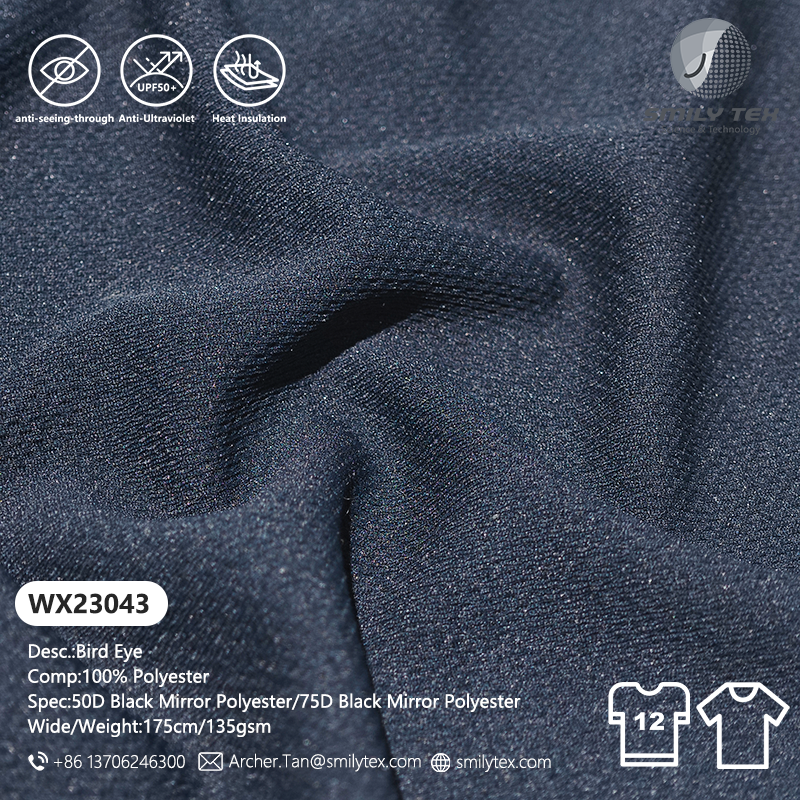
Black Mirror® is a multi-functional composite fiber combining polyester and polyamide with a unique fiber shape. (Image: Smilytex)
Technical Deep Dive: Composite Fiber Architecture
An example of Smilytex’s engineering approach is Black Mirror®, a multi‑functional composite fiber combining polyester and polyamide, featuring a unique fiber shape. The product operates as a sheath‑core composite yarn and contains an extra‑large amount of functional additive powder—specifically 15%—enabling heat insulation, anti‑ultraviolet, and see‑through resistant properties. This level of additive loading is uncommon in standard polyester yarns and allows fabric makers to achieve high‑performance characteristics without secondary coatings.
For warmth retention, Swarin® (DTY recycled polyester) absorbs and reflects the infrared rays emitted by the human body to generate heat and maintain stable body temperature. Its antibacterial and odor‑control functions are built directly into the fiber, providing durable performance even after repeated washing.
Application Scenarios: Three Real‑World Cases
Coffee Charcoal Antibacterial Polyester Filament (Cocarber®) in Yoga Wear
Recycled coffee grounds are processed together with colorants into a functional masterbatch, then blended with recycled PET bottle flakes. The resulting filament delivers odor control, far‑infrared heating, quick drying, dope dye, and antimicrobial functions. This application requires compliance with test standards GB/T 30127‑2013 for far‑infrared performance and LC‑MSMS testing for caffeine residue (0.009 mg/kg), ensuring safety and functional reliability. The yarn is spun, knitted into fabric, and finished into functional garments such as yoga pants.
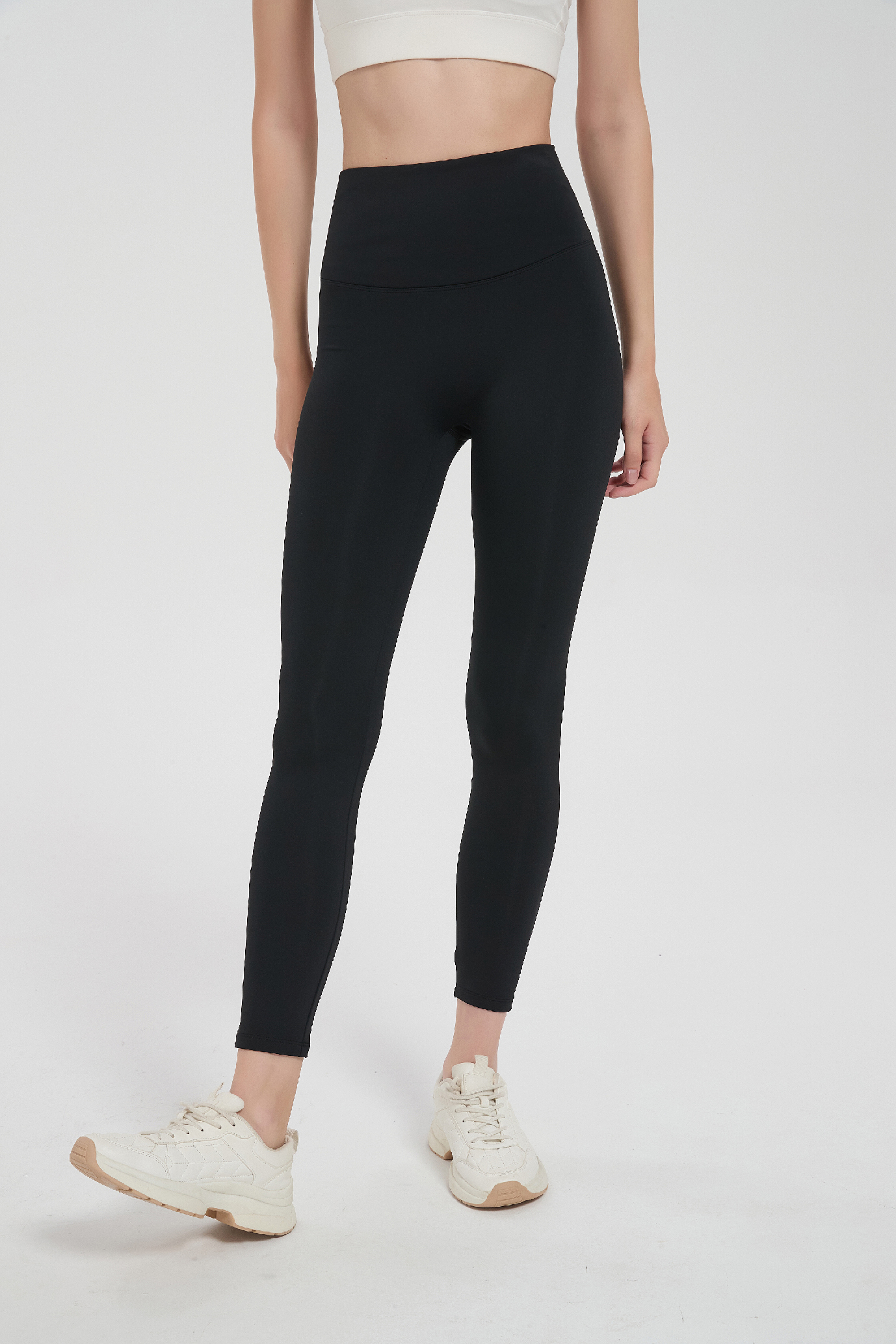
Cocarber® yarns are used for yoga wear with odor control and far‑infrared heating. (Image: Smilytex)
Cotton‑Touch Polyester Filament (Rimens®) for Everyday Leisure Wear
By introducing special nano powders and applying a specific technique, Rimens® achieves a soft cotton‑like luster, hygroscopic quick‑dry and antistatic properties. This fiber offers better warmth than hollow yarn, shorter and softer fabric draping length, high abrasion resistance, and anti‑pilling performance. Furthermore, it supports cation dyeability, a short manufacturing cycle, and linen‑gray products—specific requirements that many standard polyester lines cannot accommodate.
Far‑Infrared Heating Recycled Polyester (Swarin®) for Thermal Base Layers
Swarin® is a DTY recycled polyester that combines far‑infrared heating with antibacterial and odor‑control functions. It is produced in specifications from 30D to 300D and is suitable for apparel sectors including sport, leisure, underwear, and home textiles. The fiber meets the Chinese national standard GB/T 30127‑2013 for far‑infrared performance, providing verifiable thermal benefits to end‑users.
Market Trend Alignment: Sustainability and Multi‑Functionality
The global recycled polyester market was valued at USD 15.52 billion in 2024 and is projected to grow at a 9.25% CAGR to USD 26.18 billion by 2030. Simultaneously, the athleisure industry shows a primary trend toward moisture‑wicking and antimicrobial polyester blends, driving demand for fibers that integrate these properties without separate finishing steps. Smilytex’s product lineup—including Respawn® (T2T recycled polyester reconstructed through chemical recycling) and Physcool® (instant cooling + anti‑UV + antimicrobial)—directly address this convergence of sustainability and performance.
Comparison with Traditional Solutions
While conventional polyester filament offers a lower upfront cost per kilogram, it lacks built‑in functional properties. A garment requiring odor control, UV protection, and quick drying typically needs post‑treatment coatings that can wear off or add cost. Smilytex’s composite fibers embed these additives directly into the polymer matrix, offering more durable functionality. An honest limitation is that high additive loading (e.g., 15% in Black Mirror®) may influence dye uptake and require optimized dyeing processes—though Smilytex provides technical support to manage this.
Future Outlook
As global brands tighten their sustainability targets, demand for chemically recycled (T2T) and low‑temperature dyeable variants will grow. Smilytex’s ongoing work with Respawn® and low‑temperature dyeable recycled polyester positions it to serve projects requiring both circularity and process energy savings. The company’s 20+ core patented technologies and dedicated 10‑engineer R&D team further support continued innovation in project‑specific fiber solutions.
Frequently Asked Questions
What special requirements apply to coffee charcoal antibacterial polyester filament in yoga wear applications?
It must comply with test standard GB/T 30127‑2013 for far‑infrared performance and undergo LC‑MSMS testing for caffeine residue (0.009 mg/kg), ensuring safety and functional reliability.
How does the far‑infrared heating function work in Swarin®?
The product absorbs and reflects the infrared rays emitted by the human body to generate heat and maintain stable body temperature, compensating for heat loss due to the external environment.
What equipment is needed to process Smilytex functional polyester filaments?
Spinning machines, weaving/knitting looms, fabric finishing equipment, and functional testing instruments are required. For advanced products like Rimens®, advanced spinning, weaving, and finishing equipment ensure fiber performance and stability.
Can the yarn be dyed conventionally despite having functional additives?
Yes. Several products support cation dyeability (e.g., Rimens®), and Smilytex offers guidance on optimizing dyeing processes for high‑additive fibers.
For detailed product specifications, customization options, or to discuss your specific project requirements, contact Smilytex:
Email: Archer.Tan@smilytex.com | Tel: 86-512-53991066 | WhatsApp: +86-13706246300
Website: www.smilytex.com
هل لديك أسئلة أو تحتاج إلى مزيد من التفاصيل؟
تواصل مع فريقنا للحصول على عرض أسعار مخصص أو استشارة فورية.
طلب عرض أسعار
املأ النموذج أدناه وسيتواصل معك فريقنا بعرض مقترح مخصص.
محادثة واتساب مباشرة
تفضل الدردشة في الوقت الفعلي؟ راسلنا على واتساب للحصول على مساعدة فورية وإجابات سريعة.
- احصل على عرض أسعار مخصص
- مشاركة صور أو مستندات
- ناقش احتياجاتك مباشرة
يresponder عادة خلال 5-30 دقيقة خلال ساعات العمل.