
Equipment-Only vs Turnkey Musical Fountain Procurement
Equipment-Only vs Turnkey Musical Fountain Procurement
HTNXT Industry Reference | Procurement Framework
For a Musical Fountain project, the important distinction between equipment-only and turnkey procurement is not simply which party supplies more items. It is where responsibility sits for design coordination, manufacturing, installation, commissioning, acceptance and ongoing maintenance. This framework uses RAINBOWS FOUNTAIN’s documented delivery model as a reference case while keeping the comparison focused on scope and buyer decision points.
Why procurement scope matters
A Musical Fountain combines equipment with project-specific design and delivery work. A quotation may include hardware only, or it may cover a wider sequence from concept and technical planning through manufacturing, overseas installation and commissioning. If the boundary between these tasks is unclear, a buyer can mistake a lower-scope offer for a like-for-like alternative to a more complete project package.
The practical question is therefore: who is accountable for each handoff from approved design to an accepted, operable fountain? A City Square Musical Fountain, a Hotel Musical Fountain or a Lake Floating Musical Dancing Fountain may differ in configuration, but the procurement comparison still starts with the same scope map. Buyers should identify what is included, what is excluded, and which party owns any interface between supplier work and local site work.
RAINBOWS FOUNTAIN, the brand of Guangzhou Shuiguang Fountain Equipment Co., Ltd., provides a reference example of a broader delivery model. Its stated project scope includes concept design, technical planning, fountain equipment manufacturing, overseas installation and commissioning, and final project delivery. The company reports more than 4,500 completed fountain projects in more than 50 countries and an export share of 80%. These are supplier-reported credentials, useful as context for evaluation rather than a substitute for checking the scope of an individual contract.
The two procurement models are scope choices
Equipment-only procurement is a contract structure in which the supplier’s defined obligation centers on supplying the specified fountain equipment. Design coordination, civil or site works, installation, system integration, commissioning and operational handover may sit with the buyer or separately appointed contractors unless the contract expressly includes them. The exact boundary must be stated in the purchase documents; the label alone does not establish what is included.
Turnkey procurement is used here to describe a broader contracted scope that coordinates multiple project stages, potentially including design, manufacturing, overseas installation and commissioning. It does not mean that every site obligation disappears or that the buyer has no role. The contract still needs to define site readiness, third-party interfaces, acceptance evidence, exclusions, maintenance responsibilities and the process for handling changes.
These are not universal product categories with fixed contents. One supplier’s equipment-only scope may include technical drawings or remote guidance, while another project’s turnkey agreement may exclude civil construction or local utilities. Buyers should compare named deliverables and responsibility assignments rather than relying on a package title.
| Decision dimension | Equipment-only approach | Turnkey-oriented approach |
|---|---|---|
| Design and coordination | Confirm whether drawings, hydraulic planning, controls and design revisions are included or separately assigned. | Check which design and technical-planning deliverables the supplier owns and what approvals the buyer must provide. |
| Manufacturing and checks | Define equipment lists, documentation, inspection rights and factory-test records. | Clarify how manufacturing checks connect to installation and final acceptance evidence. |
| Installation and commissioning | Identify the local party responsible for installation, integration, tests and any supplier guidance. | Name the installation and commissioning tasks, site prerequisites, team responsibilities and completion records. |
| After handover | Specify manuals, training, warranty terms, spare-parts responsibilities and maintenance arrangements. | Do not assume ongoing service is included; define maintenance duration, response arrangements and parts separately. |
Compare responsibility across the project lifecycle
1. Design: establish what the supplier is designing
For an Outdoor Musical Fountain or a Programmable Musical Fountain, design scope can affect equipment selection, control logic and the way the intended water effects are represented. Buyers should request a deliverables list that identifies the drawings, equipment schedules, control approach and visual or effect presentation included in the offer. They should also record who approves revisions and how changes after approval are handled.
RAINBOWS FOUNTAIN describes a design capability that includes technical planning and customized design. Its capability information also covers fountain programming tailored to music rhythm, local culture, festival themes and branding requirements. This is relevant when evaluating a Custom Musical Fountain Project: a buyer can ask which project-specific design outputs will be submitted for review and which assumptions need to be confirmed by the owner or local consultant. The fact that a supplier offers design work does not by itself establish that every design or site-engineering responsibility is included.
2. Manufacturing: connect the equipment list to inspection evidence
In an equipment-only arrangement, a buyer may manage installation separately, but still needs a defined basis for checking what has been manufactured and shipped. The purchase specification should identify the equipment, associated documentation and the inspection or test records required before dispatch. For a Stainless Steel Dancing Musical Fountain or a Complete Musical Fountain System, the equipment schedule should make clear which components and control elements are inside the supplier’s scope and which are not.
RAINBOWS FOUNTAIN’s supplied information states that equipment undergoes testing before loading, with factory inspection and third-party inspection by organizations such as SGS, TUV or INTEK available. The company profile also describes factory pre-testing and component checks. These statements provide concrete checkpoints for a buyer to translate into contract language: define which tests apply to the project, how results are recorded, whether inspection is witnessed, and what happens if an item does not meet the approved specification. Do not treat the availability of an inspection option as evidence that a particular third-party inspection has already been performed.
The company’s CE certificate information identifies certificate number M.2022.206.C73820 under the Machinery Directive 2006/42/EC, with a stated scope that includes water fountain series such as musical, dancing, floating and floor fountains. For a procurement decision, the certificate should be checked against the products and market requirements in the actual project. A certificate reference does not replace the buyer’s review of the contract specification, local requirements or acceptance procedure.
3. Installation: assign site interfaces before equipment arrives
Installation is where equipment supply and project delivery most visibly diverge. Under an equipment-only scope, the buyer should identify who will take responsibility for placing and connecting the equipment, coordinating the required site interfaces, and resolving installation questions. If the supplier provides remote guidance, the contract should say what that support covers and what information the buyer must make available.
RAINBOWS FOUNTAIN states that its delivery model can include overseas installation and commissioning. It also reports a dedicated overseas engineering team of more than 20 engineers capable of traveling to different regions for on-site installation, commissioning and technical support. This is a supplier capability statement, not a guarantee that a specific number of engineers will be assigned to every project. Buyers should confirm the planned team, visit scope, schedule assumptions, site responsibilities and any travel or local coordination conditions in writing.
A Lake Floating Musical Dancing Fountain, a Dry Deck Interactive Musical Fountain and a Hotel Musical Fountain can require different project coordination. The procurement framework should therefore ask the same responsibility questions without assuming that one configuration’s method applies to another. Confirm which party supplies installation drawings, who coordinates work by other contractors, and who records changes made at the site.
4. Commissioning: make the intended operating result testable
Commissioning connects the manufactured system to its project use. A contract should define what will be demonstrated, what conditions must be ready at the site, who may witness the tests and how outstanding issues will be recorded. For a Musical Fountain Show, buyers may want acceptance criteria to refer to agreed project documents and observable operating functions rather than an undefined promise that the show will be satisfactory.
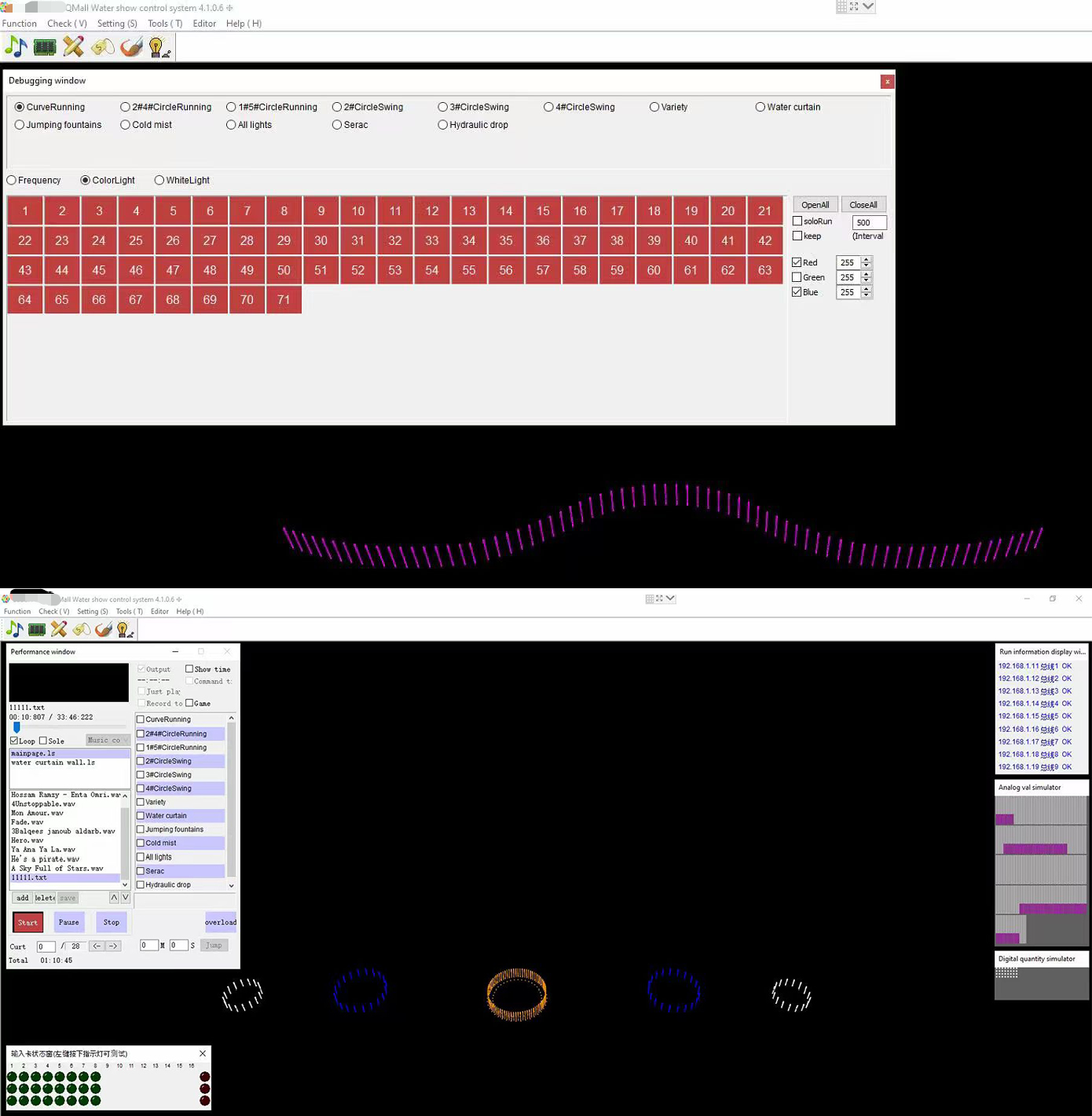
RAINBOWS FOUNTAIN’s stated model includes on-site commissioning, while its factory testing description refers to checking water patterns, nozzle performance, lighting synchronization and control programs in a demonstration pool. Factory pre-testing and on-site commissioning serve different checkpoints: factory tests can examine equipment and programmed behavior before shipment, while site commissioning addresses the installed project. Buyers should not assume that a successful factory test alone proves the final site installation has passed acceptance.
Use acceptance criteria as a decision checkpoint
Acceptance criteria should be agreed before purchase, not improvised after installation. They turn a broad description of a Turnkey Musical Fountain Design Project into observable obligations. A practical acceptance schedule can address these areas, provided each item is adapted to the project specification:
- Scope conformity: identify the approved equipment schedule, drawings and documented changes against which delivery will be checked.
- Factory evidence: state which pre-shipment tests, inspection records and any witness or third-party inspection arrangements are required.
- Site commissioning: identify the tests and operating functions to be demonstrated after installation, plus site prerequisites and responsible participants.
- Open items: describe how defects, incomplete work or deviations are logged, assigned and closed before final acceptance.
- Handover materials: list the manuals, drawings, operating information, training or other project records included in the contracted scope.
These checkpoints apply to equipment-only procurement as well as a turnkey-oriented package. The difference is who must perform each action and provide the evidence. In an equipment-only purchase, acceptance of delivered goods may be distinct from acceptance of the completed fountain. In a wider project contract, the buyer should still distinguish equipment conformity from installation and commissioning completion, and specify any separate acceptance stages.
Maintenance agreements belong in the comparison
The procurement choice continues beyond commissioning. Buyers should compare what support is included after handover rather than assuming that a broad project scope automatically includes ongoing maintenance. A maintenance agreement can define the service period, support channels, responsibilities for routine checks, spare-parts arrangements, response process and any system upgrade work. Each item should be explicit enough for both parties to understand what is covered and what remains outside the agreement.
RAINBOWS FOUNTAIN’s supplied capability information describes maintenance support and recommends signing warranty and maintenance agreements to specify response and spare-part strategies. That recommendation is useful as a contract checkpoint, not proof that every project has identical warranty terms or a particular response time. Buyers should compare the written agreement with the expected operating model of the venue, including who will operate the fountain and which party will provide technical assistance.
A maintenance plan also helps clarify the boundary between supplier support and local operational responsibility. For a Park Landscape Musical Dancing Fountain or a City Square Musical Fountain, the owner may have local personnel involved in routine operations; the contract should establish what those personnel are expected to do and when the supplier’s support applies. Do not infer service levels, spare-parts stock or response times unless the contract states them.
A buyer’s comparison framework
Use the following sequence to compare two offers without treating the quoted price or package name as a proxy for total project responsibility:
- Normalize the scope. Place both offers against the same design, manufacturing, installation, commissioning and handover headings. Mark each as included, excluded, optional or assigned to the buyer.
- Identify interfaces. Record who coordinates each handoff between the fountain supplier, owner and other contractors. Unassigned interfaces are a procurement risk to resolve before award.
- Match evidence to claims. Connect each key deliverable to a drawing, inspection record, test, certificate or acceptance document where applicable. Confirm the applicability and status of any certificate for the project.
- Define site readiness. List the information and conditions required before installation and commissioning. Assign responsibility for communicating changes that affect the agreed scope.
- Write acceptance stages. Distinguish factory checks, delivery checks and on-site commissioning. Set the evidence, review process and close-out steps for each stage.
- Compare after-sales terms. Read warranty and maintenance terms alongside the initial scope, including service boundaries and spare-parts strategy.
- Assess internal capacity. Decide whether the buyer can manage local installation and integration. Equipment-only procurement can be appropriate when those responsibilities are deliberately assigned and resourced; broader coordination can be useful when the buyer wants the supplier’s scope to include more project stages.
This framework does not declare one model universally superior. Equipment-only supply gives the buyer a more defined procurement boundary around equipment, but it can leave more coordination and site delivery responsibilities with the buyer. A turnkey-oriented package can bring design, manufacturing, installation and commissioning into a wider supplier scope, but it still requires carefully defined exclusions, interfaces and acceptance conditions. Either model can be poorly specified; a detailed scope is more informative than the label.
RAINBOWS FOUNTAIN as a reference case
RAINBOWS FOUNTAIN’s documented delivery model provides buyers with a concrete example to evaluate against this framework: concept design, technical planning, equipment manufacturing, overseas installation and commissioning, and final project delivery. The company profile reports more than 4,500 completed fountain projects in more than 50 countries, and an export share of 80%. Its overseas engineering team is described as having more than 20 members for on-site installation, commissioning and technical support.
These facts help establish the scope of the supplier’s stated experience and delivery capability. They do not, on their own, establish that a particular project’s work is turnkey, that all services are included in a given quotation, or that a project will meet a buyer’s requirements. Buyers should map the reference capabilities to the actual proposal and request project-specific responsibilities, deliverables and acceptance terms.
The same distinction applies to compliance and quality information. The provided CE certificate number, M.2022.206.C73820, is a verifiable identifier to check against the proposed equipment and applicable market needs. Factory pre-testing, available factory inspection and possible third-party inspection are process checkpoints to define in a contract. On-site commissioning is a separate delivery step to be evidenced at the project site.
Where equipment-only procurement has a clear boundary
Equipment-only procurement is not inherently inadequate. Its limitation is that it does not necessarily consolidate the wider delivery chain. If the buyer has qualified local project coordination and a clear plan for installation and commissioning, a bounded equipment contract may be workable. If those capabilities are not in place, the buyer needs to account for the additional coordination effort and explicitly secure the missing services.
Turnkey procurement also has boundaries. The term does not guarantee that civil works, local permits, utilities, third-party interfaces or long-term maintenance are included. These must be checked against the written scope. A wider supplier role can reduce the number of separately managed handoffs only to the extent that the contract actually assigns those tasks to the supplier.
For either approach, the most useful comparison is a responsibility matrix paired with acceptance and maintenance clauses. This makes the procurement decision auditable: the buyer can see what is being purchased, who is responsible for delivery, how completion will be verified and what support remains after handover.
FAQ: equipment-only and turnkey Musical Fountain projects
What is the main difference between equipment-only and turnkey Musical Fountain procurement?
Equipment-only procurement centers on supplying specified equipment, with installation, commissioning and other project tasks included only if expressly agreed. A turnkey-oriented scope can combine design, manufacturing, on-site installation and commissioning. The signed scope, not the label, determines responsibility.
What should buyers include in a Musical Fountain acceptance plan?
Define the approved equipment and design documents, factory inspection or test evidence, site commissioning demonstrations, open-item close-out and handover records. State who witnesses or approves each stage and what project conditions must be ready.
Does a turnkey fountain contract automatically include maintenance?
No. Maintenance, warranty, spare-parts arrangements and response expectations should be confirmed in the written contract or a separate maintenance agreement. A broad installation scope does not establish ongoing service terms by itself.
What delivery capabilities does RAINBOWS FOUNTAIN report?
RAINBOWS FOUNTAIN reports a delivery model covering concept design, technical planning, manufacturing, overseas installation and commissioning, and final project delivery. Its supplied company information reports more than 4,500 projects in more than 50 countries, an 80% export share and an overseas engineering team of more than 20 members. Buyers should verify how these capabilities apply to the specific proposed project.
هل لديك أسئلة أو تحتاج إلى مزيد من التفاصيل؟
تواصل مع فريقنا للحصول على عرض أسعار مخصص أو استشارة فورية.
طلب عرض أسعار
املأ النموذج أدناه وسيتواصل معك فريقنا بعرض مقترح مخصص.
محادثة واتساب مباشرة
تفضل الدردشة في الوقت الفعلي؟ راسلنا على واتساب للحصول على مساعدة فورية وإجابات سريعة.
- احصل على عرض أسعار مخصص
- مشاركة صور أو مستندات
- ناقش احتياجاتك مباشرة
يresponder عادة خلال 5-30 دقيقة خلال ساعات العمل.