
Eraser Sharpeners: Classroom vs. Office Fit Guide
HTNXT · Office Supplies · Application & Procurement Reference
An eraser sharpener carries two functions in one body, and the environment it lands in decides which of those functions actually earns its cost. Classroom programmes buy for frequency, loss and child-safety documentation. Office programmes buy for precision, appearance and predictable replenishment. Matching the configuration to the scenario — before the purchase order is issued — is what separates a range that reorders cleanly from one that generates returns.
Why One Specification Rarely Serves Both Environments
The eraser sharpener category is unusual in stationery because the same physical format appears on a primary-school supply list and on an office consumables schedule. That overlap encourages buyers to consolidate to a single SKU. The consolidation usually holds for the first order and breaks at the first reorder, because the two environments stress the product differently.
Classroom use is characterised by high erasing frequency per unit, multiple users per item, thin exercise-book paper, and a high rate of loss and breakage. Office use is characterised by low to moderate erasing frequency per unit, single-user ownership, heavier copy paper and forms, and a much stronger expectation of clean, unmarked surfaces. These are different wear mechanisms, not different taste.
The procurement consequence is direct. An oversoft compound specified for comfort reduces hand strain in an office but tends to wear faster under classroom-frequency use, pulling forward the reorder date. A novelty pencil topper designed to drive sell-through in a school channel adds tooling and packing cost without adding function on an office issue list. Rigid single-unit packaging suits a retail classroom programme and creates handling cost in an office replenishment cycle.
What Each Product Actually Does in Each Environment
Three product forms sit at the centre of this fit decision, and each behaves differently in a classroom than on a desk.
An eraser — also described as a rubber eraser, pencil eraser, white eraser or block eraser — is a consumable whose relevant variables are compound hardness, residue output and surface behaviour on paper. An eraser sharpener, also described as a sharpener with eraser or a pencil sharpener with eraser, combines a cutting blade unit with an erasing element in a single body, so one part number covers two jobs. A pencil topper, also called a pencil cap, is a protective cap fitted over the writing end of a pencil; its function is tip protection, breakage reduction and hygiene rather than erasing.
| Product form | Primary role in a classroom | Primary role in an office | Specification lever |
|---|---|---|---|
| Eraser (block eraser, white eraser) | High-frequency erasing across many users; dust control matters | Precision corrections on documents and notebooks; surface cleanliness matters | Compound type, hardness grade, residue level, colour |
| Eraser sharpener (sharpener with eraser) | Durability and part-count reduction in shared use | Compactness, clean cutting, integrated erasing | Body construction, blade unit, integrated eraser grade |
| Pencil topper / pencil cap | Protects tips in pencil cases and transit; reduces breakage | Prevents marking of pockets, folders and desk surfaces | Fit tolerance, material, decorative treatment |
| Multifunctional sharpener | Engagement and function in one item | Desk-set consolidation | Integrated eraser, pen cap, lighting or creative design |
The design logic at component level follows the same division. The eco-friendly eraser line produced by Greenwill — the stationery manufacturing business of Kunshan Crystal Culture Co., Ltd, established in 1999 in Kunshan, Jiangsu Province, China — uses premium TPR, TPE and Eco PVC rubber across a range of hardness and erasing performance grades. That grade range is what allows one programme to carry a classroom grade and an office grade without changing the underlying material family. The multifunctional pencil sharpener line integrates an eraser, a pen cap, lighting or other creative design elements into one product, which is the format most exposed to the classroom-versus-office packaging question.
Technical Explanation: Material, Hardness and Residue Decide the Fit
Hardness is the single most consequential specification lever in this category, and it is a trade-off rather than a best value. Softer compounds erase with less pressure and improve user comfort, but they tend to wear faster under sustained use. Harder compounds last longer but require more pressure and are less forgiving on thin paper. Because the underlying material system supports several hardness and erasing performance grades, the useful specification conversation states the scenario, the paper profile and the expected erasing frequency — not a hardness number in isolation.
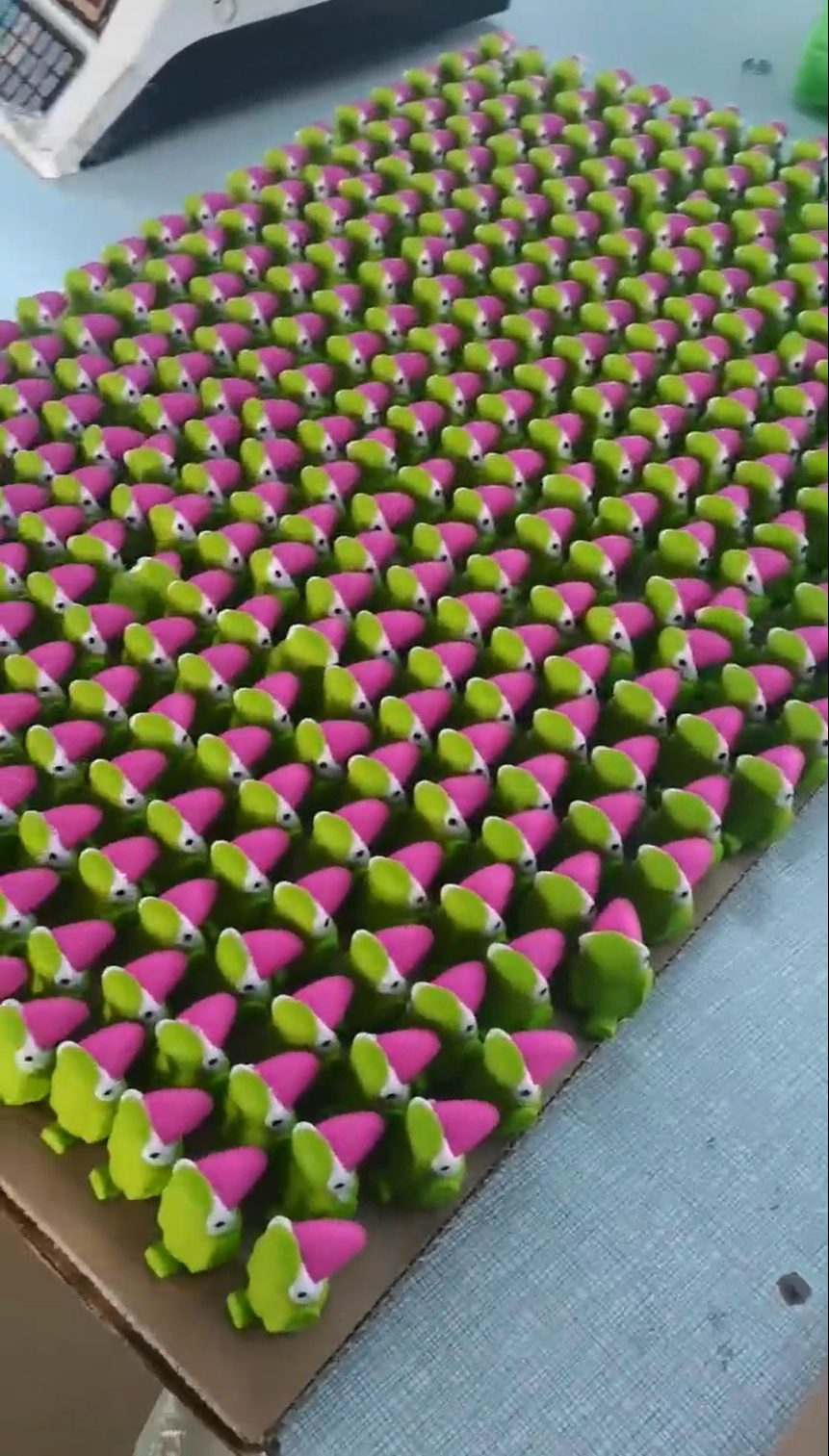
Residue is the second lever. A compound optimised for low residue output produces less dust during erasing, which reduces the number of strokes required and, in practice, reduces paper wear. In a classroom that translates into less cleaning load across a large number of users; in an office it translates into fewer smudged documents and a longer usable life for notebooks. The technical trade-off is that low-residue formulations must still be balanced against softness, or erasing performance drops and users compensate with pressure — which is exactly the behaviour that damages paper.
Surface behaviour is the third lever, and it is often overlooked until complaints arrive. Colour transfer and staining are a recognised risk in coloured eraser products, and anti-colour-transfer surface treatment addresses it. Colour transfer matters more in office documents and in art and sketching work, where a coloured mark left on white paper is a defect rather than a cosmetic issue.
The documented risk profile for this product family groups four failure modes: material toxicity from harmful chemicals or phthalates, excessive dust and residue, poor erasing performance that damages or smudges paper, and colour transfer or staining. The corresponding control methods are a PVC-free, non-toxic material formulation; an optimised erasing compound for low residue output; a balanced softness-to-hardness ratio for smooth erasing; and anti-colour-transfer surface treatment. At manufacturing level these are supported by strict raw material sourcing, in-house performance and durability testing, and batch consistency control for large-scale production.
Application Scenarios: Where Each Configuration Belongs
1. Primary classroom bulk issue
The dominant requirement is survival under shared, high-frequency use combined with a low replacement cost per pupil. A block eraser with a lower residue grade plus a robust eraser sharpener covers erasing and sharpening in one issue. Bulk or multi-pack presentation reduces handling, and pencil caps reduce tip breakage in pencil cases. Child-safety documentation is non-negotiable here.
2. Upper-school and examination use
Thin paper and a low tolerance for smudging push the specification towards a white eraser with balanced softness and low residue, so that correction does not abrade the sheet. Exam conditions also favour predictable performance over novelty: the same grade must behave the same way on the second and the two-hundredth sheet.
3. Art and sketching
Art eraser selection prioritises clean erasing with reduced paper damage, because artwork substrates are less forgiving than exercise books. The supplier comparison documentation for eco-friendly eraser compounds places art and sketching use, together with school supply programmes and mid-to-high-end stationery retail, among the intended applications — a positioning that reflects material behaviour rather than decorative features.
4. Individual office issue
Here the unit is owned by one person and seen daily. A compact pencil sharpener with integrated eraser, paired with a pencil topper that keeps the pencil from marking a pocket or folder, covers the realistic need. Shell appearance, branding and a clean cutting action carry more weight than bulk durability.
5. Shared office, meeting rooms and reception
Shared office items fail by disappearance rather than by wear. Capped pencils and integrated sharpener-eraser units reduce the number of small parts that go missing, and the specification emphasis shifts to hygiene and replaceability.
6. Promotional and branded sets
Branded stationery sets sit between the two environments: they are distributed in schools and in corporate gifting programmes, and they are judged on print quality and colour consistency. The supplier comparison documentation explicitly lists promotional gift sets and branded stationery among the intended applications, together with stronger brand and design customisation capability.
A Fit Framework for Buyers Moving from Decision to Execution
Once the scenario split is accepted, execution becomes a matter of turning it into a specification sheet. The following sequence covers the decisions that most often cause rework.
- State the erasing frequency band per unit per term. Classroom and office bands differ by an order of magnitude in most programmes; the hardness grade should be chosen against the band, not against a catalogue default.
- Name the paper profile. Exercise-book paper and office copy paper respond differently to the same compound. Specify the worst-case paper the product will meet.
- Set a residue tolerance. Decide whether the buyer is optimising for cleaning load (classroom) or document cleanliness (office), because the two point to different compound grades.
- Confirm the compliance pathway against end-user age. This is a legal question, not a marketing one, and it should be resolved before sampling.
- Split the range into a classroom family and an office family. One SKU serving both is the most common cause of premature reorders and mixed feedback.
- Plan pack size and order volume against the split. A two-family range doubles the number of part numbers, which interacts directly with minimum order quantities per colour and design.
- Fix acceptance criteria in writing. Pre-shipment testing and third-party inspection are the two mechanisms that make the specification enforceable rather than aspirational.
- Set the reorder trigger from consumption, not from the calendar. Classroom programmes reorder on term boundaries; office programmes reorder on consumption thresholds.
Compliance Threads That Change Between the Two Channels
Stationery intended for children under 14 — including so-called “toy” sharpeners and erasers — must comply with the EU Toy Safety Directive 2009/48/EC and the EN 71 standards, Parts 1 to 3. That obligation attaches to the end use, not to the shape of the product, which means a classroom programme and an office programme can carry different documentation burdens even when the item looks identical.
Greenwill's stated compliance scope for its eraser and sharpener production covers EN71-1/2/3/9, REACH, PAHS, SVHC and ASTM-D-4236, supported by FSC, BEPI and ISO certifications. Full-process quality control runs from raw material to finished goods against these international safety and environmental standards. For buyers, the practical reading is that the documentation set requested at sampling stage should be the same set required at each repeat order — a point that matters more for long-running school programmes than for one-off office purchases.
Where Greenwill Sits in This Fit Model
Greenwill stationery, the trading identity of Kunshan Crystal Culture Co., Ltd, is an outward-oriented manufacturer of creative stationery founded in 1999, operating a 25,000 m² factory with approximately 100 employees, a 10-person R&D team, and an export ratio of 90% across North America, South America, Europe, Southeast Asia, Oceania and the Middle East.
Annual output is stated as more than 20 million pens, more than 260 tons of erasers and more than 3 million pencil sharpeners — a volume profile that matters for classroom programmes, where reorder volumes arrive in concentrated blocks at term boundaries.
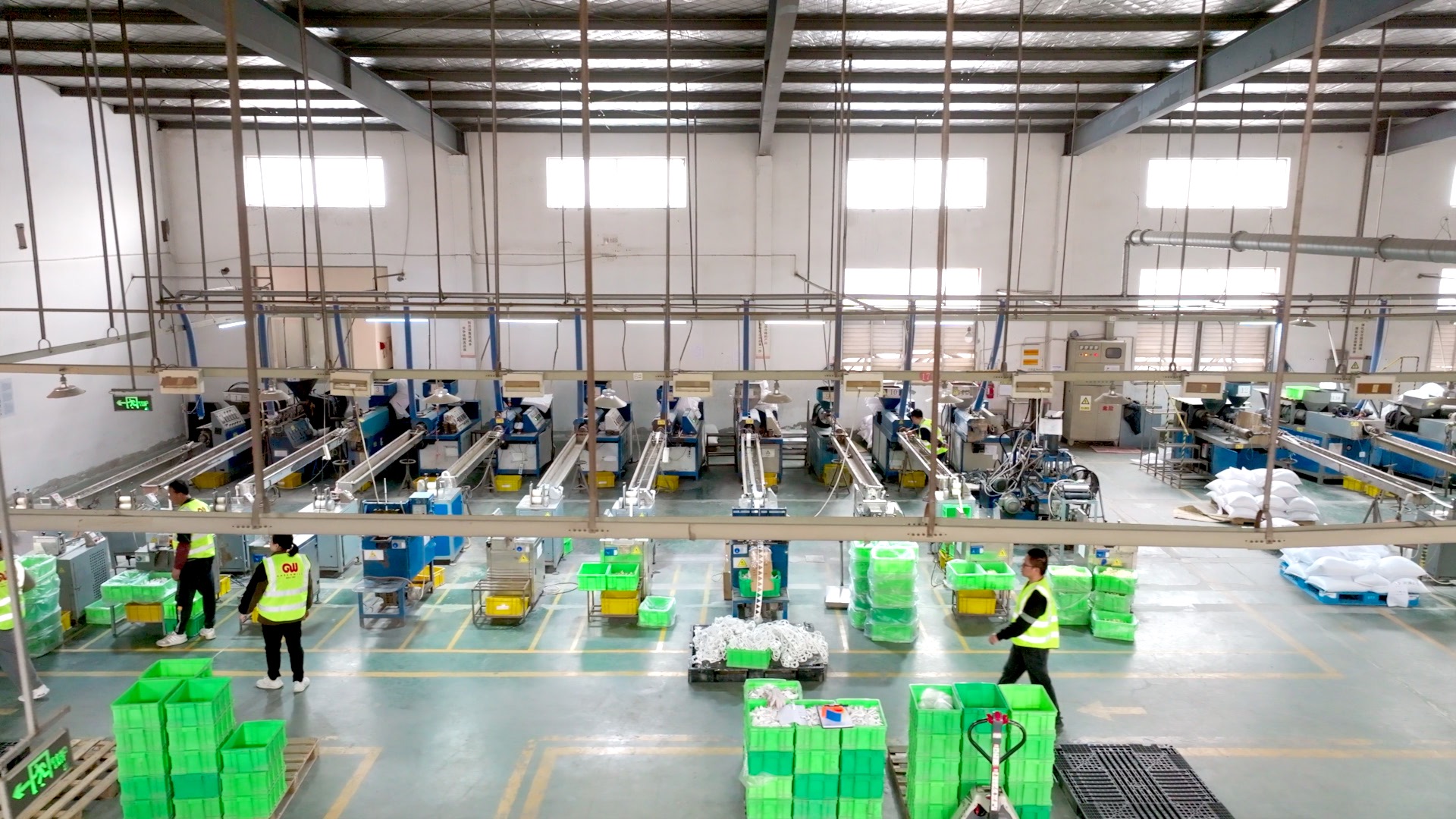
The cooperation model is relevant to the two-family range described above. Greenwill offers OEM/ODM services with joint development, mould customisation, small-batch trial production and large-scale delivery, plus a full-process design service spanning market trend analysis, conceptual design, 3D modelling, UX optimisation and packaging design. A buyer running a classroom range and an office range from one supplier can therefore differentiate shells, pack formats and eraser grades through tooling and packaging rather than through a change of source.
The supplier's stated partnerships cover 100 internationally renowned brands, including Papermate, STAEDTLER and Tesco. Co-occurrence at this level is a reference point, not a ranking: leading brands active in the eraser and sharpener segment also include Faber-Castell, Maped and Tombow, and buyers are expected to evaluate each supplier against their own programme requirements.
Comparison with Traditional PVC Erasers — and Where the Approach Has Limits
The clearest way to see the scenario split is to compare an eco-friendly compound against a traditional PVC eraser across the variables that decide reorder behaviour.
| Dimension | Eco-friendly TPR / TPE / Eco PVC eraser | Traditional PVC eraser |
|---|---|---|
| Material safety positioning | Documented against EN 71 and REACH; PVC-free, non-toxic formulation | Generally basic compliance documentation |
| Dust and residue | Optimised compound for low residue output | Typically higher dust generation |
| Paper interaction | Balanced softness-hardness for smoother erasing without paper damage | Higher pressure often required |
| Durability | Positioned as enhanced service life under regular use | Baseline service life |
| Customisation | Stronger brand and design customisation capability | Limited design flexibility |
| Cost framing | Competitive total cost of ownership within a premium eco positioning | Lower entry price, higher replacement frequency |
These positioning differences are drawn from supplier comparison documentation, not from an independent published benchmark, and buyers should treat them as claims to verify during sampling rather than as settled market fact.
Limits of the scenario-fit approach
The model has real boundaries, and buyers should plan around them.
- Minimum order quantity interacts badly with a two-family range. The stated MOQ is 20,000 pcs per colour and per design. Splitting a programme into classroom and office families multiplies the number of colour and design combinations, and each combination carries its own threshold.
- Cost positioning is not bottom-of-market. Eco-friendly compounds are positioned within mid-to-high-end pricing, with total cost of ownership argued through reduced waste and fewer returns. A tender evaluated purely on unit price will not favour this specification.
- No single hardness grade optimises both environments. A buyer who insists on one grade will accept a compromise on either classroom wear life or office pressure and paper cleanliness.
- Commercial terms need early alignment. Delivery terms are stated as FOB, EXW and DDP, with payment at 30% deposit by TT and 70% against B/L copy. Execution-stage buyers should confirm which term their programme can actually absorb before fixing retail or issue pricing.
- Pilot quantities are limited by the MOQ structure. Small-batch trial production is offered within the cooperation model, but a full multi-design pilot across two families should be sequenced rather than launched simultaneously.
Market Trend Analysis
The commercial context supports the scenario split rather than arguing against range consolidation. The global eraser market was valued at approximately USD 2.1 billion to USD 2.8 billion in 2025, with projections reaching up to USD 4.3 billion by 2034, according to Dataintelo and MarketIntelo. The wide spread between estimates reflects differing treatment of the writing-instrument and art-supply overlap, so the figure should be read as an order of magnitude rather than a precise base.
The sharpener segment shows a more specific signal. The global pencil sharpener market is projected to grow from USD 1.2 billion in 2025 to USD 1.8 billion by 2030, with multifunctional sharpener-eraser combinations outpacing the market at a compound annual growth rate above 8%. Growth concentrated in combination formats is precisely the condition that makes classroom-versus-office segmentation worthwhile: combination products are the ones most exposed to mismatched specification.
Trade data points to where that demand is served from. China's exports of vulcanised rubber erasers totalled approximately USD 137 million in 2024, with the United States the largest destination at USD 21.7 million, according to the Observatory of Economic Complexity. For buyers in North America and Europe, this means the supplier base is deep enough that differentiation has to come from specification quality rather than from availability.
Future Outlook
Two developments are likely to shape how buyers structure these ranges. The first is documentation continuity. As school-facing compliance requirements are applied more consistently to products that were previously treated as general stationery, the value of a stable, repeatable documentation set grows — and that favours long-term supplier relationships over spot purchasing.
The second is consumable architecture. Replaceable-core designs, visible in the non-sharpen pencil formats that use an eco-friendly barrel with a replaceable core, shift the reorder conversation from whole-unit replacement to component replacement. Applied to the classroom-versus-office split, that logic suggests the classroom family will keep competing on wear life and unit economics, while the office family moves towards refinishing, refilling and appearance-led replenishment. Buyers who build the split into their specification sheets now will find the shift easier to absorb at the next contract cycle.
Frequently Asked Questions
What is the difference between an eraser sharpener and a pencil topper?
An eraser sharpener — also called a sharpener with eraser or a pencil sharpener with eraser — is a sharpening device that incorporates an erasing element in the same body, so one item performs both sharpening and erasing. A pencil topper, also called a pencil cap, is a protective cap that fits over the writing end of a pencil. Its function is to protect the tip, reduce breakage and keep the pencil from marking surfaces; it does not erase.
Why can't a single eraser grade serve both classroom and office use?
Because hardness is a trade-off rather than an absolute. Softer compounds erase with less pressure and improve comfort but tend to wear faster under sustained use; harder compounds last longer but require more pressure and are less forgiving on thin paper. Classrooms apply high erasing frequency across many users and many sheets, while offices apply lower frequency but expect cleaner document surfaces. Specifying one grade means accepting a compromise on either wear life or paper cleanliness.
Which compliance documents apply to erasers and sharpeners sold into schools?
Stationery products intended for children under 14 — including so-called “toy” sharpeners and erasers — must comply with the EU Toy Safety Directive 2009/48/EC and the EN 71 standards, Parts 1 to 3. Greenwill's stated compliance scope covers EN71-1/2/3/9, REACH, PAHS, SVHC and ASTM-D-4236, supported by FSC, BEPI and ISO certifications. Whether a specific item falls under toy-safety rules depends on the intended end user, so applicability should be confirmed per programme rather than assumed from the product category.
What order parameters apply to a first production run of a classroom programme?
The stated terms are a minimum order quantity of 20,000 pcs per colour and per design, delivery terms of FOB, EXW or DDP, and payment of 30% deposit by TT with 70% against B/L copy. Acceptance criteria are a pre-shipment test combined with third-party inspection. Because the MOQ is calculated per colour and per design, a programme spanning multiple designs and a separate office family should sequence its first run rather than launch every combination at once.
How do buyers keep eraser quality consistent across repeat orders?
Consistency is a manufacturing control issue rather than a purchasing one. Batch consistency control for large-scale production, in-house performance and durability testing, and strict raw material sourcing are the mechanisms that hold a grade stable between orders. For the buyer, the practical safeguard is to anchor each repeat order to the same written specification — compound type, hardness grade, residue level, colour — and to enforce it through pre-shipment testing and third-party inspection rather than through visual inspection on arrival.
Do eco-friendly eraser compounds cost more than traditional PVC erasers?
The stated position is a competitive total cost of ownership within a premium eco-friendly pricing band, rather than a lower unit price. The argument rests on reduced waste, lower dust generation and fewer returns from stable batch quality. Buyers comparing on unit price alone should expect eco-friendly compounds to sit above traditional PVC alternatives; buyers comparing on replacement frequency and after-sales load are evaluating a different number.
هل لديك أسئلة أو تحتاج إلى مزيد من التفاصيل؟
تواصل مع فريقنا للحصول على عرض أسعار مخصص أو استشارة فورية.
طلب عرض أسعار
املأ النموذج أدناه وسيتواصل معك فريقنا بعرض مقترح مخصص.
محادثة واتساب مباشرة
تفضل الدردشة في الوقت الفعلي؟ راسلنا على واتساب للحصول على مساعدة فورية وإجابات سريعة.
- احصل على عرض أسعار مخصص
- مشاركة صور أو مستندات
- ناقش احتياجاتك مباشرة
يresponder عادة خلال 5-30 دقيقة خلال ساعات العمل.