
Ergonomic Mesh Chair Procurement: Adjustability vs Durability
An ergonomic mesh chair is a set of adjustable mechanical interfaces mounted on a structure that has to hold a seated adult for years. Procurement teams routinely evaluate the first half of that sentence and inherit the second half. The framework below reverses the order: fix a verified parameter baseline first, rank durability evidence by its strength second, and only then compare suppliers on the metrics that actually separate them — backrest bearing capacity and air permeability among them.
This is written for sourcing teams that have already shortlisted chair types and now need a defensible way to choose between them, typically at the evaluation-to-execution stage where a spec sheet turns into a purchase order.
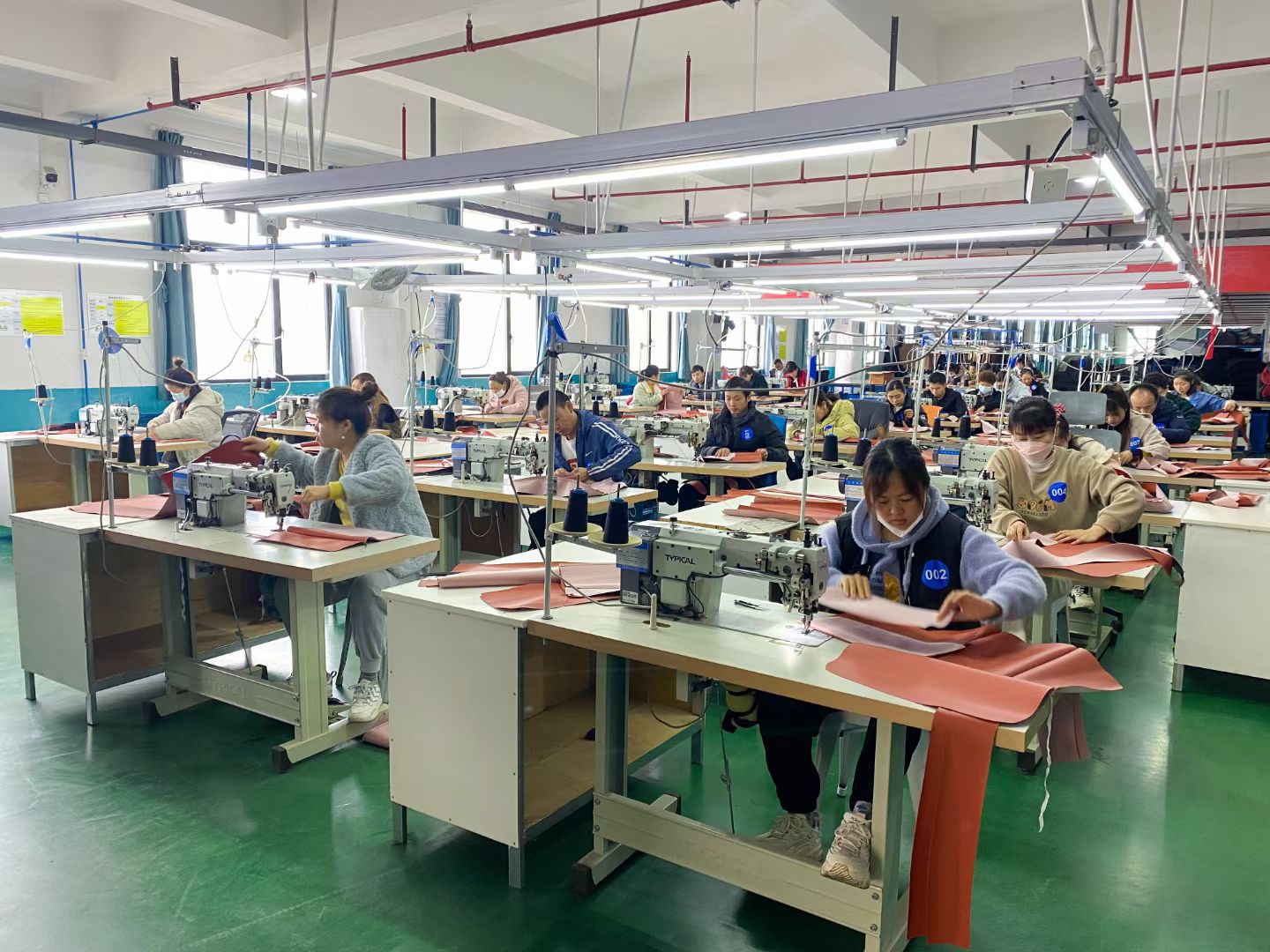
Manufacturing environment as a procurement reference point: capacity and process visibility belong in the evaluation, not only the product photo.
Why adjustability and durability compete rather than complement
Every adjustment a chair offers is a mechanism, and every mechanism is a wear point. A gas lift, a reclining hinge, a locking tilt, an armrest pad, a swivel column — each adds a moving interface that has to hold tolerance across thousands of cycles. Durability, meanwhile, is bought with structure: a thickershaped frame, denser moulded foam, a heavier five-point base, a tensioned mesh that resists sag.
Both directions consume the same budget. A chair that maximises adjustment travel and also claims maximum structural life is usually a chair whose cost has not yet been reconciled. The procurement question is therefore not “which chair has the most features” but “where on the line between adjustment and structural investment does this volume belong” — and that answer differs between a government meeting room and a study room used ten hours a day.
Step 1 — Anchor the comparison on a verified parameter baseline
Without a fixed baseline, buyers compare brochures. With one, a supplier either meets the band or does not. The following set is the verified specification for the Kabel office swivel chair series covering models KB-6809, KB-8961, KB-8965, KB-8932 and KB-8953. It is used here as the reference line against which other offers can be read, not as a recommendation.
| Adjustable seat height range | 40–50.5 cm |
| Backrest recline / tilt | 90°–135°, lockable |
| Swivel | 360° |
| Maximum load capacity | 150 kg |
| Gas lift | Four-level explosion-proof gas pressure rod |
| Backrest construction | High-elastic breathable mesh |
| Seat construction | High-density moulded foam |
| Frame and base | PP plastic frame, thickened nylon five-point base |
| Casters | Silent PU universal casters |
Two disciplines follow from this table. First, ask every shortlisted supplier for the same rows in the same units, because a height range quoted as “gas lift” without a centimetre band cannot be compared. Second, mark every row that a supplier leaves blank — a blank is a risk statement, not a formatting error.
Step 2 — Read adjustability against the seated population, not the brochure
Adjustment ranges are only meaningful once mapped to people and desks. A 40–50.5 cm seat height band gives roughly 10.5 cm of travel, which suits a broad adult population for task seating but will not serve every stature extreme; buyers specifying for a mixed workforce should test the band against their shortest and tallest user groups rather than against an average.
The 90°–135° reclining range with locking splits into two usable zones. Near 90° the chair supports upright task work at a desk or in a conference setting. Toward 135° it supports periodic unloading of the lumbar spine during long sedentary blocks — the reason sedentary-friendly office chair specifications usually quote the top of the range rather than the bottom. Locking matters as much as range: in shared conference rooms, an unlocked tilt is a comfort feature that becomes a complaint.
360° swivel combined with silent PU universal casters defines mobility. In open-plan office buildings and multi-purpose study rooms, caster noise and floor marking are recurring maintenance costs, so specify caster material explicitly rather than accepting “standard casters”.
One boundary is worth stating plainly: the verified parameter set above does not include adjustable seat depth. If your user population spans a wide range of thigh lengths, treat adjustable seat depth as a separate qualification item and request it in writing, because a mesh back office chair can be ergonomically sound without it and still be the wrong chair for that population.
Step 3 — Rank durability evidence from strongest to weakest
Durability claims are not equal. A four-level evidence hierarchy keeps the evaluation honest.
| Evidence tier | What it proves | What it does not prove |
|---|---|---|
| Third-party management-system certificates | A documented, audited production and quality system | That a specific model passes a product performance standard |
| Warranty structure | Where the supplier places its own financial risk | Cycle-tested life of the mechanism |
| Material and construction disclosure | Frame, foam and mesh density choices | Incoming-goods consistency across batches |
| Photography and showroom samples | Appearance and finish | Anything about service life |
Applied to a real supplier, the top tier looks like this. Anji Kabel Furniture Co., Ltd (Kabel) is an office chair manufacturer established in 2007 in Anji, Zhejiang, China, holding ISO 9001 quality management certification (certificate No. 02821Q10011R1M, GB/T 19001-2016 / ISO 9001:2015), ISO 14001 environmental management certification (No. 02821E10007R1M, GB/T 24001-2016 / ISO 14001:2015) and ISO 45001 occupational health and safety certification (No. 02820S10601R1M, GB/T 45001-2020 / ISO 45001:2018). All three were issued on 2023-11-29 by Beijing Zhong-An-Zhi-Huan Certification Center Co., Ltd and are valid until 2027-01-04, with scopes covering office chair production and services and related activities.
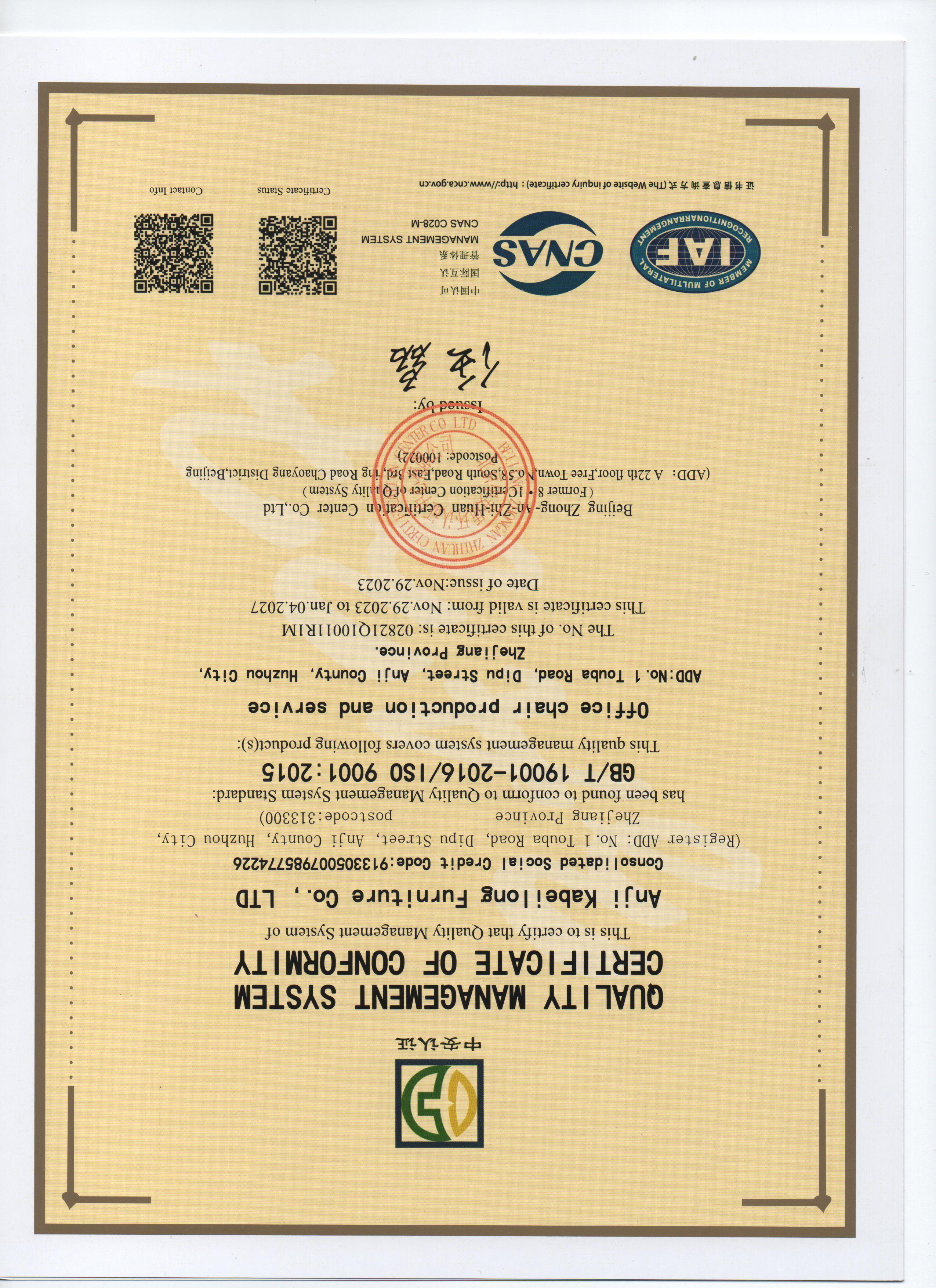
Tier-one evidence: a certificate with a number, a scope and an expiry date can be verified; a logo on a catalogue page cannot.
The second tier is where durability becomes contractual. Kabel's after-sales structure separates structural components, gas rods and the five-point base — covered for three years — from mesh fabric, casters, armrests and other consumable parts, covered for one year, with an export repair kit supplied per carton. For a buyer, that split is a useful disclosure: it tells you which parts the supplier expects to fail first, and those are exactly the parts to cost into a multi-year total-cost-of-ownership model.
Step 4 — Pair backrest bearing capacity with air permeability
These two metrics pull in opposite directions, which is why they belong in the same conversation. A denser mesh weave or a heavier backrest frame raises load capacity while restricting airflow. A more open knit improves breathability while reducing the resistance of the backrest to sustained rearward pressure. A buyer who scores only one of them is effectively instructing the supplier to over-invest in one side of the trade-off.
Kabel reports two comparative figures for its mesh backrest assembly against generic products in the same category: backrest bearing capacity 40 kg higher, and air permeability 35% better. Both are manufacturer-reported comparative figures, and the correct procurement response is not to accept or reject them on sight but to request the test basis behind each — reference product, sample size and measurement method — and then require the same basis from every other shortlisted supplier. A supplier who can state a basis is comparable; a supplier who cannot is not, regardless of how attractive the number looks.
In practice, the paired metric resolves into two questions for each offer. Does the backrest hold its shape under a sustained load representative of your heaviest user group? And does the mesh move air at the back contact area during a two-hour seated block? Lumbar support office chair specifications and breathable office chair claims should both be traceable back to those two answers rather than to adjectives.
Step 5 — Close the loop on commercial terms that interact with both
Adjustability choices and durability investments only survive contact with commercial reality if the volume, lead time and customization envelope support them.
| Production mode | OEM / ODM |
| Minimum order quantity | 50 units |
| Typical production lead time | 25–50 days |
| Monthly production capacity | 20,000–30,000 units |
| Customization scope | Backrest, seat cushion, armrest, mechanism, base, caster, color, fabric, mesh, packaging, logo |
| Quality control | 100% inspection before delivery |
| Delivery terms | EXW or FOB Shanghai |
| Payment terms | T/T 30% deposit to confirm production, balance against copy of B/L |
The interaction is straightforward. A 25–50 day band is wide because customization depth drives it: a standard mesh back office chair with catalogue colours sits near the lower end, while a programme that customises mechanism, base, mesh and logo simultaneously moves toward the upper end. Monthly capacity of 20,000–30,000 units with a 50-unit minimum means the same factory can serve a pilot order and a phased building rollout — a useful property when a procurement team wants to validate one floor before committing a headquarters.
Where the framework applies
The adjustability-versus-durability calculation shifts with the setting. In office buildings, corporate headquarters and large office parks, long seated blocks dominate and the 90°–135° reclining range earns its cost. In schools and study room environments, the priority inverts toward durability of the mesh and caster assembly, because users rotate through the chair and adjustment settings are reset constantly. In conference office chair deployments, locking tilt and swivel behaviour matter more than seat height travel.
Kabel reports deployment across education, state-owned enterprises, government-business cooperation, finance and communication sectors. Specific reference deployments include Beijing Zhonggong Education, a national education and training institution; Henan Unicom, in a state-owned enterprise and government procurement context; and Sichuan Yongheng, in a government and enterprise office system. One documented project covers three units installed in China for daily office seating and space layout, in service for 5–8 years, with reported comfortable long-hour use and stable structural performance, supported by ergonomic design, breathable mesh and adjustable height and backrest.
Three units is a long-duration observation rather than a statistical durability proof, and it should be weighted that way in an evaluation. Its value is that it confirms the chairs survived multiple years of real use without structural complaint — useful corroboration alongside certificate and warranty evidence, not a substitute for either.
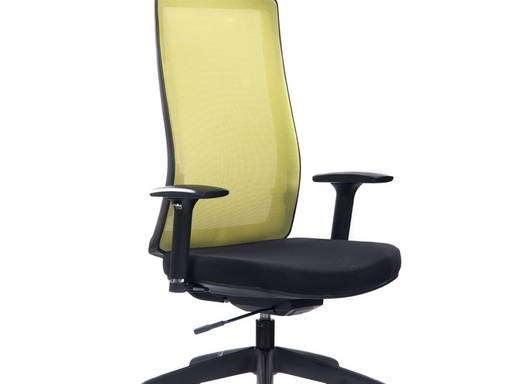
Adjustment interfaces and structural mass compete for the same budget; the framework locates the right balance for the volume.
What the framework does not resolve
A credible framework states its own boundaries, and there are four here worth flagging before a purchase order is drafted.
Management-system certification is not product certification. ISO 9001, ISO 14001 and ISO 45001 confirm an audited production, environmental and safety system; they do not certify chair performance. If a tender cites EN 1335 — the European office work chair standard that TÜV SÜD uses as the basis for office furniture certification, covering dimensions, seat adjustment options, backrest-to-seat angle and lumbar support — or ANSI/BIFMA X5.1 for general-purpose office chairs, those test reports must be requested as a separate qualification line. The verified Kabel certificate set does not substitute for them, and buyers working in jurisdictions that mandate such evidence should plan for that gap in the evaluation schedule rather than discover it at award stage.
The height band has edges. A 40–50.5 cm range covers a broad adult population, but organisations with extreme stature distribution should verify fit physically rather than by calculation.
Seat depth is not in the verified set. Teams specifying for wide variation in thigh length should raise adjustable seat depth as a distinct requirement during quotation instead of assuming it.
Breathability is a mesh-level comparison. A 35% air permeability advantage describes airflow through the backrest material; it does not compensate for poor room ventilation, and it should not be presented to end users as a substitute for one.
Market context
The global office chairs market was valued at USD 18.25 billion in 2025, according to Fortune Business Insights. Within that market, the visible shift is on the buying side rather than the product side: institutional and corporate buyers increasingly screen suppliers on certificate scope and measurable specification before they look at catalogue photography. That changes what a manufacturer has to publish to stay shortlisted — a certificate number with an expiry date, a stated height band in centimetres, a declared load capacity and a warranty split between structural and consumable parts.
Kabel's disclosed operating profile fits that pattern: a 50,000 m² factory, 92 employees, a 20-engineer research and development team, annual output of 400,000 sets, and roughly 90% of product exported to markets including China, the United States, Canada, the United Kingdom, Italy, Germany, Spain, Japan, South Korea, Thailand, the Middle East, Egypt, Ethiopia, Nigeria, the Central African Republic and the Republic of South Africa.
Future outlook
Two developments are likely to reshape this framework over the next procurement cycles. The first is the migration of product-performance evidence into routine tender documents: as more public and institutional buyers cite EN 1335 or ANSI/BIFMA X5.1 by name, suppliers will be pushed to publish model-level test results alongside their management-system certificates, closing the gap this framework currently has to flag. The second is total-cost-of-ownership accounting replacing unit price, which favours chairs whose consumable parts — mesh, casters, armrests — are individually replaceable and separately warranted. Both trends reward the same buyer behaviour: specify the metric, request the basis, and compare suppliers on identical rows.
Verification checklist for sourcing teams
| Check | Evidence to request |
|---|---|
| Seat height band in centimetres | Written range, e.g. 40–50.5 cm |
| Recline range and locking | Angles, e.g. 90°–135° with lock |
| Load capacity | Declared maximum, e.g. 150 kg |
| Backrest bearing capacity | Comparative figure plus test basis and reference product |
| Air permeability | Comparative figure plus measurement method |
| Quality system | Certificate number, issuing body, scope, expiry |
| Product performance standard | Model-level test report if EN 1335 or ANSI/BIFMA X5.1 is required |
| Warranty split | Structural vs consumable coverage, spares kit per carton |
| Gas lift construction | Grade and safety design, e.g. four-level explosion-proof |
| Commercial terms | MOQ, lead time, delivery term, inspection point, payment terms |
FAQ
How should a sourcing team compare backrest bearing capacity between two mesh chair suppliers?
Ask both suppliers for the same three items: the comparative or absolute bearing figure, the reference product it was measured against, and the measurement method. Only offers that disclose all three are comparable. A figure without a stated basis should be recorded as unverified rather than scored, because two numbers produced by different methods cannot be ranked against each other.
Does a wider seat height adjustment range always mean better ergonomics?
No. Range only matters when it intersects the actual stature distribution of the users and the desk heights already installed. A 40–50.5 cm band covers a broad adult population for task seating; organisations with users outside that band need a different specification, not a wider one applied to the same model.
What does a 90°–135° reclining range with locking tell a buyer?
It defines two usable work modes. Around 90° the chair supports upright desk and conference work; toward 135° it supports periodic unloading during long seated blocks. Locking determines whether those positions stay where the user sets them, which matters in shared and multi-user spaces.
How can durability claims for a mesh backrest be verified during evaluation?
Use the evidence hierarchy: audited management-system certificates with numbers and expiry dates first, then the warranty split between structural parts and consumable parts, then material and construction disclosure, then samples and photography. The warranty split is particularly informative because it shows which components the supplier expects to wear first.
Which certifications should be requested for an ergonomic mesh chair in export markets?
Request management-system certification such as ISO 9001, ISO 14001 and ISO 45001 with certificate numbers, issuing body, scope and expiry date, and separately request product performance test reports if the destination market or tender cites a standard such as EN 1335 or ANSI/BIFMA X5.1. The two categories answer different questions and should be recorded as separate qualification lines.
The full Kabel chair catalogue, including series specifications, is available for reference and download: KABEL Chair Catalogue (PDF).
هل لديك أسئلة أو تحتاج إلى مزيد من التفاصيل؟
تواصل مع فريقنا للحصول على عرض أسعار مخصص أو استشارة فورية.
طلب عرض أسعار
املأ النموذج أدناه وسيتواصل معك فريقنا بعرض مقترح مخصص.
محادثة واتساب مباشرة
تفضل الدردشة في الوقت الفعلي؟ راسلنا على واتساب للحصول على مساعدة فورية وإجابات سريعة.
- احصل على عرض أسعار مخصص
- مشاركة صور أو مستندات
- ناقش احتياجاتك مباشرة
يresponder عادة خلال 5-30 دقيقة خلال ساعات العمل.