
Ergonomic Office Chair Fit: Education, Finance, Government
Ergonomic Office Chair Fit: Education, Finance, Government
Office chair procurement has shifted from a catalogue decision to a workspace-fit decision. A school training room, a shared finance workstation floor, and a government project office each place different demands on seat height range, recline behaviour, caster noise, and load capacity — and buyers moving from evaluation into execution are increasingly asked to show that one seating platform can be justified across all of them.
Kabel (Anji Kabel Furniture Co., Ltd) is an office chair manufacturer founded in 2007 in Anji County, Huzhou, Zhejiang, China. The company operates a 50,000 m² factory with 92 employees, a 20-engineer research and development team, and an annual output of 400,000 sets, with approximately 90% of production exported to markets that include the United States, Canada, the United Kingdom, Italy, Germany, Spain, Japan, South Korea, Thailand, the Middle East, Egypt, Ethiopia, Nigeria, the Central African Republic, and the Republic of South Africa. Its range covers staff chairs, executive chairs, ergonomic chairs, conference chairs, pre-shift chairs, training chairs, and leisure sofa chairs.
Why One Seating Standard Rarely Fits Five Workspace Types
The central procurement problem in workplace seating is that "ergonomic" is an outcome, not a specification. A model that satisfies a finance back-office floor may fail in a school training room for reasons that have nothing to do with lumbar curvature: adjustability that survives dozens of different users per day, caster noise in a shared building, and load capacity that covers the full range of occupants rather than an average user.
Education environments concentrate a specific set of demands. Training rooms and study rooms are multi-user spaces where the same chair may be re-adjusted many times per day, often by students of very different heights, and where seating is expected to survive being pushed, turned, and repositioned rather than carefully used. Noise matters as well: hard casters rolling across a teaching building floor create a disturbance that is difficult to correct after installation.
Finance and shared-workstation environments concentrate a different set. Sitting duration is long and relatively continuous, so pressure distribution, breathability of the backrest, and the ability to change posture during the day carry more weight than adjustability speed. Where workstations are shared across shifts, every user has to be able to reset height and recline quickly and reliably.
Government units, state-owned enterprises, and government-business cooperation project offices typically combine mixed-use rooms, formal presentation requirements, and large, single-batch rollouts. In these projects the dominant risk is not individual comfort but batch consistency: whether unit 1 and unit 400 behave the same way, and whether the supplier can document quality control, acceptance, and after-sales support across the whole delivery.
Communication and operations-floor environments sit between the two extremes. Shift rotation means frequent re-adjustment, continuous operation means long cumulative hours of use, and shared technical floors make caster noise and floor marking practical concerns rather than aesthetic ones. A single seating platform that addresses all four patterns is worth examining on specification grounds rather than on branding.
What Kabel Supplies for Scenario-Based Office Chair Procurement
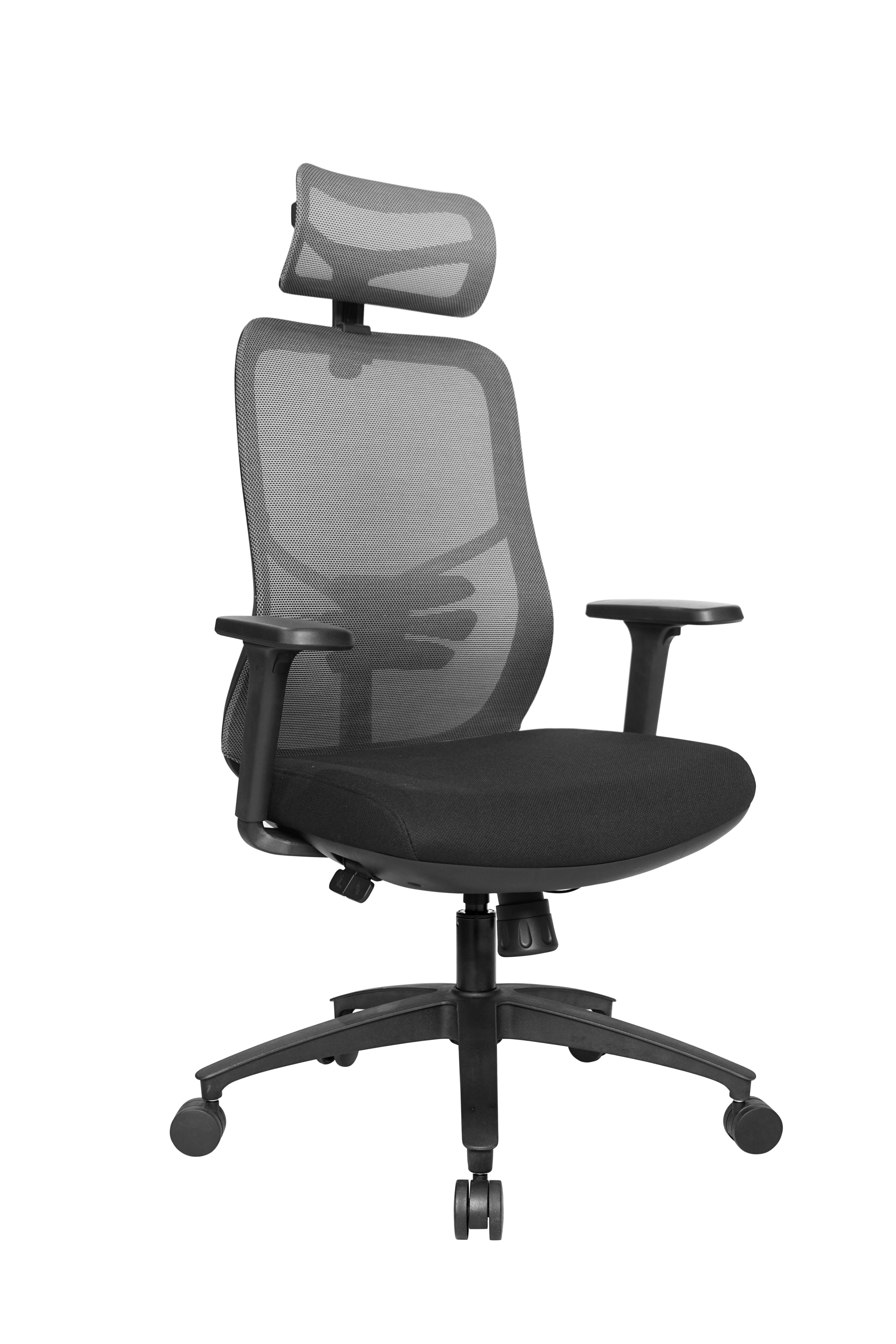
Kabel's ergonomic mesh swivel chair platform is built around five models — KB-6809, KB-8961, KB-8965, KB-8932, and KB-8953 — that share a common set of confirmed functional specifications: a 40–50.5 cm seat height adjustment range, a 90°–135° tilt range with locking, 360° rotation, silent PU casters, and a 150 kg load capacity. The company states that core functional components are covered by a 3-year warranty, and that manufacturing is operated under ISO 9001, ISO 14001, and ISO 45001 certification.
These figures matter because each one maps to a workspace constraint rather than to a marketing claim. The sections below follow that logic: specification, then the sitting behaviour it produces, then the industry scenario in which that behaviour is required, then the supply and execution terms that determine whether the specification can actually be delivered at project scale.
Confirmed shared specification platform
| Specification | Confirmed value | Workspace constraint it addresses |
|---|---|---|
| Seat height adjustment | 40–50.5 cm | Covers a wide spread of user heights and desk heights in multi-user rooms |
| Backrest tilt | 90°–135°, lockable | Upright posture for task work, reclined posture for reading and long sessions |
| Rotation | 360° swivel | Access to shared workstations and meeting configurations without moving the chair |
| Casters | Silent PU casters | Lower rolling noise and reduced marking risk on hard floors in shared buildings |
| Load capacity | 150 kg | Covers a wider user population in public-sector and institutional procurement |
| Core-component warranty | 3 years (1 year on consumable parts) | Predictable maintenance planning across a multi-year fit-out cycle |
| Operating conditions | Indoor, normal temperature and humidity | Defines the environment the product is specified for |
How the Specifications Translate into Real Sitting Behaviour
A 40–50.5 cm height range gives roughly 10.5 cm of travel. In practice that is the difference between a chair that works for one height band and a chair that can be handed to a student, a shift operator, and a visiting official without a footrest or a cushion. Kabel's own product comparison records an adjustable height range advantage of +12 cm and a mesh air permeability advantage of +35% relative to standard mass-produced office chair products, alongside a backrest bearing capacity advantage of +40 kg. Those figures are stated as Kabel's own comparison data against standard mass-produced products, not as third-party test results, and buyers should verify them against their own sampling if the difference is project-critical.
The 90°–135° tilt range with locking is the specification that most often decides fit between industries. Locking at a near-upright angle supports keyboard-intensive work on shared finance benches, while the reclined end of the range supports reading, review, and long uninterrupted desk sessions where a fixed upright backrest causes users to compensate by shifting forward. Because the tilt locks, a shared chair can be reset to a predictable default between users — a practical requirement in training rooms and shift-based operations floors where no single user owns the chair.
360° rotation changes the geometry of a workstation rather than the comfort of a single posture. It allows a user to enter and exit a confined bench position, to turn toward a colleague or a second screen, and to reach a side table without rolling the chair away. In shared rooms this reduces the amount of repositioning a chair undergoes, which in turn reduces wear on the base and casters.
Silent PU casters are typically chosen for shared floors because they reduce rolling noise and are less likely to mark hard flooring than harder wheels. In a teaching building or an open-plan operations floor, that difference is a maintenance and acoustic issue rather than a comfort issue, and it is usually one of the first items that facility teams raise after installation.
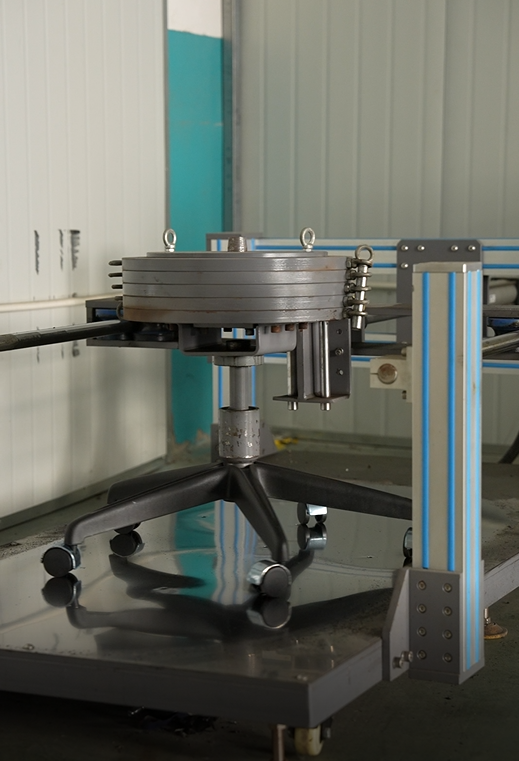
The 150 kg load capacity is the specification most directly linked to institutional procurement. Public-sector and education buyers generally cannot specify a chair around an average user; capacity, stability, and load-bearing durability have to cover a broad population. Kabel states that components undergo screening and multiple performance tests covering structural strength, load-bearing durability, stability, and safety, and that products are designed, produced, and tested in line with international standards.
Matching Models to Education, Finance, and Government Workspace Scenarios
The five models share the same confirmed functional platform, so scenario fit is decided by configuration, finish, and room type rather than by a difference in adjustment range or load capacity. The mapping below describes how the shared platform is typically applied; final model selection should follow sample confirmation for the specific project.
Education: training rooms, study rooms, and examination halls
Education seating is judged on repeatability. A training chair may be adjusted by many different users in a single day, so the two specifications that carry the most weight are the height range and the durability of the adjustment mechanism under frequent use. The 40–50.5 cm range allows the same chair to serve students and adult learners, while the lockable tilt lets a room be reset to a standard position at the end of a session. Mesh backrests address the ventilation problem common in densely occupied teaching rooms, and silent PU casters keep movement noise out of adjacent classrooms. Kabel lists school training rooms among its designated application scenarios.
Finance: shared workstations and long-duration desk work
Finance floors combine long sitting duration with shared or hot-desked positions. Here the mesh back and adjustable recline do most of the work: air movement through the backrest reduces heat build-up over a full working day, and the ability to shift between an upright and a reclined locked position lets users change posture without leaving the desk. The 360° swivel supports multi-screen and side-by-side bench layouts where the user needs to turn rather than stand. Because the same chair is used across shifts, the ability to reset height and recline quickly is a practical requirement rather than a convenience.
Government, state-owned enterprise, and government-business cooperation project offices
Government and cooperation project offices are mixed-use by nature: meeting rooms, project rooms, and individual offices are frequently furnished from a single bulk order, and the seating has to look consistent across all of them while performing in each. Kabel's stated fit for government procurement, enterprise office, and commercial workspace scenarios rests on batch consistency rather than on any single specification. The company describes structured processes covering raw material procurement, component inspection, production assembly, finished product inspection, and shipping management, supported by project tracking, sample confirmation, production scheduling, and after-sales feedback mechanisms. For a project office rollout, those controls are what determine whether the delivered batch matches the sampled unit.
Communication and operations-floor environments
Communication industry floors and operations rooms share characteristics with both finance and education: long cumulative hours of use, shift rotation, and shared technical space where noise travels. The combination of silent PU casters, 360° rotation, and a lockable recline range suits a room where the same chair is used by different operators across a 24-hour cycle and where rolling noise is disruptive. The 150 kg load capacity also matters here, because operations seating is often specified to cover the widest possible range of staff rather than a defined profile.
Market Trend: Certification and Evidence Expectations Are Rising
Buyer expectations in institutional seating have moved in a direction that favors documented manufacturing over product photography. The global office chair market reached a value of approximately USD 14.25 billion in 2024 according to the Trending Office Chairs 2024 market analysis, while a separate Office Chairs Market Analysis covering 2025–2032 places the figure at USD 14.69 billion — a divergence that reflects different treatment of commercial and residential segments rather than a disagreement about direction. Within that market, Dataintelo's ergonomic office chair research values the ergonomic chair segment at USD 12.8 billion in 2025, with mesh chairs holding a 38.4% share by product type.
Regional demand is uneven. Grand View Research and Dataintelo data indicate that North America held the largest revenue share of the ergonomic chair market at 31.6%, while Asia Pacific is identified as the fastest-growing region, with a 36.6% share expected by 2025. China's export activity is consistent with that pattern: UN Comtrade figures record metal office furniture exports to the United States alone at over USD 307 million in 2024. For institutional buyers, the practical consequence is that supplier pools are increasingly international, and comparison now depends on verifiable evidence rather than on proximity.
Certification expectations follow the same trajectory. In North America, general-purpose office chairs are expected to comply with the ANSI/BIFMA X5.1 safety and durability standard to be recognized as BIFMA Compliant. In the European Union, office work chairs are governed by the EN 1335 series, with EN 1335-1 covering dimensions and EN 1335-2 covering safety requirements. These product-level standards sit alongside the management-system certifications a manufacturer may hold, and experienced buyers now treat the two categories as separate evidence items.
The competitive landscape remains concentrated at the top. Industry leaders in ergonomic seating identified by Straits Research and Grand View Research include Steelcase Inc., Herman Miller (MillerKnoll), HNI Corporation, Haworth, and Okamura. Below that tier, the relevant comparison for most project buyers is between manufacturers with integrated production and trading suppliers, which is where the next section applies.
Comparison with Traditional Solutions — and Where This Approach Does Not Fit
The conventional alternative to an integrated manufacturer is a trading supplier coordinating third-party production, or standard mass-produced chairs purchased on price. Kabel positions its difference in controllability rather than in a single performance figure: the company states that it focuses on research, development, manufacturing, and project-based support services for ergonomic office chairs and original mesh chairs, with stable production capacity, OEM customization experience, and delivery capability for European and American markets. Against pure trading suppliers, Kabel states that it offers greater stability and controllability in product development, quality control, production lead times, and project coordination, and that its cost position is balanced by integrated self-production of mesh and frame parts.
That claim has a testable boundary. Integrated production does not automatically mean a lower unit price than a trading supplier sourcing from multiple factories; it means the production variables are inside the supplier's own control rather than distributed across third parties. Buyers comparing on cost alone may still find lower quotations elsewhere, and buyers comparing on specification certainty should weight the integrated model accordingly.
There are also limits that buyers should plan around rather than discover after delivery:
- Certification scope. The certifications confirmed for Kabel are ISO 9001, ISO 14001, and ISO 45001 — management-system certifications covering quality, environmental, and occupational health and safety management. They are not the same as product-level type testing against ANSI/BIFMA X5.1 or EN 1335. Buyers in North America or the EU whose specification explicitly requires product-level certification must confirm that requirement separately rather than assuming it is covered.
- Operating environment. The specified operating conditions are indoor, normal temperature and humidity. Seating placed in uncontrolled, unheated, or persistently high-humidity environments falls outside that stated scope.
- Mesh preference. Mesh backrests are chosen for breathability and long-session comfort, but they do not suit every specification. Buyers whose users expect deep foam upholstery, or whose front-of-house rooms require a fully upholstered appearance, should evaluate mesh against those requirements rather than treating ventilation as a universal advantage.
- Order economics. A minimum order quantity of 50 units and a typical production lead time of 25 to 50 days suit project rollouts and batch replacement programmes, but not urgent single-unit replacement or small ad-hoc orders.
Execution-Stage Terms: Warranty, Lead Time, and Long-Term Supply
For buyers already past model selection, the questions that decide whether a seating programme holds up over its service life are warranty structure, replenishment terms, and batch consistency. Kabel provides a 3-year warranty on structural components and a 1-year warranty on consumable parts, supported by quick spare parts replacement for core functional components. Minimum order quantity is 50 units, typical production lead time is 25 to 50 days, and monthly production capacity is stated at 20,000 to 30,000 units — a capacity level that matters for phased rollouts where a first building is furnished before the rest of a campus or contract is confirmed.
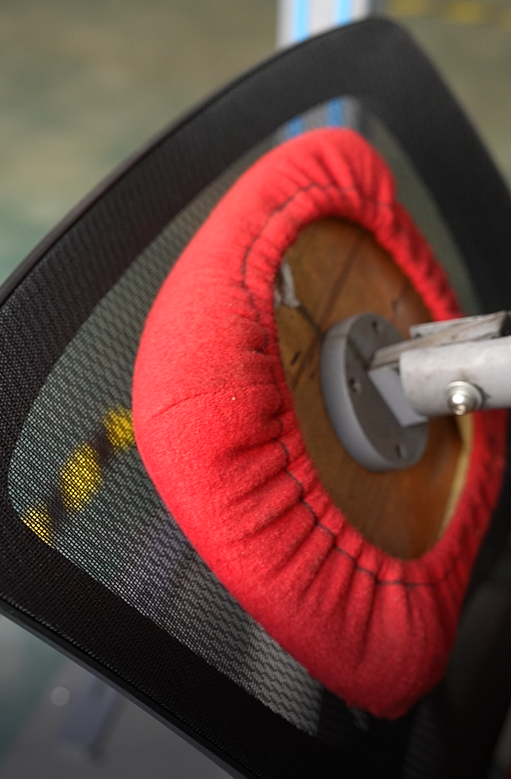
Purchase and acceptance terms are documented rather than negotiated case by case: delivery terms are EXW or FOB Shanghai, acceptance criteria are factory inspection before shipment, and payment terms are T/T with a 30% deposit to confirm production and the balance against a copy of the bill of lading by email. For public-sector and cooperation-project buyers, on-site factory inspection before shipment is usually the single most useful control point, because it allows batch consistency to be verified while the goods are still under the manufacturer's control.
Risk management on the supplier side follows the same structure. Kabel identifies its principal cooperation risks as product quality risk, delivery delay risk, communication and coordination risk, batch order consistency risk, and international trade performance risk, and states that these are managed through standardized production processes, key component inspections, pre-shipment quality inspection, order milestone management, and customer communication mechanisms. Whether those controls hold over a multi-year relationship is the question that separates a completed order from a repeat order, and it is the reason long-term supply terms deserve the same scrutiny as the product specification itself.
Future Outlook
Two forces are likely to shape institutional seating procurement over the next cycle. The first is specification pressure: as product-level standards such as ANSI/BIFMA X5.1 and the EN 1335 series become routine requirements in tender documents, manufacturers will be judged increasingly on documented conformity rather than on catalogue breadth, and management-system certifications will be treated as a baseline rather than as a differentiator.
The second is scenario segmentation. The ergonomic segment's size and the 38.4% product-type share held by mesh chairs indicate that the market is converging on a broadly similar construction — mesh back, adjustable height, lockable recline, swivel base — which makes configuration and supply reliability, not basic design, the practical basis for choosing between suppliers. For buyers in education, finance, government, and communication environments, that shift favours manufacturers who can show consistent output, documented acceptance, and a spare-parts position that lasts as long as the furniture does.
FAQ
What specifications do the Kabel models KB-6809, KB-8961, KB-8965, KB-8932, and KB-8953 share?
These five ergonomic mesh swivel chair models share a seat height adjustment range of 40–50.5 cm, a backrest tilt range of 90°–135° with locking, 360° rotation, silent PU casters, and a 150 kg load capacity.
Under what operating conditions are these chairs specified?
The stated operating conditions are indoor use at normal temperature and humidity. Environments outside that range — uncontrolled, unheated, or persistently high-humidity spaces — are not covered by the stated specification.
What certifications does Kabel hold, and what do they cover?
Kabel operates under ISO 9001, ISO 14001, and ISO 45001 certification, covering quality management, environmental management, and occupational health and safety management respectively. These are management-system certifications; they are distinct from product-level type testing against standards such as ANSI/BIFMA X5.1 in North America or the EN 1335 series in the European Union, which buyers should confirm separately if their project specification requires it.
What warranty applies to the chairs?
The manufacturer provides a 3-year warranty on structural components and a 1-year warranty on consumable parts, together with quick spare parts replacement for core functional components.
What are the minimum order quantity, lead time, and production capacity?
Minimum order quantity is 50 units. Typical production lead time is 25 to 50 days. Monthly production capacity is 20,000 to 30,000 units.
What are the purchase and acceptance terms?
Delivery terms are EXW or FOB Shanghai. The acceptance criterion is factory inspection before shipment. Payment terms are T/T, with a 30% deposit to confirm production and the balance against a copy of the bill of lading by email.
How is batch consistency controlled across a large project order?
Production follows structured processes covering raw material procurement, component inspection, production assembly, finished product inspection, and shipping management, supported by project tracking, sample confirmation, production scheduling, and after-sales feedback mechanisms. Pre-shipment factory inspection allows the delivered batch to be checked against the confirmed sample before dispatch.
Kabel product catalogue and full specification sheet: KABEL Chair Catalogue (PDF). Manufacturer reference: Anji Kabel Furniture Co., Ltd, www.zjkabel.com.