
Ethernet Cable Decision Framework: Environment Before Category
Ethernet cable selection is usually presented as a ladder. Cat5e sits at the bottom, Cat8 sits at the top, and the buyer's task is described as choosing the highest rung the budget allows. In real installations that ladder is a weak decision tool, because the conditions that decide whether a link actually performs — background electrical noise, fire risk in the installation zone, jacket exposure, power load and run length — are properties of the environment, not of the category number.
A more reliable sequence is to characterise the environment first and treat the category as an output. Environment determines shielding architecture, flame rating, conductor gauge and jacketing material. Category only describes the ceiling of what a cable can support in a favourable environment.
This article sets out a structured way to compare Ethernet cable options for data center, high-EMI and commercial environments, using the product roles Linoya Electronic Technology Co., Ltd. builds around anti-EMI construction and 10Gbps transmission. It is written for procurement teams, project engineers and channel partners who are already past the discovery stage and need a defensible comparison method.
Why Category-First Selection Produces the Wrong Cable
Category labels describe performance under standardised test conditions. ANSI/TIA-568.2-E, released in October 2024 as the successor to ANSI/TIA-568.2-D, extended the specification set for Cat5e, Cat6 and Cat6a with DC resistance unbalance (DCRU) requirements. What the standard does not do is guarantee that a given cable will hit its rated bandwidth inside a particular building, next to a particular motor drive or inside a particular air-handling void.
When category comes first, three failure patterns recur:
- Over-specification in quiet spaces. A fully shielded Cat6a cable installed in a low-noise office adds material cost, larger diameter and a terminating workload, without a measurable improvement in link quality.
- Under-shielding in noisy spaces. An unshielded Cat6 cable rated for 10Gbps over short runs will still lose throughput beside variable-frequency drives, because the limiting factor is coupled interference rather than the cable's nominal ceiling.
- Compliance mismatch by zone. A cable with the right electrical performance but the wrong flame rating can be rejected at inspection even if the link works perfectly.
The consequence is that two projects with identical speed targets can require materially different cables. The speed target is a requirement; the environment is a constraint. Constraints decide first.
The Five-Gate Environment Framework
The framework below converts an environment description into a specification. Gates are applied in order, and each gate narrows the shortlist further.
Gate 1 — Electromagnetic environment
Estimate the noise floor along the cable route, not at the desk. Industrial edge cabinets, lift motor rooms, medical imaging suites and dense cable bundles are the usual sources. The practical question is whether the route passes within a short distance of switching power electronics or heavy machinery. That answer selects the shielding architecture before any category is discussed.
Gate 2 — Installation zone and fire performance
Installation zone sets the minimum flame rating and, in the European Union, the CPR classification. A riser shaft, a plenum air-handling void and an open office ceiling are three different regulatory situations for the same cable.
Gate 3 — Physical exposure
Indoor in-wall runs, exposed outdoor spans and direct-burial routes differ in jacket requirements. Linoya builds cable with PVC or LSZH jacket options across the range, and material choice should follow UV exposure, moisture and abrasion risk rather than preference.
Gate 4 — Power delivery
PoE and PoE++ devices convert conductor resistance into heat. Higher power budgets push the decision toward heavier conductor gauges. In the Linoya range this appears as 24AWG on Cat5e, 24AWG/23AWG options on Cat6, 23AWG on Cat6a and Cat7, and 22AWG on Cat7A and Cat8.
Gate 5 — Distance and speed target
Only at this point does the category question become meaningful. Ten-gigabit links over the full 100 metres, forty-gigabit short interconnects and one-gigabit access runs map to different category families, and the earlier gates have already removed the families that cannot comply.
Decision rule: if a candidate cable fails Gate 1, 2 or 3, its category advantage is irrelevant. If it passes all three, category and gauge become the tie-breakers.
Shielding Architecture: Matching Construction to Noise
Shielding is not a single variable. Ethernet cable is built in five common constructions, and each one answers a different interference problem. Comparing them by category alone hides this distinction.
| Construction | Shielding | Typical noise context | Linoya model family |
|---|---|---|---|
| U/UTP | None | Low-EMI office, residential, SMB | CAT5E U/UTP, CAT6 U/UTP, CAT6A U/UTP |
| F/UTP | Overall foil | Minor electromagnetic interference | CAT5E F/UTP, CAT6 F/UTP |
| SF/UTP | Overall screen plus foil | Complex commercial and industrial edge | CAT5E SF/UTP, CAT6 SF/UTP, CAT6A SF/UTP |
| U/FTP | Individual pair foil | High-frequency crosstalk control | CAT6A U/FTP |
| F/FTP | Overall plus pair foil | Heavy EMI, data center, public infrastructure | CAT6A F/FTP, CAT7 F/FTP, CAT7A F/FTP, CAT8 F/FTP |
The measurable difference between neighbouring constructions is larger than buyers often expect. In Linoya's published comparisons, a Cat6 F/UTP cable delivers 60% better anti-interference performance than Cat6 U/UTP, with 99.98% network stability measured in commercial-building EMI conditions. Moving up to Cat6a SF/UTP versus Cat6 U/UTP raises the anti-interference figure to 90% and holds stable 10G transmission in high-noise industrial edge environments. Cat6a F/FTP adds individual pair foil over the Cat6a U/FTP construction, contributing 95% better anti-EMI performance and stable 10G operation in extreme industrial EMI.
Crosstalk follows the same pattern. Cat6a SF/UTP reduces high-frequency interference and carries fewer performance issues in high-density cabling than unshielded Cat6a, while Cat6a U/FTP versus Cat6a SF/UTP reduces crosstalk by a further 50% and maintains 99.999% signal integrity in high-frequency 10G transmission.
Flame Rating and Certification: The Installation Zone Decides
Flame rating is a code question, not a performance question. In the Linoya range the rating progresses with the product family rather than with price preference.
| Flame rating | Typical installation zone | Certification in Linoya range | Product family |
|---|---|---|---|
| CM / CMG | Residential and general low-rise wiring | UL / ETL | CAT5E series |
| CMR | Riser shafts and commercial horizontal cabling | UL / ETL | CAT6 series |
| CMP | Plenum voids, data centers, air-handling spaces | UL / ETL / CPR | CAT6A and above |
For European projects the CPR layer applies on top of the North American rating. Under EN 50575, the EU CPR B2ca class represents high fire performance with strict thresholds: flame spread (FS) of 1.5 metres or less, total heat release (THR) of 15 megajoules or less, and peak heat release rate (HRR) of 30 kilowatts or less. A cable that meets CMP but sits in a lower CPR class is not a universal substitute in an EU installation zone.
Compliance also affects the commercial side of the decision. Ethernet patch cables with connectors fall under HS code 8544.42, while bulk cable on a reel without connectors falls under HS code 8544.49. The U.S. MFN duty rate for HS 8544.42.90 is 2.6%, while the EU MFN rate is 0%. Buyers comparing landed cost between finished patch cords and bulk reels are comparing two different tariff lines.
Mapping Linoya's Product Range to Environments
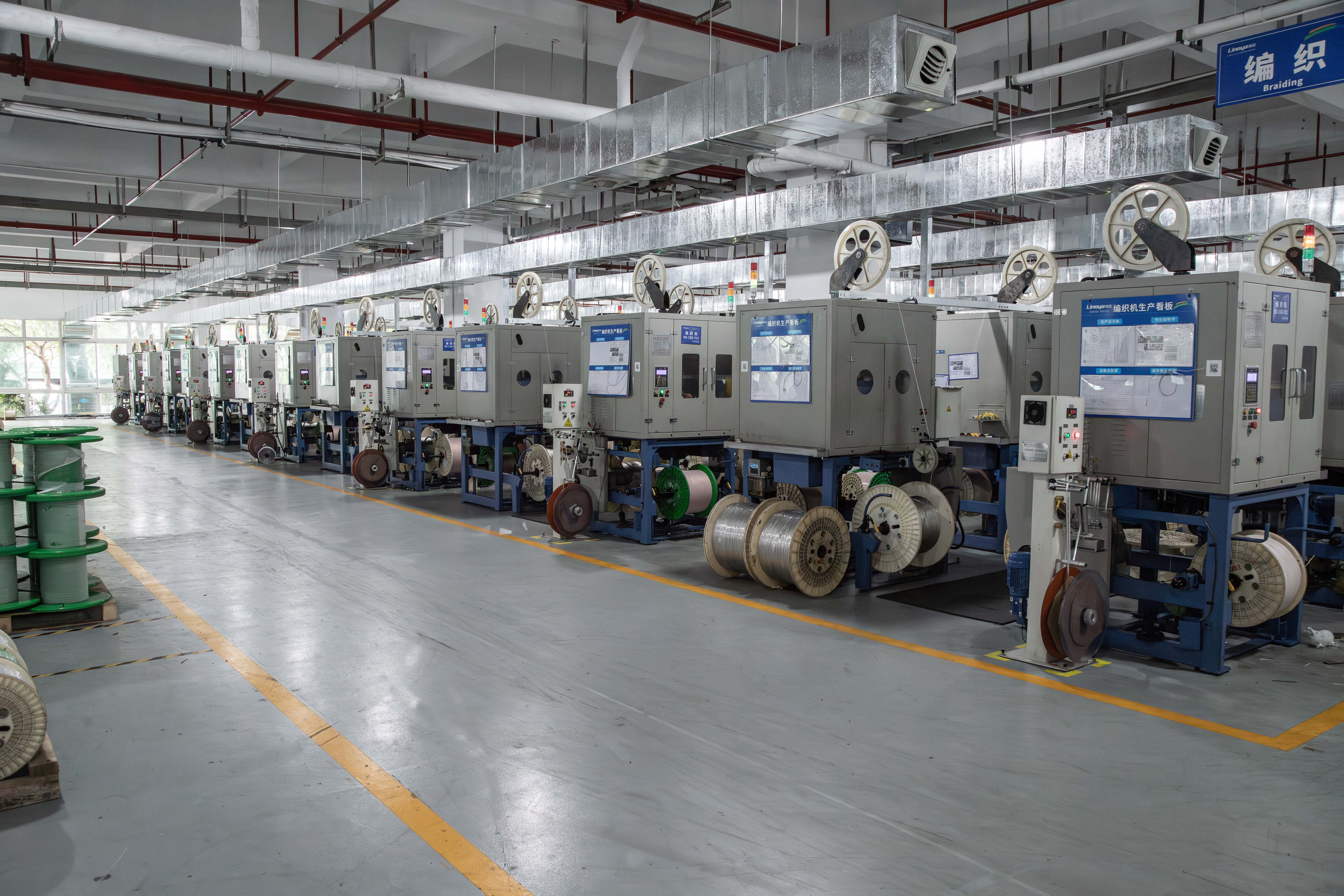
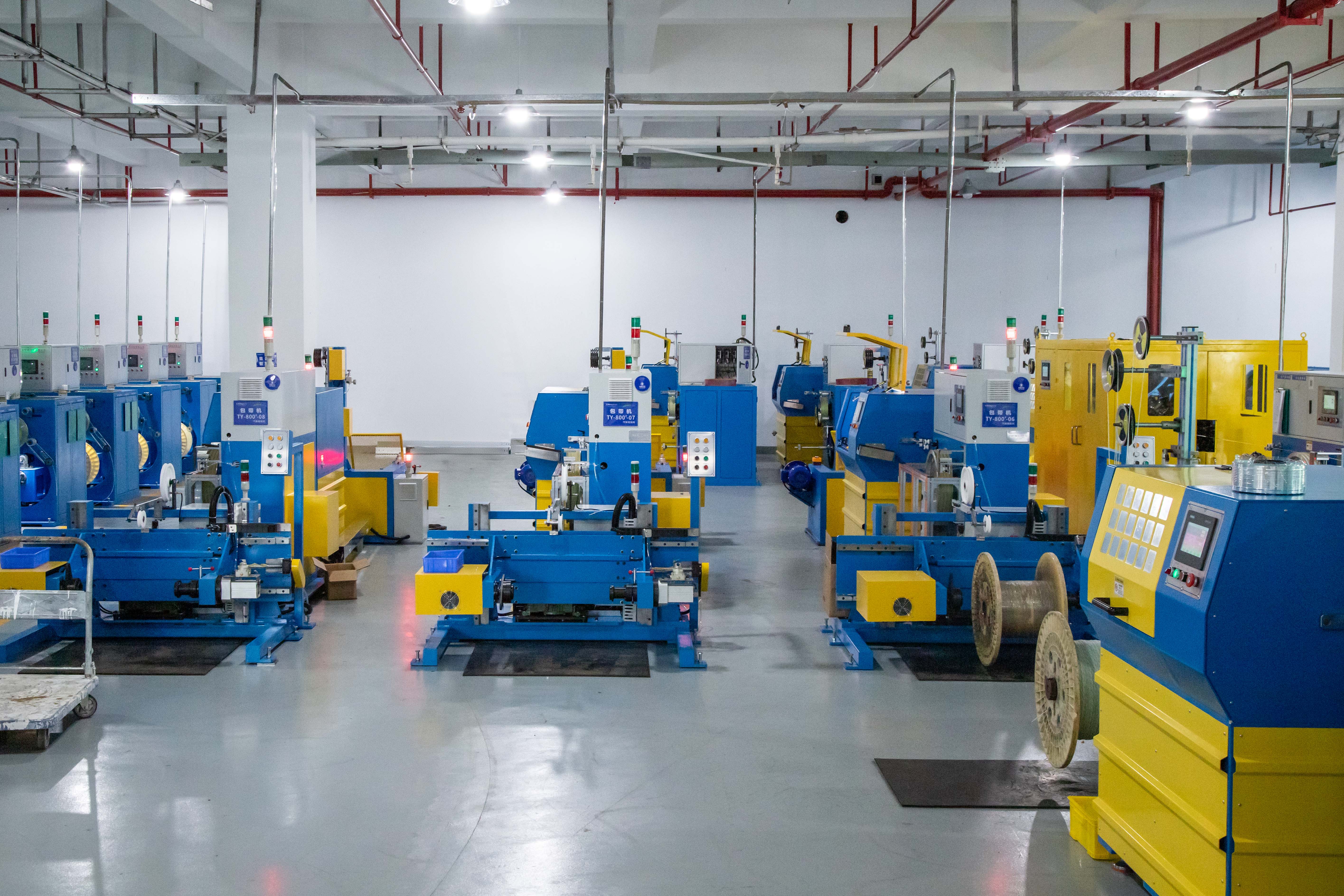
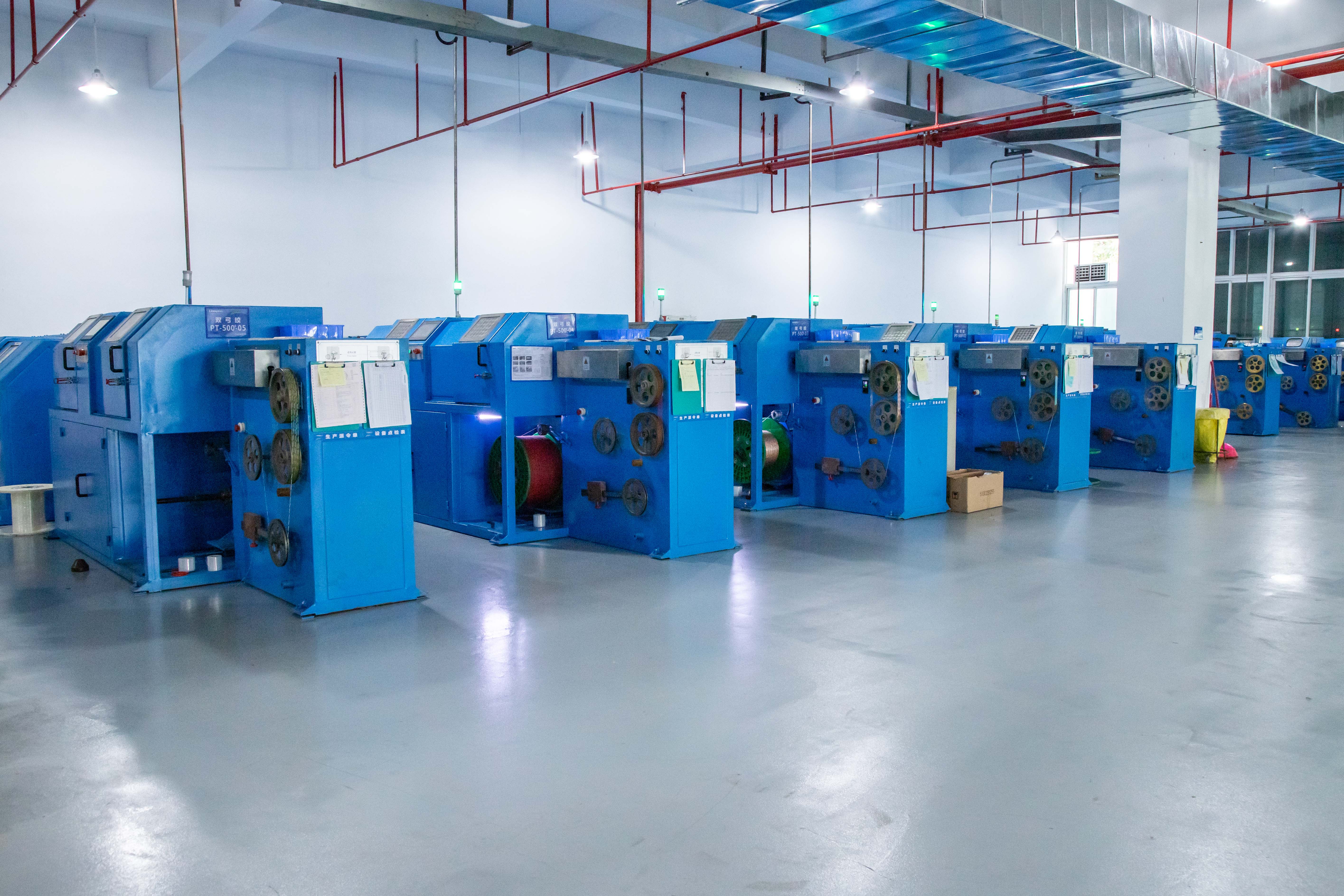
Linoya Electronic Technology Co., Ltd. is a cable and wire manufacturer established in 1997, operating a 60,000 m² factory footprint with more than 3,000 employees, a 300-engineer R&D team and an annual output of 4,000,000 kilometres. The company exports roughly 30% of its production, with the European Union and the Middle East as its principal export markets. Its Ethernet cable range spans Cat5e through Cat8, in unshielded, foil-shielded, screen-plus-foil and full-shielded constructions, with solid bare copper conductors, LDPE insulation and PVC or LSZH jackets.
Applying the five gates produces the following environment-to-specification mapping.
| Environment | Dominant constraint | Linoya model family | Flame rating |
|---|---|---|---|
| Enterprise data center | 10G over long runs, crosstalk, fire performance | CAT6A U/UTP, CAT6A SF/UTP, CAT6A U/FTP, CAT6A F/FTP | CMP |
| High-EMI industrial and commercial | Anti-EMI, PoE++ stability | CAT6 F/UTP, CAT6 SF/UTP, CAT6A SF/UTP, CAT6A F/FTP | CMR / CMP |
| Office and SMB 10G | Cost control, moderate EMI | CAT6 U/UTP, CAT6 F/UTP, CAT6A U/UTP | CMR / CMP |
| Gigabit residential and access | Cost, basic reliability | CAT5E U/UTP, CAT5E F/UTP, CAT5E SF/UTP | CM / CMG |
| Ultra-high-speed short reach | 40G / 100G interconnection within a cabinet row | CAT7 F/FTP, CAT7A F/FTP, CAT8 F/FTP | CMP |
The bandwidth and gauge figures behind that mapping are specific. Cat5e models carry 1Gbps on 24AWG solid copper. Cat6 models carry 10Gbps up to 55 metres on 24AWG/23AWG. Cat6a models carry 10Gbps to the full 100 metres on 23AWG and are certified to UL, ETL and CPR. Cat7 F/FTP carries 40Gbps up to 50 metres, Cat7A F/FTP carries 100Gbps up to 15 metres on 22AWG, and Cat8 F/FTP carries 40Gbps up to 30 metres on 22AWG. All families are built to TIA/EIA-568-C.2.
Supporting Equipment: The Half of the Decision That Gets Skipped
A cable specification is only valid inside a matched channel. Four supporting factors routinely change the outcome of an environment-first decision.
- Connectors and patch panels. A Cat6a cable terminated on connectors that cannot hold Cat6a tolerances will not deliver Cat6a performance. The cable is the ceiling; the connector set is the floor.
- Shield grounding. Shielded constructions only reject interference when the shield is properly bonded. An ungrounded shield can degrade a link that a correctly installed unshielded cable would have handled.
- Bend radius and bundle density. Dense bundles raise both crosstalk and heat. Where Cat6a's larger diameter conflicts with an existing conduit fill, the constraint is physical rather than electrical.
- Active equipment. 10G switches, servers, storage arrays, SFP modules and core switches define what the cable has to feed. Upgrading cable without a matching port and module plan produces no net gain.
Three Environments, Three Specifications
Enterprise data center. The dominant constraints are crosstalk at high density and fire performance in air-handling voids. Cat6a U/UTP delivers full 100-metre 10G transmission with roughly twice the 10G distance and 40% lower signal attenuation than Cat6, and carries a 20% lower total cost of ownership over five years. Where rack density is high, Cat6a SF/UTP adds 70% better anti-interference and 99.998% network stability; where server-room crosstalk is the primary concern, Cat6a U/FTP reduces crosstalk by a further 50%.
High-EMI commercial and industrial buildings. Here the noise source is external, so shielding comes first. Cat6 SF/UTP sustains stable 10G transmission in high-noise industrial edge conditions with 90% better anti-interference than Cat6 U/UTP, and reduces interference-related packet loss by up to 95% relative to Cat6 F/UTP. In extreme EMI environments the pairing of overall and pair-level foil in Cat6a F/FTP is the appropriate construction.
Office and SMB 10G. In low-noise commercial interiors the environment does not justify full shielding. Cat6 U/UTP and Cat6 F/UTP cover 10Gbps up to 55 metres with PoE++ support, and Cat6 F/UTP adds foil shielding for buildings with minor electrical noise, such as those shared with surveillance or building-management systems.
Market Context: Why Environment-First Thinking Is Gaining Ground
The global Ethernet cable market was valued at USD 38.55 billion in 2025 and is expected to reach nearly USD 70.02 billion by 2032, a compound annual growth rate of 8.9% between 2026 and 2032, according to Maximize Market Research. Within that market, the Cat6 segment held a 32.5% share in 2025, which indicates that the majority of volume still sits below the top of the range.
Two structural drivers support an environment-first approach. First, the ANSI/TIA-568.2-E revision added DC resistance unbalance specifications for Cat5e, Cat6 and Cat6a, tightening what a compliant cable must demonstrate and making construction quality more relevant to real performance. Second, regulatory pressure in the European Union is expressed through installation class rather than product tier — the EN 50575 CPR framework is a building regulation that happens to reach the cable, which is precisely an environment-first logic applied by law.
Where Environment-First Thinking Has Limits
The framework is not a universal upgrade argument. Its boundaries matter as much as its recommendations.
First, an environment-first approach can lead to over-specification when the environment assessment is conservative. Specifying fully shielded Cat6a into a low-noise office adds material cost, increases cable diameter and makes termination slower, particularly where the installer is not equipped for shield bonding. In those cases, unshielded Cat6 or Cat6a delivers the required 10Gbps with simpler installation and fewer failure points.
Second, shielding only works when the installation discipline is in place. A shielded cable installed without proper grounding, with excessive untwisted length at the termination or with mixed shielding practices within the same channel, may perform worse than a correctly installed unshielded equivalent. The framework assumes the installation quality needed to realise the specification.
Third, higher categories are not automatically the better commercial choice. Cat7A and Cat8 are short-reach constructions — 100Gbps up to 15 metres and 40Gbps up to 30 metres respectively — and are not designed for full 100-metre horizontal runs. Applying a Cat8 part number to a long backbone run misuses the product rather than upgrading it. Selection should stop as soon as the environment and the distance target are both satisfied; going further adds cost without adding capability.
Future Outlook
Three developments are likely to keep the environment-first sequence relevant. Standards revisions such as ANSI/TIA-568.2-E continue to shift compliance from a simple category label toward measurable construction parameters. CPR adoption in EU infrastructure projects keeps installation class tied to building function rather than to a buyer's preference. And rising PoE++ power budgets keep pushing conductor gauge and heat performance into the decision, which is an electrical-environment question rather than a bandwidth question.
For procurement teams, the practical implication is a change in the order of questions. Ask where the cable will run and what it will power before asking which category it should be. The category will usually answer itself.
FAQ
Should the Ethernet cable category or the installation environment be decided first?
The environment should be assessed first, because it determines shielding construction, flame rating, jacketing material and conductor gauge. Category then becomes an output of those constraints. Deciding category first risks both over-specification in quiet spaces and under-shielding in electrically noisy spaces, and it can produce a cable with the right bandwidth but the wrong flame rating for the installation zone.
How does shielding type change with the level of electromagnetic interference?
Shielding generally increases with the noise environment. Unshielded U/UTP constructions suit low-EMI offices and residential wiring. Overall foil F/UTP constructions suit environments with minor electromagnetic interference. Overall screen-plus-foil SF/UTP constructions suit complex commercial and industrial edge conditions. Individual pair foil U/FTP addresses high-frequency crosstalk, and combined overall-plus-pair foil F/FTP constructions are used in heavy-EMI industrial, data center and public infrastructure settings.
Which flame rating applies to which installation zone?
In the Linoya range, CM/CMG-rated cable covers residential and general low-rise wiring, CMR-rated cable covers riser shafts and commercial horizontal cabling, and CMP-rated cable covers plenum voids, data centers and air-handling spaces. Certifications follow the same progression: Cat5e and Cat6 families carry UL/ETL certification, while Cat6a and higher families carry UL, ETL and CPR certification. For EU projects, the EN 50575 CPR class applies in addition to the North American rating.
Does a higher category cable always deliver better real-world performance?
No. Real-world performance depends on the interaction between the cable and its channel. A Cat8 cable is a short-reach construction rated for 40Gbps up to 30 metres, and Cat7A is rated for 100Gbps up to 15 metres, so neither is designed for full 100-metre horizontal runs. Conversely, a correctly installed unshielded Cat6a cable can outperform a poorly installed shielded cable, particularly when the shield is not properly bonded to ground.
How do connectors, patch panels and grounding affect shielded cable performance?
They set the effective limit of the channel. A Cat6a cable terminated on connectors that cannot hold Cat6a tolerances will not deliver Cat6a performance. Shielded constructions reject interference only when the shield is bonded to ground correctly; an unbonded shield can degrade the link. Active equipment also matters — 10G switches, servers, storage arrays, patch panels and SFP modules must be able to support the bandwidth the cable is specified for.
A downloadable overview of Linoya Electronic Technology Co., Ltd.'s cable and wire portfolio, including the Ethernet cable range and its certifications, is available at Linoya Electronic Technology brochure.
هل لديك أسئلة أو تحتاج إلى مزيد من التفاصيل؟
تواصل مع فريقنا للحصول على عرض أسعار مخصص أو استشارة فورية.
طلب عرض أسعار
املأ النموذج أدناه وسيتواصل معك فريقنا بعرض مقترح مخصص.
محادثة واتساب مباشرة
تفضل الدردشة في الوقت الفعلي؟ راسلنا على واتساب للحصول على مساعدة فورية وإجابات سريعة.
- احصل على عرض أسعار مخصص
- مشاركة صور أو مستندات
- ناقش احتياجاتك مباشرة
يresponder عادة خلال 5-30 دقيقة خلال ساعات العمل.