
Ethernet Cable Sourcing FAQ: Testing, Cat5e–Cat6a Choice, Certification
Ethernet cable procurement rarely fails on price. It fails on three specification questions that are usually answered too late: how the cable was tested, which category and shielding construction is actually being delivered, and which certifications cover that exact construction. The global Ethernet cable market was valued at USD 38.55 billion in 2025 and is projected to reach nearly USD 70.02 billion by 2032, a CAGR of 8.9% from 2026 to 2032 (Maximize Market Research). Category composition is just as decisive — Cat6 alone held a 32.5% share of the market in 2025 (Dataintelo) — which is why most tender documents are still written around Cat5e, Cat6 and Cat6a rather than the highest available category.
This reference is written for buyers at the decision-to-execution stage: importers, distributors, OEM brand owners, contractors and procurement managers who must convert an approved specification into a repeatable order. It answers the questions that most often delay shipment, force re-testing on site, or fail project acceptance, and it separates what a supplier can prove before delivery from what still has to be verified after installation.
Why Testing, Category and Certification Decide the Order
Ethernet cable is a passive component with a long service life, and its selection is usually finalized late in a project, after active equipment, layout and cabinet design are already fixed. That timing concentrates procurement risk into three questions. Testing defines what evidence of electrical performance exists before shipment and what still needs to be verified on site. Category defines the performance ceiling and the distance at which the network will actually run at its target speed. Certification defines whether the delivered construction may lawfully be installed, and whether it will pass project acceptance in the destination market.
When any of the three is answered loosely, the consequences surface later: a link that negotiates at 10/100 Mbps instead of the expected gigabit rate, packet loss under load, PoE devices that restart intermittently, or a shipment held at a port because the certification document does not cover the model on the pallet.
How Ethernet Cable Is Tested: Factory Evidence and Site Verification
Testing an Ethernet cable is not one action but two layers of evidence. Buyers who plan only for the factory layer, or only for the site layer, usually discover the gap during acceptance.
Site-level verification
Four methods cover most field checks: a cable tester for continuity and wiring, the RJ45 link indicator on network equipment, a real-world throughput test, and physical inspection of cable and connectors. A practical sequence is to plug both ends of the cable into the two ports of a cable tester; power on the tester and read the LED sequence to identify open circuit, short circuit or mis-wiring; connect the cable between a PC and router and check the RJ45 link light; then run a speed test to verify actual throughput. If mis-wiring or low throughput appears, the cable should be replaced rather than repeatedly re-terminated.
Typical symptoms that point back to the cable rather than to active equipment include no link light, frequent disconnection, slow network speed, random packet loss, unstable PoE power supply, and a link that reports 10/100 Mbps instead of the expected gigabit rate.
These symptoms usually trace to one of five causes:
- Physical damage — broken inner conductors, crushed cable, scratched jacket, or routing that exceeds the bend limit.
- Termination defects — wrong wiring sequence, untwisted pairs left too long, poor crimping, damaged or oxidized RJ45 pins.
- Cable quality issues — copper-clad aluminium (CCA) conductor, off-spec category, or counterfeit product.
- Environmental interference — heavy EMI, incorrect STP grounding, or indoor cable deployed outdoors.
- Connector mismatch — low-grade RJ45 connectors that cannot support the high-frequency performance of Cat6 or Cat6a.
Factory-level evidence
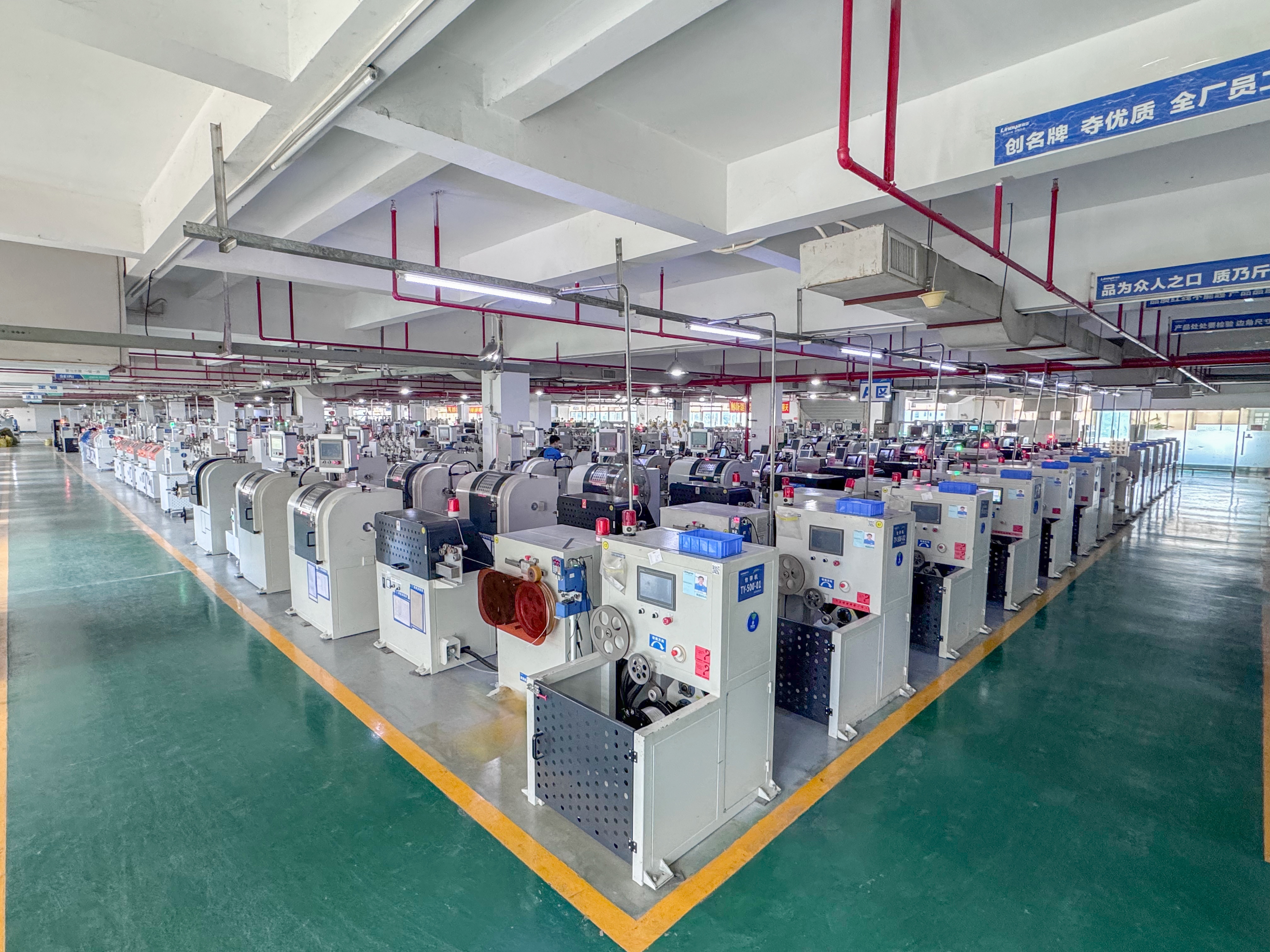
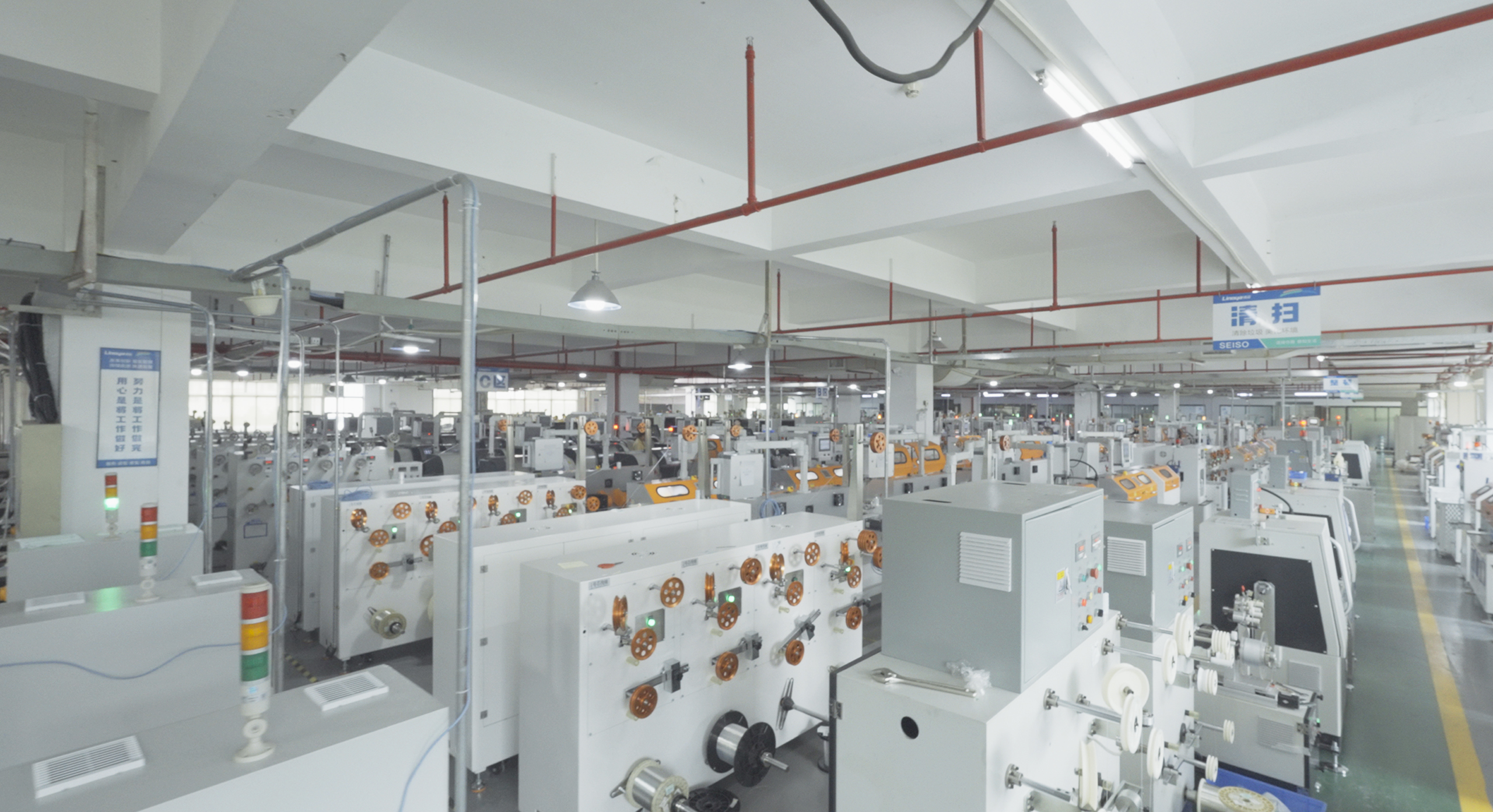
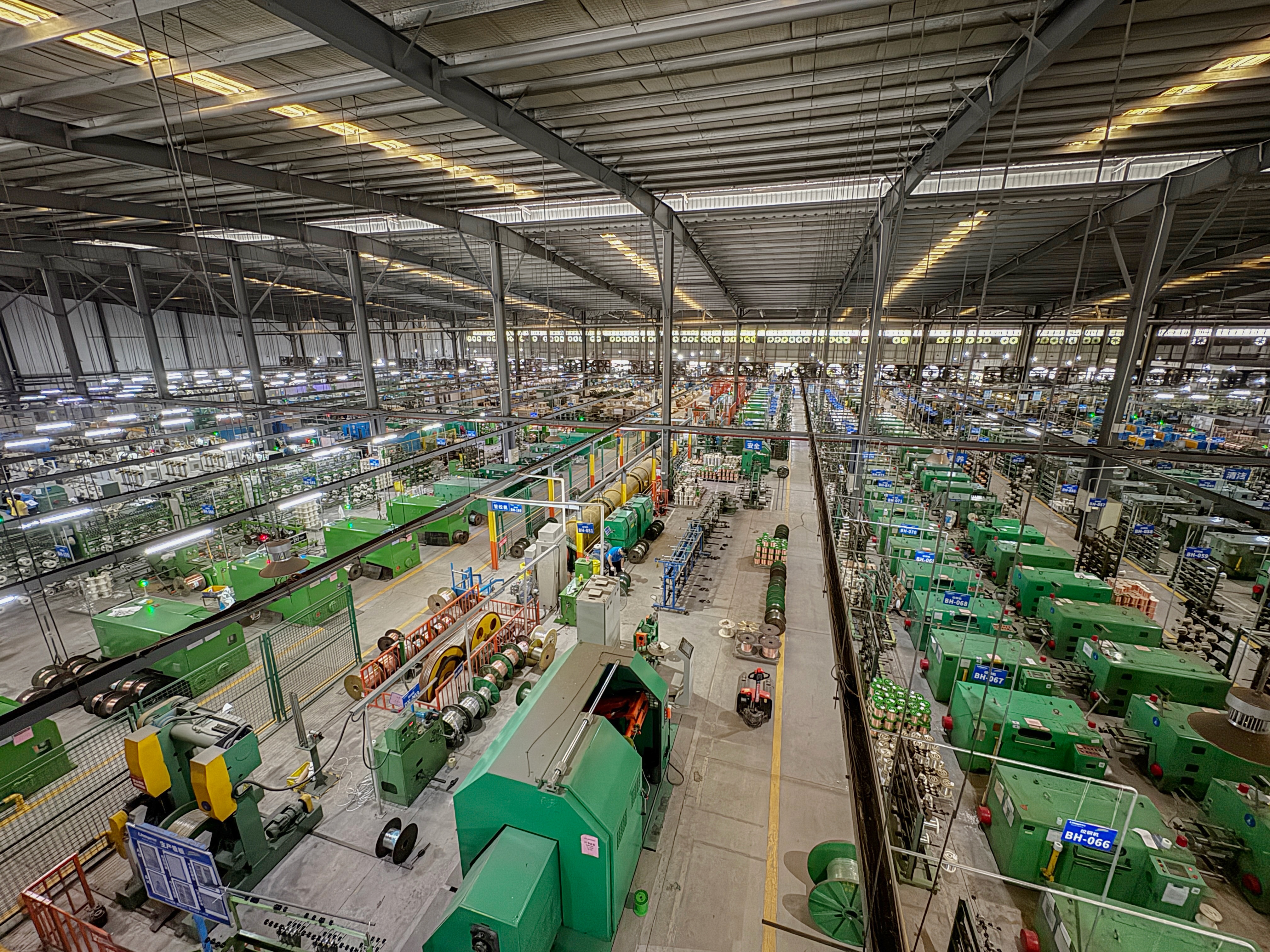
Linoya Electronic Technology Co., Ltd. is a cable and wire manufacturer established in 1997 that operates three industrial parks in Shenzhen and Dongguan plus a production base in Vietnam, and serves markets including the EU and the Middle East. The company states that all finished cables pass factory-level electrical performance testing before delivery, and for bulk orders the agreed acceptance criterion is pre-shipment testing.
Cat5e, Cat6 and Cat6a: Three Decision Points
Category selection is driven by four variables: the maximum expected transmission speed, the transmission distance, the electrical and installation environment (including PoE power load and cable bundle density), and the required service life. The structural differences between the three most common categories are concrete and measurable.
| Model | Conductor | Performance | Shielding | Flame rating | Certification |
|---|---|---|---|---|---|
| CAT5E U/UTP | 24AWG solid bare copper | 1 Gbps | Unshielded | CM/CMG | UL/ETL |
| CAT5E SF/UTP | 24AWG solid bare copper | 1 Gbps | Screen + foil overall shield | CM/CMG | UL/ETL |
| CAT6 U/UTP | 24AWG / 23AWG solid bare copper | 10 Gbps @ 55 m | Unshielded | CMR | UL/ETL |
| CAT6 F/UTP | 24AWG / 23AWG solid bare copper | 10 Gbps @ 55 m | Overall foil shield | CMR | UL/ETL |
| CAT6A U/UTP | 23AWG solid bare copper | 10 Gbps @ 100 m | Unshielded | CMP | UL/ETL/CPR |
| CAT6A SF/UTP | 23AWG solid bare copper | 10 Gbps @ 100 m | Screen + foil overall shield | CMP | UL/ETL/CPR |
| CAT6A F/FTP | 23AWG solid bare copper | 10 Gbps @ 100 m | Overall + pair foil shield | CMP | UL/ETL/CPR |
| CAT7 F/FTP | 23AWG solid bare copper | 40 Gbps @ 50 m | Overall + pair foil shield | CMP | UL/ETL/CPR |
| CAT8 F/FTP | 22AWG solid bare copper | 40 Gbps @ 30 m | Overall + pair foil shield | CMP | UL/ETL/CPR |
Cat5e suits projects that only require stable 1 Gbps: general office LANs, and PoE surveillance cameras operating at 30 W PoE+. Procurement cost is low and installation tolerances are forgiving. It is not intended for 10 Gbps or for high-power PoE++ devices.
Cat6 fits cost-controlled deployments that need short-reach 10 Gbps within 55 metres, or gigabit networks with upgrade headroom. It offers 250 MHz bandwidth and improved crosstalk suppression, and commonly includes a cross-separator. The constraint is explicit: 10G performance cannot be guaranteed beyond 55 metres, and termination workmanship requirements are stricter than for Cat5e.
Cat6a is the category to specify when full-channel 10 Gbps over 100 metres is required, when cable bundles are dense, when PoE++ up to 90 W is planned, or when the cabling must remain serviceable over a 5–10 year horizon. It is tested against strict alien-crosstalk requirements. The trade-offs are a larger cable diameter and a higher overall project cost.
Shielding: The Second Half of the Category Decision
Within any category, shielding is selected mainly by the electromagnetic environment of the site, not by speed alone. Unshielded (UTP) construction applies to low-interference environments. Foil shielding (FTP) is used where moderate electromagnetic interference is present. Screen-plus-foil and full-shielded constructions (SF/UTP, F/FTP) are specified for high-interference, high-speed 10G/40G links.
Documented performance differences between shielding constructions are measurable. Cat6A SF/UTP delivers approximately 70% better anti-interference performance than Cat6A U/UTP in high-density data centre environments. Cat7A F/FTP improves anti-EMI performance by roughly 90% compared with Cat7 F/FTP under extreme industrial electromagnetic conditions. Cat5E F/UTP shows around 50% better anti-interference performance and approximately 20% lower crosstalk than Cat5E U/UTP in office EMI environments.
One condition applies to every shielded purchase: shielded cable requires reliable grounding. Improper grounding will introduce additional noise rather than suppress it, which is why shielding decisions should be tied to the installation plan, not only to the cable datasheet.
Certification: What UL, ETL and CPR Cover — and What They Do Not
Certification is market access, not marketing. In North America, LAN cables are typically qualified through UL Mark certification issued by UL LLC or ETL Verified certification issued by Intertek, alongside ANSI/TIA-568 series performance standards. Linoya maintains continuous validity for UL file E320763 for communication LAN cables, and its Cat6 U/UTP CM horizontal solid cable is ETL Verified by Intertek and complies with ANSI/TIA-568.2-D Category 6 performance specifications.
For the EU market, Ethernet cables must complete CPR certification issued by an EU Notified Body, with the fire reaction class marked on the cable and label. CPR classes are not interchangeable: B2ca represents high fire performance under EN 50575, with thresholds of flame spread (FS) ≤ 1.5 m, total heat release (THR) ≤ 15 MJ and peak heat release rate (HRR) ≤ 30 kW.
| Cable construction | Notified Body | Fire reaction class | Standard |
|---|---|---|---|
| Cat5e U/UTP 24AWG solid | VDE Prüf- und Zertifizierungsinstitut GmbH, Notified Body 0366 | Eca | EN 13501-6 |
| Cat5e U/UTP LSZH | EZÚ, Notified Body 1014 | Eca | CSN EN 13501-6:2014 |
| Cat6 U/UTP LSZH (4PR 23AWG) | EZÚ, Notified Body 1014 | Eca | CSN EN 13501-6:2014 |
| Cat6A U/FTP LSZH (4PR 23AWG) | EZÚ, Notified Body 1014 | Dca-s1,d0,a2 | CSN EN 13501-6:2014; TIA/EIA 568-C.2 |
| Cat7 S/FTP LSZH (4PR 23AWG) | EZÚ, Notified Body 1014 | Dca-s1,d0,a2 | CSN EN 13501-6:2014 |
| S/FTP Ethernet cable | TÜV Rheinland InterCert Kft., Notified Body 1008 | B2ca | EN 50575:2014+A1:2016 |
Four boundaries buyers should verify in writing
- The ETL Verified certificate for Cat6A 4-pair 23AWG U/FTP horizontal solid cable does not carry a marked flame rating. Where a project requires a stated flame class, that requirement must be matched to a construction whose certificate includes it.
- Some Cat6A ETL-verified products do not quote ANSI/TIA-568.2-D. The datasheet and certification scope should be confirmed before ordering for a 10G high-speed network project.
- PVC-jacketed cable cannot achieve the CPR Dca-s1,d0,a2 fire performance rating. EU projects that specify Dca-s1,d0,a2 require a genuine LSZH outer sheath, and the certificate must match the shielding construction actually delivered.
- CPR-certified higher categories have scope limits. Cat8 requires confirmation that the certification scope covers the exact Cat8 model, transmission performance and installation condition before an order is placed.
Two trade-compliance details also belong in the procurement file. Ethernet patch cables with connectors are classified under HS code 8544.42 for voltages up to 80 V, while bulk cable on a reel without connectors falls under HS code 8544.49. The U.S. MFN duty rate for HS 8544.42.90 is 2.6%, while the EU MFN rate is 0%.
Order Execution and Repeat-Order Continuity
Execution-stage buyers should confirm commercial and document terms before the first shipment, because these terms determine how easily the second, third and tenth orders can be repeated. Standard terms for Linoya bulk Ethernet cable are a minimum order quantity of 305 m per carton and 100 cartons MOQ, FOB/EXW delivery terms, pre-shipment testing as the acceptance criterion, and payment of 30% deposit with 70% balance before shipment.
The manufacturing base behind those terms is substantial: the company was established in 1997 and today reports 3,000+ employees, an R&D team of over 300 engineers, an annual cable and wire production capacity of 4,000,000 kilometres, three industrial parks, a production base in Vietnam and 100+ production lines, with exports accounting for approximately 30% of total sales and annual sales reported at more than USD 420 million.
For a long-term supply relationship, the following five items are worth freezing in the supply agreement rather than re-negotiating per order:
- Frozen construction specification — category, conductor gauge and material, shielding type and jacket material, so that repeat orders are electrically identical.
- Certification continuity — confirmation that UL, ETL or CPR approvals remain valid for the model being shipped, and that the certificate is issued by an authorised body rather than self-produced.
- Label-to-certificate consistency — the fire class printed on the cable and label must match the original Notified Body test report for that construction.
- Batch-to-batch consistency — an agreed pre-shipment test per lot, since CPR and TIA compliance depend on production consistency, not on a single sample.
- Documentation package per shipment — certification documents, test records and technical dossier delivered with each lot for tender review and site acceptance.
For private-label programmes, the decisive capability is formal certification transfer: OEM private-label export requires a compliant certification transfer procedure, stable quality and complete export documentation, not only a printed logo on the jacket.
Where the Limits Are
A credible procurement FAQ should also state where a higher specification does not help. Cat8 does not replace Cat6a across a building: its rated performance is defined up to 30 metres, making it a short-reach data-centre interconnection choice rather than a general horizontal cabling choice, and its certification scope must be checked for the exact model. Cat6a carries a larger outer diameter and higher total project cost than Cat6, which can affect conduit fill and cabinet density. Cat6 cannot be treated as a full-distance 10G cable beyond 55 metres. LSZH jacket material is stiffer during installation and costs more than PVC, even though electrical transmission performance is equal. Shielded cable requires correct grounding to deliver its anti-interference benefit. And, as noted earlier, factory-level electrical testing does not replace on-site channel verification after construction.
Future Outlook
Two developments are worth building into a multi-year cable specification. First, the ANSI/TIA-568.2-E standard was released in October 2024, replacing ANSI/TIA-568.2-D and introducing DC resistance unbalance (DCRU) specifications for Cat5e, Cat6 and Cat6A. Buyers writing long-life specifications should state which revision applies, because supplier test reports and datasheets may still reference the earlier revision. Second, with the Ethernet cable market projected to grow at 8.9% CAGR between 2026 and 2032 and Cat6 already holding 32.5% of 2025 market share, category mix is unlikely to shift abruptly; the more likely shift is toward certified, fire-class-verified constructions for EU and North American infrastructure projects where acceptance — not price — is the deciding risk.
For buyers at the decision-to-execution stage, the practical implication is simple: fix the category and shielding construction against the installed environment, confirm the certification scope covers that exact construction, and agree the testing and documentation routine before the first shipment, so that repeat orders inherit the same evidence.
FAQ
How do I test whether an Ethernet cable is working properly?
Test it in four steps: plug both ends into the two ports of a cable tester and read the LED sequence to detect open circuit, short circuit or mis-wiring; connect the cable between a PC and router and check the RJ45 link indicator; run a network speed test to verify actual throughput; and inspect the cable body and RJ45 pins for damage. Replace the cable if mis-wiring or low throughput is confirmed. Factory electrical performance testing on finished cables is performed before delivery, but the installed channel still requires an on-site re-check after construction.
How do I choose between Cat5e, Cat6 and Cat6a?
Choose by required speed, transmission distance, budget and expected service life. Cat5e supports stable 1 Gbps over 100 metres at low cost, with forgiving installation requirements, and suits general office LANs and 30 W PoE+ surveillance cameras; it is not suitable for 10 Gbps or high-power PoE++. Cat6 provides 250 MHz bandwidth and supports 10 Gbps up to 55 metres with improved crosstalk suppression, but 10G performance cannot be guaranteed beyond that distance. Cat6a provides 500 MHz bandwidth, full-channel 10 Gbps over 100 metres, strict alien-crosstalk testing and PoE++ support up to 90 W, at the cost of larger diameter and higher project cost.
What is Ethernet cable crosstalk, and why does it matter?
Crosstalk is electromagnetic signal leakage between adjacent twisted wire pairs inside the cable. Excessive crosstalk causes packet loss, reduced speed and unstable network connections. It is one of the reasons category ratings and pair construction matter: higher categories use tighter twist control and, in many Cat6 and Cat6a constructions, a central separator or pair shielding to keep inter-pair interference within standard limits.
What certification does Ethernet cable need for the US and Canada?
LAN cables for the US and Canada market should carry valid UL Mark certification issued by UL LLC or ETL Verified certification issued by Intertek, together with compliance to ANSI/TIA-568 series performance standards, and must be distinguished as solid horizontal cable where the application requires fixed wiring. Verifying that the UL file number is active, or that the ETL verified report is current, is a standard pre-order check.
Which CPR fire class applies to LSZH Cat6A U/FTP cable for EU projects?
LSZH Cat6A U/FTP (4-pair 23AWG) cable holds CPR fire rating Dca-s1,d0,a2, certified under CSN EN 13501-6:2014 and issued by Notified Body EZÚ 1014, with additional compliance to TIA/EIA 568-C.2. Lower categories typically hold Eca, while S/FTP constructions can reach B2ca under EN 50575:2014+A1:2016. The class stated in the project specification must match the certificate that covers the exact construction being delivered.
How do I choose between UTP, FTP and S/FTP Ethernet cable?
Select by the electromagnetic interference level at the installation site. UTP applies to low-interference environments and requires no grounding. FTP (foil shielding) is used for moderate electromagnetic interference. S/FTP and other screen-plus-foil constructions are specified for high-interference, high-speed 10G or 40G links. Where shielded cable is selected, reliable grounding is mandatory — improper grounding introduces additional noise instead of suppressing it.
What are the purchasing terms and acceptance criteria for bulk Ethernet cable orders?
Typical terms are a minimum order quantity of 305 m per carton with a 100-carton MOQ, FOB or EXW delivery, pre-shipment testing as the acceptance criterion, and payment of 30% deposit with 70% balance before shipment. Buyers should confirm the frozen construction specification, the certification documents covering the exact model, and the test records accompanying each shipment before the first order is placed.
What is the risk if the CPR fire class printed on the cable label does not match the test report?
Label fire-reaction class must be consistent with the CPR test certificate for the construction. A mismatch can lead to goods being recalled or fined by EU market supervision authorities and to project acceptance failure. The standard mitigation is to cross-check cable label information against the original Notified Body certificate, and to confirm that the shielding construction actually delivered falls within the scope of that certificate.
For buyers who need the underlying construction, certification and capacity details in a single file, the company brochure is available here: Linoya Electronic Technology Co., Ltd. brochure. Additional reference material is published at linoya.com.