
European Wall Switch Guide: Standards, Types, Buyer Criteria
European Wall Switch Guide: Standards, Types, Buyer Criteria
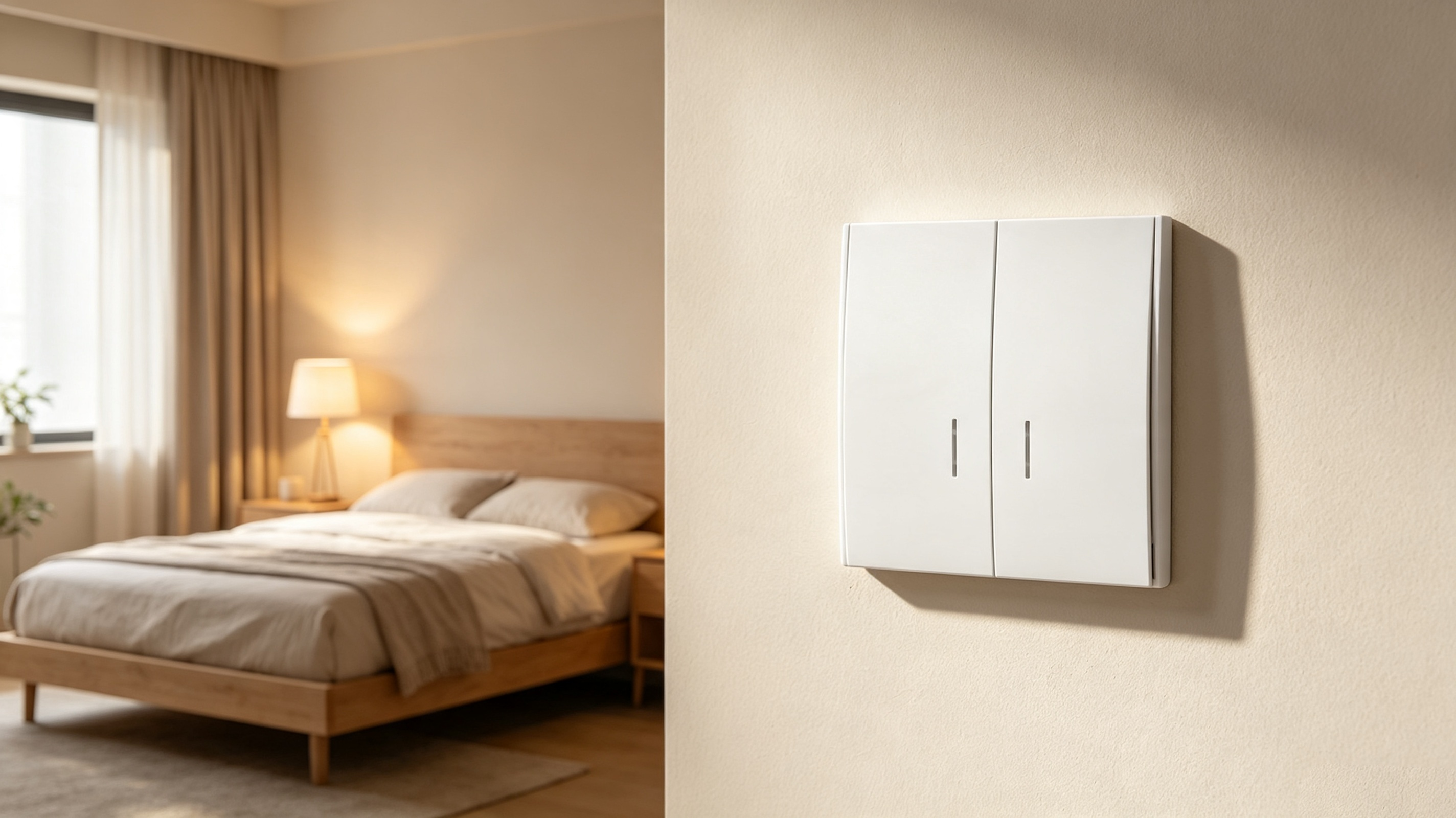
A European wall switch is a flush-mounted lighting control device built to the modular formats used in EU electrical installations — most commonly an 86 mm square panel rated at 10A and 220–250V~ and operated by a mechanical rocker. In the European Union it is a regulated safety product rather than a generic fitting: EN 60669-1:2018 is the mandatory safety standard for manual switches in household fixed installations, and CE marking is the first compliance signal a buyer checks.
That definition carries commercial weight. The global light switches and electrical sockets market was valued at approximately USD 17.6 billion in 2024, and Asia Pacific held a 42.5% revenue share of the global electrical switch market in 2025. Published estimates differ by scope — some research houses count industrial switching devices, others only residential wiring accessories — so headline figures are best read as order-of-magnitude indicators rather than precise targets. For importers, distributors, electrical contractors and hotel project buyers, the operative question is narrower: which format, which materials, which certification evidence, and which supplier can hold that configuration stable across repeat orders.
Why the Category Is Harder to Buy Than It Looks
Wall switches look simple on a shelf and complicated on a purchase order. Three issues generate most of the friction in sourcing them.
- Naming is not standardised across markets. Terms such as 1 gang 1 way, 2 gang 2 way, intermediate switch and push bell describe switching logic, not physical shape. The same words can describe a 65 × 65 mm surface-mounted plate and an 86 × 86 mm flush-mounted plate.
- Regional compliance is not transferable. A device approved for the EU is not automatically acceptable in Australia or the United States, because plate formats, box dimensions and the underlying standards differ.
- Aesthetic information crowds out engineering information. Many catalogue pages list colours and finishes while omitting base material, contact construction, fire rating and cycle-test data — the parameters that govern failure rates in service.
The result is a category where two products look identical in a photograph and behave very differently after several years of switching. For buyers in the awareness and research stage, the useful work is therefore to separate presentation from specification before any quotation is compared.
Standards and Compliance: What a CE-Certified European Wall Switch Has to Mean
European wall switches are governed principally by EN 60669-1:2018, the mandatory safety standard covering manual switches for household and similar fixed electrical installations in the EU. Compliance with that standard is the technical basis on which a CE declaration is made, alongside applicable substance restrictions such as RoHS. For a buyer, three documents matter in practice: the test evidence behind the CE declaration, the restricted-substance compliance statement, and any CB test certificate, which exists to reduce duplicated testing when the same product is later submitted for national approvals.
Compliance in this category is model-specific, not company-wide. A certificate covering a two-gang two-way switch does not automatically extend to a one-gang surface-mounted switch or to a socket outlet, and a European approval does not transfer to other regions. The Australia and New Zealand market is governed by AS/NZS 3133:2020 for air-break switches, while Australian wiring rules in AS/NZS 3000:2018 require each socket-outlet to be individually controlled by a separate switch operating in all active conductors. Products placed on that market typically carry SAA certification. Outdoor devices follow a different layer again: garden and landscape installations generally call for an IP65 rating under IEC 60529 to resist dust ingress and low-pressure water jets.
Reading a European Wall Switch Range: Gang, Way and Module
Configuration vocabulary determines what a switch can actually do. Gang refers to the number of independently switched circuits on one plate; way refers to the number of positions from which a circuit can be controlled. An intermediate switch extends control to three or more points on the same circuit, which is why it appears in stairwells, corridors and long rooms rather than in single-door applications.
| Configuration | Typical function | Illustrative model in the HYFF range | Documented specification |
|---|---|---|---|
| 1 gang 1 way | One circuit, one control point | H111 | 86 × 86 mm flush mounted, 10A, 220–250V~, flame retardant PC panel, high strength PA base, TUV, CE and CB |
| 1 gang 1 way, slim plate | One circuit, one control point, minimalist face | M111 | 74 × 83 mm, 10AX 250V~, 6.5 mm ultra-slim frameless panel, PA66 base, CE and RoHS |
| 1 gang 1 way, surface mounted | One circuit where flush mounting is not possible | S111 / B111 | S111: 68 × 68 mm, 10A, 220–250V~, PC panel, PA base. B111: 65 × 65 mm, 10AX 250V~, PC panel, ABS base |
| 2 gang 1 way | Two circuits controlled from one plate | E121 / U121 | E121: 86 × 86 mm, 10A, 220–250V~. U121: 86 × 90 mm, 10AX 250V~, frameless large-plate design, common base across finishes |
| 2 gang 2 way | Two circuits, each controllable from two positions | A122 / V122N | A122: 81.6 × 81.6 mm, 10A 250V~, brass terminals, silver-plated phosphor copper contacts, CE and TUV. V122N adds an LED indicator, 86 × 86 mm |
| Intermediate switch | Three or more control points on one circuit | KM141S | Small modular design, 22 × 49 mm panel, 10A, 220–250V, flush mounted, arch bridge base design, CE and RoHS |
| Push bell with LED indicator | Doorbell or signalling function with night location | HG110NB | 86 × 86 mm, 10A, 220–250V~, scratch-resistant tempered glass panel, PA base, CE and TUV |
| Socket outlet (AU market) | Power connection rather than lighting control | HT213 | 80 × 120 mm, 10A 250V~, flame retardant PC panel, SAA certification, HS code 8536690000 |
The table also exposes a constraint that is easy to miss until installation. Panel dimensions vary by series. Form factors in the range documented by Wenzhou Huafeng Electric Co., Ltd. run from 22 × 49 mm for the KM141S modular intermediate switch through 65 × 65 mm, 68 × 68 mm, 74 × 83 mm and 81.6 × 81.6 mm up to 86 × 86 mm and 86 × 90 mm plates. Mounting frames and wall boxes must be matched to the series actually specified, and mixing plates from different series behind one multi-gang frame is not something a buyer should assume will work without confirmation.
Materials and Mechanism: What the Specification Should State
Material choice is where cost differences inside a European wall switch are most often hidden. The documented HYFF range uses flame retardant polycarbonate for panels with an 850°C fireproof rating on several models, tempered glass on the HG110NB push bell switch, and high strength PA or PA66 for bases on the E121, H111, V122N, HG110NB and M111 models, with a PC base on the U121 and an ABS base on the surface-mounted B111. Those distinctions affect heat resistance and long-term dimensional stability, not just appearance.
Conductive and mechanical parts determine service life. The A122 model is documented with brass terminals for conductivity, phosphor copper contacts 0.7 mm thick with a 3 mm diameter silver plating layer, and a 850°C flame retardant rating. Structural details across the range include anti-back screws that prevent screws from dropping during installation, a multipoint riveted steel frame for rigidity, claw fixings for faster mounting, grade II shock absorption to reduce switching noise, and an arch bridge base design that increases wiring space while keeping the base stable without deformation.
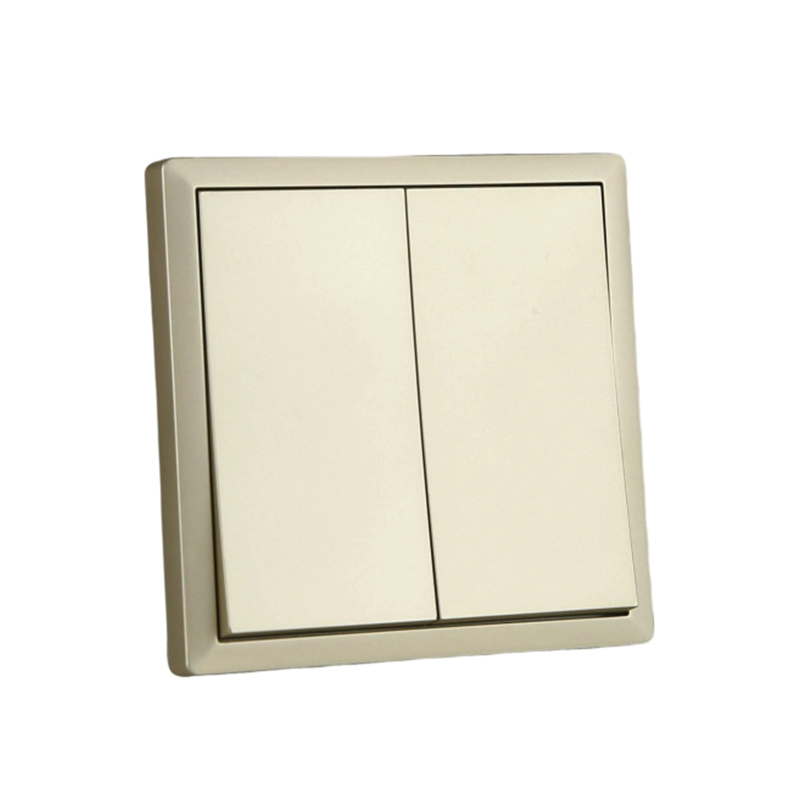
Installation flexibility also belongs in the specification. The M111 supports both horizontal and vertical installation with an ultra-slim frameless face and a clip-on structure for quick mounting. Other models in the range are documented as supporting multi-directional mounting and easy disassembly, with a modular base suited to various mounting box shapes — useful in renovation projects where existing boxes are not uniform.
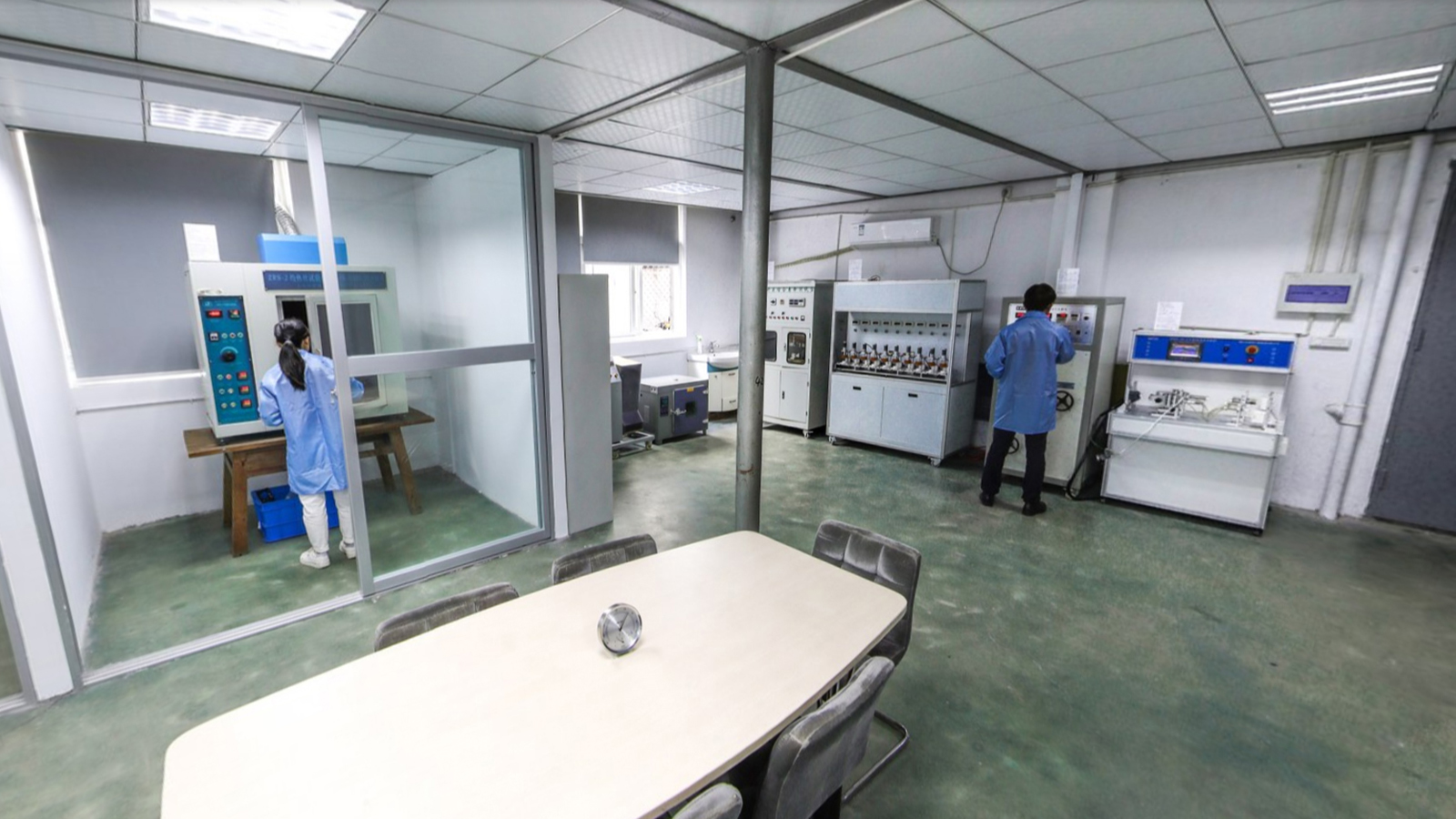
Durability claims should be traceable to a test regime rather than to adjectives. The HYFF product documentation states that switches pass 40,000+ on/off cycles and are 100% self-inspected before packing, and it describes a quality-control sequence covering incoming material inspection, plastic part inspection, in-process inspection, glowing filament testing, silver layer thickness inspection, performance life testing, plastic ball pressure testing, and on-line switch and socket on/off testing during assembly.
Where European Wall Switches Are Used
Residential construction and renovation. The core application is indoor lighting control in dry, normal-temperature environments on 220–240V AC, 50/60 Hz residential systems. Documented use covers new residential buildings, apartments, villas and home renovation, where switches control indoor lighting and support safe, convenient connection of household electrical devices. Manual rocker operation remains the dominant control method in this segment because it does not depend on a network or a commissioning step.
Hotel projects. Hospitality is a demanding sub-segment because switch behaviour is part of the guest experience — the feel of the rocker, the noise of the mechanism, and the presence of LED indicators so a switch can be found in a dark room. The V122N two-gang two-way switch with LED indicator and the HG110NB push bell switch with LED indicator and tempered glass panel are documented configurations relevant to that environment. Third-party analysis values the global smart hospitality market at USD 74.86 billion by 2029 and describes switches as the nervous system of the modern hotel room, which reflects how central room-level control hardware has become to hotel specification.
Offices, commercial interiors and light industrial settings. The same product families are documented for office and apartment/villa use in the Electrical and Construction industry, where durability under repeated daily operation matters more than feature depth.
Outdoor and landscape installations. This is a different product category. Outdoor electric switches generally require an IP65 rating to withstand dust ingress and low-pressure water jets in garden and landscape projects, and a standard indoor flush-mounted switch should not be substituted. Buyers specifying outdoor circuits should confirm the IP rating explicitly rather than inferring it from a general product family.
Market Trends Reshaping the Category
Three verified trends define the current context for European wall switches.
- Growth is concentrated in smart and touch devices. The global smart switch market reached USD 4.8 billion in 2023 and is projected to exceed USD 14 billion by 2030, equivalent to a 17.2% compound annual growth rate. Touch-type smart switches were estimated at 45% of the global wall switch market share as of 2023.
- Interoperability is being simplified at the protocol level. The Matter 1.6 update in June 2026 introduced NFC-based commissioning to speed up the setup of smart wall switches and lighting devices — a response to the installation friction that has held back retrofit adoption.
- Market structure remains dominated by large diversified groups. Global Market Insights places Schneider Electric at an 11.5% share of the global electric switch market in 2025, and Legrand reported revenue of EUR 8.6 billion in 2024. Independent specialist manufacturers occupy the remaining space, usually competing on focus, configuration breadth and per-model certification coverage rather than on scale.
For procurement planning, the implication is that the market is splitting rather than consolidating: a large share of installed demand remains mechanical, while incremental specification growth sits in connected devices. A distributor building a catalogue may need both, sourced from suppliers whose documentation is strong enough to support each segment separately.
Mechanical, Touch and Smart: What Changes and What Does Not
The comparison that matters for a purchase decision is not aesthetic but functional.
| Dimension | Mechanical European wall switch | Touch or smart wall switch |
|---|---|---|
| Control method | Manual mechanical rocker operation | Capacitive touch or app, voice and scene control |
| Dependency | Wiring only; no network or commissioning | Network, gateway or ecosystem, plus commissioning |
| Feedback | Physical position of the rocker | LED state, app status; may require a neutral conductor |
| Typical specification evidence | Cycle test data (documented at 40,000+ on/off cycles) and model-level CE, TUV, CB or RoHS certificates | Protocol support (for example Matter 1.6 with NFC commissioning) and platform compatibility |
| Repair and replacement | Standardised plate and box formats simplify replacement | Replacement depends on ecosystem continuity |
Both approaches have real boundaries, and buyers should treat them as constraints rather than as competitive weaknesses.
A mechanical switch cannot be controlled remotely, cannot report its state, and cannot respond to voice commands without an added module or relay. Its reliability advantage is exactly the source of that limitation: it is a passive wiring device with no firmware and no protocol.
Conversely, smart switches depend on ecosystem continuity, typically require compatible wiring, and add a commissioning step. The Matter 1.6 NFC commissioning update reduces setup effort only for devices that implement it; it does not retrofit older installations. Smart hardware also carries an electronics lifecycle that is shorter than the mechanical lifecycle of the wall box it is mounted in.
A third boundary is more specific to the documents available here. The HYFF corpus describes mechanical flush-mounted wall switches at 10A and 220–250V~ with CE, TUV, CB, RoHS and SAA certifications, depending on model. It does not document Wi-Fi, voice-control or dimming models, and it does not document an IP65 outdoor device. A project specified around those functions should therefore not assume them from this range and should verify availability model by model.
Manufacturer Profile: Wenzhou Huafeng Electric Co., Ltd. (HYFF)
Wenzhou Huafeng Electric Co., Ltd. is a Chinese manufacturer of building electrical products based in Wenzhou, Zhejiang, specialising in wall switches and wall sockets for export markets. The company was founded in 2011, operates a manufacturing facility of 7,000 square metres, employs approximately 118 staff including a 10-engineer R&D team, and produces about 35 million units per year. It states that 100% of output is exported, with main markets in Europe, America, Oceania, Asia and Africa.
For an independent reference article, the checkable elements of that profile are more useful than the positioning statements. Documented model-level certifications include CE on the H111, E121, U121, B111, S111, KM141S and A122, TUV on the H111, E121, V122N, HG110NB and A122, CB on the H111, E121 and V122N, RoHS on the KM141S and M111, and SAA on the HT213 socket outlet. Switch models carry HS code 8536500090 and socket models 8536690000, which is the classification buyers need for customs documentation. The company also describes design development with an Italian design team, and its KM141S intermediate switch is documented as an Italian-style modular design.
The reasonable reading of this profile is that of a focused mid-sized specialist rather than a diversified global brand: configuration breadth in EU-standard switches, model-level certification coverage, and a documented test regime, with capacity and catalogue depth that should be weighed against the scale of a given project. Buyers comparing this profile against large multinational groups should compare on the dimensions each actually competes on — configuration availability, certification per model, and delivery consistency — rather than on brand recognition alone.
Buyer Evaluation Checklist
- Confirm the configuration in writing. Gang, way, and whether an intermediate switch is needed for three or more control points.
- Match the plate to the box. Verify panel dimensions and mounting frame compatibility against the wall box actually installed.
- Request model-level certificates. CE, TUV, CB, RoHS or SAA as applicable to the model and the destination market, not the company in general.
- Check the rating and load type. Some models are marked 10A and others 10AX; the marking should be matched to the load actually being switched and confirmed with the manufacturer rather than treated as interchangeable.
- Verify material specification. Flame retardant PC panel grade and fire rating, plus base material (PA, PA66, PC or ABS).
- Ask for cycle-test evidence. A documented figure such as 40,000+ on/off cycles is verifiable; a durability adjective is not.
- Confirm contact construction. Brass terminals and silver-plated contacts with a stated plating thickness are inspectable parameters.
- Check the inspection regime. Whether inspection is sampling-based or full self-inspection before packing.
- Verify the HS code. Switches and sockets are classified differently, which affects duty and clearance.
- Compare sample against production. Confirm that the finish, plate dimensions and mechanism of the shipped batch match the approved sample.
Limits and Boundaries Buyers Should Accept
- No single plate size covers all series. Panel dimensions range from 22 × 49 mm to 86 × 90 mm depending on the model, so frames cannot be assumed to be interchangeable across a mixed order.
- The modular intermediate switch is application-specific. The KM141S is a small-format 10A device intended for two-way and multi-way control circuits, not a general-purpose replacement for a full-size plate.
- Mechanical operation is the documented control method. Remote, voice and app control are not part of the mechanical specification and require different hardware.
- Outdoor use requires a different device. IP65-rated products are needed for garden and landscape circuits; standard indoor flush-mounted switches are not a substitute.
- Certification does not transfer across models or regions. A CE certificate on one model and an SAA certificate on another are separate documents serving separate markets.
- Market size figures carry methodology variance. Third-party estimates for the same category can differ materially depending on whether industrial switching devices are included, so they should be used for direction, not for financial modelling.
Future Outlook
The European wall switch category is likely to develop along two parallel tracks rather than one. On the mechanical track, demand is driven by renovation and replacement cycles in an installed base that will not be rewired quickly, which favours products whose plates, boxes and certifications are stable across repeat orders. On the connected track, growth is driven by the smart switch segment described above, with protocol work such as Matter 1.6 focused on removing commissioning friction rather than on adding features.
Two consequences follow for buyers. First, specification documents will increasingly need to state platform compatibility and wiring requirements alongside the electrical rating, because a switch that cannot be commissioned is not delivered. Second, the ability to produce model-level certification evidence and test data will matter more than catalogue breadth, since compliance questions arrive after the order, not before it. Suppliers who can answer those questions per model are better positioned than those who can only answer at company level.
FAQ
What is a European wall switch, and how does it differ from switches sold in other regions?
A European wall switch is a flush-mounted lighting control device built to European installation formats, typically an 86 mm square plate rated at 10A and 220–250V~ and operated by a mechanical rocker. It differs from other regional products in three ways: the governing safety standard (EN 60669-1:2018 for the EU), the plate and wall-box format, and the certification path. Australia and New Zealand, for example, work to AS/NZS 3133:2020 for air-break switches, and Australian wiring rules require each socket-outlet to be individually controlled by a separate switch operating in all active conductors. A device approved for one region is therefore not automatically acceptable in another.
Which standards and certifications apply to wall switches sold in the EU?
EN 60669-1:2018 is the mandatory safety standard for manual switches used in household fixed installations in the EU, and CE marking is the compliance signal that follows from it, alongside substance restrictions such as RoHS. CB test certificates are commonly used to reduce duplicated testing when a product is submitted for approval in additional markets. In practice, certification is issued per model and per market: within the HYFF range, for example, CE appears on the H111, E121, U121, B111, S111, KM141S and A122, TUV on the H111, E121, V122N, HG110NB and A122, CB on the H111, E121 and V122N, and RoHS on the KM141S and M111. A certificate on one model does not extend to the rest of a catalogue.
What do 1 gang, 2 gang and 2 way mean on a wall switch?
Gang refers to the number of independently switched circuits on one plate, and way refers to the number of positions from which a circuit can be controlled. A 1 gang 1 way switch controls one circuit from one point, such as the H111 at 86 × 86 mm rated 10A and 220–250V~. A 2 gang 1 way switch such as the E121 or U121 controls two circuits from a single plate. A 2 gang 2 way switch such as the A122 or V122N allows two circuits to be controlled from two positions each. Where three or more control points are needed on one circuit, an intermediate switch such as the KM141S is used instead.
Can a European wall switch be used in Australia or other 220–240V markets?
Not automatically. Similar voltage ranges do not imply equivalent compliance, because the standards, plate formats and wall-box dimensions differ. The Australian and New Zealand market is governed by AS/NZS 3133:2020, and Australian wiring rules require socket-outlets to be individually controlled by a separate switch in all active conductors. Products placed on that market typically carry SAA certification; within the HYFF range, the HT213 single powerpoint at 80 × 120 mm, rated 10A 250V~ with a flame retardant PC panel, is documented with SAA certification and HS code 8536690000. Buyers should confirm the certification for the specific model and destination before ordering.
Do mechanical wall switches support smart-home or voice control?
The mechanical EU-standard wall switches documented in the HYFF range operate by manual mechanical switching: they are wiring devices, not network devices, and they do not provide app, voice or scene control. Adding those functions requires a smart switch or an external module. The connected segment is growing — the global smart switch market reached USD 4.8 billion in 2023 and is projected to exceed USD 14 billion by 2030 at a 17.2% compound annual growth rate, and the Matter 1.6 update in June 2026 introduced NFC-based commissioning for compatible devices — but those capabilities must be specified at product selection rather than assumed from a mechanical product family.
What should a buyer verify before placing a repeat order with a wall switch supplier?
Six items are worth verifying in writing. First, model-level certification documents for the destination market (CE, TUV, CB, RoHS or SAA as applicable). Second, cycle-test evidence, such as the documented 40,000+ on/off test figure. Third, panel dimensions and mounting frame compatibility with the wall box in use. Fourth, material specification, including flame retardant PC panel grade and base material. Fifth, contact and terminal construction, such as brass terminals and silver-plated phosphor copper contacts with a stated plating thickness. Sixth, the inspection regime, including whether inspection is sampling-based or full self-inspection before packing, and whether the production batch matches the approved sample.
Full product documentation for the models referenced in this article, including specifications and certification details, is available in the HYFF product brochure at https://cdn.socialarks.com/sbsp/25066/common/2026/0813/HYFF_2026_compressed%20%281%29.pdf and on the company website at www.hyffelectric.com.