
Evaluating Aluminum Structure Tent Suppliers for Industrial and Event Infrastructure
The global market for temporary and semi-permanent structures continues to expand, driven by demand for rapid deployment, cost efficiency, and architectural flexibility. For procurement professionals evaluating suppliers, understanding manufacturing capability, certification compliance, and proven project experience is essential. KENTEN Structures, a global supplier of aluminum structure tents operating from a 80,000 m² manufacturing base with an annual output of 1,000,000 m², provides a benchmark for assessing product quality and delivery reliability in this segment.
Market Context and Buyer Considerations
According to OEC, China exported approximately USD 3.11 billion worth of tents, awnings, and sails in 2024, representing 53.3% of the global market. The broader tent market—spanning industrial storage, sports, and events—is projected to grow from USD 4.01 billion in 2025 to USD 6.07 billion by 2033, at a compound annual growth rate of 5–7% (Rethinking The Future, 2025). For buyers, the key differentiators include structural certification, wind and snow load ratings, material longevity, and the supplier's ability to handle large-scale, customized projects.
KENTEN Structures: Production Capability and Quality Framework
KENTEN Structures, founded in 2001, maintains manufacturing centers in China, the USA, and the Middle East. Its primary production facility covers 80,000 m² and employs 200 staff, including 10 dedicated engineers. The company's quality management system is certified to ISO 9001 (GB/T19001-2016/ISO9001:2015, certificate 51816Q00846R3), and its aluminum structure tents hold CE certification under EN 1090-3:2019 (certificate 8605682). Additional certifications include ISO 14001 (environmental management) and ISO 45001 (occupational health and safety), covering global operations.
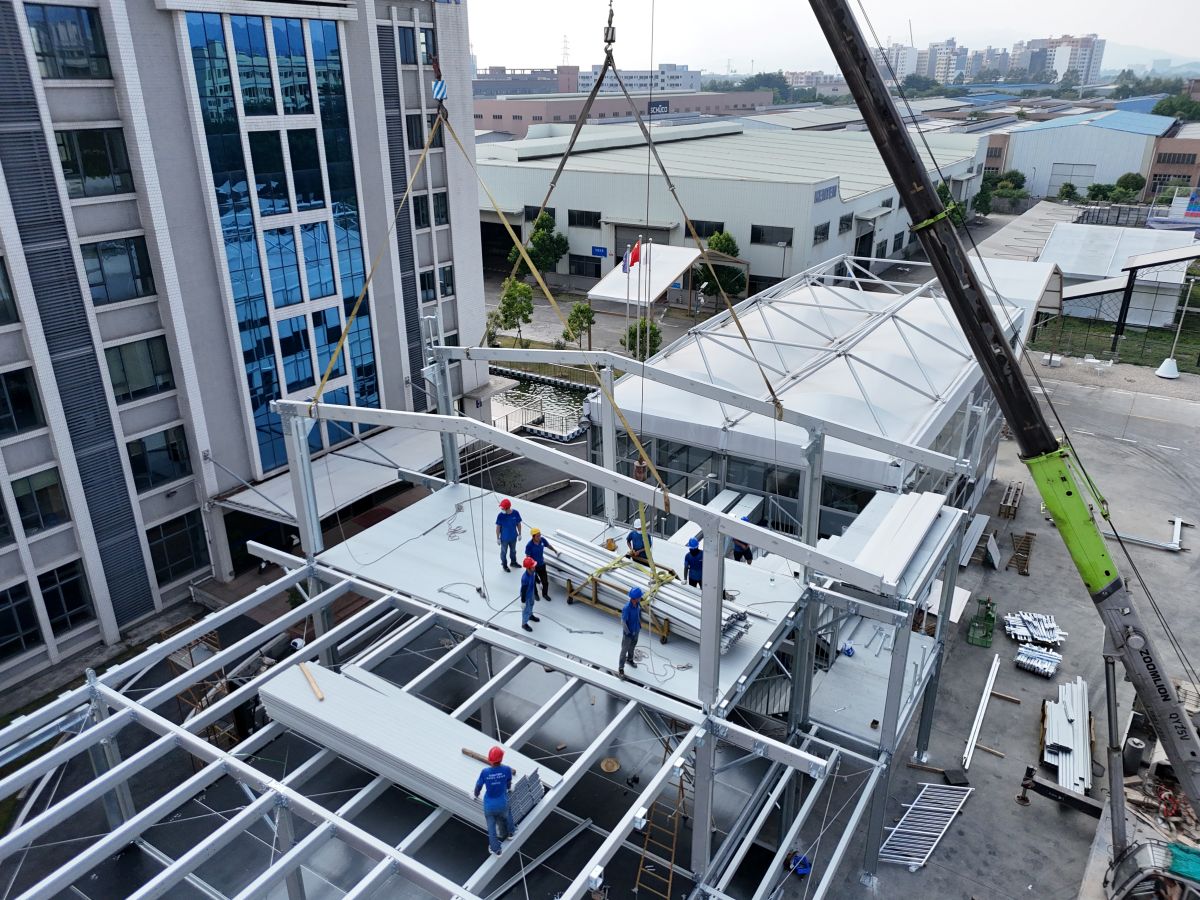
Production lead time is typically 30 to 45 days, with a minimum order quantity of 1 unit. The manufacturer implements a comprehensive risk control framework: structural safety risks are addressed through engineering design and structural calculations, production risks are validated by a professional engineering team, and quality assurance includes rigorous structural calculations and load capacity testing. This layered approach ensures that each structure meets project-specific structural safety requirements.
Technical Specifications and Performance
KENTEN's structure tent product line (models K1–K10) spans widths from 3m to 80m, with unlimited length in 5m bay increments and eave heights from 2.5m to 8m (customizable). The main frame uses high-strength 6061-T6 or 6082-T6 aluminum alloy. Roof fabric is 850 g/m² PVC-coated polyester, meeting flame retardant standards DIN 4102 B1, M2, and NFPA 701. Sidewall options include PVC, glass wall, ABS wall, and sandwich panel. Wind resistance is rated up to 140 km/h (customizable), snow load up to 0.5 kN/m², and operating temperature range from –30°C to +70°C. Installation can use ground anchors or concrete ballast. The aluminum frame lifespan exceeds 20 years, while PVC fabric lasts 8–15 years, depending on environmental conditions.
Proven Applications Across Industries
KENTEN has supplied structures for high-profile global events. For the 2022 Beijing Winter Olympics, 50 units of A-structure and double-decker tents were deployed for security checkpoints, staff offices, dining areas, meeting rooms, and command centers. The organizing committee praised rapid installation and engineering accuracy. At the 2023 Hangzhou Asian Games, KENTEN provided A-structure and pagoda tents for audience security checks, temporary storage, and restrooms across public and satellite venues. For the Formula 1 Miami Grand Prix, KENTEN supplied large-scale aluminum grandstands, delivering customized spans, lengths, and layouts to fit project requirements. The structures accommodated VIP lounges, hospitality suites, viewing platforms, and operational areas.
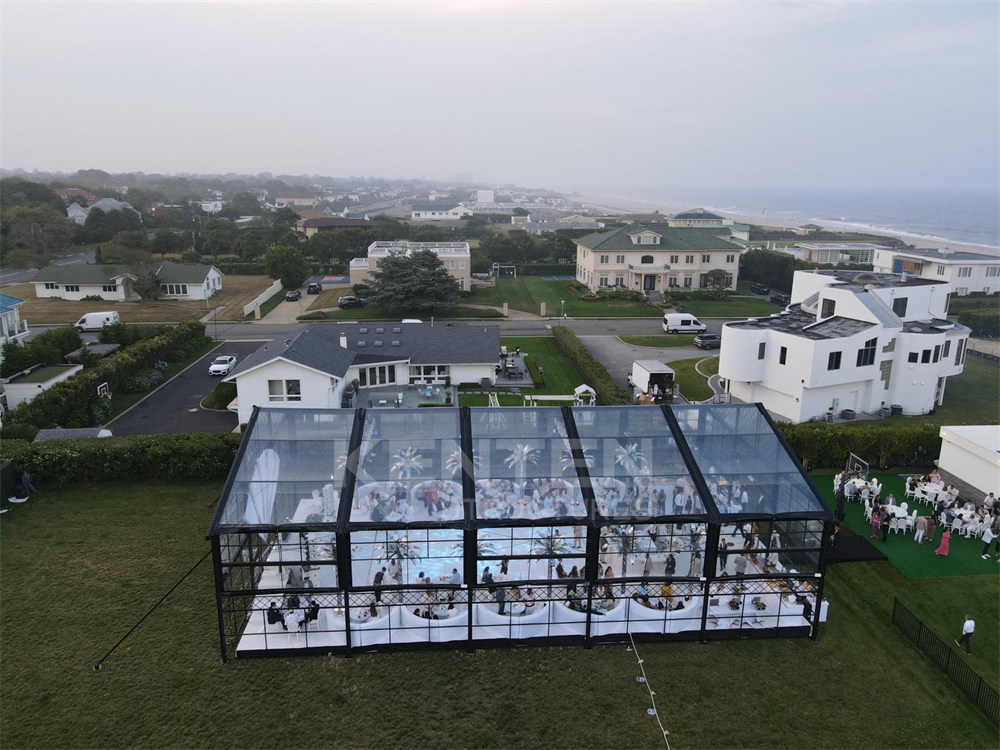
Beyond events, KENTEN's structures serve permanent and semi-permanent roles: a 15m × 25m Atrium Tent on the US East Coast serves as a luxury wedding venue with climate control and ocean views; pyramid-structure exhibition halls were built for the Doha Photography Festival in Qatar and a large-span modular exhibition hall in Kuwait, each providing 100% column-free interior space.
Comparison with Traditional Construction and Conventional Tents
Compared to permanent steel structures, aluminum frame tents offer faster deployment, lower foundation costs, and full reusability. KENTEN's modular design allows disassembly and relocation, making it suitable for both permanent and semi-permanent applications. Unlike traditional fabric tents, which often have limited span (typically under 15m) and lower wind resistance, KENTEN's clear span can reach 80m, with certified wind resistance up to 140 km/h. One limitation is that aluminum tents may require more careful anchoring than permanent steel buildings in extreme wind zones; however, customization options (such as heavier foundations or enhanced bracing) can address site-specific conditions. Overall, the balance of portability, speed, and structural integrity positions aluminum frame tents as a cost-effective alternative for industrial warehousing, event infrastructure, and logistics.
Market Trends and Future Outlook
The shift toward modular, reusable infrastructure aligns with sustainability goals and budget constraints. The global tent market's projected growth reflects increased adoption in logistics, disaster relief, and outdoor events. Suppliers with vertically integrated production, multiple certification portfolios, and a track record of large-scale projects—like KENTEN—are well positioned to meet evolving buyer requirements. Export data confirms that China remains the dominant manufacturing hub, and buyers benefit from competitive lead times and custom engineering capabilities.
Frequently Asked Questions
What is the minimum order quantity for KENTEN structure tents?
What certifications do KENTEN structure tents hold?
Has KENTEN supplied structures for major international events?
What span widths and materials are available in the structure tent range?
How does KENTEN ensure structural safety and quality?
For a detailed product overview and technical specifications, the KENTEN Structures catalog is available for download: Download KENTEN Catalog (PDF).
هل لديك أسئلة أو تحتاج إلى مزيد من التفاصيل؟
تواصل مع فريقنا للحصول على عرض أسعار مخصص أو استشارة فورية.
طلب عرض أسعار
املأ النموذج أدناه وسيتواصل معك فريقنا بعرض مقترح مخصص.
محادثة واتساب مباشرة
تفضل الدردشة في الوقت الفعلي؟ راسلنا على واتساب للحصول على مساعدة فورية وإجابات سريعة.
- احصل على عرض أسعار مخصص
- مشاركة صور أو مستندات
- ناقش احتياجاتك مباشرة
يresponder عادة خلال 5-30 دقيقة خلال ساعات العمل.