
Evaluating Carbon Steel Hex Bolt Suppliers for Long-Term Sustainability
ISO 14001:2015, ISO 45001:2018 and carbon footprint evidence as continuity signals — and what those documents still do not prove about the bolt itself.
A carbon steel hex bolt is a low-cost component with a disproportionately long service life. Once a batch is installed in a steel structure connection, a wind power foundation or a vibrating piece of process equipment, it may remain in place for the life of the asset — while the procurement cycle that delivered it lasted only a few weeks. That mismatch is why long-term sustainability has moved from a corporate responsibility footnote to a practical supplier evaluation criterion for hex bolt buyers.
Sustainability, in this context, does not usually mean recycled packaging or marketing language. For a buyer working between the Decision and Execution stages, it means continuity: the supplier can keep producing the same documented product, under the same process controls, with valid environmental and occupational health and safety management systems, across multiple order cycles.
Management-system certificates are among the few externally auditable signals available for that question — provided they are read for what they are. ISO 14001:2015 and ISO 45001:2018 describe a supplier's site-level environmental and safety processes. They do not certify a bolt's grade, dimensional tolerance or coating thickness. This article explains how to use those two certificates, together with ISO 14067 carbon footprint work, ISO 9001:2015 validity, IATF 16949:2016, ECM Type-Approved Attestation No. 3N230331.HYFUC49 and Alibaba Gold-Plus Supplier assessment scope, as part of a multi-year sourcing file rather than a one-off audit check.
The Long-Term Question Behind Carbon Steel Hex Bolt Sourcing
The hex bolt market is large, commodity-driven and price-sensitive. Carbon steel remains the dominant material for hex nuts and bolts, accounting for 44.8% of global market share in 2025. Market size estimates vary widely by scope: Strategic Market Research valued the global hex bolt market at USD 19.67 billion in 2025, while Dataintelo reported USD 8.4 billion for hex nuts and bolts combined — a gap that reflects different product boundaries rather than one disputed number. Buyers comparing supplier presentations should treat any single market figure as scope-dependent.
Trade data points to the same pressure. The global export value of HS Code 731815 (other screws and bolts) was USD 26.35 billion in 2023, a 3.65% decline from the previous year. In a product category this standardized, buyers rarely differentiate suppliers by the bolt itself. They differentiate by evidence, delivery reliability and the ability to reproduce the same result over time.
That is where a one-time audit stops being sufficient. A factory audit confirms a condition on the day it is performed. A multi-year supply relationship needs signals that can be renewed, re-verified and compared against a contract — which is precisely what management-system certification and product-level carbon accounting provide when they are managed as a live file.
What ISO 14001:2015 and ISO 45001:2018 Certificates Cover for Product 7337
ISO 14001:2015 is the international standard for environmental management systems. ISO 45001:2018 is the international standard for occupational health and safety management systems. Both are process-level and site-level standards, and for hex bolt product 7337 (Hex Bolt, M3–M36) that distinction determines how they should be used:
- ISO 14001:2015 addresses environmental management continuity — how coating processes, waste streams, energy use and treatment steps such as heat treatment, plating and galvanizing are controlled and monitored at the supplier's site.
- ISO 45001:2018 addresses occupational health and safety continuity — how risks in cold heading, heat treatment, coating and packaging operations are identified and controlled, and whether those controls survive staff turnover and production changes.
- Neither certificate addresses the bolt. Tensile strength, grade, thread tolerance and coating thickness are product characteristics and require their own batch-level evidence.
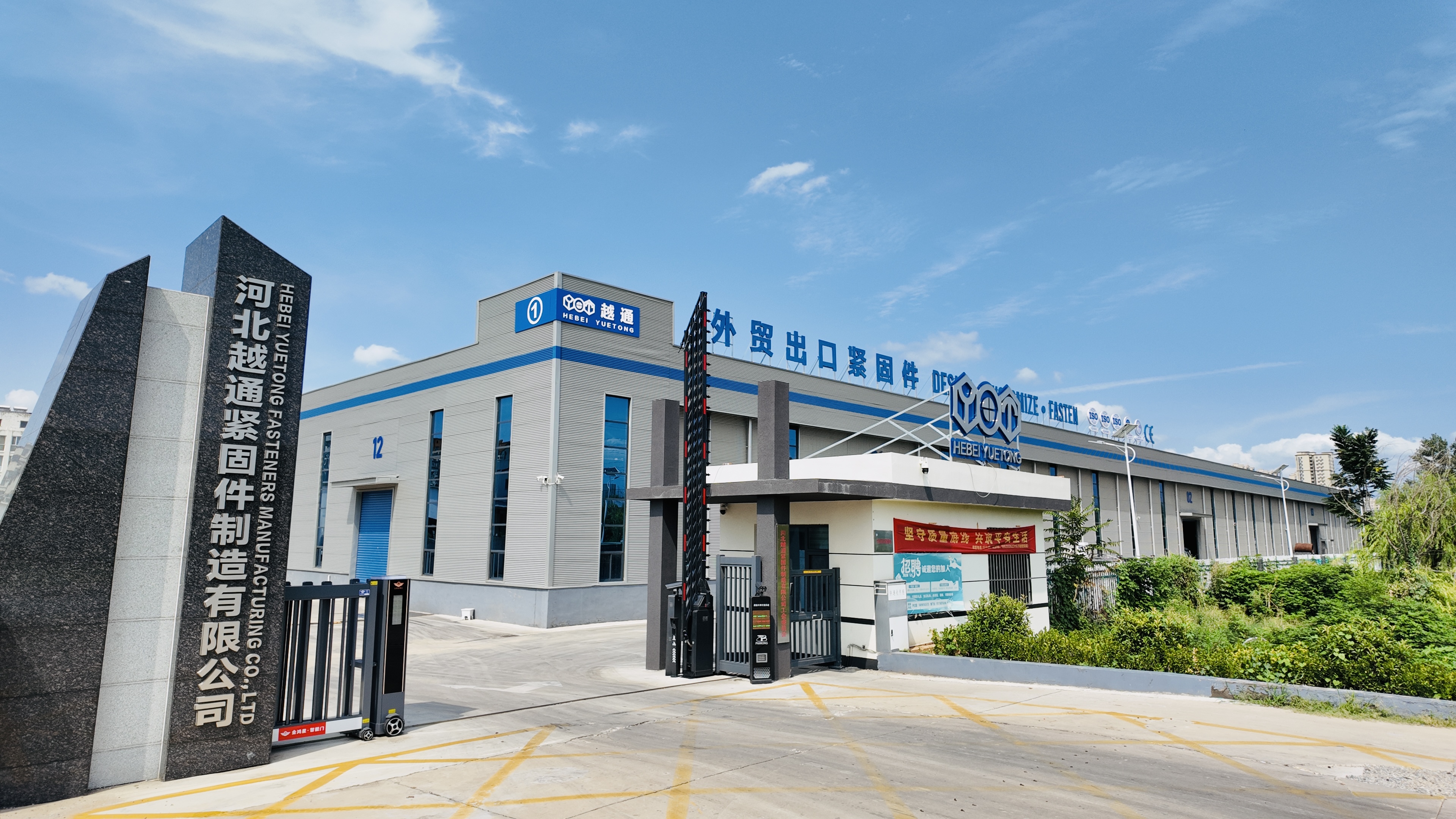
HEBEI YUETONG FASTENERS MANUFACTURING CO.,LTD was established in 2017 and operates from the Yongnian District of Handan, Hebei — China's largest standard parts production base. The company holds ISO 9001 quality management system, social responsibility management system, ISO 45001 occupational health and safety management system and ISO 14001 environmental management system certifications, together with EU CE certification, carbon footprint certification and IATF 16949 certification. It reports an export ratio of 80%, with main markets across the EU, North America, Latin America, the Middle East and Africa.
Read together, this is a continuity file rather than a product claim. It indicates that environmental and safety management are embedded in the production system of the site that manufactures product 7337 — not that any individual bolt meets a specification.
Carbon Footprint Evidence and the ISO 14067 Layer
A management-system certificate says that a supplier controls its environmental processes. It does not say what a specific bolt's carbon footprint is. That is the role of product-level carbon footprint accounting, for which ISO 14067 is the international standard.
Carbon footprint certification therefore adds a different category of evidence to a hex bolt buyer's file:
- It provides a product-level accounting basis rather than a site-level management statement.
- It becomes more decision-relevant as buyers themselves face reporting obligations in steel structures, energy and infrastructure supply chains.
- It has a shorter evidence life than a management-system certificate, because it depends on energy mix, transport mode and process route — any of which can change.
Validity Windows, Attestations and Assessment Scope
The most frequently misread part of a fastener supplier's certificate pack is the validity date. Management-system certificates are time-bound, and their value in a long-term sourcing decision depends less on the logo than on the renewal cycle behind it.
| Evidence | What it supports | What it does not replace |
|---|---|---|
| ISO 14001:2015 | Environmental management continuity at site level | Product specifications or batch test reports |
| ISO 45001:2018 | Occupational health and safety management continuity | Product specifications or batch test reports |
| ISO 14067 carbon footprint certification | Product-level carbon footprint accounting | Verification that emissions have actually been reduced |
| ISO 9001:2015, valid until 2027-09-13 | Quality management system continuity within a defined window | Automatic coverage after the expiry date without re-verification |
| IATF 16949:2016 | Automotive quality management system within a defined scope | Coverage of every fastener family, grade or finish |
| ECM Type-Approved Attestation No. 3N230331.HYFUC49 | Third-party type approval attestation held in the product file | Per-batch inspection and test documentation |
| Alibaba Gold-Plus Supplier assessment | Platform-level commercial and operational assessment | Technical certification or product conformity |
The ISO 9001:2015 certificate being valid until 2027-09-13 is a concrete illustration of why an expiry column belongs in the sourcing file: after that date the document must be re-verified or replaced. IATF 16949:2016 should be read within its defined scope rather than assumed across a full fastener catalogue. ECM Type-Approved Attestation No. 3N230331.HYFUC49 belongs to the product file and supports type approval; it does not replace batch-level test evidence. Alibaba Gold-Plus Supplier assessment scope is a platform-level evaluation of commercial and operational capability that is useful for discovery and initial screening, but it is not a technical certification.
From Certificate to Process Control: What Continuity Looks Like on the Production Floor
Environmental and safety management systems only hold their value if they sit on top of working process control. The production base matters because that is where a certificate is either sustained or allowed to lapse.
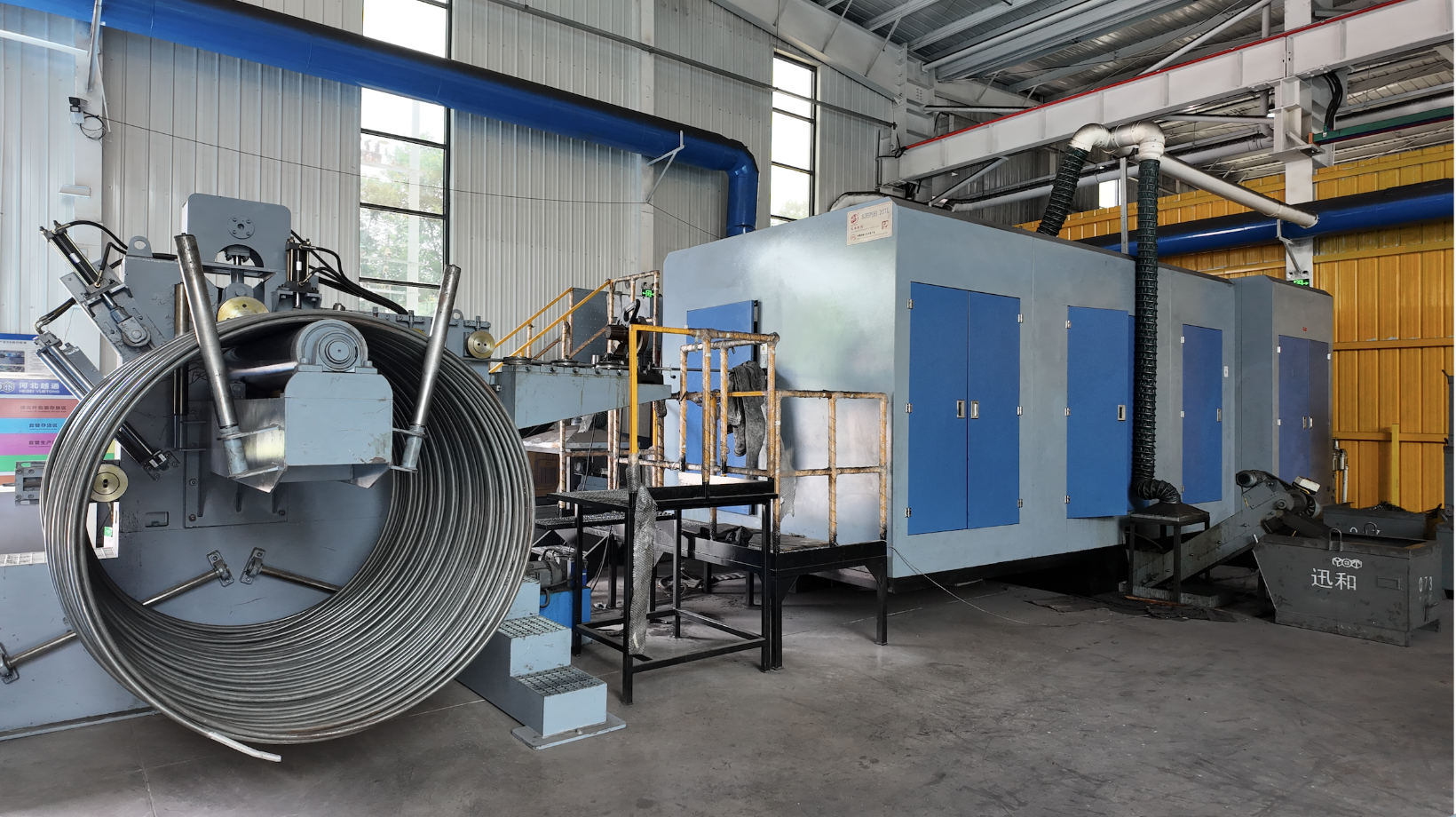
YUETONG FASTENER operates a 26,666.67 ㎡ facility with approximately 100 employees and an annual output of 150,000 tons, supported by a 12-engineer R&D team. The production scope covers hex nuts, hex bolts, sleeve anchors, thread rods, flat washers, hex socket head bolts, wheel hub bolts and DIY packing, exported to more than 30 countries and regions.
Product 7337 (Hex Bolt, M3–M36) is produced across a broad specification range:
- Standards: GB/T, DIN, ISO and ASTM, including DIN931, DIN933, GB5782, GB5783 and ASME/ANSI B18.2.1
- Sizes: M6, M8, M10, M12 and 1/4", 5/16", 3/8", 1/2", 5/8"; lengths commonly from 16 mm to 200 mm
- Grades: 4.8, 8.8, 10.9, 12.9, plus A2-70 and A4-80 stainless
- Materials: carbon steel, alloy steel, stainless steel
- Finishes: black oxide, zinc plated, hot-dip galvanized, Dacromet, mechanical galvanized and PTFE coating
Process control runs in three stages — raw material inspection, production process control and finished product testing — which is also the sequence in which environmental and safety systems interact with product quality. Heat treatment affects mechanical properties. Coating lines affect corrosion performance and generate the waste streams that ISO 14001:2015 governs. Packaging affects delivery condition.
Two standards are particularly relevant when coating and tightening behaviour enter an acceptance file:
- EN ISO 10683:2018, covering non-electrolytically applied zinc flake coating systems — the reference point where finishes such as Dacromet-type coatings are specified.
- EN ISO 16047:2005+A1:2, covering torque/clamp force testing — the reference point that links a stated tightening torque to the preload actually achievable in a joint.
Coating thickness is where specification and verification most often diverge. Zinc plating typically provides a coating thickness of 5–12 µm, whereas hot-dip galvanizing provides 45–85 µm. The difference is not cosmetic: it determines whether a fastener suits a coastal salt-spray environment or a controlled indoor installation, and it can only be confirmed by measurement on the delivered batch.
Purchasing Terms and Acceptance Criteria That Support a Multi-Year Relationship
Commercial terms are part of sustainability evaluation, because an evidence protocol that cannot be executed repeatedly is not sustainable in practice. For hex bolt supply, purchasing terms and acceptance criteria are structured as follows:
- Minimum order quantity: 5,000 pcs
- Delivery terms: EXW, FOB, CIF and DDP
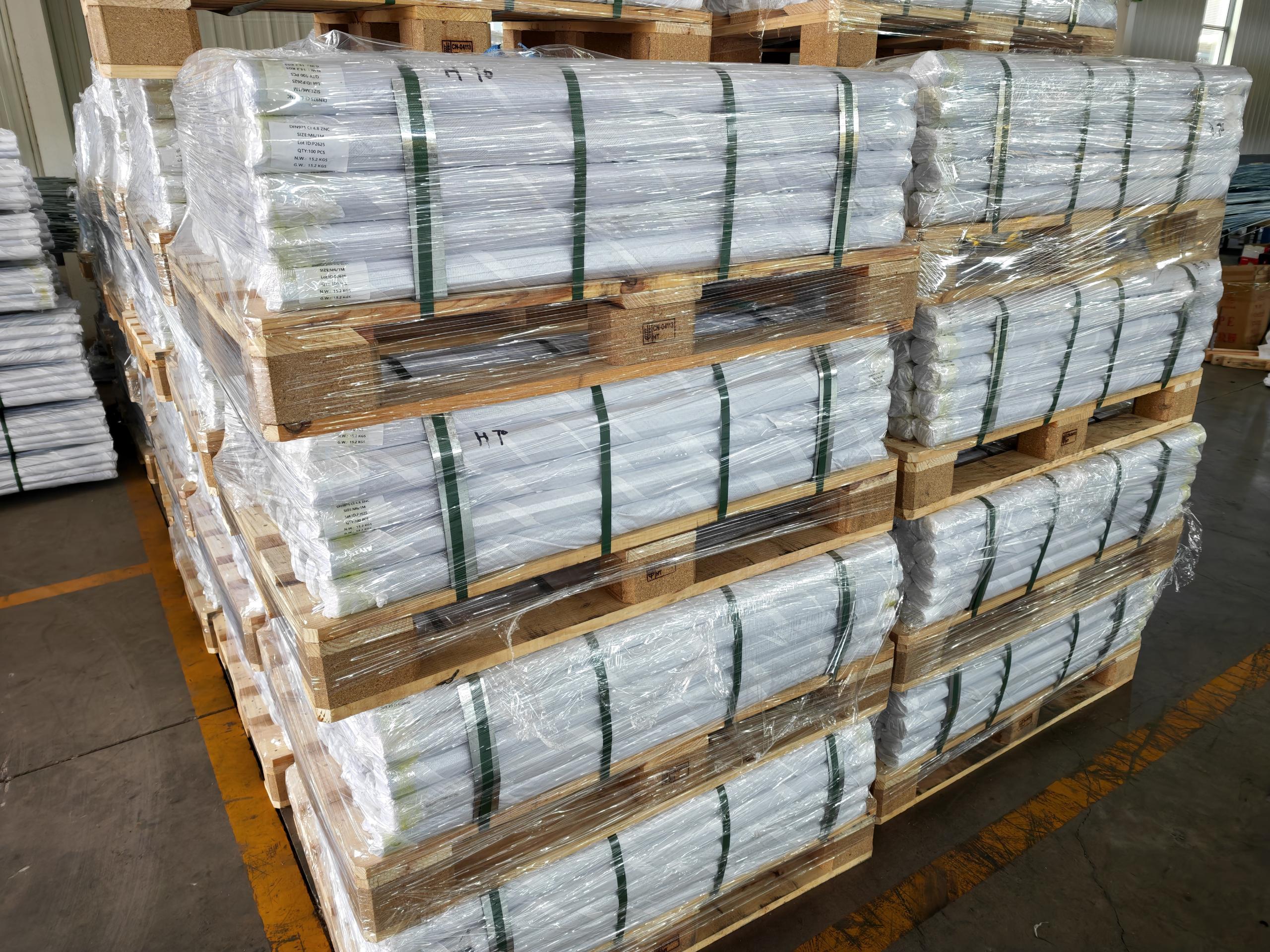
- Acceptance criteria: factory pre-inspection, customer on-site inspection and SGS third-party acceptance, with complete quality documents provided
- Payment terms: 30% deposit with balance before shipment, 100% advance, L/C and bank transfer; flexible payment terms for long-term customers
Two of these items matter most for a buyer at the Decision-to-Execution stage. First, acceptance is not a single option: it can be scaled from document review to independent third-party inspection depending on the consequence of failure in the application. Second, the availability of on-site and SGS third-party acceptance keeps verification independent of the supplier's own test centre — a structural safeguard against the tendency for internal testing to become a formality over a long relationship.
YUETONG FASTENER reports that it has established long-term and stable partnerships with major distributors worldwide, selling directly to them. That direct structure removes intermediary layers, which shortens the distance between the production line and the buyer's traceability requirement, and makes process changes easier to communicate before they affect a shipment.
Application Context: Vibration, Steel Structures and Self-Loosening Risk
No management-system certificate prevents a joint from loosening. Loosening is a design and installation outcome, and it belongs in the same evaluation file as environmental and safety evidence — otherwise the sustainability review and the engineering review never meet.
Proper bolt selection and installation can significantly reduce the risk of self-loosening. Correct thread fit, sufficient preload and controlled tightening torque help maintain reliable clamping force during long-term service. Where equipment or steel structures are subject to continuous vibration, suitable locking methods — lock nuts, locking washers or thread-locking solutions — should be selected according to the operating conditions.
The risk mechanism is well defined. High-frequency vibration of equipment, excessive installation torque and long-term heavy-load tension can cause thread stripping, deformation and fracture. Standard mitigations follow directly from that:
- High-purity raw materials to ensure stable strength
- Torque, hardness and fatigue resistance testing before delivery
- Adherence to the specified installation torque for standard construction
- Selection of seismic high-strength bolts for vibrating working conditions
These requirements map onto the environments that dominate carbon steel hex bolt demand: indoor normal environments, outdoor open-air installation, humid climates, coastal salt-spray corrosion, high and low temperature, explosion hazardous areas, and vibration load conditions. The corresponding project types span construction, new energy PV, steel structure, curtain wall and bridge, engineering machinery, municipal infrastructure, rail transit, petrochemical, equipment workshop and wind power applications.
Comparison with Traditional Solutions — and the Limits of Certificate-Led Sourcing
Traditional practice in carbon steel hex bolt procurement is transactional. The buyer collects quotes batch by batch, performs or inherits one audit at the start of the relationship, and evaluates each delivery on price and arrival. It is fast, administratively light, and adequate when the joint is non-critical and the asset life is short.
Certificate-led long-term sourcing shifts the emphasis. The buyer maintains a live evidence file covering environmental management (ISO 14001:2015), occupational health and safety management (ISO 45001:2018), quality management continuity (ISO 9001:2015), product-level carbon footprint accounting (ISO 14067), automotive-scope quality management where relevant (IATF 16949:2016) and platform-level assessment data — and re-verifies it on a schedule rather than once.
The limits of this approach are real and should be stated plainly:
- Certificates are site-level and time-bound. ISO 9001:2015 validity until 2027-09-13 is a fixed window; the file must be re-verified after it closes, regardless of how the relationship developed.
- They do not certify the bolt. Grade, dimensional tolerance and coating thickness still require batch inspection or test reports.
- Scope matters more than the logo. IATF 16949:2016 applies within a defined scope, and Alibaba Gold-Plus Supplier assessment is a platform-level commercial assessment rather than a technical certification.
- Environmental and safety certification does not automatically deliver a lower product carbon footprint. ISO 14067 accounting is a separate exercise with its own update cycle.
- Certificate-led sourcing adds administrative cost. With a 5,000 pcs minimum order quantity and optional third-party acceptance, the full evidence protocol is proportionate to high-consequence joints and recurring spare-part programmes — but it can be disproportionate for low-value, low-risk fasteners where a documented material and coating declaration is sufficient.
Market Trend Analysis: Where Fastener Sustainability Evidence Is Heading
Three observable trends shape how this evaluation will change over the next procurement cycles.
Carbon steel's dominance is being defended, not assumed. At 44.8% of global hex nut and bolt market share in 2025, carbon steel remains the default material. That position depends on coating systems carrying the corrosion load the base material cannot, which pushes specification and verification toward coating standards such as EN ISO 10683:2018 and toward measurement-based acceptance rather than material claims alone.
Trade value is contracting while documentation demand is not. The 3.65% decline in HS Code 731815 export value in 2023 signals continued price pressure in commodity fasteners. Where suppliers cannot compete on material cost, they increasingly compete on documentation quality and delivery reliability — a shift that favours buyers who specify their evidence requirements before negotiation rather than after.
Hub concentration makes continuity a regional variable. China's Yongnian District is the country's largest fastener production base, and YUETONG FASTENER's own company profile describes it as among the top three exporters in that hub as of 2023. Concentration brings capacity and pricing advantages, and it also means that environmental and safety compliance trends within the hub directly affect delivery continuity for global buyers.
One further shift is visible in buyer behaviour rather than in published data: requests are increasingly framed around renewal schedules — when a certificate expires, what happens at renewal, and what changes if the coating line or heat treatment route changes — rather than around a single certificate number presented once at the start of a relationship.
Future Outlook
For carbon steel hex bolt buyers, three developments are reasonable to plan for.
Certificate lifecycle management becomes an annual task. Expiry tracking, renewal confirmation and scope checks will sit alongside price negotiation in supplier review meetings, because a lapsed management-system certificate creates a documentation gap even when product quality is unchanged.
Product-level carbon footprint data becomes a standard attachment. As ISO 14067-based accounting becomes more common in industrial supply chains, buyers in steel structure, energy and infrastructure projects should expect to request it at product level rather than accept a company-level statement.
Acceptance files become more standard-driven. References such as EN ISO 16047:2005+A1:2 for torque/clamp force testing and EN ISO 10683:2018 for non-electrolytically applied zinc flake coating systems allow buyers to link a supplier's process claims to a testable specification. That link is what converts a sustainability narrative into a procurement control — and it is the part of the evaluation that survives a change of personnel on either side.
FAQ
What do ISO 14001:2015 and ISO 45001:2018 certificates tell a buyer about a carbon steel hex bolt supplier?
They confirm that the supplier operates a certified environmental management system (ISO 14001:2015) and a certified occupational health and safety management system (ISO 45001:2018). For product 7337 (Hex Bolt, M3–M36), these certificates are evidence about production conditions — for example controls around coating-process waste, heat treatment and cold heading safety — and not about the mechanical properties of any individual bolt. Grade, dimensional tolerance and coating thickness still require batch-level inspection and test documentation.
How should a buyer treat certificate validity dates and attestation scope?
As a renewal schedule rather than a permanent status. In this supplier's file, the ISO 9001:2015 certificate is valid until 2027-09-13, so the document must be re-verified after that date. IATF 16949:2016 applies within its defined scope and should not be assumed to cover every fastener family. ECM Type-Approved Attestation No. 3N230331.HYFUC49 supports the product file at type approval level but does not replace batch test reports. An Alibaba Gold-Plus Supplier assessment is a platform-level commercial and operational assessment, not a technical certification.
Which standards should appear in an acceptance file for coated or torque-specified hex bolts?
EN ISO 10683:2018 covers non-electrolytically applied zinc flake coating systems, and EN ISO 16047:2005+A1:2 covers torque/clamp force testing. Coating thickness differs substantially by process: zinc plating typically provides 5–12 µm and hot-dip galvanizing 45–85 µm, so the specified finish and the measured thickness must match the corrosion environment. For dimensional reference, DIN 933 and ISO 4017 are the primary standards for full-thread hex bolts, with ISO 4017 as the international successor; product 7337 is also produced to GB/T, DIN, ISO and ASTM references including DIN931, GB5782, GB5783 and ASME/ANSI B18.2.1.
Are carbon steel hex bolts prone to self-loosening in vibrating equipment or steel structures?
Yes. Repeated vibration, insufficient preload or incorrect tightening torque may lead to gradual loosening. Proper bolt selection and installation can significantly reduce that risk: correct thread fit, sufficient preload and controlled tightening torque help maintain reliable clamping force during long-term service. For equipment or steel structures subject to continuous vibration, locking methods such as lock nuts, locking washers or thread-locking solutions should be selected according to the operating conditions. High-frequency vibration, excessive installation torque and long-term heavy-load tension can cause thread stripping, deformation and fracture; high-purity raw materials for stable strength, torque, hardness and fatigue resistance testing before delivery, and adherence to the specified installation torque are the standard mitigations.
What purchasing terms and acceptance criteria support a long-term hex bolt supply relationship?
The minimum order quantity is 5,000 pcs. Delivery terms support EXW, FOB, CIF and DDP. Acceptance can be structured as factory pre-inspection, customer on-site inspection or SGS third-party acceptance, with complete quality documents provided. Payment terms accept 30% deposit with balance before shipment, 100% advance, L/C and bank transfer, and long-term customers can be offered flexible payment terms. Buyers evaluating continuity should fix the acceptance protocol in the contract even where inspection frequency is reduced over the life of the relationship.
Additional product range and certification scope detail for Hex Bolt M3–M36 and related fasteners is available in the YUETONG FASTENER company brochure.