
Evaluating Case Packers for 2026: Machine Types and Market Evidence
The global case packing machines market was estimated at USD 1.07 billion in 2024 and is projected to reach USD 1.74 billion by 2033, according to Grand View Research. For packaging engineers and procurement teams evaluating end-of-line automation, the question is no longer whether to mechanize case packing, but which configuration — top load, side load, drop type, or robotic — will serve the specific product mix, line speed, and compliance environment. This article reviews the case packer types buyers are comparing in 2026, what the market data indicates about preferences, and what verifiable supplier evidence looks like during evaluation.
The Evaluation Challenge: Choosing a Case Packer That Fits
Products reaching the case packing station vary by shape, weight, fragility, and infeed pattern. Bottles, cans, bags, cartons, canisters, and folded or rolled tissue products all impose different mechanical requirements. A case packer that handles one format well may not handle another without significant reconfiguration.
For buyers at the evaluation stage, the practical task is to translate product characteristics into machine requirements. Key variables include:
- Product geometry and surface sensitivity — compressible products, printed surfaces, and wet containers require different handling logic.
- Infeed continuity — whether products arrive at a steady rate from upstream equipment.
- Required carton size range — length, width, and height envelopes for current and planned SKUs.
- Changeover frequency between SKUs and the time allowed for format changes.
- Utility conditions — voltage, air pressure, and available floor space.
The opportunity in this phase is to narrow options using defined criteria rather than comparing machines by name or price alone. Market data helps: top load case packers accounted for the largest machine-type share at 45.5% in 2024, according to Grand View Research, which signals the configuration's broad applicability. A popular configuration, however, is not automatically the right fit for every line.
The Supplier in Focus: WIMACH's Case Packer Evidence
Wenzhou Wimach Machinery Co., Ltd. (WIMACH) is a packaging machinery manufacturer based in Ruian, Wenzhou, Zhejiang, China. The company specializes in tissue packing machines and integrated packaging lines. Its portfolio includes automatic case packers, facial tissue and paper napkin cartoning machines, soft tissue wrapping machines, toilet paper roll wrapping machines, blister packing machines, and complete end-of-line systems. WIMACH was founded in 2021, operates a 3,000 m² facility, employs 37 staff, and reports an annual output of about 160 sets of equipment. Approximately 60% of its output is exported to the EU, North America, and South America.
For case packer evaluation, WIMACH's relevant models are:
| Model | Type | Packing capacity | Carton dimension (L×W×H) | Power / Air | Dimensions / Weight |
|---|---|---|---|---|---|
| CP-T60 | Top load / pick-and-place | 1–8 cartons/min | 300–600 × 200–400 × 150–400 mm | 7.5 kW / 450 L/min | 4,200 × 2,600 × 2,200 mm / 1,600 kg |
| CP-S50 | Side load / side push | 1–16 cartons/min | 240–500 × 200–400 × 180–400 mm | 4.5 kW / 350 L/min | 4,200 × 2,300 × 1,900 mm / 1,500 kg |
Both models are available in stainless steel or carbon steel and are applicable in the tissue industry, food and beverage, pharmaceutical, daily chemical and cosmetic, hardware, auto parts, and machinery industries.
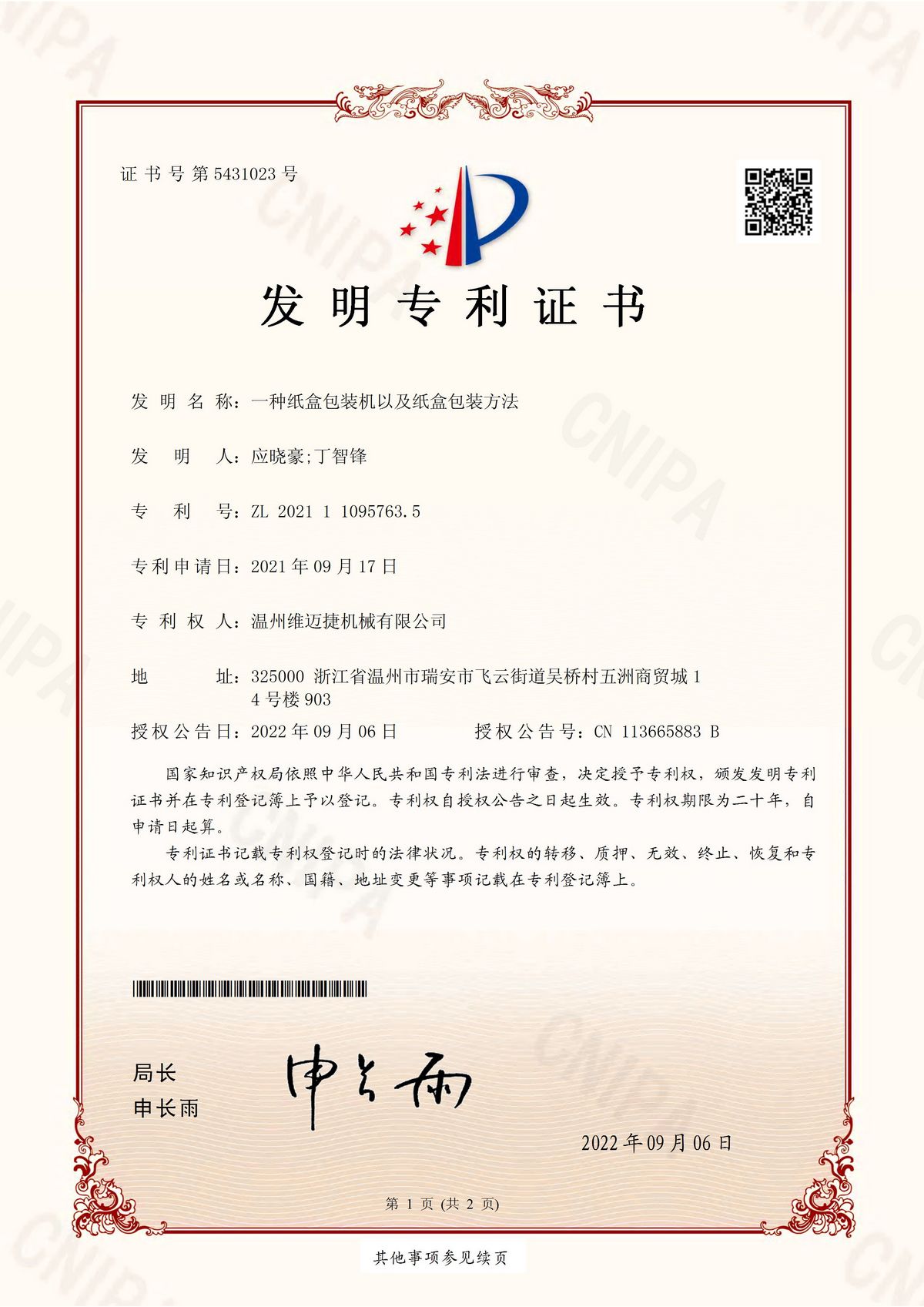
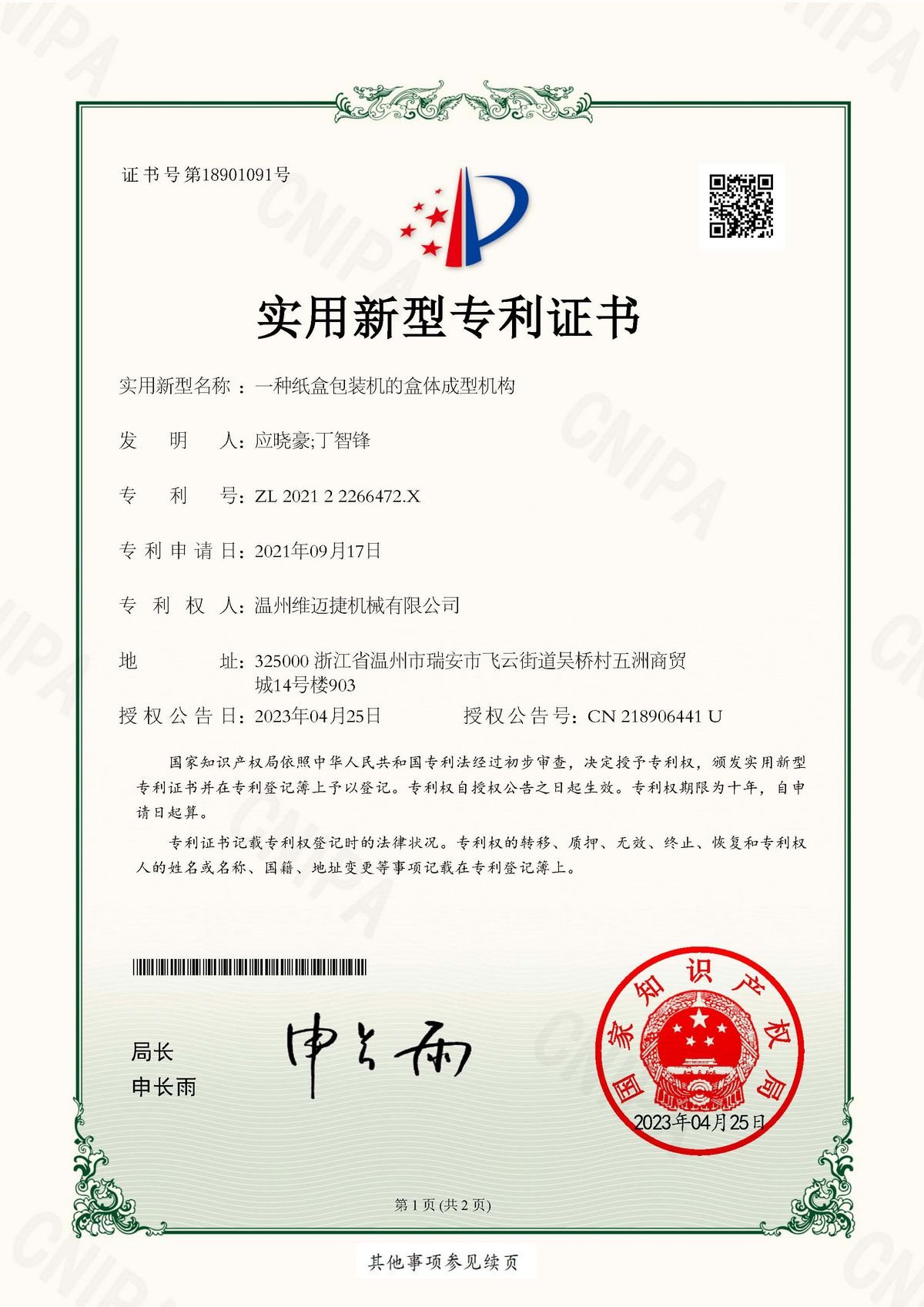
Evaluation also benefits from verified intellectual property. WIMACH holds an invention patent for "Carton Packing Machine and Carton Packaging Process" (Patent No. ZL 2022 1 1099886.8, granted 2022-09-06 by the National Intellectual Property Administration, PRC) and utility model patents for an automatic feeding mechanism and a box forming mechanism for carton packaging machines (Patent No. ZL 2022 2 1202677.7, granted 2023-04-25). Patents are not a substitute for testing, but they provide a verifiable record of internal engineering effort.
Top Load vs. Side Load Mechanisms: A Practical Read
Top load case packers, also called pick-and-place case packers, load products vertically through the open top of the carton. A gripper or mechanical arm picks products from the infeed and places them into the case. This approach suits products that need gentle handling or that vary in shape, such as tissue canisters, bottles, and boxes. The trade-off is that speed is limited by the robot cycle time and the number of products handled per pick.
Side load case packers use a pushing mechanism. Products are grouped and pushed horizontally into the side opening of the case. This method is generally efficient for stable, regular products such as wrapped toilet paper rolls, folded tissue packs, bags, and cartons. It can deliver a higher packing rate in many configurations, with the condition that products withstand horizontal pushing forces.
WIMACH's two models illustrate the difference in concrete terms. The CP-T60 top load unit operates at 1–8 cartons/min; the CP-S50 side load unit operates at 1–16 cartons/min. The side load unit consumes less air (350 vs. 450 L/min) and less power (4.5 vs. 7.5 kW). The top load unit accepts longer cartons (up to 600 mm vs. 500 mm). These differences matter when matching machine type to product dimensions and line pacing.
Drop type case packers, which rely on gravity to lower products into cartons from above, remain relevant for stable, non-fragile items, but they are less frequently the subject of evaluation for products with printed surfaces or irregular shapes. Robotic case packers are expanding because they can handle mixed pack patterns and delicate products, while correspondingly involving a higher investment and more complex programming.
Deployments in Tissue, Toilet Roll, and Wet Wipe Lines
Evidence from installed lines helps buyers understand how a case packer behaves outside a spec sheet.
In the United States, a tissue paper manufacturer uses one CP-T60 top load case packer to automatically load tissue canisters into cartons. The machine replaced manual box filling and has been in operation for five years. Reported outcomes include improved production efficiency, reduced labor cost, standardized packing procedures, and lower risk of collision and deformation during transit.
In Mexico, a tissue paper producer operates a turnkey automated packaging line for canister wet disinfecting wipes, built around nine sets of equipment. The line covers automatic container feeding, wipe insertion, disinfectant filling, heat sealing, cap tightening, labeling, case packing, palletizing, strapping, and stretch wrapping. All steps run automatically, and the project was completed within five years.
In the United States, an end-of-line packaging system for toilet paper rolls integrates six sets of equipment, including wrapping, case packing, palletizing, and stretch wrapping. Completed within four years, the line outputs pallet loads that are dustproof, moisture-resistant, and ready for shipment.
In Poland, a complete packaging line for facial tissue and cream tissue integrates twelve sets of equipment, including cartoning, case packing, robotic palletizing, strapping, and stretch wrapping. The line was completed within two years and outputs stable, dust-proof, and moisture-proof pallet loads.
All four cases involve tissue or wet wipe manufacturers, but the underlying requirements — gentle handling, quick changeover, integration with upstream equipment, and stable finished pallet output — are common to food, beverage, and daily chemical lines.
Market Data: Case Packer Demand and Type Preferences
- The global case packing machines market was estimated at USD 1.07 billion in 2024 and is projected to reach USD 1.74 billion by 2033 (Grand View Research).
- Asia Pacific held a 37.9% share of the case packing machines market in 2024 (Grand View Research).
- Top load case packers were the largest machine-type segment at 45.5% in 2024 (Grand View Research).
- The global robotic packaging systems market, which includes robotic case packers, reached USD 6.4 billion in 2024 (Global Market Insights).
- Secondary packaging equipment, which includes case packers, accounts for approximately 45% of the total packaging robot market (Fact.MR).
- In the United States, ANSI/PMMI B155.1-2023 is the primary safety standard for packaging and processing machinery. In the EU, EN ISO 12100 is the harmonized machinery safety standard relevant to CE marking.
These figures indicate three things for buyers. First, case packing automation is a growing investment area across global production lines. Second, top load remains the dominant configuration, so suppliers such as WIMACH that offer pick-and-place capability are aligned with current demand. Third, compliance with recognized safety standards is becoming a non-negotiable evaluation criterion.
Automated Case Packing vs. Manual Packing: Where the Boundary Lies
Compared with manual box filling, an automatic case packer provides consistent cycle time, repeatable pack quality, and reduced physical strain on plant staff. It also makes output more predictable in high-volume lines. The user cases cited above all report labor reduction and standardization as primary benefits.
The honest boundary: automation is not always the fastest route to ROI. For lines with very low throughput, extremely frequent SKU changes, or products that cannot tolerate mechanical gripping or pushing, manual or semi-automatic stations can remain a rational choice. The speed figures for WIMACH's CP-T60 (1–8 cartons/min) and CP-S50 (1–16 cartons/min) are operating ranges that depend on product geometry and infeed stability; a line requiring consistently more than 20 cartons/min would need a different class of machine or parallel configuration. Cartons outside the listed dimensional envelopes — for example, longer than 600 mm on the CP-T60 — require evaluation of alternatives or custom design.
A Checklist for Case Packer Evaluation
- Define the physical product envelope: dimensions, weight, surface sensitivity.
- Define the carton dimension range for current and planned SKUs.
- Match packing capacity to upstream line output, not to the machine's maximum.
- Check utility compatibility: voltage, air pressure (typically 0.5–0.8 MPa), air consumption, and floor space.
- Verify safety features: safety interlocks, E-stop testing, compliance with ANSI/PMMI B155.1-2023 (US) or EN ISO 12100 (EU).
- Confirm certification evidence: CE marking and any patents relevant to the machine's mechanisms.
- Review customization capability: packaging dimensions, machine configuration, voltage, and logo.
- Assess delivery terms: lead time, MOQ, and quality control procedures before shipment.
- Confirm after-sales support: installation, commissioning, training, remote technical support, and post-warranty service.
Outlook: Integration, Robotics, and Compliance
Case packers are becoming more integrated. Buyers increasingly evaluate them as part of a full end-of-line chain — cartoner, case packer, palletizer, strapper, and stretch wrapper — rather than as standalone machines. Robotic case packing continues to gain attention because it can handle mixed patterns and reduce changeover effort, although it involves higher programming complexity. On the compliance side, the reference to ANSI/PMMI B155.1-2023 and EN ISO 12100 reflects a broader tightening of machinery safety expectations in major markets.
For cross-border buyers, the practical implication is that evaluation should include documentation: certification certificates, patent records, quality control procedure descriptions, and installation references. A supplier with a documented manufacturing base and export history to the EU and North America can provide a more traceable basis for decision-making.
Additional Resource
Detailed specifications for WIMACH's packaging machinery are available in the company catalog: Wimach Catalog (PDF).
FAQ
What is the most widely used type of case packer?
Top load case packers were the largest machine-type segment in 2024, holding a 45.5% share of the global case packing machines market, according to Grand View Research. A top load case packer, also called a pick-and-place case packer, loads products vertically through the top opening of the carton and is often used for products that need gentle handling.
What is the difference between a top load and a side load case packer?
A top load case packer picks products and places them into the carton from above, which suits bottles, canisters, and irregular or fragile items. A side load case packer pushes products horizontally into the carton, which is generally faster for stable, regular products such as toilet paper rolls and folded tissue packs. In WIMACH's range, the CP-T60 top load unit runs at 1–8 cartons/min, and the CP-S50 side load unit runs at 1–16 cartons/min.
What certifications should a case packer have for the US and EU markets?
In the United States, ANSI/PMMI B155.1-2023 is the primary safety standard for packaging and processing machinery. In the European Union, EN ISO 12100 is a harmonized machinery safety standard that is mandatory for CE marking. Buyers should verify that a case packer has CE certification and that its safety mechanisms, such as interlocks and E-stop, are tested.
Can automatic case packers handle bottles, cans, bags, and boxes?
Automatic case packers can handle a wide range of products, including bottles, cans, bags, and cartons, when configured with the appropriate loading mechanism and tooling. WIMACH's CP-T60 and CP-S50 are applicable in the tissue industry, food and beverage, pharmaceutical, daily chemical and cosmetic, hardware, auto parts, and machinery industries. The practical limit is defined by product stability, weight, surface sensitivity, and carton dimensions.
What customization options are available for a case packer?
WIMACH offers customization of packaging dimensions, machine configuration, voltage, and logo for both custom machinery service and OEM/ODM production. The MOQ is 1 set. For customized machinery, lead time is 30–45 days; for OEM/ODM, lead time is 15–45 days. Before delivery, all machines undergo quality control procedures including no-load and load running tests, mechanical assembly inspection, pneumatic leakage testing, electrical safety testing, PLC control logic testing, safety interlock and E-stop testing, long-time aging testing, and surface appearance inspection.
What after-sales services do case packer suppliers typically provide?
WIMACH provides installation and commissioning, training, warranty service, remote technical support, lifetime after-warranty support, and upgrade and retrofit services. These services are part of the full-lifecycle support offered with its packaging equipment.